Nicholas Grimshaw, 1939–2025
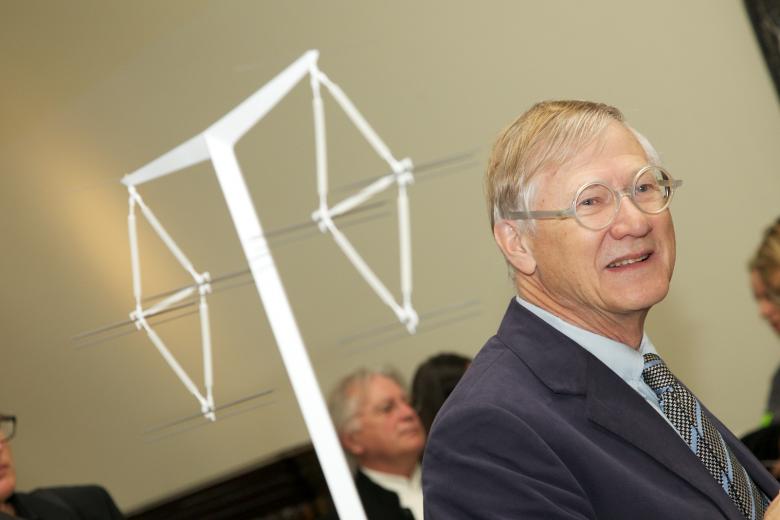
Sir Nicholas Grimshaw, the English architect best known for designing such high-tech buildings as the International Terminal Waterloo in London and the Eden Project in Cornwall, and the recipient of the 2019 RIBA Royal Gold Medal, died on September 14 at the age of 85.
Although Nicholas Grimshaw did not found his eponymous practice until 1980, following a fifteen-year partnership with Terry Farrell, his first architectural project was built in 1967, just two years after Grimshaw graduated from the Architectural Association. Studying under Cedric Price and influenced by R. Buckminster Ruller, Grimshaw's Sussex Gardens Service Tower provided thirty bathrooms for student accommodations in a cylindrical volume clad in translucent glass. Instead of floors, the bathroom modules were mounted to a central steel frame and followed a helical ramp that serviced each floor of the dormitory. Prioritizing lightweight construction over the heavy concrete buildings popular at the time, the project—since demolished, as lamented by Grimshaw in a 2017 video—heralded high-tech architecture and foreshadowed a promising career.
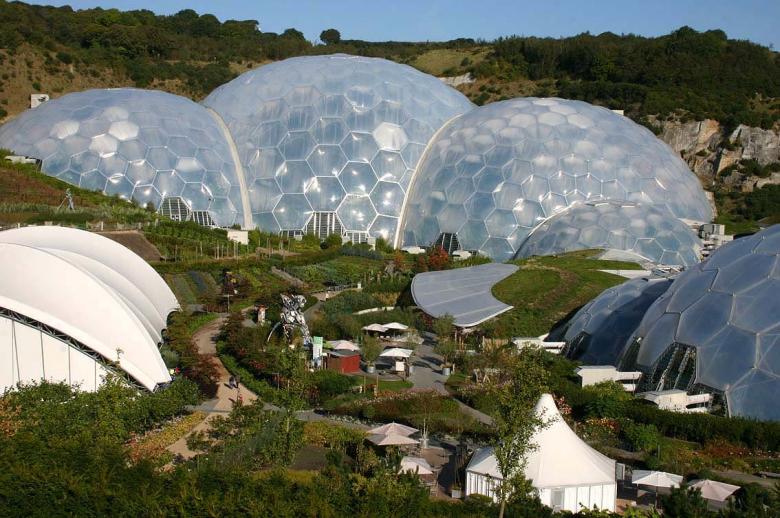
In the years that followed his first commission, Grimshaw joined fellow UK architects Richard Rogers and Norman Foster as a proponent of a high-tech approach to architecture, defined by the incorporation of advanced technology and materials, an expression of structure, and lightweight construction. Some of Grimshaw's gravitation to this approach can be attributed to his father having been an aircraft engineer and his grandfather a civil engineer. His mother was a painter and Victorian painter John Atkinson Grimshaw was an ancestor, so one could find a merging of art and engineering in his architecture. To wit, the Eden Project, completed in Cornwall in 2001, melds a highly engineered approach with a certain playfulness (soap bubbles!) that belies its serious intent: remediating a toxic site with biomes focused on stewardship of the Earth in the 21st century.
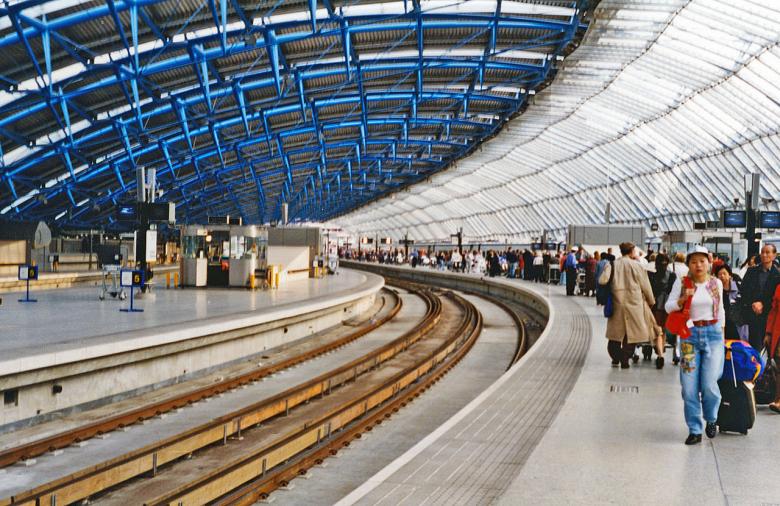
Grimshaw was hired for the Eden Project because of the International Terminal his firm added to Waterloo Station in London. Marked by a sweeping glass roof following the curve of the tracks, the terminal opened in 1994 and provided service through the Channel Tunnel to Europe until 2007, when it was closed. Notably, the project won the European Union Prize for Contemporary Architecture – Mies van der Rohe Award in 1994.
Grimshaw's death was announced Monday on the website of Grimshaw, the practice that he founded in 1980 and which is now a partnership and employs more than 550 people in offices in Los Angeles, New York, London, Paris, Dubai, Melbourne, Sydney, and Auckland. The firm described “Nick,” who was knighted in 2002 and received the RIBA Royal Gold Medal in 2019, as “a man of invention and ideas [who] will be remembered for his endless curiosity about how things are made and his commitment to the craft of architecture and building. With this pragmatic creativity, Nick had an extraordinary ability to convince others that daring ideas were possible.”