Terry Farrell, 1938–2025
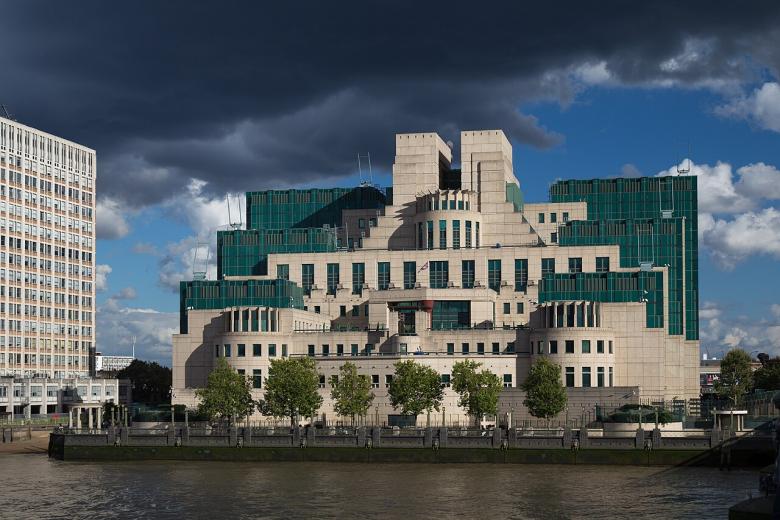
Sir Terry Farrell, best known for designing the MI6 Building, the London headquarters of the British Secret Intelligence Service (and which made frequent appearances in James Bond films), died on September 28th at the age of 87.
The news was announced on the website of Farrells, the eponymous firm the British architect had founded in London in 1980 as Terry Farrell & Partners, and which now has offices in Hong Kong and Shanghai as well. “Terry was frequently called a maverick, radical and a non-conformist which he relished,” it reads. “He was an architect who was never quite part of the ‘architecture club,’ often going against the architectural establishment.”
The news comes just two weeks after the death of Sir Nicholas Grimshaw, the high-tech architect whom Farrell had partnered with from 1965 until 1980. Appropriately, Farrell's half-century career “was marked by decisive shifts, from High-Tech, to Postmodernism most famously in the MI6 Building in London, and then to urban design and masterplanning,” this according to the website of the Farrell Centre, which houses his archive and opened in 2023, the same year Farrell formally retired from practice.
The obituary on the Farrells website spells out the three “strands of design thinking” that drove Terry Farrell's career, listing relevant and notable examples for each: major new build projects (Embankment Place, M16 Headquarters); conservation-led regeneration projects (Comyn Ching, Royal Institution); and masterplanning and urban visioning based on urban renewal and post-industrial regeneration of inner cities (Wood Wharf, Earls Court).
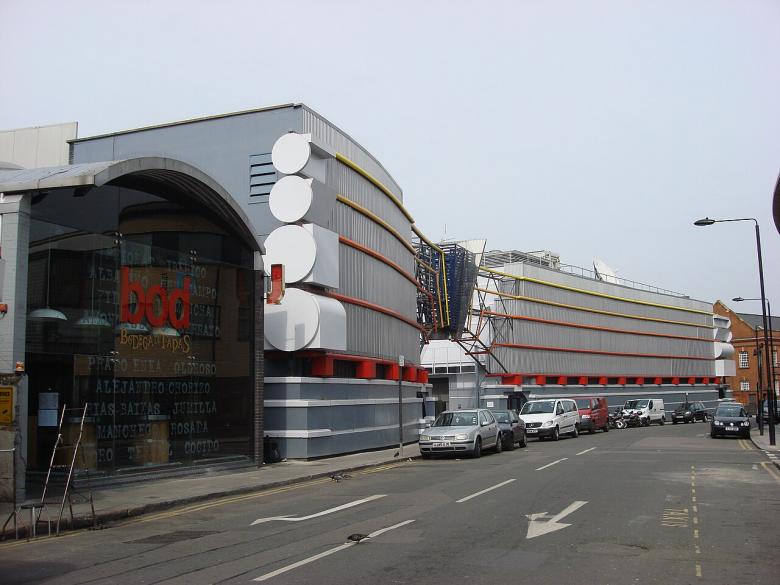
Other notable projects designed by Farrell included the TVAM Building (1981; now Channel 5) in Camden, a merging of high-tech, postmodernism, and preservation; Peak Tower (1991), a hotel in Hong Kong that led Farrell to set up an office there; The Deep (2002), an aquarium in Hull that was one of the UK's Millennium Commission projects; the Beijing South Railway Station (2008), recipient of a RIBA International Award in 2009; and China Zun (2019), a supertall skyscraper in Beijing.
Farrell also published extensively, and probably no document approached the high level of importance of The Farrell Review (2014), a comprehensive national review of architecture and the built environment that included recommendations for the UK government, some of them implemented since. A few years later he co-wrote Revisiting Postmodernism (RIBA, 2017) with Adam Nathaniel Furman, updating the text in a new format just last year.
“My work these last 50 or so years has been heavily involved in creating a kinder, less doctrinaire world than that of the previous era of high modernism,” Farrell said in a 2017 lecture, echoing the importance of postmodernism in his career. “It has been about layering, learning from the past and regenerating with communities’ involvement from the bottom up.”