Two by Torzo
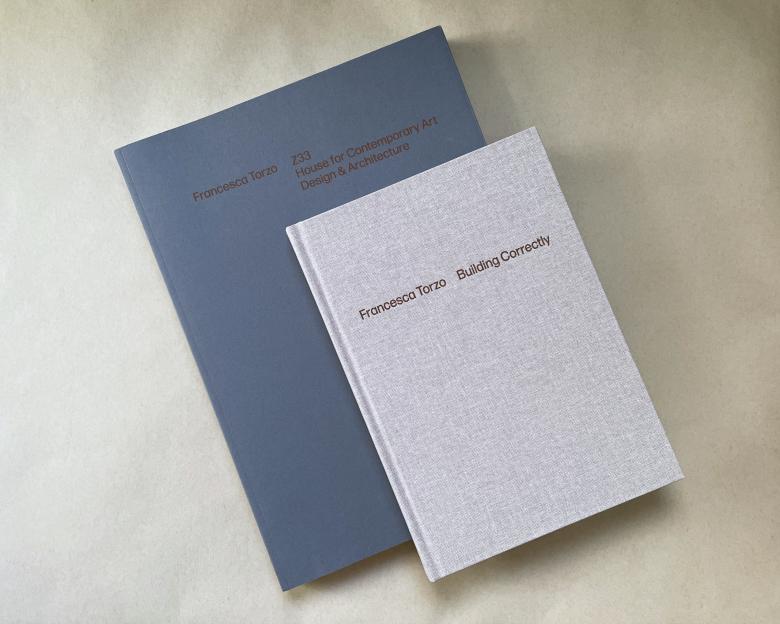
Two recent books co-published by Verlag der Buchhandlung Walther und Franz König with Accattone and Architecture Curating Practice present the Z33 House for Contemporary Art, Design and Architecture and the ideas of its architect, Francesca Torzo. Here, we take a look inside the two books.
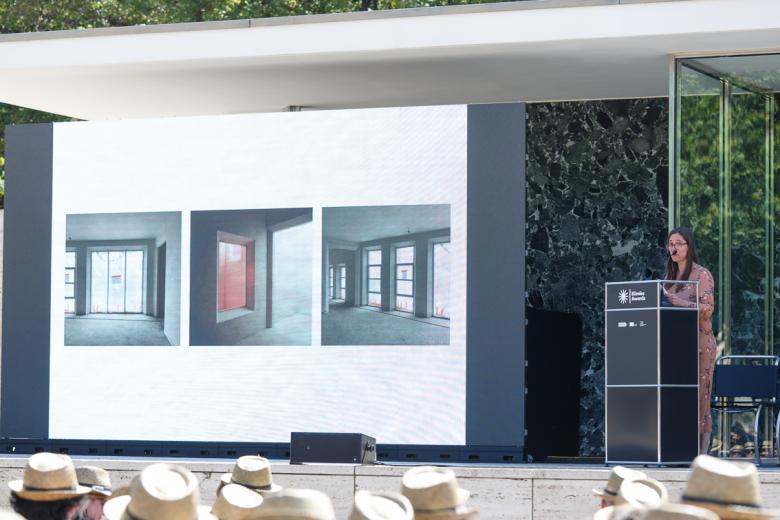
Lately my mind has been wandering back to May 12, 2022, and the ceremony for the EUmies Awards at the Barcelona Pavilion. This isn’t because the shortlist for the latest EUmies Awards was just released, or because the ceremony four years ago was the first (and so far only) such event I attended. Instead, my wandering mind is courtesy of the receipt of two books by Italian architect Fransesca Torzo: One is focused on her design of the Z33 House for Contemporary Art, Design and Architecture in Hasselt, Belgium, which was a finalist in the 2022 EUmies Awards, while the other is the expansion of the talk Torzo gave to those of us assembled in front of the Barcelona Pavilion that sunny May day. Respectively expressing the architect’s beautifully crafted pencil drawings and methodical design process, and her conceptual framework for translating design sketches into built realities, the books feel like relics of a not-too-distant past, when architects focused on theories and tectonics rather than social and political concerns.
Building Correctly
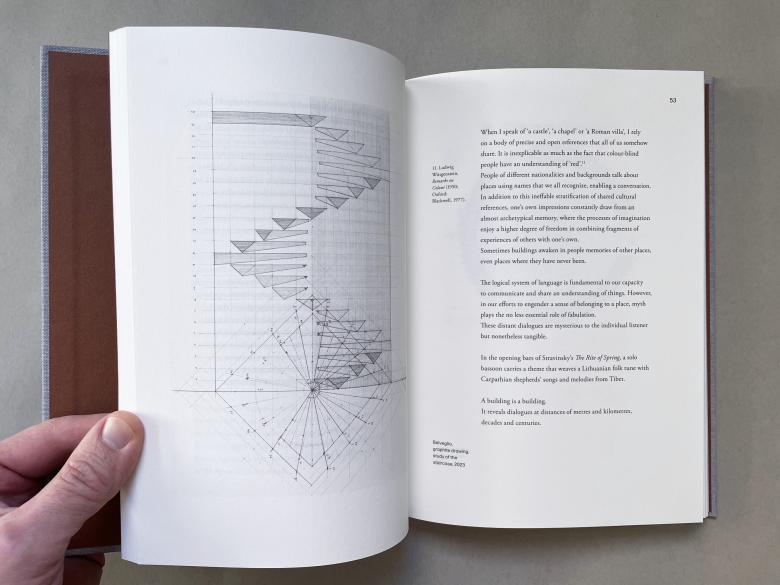
The smaller and slimmer of the two books is Building Correctly, Torzo's expansion of her 2022 EUmies Awards presentation. With its linen hardcover, off-white matte paper, and text passages that alternate with images of architectural drawings and building surfaces, the book recalls Peter Zumthor's influential Thinking Architecture and Atmospheres titles, both of which are transcripts of lectures by the Swiss architect. This resemblance might not be a coincidence, given that Torzo studied under Zumthor at IUAV and worked in his atelier in Haldenstein before establishing her own office in Genoa in 2008. Torzo is also aligned with Zumthor in a process that is antithetical to today's prevalent “move fast and break things” culture: “The studio has intentionally chosen for more than 10 years a defiladed position,” it says on her studio's website, “to gain the time and the necessary quietness to focus on the work.” Akin to Zumthor projects like LACMA, which labored on for more than a dozen years, Z33, so far Torzo's largest and most celebrated work (it won the Piranesi Award before becoming an EUmies finalist), took a full ten years from competition to completion.
In form and presentation, Building Correctly more closely resembles Atmospheres, the transcription of a lecture Zumthor gave at the Festival of Literature and Music in Wendhausen, Germany, on June 1, 2003. Yet, while the editors of that book kept edits to the lecture at a minimum, “to preserve the spontaneity and immediacy of Peter Zumthor's words,” Torzo's book uses the lecture as a starting point, greatly revising and expanding it. I remember Torzo speaking slowly and carefully, such that a recitation of the words in this 192-page book would have gone well over her allotted fifteen minutes—this even granting that the lecture takes up half the book (it is followed by roughly 90 pages of “Documents” on nearly 20 projects in Torzo's studio). Outside of “Ladies and gentlemen, it is a beautiful day to honour the practice of architecture,” on page 11, and “Thank you” 74 pages later, Building Correctly is more like a diary with mediative thoughts and pithy statements rather than a lecture. Befitting Torzo's need for “time and the necessary quietness to focus on the work,” the time between the lecture and its realization in print, in June 2025, was just over three years.
Without comparing the lecture and book line by line, any disconnect between a lecture and its transcription in print is not a problem to this reviewer. Even if they both address architectural theories and projects, a lecture and a book are different things: one ephemeral, though often recorded for posterity; one permanent, printed on paper and bound between covers. The book that Torzo and her trio of publishers have crafted is exquisite and beautiful to hold. Its layout elevates the architect's words, inviting readers to slowly digest them. “Redrawing, we learn”—the shortest phrases sometimes carry the most weight. “A building is a building”—this statement is repeated a few times to make Torzo's position crystal clear: “A building is not an object. Nor is it a social or political experiment.” The documents that follow the lecture illustrate that Torzo, who elevates building, has built little to date. Furniture and product design are in abundance, but only two or three buildings are documented in photos. As such, a single book devoted to her most important built work is a fitting companion to Building Correctly.
Z33 House for Contemporary Art, Design and Architecture
Z33 House for Contemporary Art, Design and Architecture is the larger of the two books, though not nearly as big as the A3 book Torzo created during the competition for Z33 in 2012. That book, “a limited edition of two copies [meant] to convince the jury of the relevance of her design,” was the inspiration for the new A4 softcover book, in which documents on the project are interspersed between a lengthy, 11-part critical essay by architect Christoph Grafe. Instead of ordering itself according to an architectural process, with research and site analysis followed by conceptual design and working its way up to construction and completion, Z33's chapters move from architectural elements ("A Garden," “The Wall,” “Rooms”) in its first few chapters to what might be described as ephemeralities ("Myths, Stories, Gestures," “Conviviality and Permanence,” “Temporalities and Timelessness”) for much of the balance. Regardless, the hundreds of images should accumulate in a reader's mind as they advance through the book to paint a vivid picture of the project, with certain elements and effects coming to the fore: the diamond-shaped brick covering the main facade, the lacunar ceilings in the rooms, the soft light illuminating the galleries. Those looking for a more chronological presentation of the design will not be disappointed: a three-chapter “Archive” concludes the book with a thorough documentation of competition sketches, working drawings, and construction details. There's even a page illustrating the geometry of the custom alphabet Torzo developed for the foundation stone.
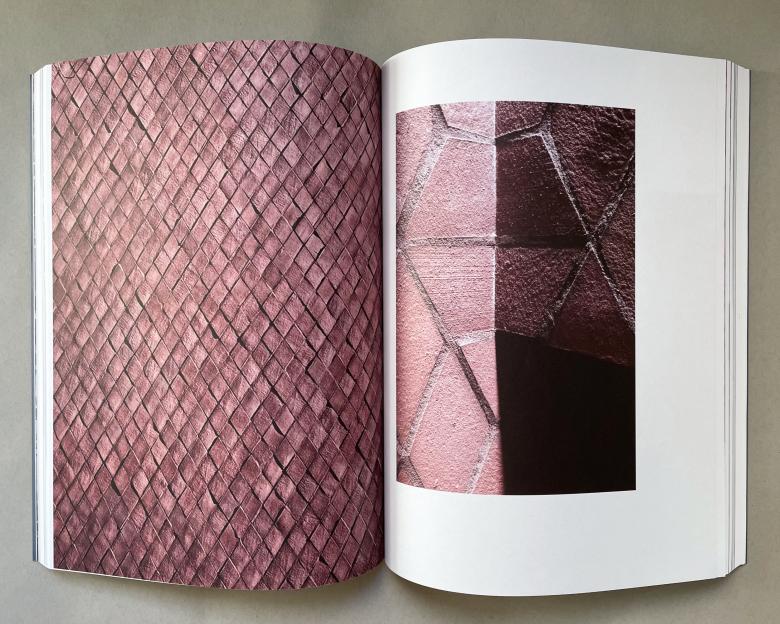
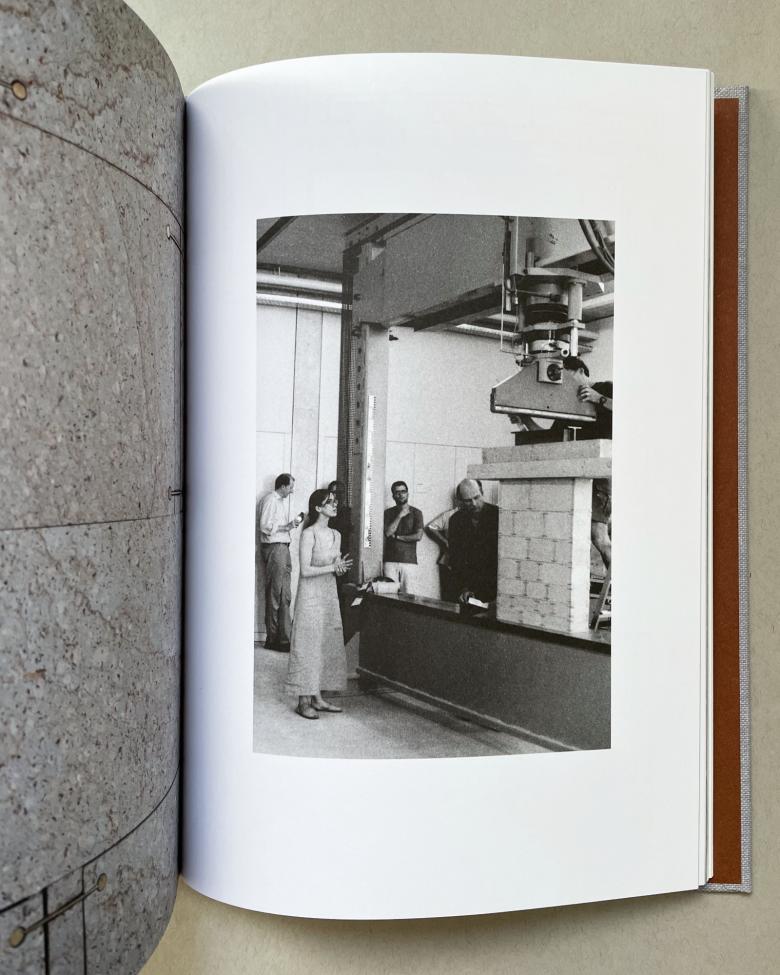
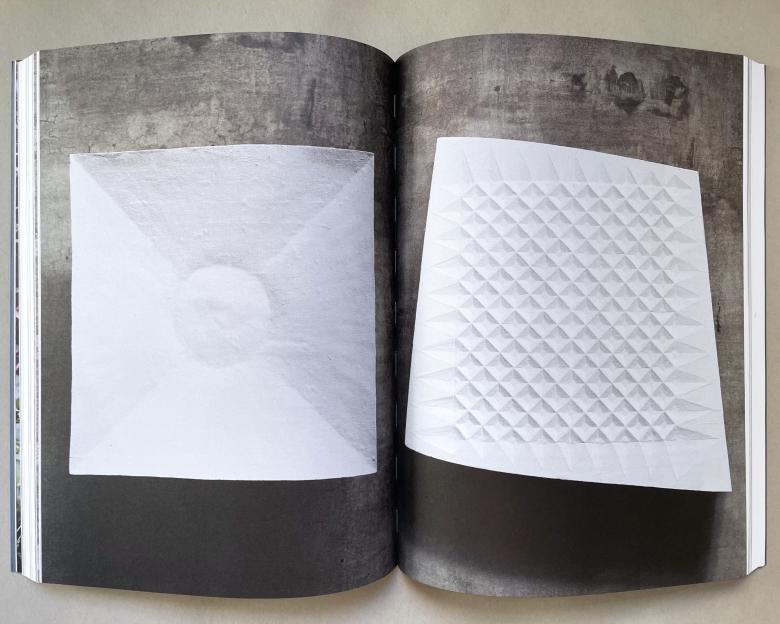
One hypothesis this reviewer has about architecture books in general is that the contents roughly in the middle of a book are most important to the author, editor, publisher, and others involved in making the book. Most architecture books don't have a narrative, but the middle section nevertheless sits at the high point of a book's arc—halfway between the introduction and back matter, at a place where the reader is invested in the book and therefore open to a bold statement as to the book's main points. This is a hypothesis, mind you, but the middle of Building Correctly finds the closing, summarizing words of Torzo's lecture, while the central portion of Z33—pages 113 to 152 in the 256-page book—are given over to many pages documenting the brick wall (above spread) and lacunar ceilings (below spread), and includes the ninth chapter in Grafe's essay, suitably titled “Clay and Lime, Knots and Diamonds.” The images convey that these surfaces are the most important parts of Z33 for Torzo, and Grafe's words give them figurative depth beyond their built realities: “If brick is a local material,” he writes in this chapter, “its treatment and lozenge shape in Z33 seem to be of another world, or another culture.” And another time, given how the wall is free of expansion joints and weep holes: It is a solid construction at odds with the open joints and panelized construction so prevalent today in Europe and other parts of the world.
Although it is full of the architect's drawings, models, and her own photographs, if Z33 were published alone, readers might have been yearning for Torzo's voice, by which I mean her words, rather than just those of another architect offering their own interpretation. Publishing the two books simultaneously, albeit in different packages, remedies such an omission and allows Torzo to express her studio's singular approach to architectural design and building construction—an approach that made Z33 such a provocative and celebrated building. This is one way of saying that architects who appreciate the work of Francesca Torzo will find value in both books, rather than just one or the other.
関連した記事
-
-
Periphery as Method: On Architecture’s 'Dispositional Intelligence'
Guiomar Martín | 15.05.2026 -
-
-