Herman Hertzberger's Final Book
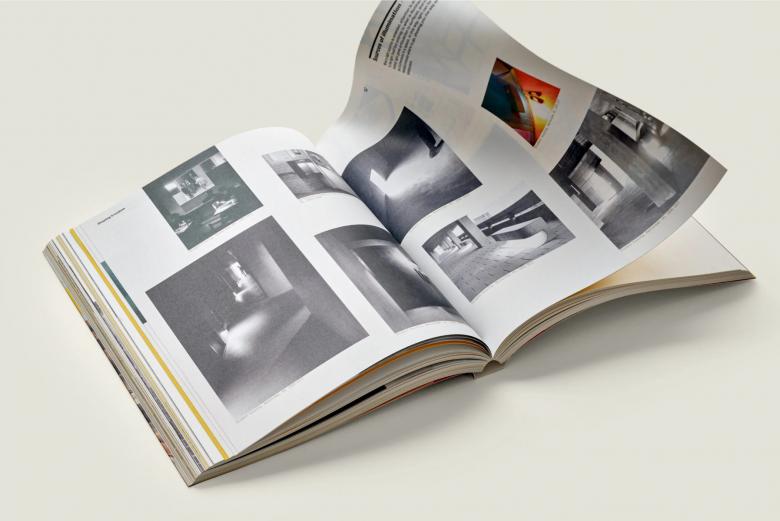
The latest book by Herman Hertzberger—and “most likely my last,” in his words—is Herman Hertzberger, Shaping Freedom: Architecture 1959–2025, published earlier this year by Rotterdam- and Montreal-based Maas Lawrence. World-Architects delves into the career-spanning book that is part monograph, part manifesto, and part memoir.
If there is an equivalent of a triple threat in architecture, it would be an architect whose skills span design, teaching, and writing. It is not uncommon to find architects working in each area, but it is rare to find architects equally influential in all of them: buildings, words, and ideas. Born in Delft in 1932, Dutch architect Herman Hertzberger is one such architect. Across a nearly 70-year career, Hertzberger has designed a handful of buildings that could be labeled masterpieces, taught at numerous schools around the world and founded a postgraduate institution, and written at least one seminal book. Although Shaping Freedom, Architecture 1959–2025 does not exhaustively cover Hertzberger's whole output over those years, the book he admits to being “most likely my last” thoroughly captures his multifaceted career. As such, it can be described as a triple-M: Monograph, Manifesto, and Memoir, all in one.
Hertzberger graduated from Delft University of Technology (TU Delft) in 1958, immediately moving to Amsterdam and establishing his studio there. That year he also won a competition (in collaboration with TJ. Hazewinkel and H. A. Dicke) to design student housing on Weesperstraat in Amsterdam, and the following year he was invited to join the editorial board of Forum, the monthly journal of Architectura et Amicitia, the national association of architects. Working alongside Team 10 members Aldo van Eyck and Jaap Bakem, and other progressive elders interested in “another attitude towards architecture,” the editorial team created twenty thematic issues that “together,” Hertzberger writes in the book, “formed a comprehensive whole. Each issue was a standalone treatise on a particular aspect of what can be considered an encompassing architectural vision.” Most of the texts were written by the editors, and already in the second issue Hertzberger was slated with explaining the theme, “Threshold and Encounter,” which he did through “sensational” study models made from matchboxes.
Hertzberger worked on Forum until 1963, and one year later he was approached by the NCHB (Dutch Centre of Housing for the Elderly), which was looking for a young architect to design a residential complex that would be “warm and welcoming” for residents “in various stages of declining independence.” Hertzberger designed a city-like building, with residential wings radiating from a “central square” where a library, restaurant, terrace, and other communal facilities were located. Completed in 1974, De Drie Hoven Elderly Housing was an early important work that—alongside the Montessori School (1960–66) and Diagoon Houses in Delft (1966–1971), and the Centraal Beheer Offices in Apeldoorn (1968–1972)—expressed Hertzberger's humanist/structuralist approach to architecture, in which form would “play as many roles as possible in the service of the various, individual users.” Hertzberger likened his buildings to instruments embracing indeterminate uses, as opposed to apparatuses that are functionally determined, and he acknowledged the importance of change and transformation over time.
Hertzberger's attitudes toward architectural transformation and historical continuity are evident in the Berlage Institute that he founded in 1990; the postgraduate architecture school initially occupied Aldo van Eyck's Children's Orphanage (1955–1960) in Amsterdam, a building whose cellular structure and spatial intimacy clearly inspired Hertzberger. Decades before establishing what would eventually become known simply as The Berlage, Hertzberger was a professor at TU Delft, teaching there from 1970 until 1999. Lectures he started giving at his alma mater in 1973 became the basis for Lessons for Students in Architecture, a seminal book first published in Dutch in 1991. Updated numerous times and translated into many languages since, the book also served as the basis for a pair of sequels: Space and the Architect (1999) and Spaces and Learning (2008). Coming to the fore in the books are Hertzberger’s humanist beliefs that put the people dwelling in and using buildings above anything else—beliefs clearly expressed in the buildings he designed, not just the more famous works mentioned above.
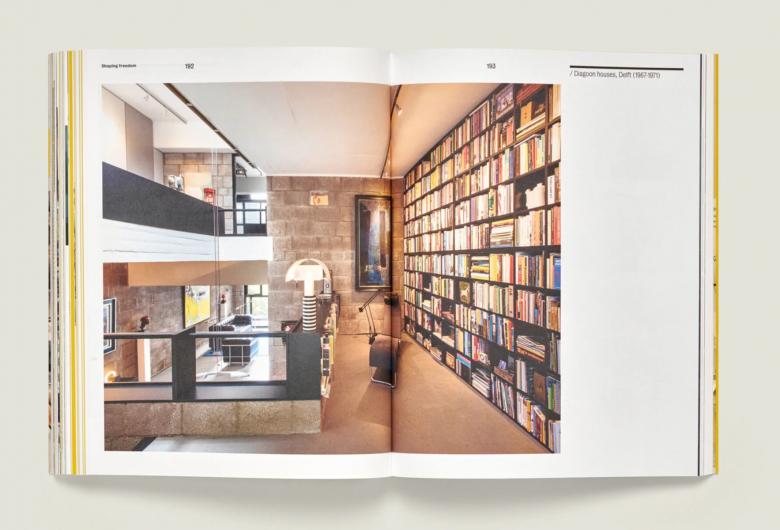
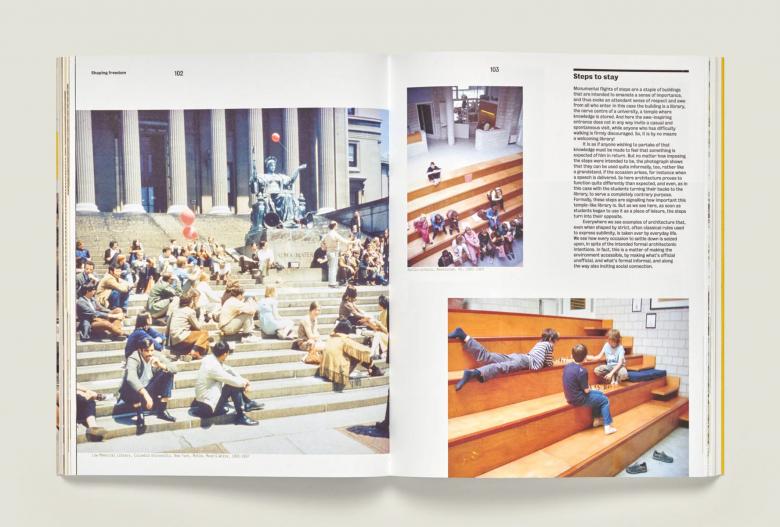
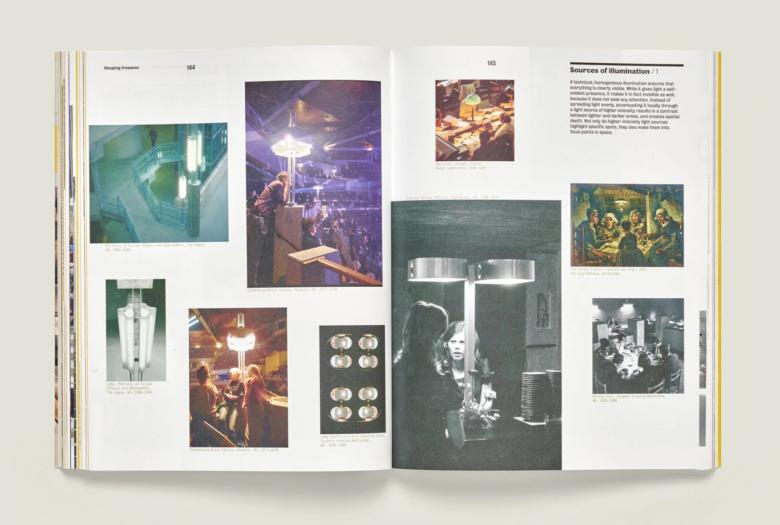
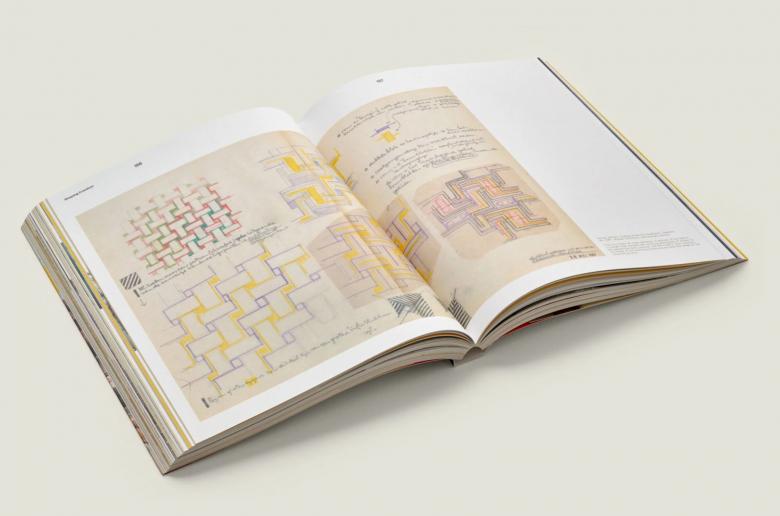
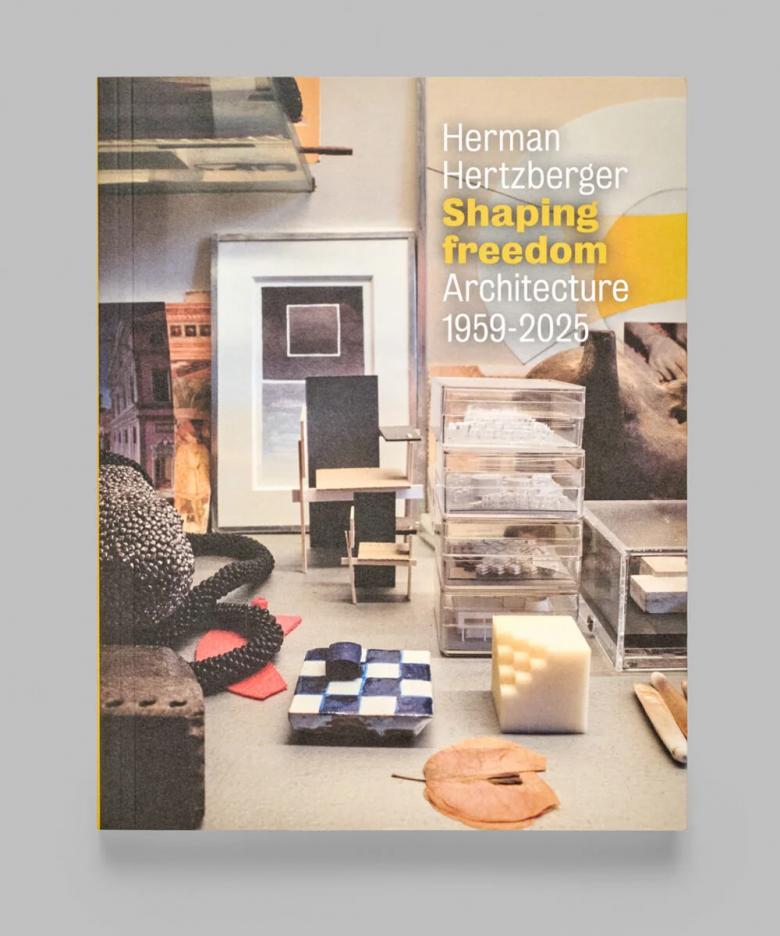
How does a 272-page book present even a smattering of Hertzberger's buildings, writings, and pedagogy spanning 66 years? As edited by Suzanne Mulder and Hans Ibelings, publisher at Maas Lawrence, and designed by Eliane Beyer, the book weaves together Hertzberger's architecture, texts, photographs, drawings, and quotes, plus the art and architecture of others. Like the architect's building, there is a structure to the book that is rational yet relaxed, not rigid or unwavering. Quotes from Hertzberger's writings are on yellow pages spaced fairly evenly throughout the book, serving to break up thematic sections (“Seeing the unseen,” “Space and spacing,” “Gravity and horizon,” etc.) that feature new texts by the architect and examples of his work across a bevy of images—his work, others' work, photos he's taken, etc. The numerous illustrations balancing the text across nearly every spread recall the page layouts of Lessons for Students in Architecture—a precedent that must have been hard for the editors to ignore. In the essay that ends the book, “Assembling Freedom,” Thomas Hertzberger, speaks about his grandfather's “cabinet of curiosities […] which surrounds him as he works and lives.” Photos of that colorful collection pepper the book and grace its cover, while the idea of juxtaposing objects as Hertzberger does seems to inform the organization of the book's contents.
Roughly the last third of the book consists of a presentation of nine buildings and projects designed by Hertzberger between 1964 and 2014. It's an admittedly incomplete survey of the architect's important works, but holding them together is a focus on what's labeled “Building as a city”: arcades, atria, central squares, and other open spaces that “merge the urban with the architectural.” The buildings and projects sum up an influential career that has been remarkably consistent in both theory and execution: maintaining a humanist perspective even as societies, politics, and economies have changed over the same decades. Shaping Freedom capably expresses Hertzberger's longterm commitment to designing for the people who live, work, and learn in his buildings.
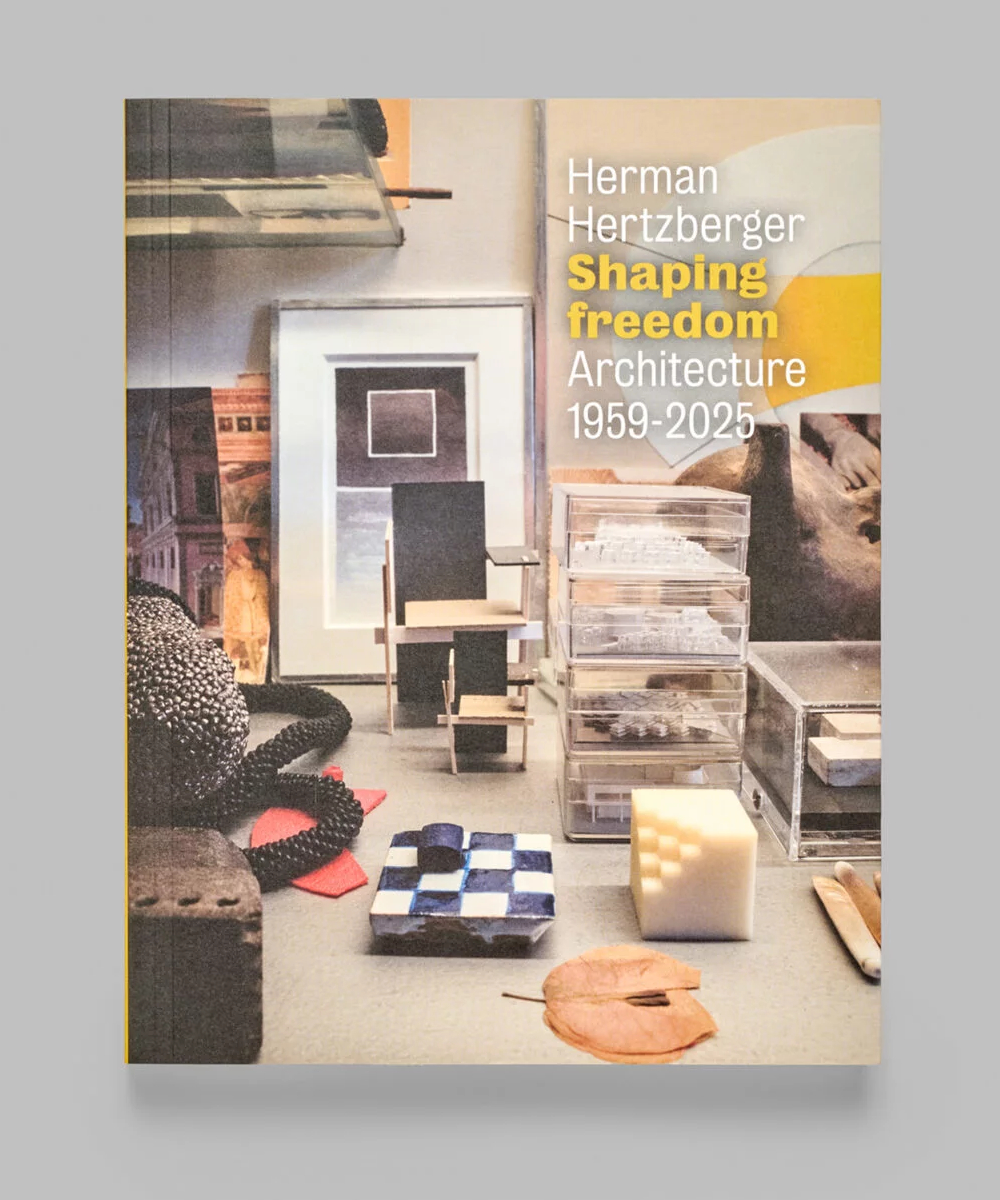
Herman Hertzberger, Shaping Freedom: Architecture 1959–2025
Written by Herman Hertzberger, edited by Suzanne Mulder and Hans Ibelings
With an essay by Thomas Hertzberger
21 x 27 cm
272 Pages
Paperback w/flaps
ISBN 9789083286044
Maas Lawrence
Purchase this book
Related articles
-
-
Periphery as Method: On Architecture’s 'Dispositional Intelligence'
Guiomar Martín | 15.05.2026 -
-
-