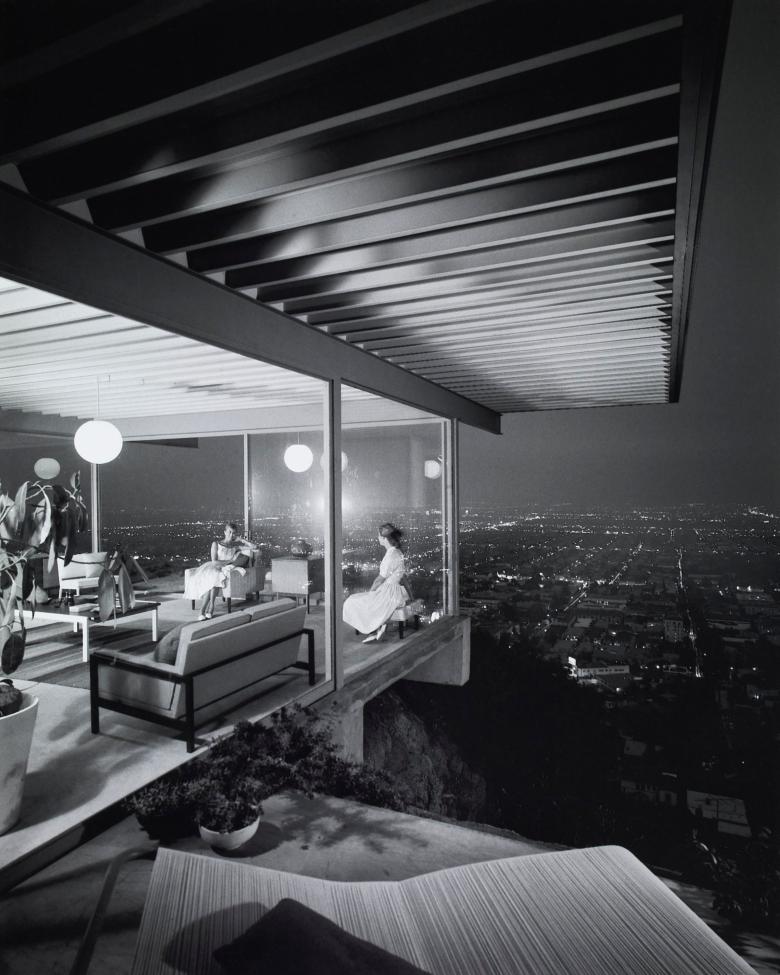
For the first time in its 65-year history, the house designed by Pierre Koenig as part of Arts & Architecture magazine's Case Study Houses program, made famous through photographs taken by Julius Shulman, is up for sale.
The listing from The Agency reads in part:
“Case Study House #22—universally known as the Stahl House—stands as one of the most important residential works of the 20th century: a museum-grade architectural artifact preserved with exceptional care and offered now, for the first time, by the original family. Designed by Pierre Koenig for Buck and Carlotta Stahl, the home became immortalized through Julius Shulman's legendary 1960 photograph, later recognized by Time Magazine as one of the most influential images in the publication's 200-year history. Its impact on architecture, visual culture, and the global perception of Los Angeles remains unparalleled.”
The Agency is asking $25 million for the house—or a little bit over $11,000 per square foot for the 2,200-sf house completed in 1960. The house is on the National Register of Historic Places and is a protected Los Angeles Historic-Cultural Monument.
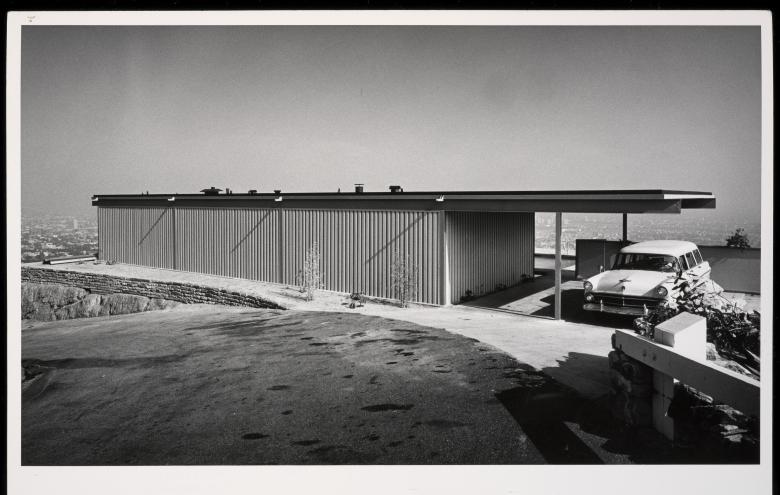
Buck and Carlotta Stahl bought the approximately 86'x150' lot at 1635 Woods Drive in Los Angeles's Hollywood Hills in 1954 for $13,500. The Stahls terraced the property that sat on the edge of a precipice over the course of the next few years, with Buck envisioning an L-shaped house on the difficult-to-build site. They hired Pierre Koenig—the third architect they spoke to—in 1957, and in 1959 he proposed the house to John Entenza, editor of Arts & Architecture, for the Case Study Houses program. Construction took just over a year and cost $37,500, with the house completed and photographed in 1960.
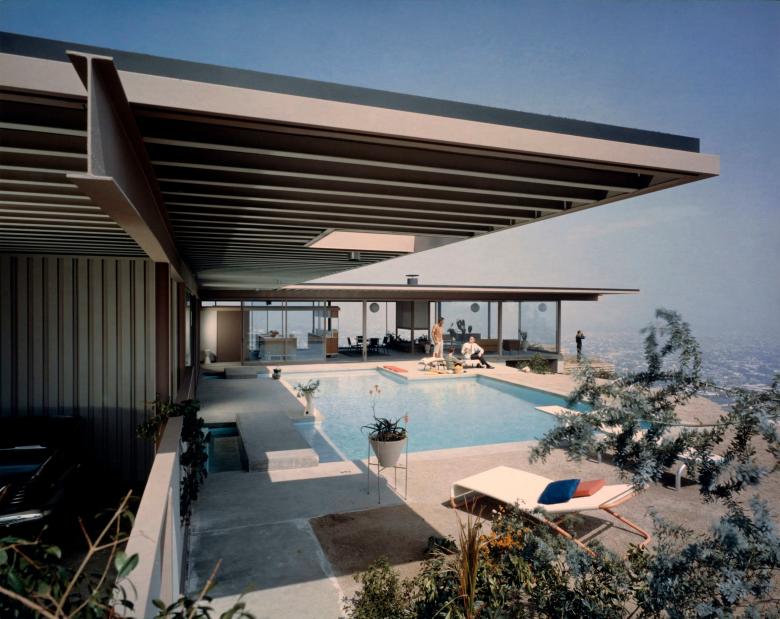
Following from Buck Stahl's initial idea, Koenig designed an L-shaped plan embracing an outdoor pool, with bedrooms and carport in the long leg of the L facing the street, and the living space in the short leg of the L. The former is solid toward the street for privacy and features glass walls toward the pool, while the latter has glass walls on three sides for panoramic views of Los Angeles. Koenig cantilevered a portion of the floor slab on deep cantilevered beams, while everything above the floor slab is framed in steel: a 20'x20' grid of 4" H-columns supporting 12" deep I-beams, and 5" deep T-steel roof deck spanning the beams and cantilevering beyond the glass walls for shading. If the carport and areas covered by overhangs are taken into account, the house totals about 4,000 square feet.
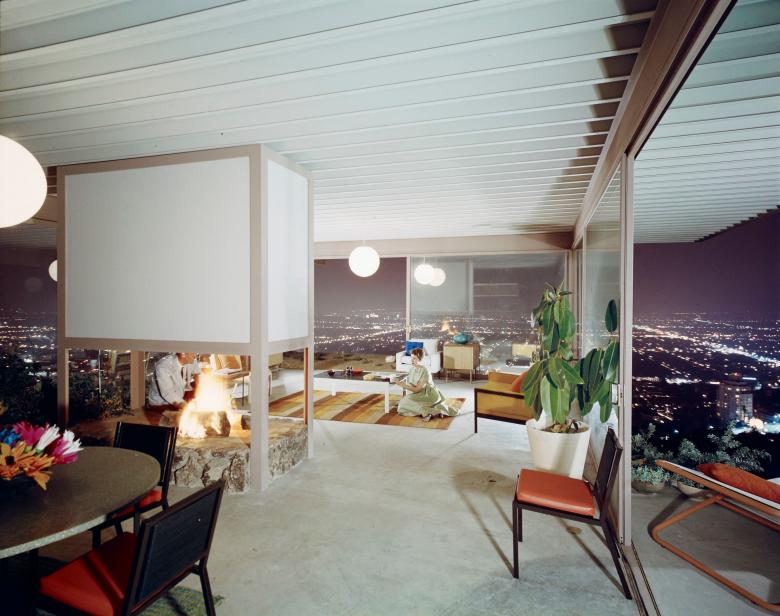
Given that the Stahl House was also Case Study House #22—it logically followed #21, also designed by Koenig, by one year—its documentation in the pages of Arts & Architecture was a given. Julius Shulman photographed the house before it was furnished and the Stahls moved in, and the house appeared in the magazine's June 1960 issue (PDF link). Writing about the photoshoot in his book Photographing Architecture and Interiors, Shulman indicated that furniture was supplied specifically for the shoot and placed at his discretion. Shulman described the famous twilight shot at the top of this article as “complex in technique” but “straightforward,” with a 5-minute exposure for the city lights followed by the interior lights flashing when the women assumed their poses.
All these decades later, the iconic photo still enthralls and is doubtlessly helping to bring attention to the house's sale. Of course, it remains to be seen if a buyer is willing to pay $25 million, who that might be, and if, like the proud Stahl family, the new owner occasionally opens up the house to visitors.