A Closer Look at John Hejduk
All photographs by John Hill/World-Architects
The Cooper Union in New York City has pulled John Hejduk's 1969 publication Three Projects from its archive and is displaying its drawings and related photographs and documents in the third-floor corridor of the Irwin S. Chanin School of Architecture. World-Architects stopped by and took some photos.
Like many architecture schools, the Irwin S. Chanin School of Architecture at Cooper Union has numerous exhibitions, displaying them in different places at various times during the school year. World-Architects has visited their exhibitions in 41 Cooper Square (the engineering school designed by Morphosis), in Cooper Square Park, in the Foundation Building's first-floor gallery, in the architecture school's third-floor gallery, and even online.
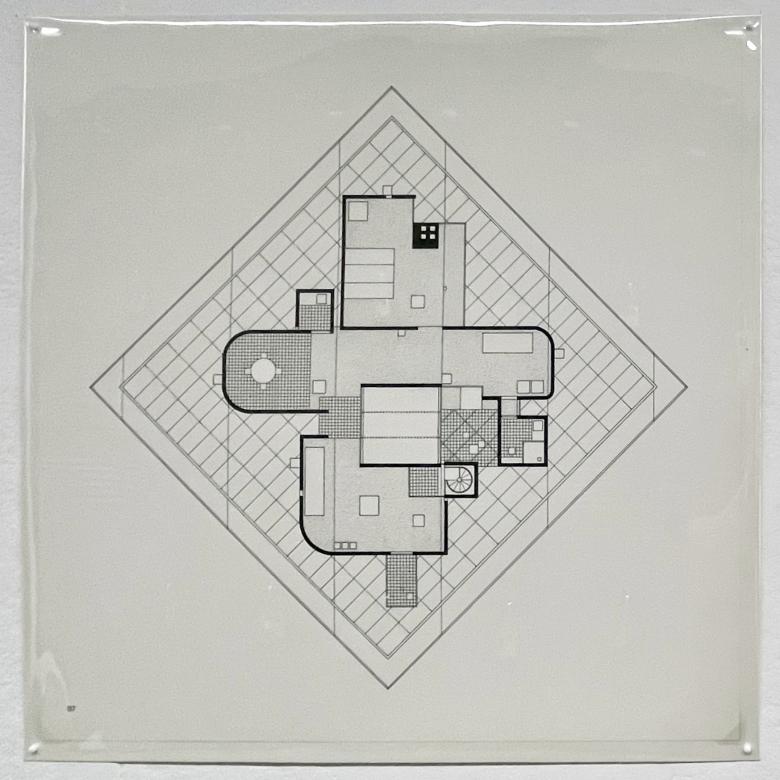
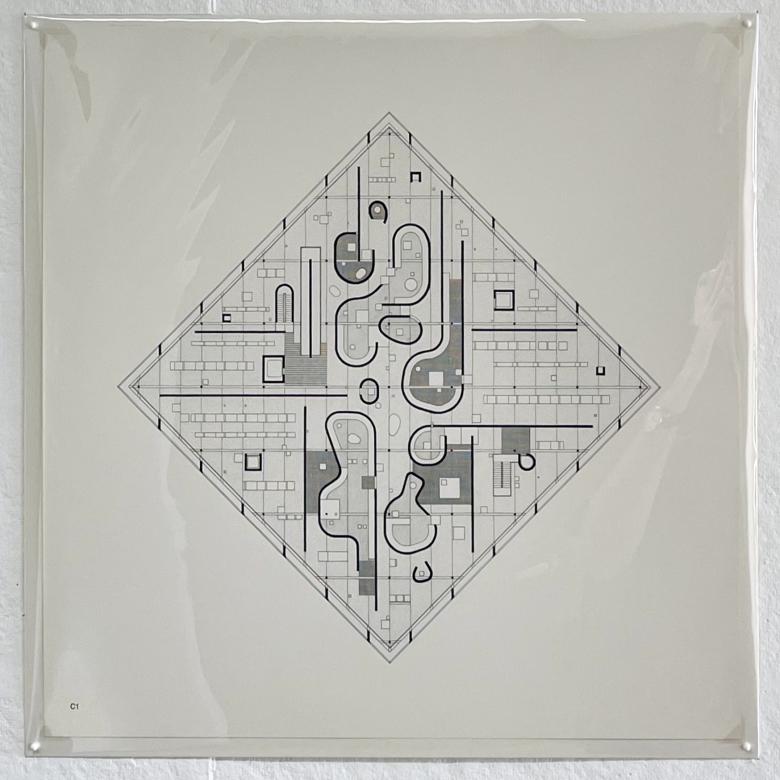
The school's latest architecture exhibition is on display in the third-floor corridor from September 11 until October 3, presenting drawings created by John Hejduk, the school's dean from 1975 to 2000, before he assumed that position. Three Projects is a publication he produced in 1969, “a ten-year effort and search into generating principles of form and space.” The principle in question, the Cooper Union describes, “was his diamond configuration, a long-standing inquiry into the spatial possibilities that emerge from the isometric projection of a diamond.”
Take a peek at John Hejduk: Three Projects through a dozen photos we took on our visit, accompanied by captions providing more information on the project and exhibition.
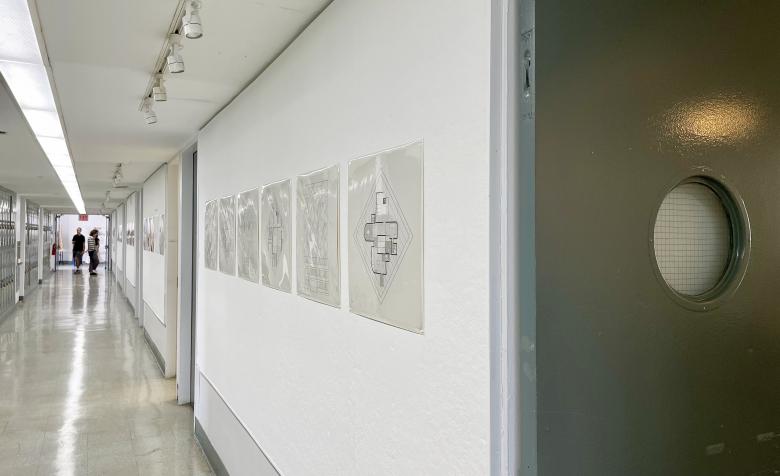
While much of Cooper Union's East Village campus is closed to the public, exhibitions like Three Projects—in the corridor just outside the architecture studios—also allow glimpses of student life.
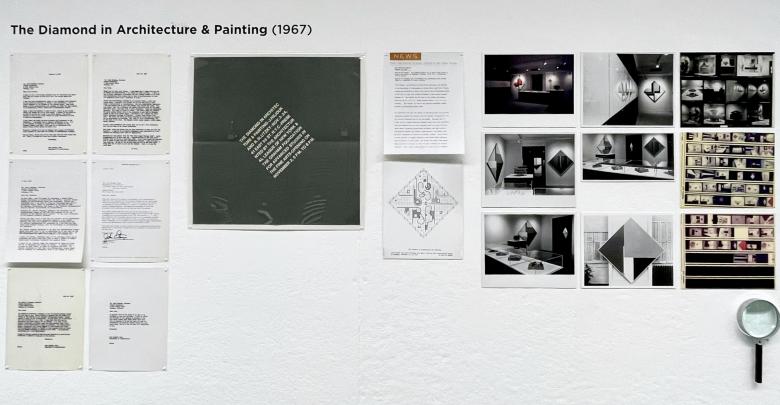
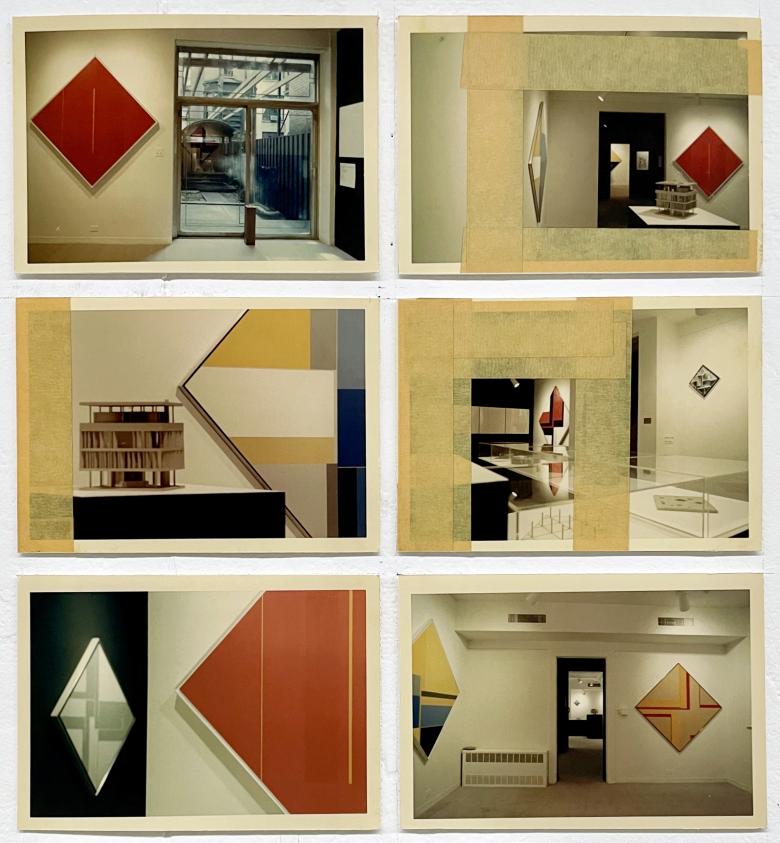
With support from the Architectural League and the Graham Foundation, Hejduk presented the three projects in 1967 in The Diamond in Architecture and Painting, a joint exhibition he did with painter and architectural theoretician Robert Slutzky.
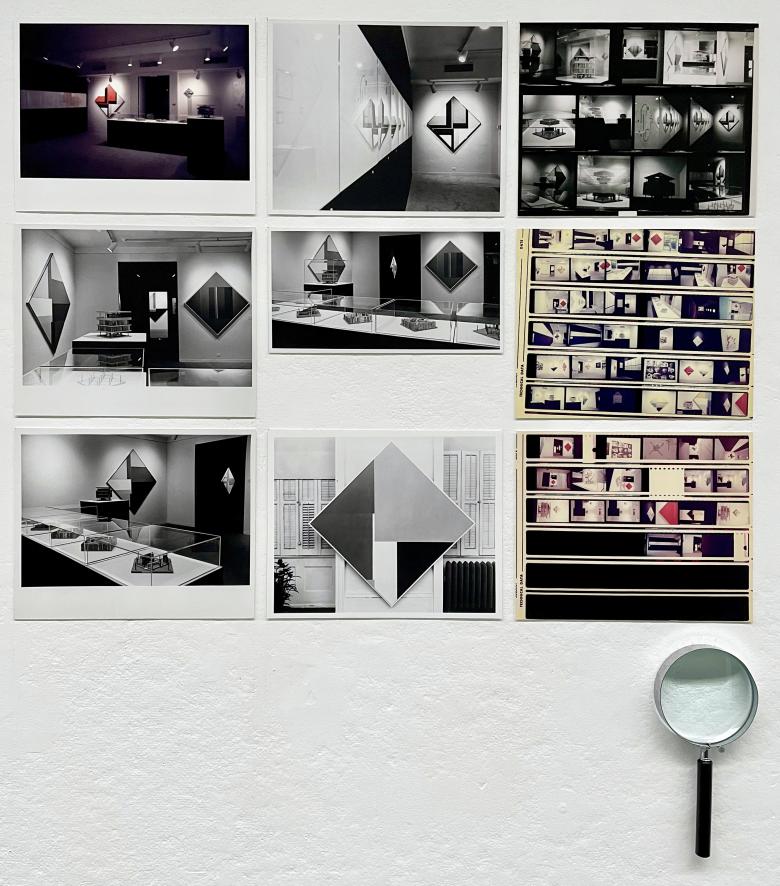
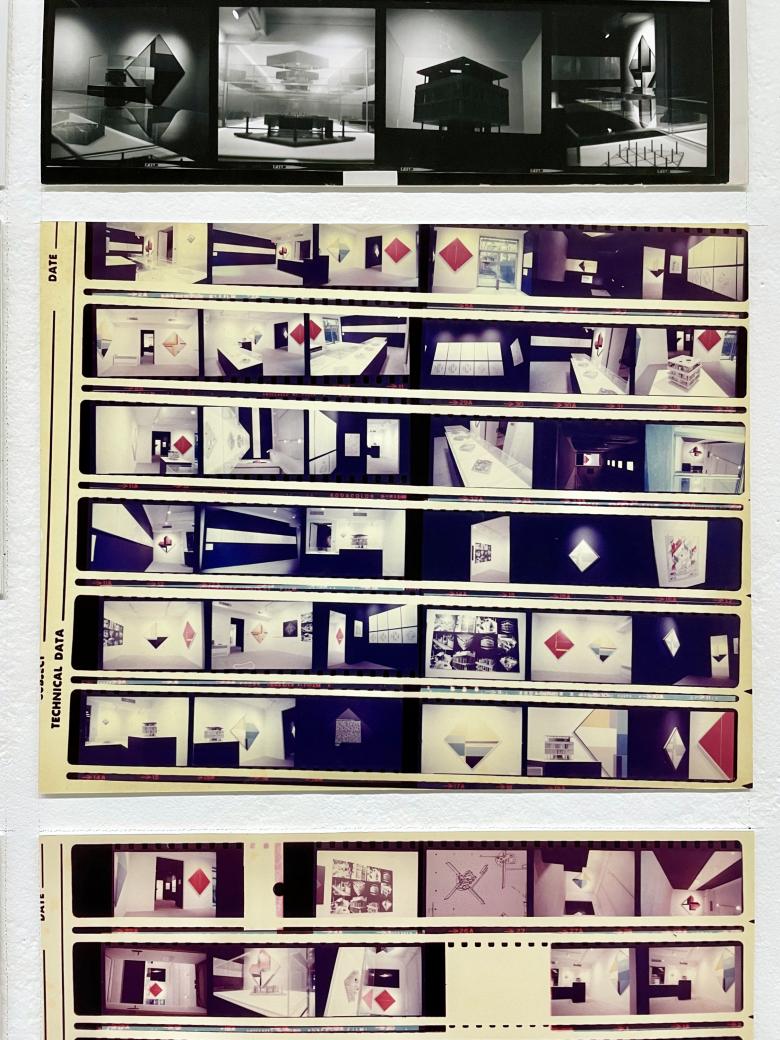
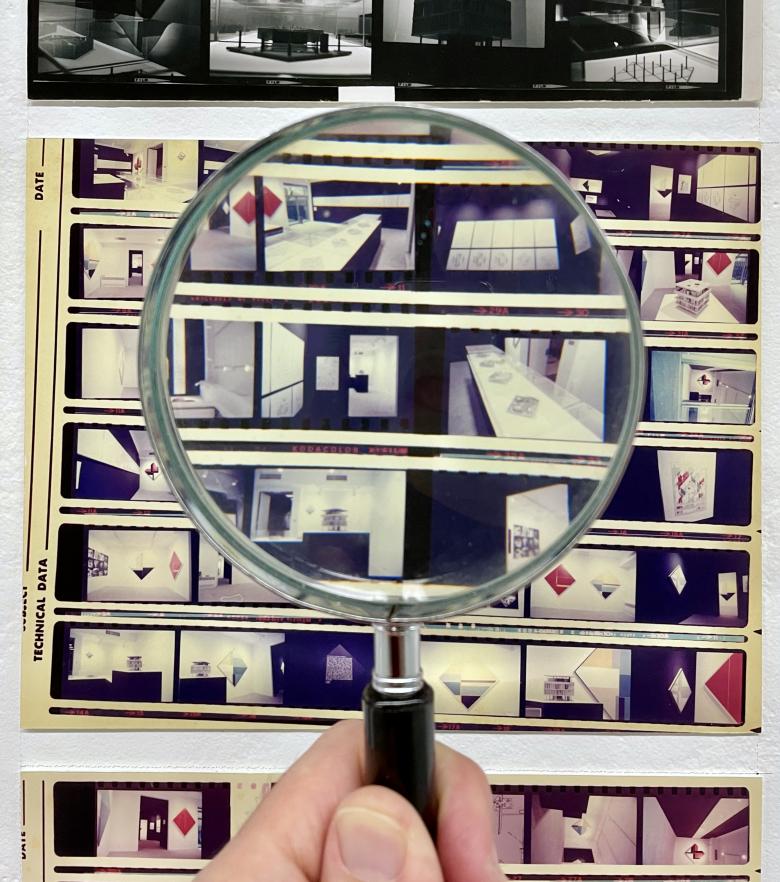
The display in John Hejduk: Three Projects that documents the 1967 exhibition includes numerous photographs of the installation at the Architectural League.
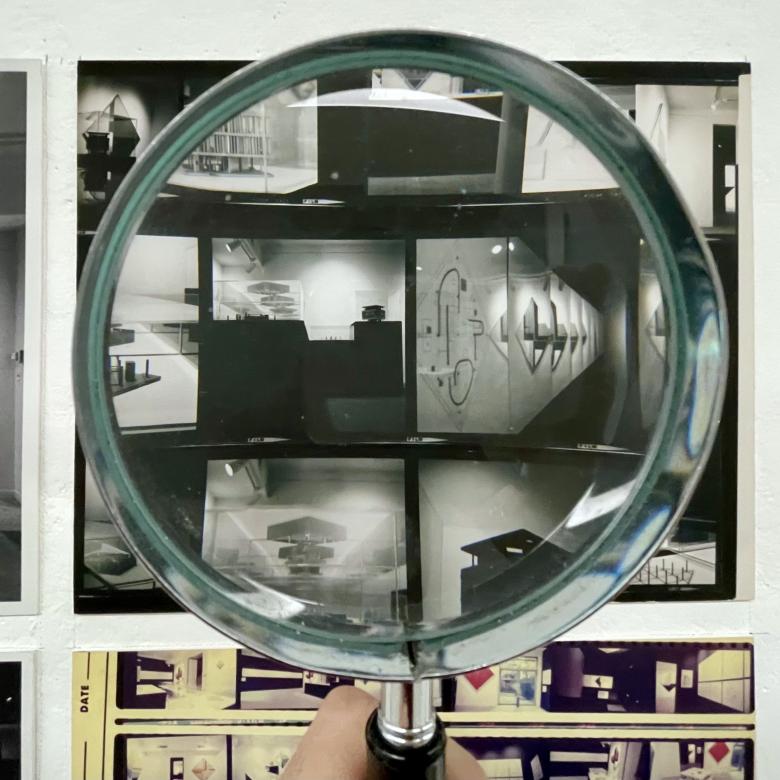
Some of the photographs are large but some of them, as seen here, are small proofs.
Hence the magnifying glass that allows visitors to take a closer look at the exhibition of Hejduk's drawings and models and Slutzky's paintings.
The 1967 exhibition was reviewed by Ada Louise Huxtable, according to a letter from a professor at Cooper Union to the New York Times architecture critic praising Huxtable's appreciation of Hejduk's "revolutionary" new method of architectural representation.
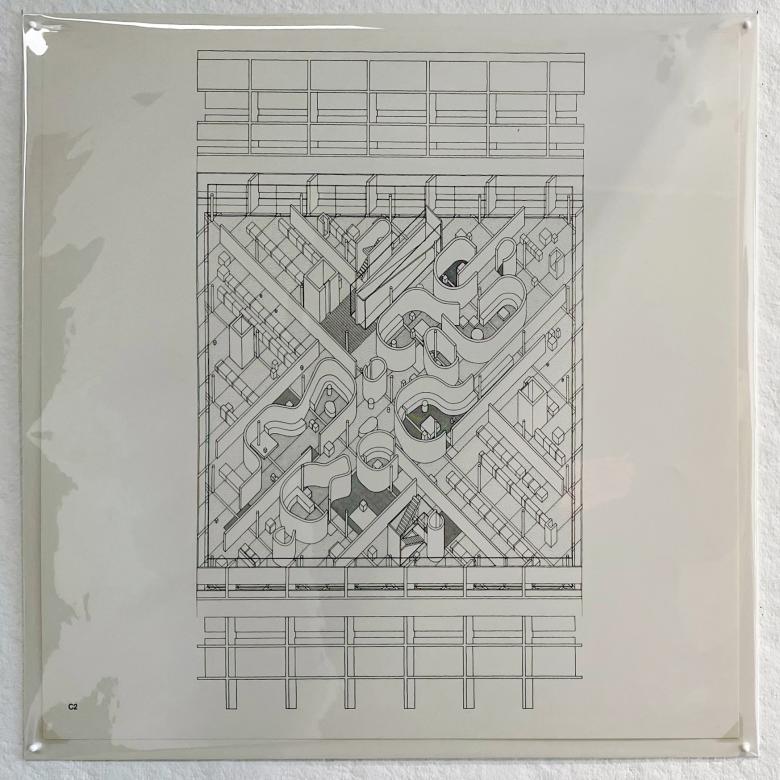
In the introduction to Cooper Union's publication of Three Projects in September 1969, Dean George Sedak boasted that Hejduk's approach “implies new points of view in architectural space. It delineates with clarity the frontal facet of isometric projection in the two-dimensional space of the picture plane of the drawings.”
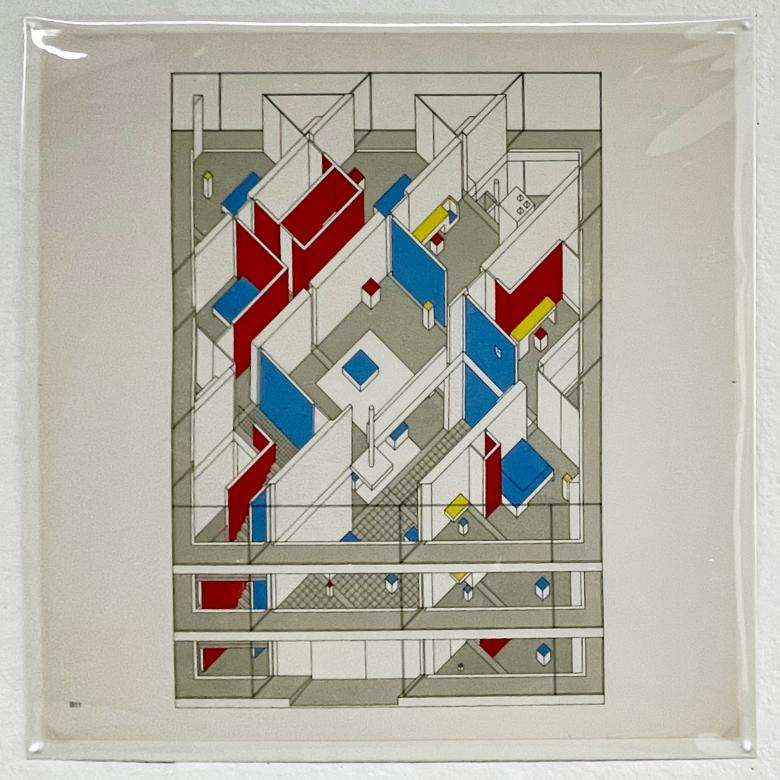
Hejduk was inspired by artists Piet Mondrian and Theo Van Doesburg, who both rotated the canvases of their paintings 45 degrees, and nowhere is this more evident than in Hejduk's drawings and models featuring primary colors.
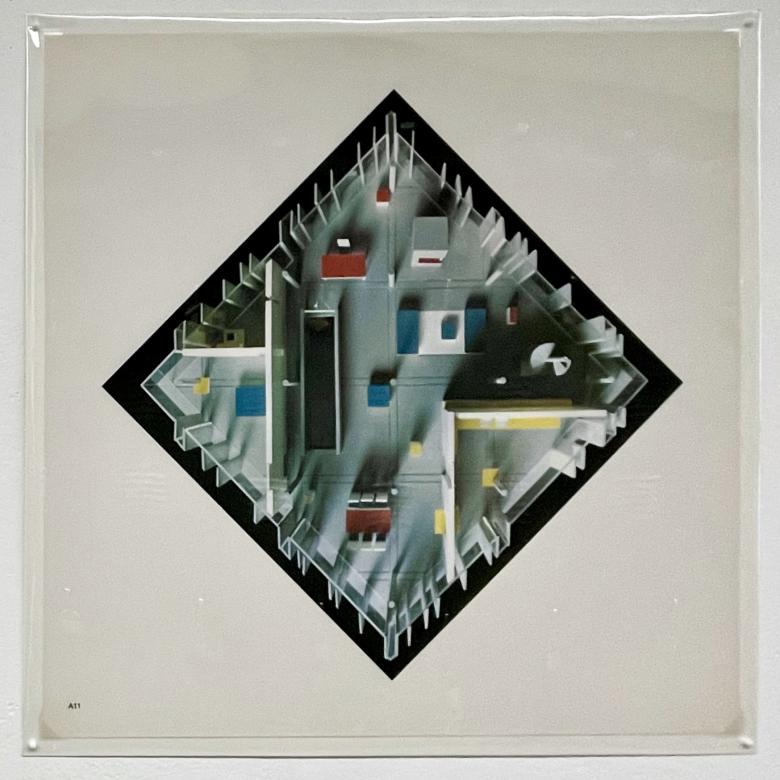
Although “diamond” is the term mentioned in the 1967 exhibition, the three projects are more accurately squares, complete with 90-degree corners; rotating the plan 45 degrees had “formal ramifications [that] were shattering” to Hejduk.
The projects on display saw Hejduk drawing orthogonal and sometimes curved lines within the rotated square plans.
Hejduk also delineated what Stan Allen later called 90-degree axonometrics, whereby the plan was rotated back to square and projected vertically, revealing spatial complexity that wouldn't have occurred without the initial 45-degree rotation.
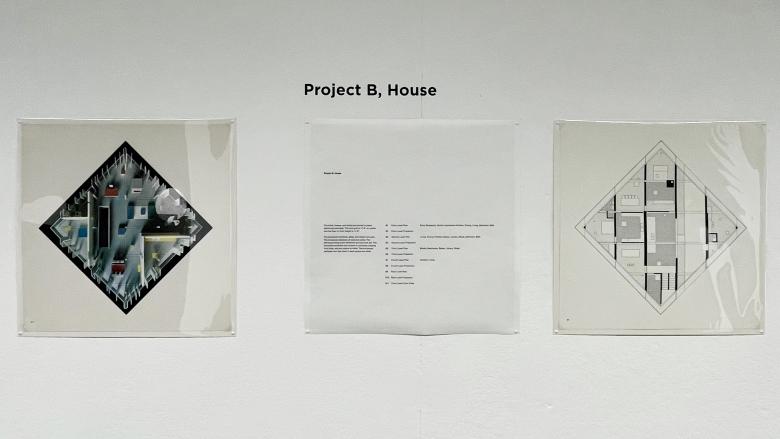
The Three Projects publication consists of Hedjuk’s Diamond Houses A and B, as well as the Diamond Museum, documented on 35 18-inch-square plates, all of which are carefully mounted behind acetate on the walls of the third-floor corridor.