A Riken Yamamoto Exhibition Inside a Riken Yamamoto Building
All photos by Neoplus Sixten Inc.
Riken Yamamoto Exhibition: Community and Architecture is on display until November 3rd at Yokosuka Museum of Art, which Riken Yamamoto designed in 2006 and is considered one of his masterpieces. The Japan-Architects curators visited the exhibition when it opened in July and took photos—some of them are here, accompanied by brief descriptions of the exhibition and the museum housing it.
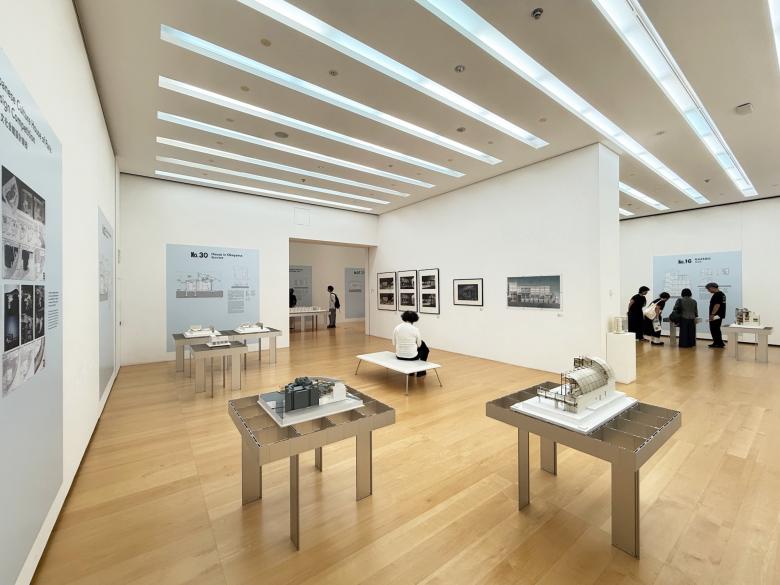
The introduction to Riken Yamamoto Exhibition: Community and Architecture tells us that the exhibition “introduces the 50-year design activities of Riken Yamamoto (1945- ), an architect who won the Pritzker Prize in 2024, through approximately 60 models, drawings, sketches, and paintings.” The Japanese architect “calls the boundary between the public and private in architecture a ‘SHIKII: threshold,’ and considers it important as a space that creates a connection with the local community. Architecture that embodies these ideas has garnered worldwide acclaim for its ability to enrich not only the people who live there, but also the entire surrounding community.”
In addition to the exhibition being held at the architect's own Yokosuka Museum of Art, Riken Yamamoto Exhibition: Community and Architecture is notable for being the largest exhibition ever to comprehensively introduce Riken Yamamoto's design philosophy. Some photos of the exhibition follow, though many more can be found in the original post on Japan-Architects.
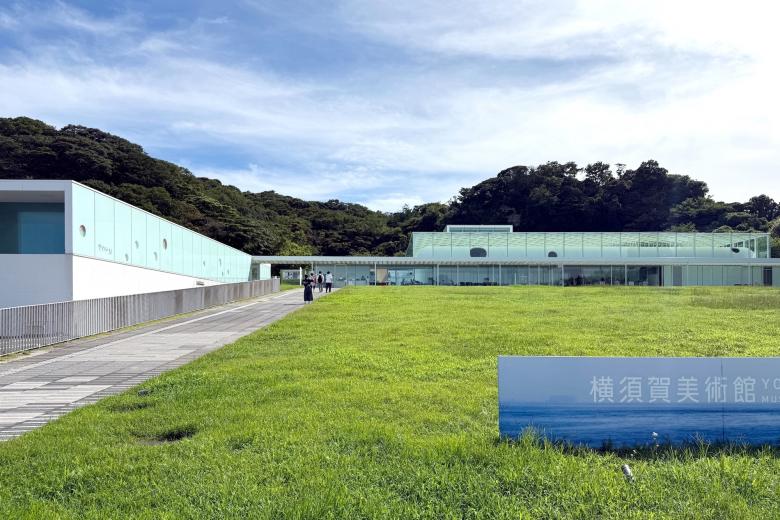
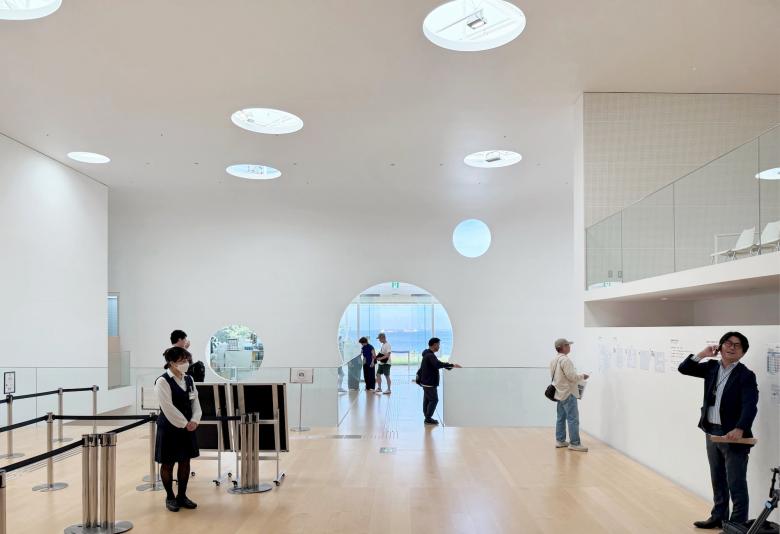
The Yokosuka Museum of Art is surrounded by mountains on three sides and is just steps from the sea on the northeast side. To protect the exhibits from salt in the air, the restaurant, museum store, and workshop sit behind glass facades on the perimeter, while exhibition space and storage are in a large shelter in the middle.
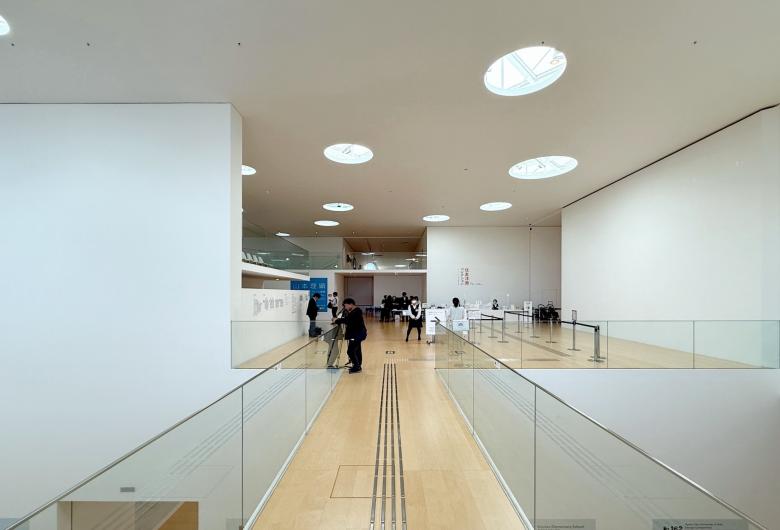
To approach the exhibition, visitors pass through the outer layer with museum shop and entrance, and then cross a bridge to the museum foyer.
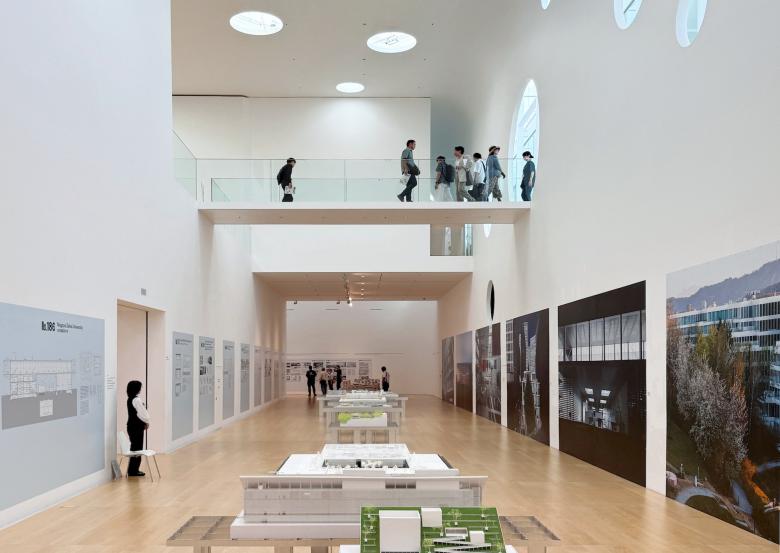
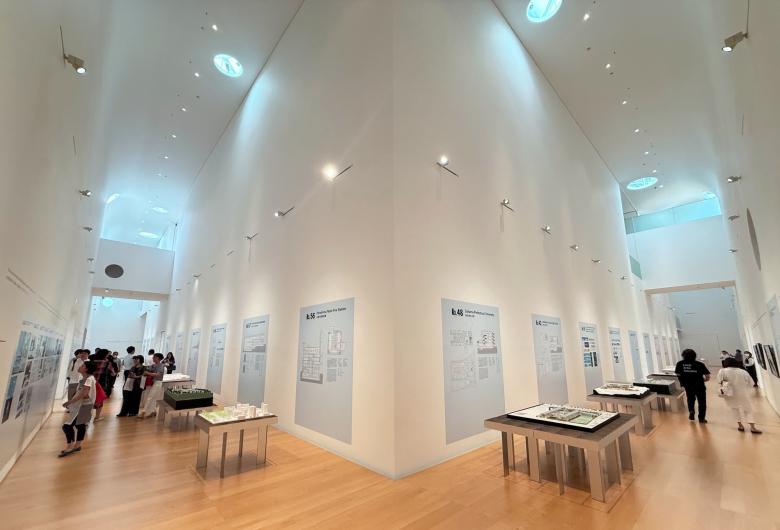
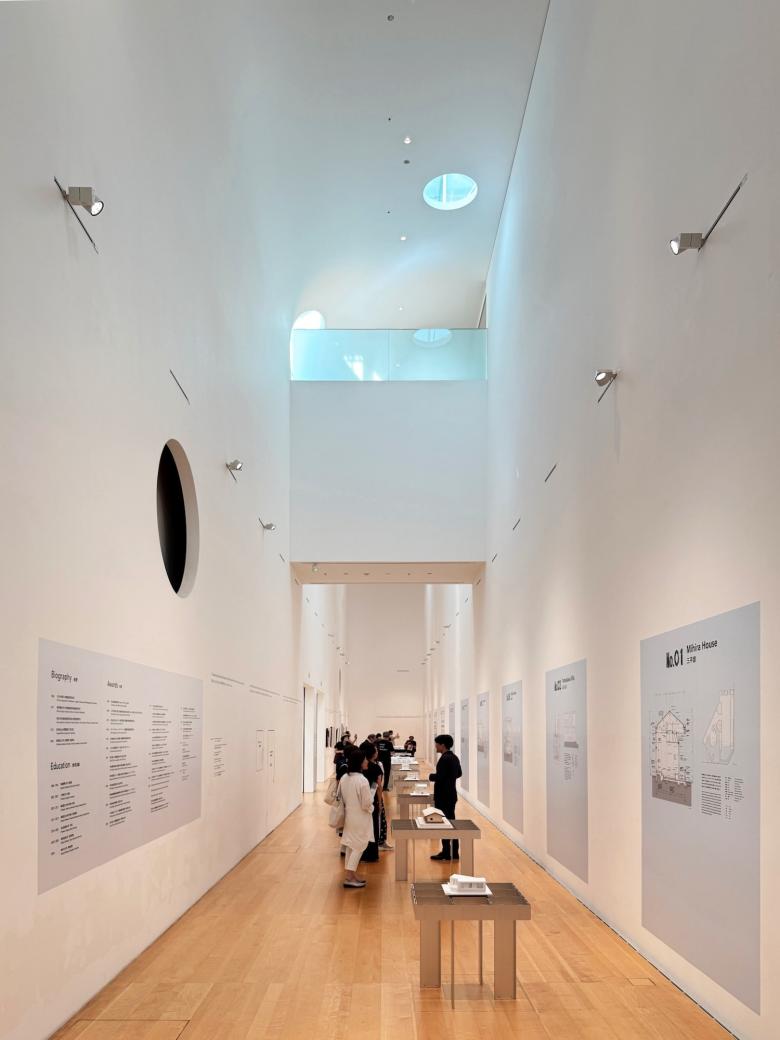
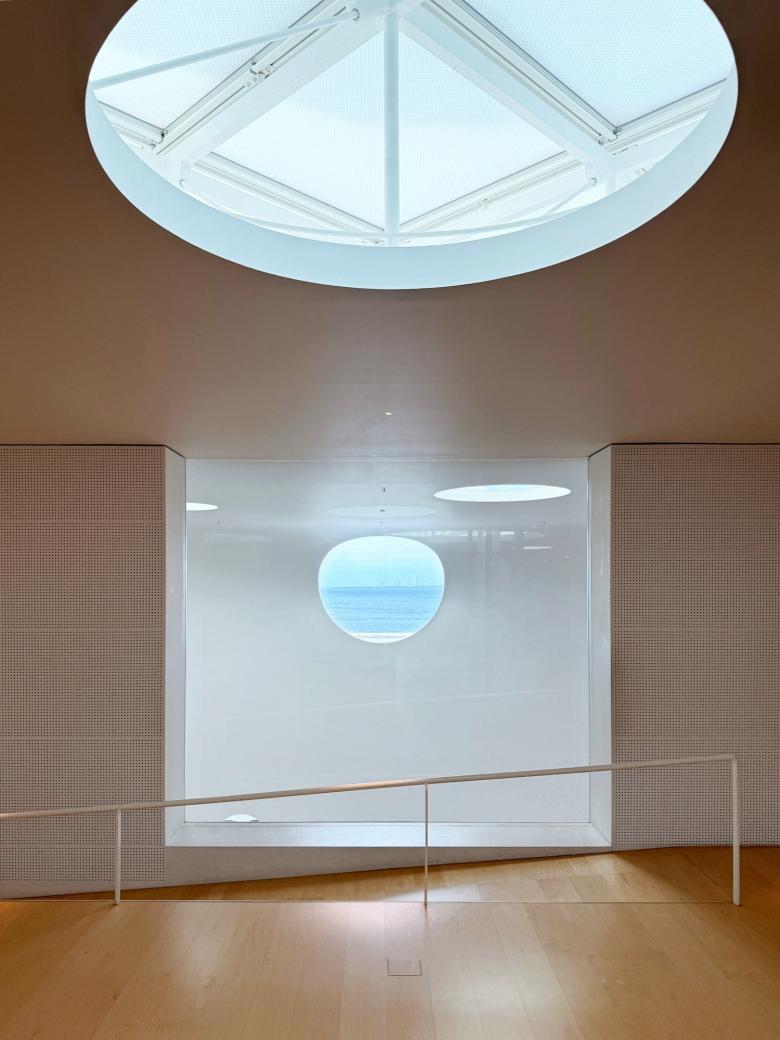
The main gallery is a tall space that sits within a layer of welded steel plates—built by shipbuilders from a local shipyard—that bend from wall to ceiling, both perforated by round openings bringing in natural light.
The exhibition makes full use of the main gallery and five exhibition rooms to comprehensively introduce the relationship between architecture and society that Yamamoto has cultivated over the past fifty years.
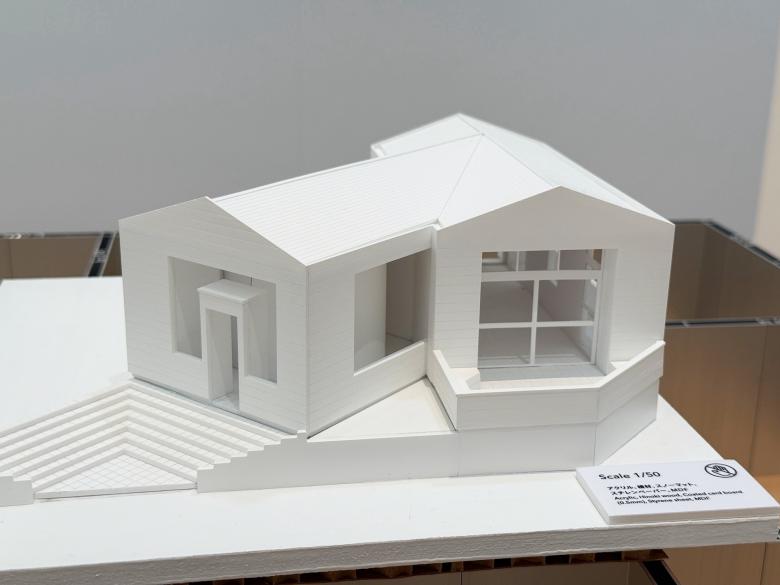
Projects are documented through drawings and models, with many of the latter newly made for the exhibition.
Graphic designer Masaaki Hiromura, a frequent collaborator of Yamamoto's, organized the exhibition and designed its graphics. The exhibited works are numbered chronologically, with sixty projects numbered from No. 01 to No. 198.
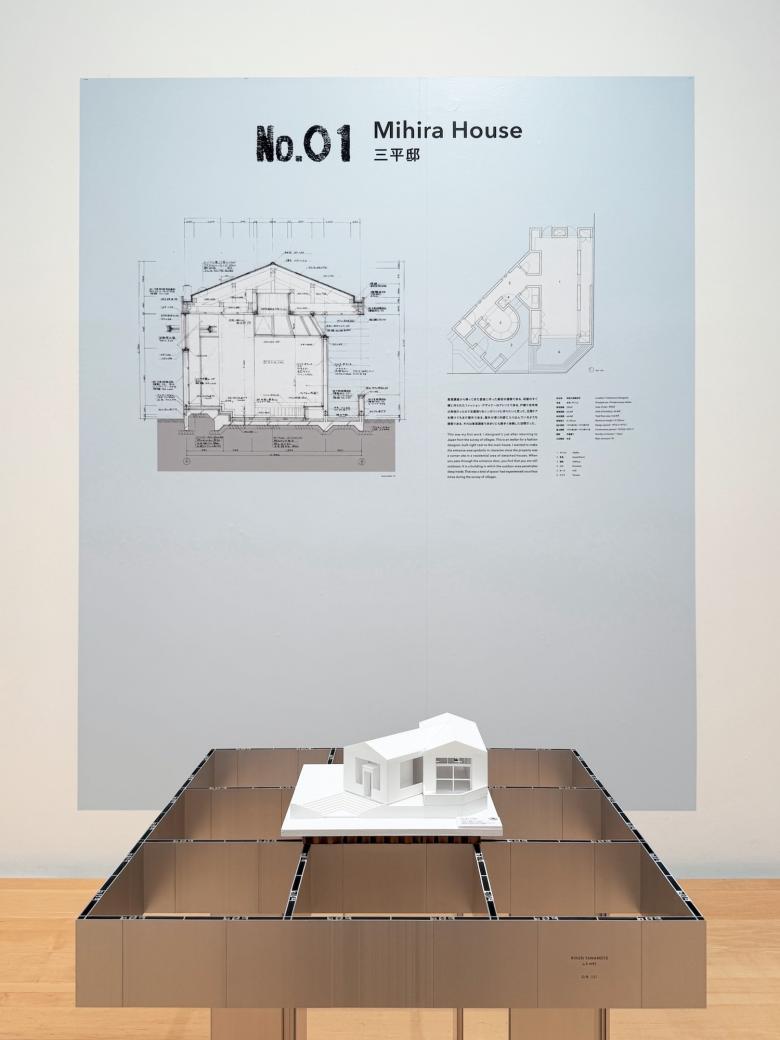
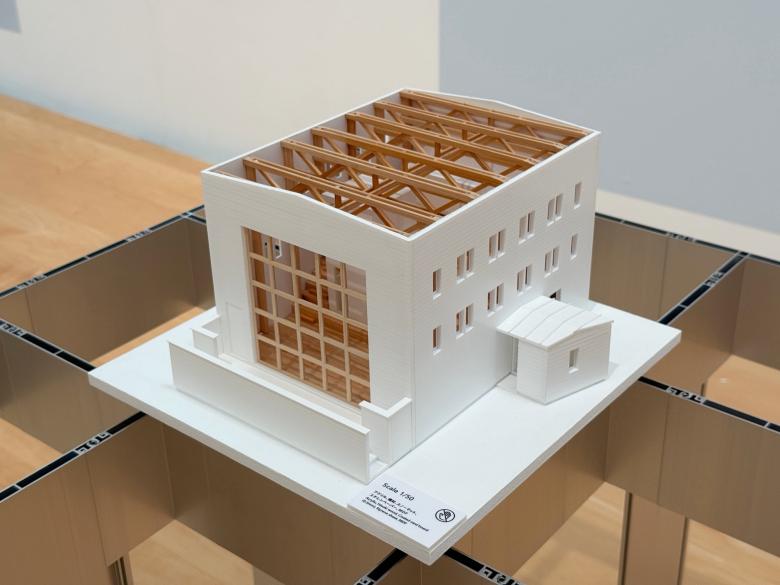
No. 01 is the Mihira House, appropriately Yamamoto's debut work, built in Yokohama in 1975. The atelier of a fashion designer, Yamamoto worked on it after returning from a “village survey” he made while traveling around the world with Hiroshi Hara.
Yamamoto, speaking honestly with the Japan-Architects curators, revealed that the house “is being torn down. I am sorry about that.”
No. 06 is STUDIO STEPS, a house for an artist in Kawasaki City in 1978. Note the platform for the models: Made of extruded aluminum modules from by the SUS Corporation, the panels will be engraved and then sold after the exhibition.
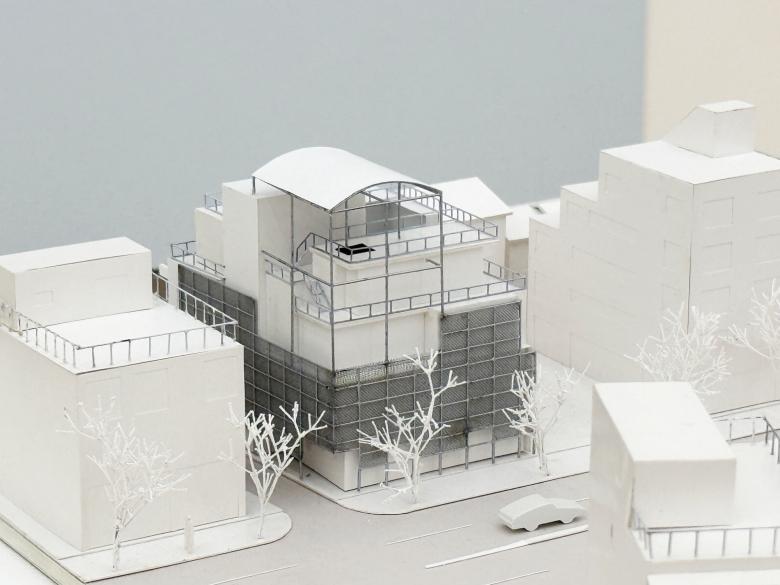
No. 016 is GAZEBO, built in Yokohama in 1986; it is one of Yamamoto's most well-known designs. The mixed-use project has a store, offices, a rental house, and Yamamoto's own residence on the top floor, where a large exterior space is sheltered by a membrane roof.
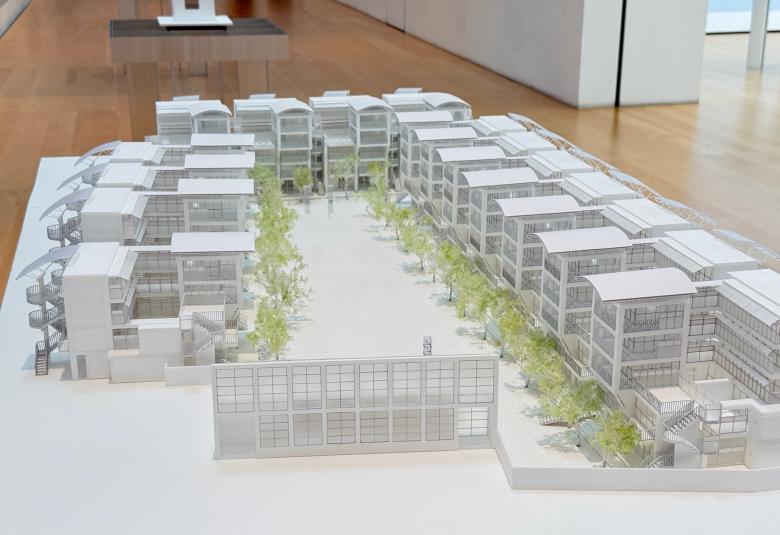
No. 28 is Hotakubo Housing, built in Kumamoto City in 1991. The housing complex of 110 residential units surrounds a courtyard that is accessible only from the units, with each unit acting as a threshold between public and private.
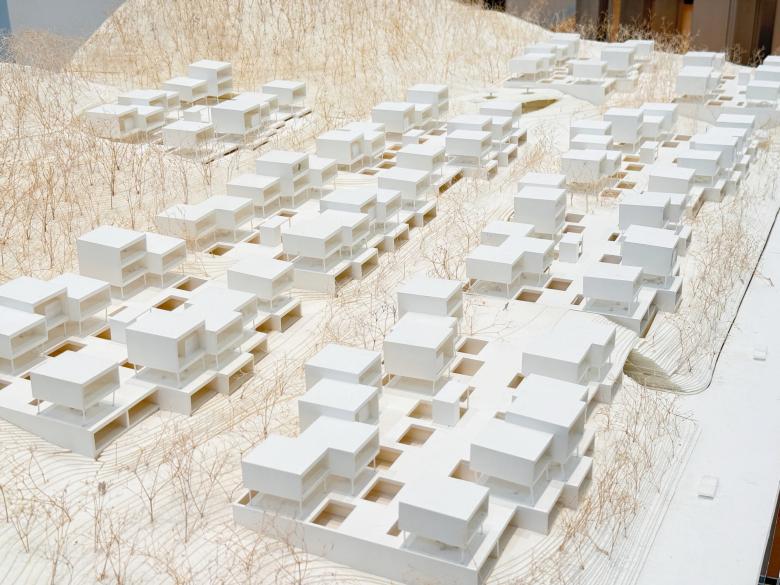
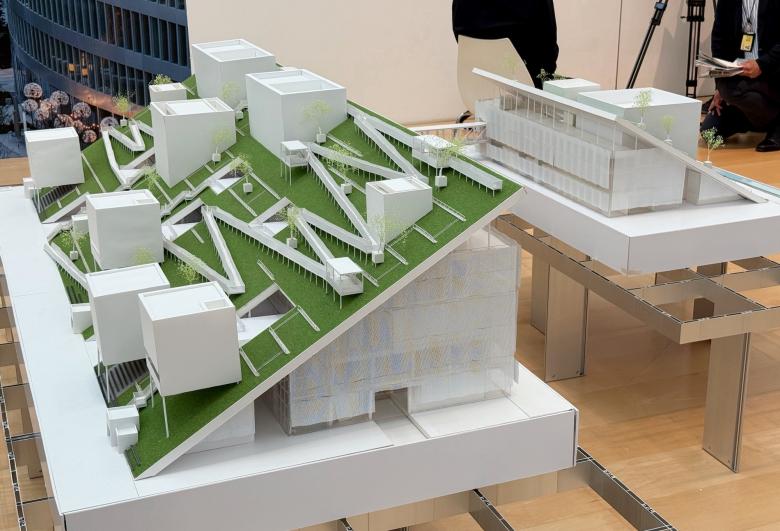
No. 129 is Pangyo Housing, built in Seongnam City, Korea, in 2011. The housing complex consists of 100 units broken down into nine groups, with shared communal decks for each group.
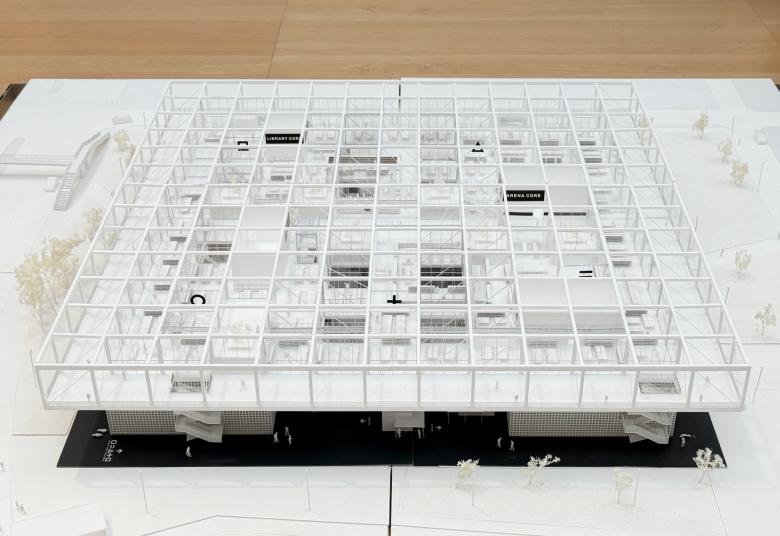
No. 186 is Nagoya Zokei University, built in Nagoya in 2022. The building is literally a bridge, with the huge 104m square upper floor built atop a subway station. The ground floor features an art street that allow local residents to use the space.
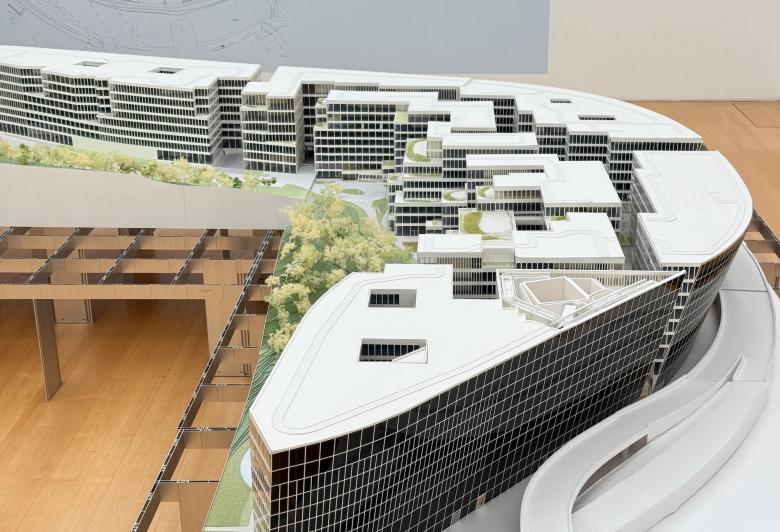
No. 187 is The Circle at Zurich International Airport, built in 2022. The large, 260,000 m2 project consists of commercial, cultural, educational, hotel, and medical facilities adjacent to the airport. It is said that the 1:100 model on display traveled back and forth between Zurich and Tokyo many times.
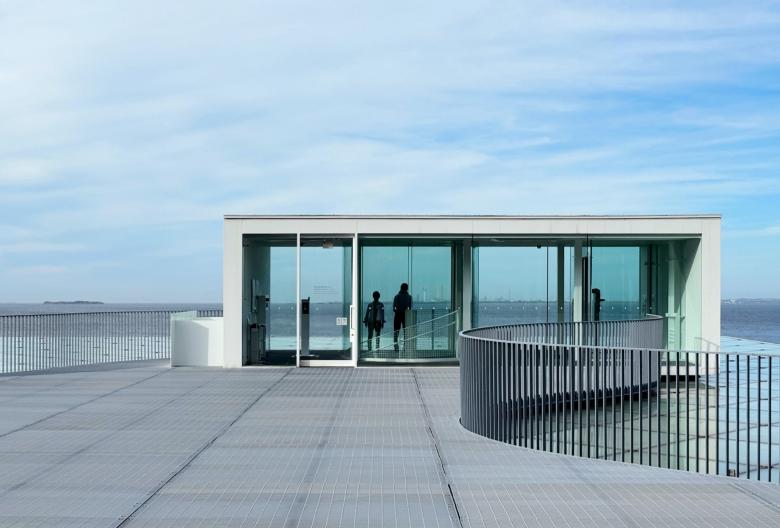
After the exhibition, visitors can ascend to the rooftop for views of the sea, which can also be glimpsed from upper floors of the museum.
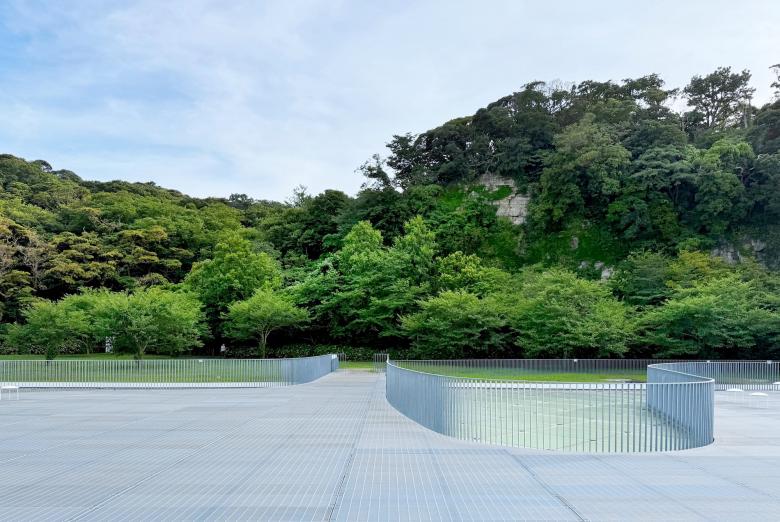
The rooftop observation deck, which connects to the adjacent forested landscape via a bridge, is covered with fine-grained grating that allows daylight to shine through the round holes in the steel shell.
The rooftop pavilion facing Uraga Channel of Tokyo Bay to the northeast is named “Lover's Sanctuary.”
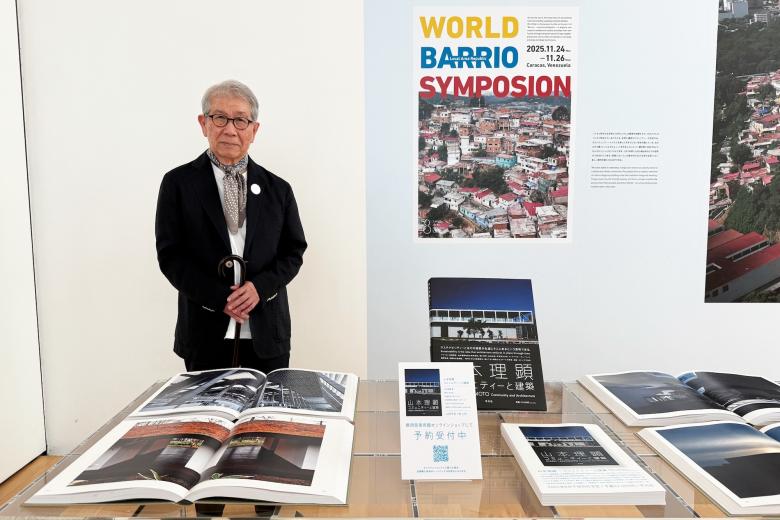
Rikien Yamamoto next to a book of photographs whose September publication coincides with the exhibition: “Architects are often misunderstood as ‘making selfish things,’” he said, “but if you come here, you will understand that we do our best to design for the community, for the users, and for the residents.”