Studio Visit: Cooper Robertson
Three high-profile museum projects nearing completion in New York and New Jersey—New Museum, Princeton University Art Museum, and Studio Museum in Harlem—have one architecture firm in common: Cooper Robertson. World-Architects recently stopped by Cooper Robertson’s Lower Manhattan office to speak with partner Erin Flynn about the trio of projects she is working on and learn more about the 46-year-old architecture and urban design firm.
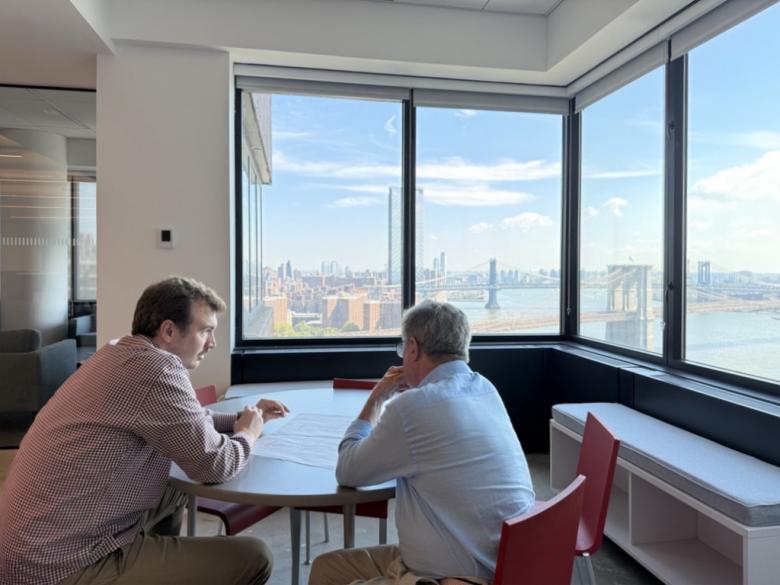
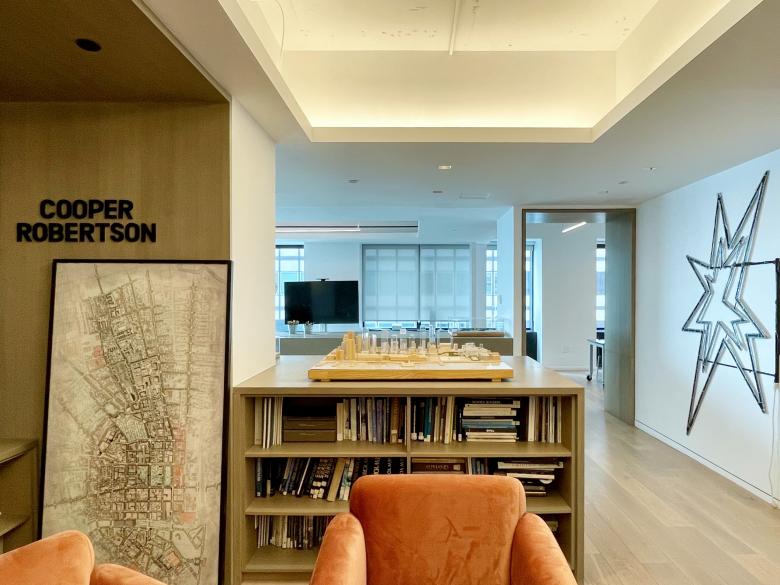
Earlier this year Cooper Robertson moved its 30-person office to 40 Fulton Street, a 29-story, late-1980s office building just steps from The Seaport and the East River Promenade. I was early for my late-summer visit to their office, so I strolled around the historic Seaport district and took in views of the Brooklyn Bridge from the promenade—a sight that never gets old, even to a New Yorker. The views are even better from Cooper Robertson’s 21st-floor office, which looks over its low-scale neighbors and the East River beyond to Brooklyn and distant Queens. If not for taller buildings to the north, one could espy the New Museum on the Bowery and, much farther uptown, the Studio Museum in Harlem. Thankfully, the square columns—some of the few solid surfaces in the studio, given the glazed partitions between the open studio and conference rooms—were covered with photographs, drawings, and other materials related to these two museums, the Princeton University Art Museum, and other in-progress projects.
Meeting partner Erin Flynn, we immediately started talking about the trio of museums for which the firm currently serves as executive architect, two of which have opening dates set for this fall: Princeton University Art Museum, designed by Adjaye Associates in collaboration with Cooper Robertson, will open on October 31, and the Studio Museum in Harlem, also designed by Adjaye Associates in collaboration with Cooper Robertson, will open on November 15. Although the expansion of the New Museum, designed by OMA – Office for Modern Architecture in collaboration with Cooper Robertson, did not have an opening date at the time of my visit (it had been aiming for a fall 2025 reopening), it was the first project we discussed.
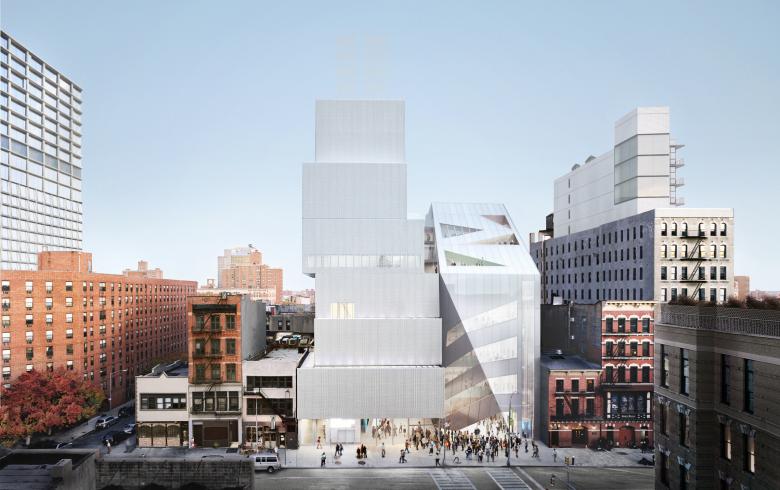
Before OMA was selected, in 2017, to expand the then ten-year-old New Museum designed by SANAA, it was already working on an expansion of Gordon Bunshaft’s Albright Art Gallery (now Buffalo AKG Art Museum) in Buffalo, New York. Cooper Robertson collaborated with OMA on both projects. Located on the Bowery west of SoHo, the New Museum project is basically a horizontal expansion of the original building and near doubling of its exhibition space to around 20,000 square feet. Where SANAA’s building hides itself behind solid boxes cloaked in metal mesh, the expansion positions stairs and elevators in an atrium at the front of the building, behind an angled glass facade that will create a plaza along the Bowery.
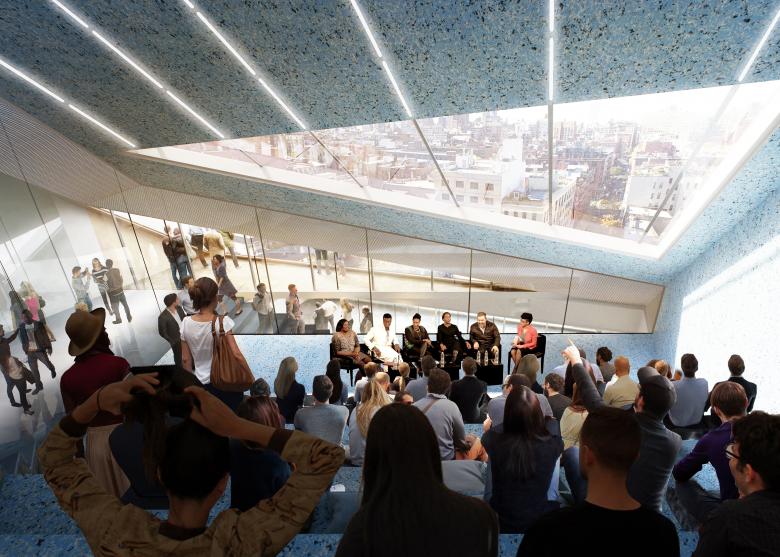
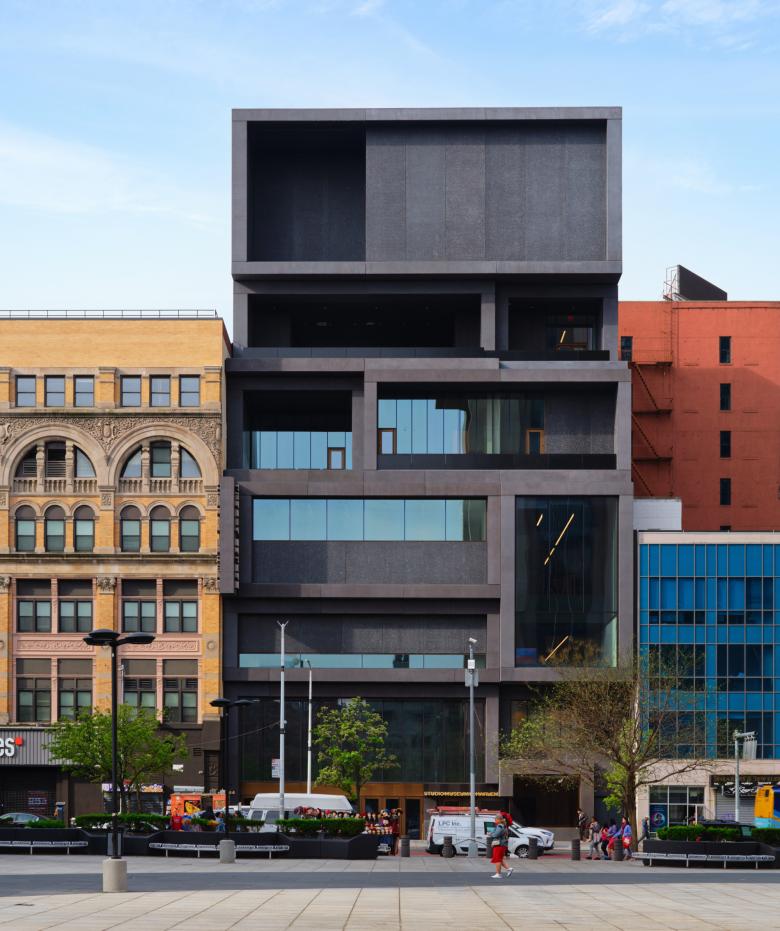
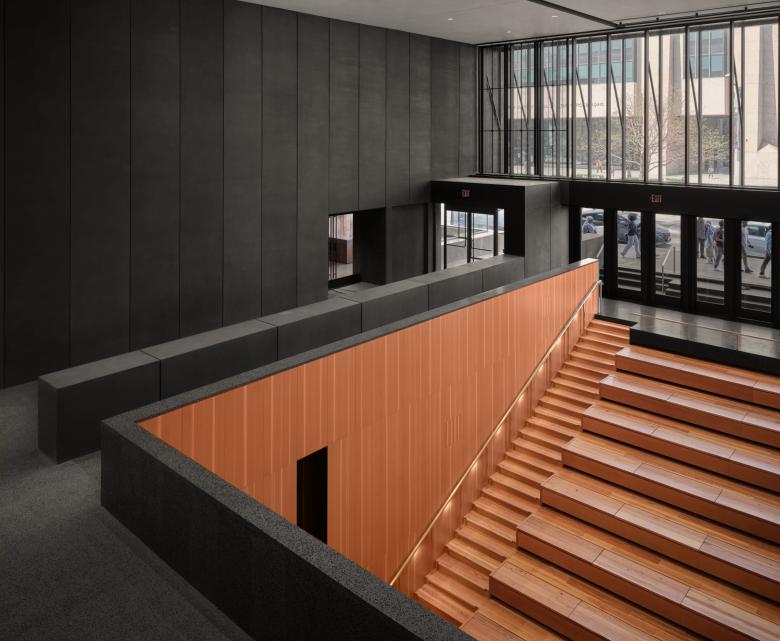
Flynn’s role in the New Museum came late in the process, following the semi-retirement of partner Scott Newman in 2021, but that is not the case with the museums in Harlem and Princeton, projects she has been involved with since their inceptions. Although both projects are designed by Adjaye Associates and are replacements of existing facilities, they are different in a couple significant ways: Princeton University Art Museum is a horizontal building that doubles the size of its predecessor but maintains the scale of the original, while the Studio Museum in Harlem is a vertical building that juts above it neighbors; and in addition to being public art museums, Princeton includes academic program areas and Harlem has facilities for its artist residencies. Regardless of these differences, both projects are porous, with Princeton allowing people to stroll through the building via an “Art Walk” at grade, and Harlem incorporating a 140-seat “inverted stoop” lobby free to the public and hosting events.
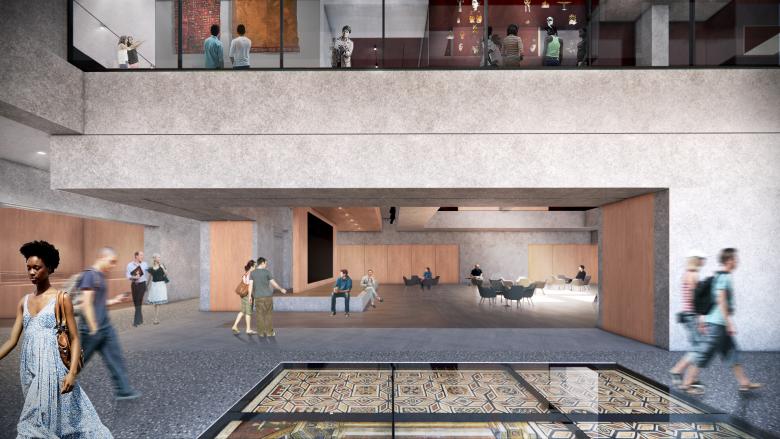
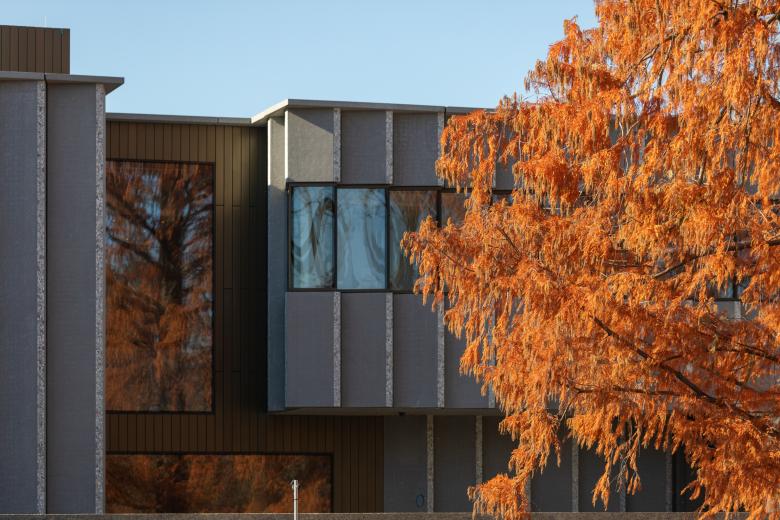
Both museums are set to open soon, so photo documentation of their construction I saw on the columns was advanced. The most dramatic moments at the Princeton University Art Museum—seven years in the making—are the views into the double-height Grand Hall in the heart of the museum, the skylights above the glulam structure on the top floor, the “lens moments” that allow glimpses inside the museum to passersby, and the partial recladding of the abutting Marquand Art Library, the only existing facility not demolished in the project. The Studio Museum in Harlem—more than a decade from start to finish—finds its drama in design features inspired by its Harlem context: the street (the 125th Street facade revealing the building’s different functions), the stoop (the lobby off the sidewalk), the stage (the seating descending from the lobby), and the sanctuary (the central stair extending through the building’s section).
Sitting down with Flynn in a conference room after a brief tour of the studio and the three museum projects, I asked her how the firm founded by Alex Cooper in 1979 (Jacqueline Robertson joined in 1988) with a focus on urban design and planning ended up being a go-to firm for art museums. Flynn explained that through Scott Newman the firm “started doing a lot of deep programming studies and planning museum expansions. One of the first museum projects was working with MoMA planning the museum expansion that turned into the 1997 competition that Yoshio Taniguchi won.” Since then the firm has worked on over 55 museum projects around the world, ranging from behind-the-scenes planning work and serving as executive architect to working as design architect, as in the well-received Gateway Arch Museum and Visitor Center in St. Louis.
At the time of the MoMA project, Flynn was at KPF, actually working as executive architect on the MoMA expansion. “I realized that that is the type of work that would satisfy me as an architect,” she told me. The Cooper Robertson planning document was also her introduction to the work of Cooper Robertson, who would hire her after she took time off to start a family and reorient herself following the 2008 recession. She joined Cooper Robertson in 2010, in the midst of the firm working as executive architect on the new building for the Whitney Museum of American Art designed by Renzo Piano. On projects such as the Whitney and the trio of museums soon opening in New York and New Jersey, Flynn explained that “we want to work in partnership with a design architect,” not simply as production architects who are handed a design.
Working closely with museums to define their needs and working in partnership with architects on their designs means that Cooper Robertson has many repeat clients and collaborators, from MoMA and The Met to Adjaye Associates and OMA. It also means that these projects—whether the wider public or even other architects know of Cooper Robertson's involvement in them—exist in the public sphere, not behind closed doors. “I really love being able to work on buildings that I can bring my family to,” Flynn said. “You put your soul into these projects, so it's really nice to be able to share them with people.”