An exhibition on Marina Tabassum Architects
People Place Poiesis
Marina Tabassum Architects | 27. November 2025
All photos by Neoplus Sixten Inc.
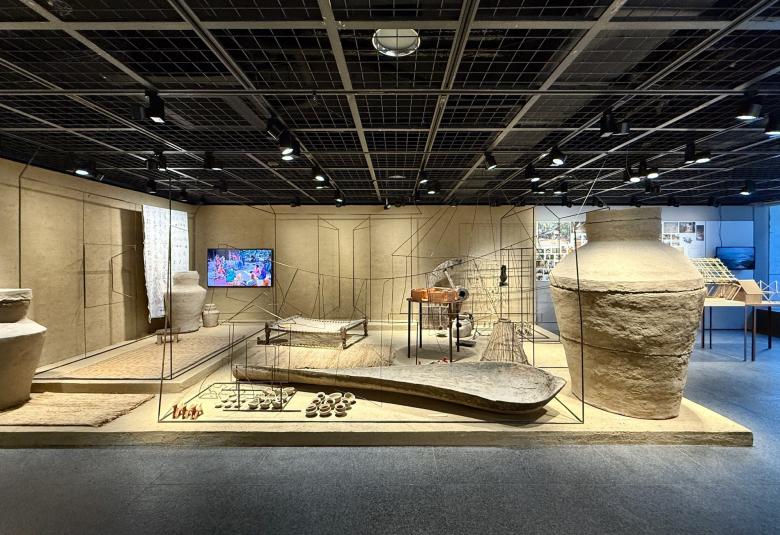
Marina Tabassum Architects: People Place Poiesis opened at TOTO GALLERY·MA on November 21. The exhibition showcases the Bangladeshi architect's projects that are rooted in climate, culture, and tradition, and which are also committed to supporting people affected by natural disasters and poverty.
The Japan-Architects curators attended a preview of Marina Tabassum Architects: People Place Poiesis, taking photos and providing captions. The exhibition is on display at TOTO GALLERY·MA in Tokyo until February 15, 2026. This English translation of the original article was edited by John Hill.
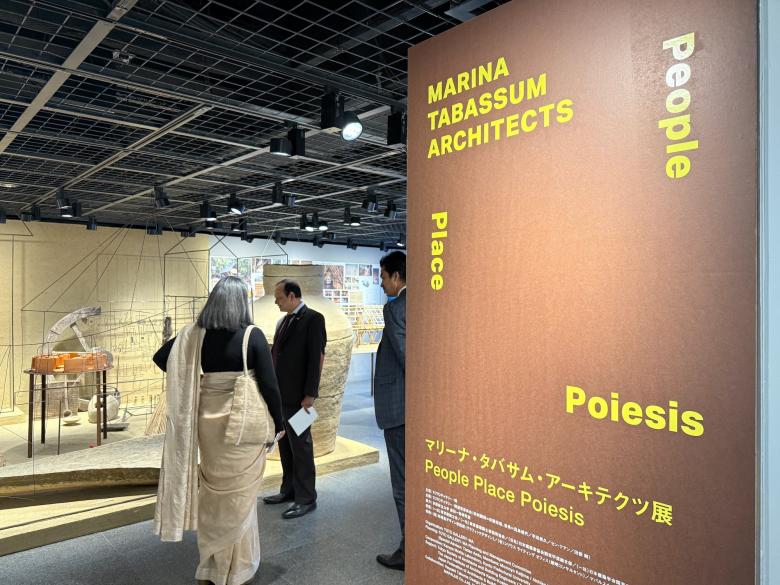
An exhibition by Marina Tabassum Architects (MTA), based in Dhaka, Bangladesh. The words “People, Place, and Poiesis” serve as themes for introducing the works and activities of MTA through models, videos, installations, and more.
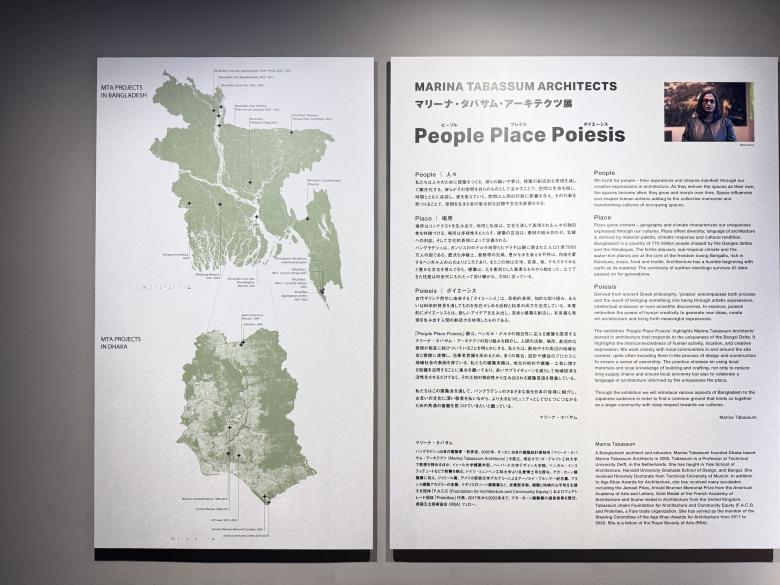
The map on the left shows Bangladesh and an enlarged view of the central capital, Dhaka, indicating the locations of MTA projects. Bangladesh's landmass lies in the lowlands of the Bengal Delta formed by great rivers like the Ganges, making it a country prone to flooding. This condition means that human activity, place, and creative expression are mutually intertwined.
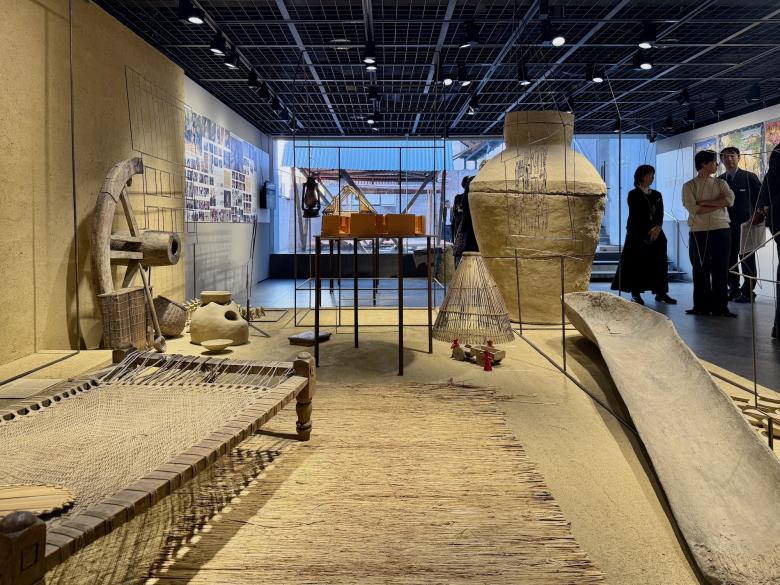
The third-floor gallery recreates a courtyard found in typical rural settlements. Steel frames evoke the features of homes that surround a courtyard, while displaying everyday household items actually used in such settings: a reclining chair, a wooden boat, an earthenware jug, an earthen stove. The courtyard, known as the “uthan,” is a living space and the soul of Bengali homes. It has no physical boundaries, forming a loosely enclosed space where various elements of daily life intertwine.
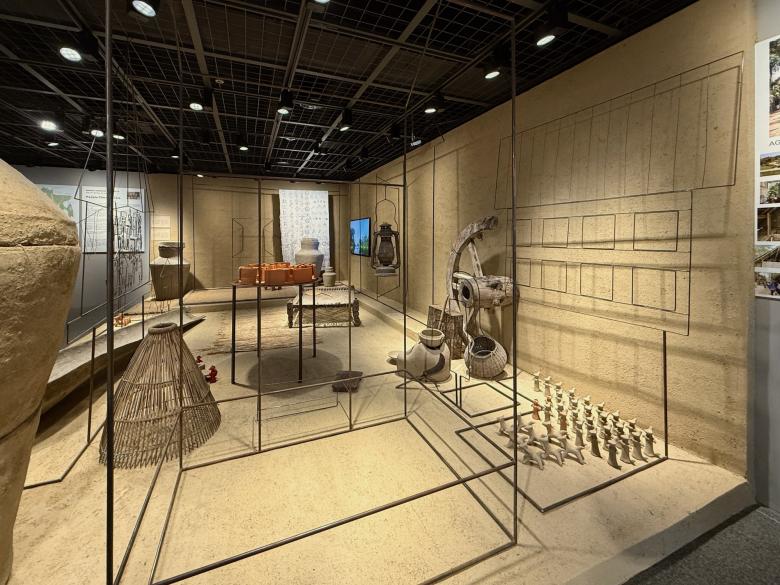
With the earth as its floor and the sky as its ceiling, space flows from courtyard to courtyard, creating a social atmosphere where each household maintains its individuality while feeling a deep sense of community connection. From dawn to dusk, as residents perform their daily rituals, the character of the space changes. The installation dramatically expresses a life lived in symbiosis with nature.
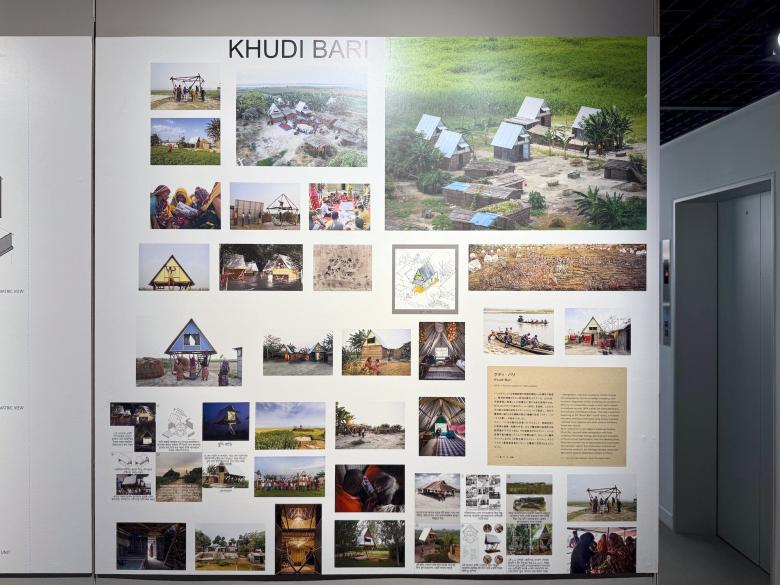
Designed to withstand floods and storms, Khudi Bari (2020) is a mobile two-story dwelling that residents can assemble themselves.
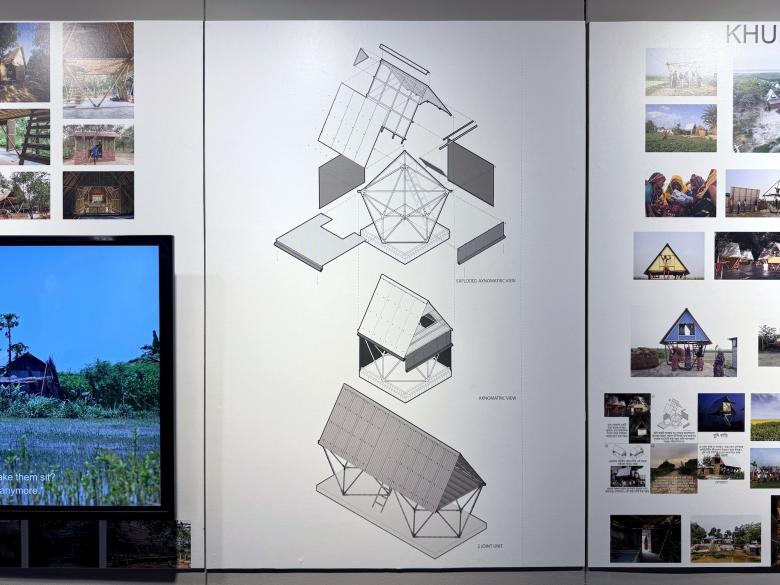
The structure is made of bamboo and steel fittings; the floor is wooden planks, the walls are reed, and the roof is corrugated iron.
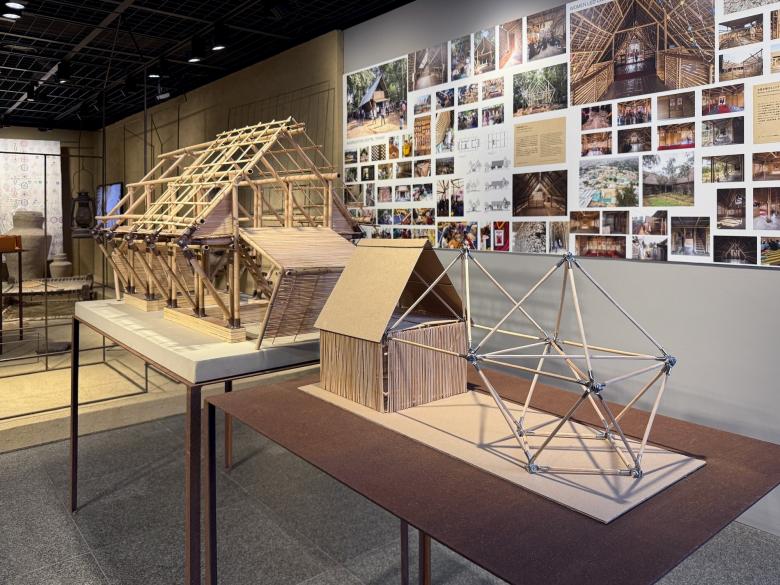
The truss structure is simple but strong. By connecting units, the structure can be scaled up to form large buildings. The models and wall panels in the back showcase larger projects built at Rohingya refugee camps: the Women Led Community Center and the Aggregation Center.
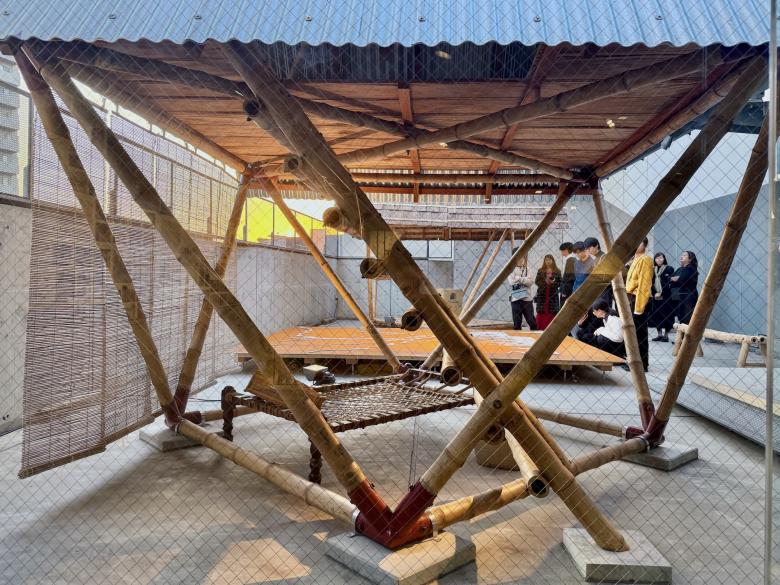
In the courtyard, the full-size Khudi Bari is on display.
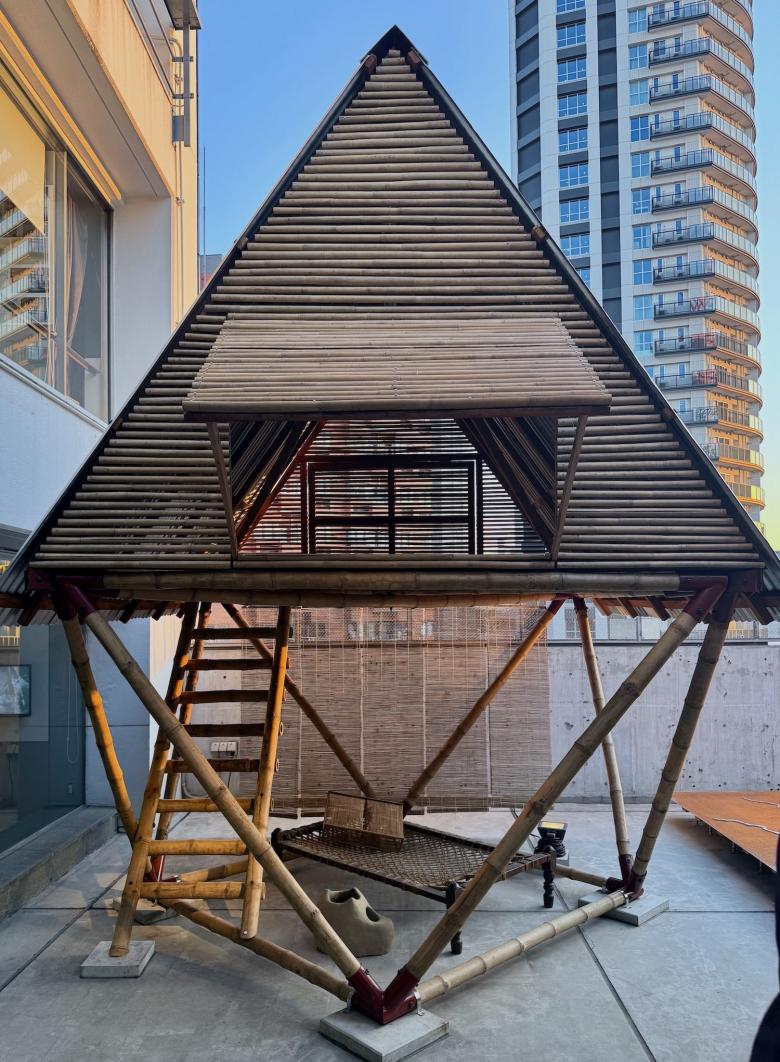
A few bamboo poles can stand on their own and provide sufficient strength, but not Japanese bamboo. Instead, it is built from the thick-walled bamboo unique to South and Southeast Asia.
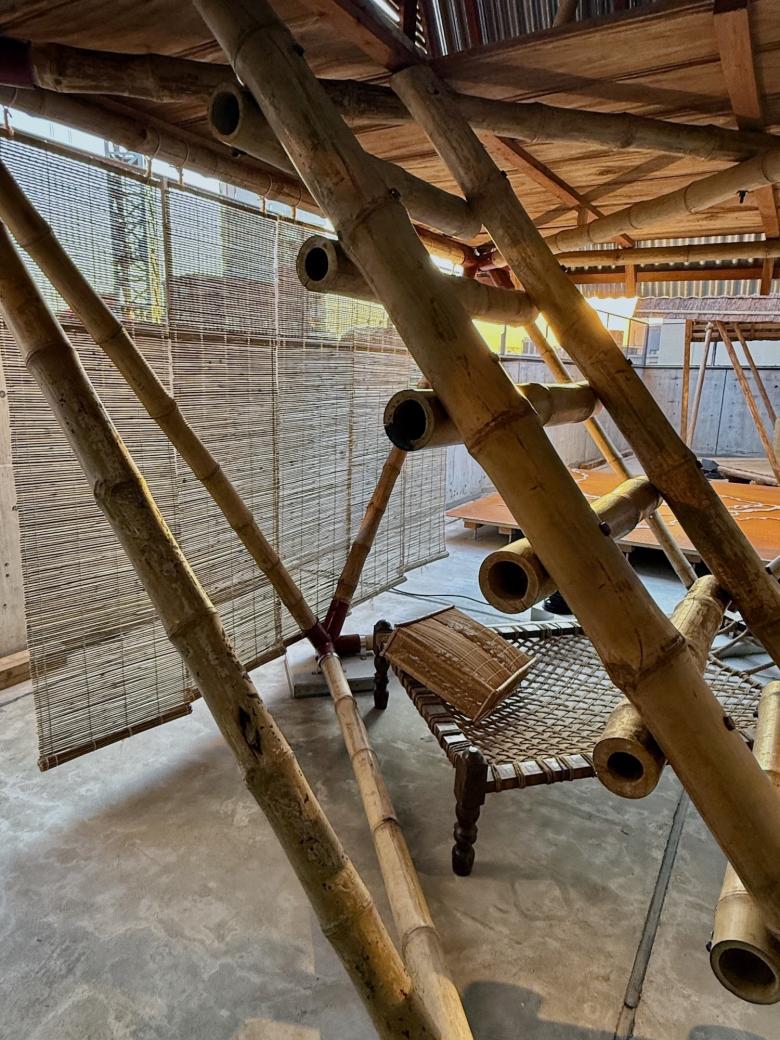
The thickness varies, but the cross-section of thick bamboo can be seen.
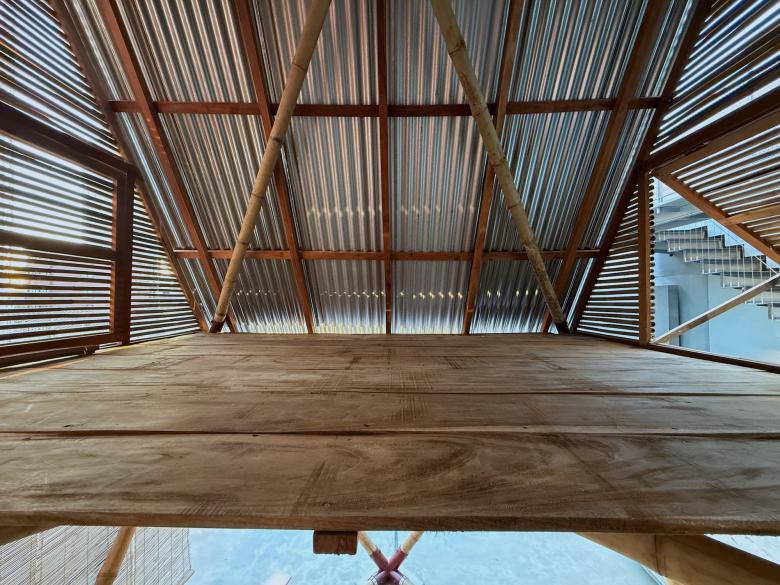
Apparently, the only time you can access the second floor of Khudi Bari is during the gallery tour.
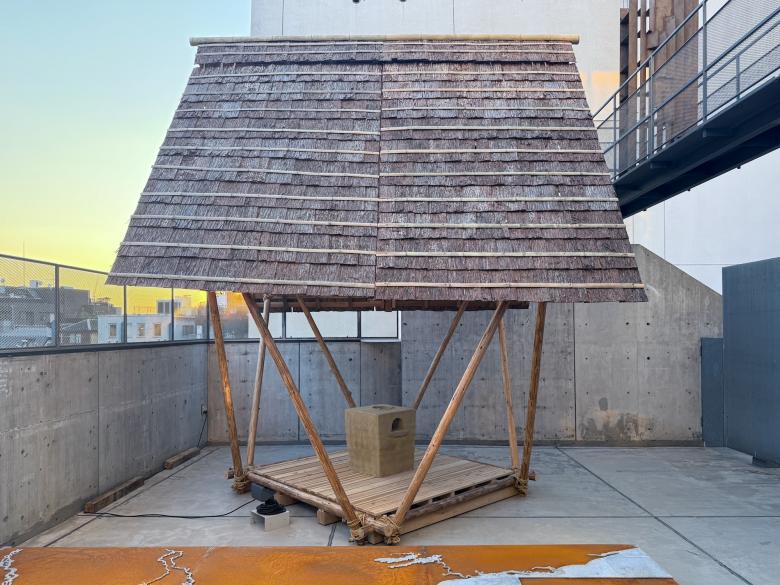
The other building in the courtyard is a Japanese adaptation of Khudi Bari, created by students from the Kazuya Morita Laboratory at Kyoto Prefectural University using Japanese materials and techniques. Since bamboo is difficult to work with, the structure is made of cedar logs and the roof is cedar-shingled. There is also an earthen stove.
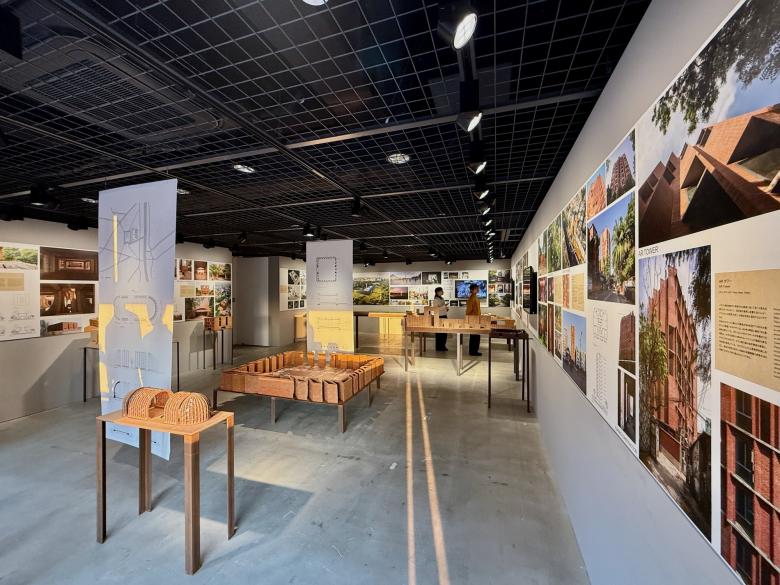
The fourth-floor gallery showcases architecture in urban areas.
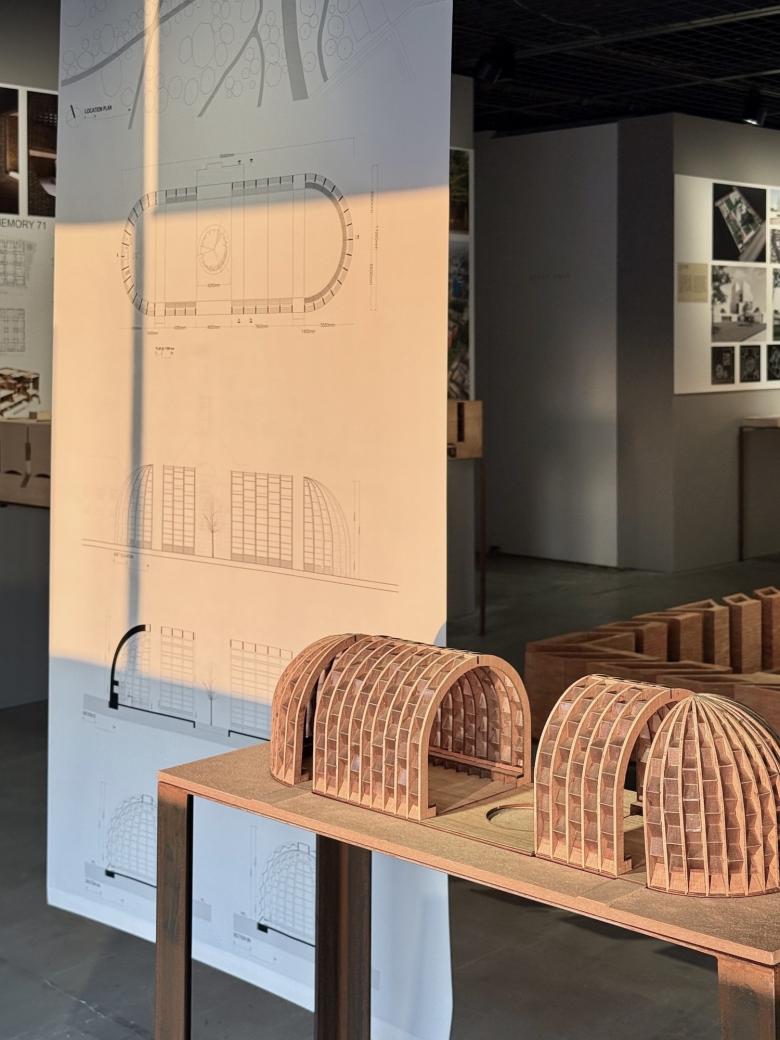
A Capsule in Time, the 2025 Serpentine Pavilion: A platform where people could engage in dialogue and solidarity during an intolerant era, designed as four arch-shaped structures resembling capsules where individuals from diverse backgrounds could gather.
Alfadanga Mosque in Alfadanga, Faridpur, Bangladesh, 2022. Built for the Buraich Maulvi Bari family, the brick chapel features natural light streaming through the wall openings, creating beautiful effects of light and shadow that evoke a sacred atmosphere.
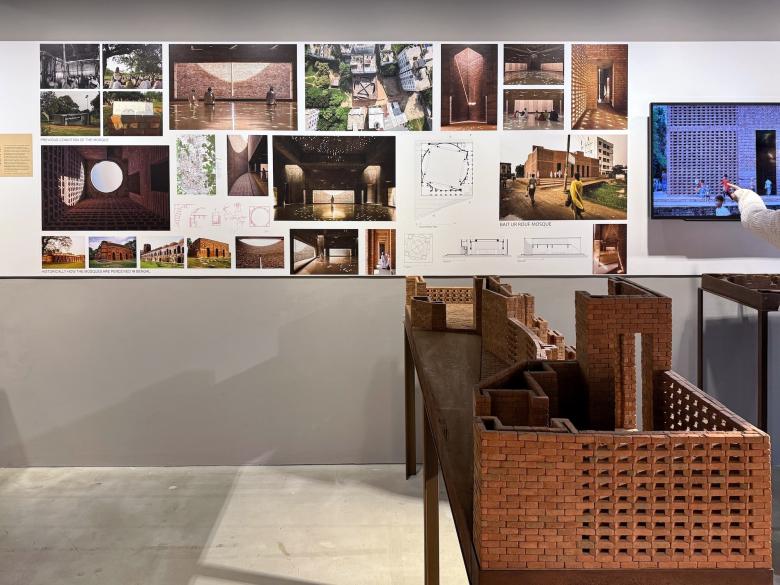
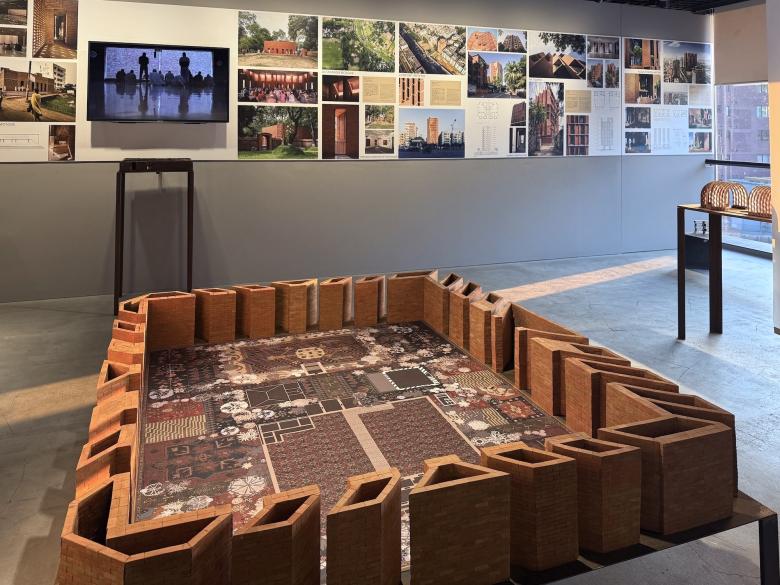
Bait Ur Rouf Jame Mosque in Faidabad, Dhaka, 2012: Built in a rapidly developing, densely populated area of northern Dhaka, it serves as a place of tranquility for residents and as a community gathering space. Part of the land and construction costs were donated by Ms. Tabassum's grandmother; after her death, the family and local residents covered the remaining construction expenses.
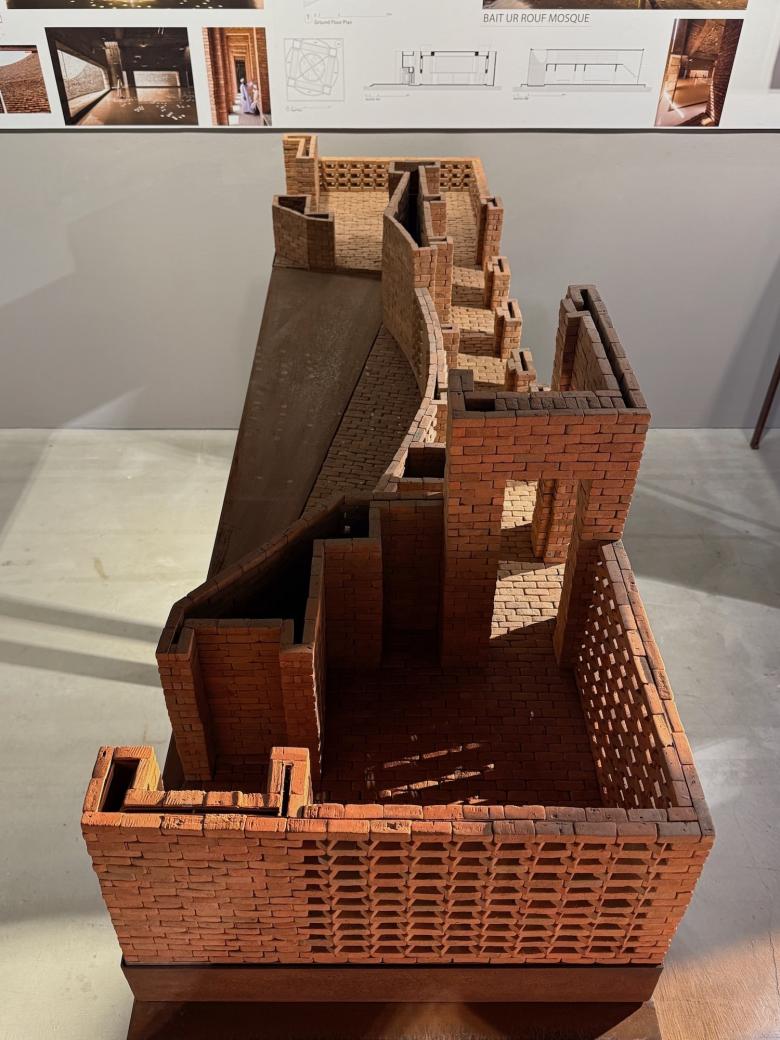
The design of the mosque avoids traditional domes and minarets, instead expressing spirituality through a geometric structure of space and light. Employing brick, a key material for mosques in this region, the cylindrical prayer hall is a pleasant space ventilated by courtyards at the corners of the square plan. Elevating the structure on a plinth protects it from flooding, provides a place for people to sit and converse before prayers, and serves to separate it from the city's bustle. (The sectional model displays one-fourth of the entire structure.)
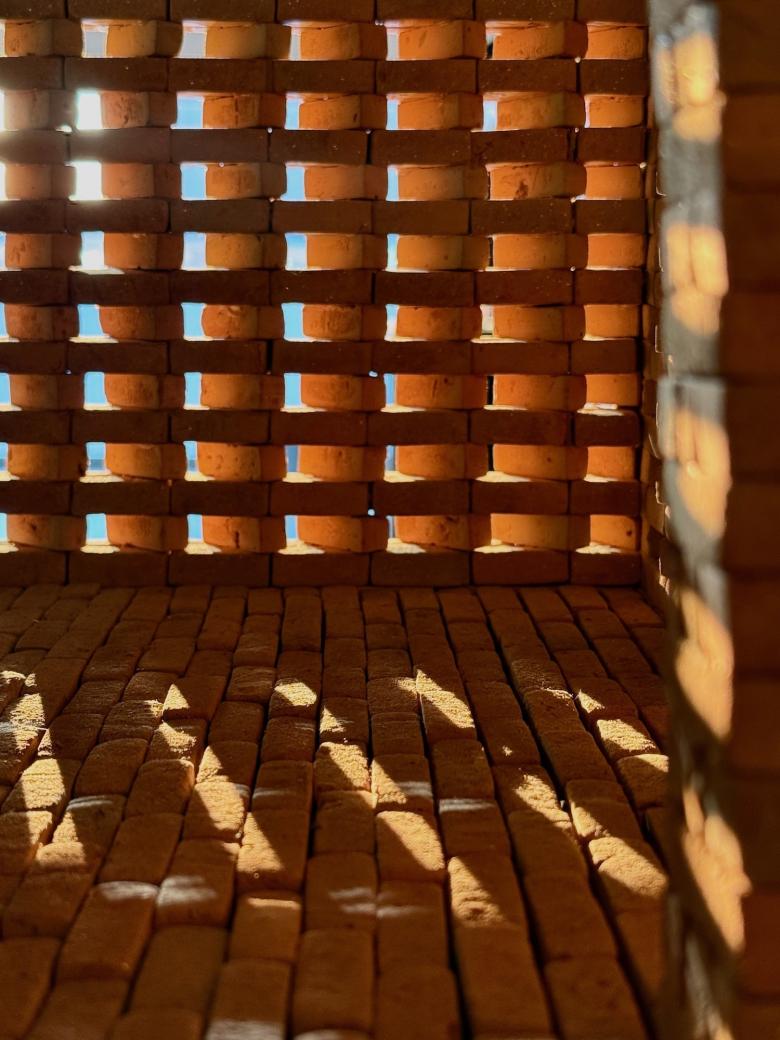
The setting sun illuminated the model beautifully, allowing me to capture a photo that felt like experiencing the real thing on-site.
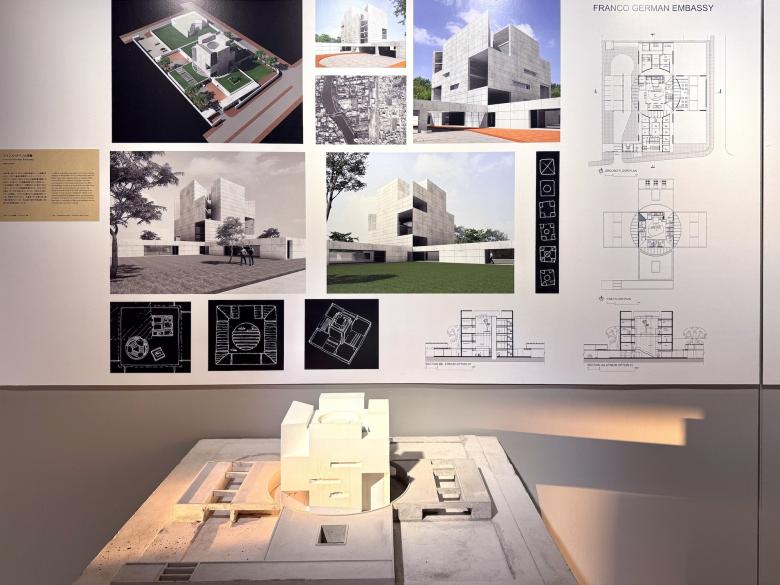
Unbuilt project for Franco German Embassy, Bangladesh, 2009
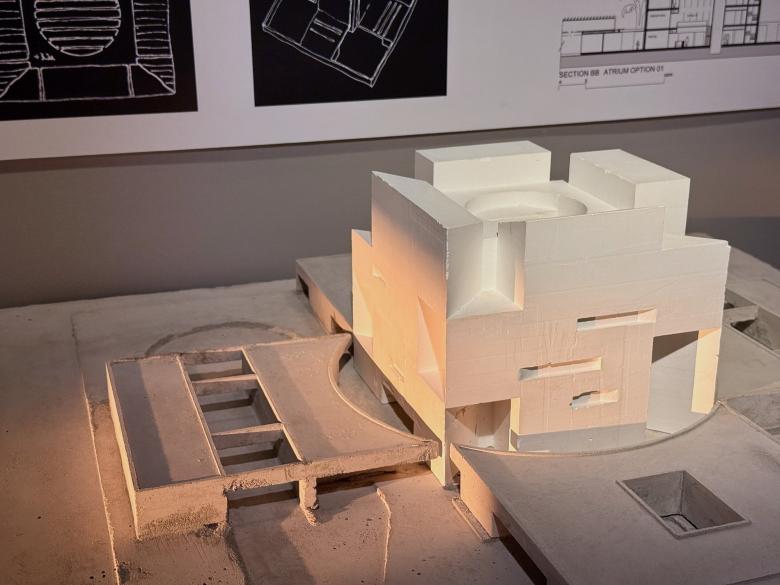
MTA, collaborating with Schultes Frank Architekten, won the 2009 competition for the Franco German Embassy in Bangladesh, but the project was later awarded to another firm.
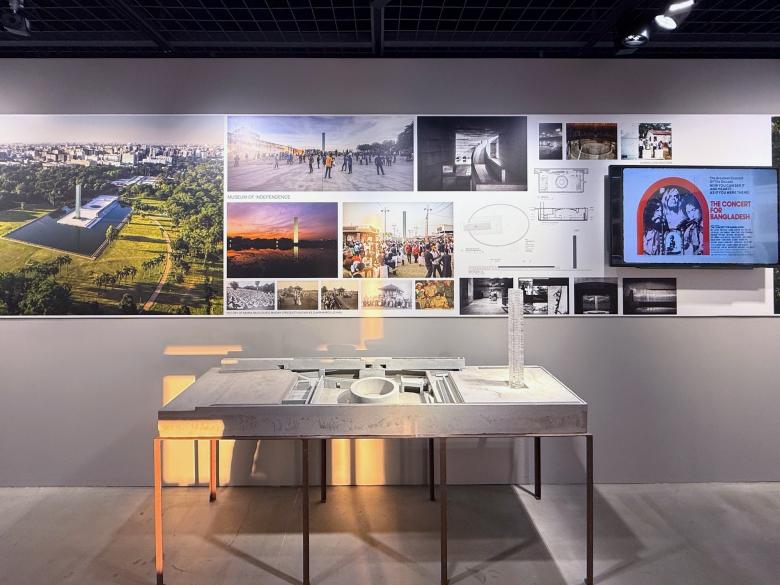
Museum of Independence, Dhaka, 1997–2015
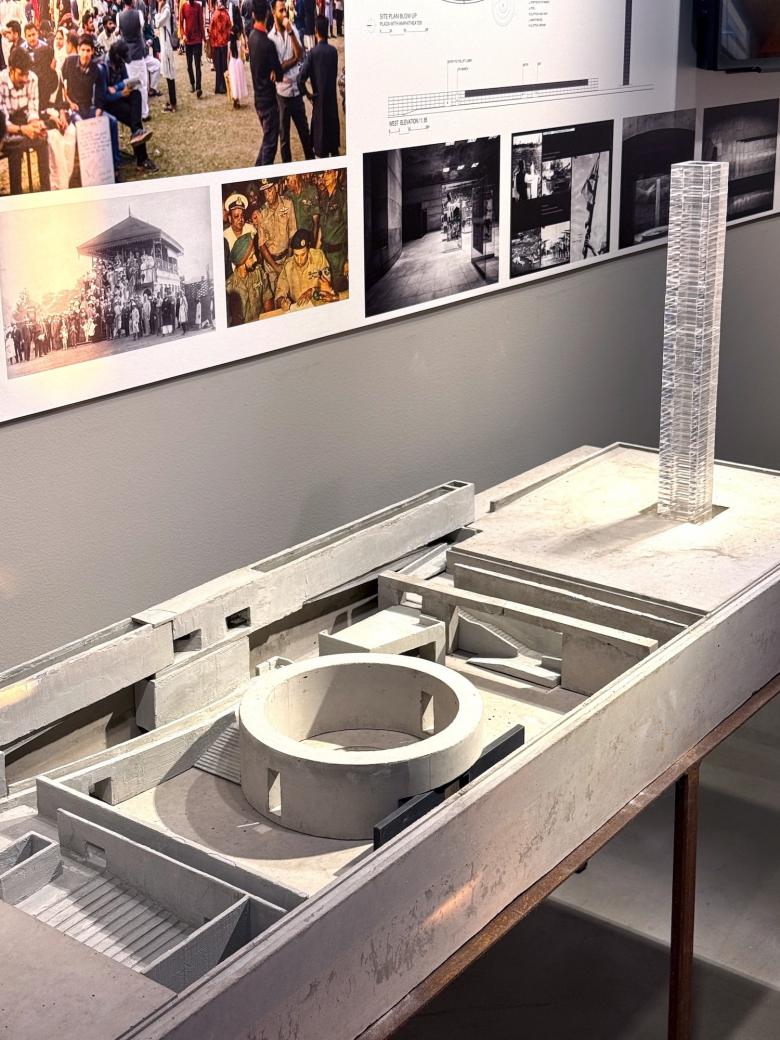
Completed in 2015, the museum chronicles the history of the 1971 Bangladesh Liberation War.
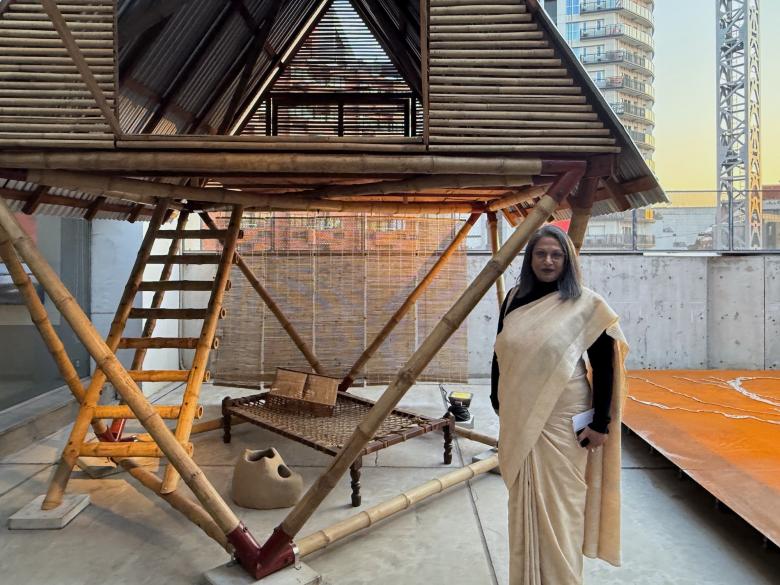
Marina Tabassum: “Through this exhibition, we hope to introduce various aspects of Bangladesh to the people of Japan. We wish to find common ground that will unite us as a larger community, while holding deep respect for each other's cultures.”
Marina Tabassum Architects: People Place Poiesis
Dates: November 21, 2025 – February 15, 2026
Venue: TOTO Gallery MA
Details: info.jp.toto.com/gallerma/ex251121
Dates: November 21, 2025 – February 15, 2026
Venue: TOTO Gallery MA
Details: info.jp.toto.com/gallerma/ex251121