Communicating the Incommunicable
All photographs by John Hill/World-Architects
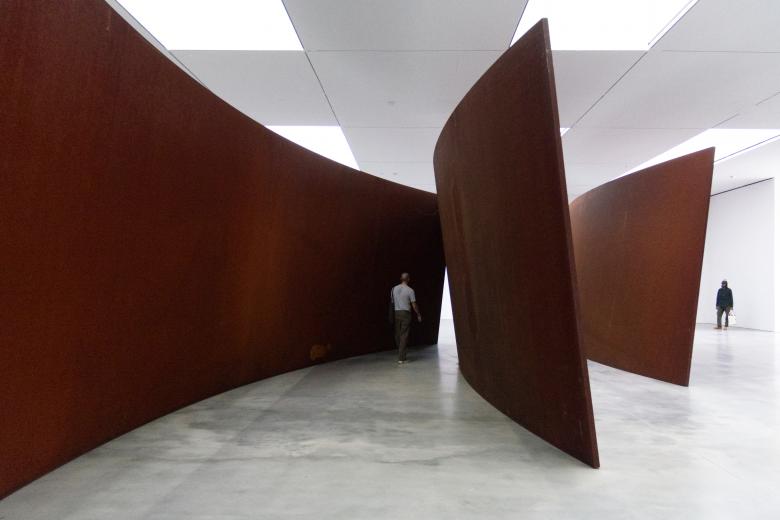
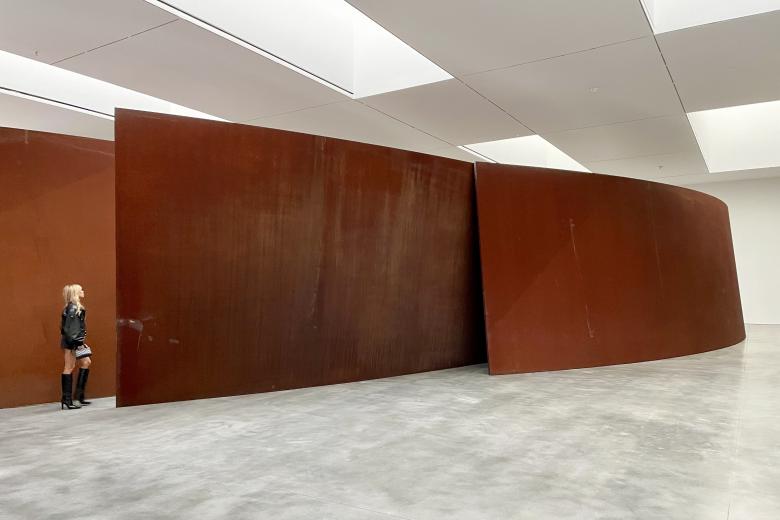
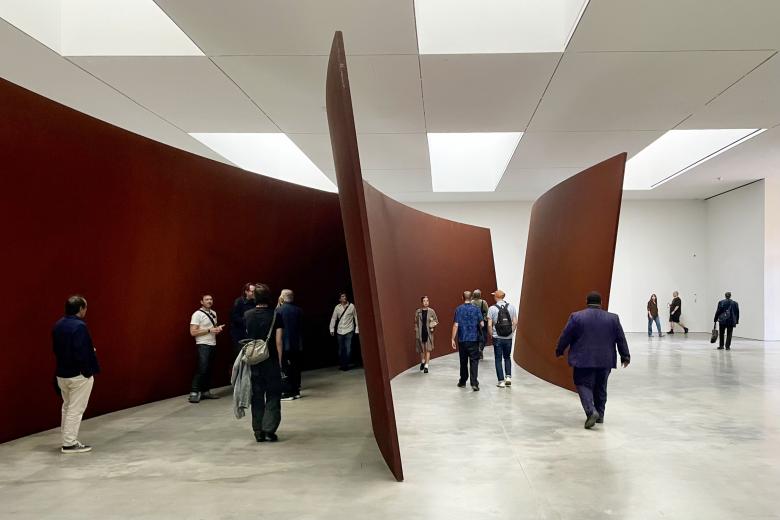
Richard Serra's Running Arcs (For John Cage) opened at Gagosian's gallery on West 21st Street in New York City on September 12—exactly thirty years to the day after it opened, on September 12, 1992, at Kunstsammlung Nordrhein-Westfalen in Düsseldorf, Germany. World-Architects stopped by to walk through and take some photographs of Serra's installation.
Outside of Richard Serra's 1992 exhibition of Running Arcs (For John Cage) in Düsseldorf, its only previous showing to date, and some details on the construction of the massive sculpture—“three identical conical steel segments, inverted relative to each other, installed in a staggered formation, [each] approximately 52 feet [16m] long, 13 feet [4m] high, and 2 inches [5cm] thick”)—the Gagosian website provides very little information on the sculpture. What is the significance of the artwork? Why is it dedicated to avant-garde composer John Cage? Thankfully, these and other potential questions are addressed in a publication from the Kunstsammlung Nordrhein-Westfalen that accompanied the sculpture's 1992 installation. Some information from that book is included as captions to our photographs that follow. Those interested in seeing Running Arcs (For John Cage) in person—highly recommended!—have until December 20th to do so.
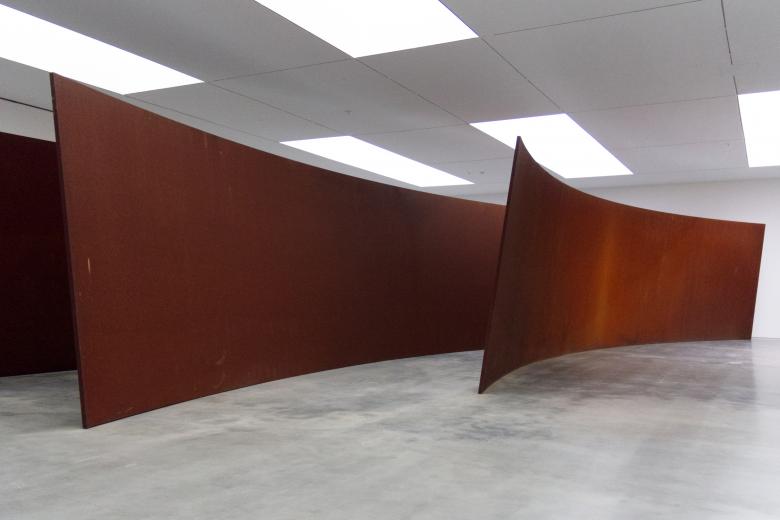
Richard Serra had been installing single-curve walls of weathering steel since the 1980s, most of them for outdoor spaces. Starting with Clara-Clara (1983) and continuing with such pieces as Berlin Junction (1986/87), Serra worked with two curves together, making the spaces between them as important as the objects themselves.
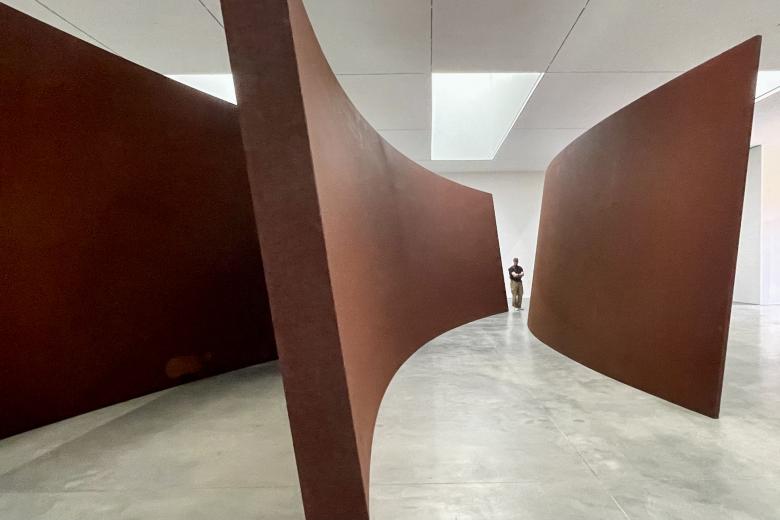
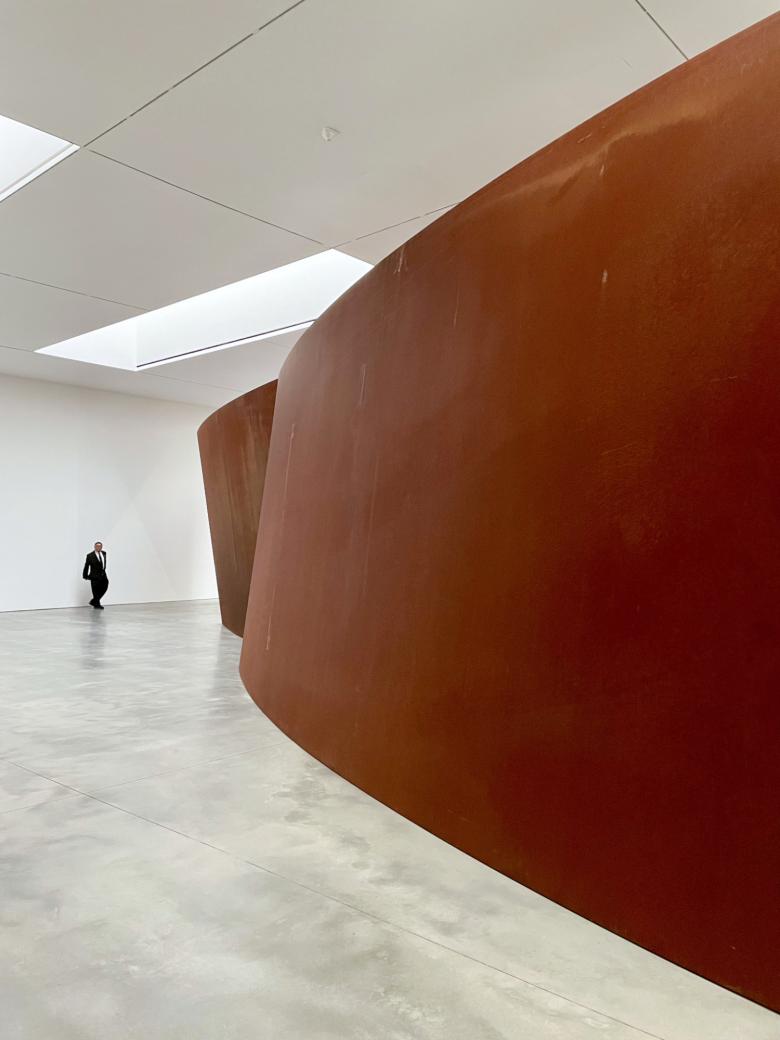
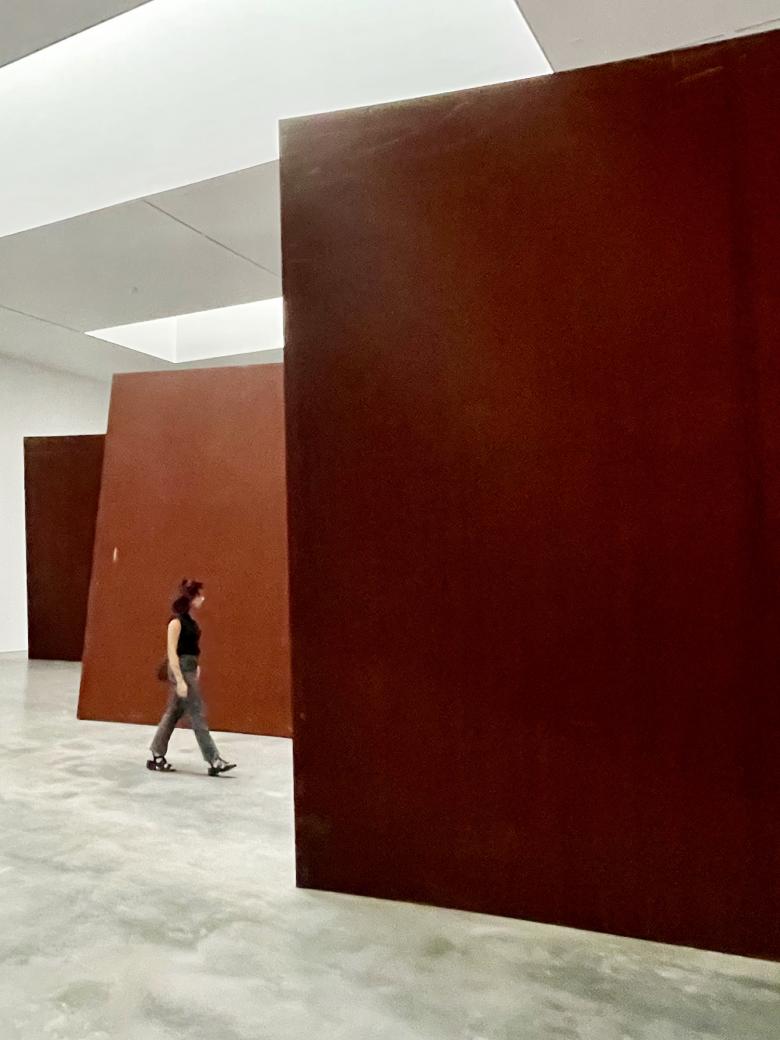
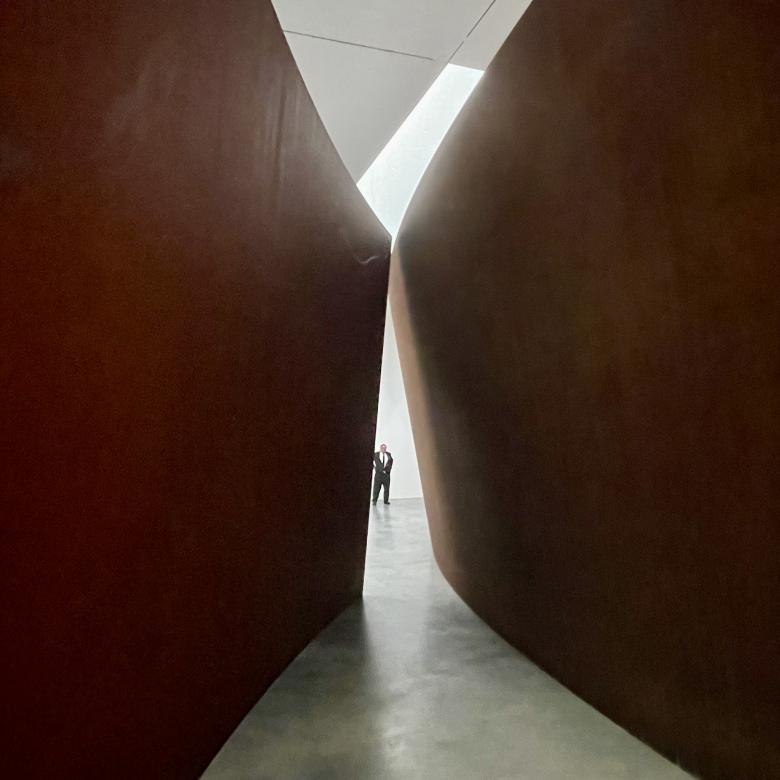
Before installation, Serra would work with scale models in a sandbox to determine their positions. He alternated the three pieces of Running Arcs (For John Cage) vertically—the outer two lean inwards and the middle one leans outward—to vary the feeling of the spaces between the arcs.
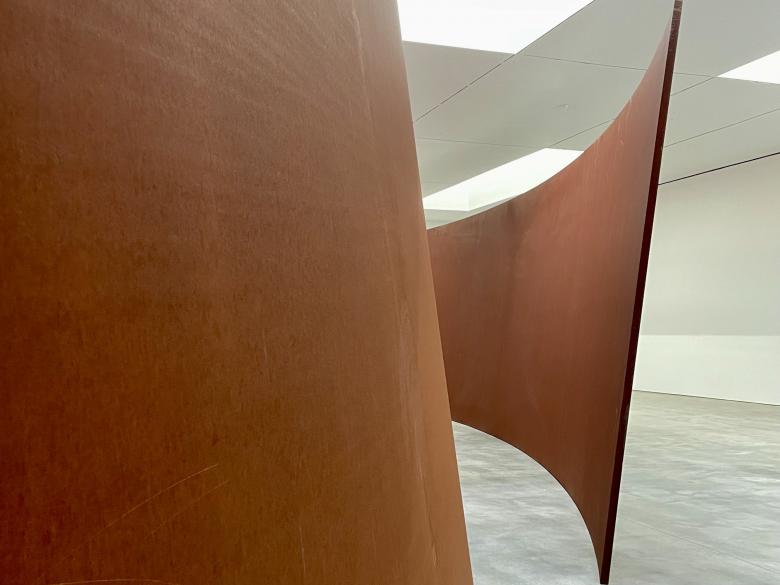
To wit, here we can see the arc on the left angled inward and the arc on the left angled outward, with the space between them freely opening up toward the ceiling…
…contrast that space on the left with the space between the two arcs on the right, which is tighter and compressed, even distressing.
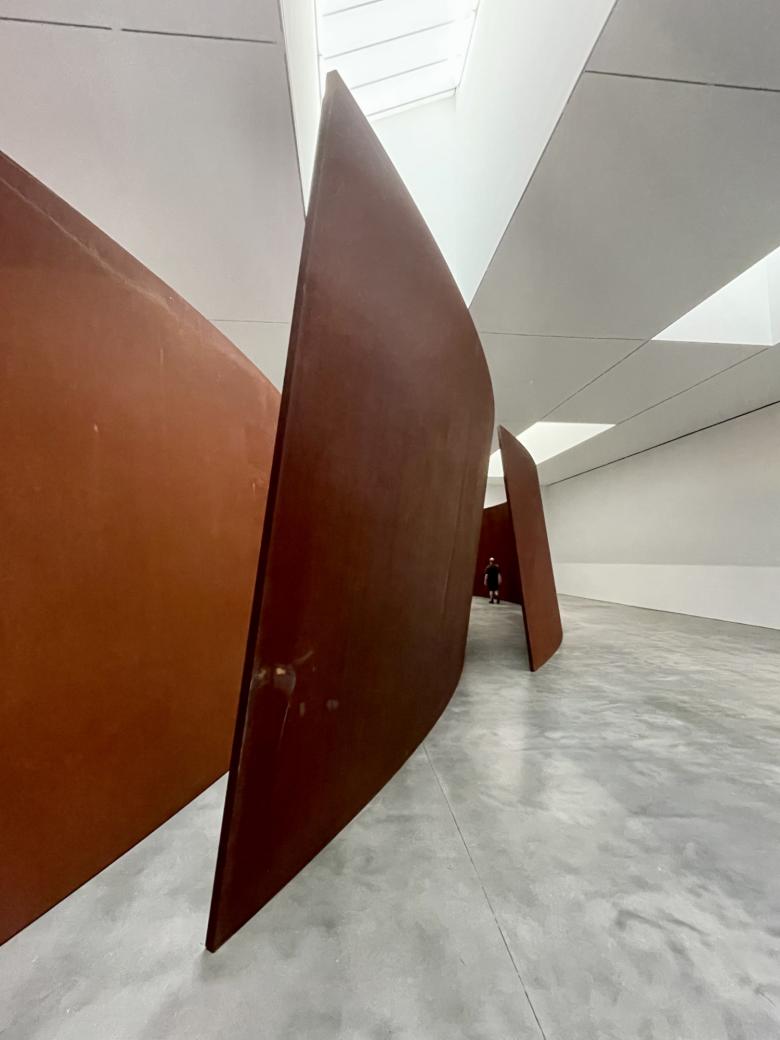
By nearly touching, the sculpture looks almost continuous at the rear of the gallery. As such, it recalles some of Serra's earlier singe-arc sculptures, most notably Tilted Arc (1981), which was installed at Javits Plaza in Lower Manhattan but controversially removed by the federal government in 1989, just one year before Serra began working with the Kunstsammlung Nordrhein-Westfalen on what would become Running Arcs (For John Cage).
“The large, extremely problematical exhibition hall of the Kunstsammlung Nordrhein-Westfalen,” as described by museum director Armin Zweite in the 1992 catalog, forced Serra to nearly fill the room with the steel arcs, something that is very nearly achieved in the gallery on West 21st Street—one of four Gagosian galleries in New York City.
According to Zweite, Serra “originally intended to name this sculpture Curved Straights, [but] he renamed it Running Arcs (For John Cage) in Düsseldorf, evidently in order to underline the illusion of the transitory in the static” and because the divergent artists both believed “that works of art are forms of communicating the incommunicable.”
“The viewer cannot relate to the work until he has perambulated it,” Zweite continued, “walked all the way through and around it.”
Walking around the gallery to experience the sculpture is important, but one rarely does that alone. Experiencing Running Arcs (For John Cage) and other Serra works accentuates what Rosalind Krauss calls “the mutual transitivity of seer and seen”—and seeing people experience a Serra piece is as joyful as walking through it.