In the Gallery and on the Page
Melnikov's Models
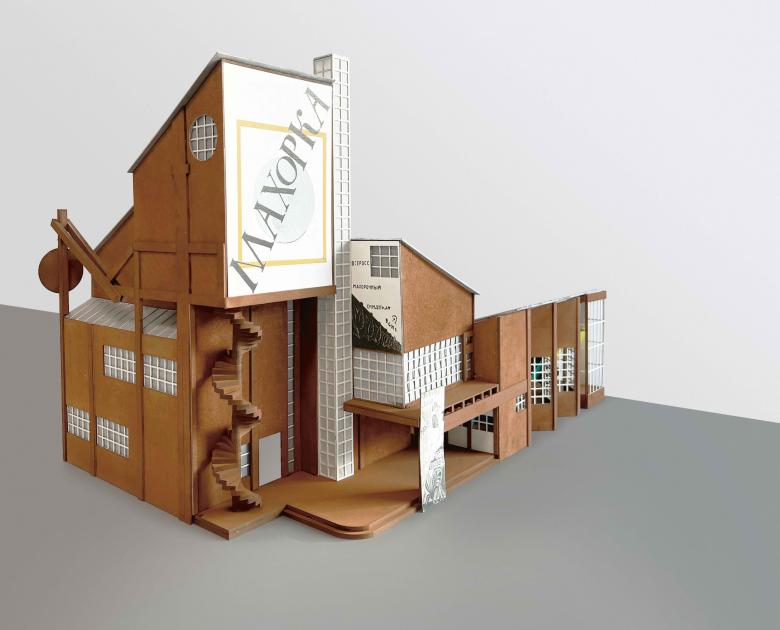
Makhorka Pavilion, Moscow, 1923. Model by Simone Mirabella and Nora Soldati, from Melnikov: An Investigation Through Architectural Models, Lars Müller Publishers, 2025 (Photo © Vladislav Ogay)
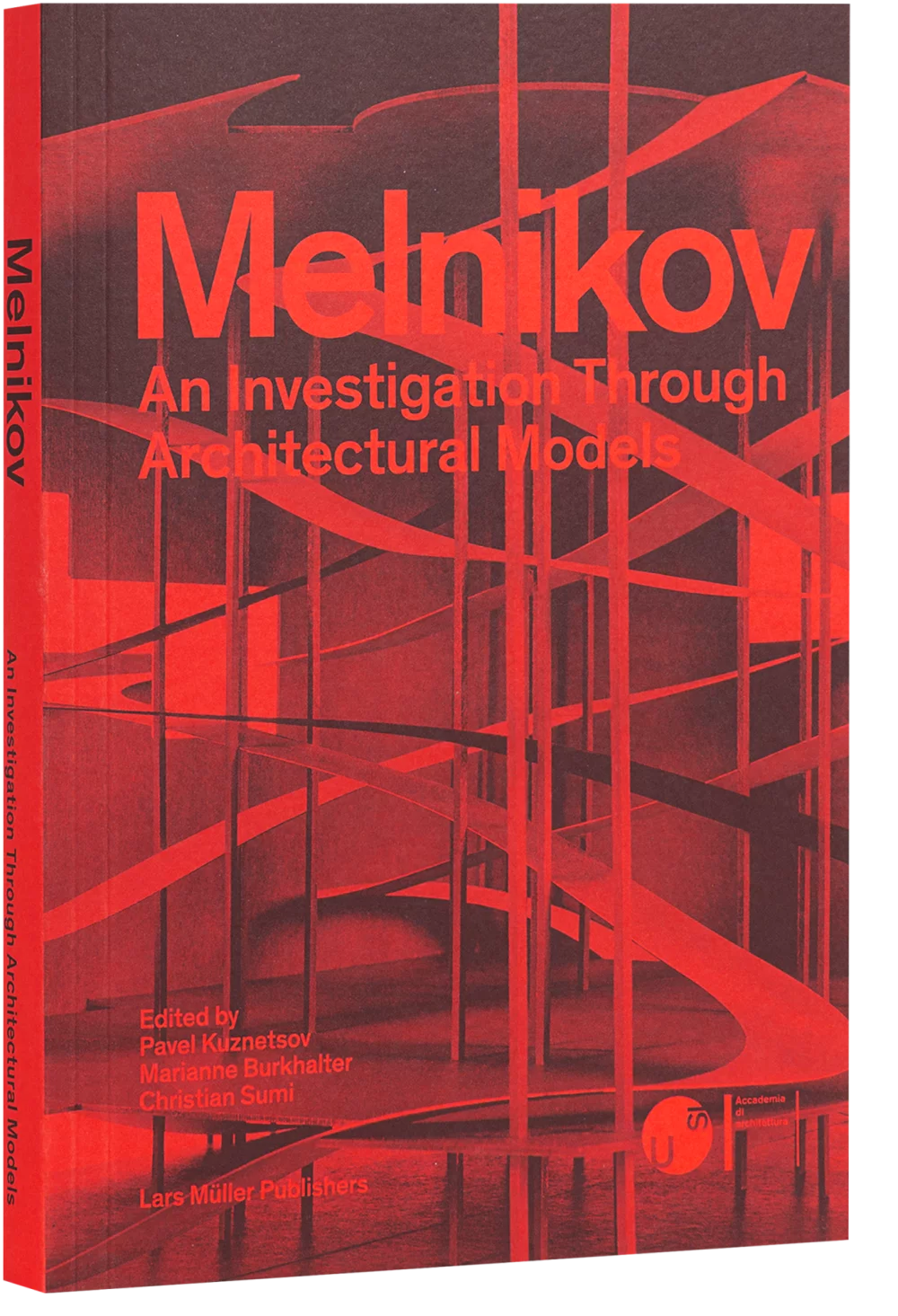
As its subtitle makes clear, Melnikov: An Investigation Through Architectural Models is a new book that examines the built and unbuilt architectural projects of Russian architect and artist Konstantin Melnikov through models. The topic was also the subject of a recent exhibition at Architekturforum Zürich, which World-Architects visited and highlights here alongside the book.
The architectural models in the book and exhibition were made by students at the Academy of Architecture in Mendrisio, Switzerland, under the direction of Pavel Kuznetsov, between 2022 and 2024, when he was a visiting professor at the school and was lecturing on the Soviet avant-garde. More than two-dozen built and unbuilt Melnikov projects were documented by the students in models ranging from 1:1 scale to 1:25,000 (most were around 1:100). The majority of the original designs were done between 1922 and 1936, reflecting the fruitfulness of the avant-garde Vkhutemas school—often referred to as the “Soviet Bauhaus”—but also how Melnikov's architectural output basically ceased after Stalin's cultural turn in 1932. Following decades of silence, Melnikov reemerged in the early 1960s with a design for the USSR Pavilion at the 1964 World's Fair in New York City. Although it remained unbuilt, the project helped bring Melnikov out of isolation and introduce his output to a wider audience in the years leading up to his death in 1974. The same can be said about the models that were made in Mendrisio this decade and are drawing attention to Melnikov once again.
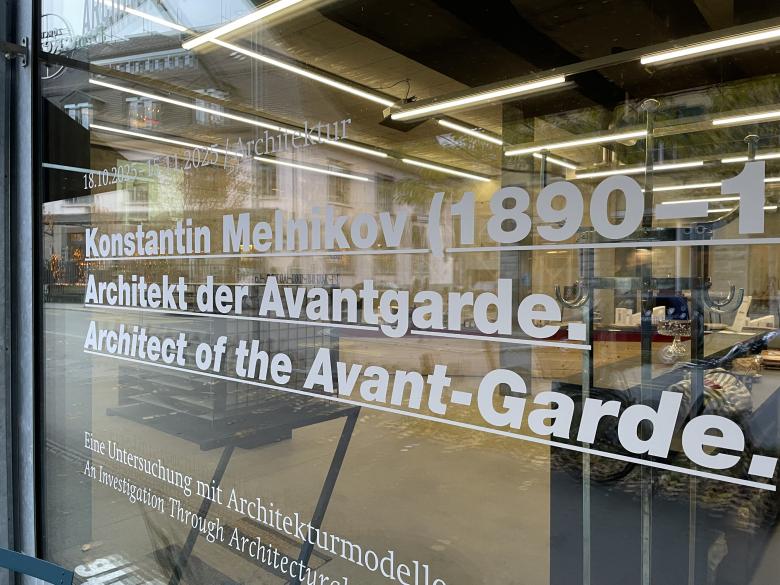
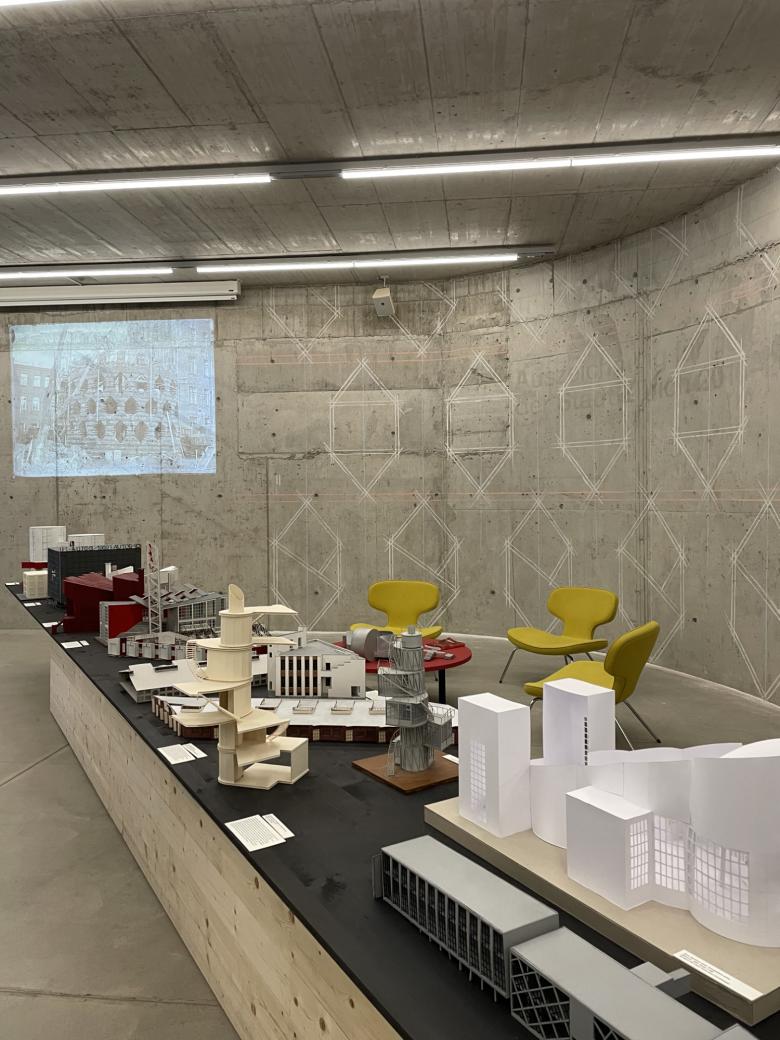
Konstantin Melnikov (1890-1974): An Avantgarde Architect was on display at the Architekturforum Zürich between October 19 and November 15, 2025. (Photo: John Hill/World-Architects)
Many of the models were arrayed across a long table in the middle of the gallery. (Photo: John Hill/World-Architects)
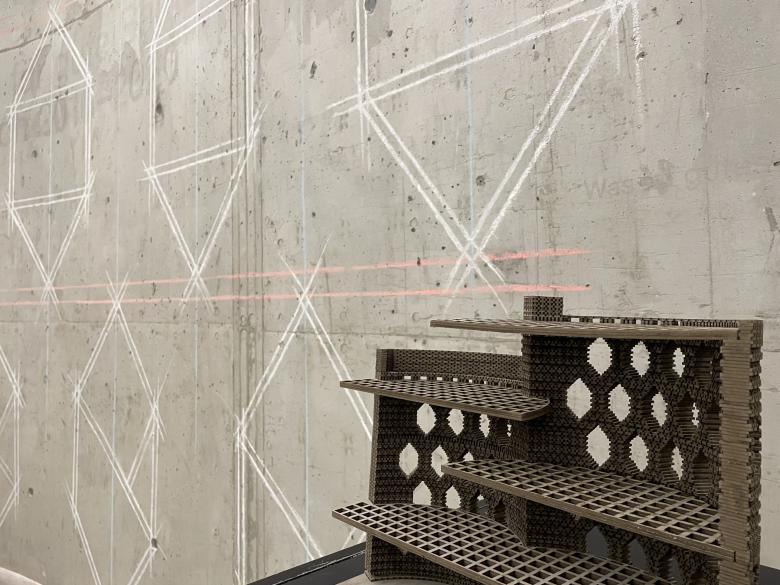
The gallery's curving concrete wall was marked with full-size windows from Melnikov's most famous project, the Melnikov House, built in Moscow in 1929 and also displayed as a sectional model at 1:40 scale. (Photo: John Hill/World-Architects)
Melnikov House, Moscow, 1927–1929. Model by I-hsuan Chu, Zhiyuan Jiang and Yuxuan Zhang, from Melnikov: An Investigation Through Architectural Models, Lars Müller Publishers, 2025 (Photo © Vladislav Ogay)
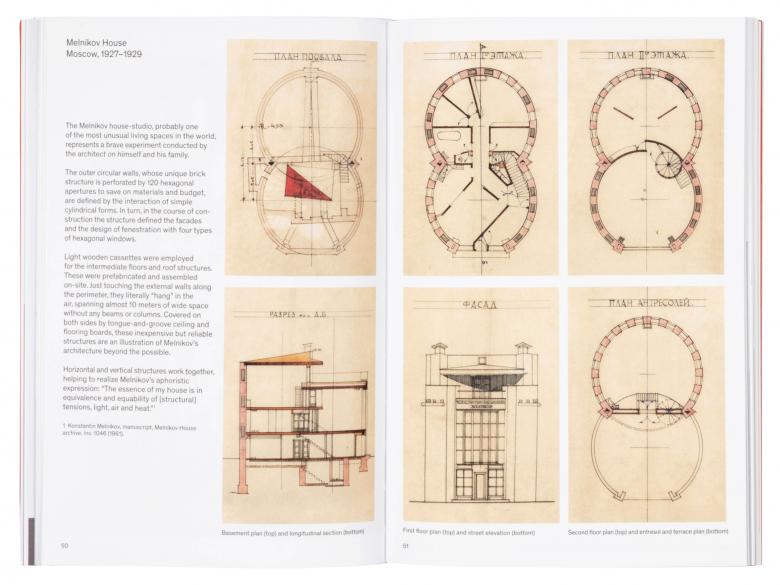
The Melnikov House is documented more extensively that most projects in the book, including drawings of the house, seen here, and photos of some large-scale models of the 38 hexagonal windows that wrap the two interlocking cylinders. (Photo courtesy of Lars Müller Publishers)
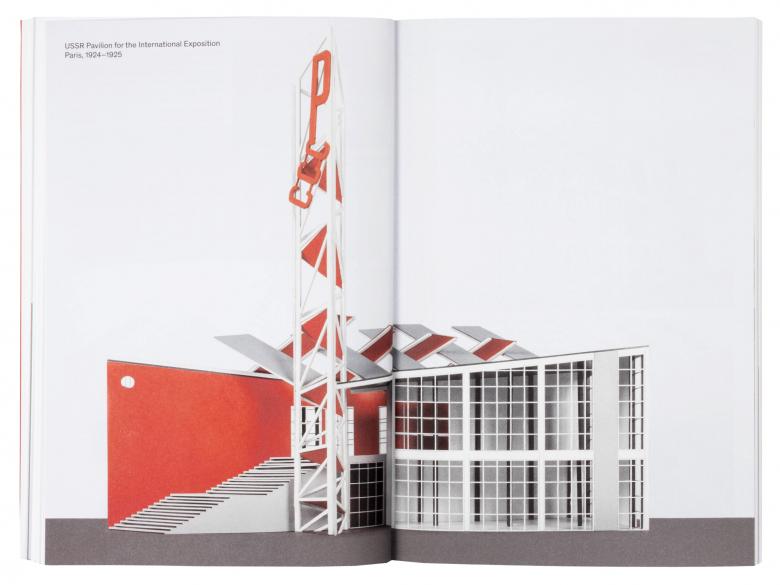
Although Melnikov's USSR Pavilion for the 1964 World's Fair was not built, his design of the USSR Pavilion at the 1925 World's Fair in Paris was. The rectilinear building bisected diagonally by an open stair was a pivotal project for Melnikov's architectural career. (Photo courtesy of Lars Müller Publishers)
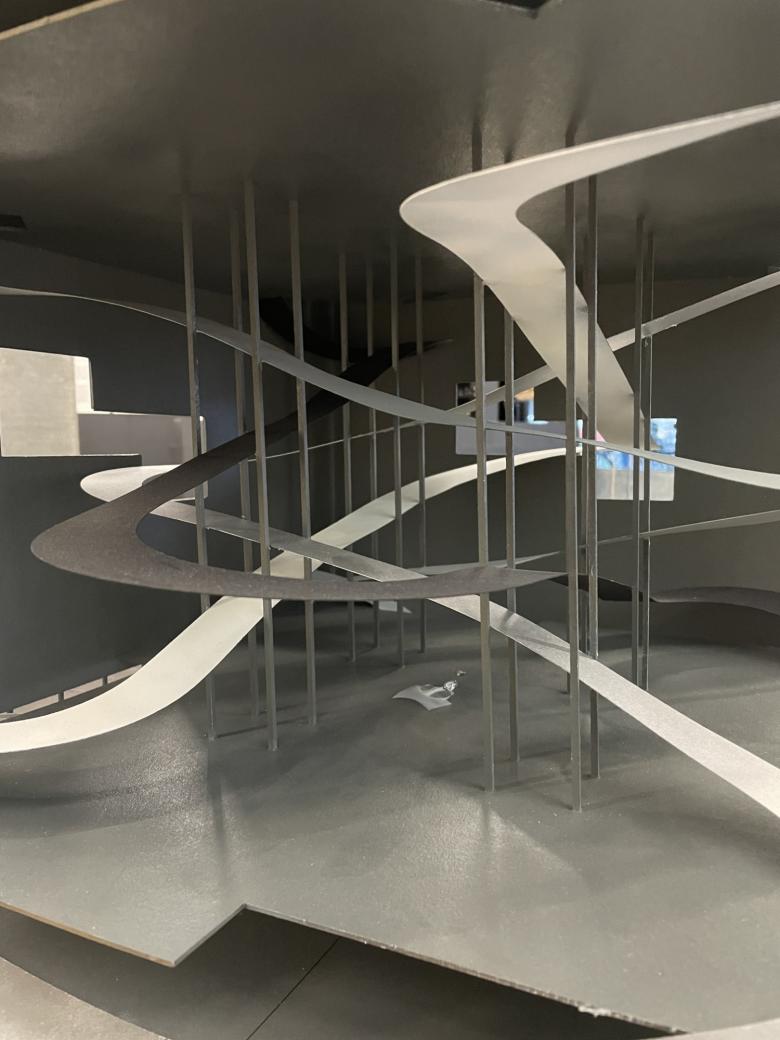
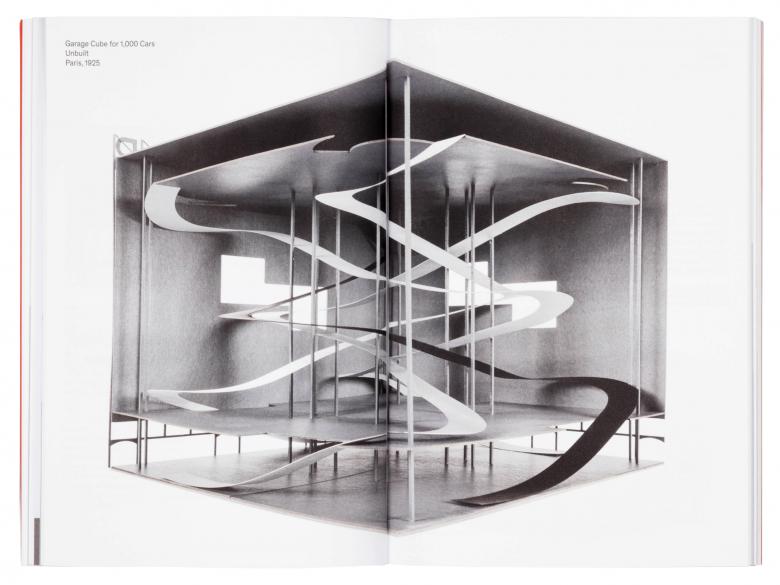
The USSR Pavilion allowed Melnikov to design other projects in Paris in 1925, but they remained unbuilt, including the Garage Cube for 1,000 Cars. (Photo: John Hill/World-Architects)
Two 1:100 models were built by the students. The one by Nicolas Keldany and Keon Ho Lee shown here and above depicts the ramps but omits the floor slabs. (Photo courtesy of Lars Müller Publishers)
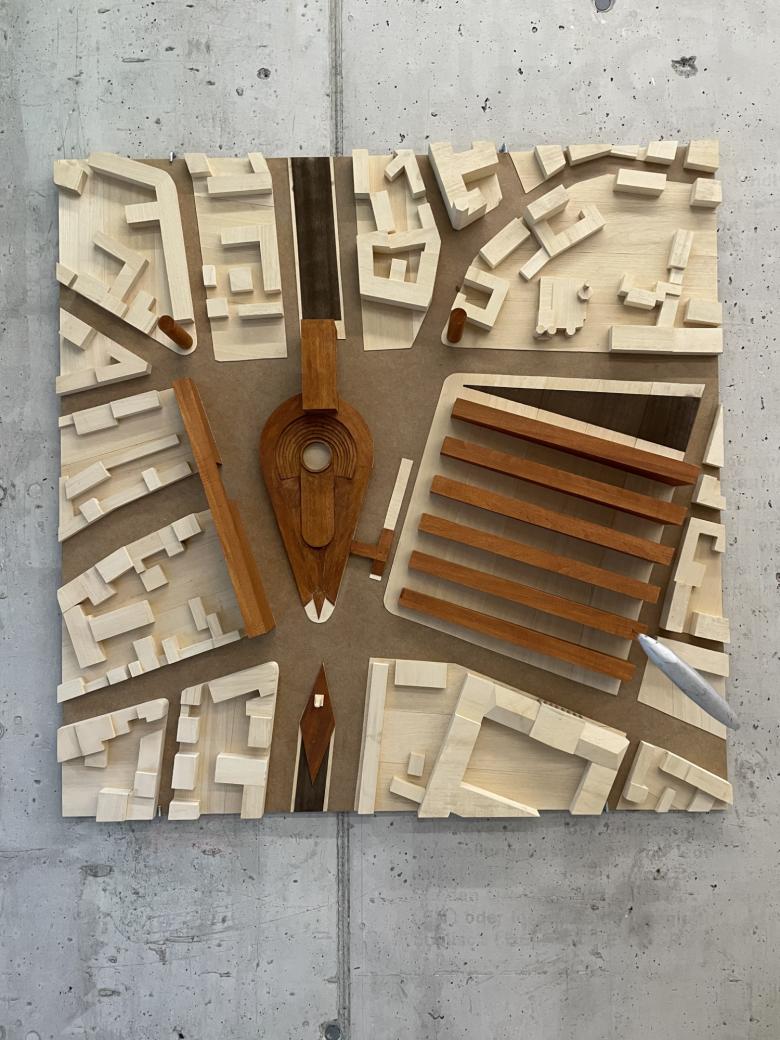
Models in the exhibition were displayed in a variety of ways, including mounted to the concrete walls, as in this 1:400 model built by Francisco Silva of the Arba Square Reconstruction, an unbuilt project from 1931. (Photo: John Hill/World-Architects)
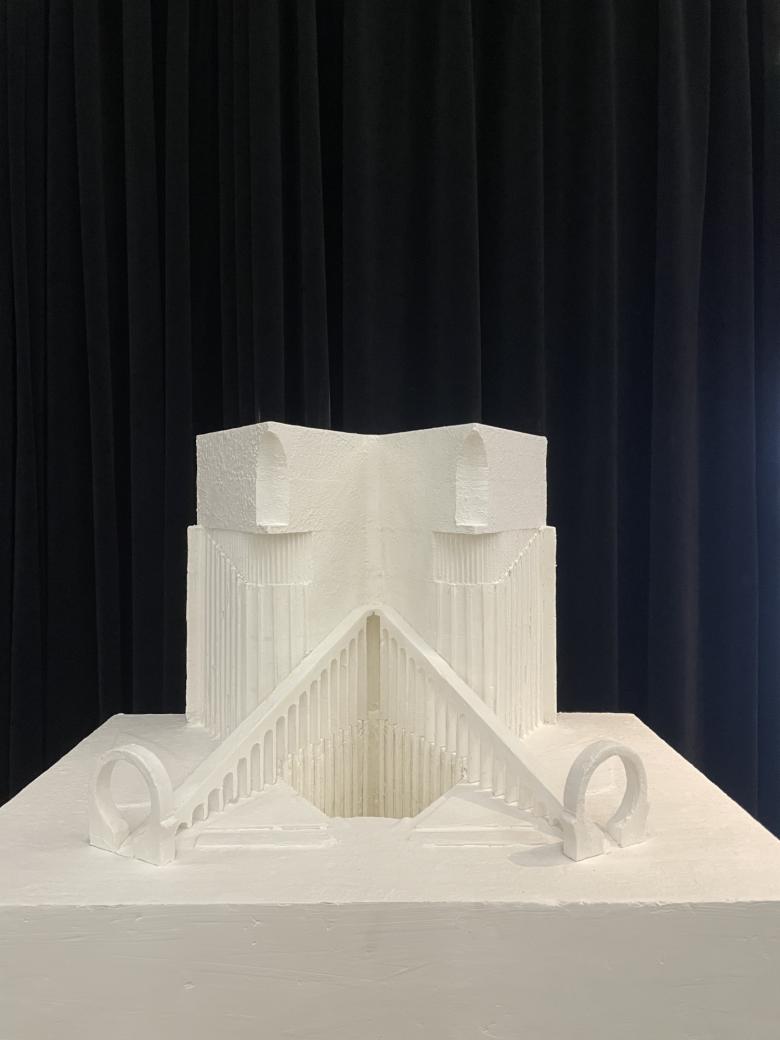
Sveva Bonapace and Maura Pagani's model of the NKTP Building (People's Commissariat for Heavy Industry), a competition entry from 1934, stood out from its position in front of a dark curtain. (Photo: John Hill/World-Architects)
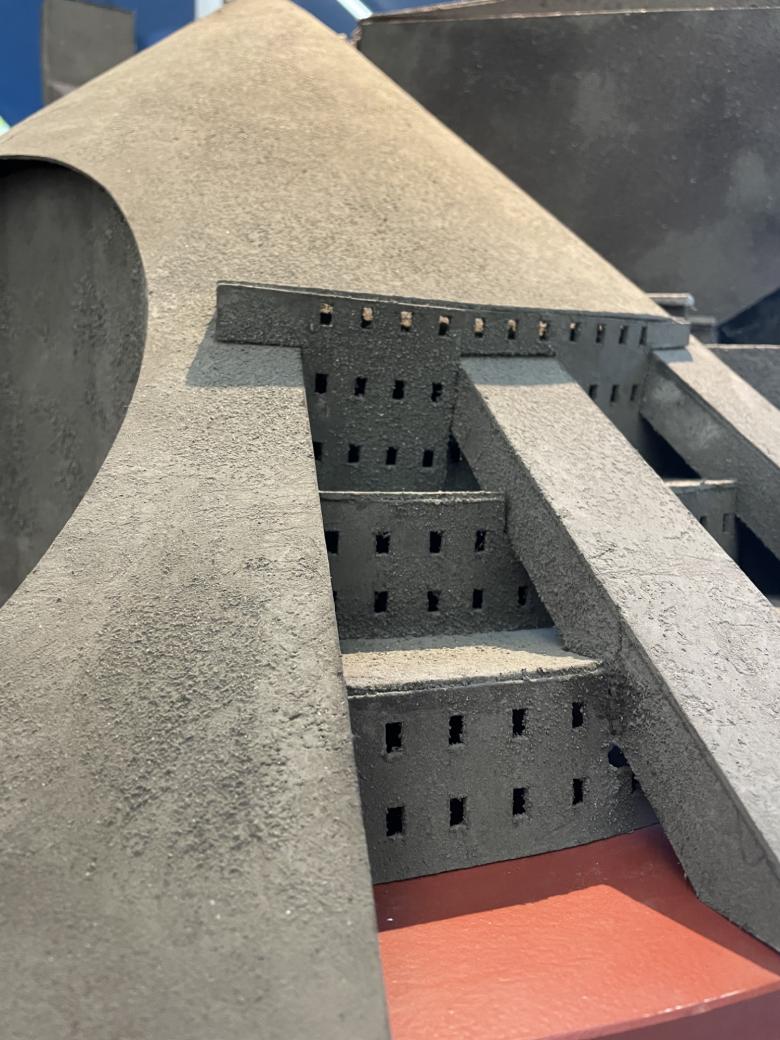
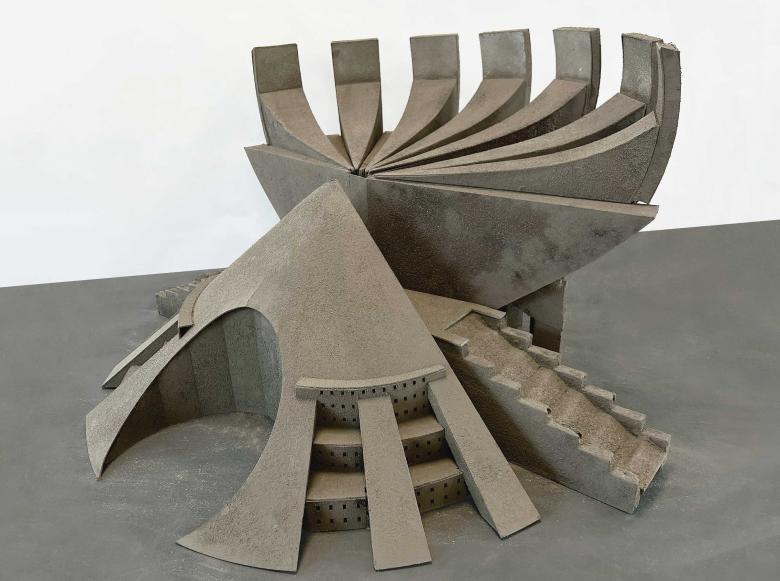
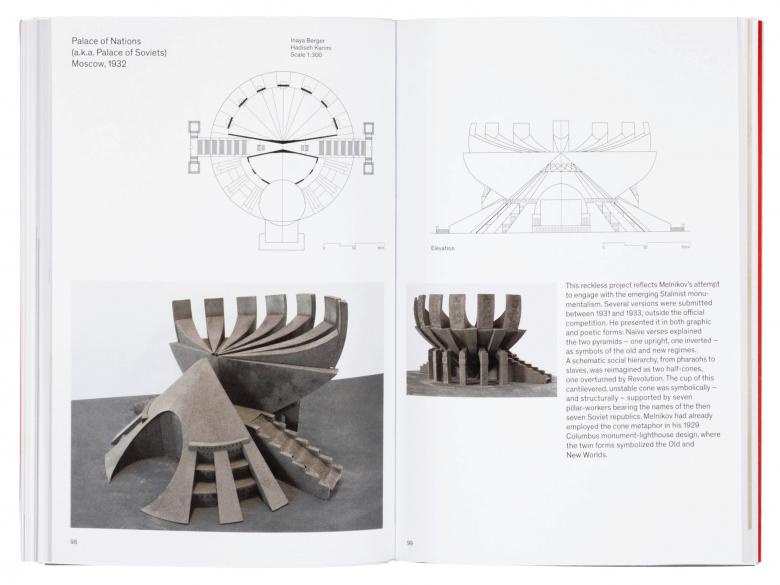
One of the most striking models on display was Melnikov's unoffical competition entry for the Palace of Nations (aka Palace of Soviets) in 1932. (Photo: John Hill/World-Architects)
Palace of Nations (aka Palace of Soviets), Moscow, 1932. Model by Inaya Berger and Hadiseh Karimi, from Melnikov: An Investigation Through Architectural Models, Lars Müller Publishers, 2025 (Photo © Vladislav Ogay)
Both the Palace of Soviets and NKTP Building are situated in a section of the book titled “Monumentalism, 1932–1937,” which saw Melnikov grappling with “a language of new monumentality” that stemmed from briefs demanding buildings “wildly out of scale with the city.” (Photo courtesy of Lars Müller Publishers)
Melnikov: An Investigation Through Architectural Models
Edited by Pavel Kuznetsov, Marianne Burkhalter and Christian Sumi
16,5 × 24 cm, 6 ½ × 9 ½ in
160 Pages
150 Illustrations
Paperback
ISBN 9783037788035
Lars Müller Publishers
Purchase this book