Atsuta-nagAya
Nagoya-city, Aichi, Japan
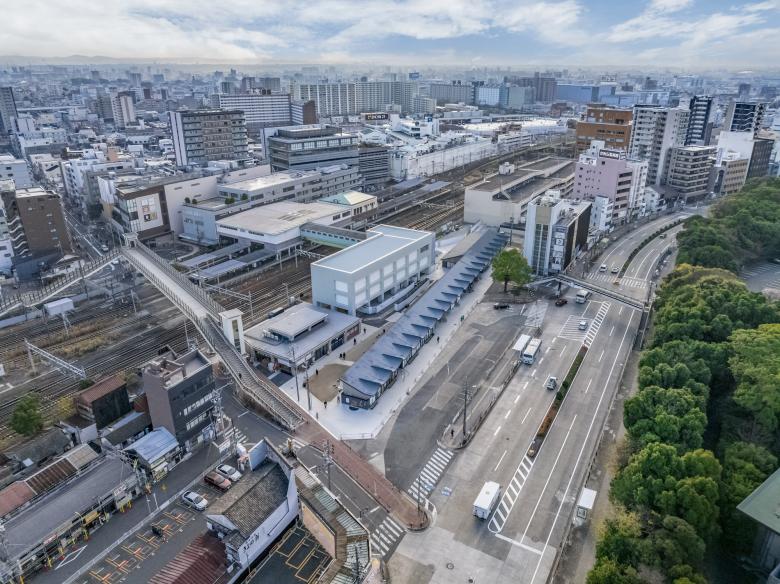
Redevelopment of Division
Although there is a common saying about subtraction design, we think this is division architecture. Not only would it reduce the scale, but by dividing functions and distributing them across areas, it might become a development that fosters multifaceted connections.
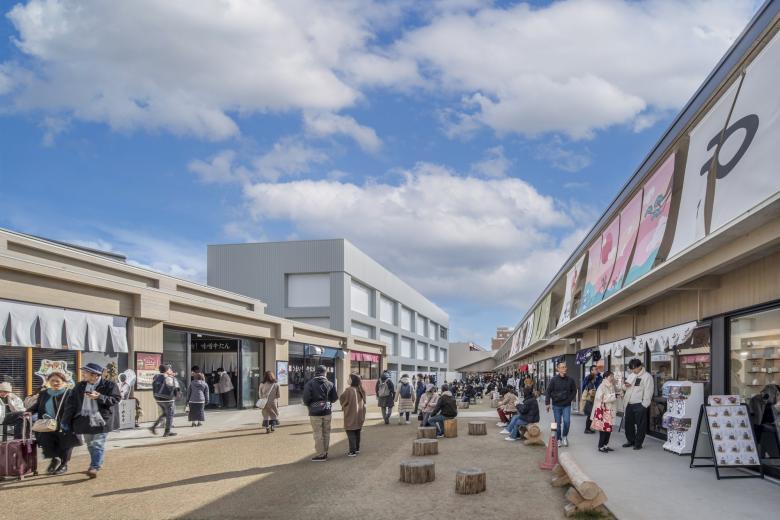
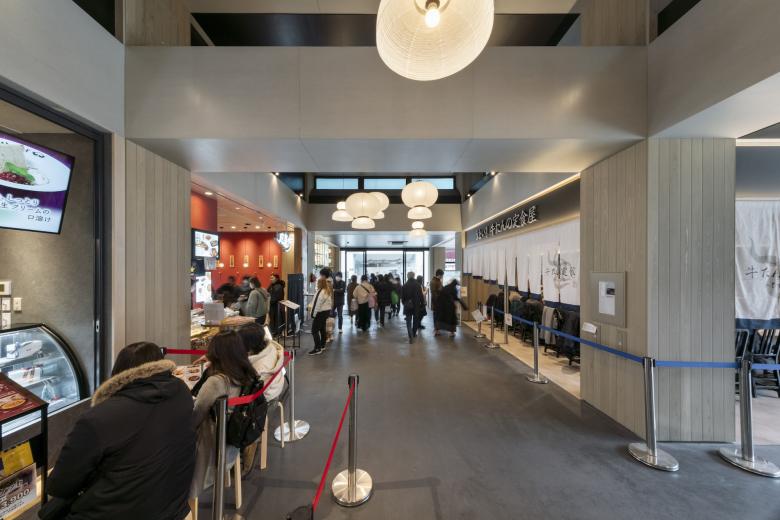
A redevelopment project for the block west of Nagoya Railroad Jingūmae Station, located in Atsuta Ward, Nagoya City, Aichi Prefecture. The Atsuta area is one of Nagoya's tourist areas. Nagoya Railroad reduced the size of an existing large commercial facility on a roughly 7,000 m² site while preserving the station building functions. And then, we constructed three single-story wooden buildings in the vacant space. The project required a space that can be used daily by commuters, students, and local residents, in addition to serving as a commercial tourism facility. Moreover, due to its proximity to the shopping district, the design also required a layout that encouraged circulation in areas extending beyond the site boundaries. Although redevelopment projects typically tend to feature commercial facilities in low-floors and offices or hotels in high-floors, this project stands out from that conventional approach.
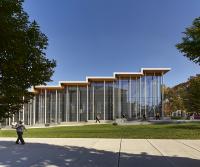
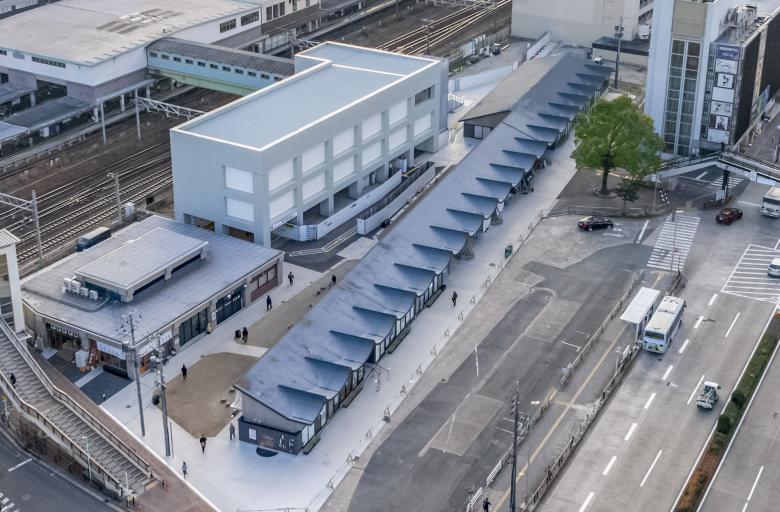
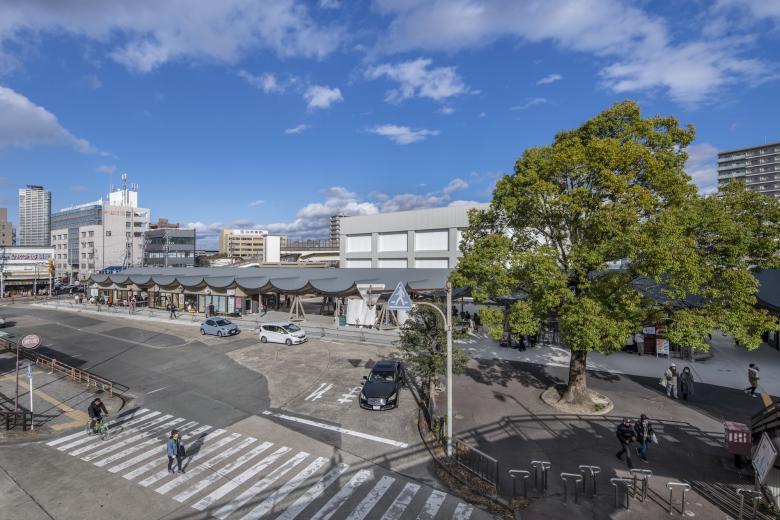
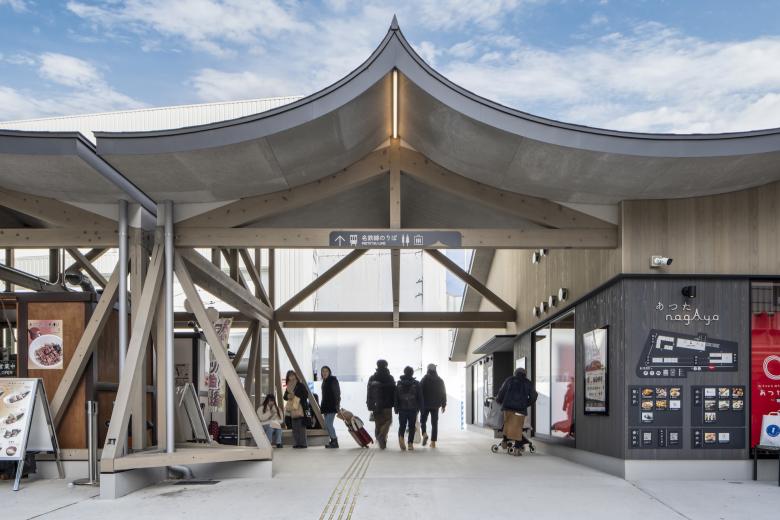
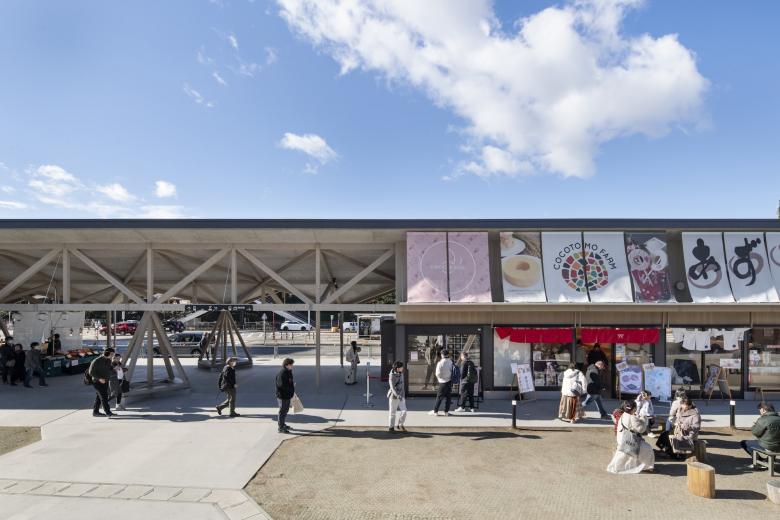
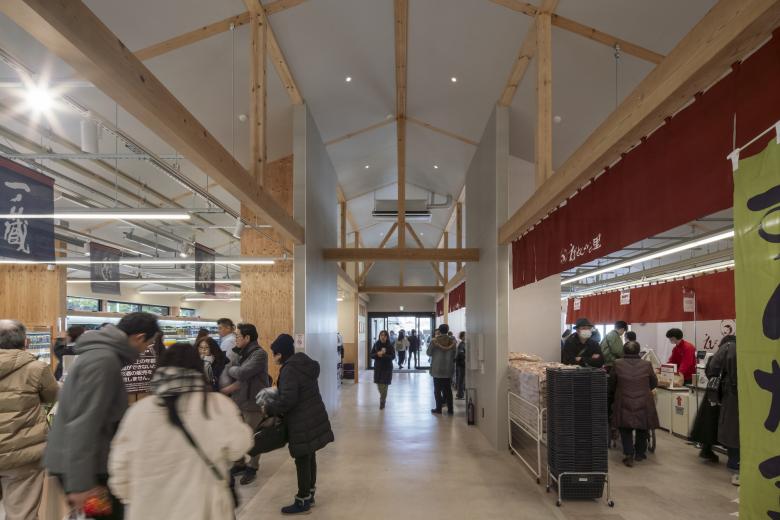
The building features a long facade of 120 meters facing the road. The layout makes use of the site's length to create an attractive architectural design that entices passing motorists to stop by. In order to achieve sequentiality with the shopping district leading toward JR Atsuta Station, considering the layout of crosswalks and pedestrian flow, we examined the balance the three buildings. Building A was designed to retain the form of the existing large-scale commercial facility. During demolition, the cut surfaces of reinforced concrete were exposed. When supervising the station building's exterior design, it was planned to utilize this exposed finish as it was, but this was abandoned due to the station 's high public nature. In Building A, the cross-sectional size and column span were determined based on the shape of the partially cut columns and beams during demolition, aiming for a robust timber structure.
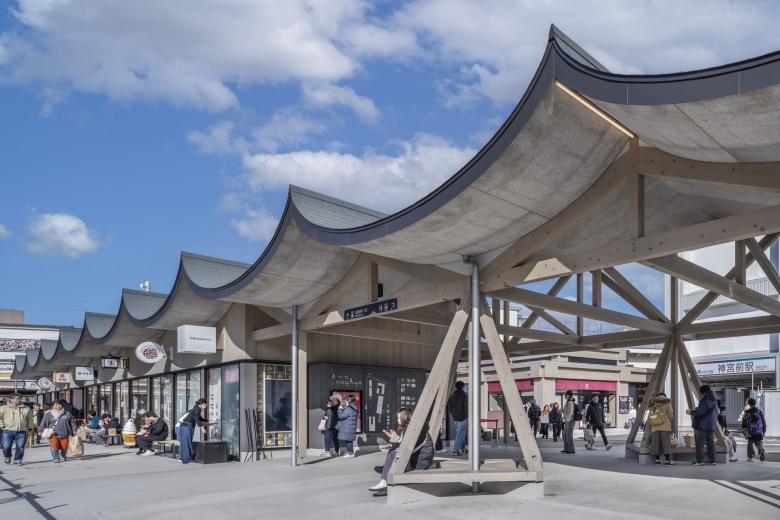
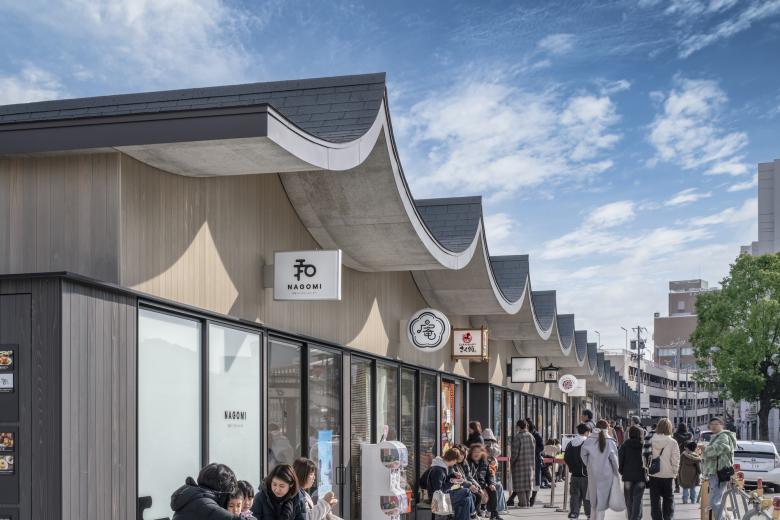
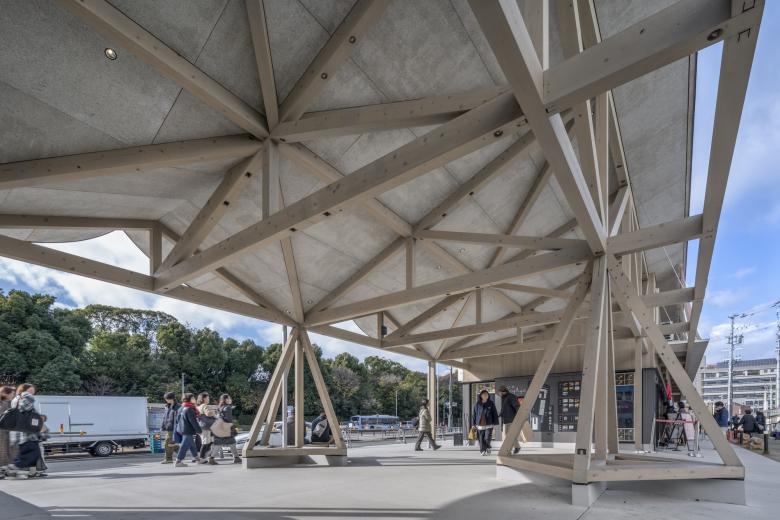
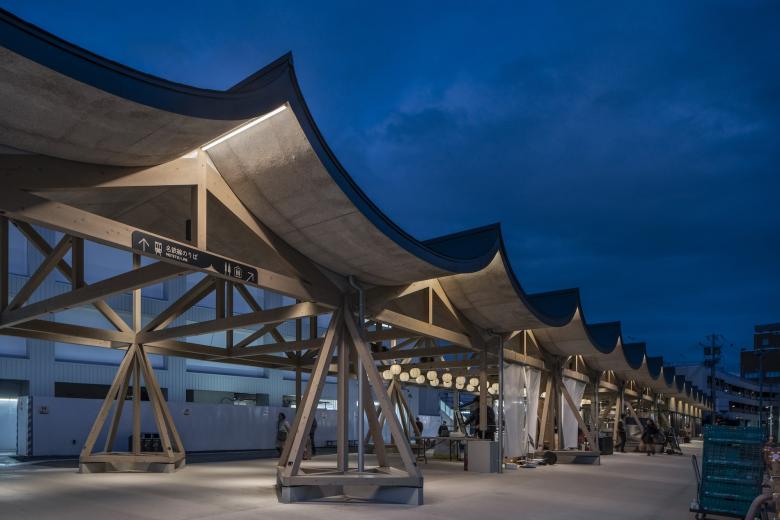
The repeating wave roof of Building BC was designed to give each store its own distinct identity. Drawing inspiration from Japan's traditional wooden architecture, we recognized that capturing Nagoya's unique character was essential to providing an experience found only here. We reached “Nagoya-Roofs” what photographer Akira Oyama named. These are tent roofs extending from hotel and shop premises onto the sidewalk. They serve as signage, embody the spirit of hospitality by providing shelter from the rain, and their prominence rediscovers Nagoya's distinct character. To create a bustling atmosphere through the continuous connection of small shops along the shopping street, we created a sequence of small-scale wave roofs, making them a symbol like "Nagoya Roofs". The east side of Buildings B and C were designed to match the height of the adjacent shopping street's roof, creating a sense of unity. The storefront signs featured tents painted in red, yellow, and green as sunshades, inspired by the shopping street's canopies, creating a distinctive roof that reflects character in this area. The wooden frame of the square pyramid was designed with downward-spreading braces to prevent people from bumping into them in crowded conditions. Seating surfaces were incorporated into the structural elements to create a place to sit, and the space is now bustling with activity. In addition to the four elevations, we also focused on the five-sided facade seen from station platforms and pedestrian bridges, paying particular attention to equipment placement to ensure no mechanical systems were exposed. Stores offering street food, local culture, and unique regional cuisine are lined up here.
Phase 1 Buildings A and B opened in September 2024, and Phase 2 Building C opened in December. The Jingumae Station West District aims to be “a town adults want to visit,” while Atsuta nagAya seeks to be “a place where visitors can experience and rediscover locally inherited attractive features.” Food trucks and other vendors participated, creating a bustling atmosphere reminiscent of a festival. Upcoming projects include renovating station access routes and improving the police box and rotary.
- Architects
- nanometer architecture
- Year
- 2024
- Project Status
- Built