Expo 2025 Osaka, Kansai Satellite Studio East
Osaka-city, Osaka, Japan
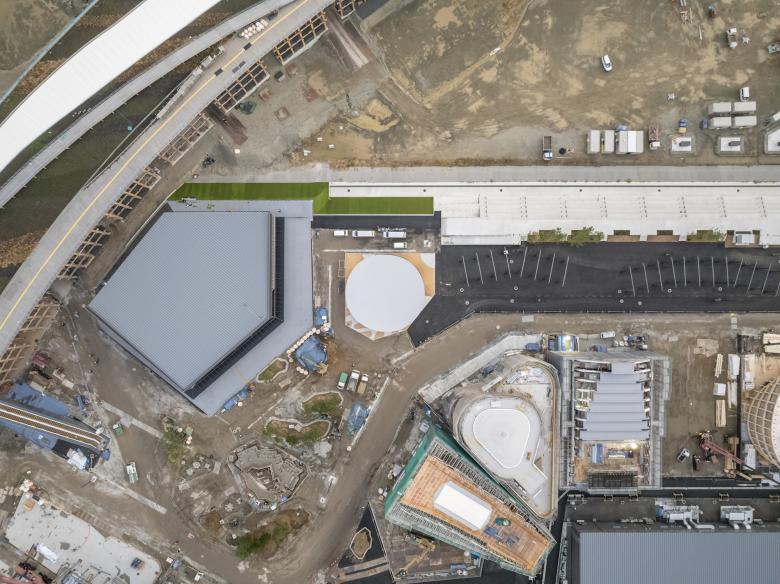
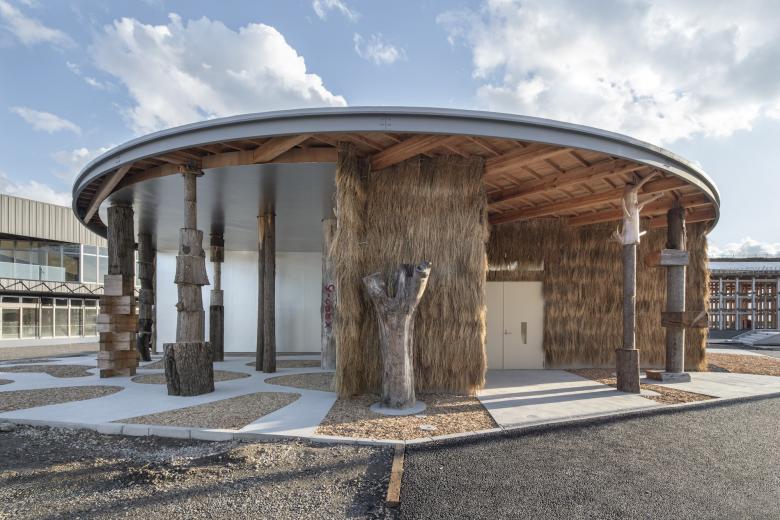
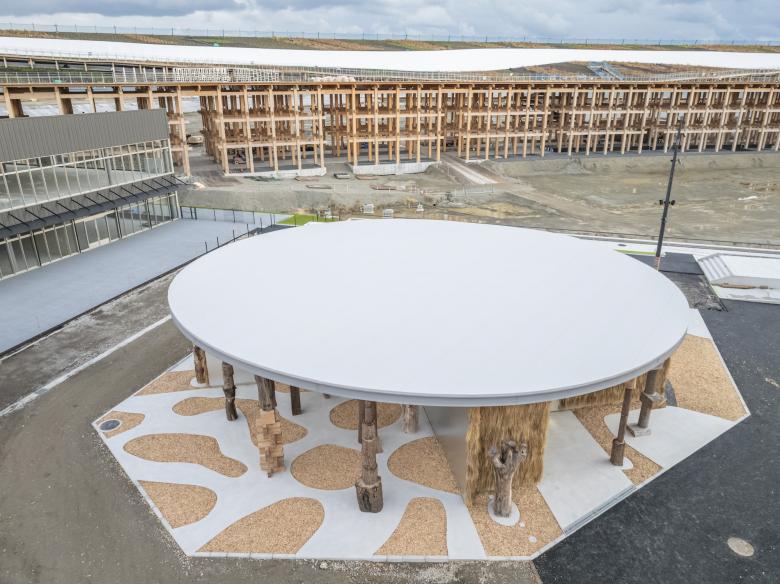
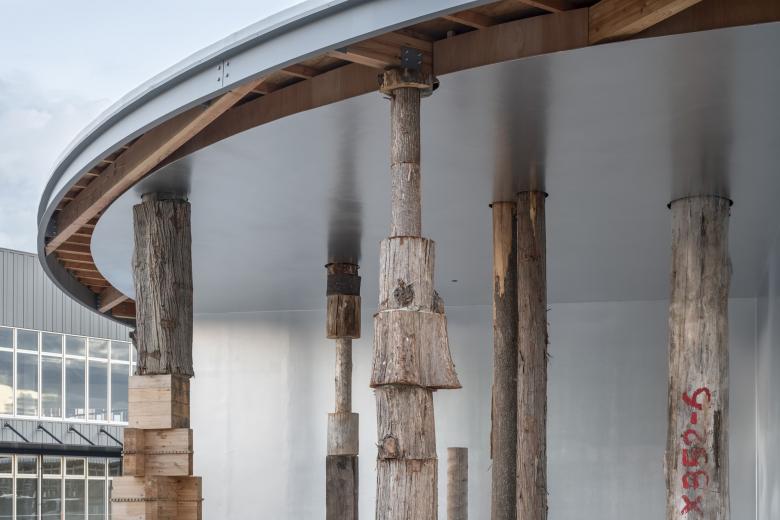
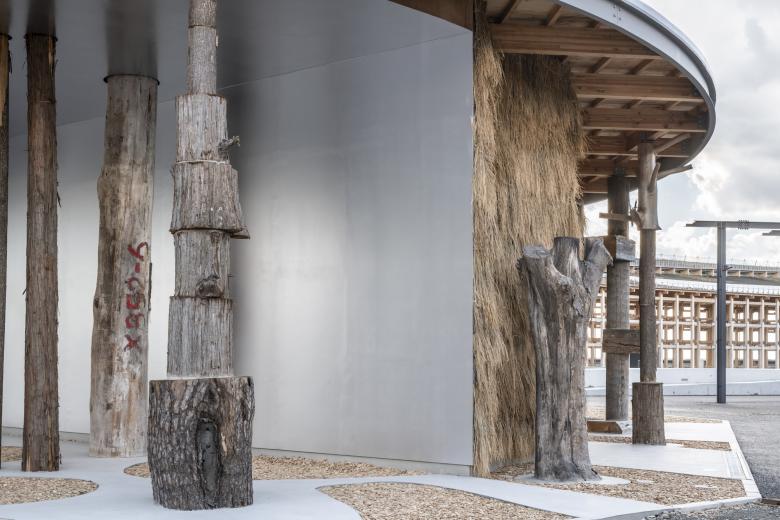
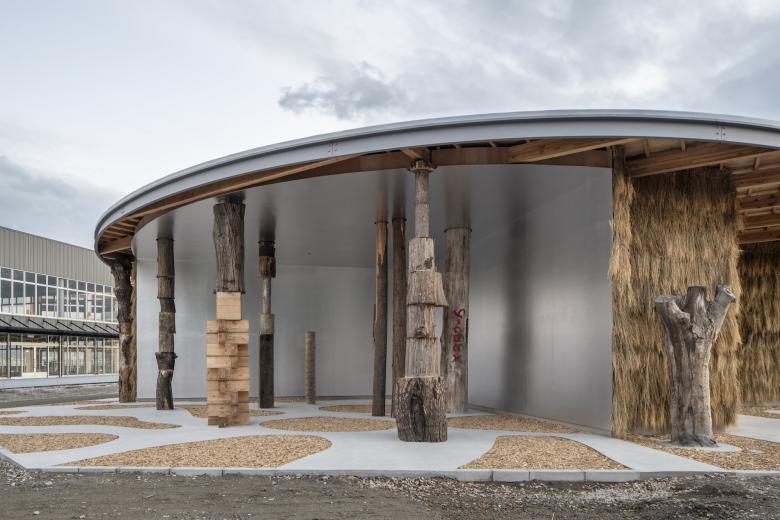
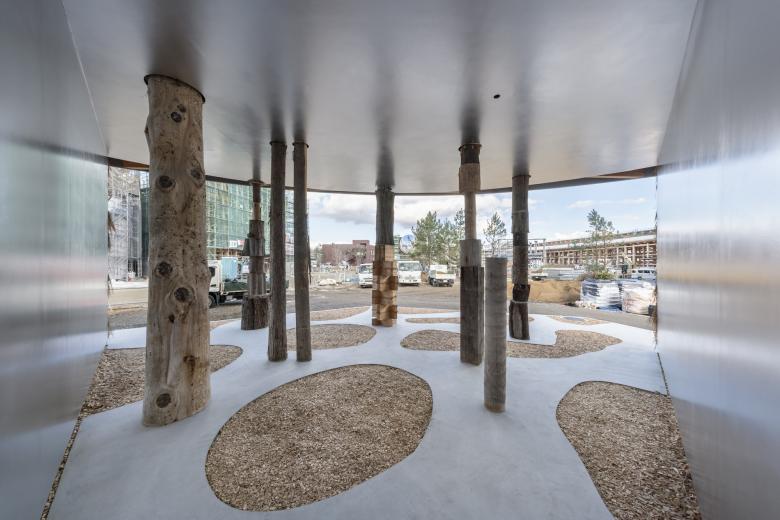
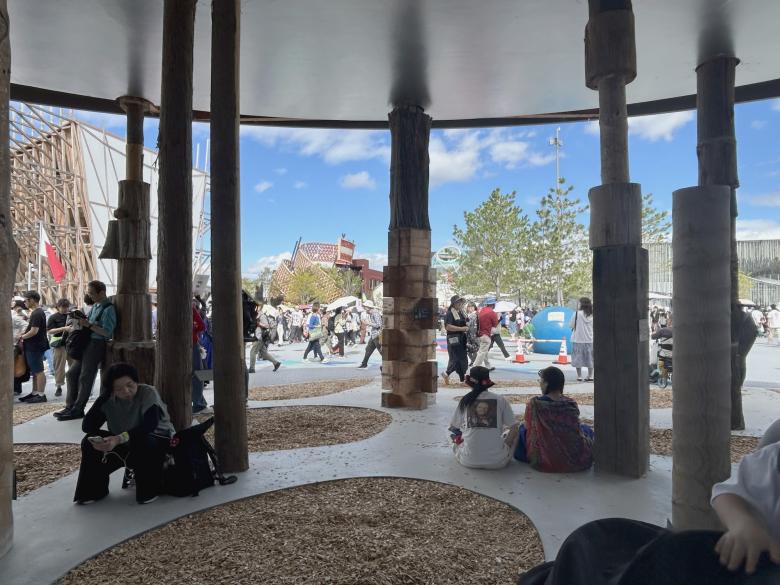
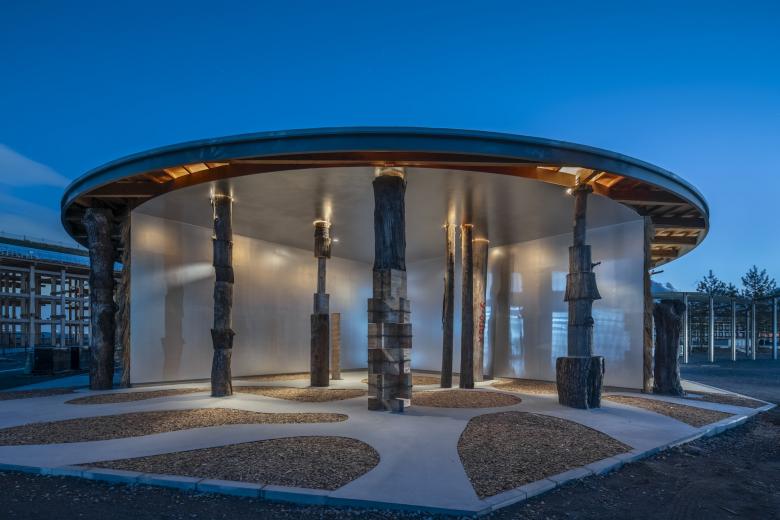
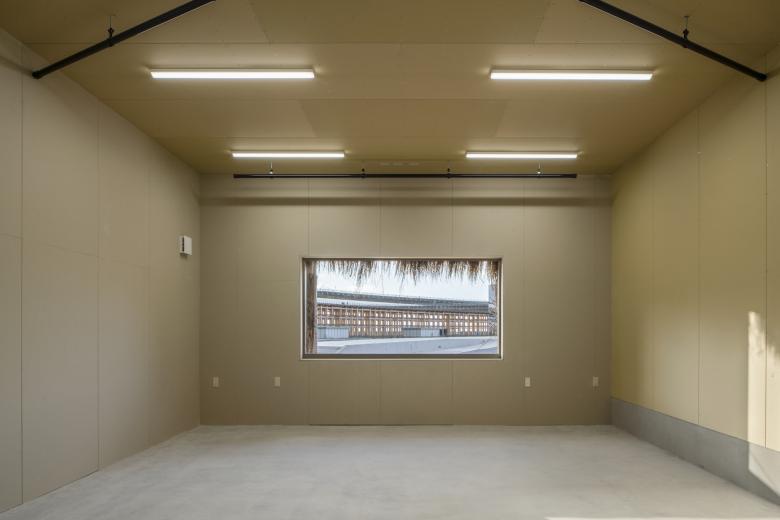
Satellite Studio East collects “ troubled woods ” discarded due to various human circumstances from across Japan and uses them as pillars. This building has three TV station broadcast studios inside. Various types of wood are stacked vertically to support the disc-shaped roof.
The proposal remained unchanged from the initial submission, and over the course of about a year starting from the detailed design phase, we gathered troubled woods. We typically handle processed wood products, so we have an ingrained recognition of wood as a building material. After many twists and turns, we entered the world of architecture. This is why we tend to think about architecture by looking at it from the outside and then stepping inside, repeatedly crossing back and forth. However, when it comes to building materials, there seems to be a tendency to choose from a set selection—or perhaps it's more accurate to say that cost and regulations have led to this situation—and we feel we've come to doubt it no longer. It might not be an exaggeration to say that we had become to think only within the confines of architecture.
However, through collecting wood, we came to understand the significance of wood before it becomes building material and the woods around us. With wood as a starting point, we became aware of the social, environmental and industrial issues surrounding it, as well as activities that draw on its positive attributes. Stepping outside the realm of architecture, we feel our perspective has broadened.
The wall material features rice straw woven by “thatch weaving” technique. What is required of an exterior wall is durability. However, rice straw is a material that needs to be renewed every year, possessing characteristics diametrically opposed to modern materials. The six-month exhibition period allowed us to use this material. While thatch reeds are not easily obtained, rice straw is a readily available material that can be sourced from anywhere in Japan every year. We would not continue to propose rice straw as an exterior wall material going forward, but it led us to reconsider the material's lifespan, cycle, and sourcing routes.
This is an attempt to approach the reorganization of a new timber construction method called “ stacked pillars” using simple, accessible materials as a starting point, as well as to enable recognition of social issues surrounding us. Can we turn our attention to the future that vaguely comes into perspective beyond the collection of “troubled trees”? I feel that encountering unseen challenges makes the future clearer.