World Building of the Week
A Loop for the Arts: The Xiao Feng Art Museum in Hangzhou
In China, things usually happen quickly—including in architecture. But the Xiao Feng Art Museum in Hangzhou took its time: the planning, coordination, and outfitting stretched over thirteen years before the museum doors were finally opened. Beijing-based architect Zhang Ke and his team at ZAO / Zhang Ke Architecture Office (formerly standardarchitecture) were commissioned to build the museum after winning the initial design competition in 2012.
Dedicated to the artist couple Xiao Feng (1932–2025) and Song Ren (1932–2025), the museum sits at the foot of Daci Mountain, just a few kilometers south of Hangzhou’s celebrated West Lake. Xiao Feng began his studies in Shanghai in 1950 and was sent to the Soviet Union in 1954 to pursue further studies in oil painting. After his return in 1960, he taught first at the art academies in Hangzhou and Shanghai before serving as a full professor at the Zhejiang Art Academy in Hangzhou from 1983 to 1996.
Xiao Feng and Song Ren donated more than 500 works to the museum collection, 80 of which have been on display in the inaugural exhibition since April 2025. Xiao Feng’s paintings are well known throughout China, as many of his works—some of them created in collaboration with his wife—depict revolutionary themes that were disseminated nationwide as iconic propaganda posters. Despite their technical mastery, the works are still largely regarded as an expression of a bygone era, one that today’s younger generation views with a certain indifference.

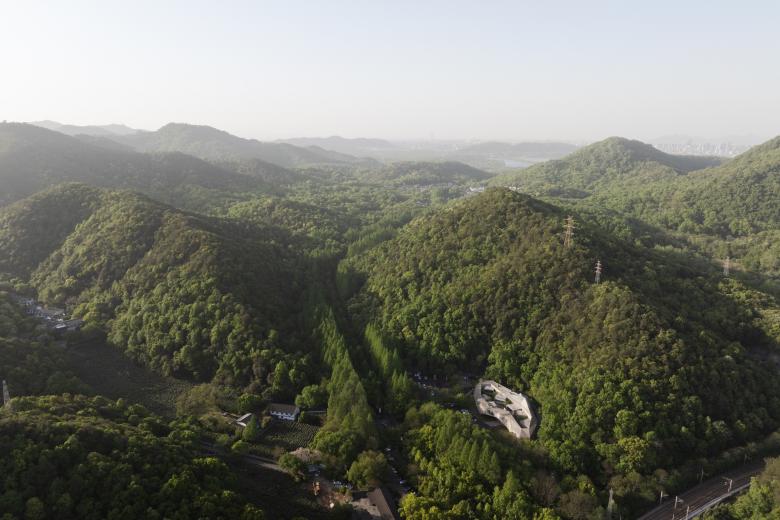
The museum site is nestled in a tranquil, hilly, wooded landscape on the slopes of Mount Daci, halfway between West Lake and the Qiantang River. The wider area is home to attractions that draw countless tourists, ranging from historic temples and tea terraces to the pagodas around West Lake that no visitor leaves unseen. Against such formidable competition, it was essential to develop an idea for the museum that would speak to people on an emotional level, especially the younger audiences.
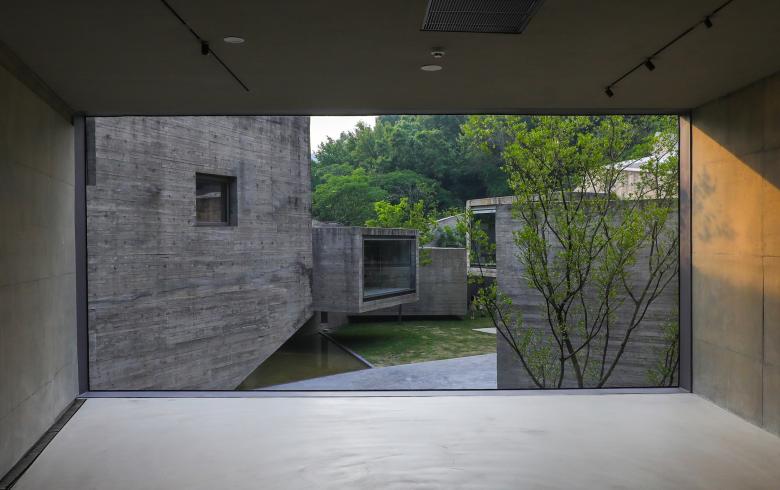
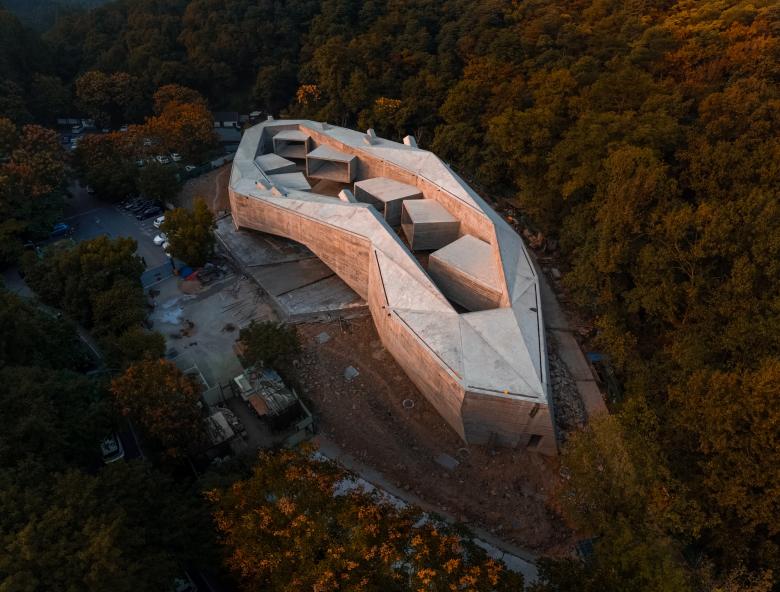
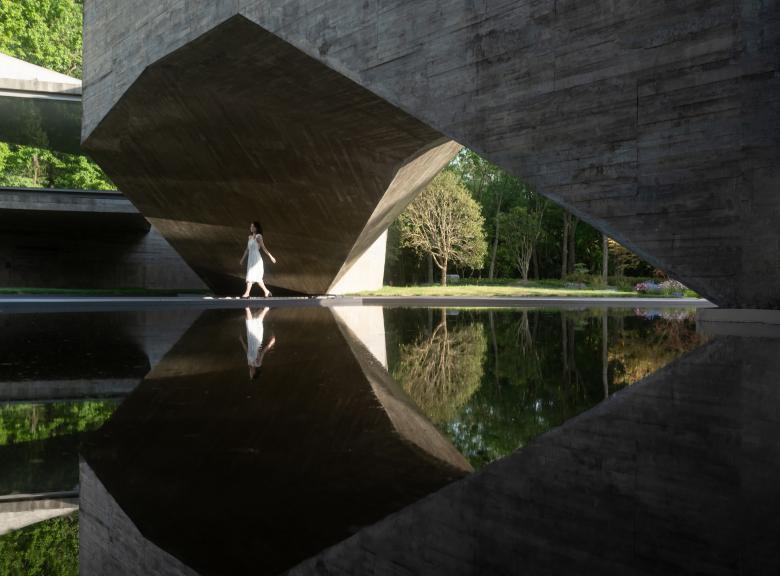
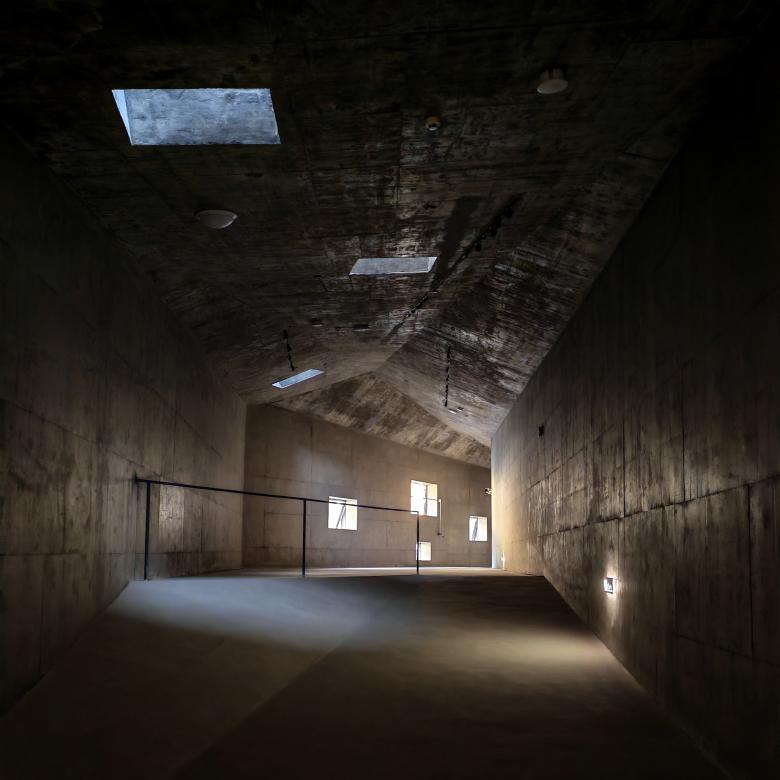
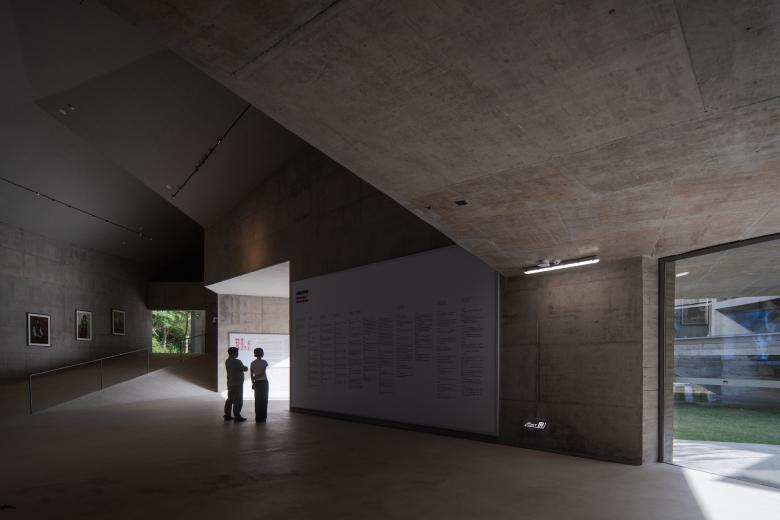
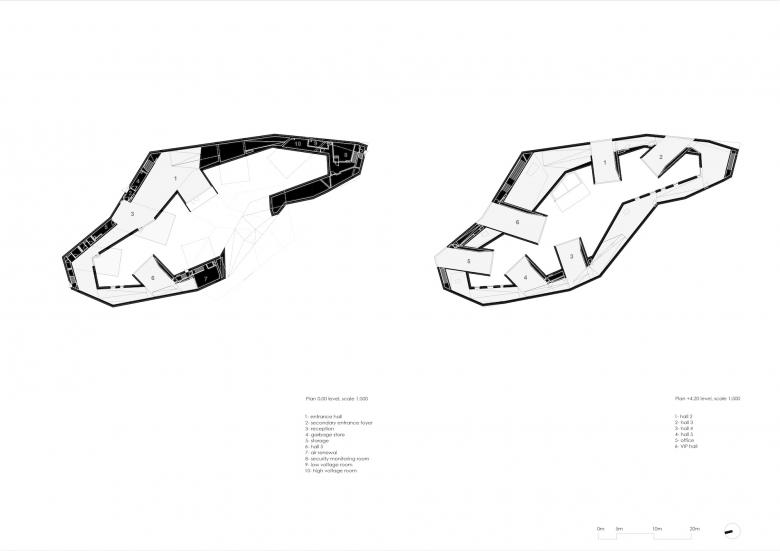
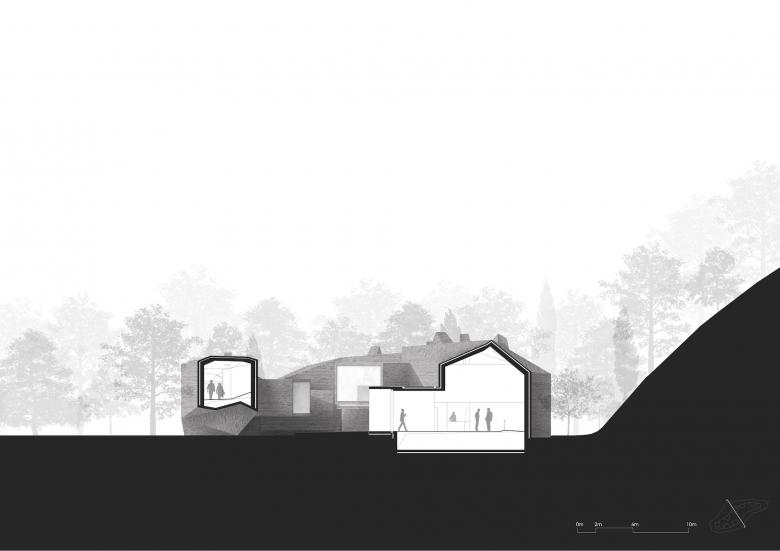
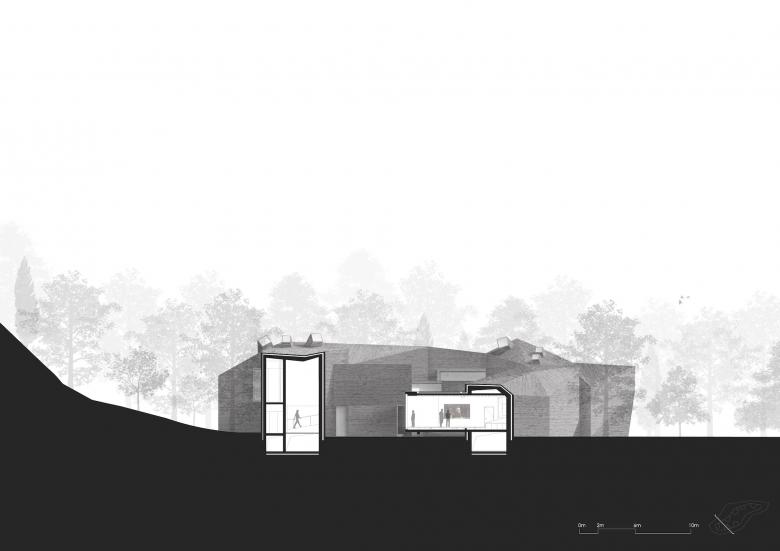
The museum’s unusual shape, nestled into the contours of the terrain, evokes an animal—perhaps a snake—winding itself around a central garden. Inside, visitors follow a looping path, a circular promenade that unfolds along a series of ramps. These ramps bridge over the elevated sculptural structure that marks the museum’s entrance. From the outside, the polygonal building is largely closed, with the external facades punctuated only by a few carefully placed openings. On the inside, box-like volumes project toward the inner courtyard—a contemporary interpretation of the traditional scholar’s garden—and frame deliberate views that subtly integrate the world beyond the museum walls.
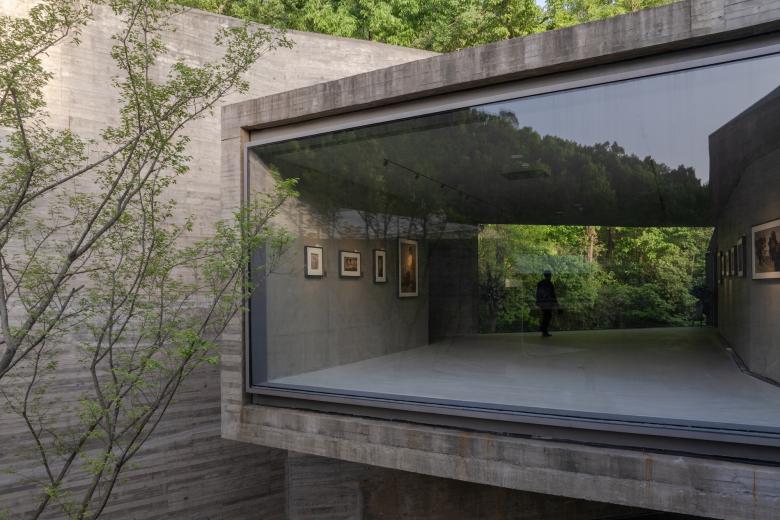
The sculptural external shell of cast concrete tinted with black ink was fabricated and cast on-site. Its polygonal, almost crystalline geometry refracts daylight, thus emphasizing the building’s organic contours. The serpentine form sets the uniformity of the material in stark contrast with the surrounding nature. Inside, the sequence of narrow passages followed by expanding galleries creates a spatial rhythm that engages the visitor both physically and visually in an experience that unfolds as they move through the loop.

The selection of this project by the competition jury owed much to its potential to attract a younger audience through its unconventional architectural expression. The strategy has paid off: Over a thousand visitors come daily, sharing selfies and snapshots that circulate widely on social media—inadvertently giving new visibility to the revolutionary pathos of Xiao Feng’s art. The architecture itself, which subtly interacts with historical themes, becomes a powerful gesture that merges topography, nature, and organic form into a cohesive spatial experience. In a world saturated with virtual environments, the tangible presence of material, the choreographed perspectives, and the strong grounding in local context offer visitors, especially the younger generations, a heightened sense of discovery in the physical world.
Text by Eduard Kögel.

Location: No. 1 Huyu Road, Xihu District, Hangzhou, Zhejiang Province, China
Client: China Academy of Art, Qianjiang Management Committee of West Lake Scenic Area
Period: 2012–2025
Site Area: 3,942 m²
Total Floor Area: 1,298 m²
Architect: ZAO / Zhang Ke Architecture Office
- Project Architect: Zhang Ke
- Design Team: Roberto Caputo, Dai Haifei, Simon Persson, Virginia Chiappa Nunez, Sofia Chebotareva, Wang Liying, Zhang Mingming, Fang Shujun, He Kuang, Yu Ge
- Collaborator Team: Wang Xiang, Chen Yixin, Li Xiang, Chen Xi, Xi Jiakai, You Bolin, Geng Junjun, Zhu Weichang, Zhang Hua, Wu Pan
- Exhibition Design Team: Qian Qi, Yu Xiaoying, Yan Jiafan, Shan Jiale, Dong Xiaoyu

Related articles
-
The Three-Body Problem: Trapped in a Wave Sandwich
Eduard Kögel, Scenic Architecture Office | 13.04.2026 -
-
-