Isabel Zumtobel: 'We Believe in the Power of Design to Change the Future for the Better'
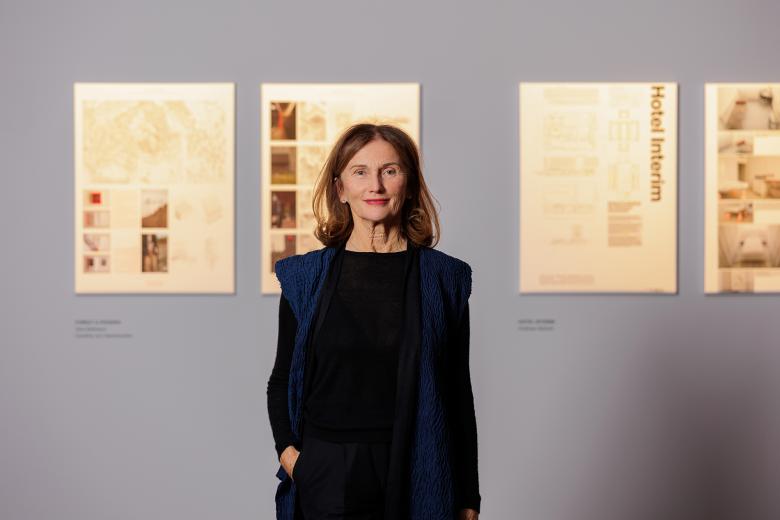
The Zumtobel Group supports the EUmies Awards, one of the most prestigious awards for architects worldwide. Isabel Zumtobel explains why she is convinced of the importance of this commitment and why promoting young talent is particularly close to her heart.
Ms. Zumtobel, your family business is one of the world's leading developers of integrated lighting solutions for professional indoor and outdoor building lighting. What motivated Zumtobel to become a partner of the EUmies Awards?
This collaboration is another step in expanding our involvement in the world of architecture. It is important for us to deepen the dialogue with contemporary architecture and urban planning. Working closely with architects inspires us time and again. Our aim is to make the perfect interplay between light and architecture visible and tangible.
Since 2016, the EUmies Awards Young Talent have been presented alternately with the European Union Prize for Contemporary Architecture, i.e. the Mies van der Rohe Awards. This award for young talent is intended to promote young architects, planners, and landscape architects who will shape our environment in the What significance do young architects have in your long-term corporate strategy? And what measures does Zumtobel take, apart from the EU Mies Awards, to specifically support this group?
As part of our partnership, we want to promote young talent and learn from them. With project-specific solutions, we are continuously developing our portfolio to improve people's quality of life through light. As the Zumtobel brand, we consciously support this young talent award to promote access to the next generation of architects, urban planners, landscape architects, and lighting designers.
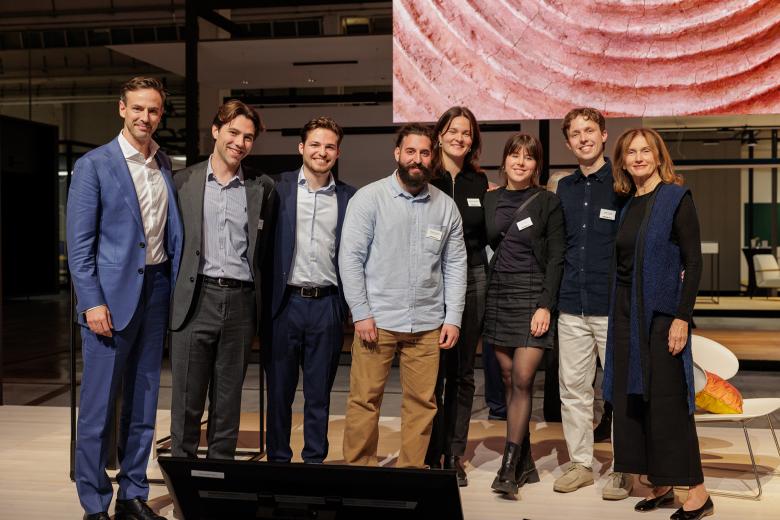
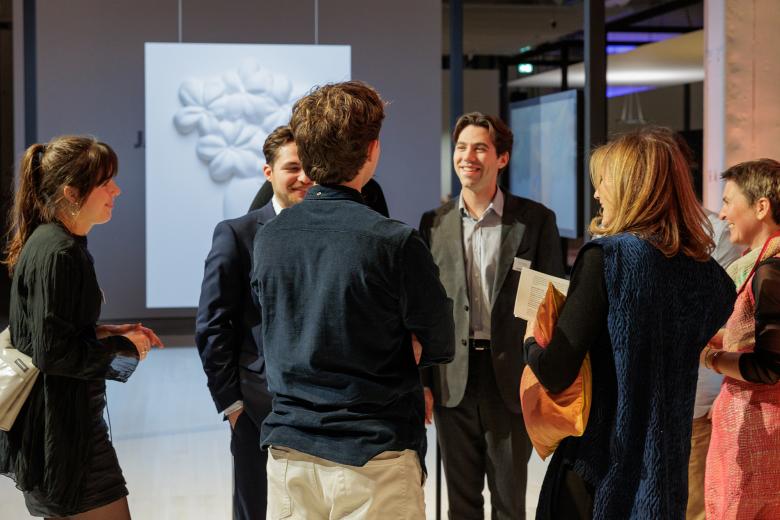
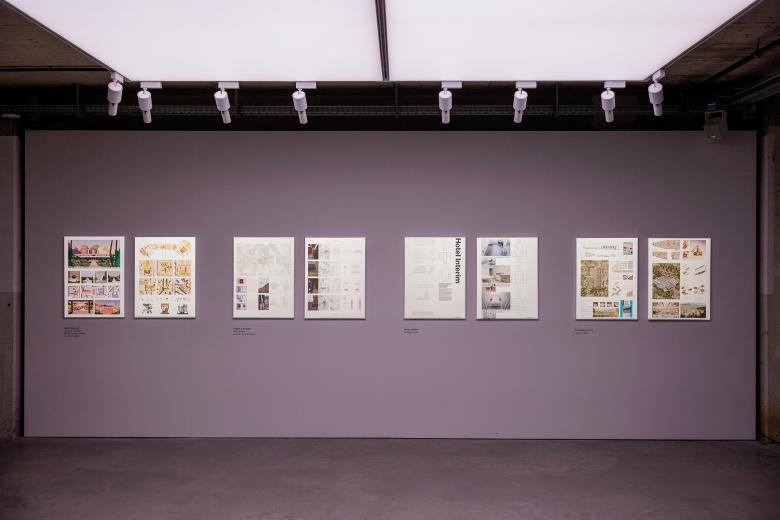
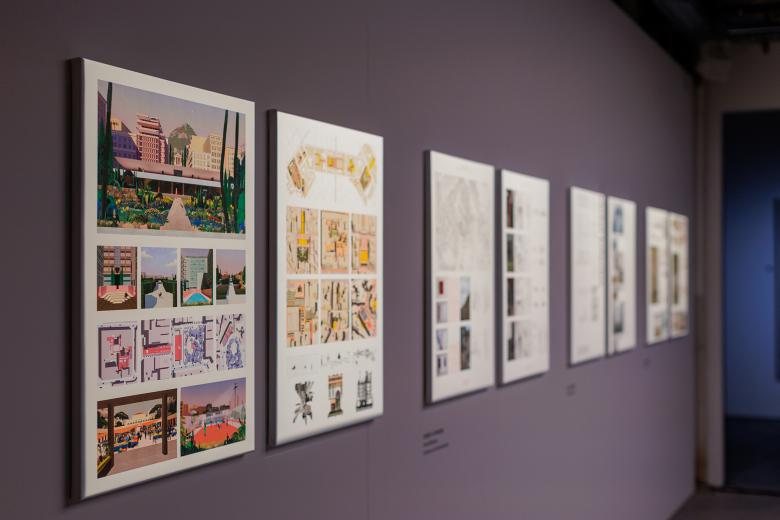
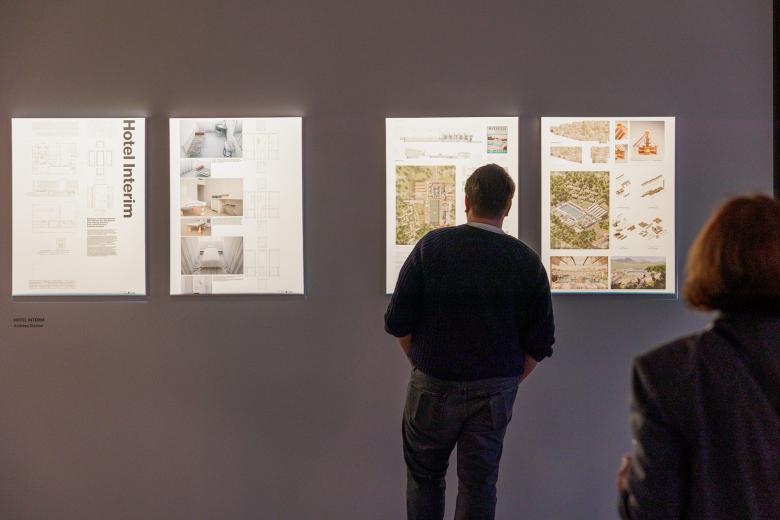
In June, the projects “Brave New Axis” by Georgios Thalassinos, Markos Georgios Sakellion, and Spyridon Loukidis from Greece, “Forest & Phoenix” by Carolina von Hammerstein and Vera Kellmann from Germany, “Hotel Interim” by young German architect Andreas Stanzel, and “Poolside Politics” by James Langlois from the UK were honored in Venice. What impressed you most about these four designs?
We live in a time of extremes. Basically, I see in all of these projects that existing infrastructure is being connected with new livable spaces. The focus is on people. Fortunately, developing architecture for people and taking social aspects into account seems to be deeply ingrained in the younger generation. It's more about the collective than ever before and, of course, about the economical use of resources.
Architects today are challenged much more than in the past. In the “Forest & Phoenix” project, the architects become mediators between science and society, i.e., between the fire department, forestry, and much more.
Architecture encompasses more than just the design of beautiful, comfortable, and efficient buildings. How does Zumtobel position itself with regard to the social relevance of architecture and issues such as limited resources, climate change, and social justice? Do you see yourself in the role of a social catalyst?
Zumtobel sees architecture as a cultural asset that can not only be enhanced by light in terms of design, but also preserved in the long term.
By using energy and materials responsibly, we contribute to the conservation of resources. Through our research and collaborations with architects, designers, and scientists, we develop new technologies and lighting solutions that go far beyond normative requirements and promote well-being, health, and climate protection in equal measure. Light influences how spaces and environments are experienced—it creates atmosphere, promotes participation, and thus becomes a social catalyst in a sustainably designed environment.
For us, sustainability is not a marketing trend; on the contrary, it has long been an integral part of our corporate strategy. We focus on durable, recyclable products and design lighting solutions that conserve resources and put people at the center. We already operate our factories largely with renewable energy. For the future, we are striving for climate neutrality in our operations. We will have achieved this goal by the end of 2025.
With initiatives such as our Circular Design Rules, Cradle to Cradle certified products, and verified, transparent environmental declarations, we create transparency and take responsibility along the entire value chain. Our goal is clear: sustainable lighting for a livable future.
How important is collaboration with architects and lighting designers, and how does this influence the research and development processes at Zumtobel?
Close communication with the market, and in particular with architects and lighting designers, is of central importance to us. This strategic target group has a significant influence on our innovation processes—their requirements and ideas are directly incorporated into the development of our products and solutions.
We do not see market needs as specifications, but as impulses and drivers of innovation that help us achieve relevant and future-oriented results. Close cooperation with our partners is therefore not an option, but a logical consequence: Only through dialogue can solutions be developed that are truly convincing in terms of design, technology, and functionality and ultimately meet the needs of users.
The construction and lighting industry is currently facing major economic challenges. What strategies are you pursuing to respond resiliently to economic fluctuations while driving innovation forward?
The construction and lighting industry is indeed in a phase of upheaval, characterized by economic fluctuations, technological leaps, and growing demands for the environmental friendliness of its products and projects. Our strategy therefore aims to strengthen both resilience and innovative strength in equal measure. On the one hand, we rely on a very broad positioning—both geographically and in our areas of application—in order to cushion economic risks. On the other hand, we invest specifically in research and development, particularly in energy-efficient, networked, and recyclable lighting solutions.
Our proximity to the market and our customers is central to this: Through intensive exchange with architects, lighting designers, and partners, we identify new needs at an early stage and can derive innovations that create real added value. This combination of stability, market knowledge, and focus on innovation makes us resilient—and enables us to actively shape the future of lighting instead of merely reacting to change.
With the innovative strength of its Tridonic and Zumtobel brands, the Zumtobel Group also contributes to the high patent density of the province of Vorarlberg, where our headquarters are located. Compared to other Austrian provinces, Vorarlberg ranks fourth in terms of the number of patents filed—currently 285. With 71 patent applications alone, Tridonic ranks second in the EPO ranking for 2024/25, i.e., on the European Patent Office's “hit list.” This makes the company one of Austria's most innovative and underlines its leading position as a technology driver in the lighting industry.
Zumtobel is celebrating its 75th anniversary this year. In addition to technological and business considerations, values such as the emotional impact and well-being created by light have always been a central focus. How do you see the future development of the architecture and lighting industry? What role would you like to play in this?
We want to be a source of inspiration and shape the future of light. We see ourselves not only as a manufacturer of luminaires, but also as a partner that combines architecture, technology, and sustainability in an interdisciplinary dialogue. Our aim is to use light to create living spaces that save energy, promote well-being, and strengthen the identity of architecture.
Our vision of the architecture of the future is one in which disciplines are converging more than ever before: Architecture, lighting design, materials research, digitalization, and social design are merging into a holistic approach. Buildings are becoming intelligent, adaptable systems that respond to people and the environment in real time—through networked technology, sustainable materials, and conscious lighting design.
Light plays a central role as a connecting element between people, space, and technology. Zumtobel wants to actively shape this interdisciplinary development—through open collaboration with architects, lighting designers, designers, researchers, and the next generation of creative minds. The result is architecture that is not only built, but also experienced, shared, and responsibly reimagined.
Let's return to your involvement in the EUmies Awards. I'm sure you want to send a message with your support.
Through our involvement in the EUmies Awards, we want to highlight the importance of architecture as a cultural and social force. Architecture shapes how we live, work, and interact with each other—and good lighting is an essential part of this experience.
Zumtobel supports this award because we are convinced that excellence in architecture and lighting design can only be achieved through dialogue – between disciplines, generations, and cultures. For us, it is not just about aesthetics, but about responsibility: creating spaces that are sustainable, human, and inspiring.
Our message to the architectural world is this: We believe in the power of design to change the future for the better, and we want to work with you to ensure that light and architecture continue to inspire a world worth living in.
What makes good architecture for you?
For me, good architecture always has aesthetic, functional, social, and ecological qualities.
It follows a clear concept; nothing about it is arbitrary or pretentious. Good architecture is tailored to its users and at the same time creates added value for the general public. It serves the people who use it and is sensibly arranged, accessible, and flexible.
Today, it is also essential that it is designed to be environmentally friendly. It is important to choose the right materials and keep resource consumption to a minimum.
But an aesthetic design that inspires people is also important. The right lighting, good proportions, and consideration for the location, history, landscape, and cultural characteristics ensure that buildings are maintained and preserved in the long term—an important aspect of sustainability that is sometimes overlooked in current debates.