Herzog & de Meuron Designing Museum for the Eames Institute
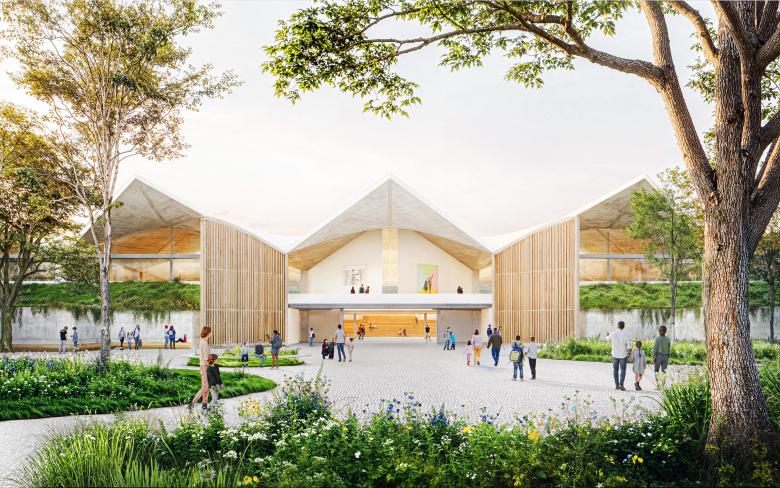
Swiss architects Jacques Herzog and Pierre de Meuron will transform the historic Birkenstock Campus in Marin County, California, into “a world-class art and design museum” for the nonprofit Eames Institute of Infinite Curiosity, which advances the legacy of famed husband-and-wife designers Charles and Ray Eames.
Since it launched in early 2022 the Eames Institute has been busy. It acquired William Stout Architectural Books that same year, ensuring San Francisco will continue to have a brick-and-mortar bookstore catering to lovers of architecture and design. Two years later, it opened the Eames Archive in Richmond, California, to the public, and moved its headquarters into a building in San Francisco originally designed by Jim Jennings. Then this year the Eames Institute acquired Lars Müller Publishers and announced its most ambitious project: a new museum that, per a statement, will hold “an array of immersive art exhibitions, makerspaces and workshops, high-impact educational programming, accessible public open space, culinary and retail offerings, with a portion of the Eames Collection and family archives on display, among other collections and works.”
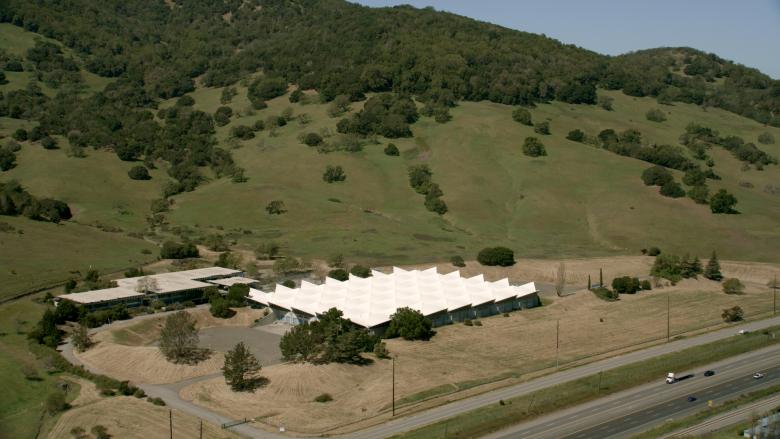
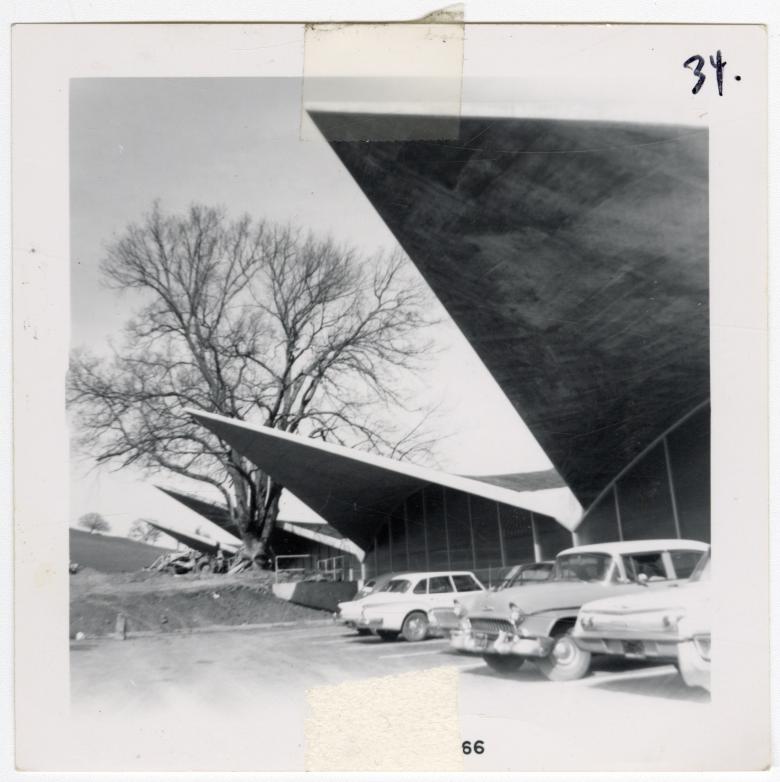
The site for the so-far unnamed museum is in Novato, a small city of around 50,000 residents in Marin County, north of San Francisco—or roughly a 45-minute drive from William Stout Architectural Books on Montgomery Street. Although its last occupant was Birkenstock, the office building and warehouse that will soon be the home of the Eames Institute museum were first built for the publisher McGraw-Hill. The office volume and adjacent warehouse with its distinctive saw-tooth roofline were designed by Bay Area architect John Savage Bolles in the 1960s. A local icon of mid-century modern design, the warehouse in particular looks like a readymade symbol for the future museum.
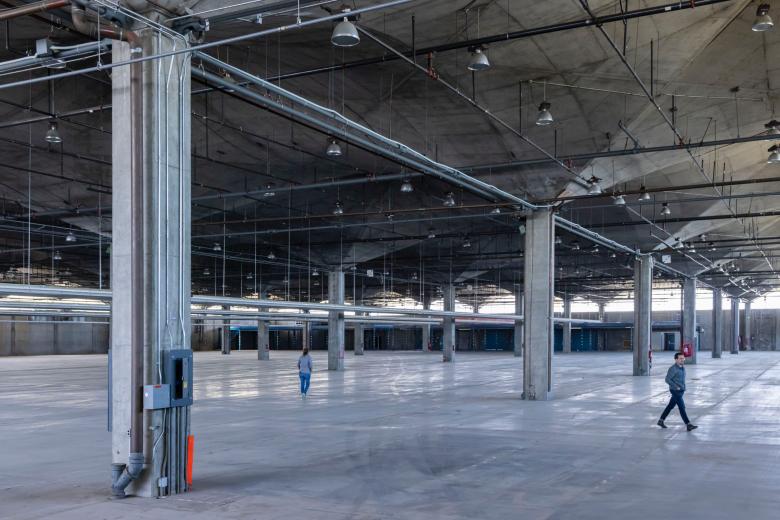
Llisa Demetrios, granddaughter of Charles and Ray Eames, is the head curator of the Eames Institute, while John Cary serves as president and CEO. “This extraordinary space,” Cary said in a statement, "will enable us to expand our programming and reach a broader audience, while serving as a permanent anchor for creativity and innovation in the Bay Area.” While it's not clear if Cary is referring specifically to the interior of the warehouse, photos of the expansive space (below) reveal its obvious potential for displaying the objects and hosting the events the institute foresees.
Herzog & de Meuron is no stranger to the Bay Area, having designed the Dominus Winery (1998) and Kramlich Residence (2015) in the nearby Napa Valley, and the de Young Museum (2005) in San Francisco. In this case the Swiss architects will be working with EHDD as executive architect. More than those regional projects, the Eames Institute museum is more closely aligned with other adaptive reuse projects by Herzog & de Meuron, such as the ongoing renovation of Marcel Breur's Whitney Museum for Sotheby's and the Tate Modern (2000), the latter of which is mentioned by partner Simon Demeuse in a statement: “Drawing on our expertise of adapting historic structures, most notably the Tate Modern in London, we are thrilled to now help transform this modernist campus into a vibrant public arts destination serving the Bay Area and beyond.”