Foster-Designed JPMorganChase Tower Opens
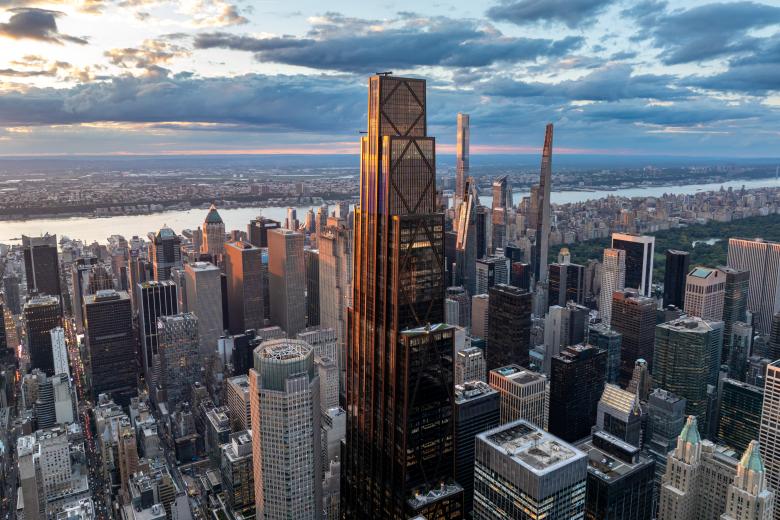
Although it won't be 100% complete and fully occupied for some months, JPMorganChase opened its new 60-story global headquarters at 270 Park Avenue in Midtown Manhattan on Tuesday, October 21, six years after the demolition of its predecessor, the 52-story Union Carbide Building, began.
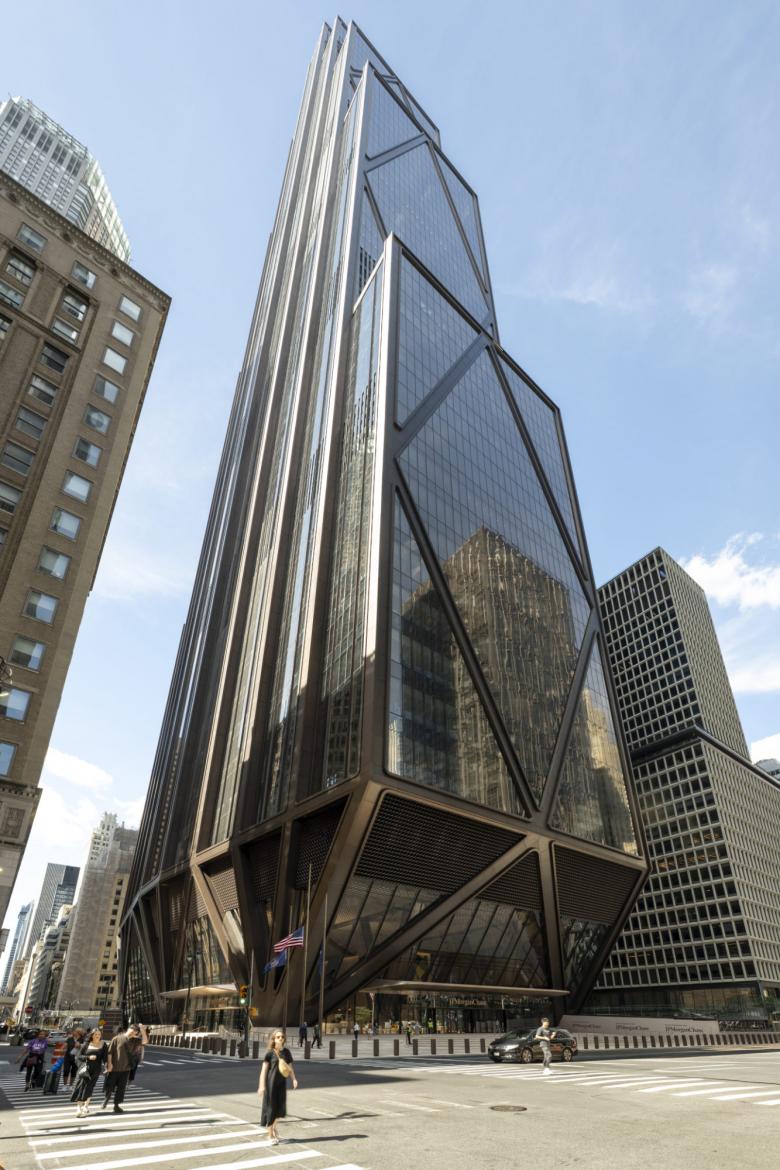
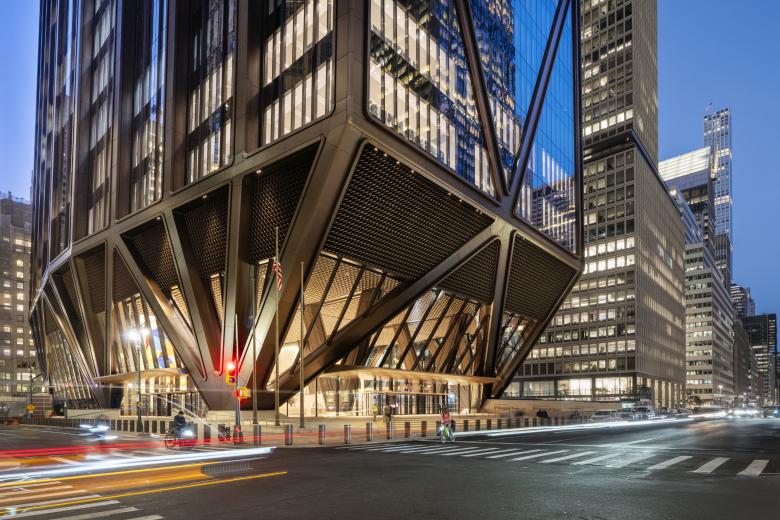
The press release for yesterday's grand opening of the JPMorganChase Tower at 270 Park Avenue is full of superlatives, some of them focused on the bank's outsized influence on New York's economy ($42 billion annually) and the 10,000-employee capacity of the skyscraper, while some of them praise the Foster + Partners-designed building. An example of the latter indicates how, with 2.5 million square feet of workspace, 270 Park is the first new office tower built under the East Midtown Rezoning, which allows for more floor area—2.5 million square feet (230,000 m2) in total across its 60 floors—as well as more height, in this case 1,388 feet (423m). In terms of sustainability, the bank describes it as “the city’s largest all-electric tower” and says it “operates at net zero emissions and delivers exceptional indoor air quality, setting new standards for sustainability, health, and wellness.” And Norman Foster himself chimes in, saying how “the unique cantilevered structure, clad in bronze, delivers two and a half times the amount of public space at the base, including a garden, than its predecessor.”
Not surprisingly, the “predecessor” Foster describes is not explicitly named in the press release. The Union Carbide Building, designed by Gordon Bunshaft and Natalie de Blois of Skidmore, Owings & Merrill, was completed in 1960 on a full block bound by Madison and Park Avenues, and 47th and 49th Streets, a few blocks north of Grand Central Terminal. Its original client, Union Carbide, moved out of the 1.5 million-sf (140,000 m2) building in the 1970s and Manufacturers Hanover Corporation moved in the following decade. Through several mergers, Manufacturers Hanover eventually became part of JPMorgan Chase, which shifted its headquarters to the building and renovated it in the process, earning a LEED Platinum certification in 2012 for, among other things, reusing 99% of the existing building. But later in the decade, with 6,000 employees in a space originally designed for 3,500, JPMorganChase decided to raze the existing 270 Park Avenue and, after buying air rights from other sites in the East Midtown Rezoning area, build a larger tower designed by Norman Foster.
By virtue of the size of its predecessor, the Union Carbide Building earned JPMorganChase another inadvertent accolade: at 707 feet (215m), it was the tallest building voluntarily demolished. It earned that “honor” in 2021 with the completion of the tower's piece-by-piece demolition, though it was eclipsed by a slightly taller demolition in Singapore two years later. What happened with the structure and other pieces of Union Carbide? Yesterday's press release contends that “97% of demolition materials [were] recycled, reused, or upcycled – far exceeding green building standards.” Other reports additionally indicate that the new building uses majority recycled steel for reinforcing bars in the concrete and for structural steel, though it is not clear if that recycled content came from the Union Carbide Building itself, thereby creating what could be considered a closed loop.
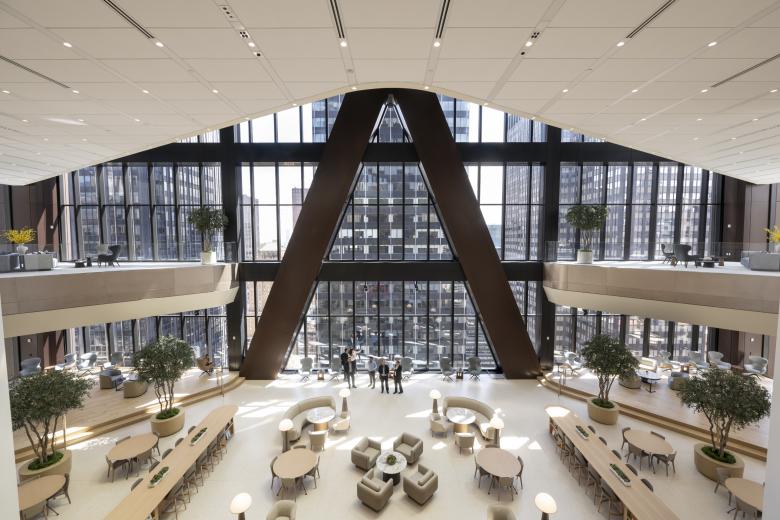
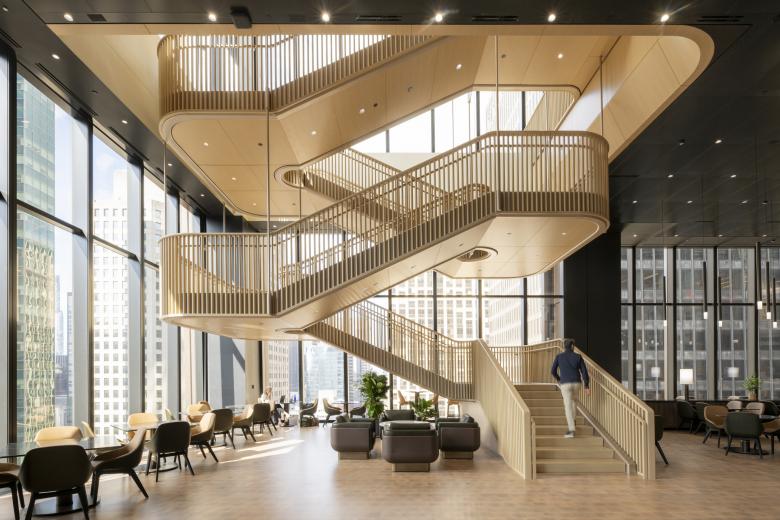
Doing math on some of the numbers in the preceding paragraphs, one of the most outstanding aspects of the new JPMorganChase Tower at 270 Park Avenue is related to its height. The new tower has just eight floors more than the preceding tower, yet it is 681 feet (208m) taller—nearly twice the height! Some of this can be attributed to the tower's spacious lobby and tall floor-to-floor heights, especially at the trading floors in the larger, lower floors of the building, but some height is gained at the numerous amenity floors that contain 19 restaurants, an English pub, coffee shops, a company store, and a gym, as well as intermittent mechanical floors. Outside of a two-story sky lobby near the uppermost setback, the top two tiers of the building are given over to mechanical equipment on the inside and a light-based art installation, Celestial Passage by Leo Villareal, on the outside.
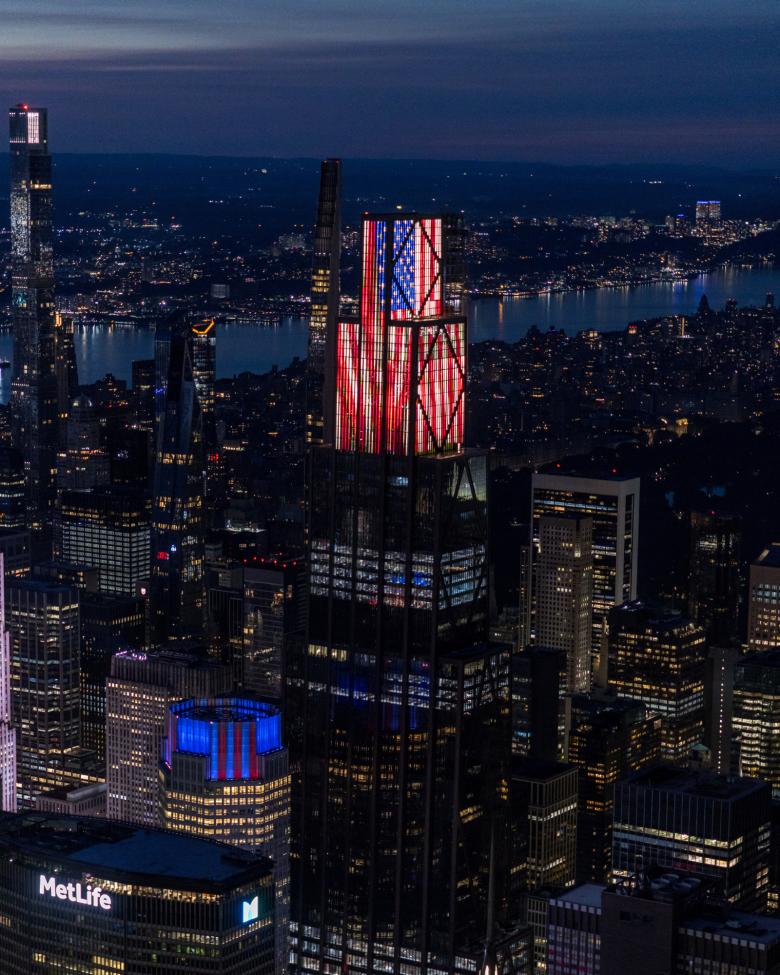
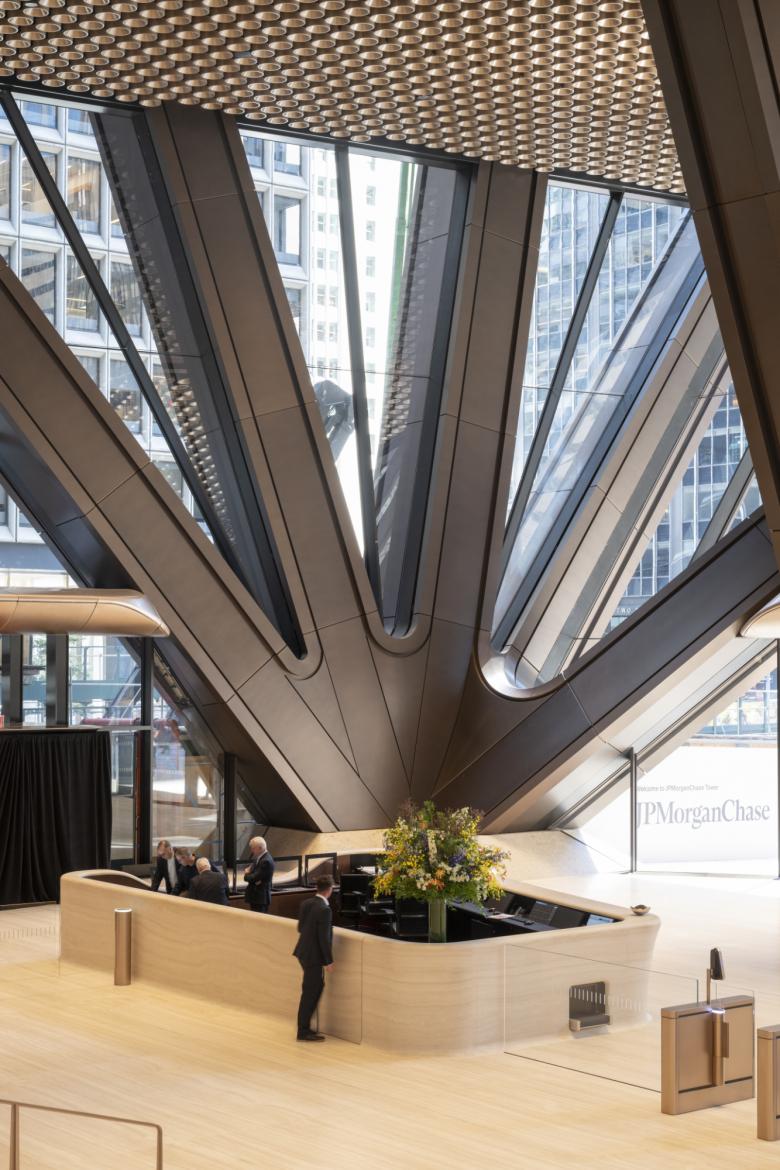
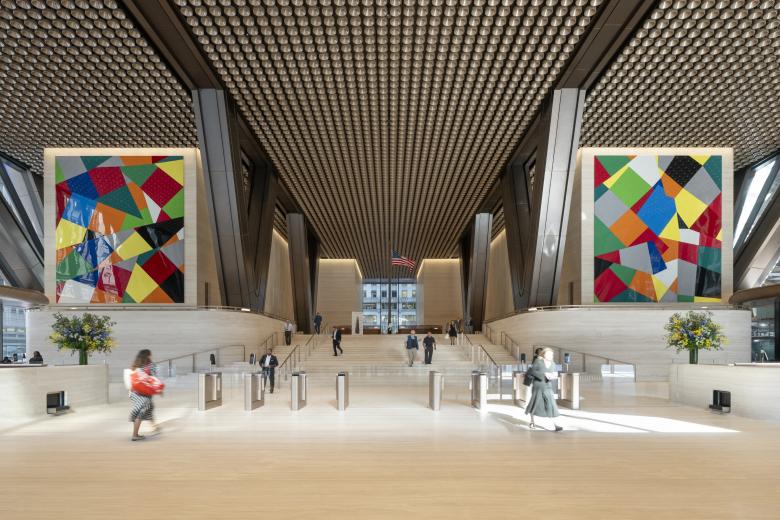
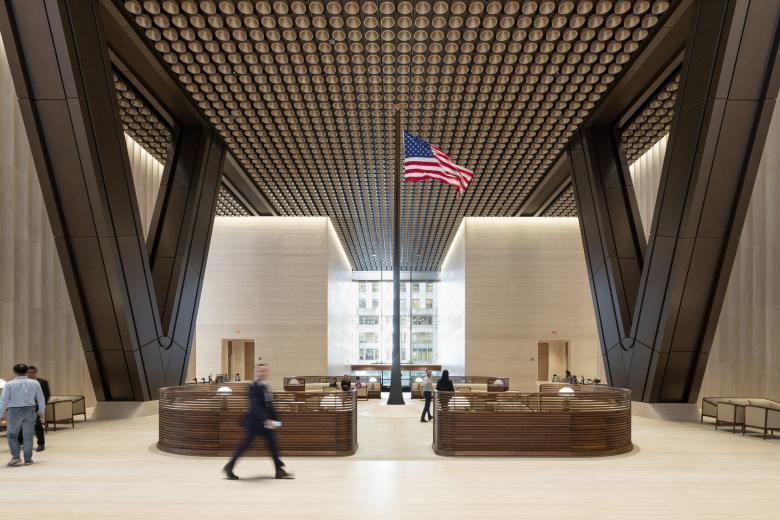
Other works of art integrated into the tower include: A Parallel Nature, a rock wall installation on Madison Avenue by Maya Lin that overlooks a garden designed by Ken Smith; Gerhard Richter's Color Chase One and Color Chase Two in the lobby; Norman Foster's Wind Dance, also in the lobby, which consists of a tall bronze flag pole that “replicates outdoor airflow to ensure the flag inside moves in harmony with those outside”; and Living Building by Refik Anadol, an ever-changing display of AI-powered art at the elevator banks. Outside of some dubious claims of sustainability that overlook how the tower came into being, the setback skyscraper can be seen as a work of art in and of itself. At the very least, the new JPMorganChase Tower at 270 Park Avenue is a structural tour-de-force, expressed in bronze-clad diagonal bracing on the east and west facades and, most dramatically, in the massive fan columns that converge a 60-story tower into just six perimeter points at sidewalk level.