Trump Bulldozes East Wing for New Ballroom
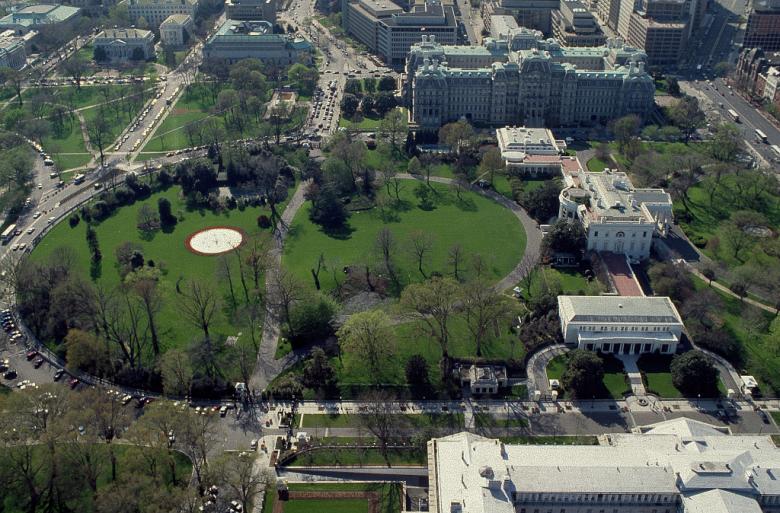
Outrage has accompanied images of the East Wing of the White House in Washington, DC, being demolished to make way for US President Donald J. Trump's large addition of a 900-seat, $250 million ballroom.
In late July, when President Trump and the White House unveiled renderings of a proposed 90,000-square-foot State Ballroom that would take the place of the East Wing, immediate reactions focused on the style and size of the building and the estimated $200 million construction cost being paid for privately by “patriot donors.” Two and a half months later, with excavators earlier this week tearing through the walls of the East Wing, responses to these latest actions in service of the new ballroom are now focused on Trump's assertion that the project “won't interfere with the current building,” and his administration's apparent departure from the review process that even considerably smaller projects would normally adhere to.
With Trump's penchant for lying, it's not clear if he was doing just that when he said in July that the new ballroom would “be near it but not touching it—and pays total respect to the existing building,” or if the “it” he was referring to was the main, central building of the White House, where the residence is located, rather than the more public East Wing (the third building, the West Wing, is the domain of offices). An East Gallery was first added in 1902, by architects McKim, Mead & White for President Theodore Roosevelt, then expanded to the East Wing in 1942 by architect Lorenzo Winslow for President Franklin Delano Roosevelt. Before the East Wing was recently emptied ahead of its demolition, it housed, among other functions, the First Lady's office and the main entrance for public visits to the White House. The new ballroom will, much like the East Wing, be connected to the main portion of the White House by a gallery, which will grow to two stories per the renderings released in July.
- National Trust for Historic Preservation (October 21)
- Society of Architectural Historians (October 16)
- American Institute of Architects (August 5)
Outside of the gut structural renovation carried out by President Harry S. Truman in the early 1950s, the expansion of the East Wing in 1942 was the most significant work on the White House to date. Trump made at least one change in his first term—a new Tennis Pavilion, completed in December 2020—but at that time he followed the standard rules for making changes to the White House, including submitting plans to the National Capital Planning Commission (NCPC) and the US Commission of Fine Arts. To date, plans of the ballroom have not been submitted for review, just one reason Trump appears to be flouting norms and commencing on the ballroom without the proper approvals. Will Scharf, the Trump-appointed chairman of the NCPC, has clarified to reporters that the commission has jurisdiction over construction, not demolition, though Thomas M. Gallas, a commission member at the time of the new tennis pavilion, told the New York Times that “such proposals would typically be submitted for review earlier.”
Yesterday, the White House responded to the outcry over images of the East Wing's demolition with a statement calling it “manufactured outrage” and stating that critics “are clutching their pearls over President Donald J. Trump’s visionary addition of a grand, privately funded ballroom to the White House.” Curiously, in the statement's timeline of changes to the White House since Teddy Roosevelt's addition of the West Wing in 1902, the properly approved 2020 Tennis Pavilion is included. Lastly, Reuters reports today that the White House will “soon” submit plans to the NCPC for review, though the commission is currently closed due to the government shutdown. Demolition, on the other hand, continues unabated, given that the ballroom is privately funded.