Trump's Latest Attempt to 'Make Federal Architecture Beautiful Again'
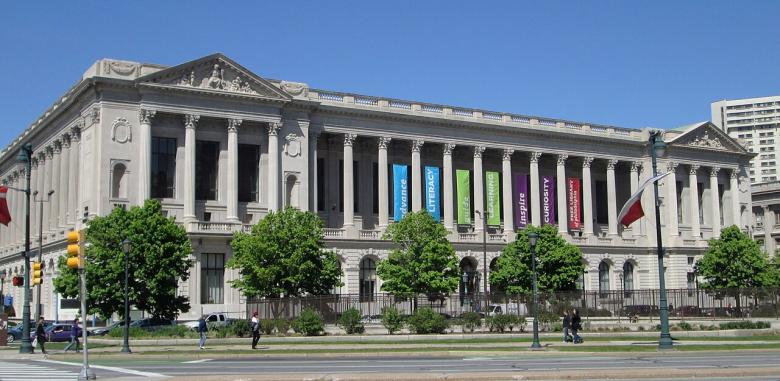
In an anticipated move, US President Donald J. Trump has issued an executive order that calls for classical and traditional architecture to be the preferred styles of federal public buildings in the United States. “Making Federal Architecture Beautiful Again” echoes a similar executive order from his first term but expands upon it in a couple ways.
“Making Federal Architecture Beautiful Again” comes seven months after Trump—as part of a wave of executive actions done immediately after he was sworn in for his second, nonconsecutive term as president—issued a memorandum to the General Services Administration to submit recommendations for “Promoting Beautiful Federal Civic Architecture” (and a few weeks after Trump unveiled plans for a new ballroom wing at the White House). The January memorandum gave the GSA, which manages the federal government's buildings, 60 days to respond, so architects across the US have known an executive order would follow sometime this year. That day was yesterday.
The new executive order has much of the same language as the executive order Trump issued in December 2020, near the end of his first term, but which was revoked by Joe Biden a few months later, early in his term. Namely, this week's order calls for “particularly traditional and classical architecture” to be “the preferred architecture for applicable Federal public buildings,” though those in Washington, DC would be “classical architecture.” The order would apply to all federal courthouses and agency headquarters, federal buildings in and around DC, and other federal buildings around the country with budgets exceeding $50 million. As written out in the order, classical architecture “encompasses such styles as Neoclassical, Georgian, Federal, Greek Revival, Beaux-Arts, and Art Deco.”
Like the 2020 order, “Making Federal Architecture Beautiful Again” also singles out Brutalist and Deconstructivist architecture as the antithesis of the “preferred modes of architectural design” for federal buildings. Given that neither style is as common today as in their respective heydays in the 1960s/70s and 1990s/2000s, the order also includes “any design derived from or related to these types of architecture.” While the new order does allow for designs that “diverge from the preferred modes of architectural design,” the GSA “could reject such design[s]” and push for classical/traditional redesigns, “especially with regard to the building’s exterior.”
The areas where the new executive order expands beyond the 2020 order in significant ways are two-fold:
- “Competitions for the design of Federal buildings should be held where appropriate,” with the GSA actively recruiting architectural firms with experience in classical and traditional architecture for them;
- The architects at the GSA involved in appointing architects for federal buildings and reviewing their plans must “have formal training in, or substantial and significant experience with, classical or traditional architecture.”
These points, and the executive order as a whole, are aimed at dismantling the Guiding Principles for Federal Architecture, which were established in the early 1960s and saw the subsequent designs of federal buildings swing strongly toward modern and contemporary styles, reflecting the eras in which they were realized. Whereas the principles outlined by future senator Daniel Patrick Moynihan said, “Design must flow from the architectural profession to the Government, and not vice versa,” the new order rephrases it to say, “Design must flow from the needs of the Government and the aspirations and preferences of the American people to the architectural profession, and not vice versa.” In this rewording, the executive order reflects the populist, anti-elitist position of Donald Trump, whose own architectural tastes have moved from corporate modernism to gilded neoclassicism.