The long road to a culture of sufficiency
How can resources be used responsibly in construction? Young architects Ronan Crippa and Timothy Allen discuss this with architecture educator Andreas Ruby and researcher Daria Kovaleva, while Basel Grand Council member Salome Bessenich assesses which ideas are likely to gain majority support.
This article has been translated. Go to the original German version
The sun protection manufacturer Griesser is committed to environmentally friendly construction. By 2035, the family-owned company wants to produce climate-neutrally. A new plant in Nenzing in Vorarlberg is an example of the technological innovations required for this. The product range is also designed with ecological sustainability in mind: Griesser provides product declarations for the DGNB and LEED building labels and offers two MINERGIE module sun protection systems. In addition, green aluminium from sustainable European production is processed to significantly reduce CO2 emissions.
In an initial architectural debate as part of the article series "Energy Miracle Sun Protection", Griesser showed how shutters and façade awnings, i.e. components that the company manufactures itself, keep low-tech buildings cool without complex air conditioning technology. A second round of talks will now ask what fundamental political and architectural decisions need to be made for environmentally friendly, resource-saving construction.
Why are building materials often used wastefully despite scarce resources?
Daria Kovaleva: Because raw materials have become relatively too cheap compared to labor costs. In the post-war decades, concrete and steel were valuable goods whose efficient use was a top priority. Accordingly, they were used sparingly: avant-garde architects and engineers developed wafer-thin shell structures that we admire today. Although these constructions required elaborate formwork and countless hours of work, this was justifiable, as manual work was relatively inexpensive. As the cost of materials fell and wages rose, geometrically simplified constructions were used, such as solid ceiling tiles. Although these devour an incredible amount of resources, they are quick and easy to implement. Unfortunately, this is economically attractive.
Ronan Crippa: In addition, there are our exaggerated demands for comfort: In today's new buildings, for example, the sound insulation is designed in such a way that you can't hear the neighbors under any circumstances. This requires extremely material-intensive constructions.
Salome Bessenich: Many builders and experts shy away from the risk: they prefer to rely on proven constructions that are accepted by the licensing authorities without critical questions, instead of considering new, economical solutions.
How can this be changed?
Salome Bessenich: Ultimately, it is the task of architects and engineers to prove that there is another way.
I also see politics as having a duty. We need CO2 pricing so that building materials receive a price that corresponds to their environmental costs, i.e. the economic losses due to environmental destruction and resource exploitation.
Salome Bessenich: Politics has a share of the responsibility, and prices are undoubtedly an important factor. However, very strong market interventions would be necessary, because materials would have to be drastically increased in price. It is much easier to introduce a CO2 budget, i.e. a limit value for emissions during production. I also favour this approach because politicians only provide the framework, but leave the concrete technical solutions to the experts. They can decide on a project-by-project basis how to keep CO2 emissions low. In order to introduce such rules, however, we need the initiative of the professional associations: only what is demanded from outside is capable of gaining a majority. If politicians try to enforce a limit value on their own, they will fail.
Timothy Allen: As part of a revision of the law, we proposed to the municipality of Grabs in eastern Switzerland to introduce a material verification system based on the model of the energy certificate. That failed miserably. So far, no Swiss municipality has set CO2 limits.
Salome Bessenich: There are signs of a change in thinking: limit values are already an issue in the new MuKEn, the model regulations of the cantons in the energy sector, and in the canton of Basel-Stadt a proposal for upper limits on production emissions is being drawn up. The limit will probably be even higher than what climate experts are demanding, but it would be an important step.
Andreas Ruby: The fees of the planners must be decoupled from the construction costs. At the moment, material-intensive, expensive constructions are rewarded with high pay. On the other hand, architects who spend a lot of time and creativity developing economical solutions or design them with used components are economically disadvantaged. In the future, remuneration must be measured according to the quality of intellectual work.
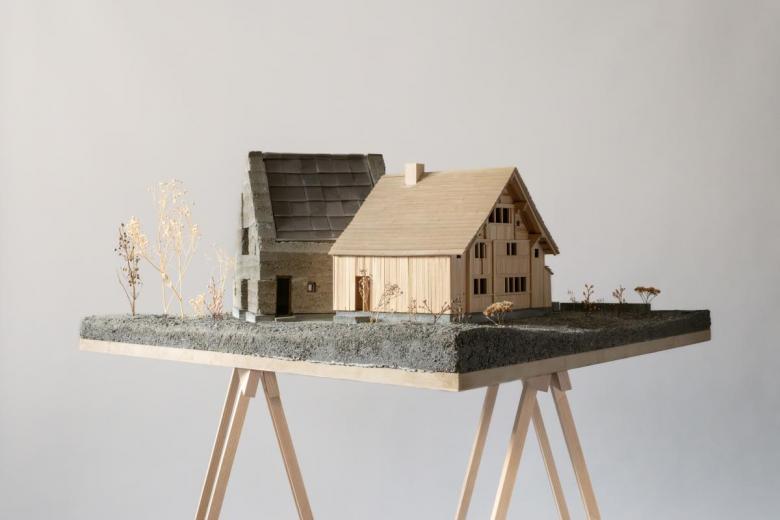
Ronan Crippa: As architects, we actually work less economically when we advocate climate-friendly construction. In practice, however, the additional costs for buildings made of wood, clay or used parts prove to be the bigger problem: In the end, professional builders in particular prefer to choose standard constructions out of concern for their return targets and have innovative projects modified first.
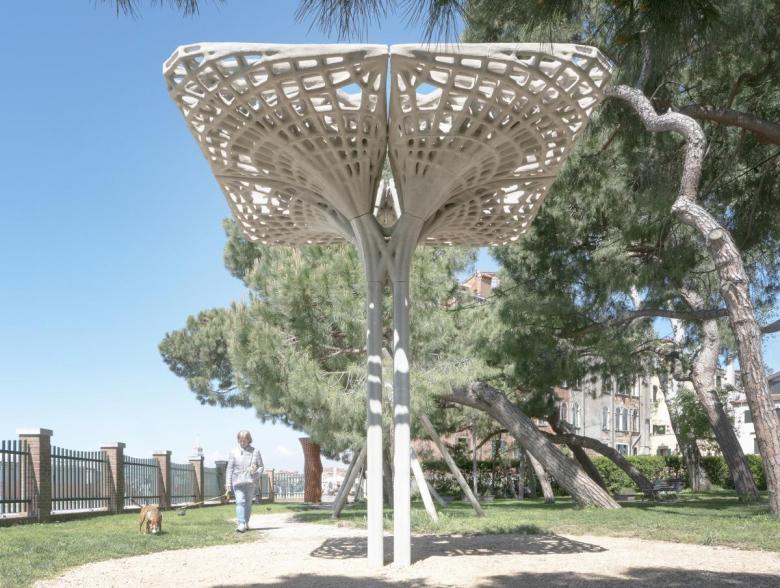
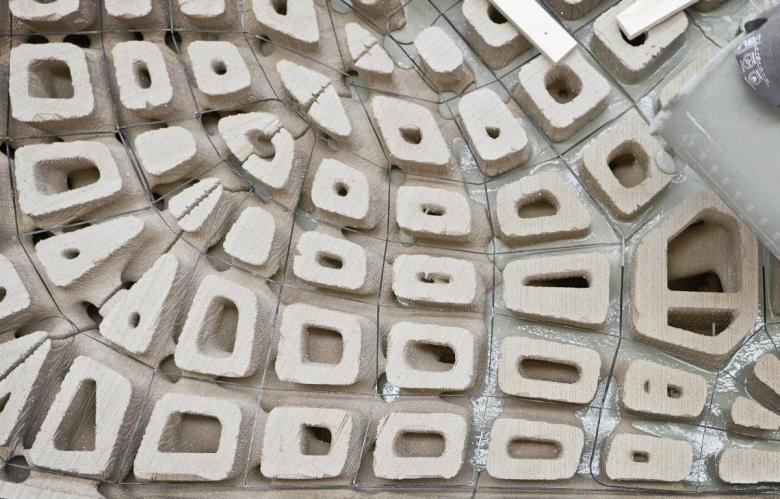
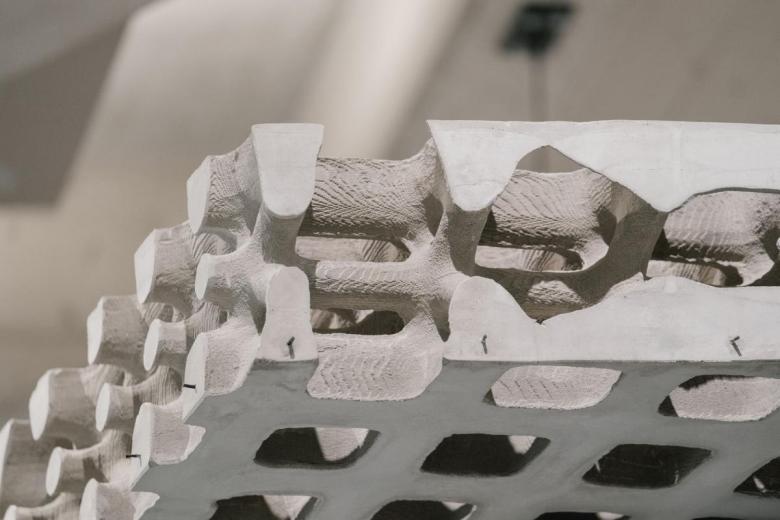
Daria Kovaleva: I am convinced that CO2 pricing will come. As an architect and researcher, this motivates me, because I am challenged to think holistically: I have to design in a material-saving way, use low-emission building materials and think about recyclability. When designing with concrete, my field of research, lightweight construction will experience a renaissance. It is often overlooked that the CO2 balance of concrete is actually low per kilogram compared to other building materials. It is only the far too high consumption that makes it a problem: 30 billion tons are used worldwide every year. Digital design and production methods give us the opportunity to realize extremely material-saving concrete structures without wasting vast amounts of material on formwork construction. In my dissertation at the University of Stuttgart, I showed how formwork waste can be completely avoided by water-soluble sand formwork.1
That sounds promising.
Daria Kovaleva: Today, it would be possible to reduce the demand for concrete by 50 percent through optimized constructions. But this is not enough: we must combine lightweight construction with strategies for CO2 storage in concrete. From a chemical point of view, concrete could completely bind the process-related emissions from the calcination of the limestone through carbonation. However, this still requires some research. Politicians have already recognized the potential: The state of Baden-Württemberg is specifically promoting the use of recycled aggregates and their accelerated carbonation in order to convert concrete waste into permanent CO2 reservoirs.
Andreas Ruby: Concrete is clearly a great material, but it's just one of many. Unfortunately, however, in the 20th century it became a universal building material and a "one size fits all" solution. This not only caused great damage to the environment, but also impoverished architecture. Materials must be used again according to demand, as was customary before modernity.
Why is there such a wide gap between the state of research and construction practice?
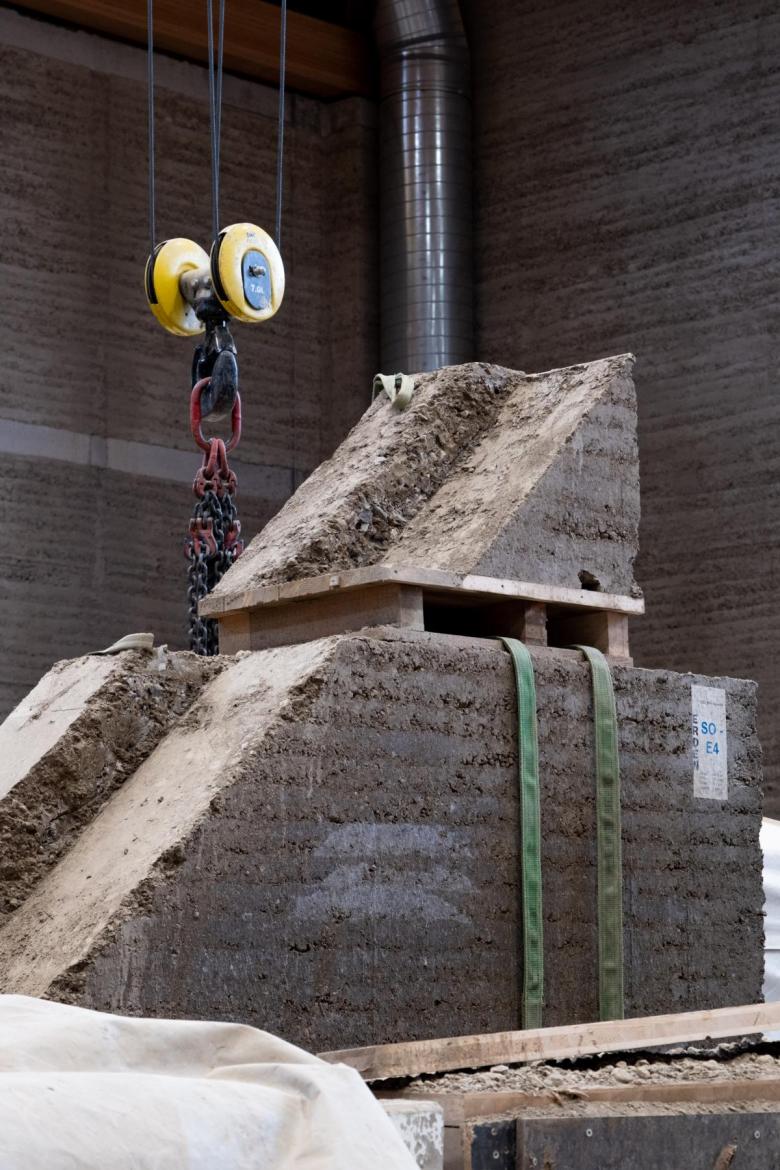
Ronan Crippa: The challenge is to assemble the newly developed building materials into systems. Building a shell out of clay is not difficult. But how do you loosen the connections and how do you design the building envelope? These questions must first be clarified in pilot projects.
Timothy Allen: Some people ask us why we build with dirt when they see our mud houses. We still have a lot of educational work to do before builders, entrepreneurs and craftswomen accept materials such as clay.
Salome Bessenich: Innovation is always a question of risk-taking. In the end, all those involved must support new constructions, including insurance companies. In practice, however, they already see recycled concrete as a problem and do not provide any sealing guarantees.
How could they be persuaded?
Salome Bessenich: We have a systemic problem and need a cultural change in society as a whole. For example, I would also like to see judges who, in the event of a dispute, do not blindly orient themselves to a standard, but also to the preamble, which always states that one may build in accordance with the guideline or equivalently.
Daria Kovaleva: Show projects are important to create acceptance. For this reason, a new research building is being built on the campus of the University of Stuttgart for its Cluster of Excellence Integrative Computational Design and Construction for Architecture, or IntCDC for short, which will be part of the International Building Exhibition 2027. All technologies that have been researched since the founding of the IntCDC in 2019 will be used.
Andreas Ruby: Technical performance certificates are valuable, but the key to the construction turnaround lies in aesthetics and emotions. If the 21st century is to be the century of sufficiency, we must not have an ideological discussion. We should not speak of renunciation, but of beauty by omission. Let's develop a new architectural language based on the idea of sufficiency. Let's design buildings that respond to actual needs. Let's ask how much is enough. From an architectural point of view, it can be a great benefit to practice self-sufficiency. A wonderful example from the history of architecture is the Cistercian monastery of Chorin near Berlin: the entire complex is built with a limited number of clay-fired measuring stones – including all ornaments, rosettes, vault and window arches. Social housing in Mallorca can also be a role model: In the last ten years, competitions with strict emission consumption limits have been announced. These could not be met with the usual concrete construction, but they could be met with local sandstone. Although this material does not allow for spans as large as reinforced concrete, young architects developed floor plans with pleasure and curiosity that exude a feeling of openness despite the supposed restrictions, and vaulted them with impressive natural stone ceilings. Communicating the benefits of the waiver better in the future is one of my most important tasks as an architecture mediator. So far, we have not succeeded in doing so at all.
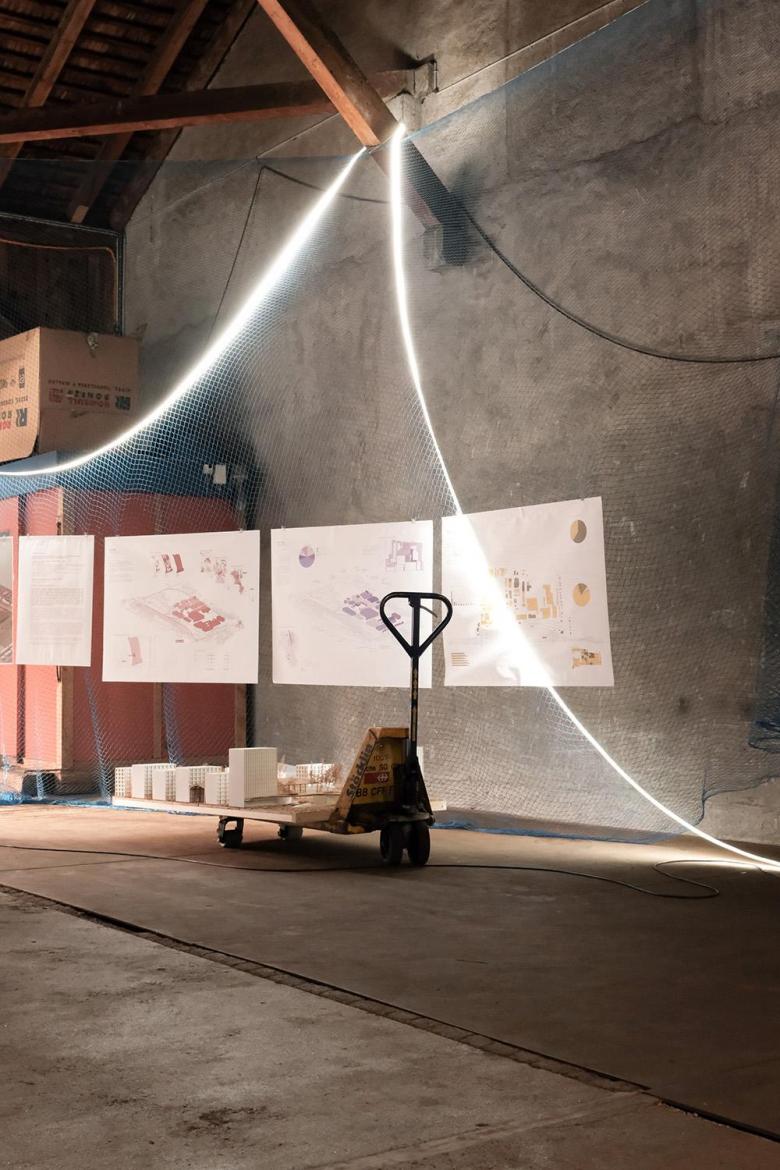
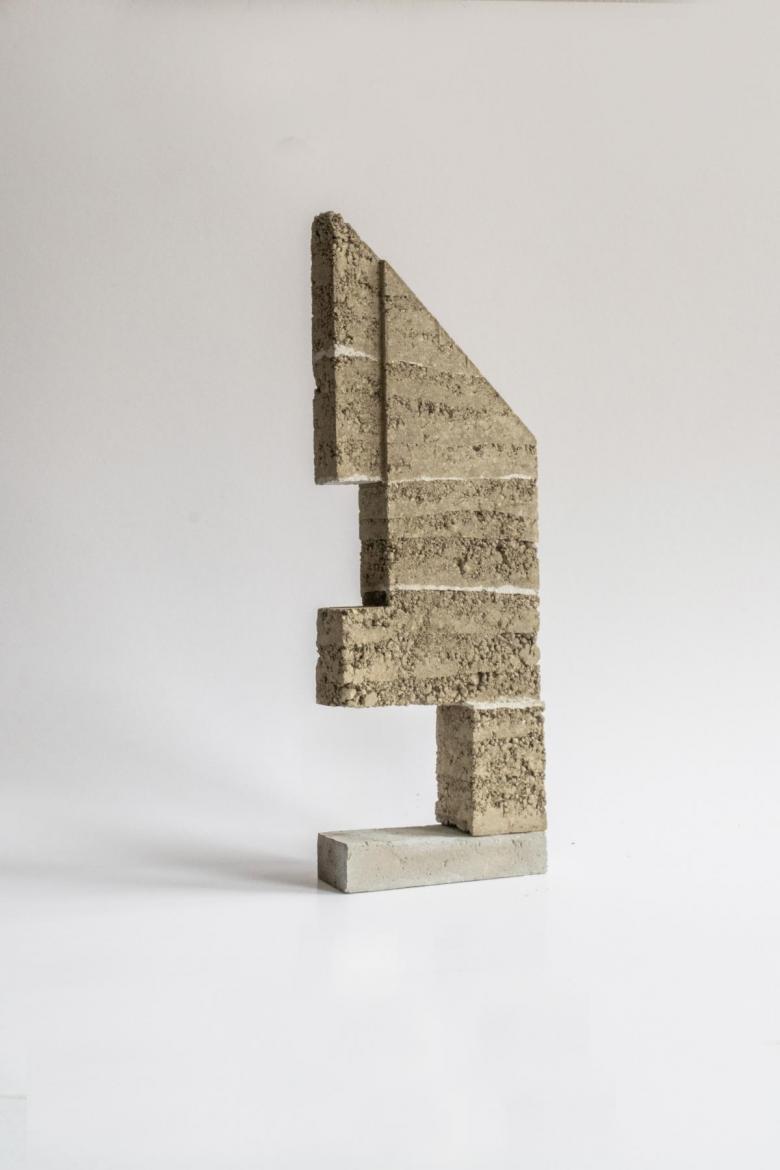
Ronan Crippa: We also have to understand that we gain a lot by scaling back our standards: Maybe some unsightly but harmless cracks form in clay walls. But the indoor climate is much healthier: the air quality is better and the house does not mold.
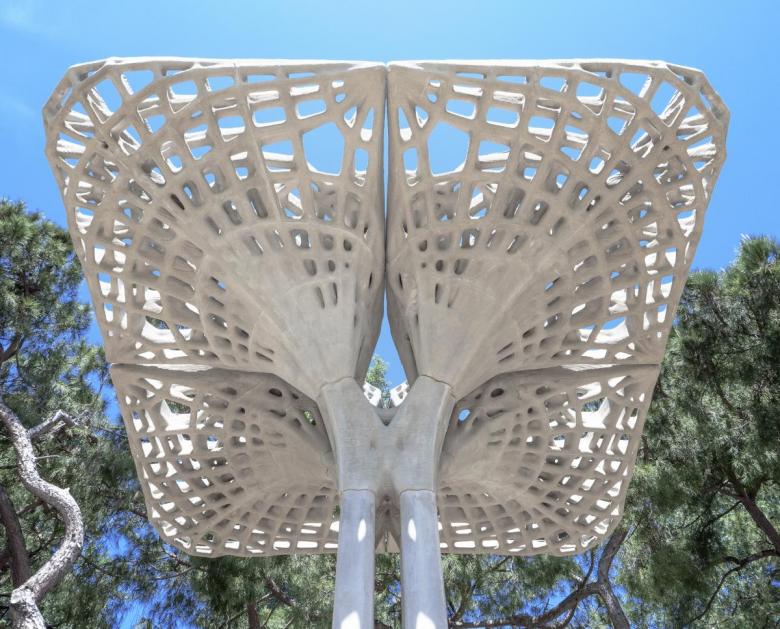
Daria Kovaleva: Unfortunately, we rarely talk about aesthetics in academia, especially in technical disciplines. It is crucial for the acceptance of new solutions, and material-optimized designs can be very visually appealing. I learned this from the reactions to our large demonstrators, for example, when we exhibited exhibits such as the Marinaressa Coral Tree, a filigree concrete structure, at the 18th Venice Architecture Biennale.
Using resources responsibly would also mean avoiding construction waste. However, the construction industry currently generates over 80 percent of waste in Switzerland.
Andreas Ruby: Waste must be expensive. It's far too cheap to throw things away. But we would also do well to change our mindset: There is no waste, only resources. What is no longer needed must be separated by type and reused elsewhere. And materials that cannot be recycled or reused must be very expensive.
Salome Bessenich: I see a need for political action here, but I don't think ideas such as a general demolition ban are capable of winning a majority at the moment. Nevertheless, I would find such a rule interesting – not because I am conservative, but because I am in favor of continuing to build. What kind of architectures would be created if you were only allowed to rebuild or only use used parts? What would be needed would be a reversal of argumentation at the legislative level: Today, one must obtain a protected status to prevent demolition, and the obligation to preserve it is perceived as a deep encroachment on the freedom of property. It would be correct to reverse the burden of proof, i.e. if a builder has to prove before demolition that there is no alternative to a replacement new building.
Andreas Ruby: Another possibility would be to benefit the transformation of buildings economically. Today, replacement new buildings are often erected if a plot of land can be used to a greater extent. A two-storey existing building, for example, will then give way to a four-storey new building. We need incentives that make an increase the more attractive solution in such cases.
Ronan Crippa: In addition to the incentive, the non-incentive also makes sense: At present, Swiss agglomeration municipalities are indiscriminately zoned out. It would be much wiser to differentiate precisely in spatial planning and, for example, to allow much higher utilisation around train stations, while in remote neighbourhoods everything is left as it is.
Timothy Allen: I agree with you in everything. But we have to start further ahead and explain to people what huge amounts of waste are generated when a house is demolished and what happens to this material. Many people don't know that construction waste is hardly separated and recycled, but is loaded into overcrowded landfills. We have to create awareness of this environmental problem among the population. In addition, we need standards and building regulations that are geared towards further construction. I am convinced that we could carry out more conversions if we were less slowed down by official requirements, monument protection regulations and comfort standards.
This leads us to a tricky question: How can we eliminate the housing shortage if we don't want to build new ones?
Salome Bessenich: The biggest lever is the consumption of living space. Today, a person occupies an average of over 46 square metres in Switzerland. If this value were to fall by 5 square meters, we could accommodate 10 million people in the current building stock. To what extent this calculation could be implemented socially and architecturally is another topic. But there is still a lot of potential, especially in the single-family housing stock.
Is this a plea for occupancy regulations, as we know them from some cooperatives?
Salome Bessenich: That would be expedient, but it is politically unimaginable. Occupancy regulations would be a very strong interference with people's most personal needs, such as remaining in a familiar environment. On the other hand, an incentive tax that is due in the event of excessive housing consumption and rewards those who consume little living space could make sense.
Andreas Ruby: I don't believe in forced renunciation. I'd rather highlight the benefit of not being alone. No one can tell me that being the only resident of a single-family home makes me happy. In fact, we have a socio-psychological problem with loneliness. In the future, it will be of utmost importance for the mental health of our society that people find strategies against being alone. One concrete solution is cluster living or more radical hall living. The people live in a social family of cohabitants. But single-family homes also offer great potential. We should make it economically easy for owners to enable additional use of their house. They could set up extra apartments for students or caregivers or install mini-daycare centers for the neighborhood. At the Technical University of Berlin, Nanni Grau from Büro Hütten & Paläste and Jan Engelke dealt with this topic in a design studio. At the same time, Andreas Hild and Thomas Auer started an exciting research project at the Technical University of Munich on the densification of single-family housing estates, in which they asked, among other things, what the impact of the development of the clearance areas would be. And in Switzerland, MetamorpHouse supports interested parties in the conversion of single-family homes.
Ronan Crippa: We should not forget the economic factor: People who have put their savings into their own home and may still have to service a mortgage cannot easily afford to move into an apartment. Alternative offers must be affordable.
Timothy Allen: The housing shortage is not a problem of quantity, but of distribution. We are currently working on three projects to divide single-family homes into two or even three units. With such conversions, we repeatedly come up against the limits of building law – also because the existing buildings offer little flexibility. We learn from this that it is important to design new buildings as robust, convertible structures that can be easily adapted. But the greatest lever for sustainable construction remains the existing: architects must be curators and advocates of the existing building.
1 Daria Kovaleva, Zero-Waste Sand Formworks for Lightweight Concrete Structures (PhD thesis, University of Stuttgart, 2025).
Salome Bessenich is an art and architecture historian. She is a member of the SP parliamentary group in the Grand Council of the Canton of Basel-Stadt and is involved in the Countdown 2030 group. As an editor for Environment & Spatial Planning, she writes about environmentally friendly construction for espazium magazine. She is also a member of the Frau+SIA network and is committed to diversity and equality.
Daria Kovaleva conducts research at the Institute for Lightweight Structures and Design at the University of Stuttgart. The architect wrote her doctorate on waste-free sand formwork for shape-optimised, ultra-light concrete structures. Her work was shown at the 18th Venice Architecture Biennale and was exhibited at the Technical Museum in Nuremberg and the Natural History Museum in Stuttgart.
Timothy Allen and Ronan Crippa founded the architecture firm Allen + Crippa in 2022. The two architects have been teaching at the University of Liechtenstein since 2024. Her work was part of the exhibition "What Could Become: Experiments between Monument Preservation and Architecture" at the Swiss Architecture Museum. Timothy Allen is a member of the Advisory Board of the Swiss Building Culture Foundation.
Andreas Ruby studied art history and then worked as a permanent correspondent for the architecture magazines Daidalos and werk, bauen + wohnen. He has curated architectural exhibitions for the German Architecture Museum in Frankfurt, the German Architecture Centre, the Aedes Gallery in Berlin and the House of Architecture in Graz. In 2008, he founded the architecture publishing house RUBY PRESS together with Ilka Ruby. From 2016 to the end of 2025, he was director of the Swiss Architecture Museum in Basel. Andreas Ruby has taught architectural theory at Cornell University in Ithaca, New York, the TU in Graz and the ENSAPM in Paris, among others.