A Holistic Approach to Hospital Design Is Needed
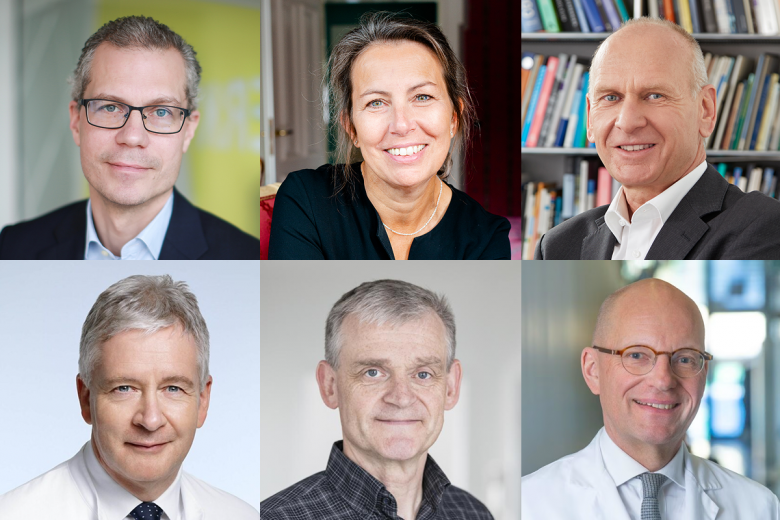
In our “Healing Architecture” series, we examine the quality of stay in healthcare buildings, focusing on the creation of spaces that actively support recovery.
It is well established that the design of hospitals and other healthcare facilities has a significant impact on the well-being of patients, relatives, and staff. However, our conversations with experts from a wide range of disciplines made it clear that further differentiation is needed—especially regarding the age of patients. Perspectives from both geriatric care, as discussed with Cornel Sieber, and from the new Zurich Children’s Hospital highlight this necessity. Whether geriatrics or pediatrics, the needs of each specific patient group must take center stage, albeit with different emphases. Both children and the elderly are vulnerable and require environments tailored to their age and condition.
Safety and orientation are primary concerns for the elderly, while children need comfort and a sense of security. Both groups experience fear when they are in unfamiliar surroundings. However, children are typically accompanied by their parents to provide support, whereas older adults are often left to navigate these spaces on their own—frequently while dealing with multiple physical and/or mental conditions, referred to in hospital settings as multimorbidity. As Cornel Sieber noted, it’s crucial “not to build from the perspective of one’s own generation, but with a clear view of the needs of the patients”—a principle that applies equally to the young and old.
One of the key criteria repeatedly emphasized by our interviewees was the quality of daylight planning. Older people, who often have impaired vision, are better able to orient themselves in clearly legible spaces, while children benefit from a varied and atmospheric design that helps reduce fear and build trust and confidence. Daylight should be used to the fullest extent, with artificial lighting acting as a supplementary source tailored to the human circadian rhythm. Achieving this requires a holistic approach to spatial planning, including surface materials—a point underscored both in the discussion with lighting designer Mathias Wambsganß and in interior designer Sylvia Leydecker’s reflections. She sees design as a kind of “embrace” and, in conversation, highlighted the importance of material quality, color, and shape. At the same time, she criticized the fact that, in contrast to optional services, spatial quality in standard hospital care is not financially rewarded by healthcare providers.
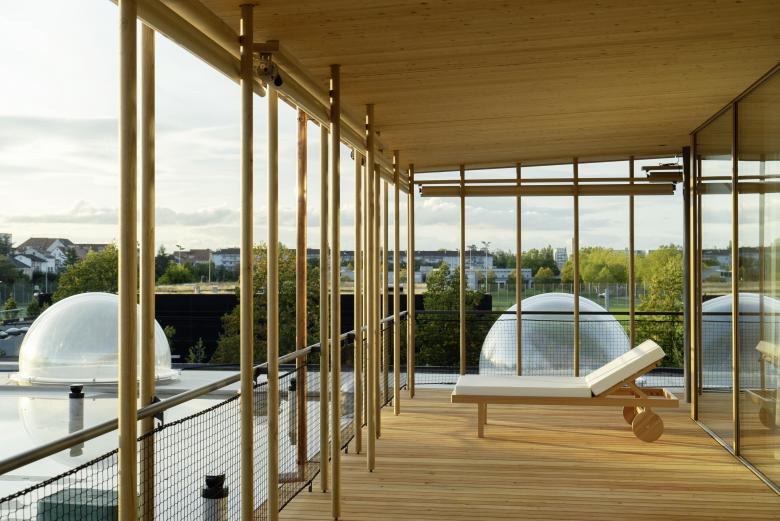
From the very beginning of our series, the quality of stay was identified by Sylvia Leydecker and architect Linus Hofrichter as a decisive factor. While Leydecker emphasized the emotional dimension in conjunction with the specific demands of the healthcare sector, Hofrichter highlighted the importance of orientation, daylight, and clear wayfinding. He also advocated for greater consideration of staff needs, as hospital employees are typically under disproportionate strain due to shift work. Boris Augurzky, the third participant in this initial conversation, focused primarily on economic and financial aspects. He called for quality-based remuneration of hospital care services and criticized the still prevailing dual financing system. The fact that quality of stay has so far not been recognized as a relevant factor is, in Augurzky’s view, a serious shortcoming. At the same time, he pointed to the potential of developing new methods for capturing and quantifying these qualities and their positive influence on the healing process, thereby enabling clearer definitions of quality of stay. In the interview, he spoke of test procedures that can measure a hospital’s level of digital maturity and expressed confidence that similar tools could be developed to assess the quality of stay.
Gernot Marx, a specialist in anesthesiology and head of the Clinic for Surgical Intensive-Care Medicine and Intermediate Care at the RWTH University Hospital in Aachen, also spoke about economic optimization potential with regard to today’s hospital structures. He sees considerable opportunity for improved patient care in the fields of digitalization and telemedicine. Digitalization is transforming hospital work, enabling faster data exchange, better networking, and more efficient workflows. Telemedicine, Marx explained, plays a key role in ensuring expert knowledge is made available across the board.
But while professionals in Germany and Europe are engaged with these highly specialized technologies, the global picture tells a different story. As a counterpoint to the German hospital infrastructure, our dossier also examined conditions abroad—more specifically, on the African continent. Many countries in the Global South are faced with major challenges in the healthcare sector that stem from poverty, climate change, and disease. In such contexts, architecture can serve as a tool of care by relying on local materials, skills, and ecological strategies.
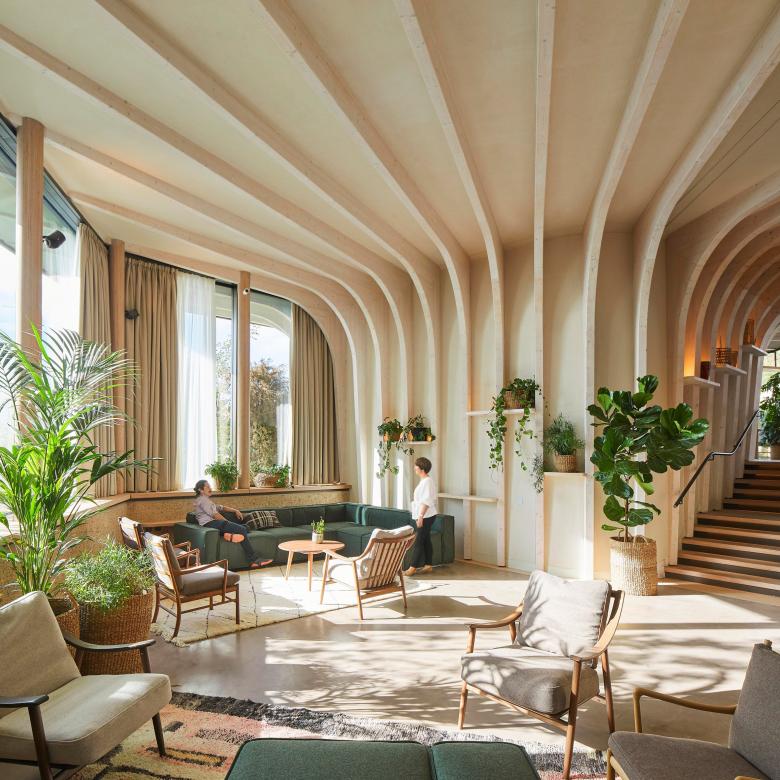
All the contributions published so far demonstrate just how complex and layered the topic of “Healing Architecture” is. There is no single right approach—rather, a multitude of different factors must be considered in the design of healthcare buildings. The deficits are diverse and cannot be traced to a single root cause. Many of them are grounded in objective issues that can be substantiated by studies and practical experience—such as the need for age-appropriate structures, effective daylight planning, or the significance of high-quality environments.
However, subjective viewpoints of the respective experts also shape the overall picture. While there is broad agreement among experts on key principles, they each have different priorities. Ultimately, the most effective levers for improving hospital quality lie in a holistic view of the hospital environment—one that integrates medical, functional, and emotional needs of both patients and staff.
Such an approach requires interdisciplinary collaboration between different disciplines, a reassessment of financing structures, and the integration of research findings into the planning process. It also demands a fundamental shift in how sustainability and cost-efficiency are weighed—so that long-term improvements in healthcare provision can be achieved. In further articles, we will explore these topics in greater depth as well as present other approaches and examine their future viability.
Agrob Buchtal
“With our ceramic products, we have been a part of ‘Healing Architecture’ for decades. We enhance the quality of stay in sensitive environments like hospitals and care facilities, for example through features like the hygienic Hytect surface refinement of our tiles and timeless design. We focus on combining functionality, aesthetics, and healthy living interiors—to create spaces that support comfort, orientation, and a sense of security.”
Schyns Medizintechnik
“Since our founding by Alphonse Schyns in 1984, Schyns Medizintechnik has focused on improving the quality of patients’ stays. True to our motto ‘Healing architecture for all senses,’ we are committed to equipping patient rooms with design-oriented, multisensory, and ergonomic medical supply units. Our lighting, music, and acoustic systems help create a therapeutic atmosphere that fosters well-being, calm, and orientation for patients.”
Tarkett
“At Tarkett, we are committed to placing people and their well-being at the center of every healthcare project. We focus on tested, sustainable materials and soothing colors that support recovery. The well-being of healthcare staff is also a priority for us. With our own research study on the ‘Hospital of the Future,’ we aim to help create hospitals where both patients and staff feel truly comfortable.”