Immersive Futures: Dr. Georges Kachaamy on AI and Architecture

Contributing writer Jumana Naim visits the campus of the American University in Dubai to explore the work of Dr. Georges Kachaamy, a celebrated architect and academic who is redefining the boundaries of architecture, and how his research in emerging technologies and artificial intelligence is reshaping the field.
I first met Lebanese architect Georges Kachaamy earlier in the year at a swanky Dubai eatery for a luncheon on a sunny January afternoon. As sunshine flooded the bustling restaurant from floor to ceiling windows, a group of us discussed, among other things, his time in Japan, life in Dubai, and his innovative work in the field of architecture. We would meet later in the year at the American University in Dubai, where he has been the Director of the Center for Research, Innovation, and Design (CRID) at the School of Architecture, Art, and Design for 15 years. The conversation was just as fruitful.
What really struck me on both occasions was Dr. Kachaamy’s passion for architecture, particularly in the field of emerging technologies. He spoke extensively on the potential of virtual environments on enhancing creativity, spatial understanding, and emotional engagement in the design process.
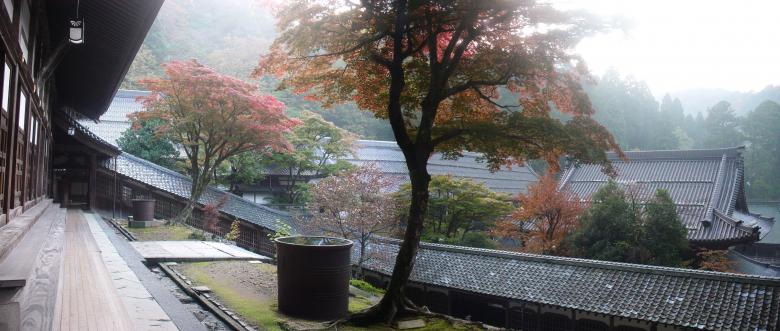
“My life began amid conflict. I am a child of war, born and raised in an environment marked by uncertainty and unrest,” he says of his early life, raised during the tumultuous period of the Lebanese civil war. “Those early struggles taught me to value peace, clarity, discipline, and, most importantly, compassion. In searching for that sense of calm, I found myself drawn to Eastern philosophy, meditation, and the idea that space isn’t just something we live in.”
As a result, the architect was naturally drawn to Japan, where he continued his doctoral studies from the University of Tokyo as a recipient of the Japanese Government Monbukagakusho Scholarship, after earning his D.E.S. in Architecture from the Académie Libanaise des Beaux-Arts (ALBA).
“My path has taken me across geographies and ontologies, beginning in the turbulent environments of Lebanon, moving through the contemplative serenity of Zen temples in Japan, and arriving in the dynamic, future-oriented cityscape of Dubai. Each context has left a distinct imprint on my overall architectural journey,” he says.
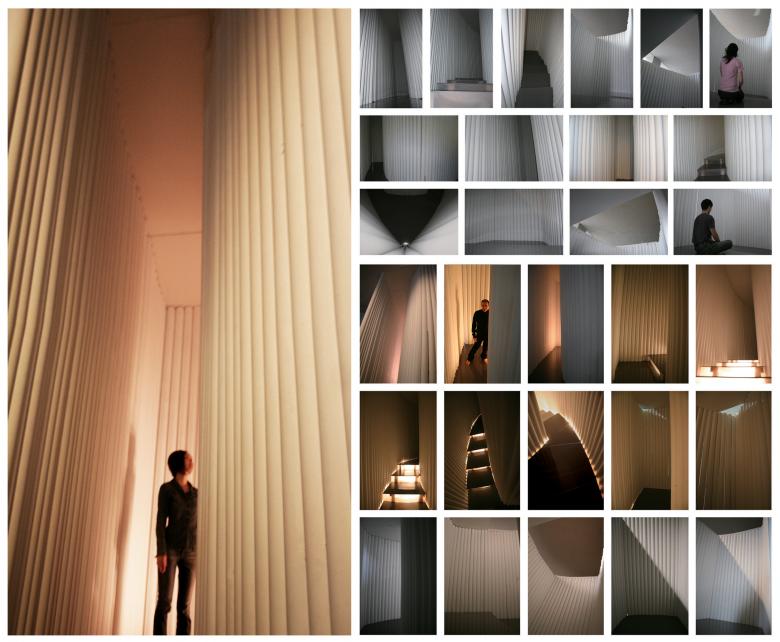
One of the pivotal moments in that period was the development of a spatial experiment titled “Emptiness: The Experimentation,” conducted at the Institute of Industrial Science under the mentorship of Fujii Laboratory in Japan. Before being constructed, this design won the Union Internationale des Architectes (UIA) TIM international award. Part of the experiment was to engage 166 participants in an architectural experience designed to explore how spaces could affect the emotions of users and how it would influence their well-being.
The results demonstrated that space, when composed with specific features and intension, could evoke emotional stillness and elevate the human condition.
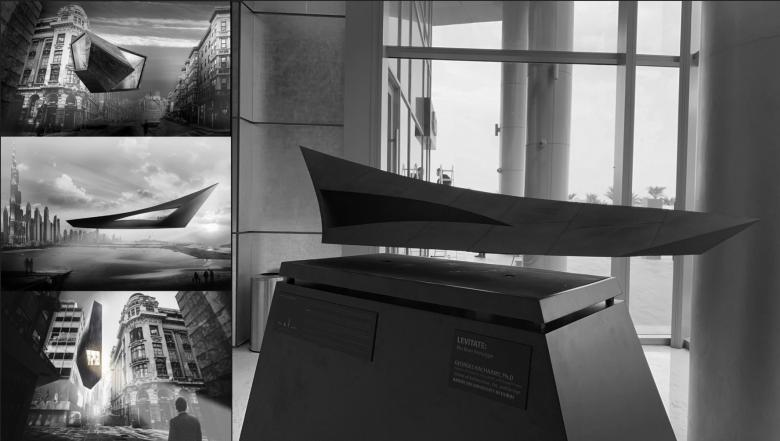
“That period profoundly shaped my thinking about space as a vessel of inner transformation,” Kachaamy says. “This empirical and philosophical insight laid the groundwork for what I would later develop as Gravity Defiant Architecture (GDA), a design paradigm that explores how structures might be liberated from the ground and imagined as airborne sanctuaries.” Prototypes of GDA were exhibited in Venice and Dubai, and it eventually gained the attention of CNN. “My relocation to Dubai marked a turning point,” he adds.
Among his many accolades, Kachaamy is a professor of architecture, a registered architect, a certified VR Sketch trainer, a Gravity Sketch certified trainer, a VictoryXR certified VR educator, an associate member of the American Institute of Architects, and an affiliated member of the UAE Society of Engineers.
But his work at AUD, a quaint university located in the heart of the city, surrounded by skyscrapers and business centers right in the middle of the bustle, has given the architect a chance to explore new perspectives in emerging technologies that has seen his work highlighted and showcased in architectural publications and at events across the globe.
“There is a unique energy in this city that encourages you to imagine what architecture could become, not just what it has been,” Dr. Kachaamy explains. “Joining the American University in Dubai (AUD) felt like a natural evolution. It provided an institutional framework through which I could unify research, innovation, and pedagogy. I saw the potential to empower a new generation of designers to think beyond what is conventional.”
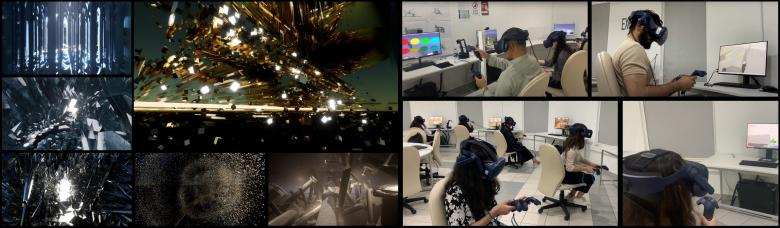
As the previous Chair of the Department of Architecture, Dr. Kachaamy led the program through NAAB accreditation, reinforcing the university’s commitment to international standards. He continues to explore the intersection of speculative architecture and immersive technologies through several groundbreaking projects—one of which is the development of Virtual Reality (VR) and Augmented Reality (AR) courses at the university that helps students design from within a space rather than “about” it.
“Through these immersive platforms, future and virtual architecture has become more than a conceptual vision; it is now an experiential framework for reimagining architecture as a phenomenology of sensory, cognitive, and even spiritual dimension,” he says. “The overwhelmingly positive feedback collected from multiple iterations of the courses revealed the potential of virtual environments to enhance creativity, spatial understanding, and emotional engagement in the design process,” Kachaamy adds.
Another project reshaping Dr. Kachaamy’s architectural practice is Generative Artificial Intelligence (GAI). He believes generative AI can bring together human ideas and algorithmic suggestions to produce results neither could achieve alone. In this approach, intelligence comes not just from the code, but from the way human thinking and computer processing work together, he explains. “In my classes, students use AI to discover new design patterns that traditional methods might miss.”
This philosophy found full expression in an initiative Kachaamy led at the CRID, titled “Dreamscapes: Envisioning the Future of Dubai with AI,” which was developed in collaboration with UAE-based conglomerate Majid Al Futtaim, Dubai Culture and Arts Authority, and the American University in Dubai. Embedded within the academic curriculum, this competition engaged 10 faculty members and over 150 students, culminating in more than 250 speculative artworks that imagined Dubai years into the future.
“Each piece was generated using advanced AI applications and explored critical themes such as cultural identity, sustainability, placemaking, innovation, and architectural storytelling,” Kachaamy explains proudly. “The result was not merely a collection of artifacts, but a pedagogical shift, one that repositions AI as a collaborator in envisioning future urban narratives.”
In his broader multidisciplinary practice, to say the architect is staying busy is an understatement, as he continues to work across art, research, and emerging technologies. As an architect, Kachaamy designed the Executive MBA Educational Facility (EMBA) on the AUD campus that we sat in during our meeting. According to Kachaamy, this project marked another significant milestone in crafting spaces that respond thoughtfully to the climate of the region while enhancing the user experience.
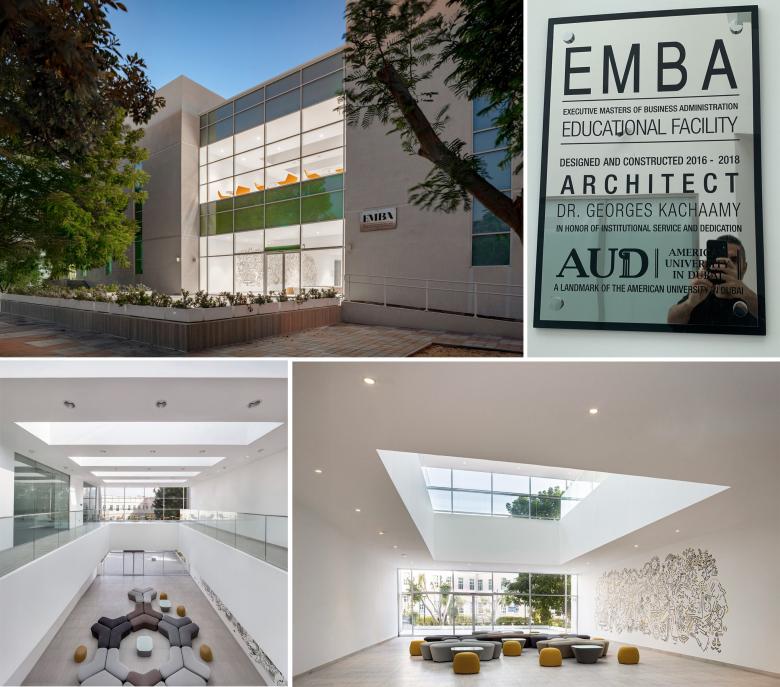
“The building reinterprets the relationship between light, space, and human experience through a composition of five distinct volumes linked by transparent circulation and social areas,” he explains passionately to me. Strategically located at the heart of the campus, the EMBA building integrates seamlessly with its surroundings, offering a balance between enclosed learning spaces that foster focus and open atriums that invite light, greenery, and fluid social interaction.
The design of the building features flexible classrooms, breakout rooms, an innovation center, and spaces that extend into outdoor terraces, elevating the academic environment through an adaptive and minimalist design. He describes it as a “business-chic atmosphere”, and I couldn’t help but agree. At its heart, the building aims to enhance the well-being and experiences of its users.
“As an artist, I continue to evolve a body of work titled UNCONSCIOUS, which I initiated while residing in Tokyo”, he continues. “This ongoing artwork is a visual meditation on the boundless cosmos and the fluid interplay between the microscopic and the infinite.”
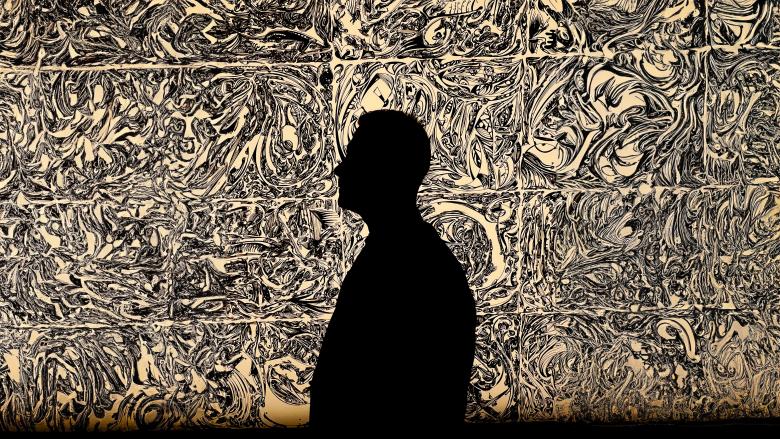
Created through a synthesis of surrealist automatism and meditative practices, each piece emerges in a trance-like state where conscious control dissolves and the subconscious guides the hand. The series, with over a hundred pieces, encourages viewers to openly discover meaning for themselves. This piece has been exhibited internationally, from Venice and Munich, to Dubai and London, and embodies both a personal journey and an artistic expression for the architect.
Turning to the state of architecture in the region, I picked the architect’s brain on his opinion of the state of the industry in the Middle East. “The architecture industry in this region is advancing with remarkable speed,” he says. “Yet, amid this momentum, a fundamental question must be asked: Are we building for visual spectacle alone, or are we creating environments that truly foster human well-being?
“In an age of climate urgency, technological acceleration, and urban density, architecture must do more than impress,” he continues. “It must become an instrument of healing. This is where the industry must evolve.”
Through his many ventures, from architecture and art to immersive experiences and literature, Kachaamy has consistently placed the human condition at the center of his work, while seeing great opportunity in leading a global movement rooted in spatial well-being. “By embracing this intersection of innovation, technology, design, and mindfulness, the region can assert itself not only as a hub of architectural excellence, but as a global beacon for human-centered environments,” he says, adding that “the future lies in creating buildings that don’t just rise, but uplift.”
相关文章
-
-
-
Spotlight Arabia Sets the Stage for New Arabian-Architects Platform
Catherine Belbin | 28.10.2025