House in Yawatano
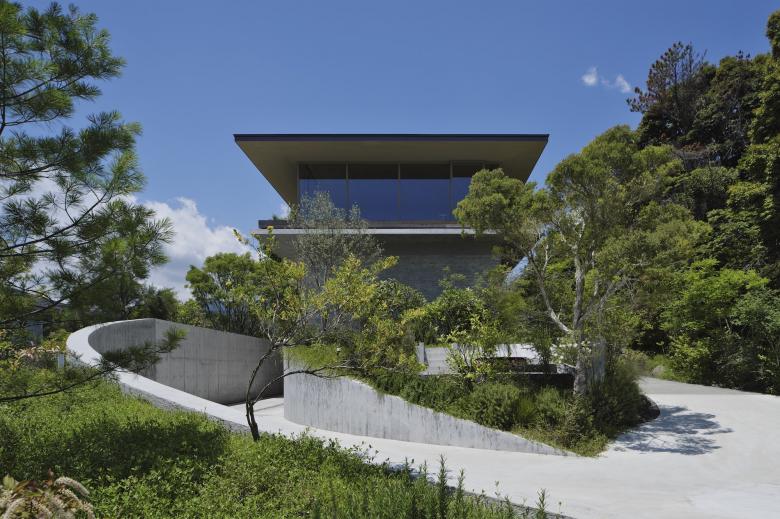
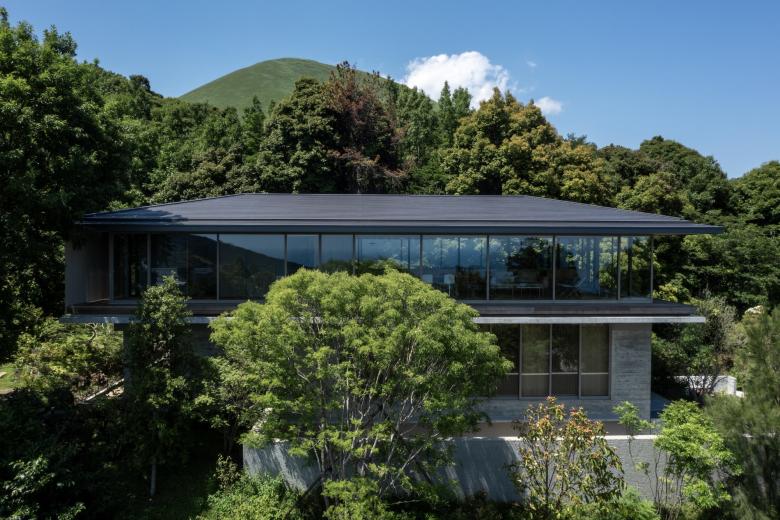
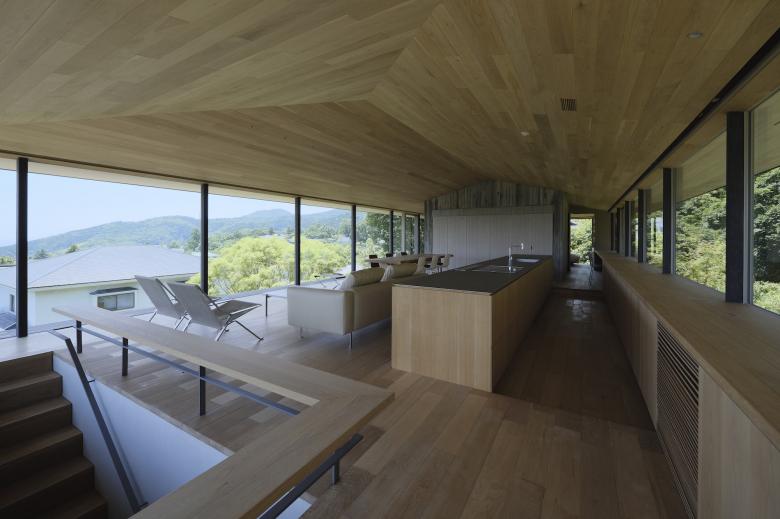
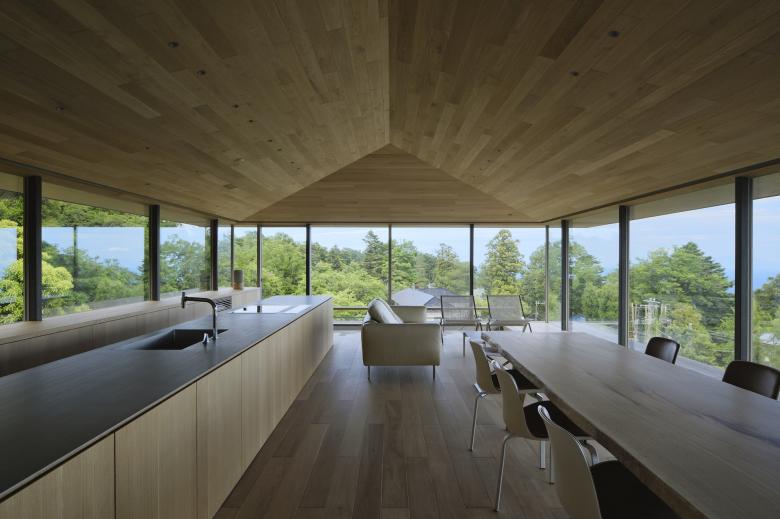
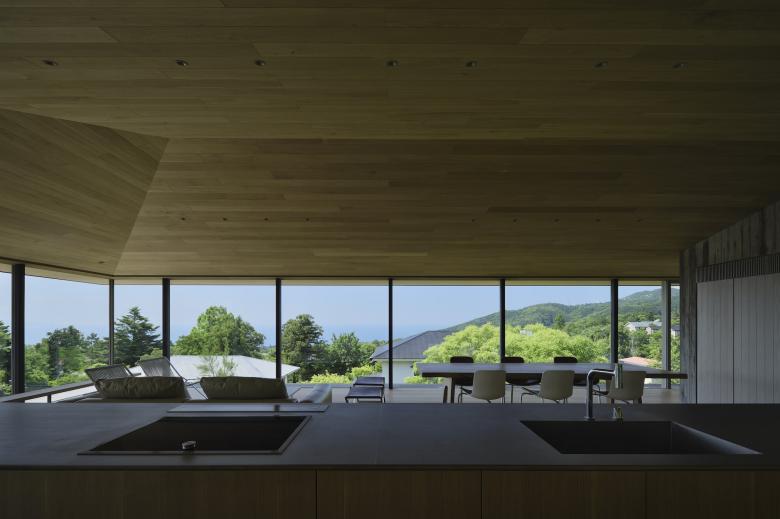
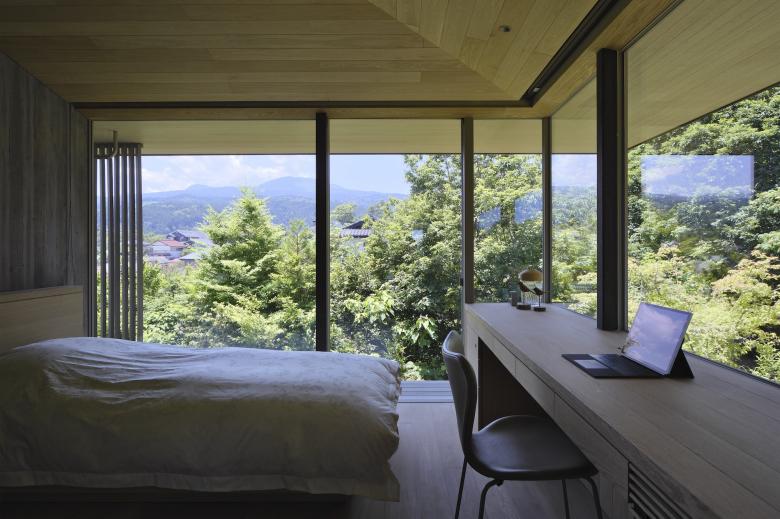
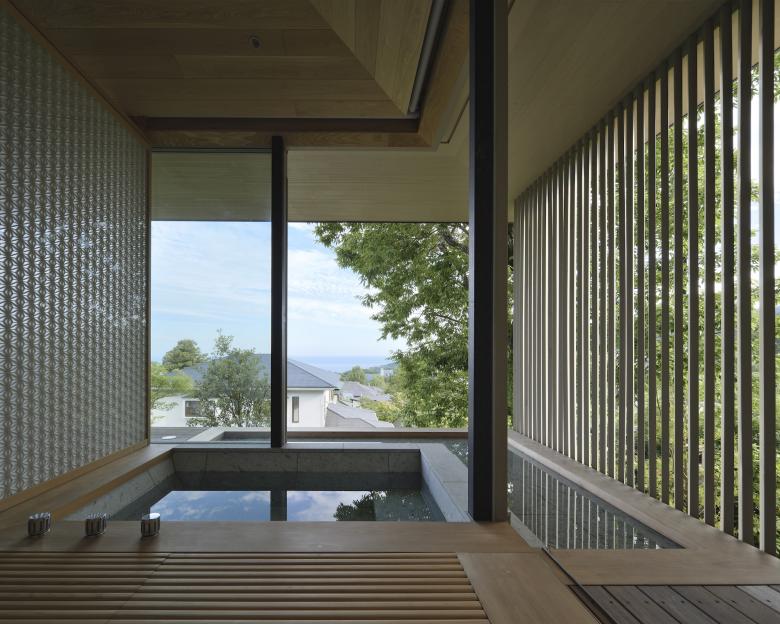
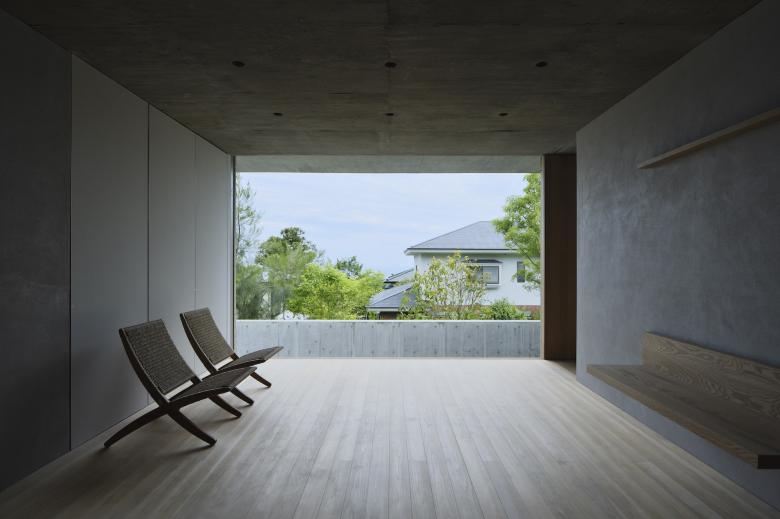
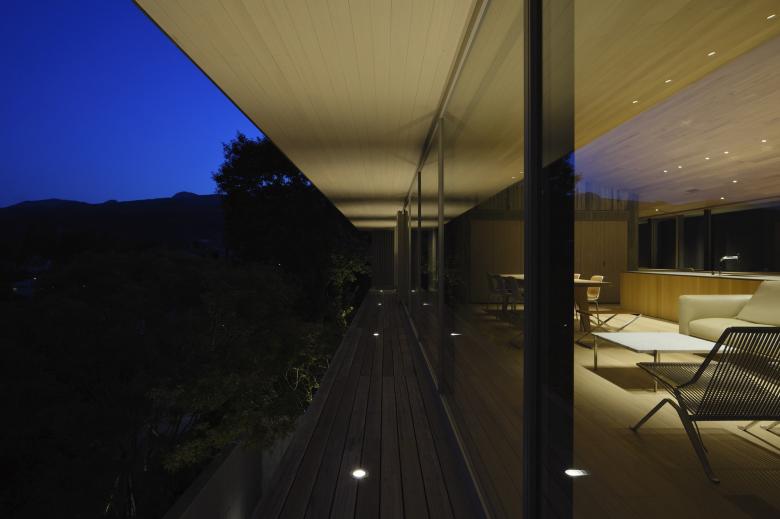
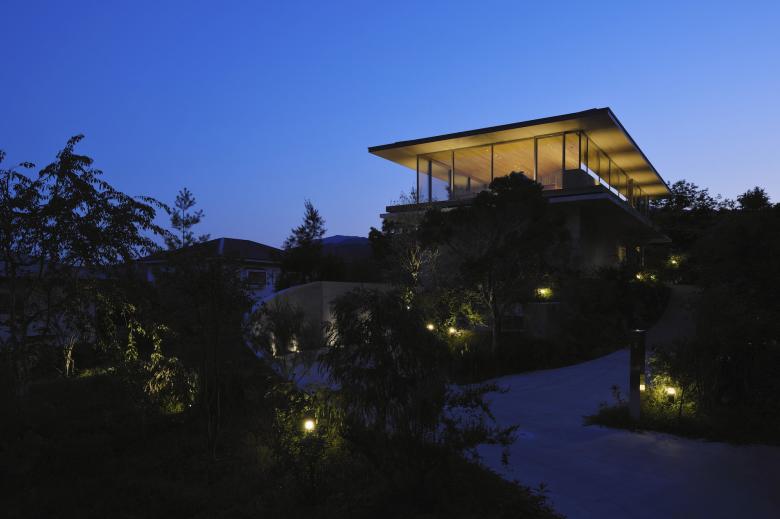
The site is located on a hilly terrain formed by volcanic lava flows that poured into the bay. The site, which retains its natural topography, slopes from northwest to southeast, with an elevation difference of as much as 7 meters. By designing the floor level 3 meters above the higher ground in the northwest, the view opens up from south to east, offering a panoramic view of the bay. Furthermore, a mixed woodland spreads across the natural hillside across the road to the north. The challenge was to maximize these views opening to the north, east, and south.
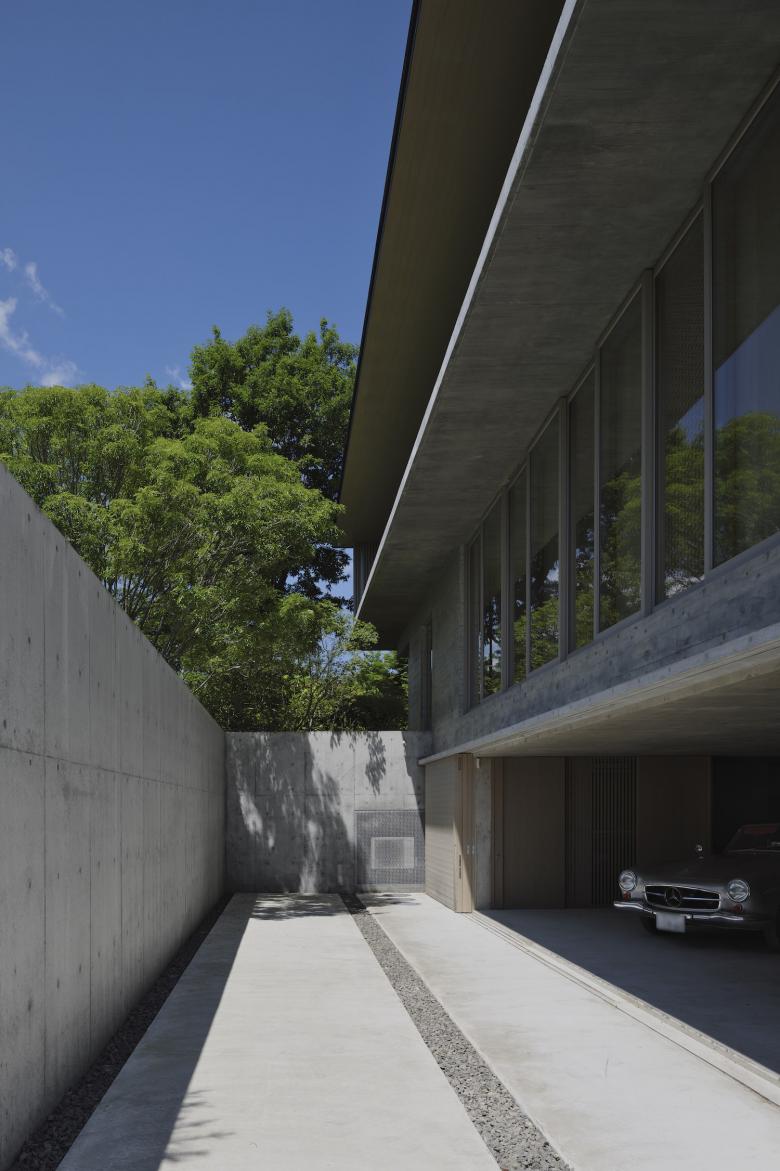
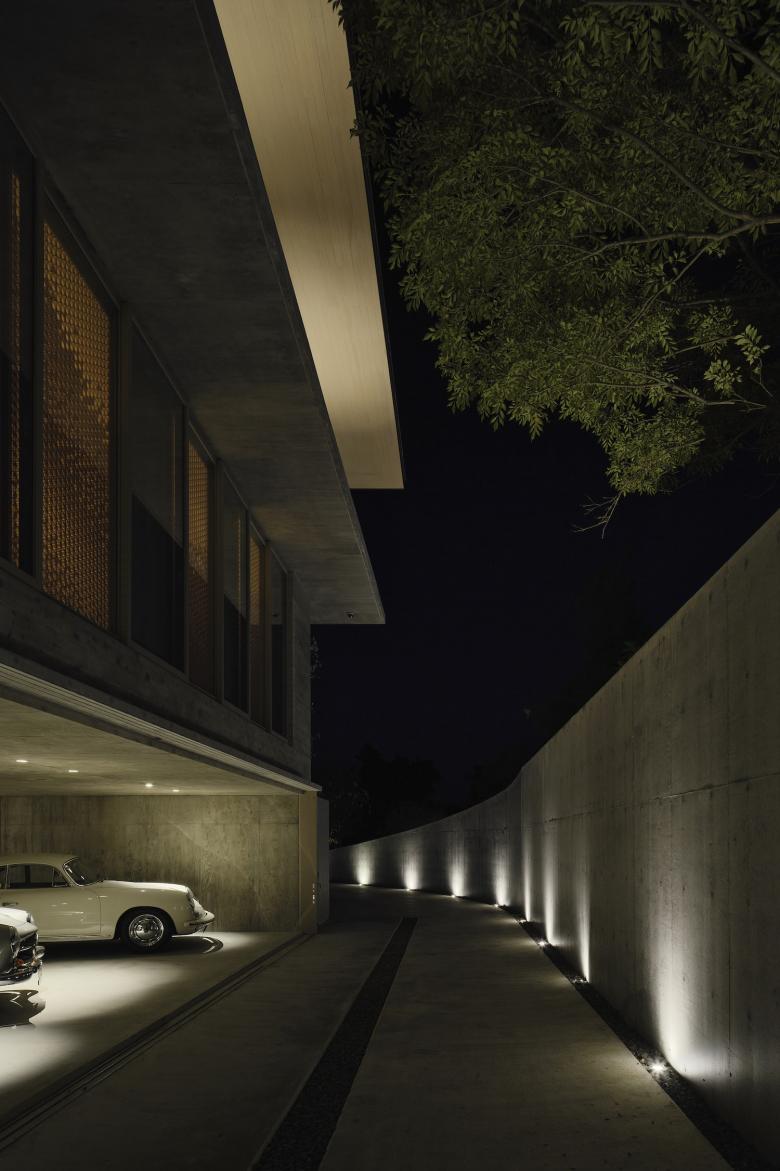
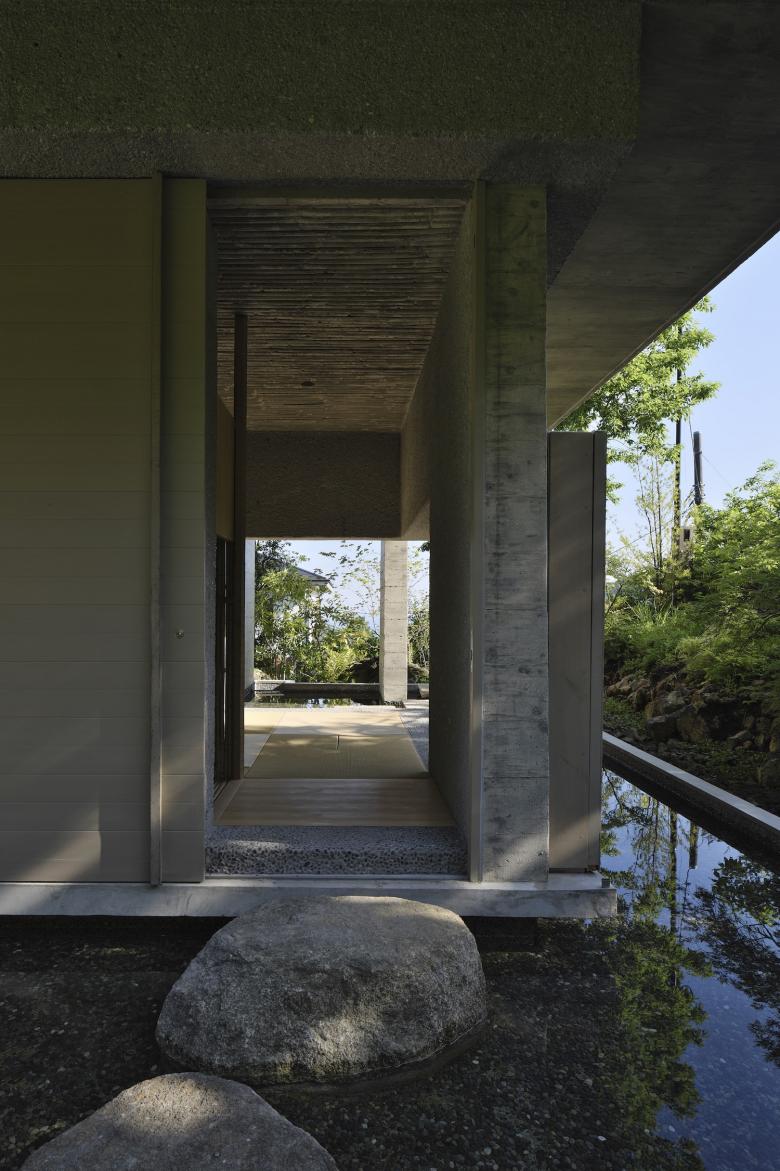
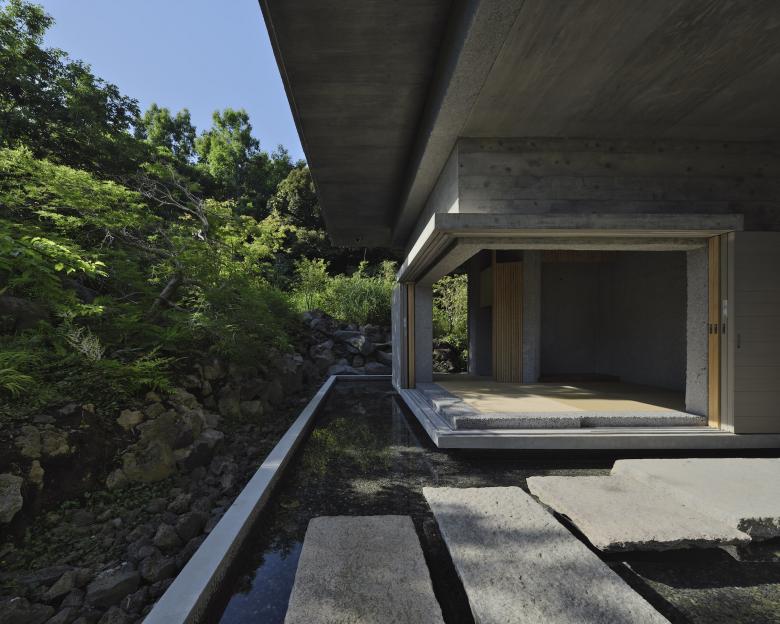
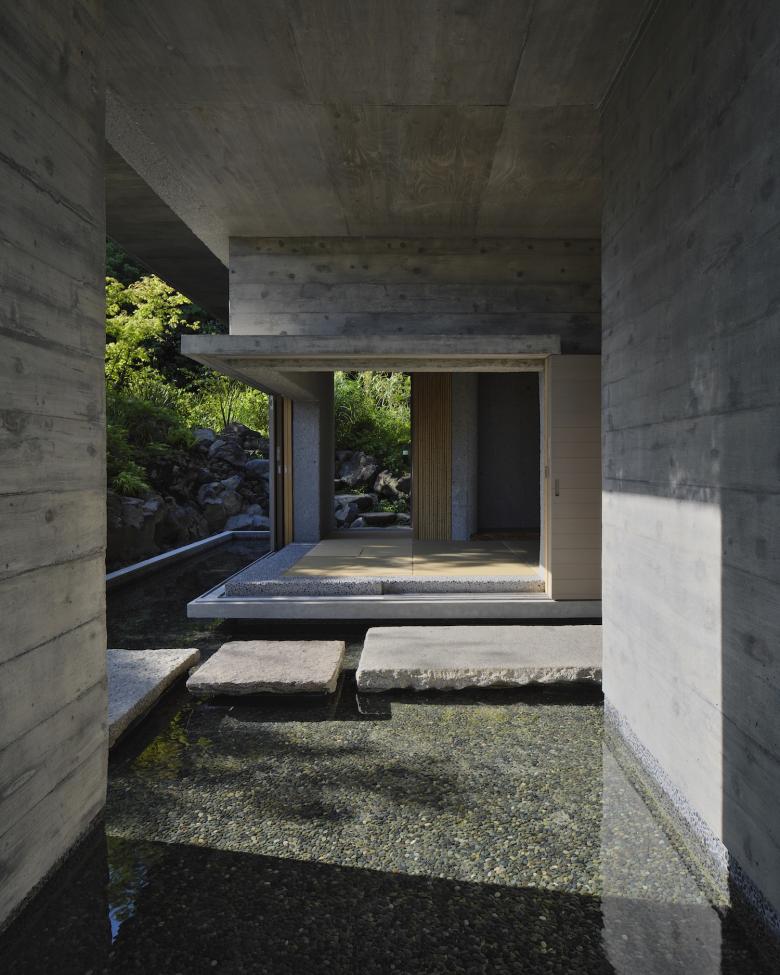
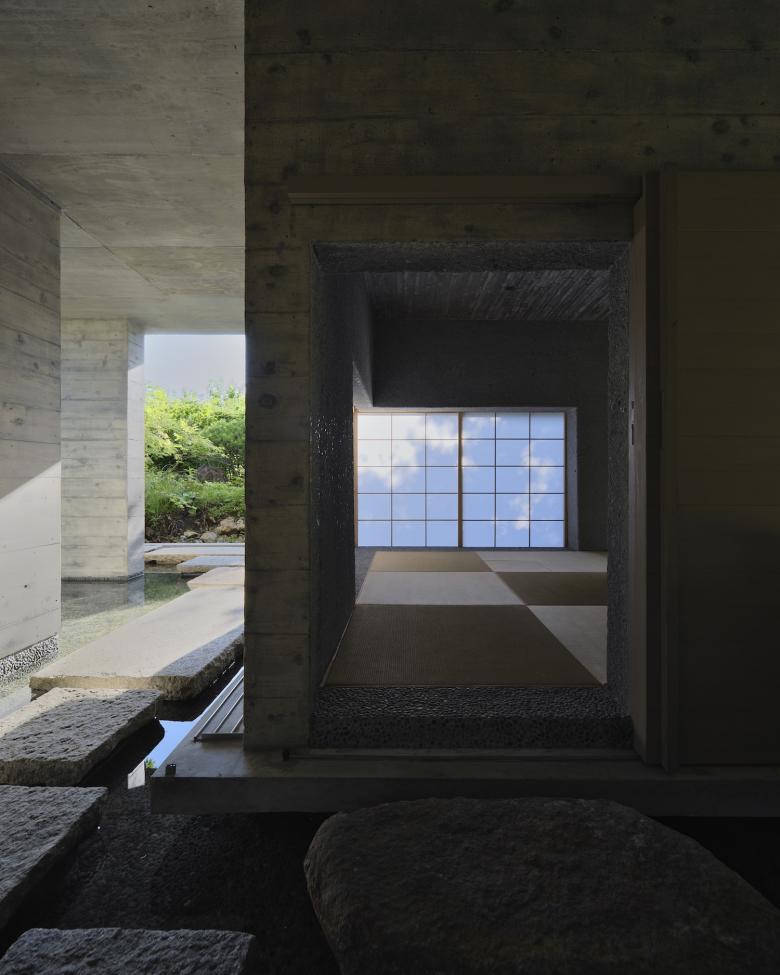
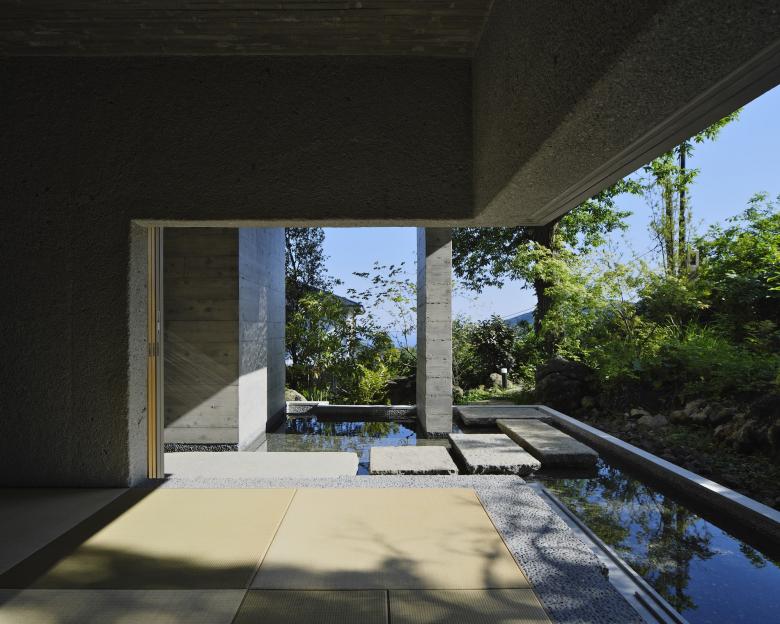
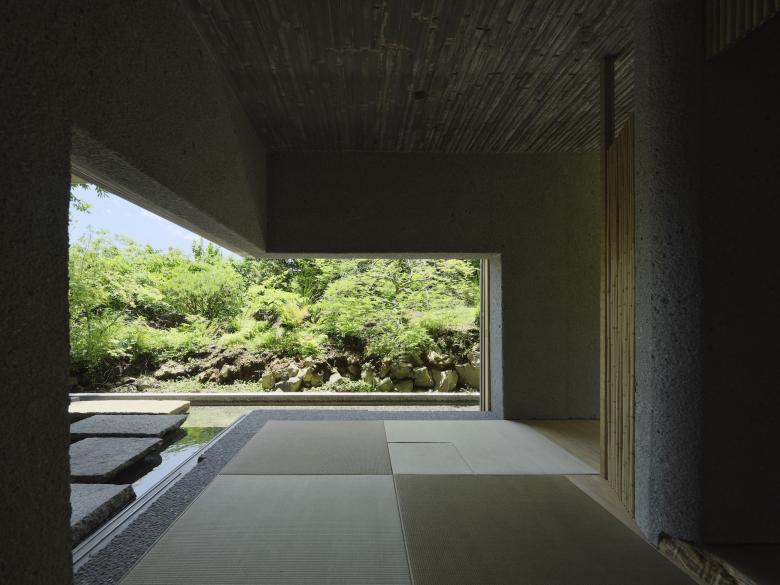
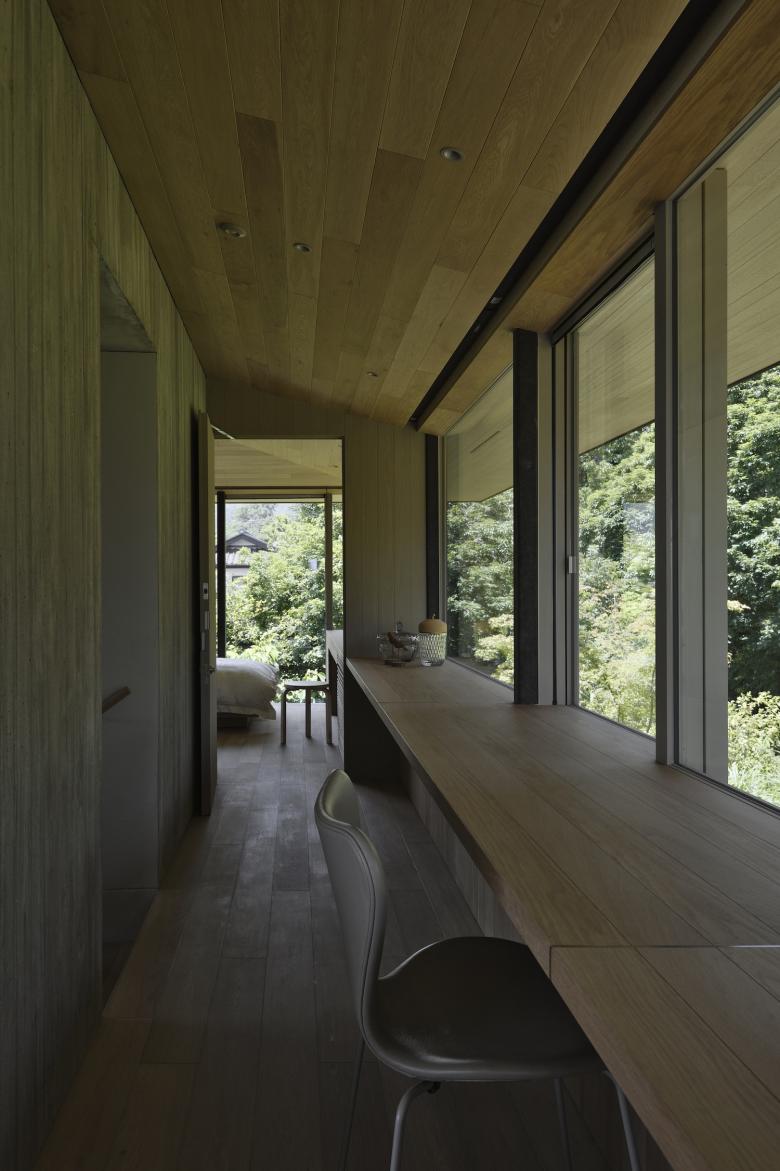
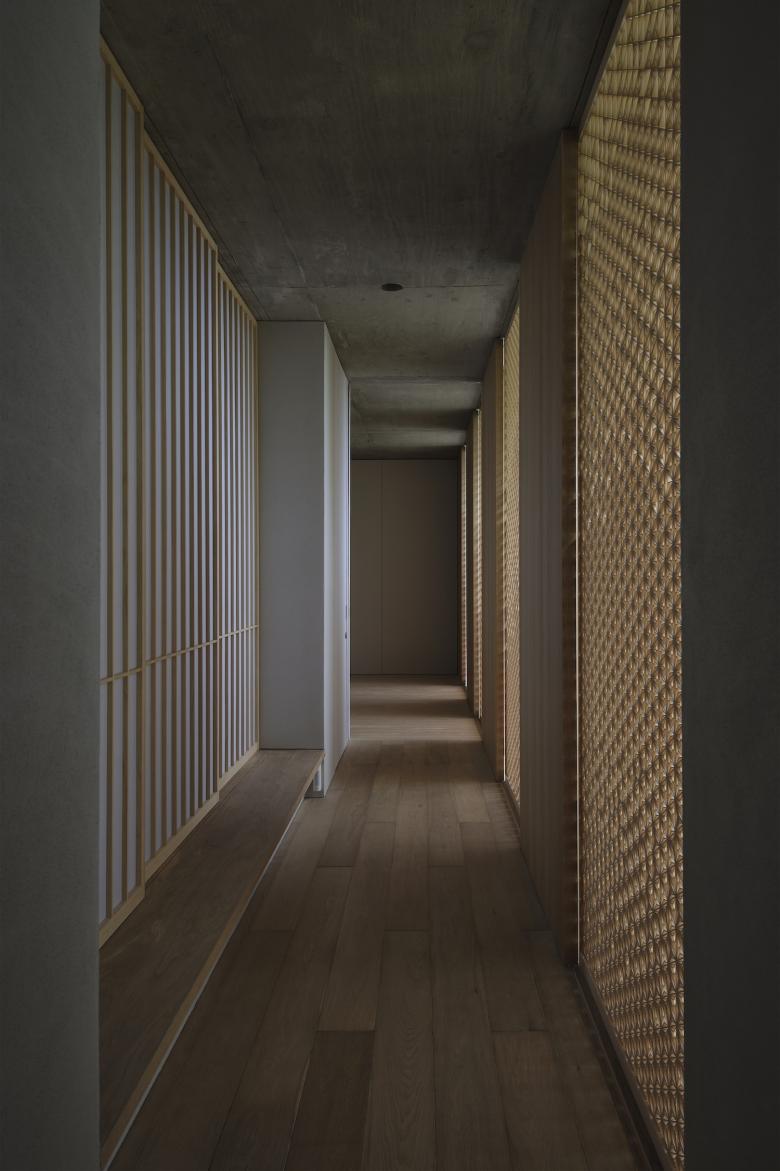
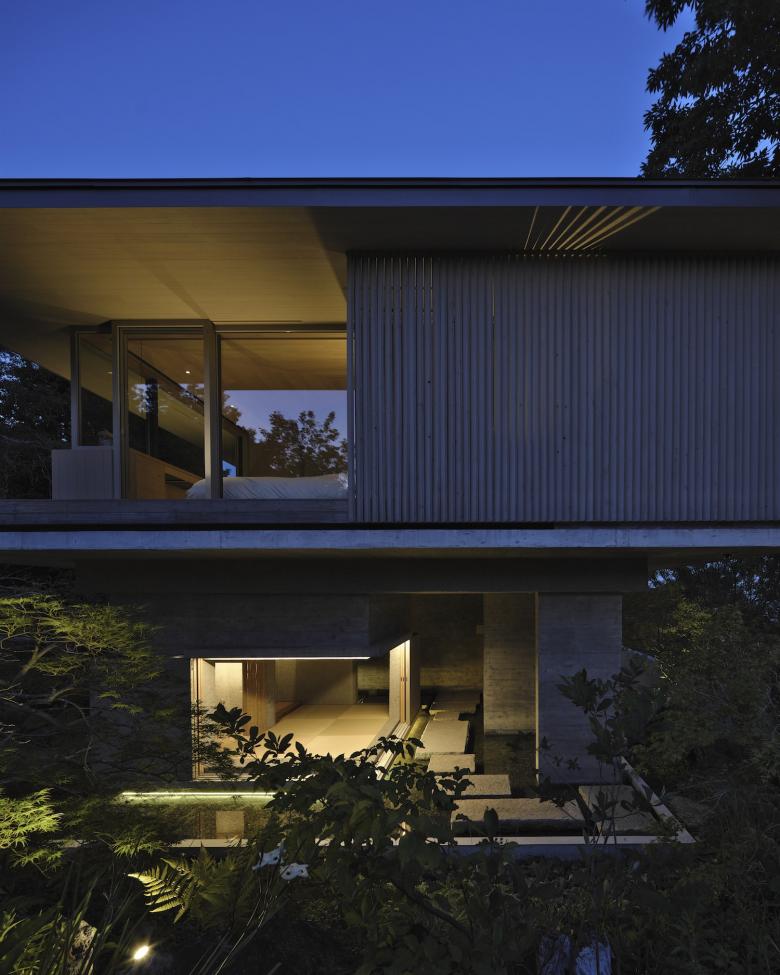
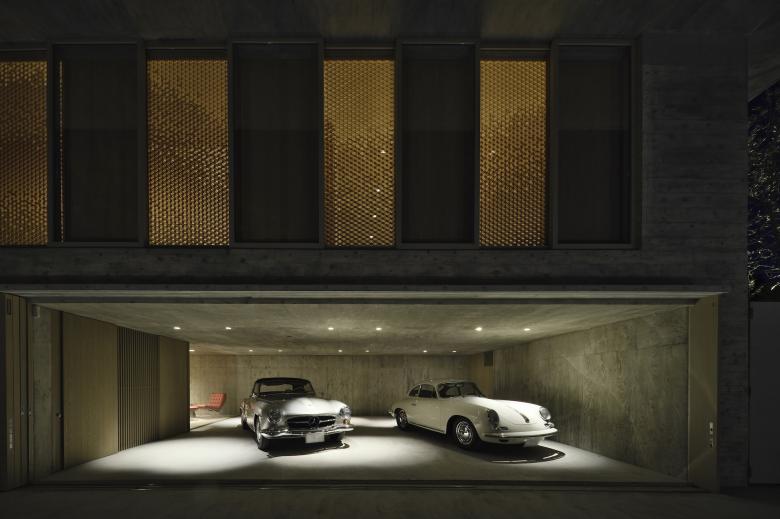
To achieve this, the building was positioned toward the northwest to raise the average ground level, ensuring the views were preserved while complying with local floor-area and height restrictions. The northeast corner—the only point on the site that connects directly and levelly with the road—serves as the approach, from which a gently sloping driveway follows the site’s contour lines to the garage. The garage serves as the building’s basement and forms its foundation. The master bedroom, designed for the husband who enjoys cars, is located directly above the garage and connects to it. Additionally, a stage for Japanese dance—another of his hobbies—a waiting room for his dance instructor that doubles as a guest room, and a tea room—planned to resemble a separate building by utilizing the pilotis—were incorporated. On the top floor, which offers the best views, the living-dining area, kitchen, and utility spaces are arranged, with the wife’s bedroom positioned within this circulation route, taking into account her access to the kitchen, as cooking is her hobby. The villa was designed so that both husband and wife could enjoy their own personal time.
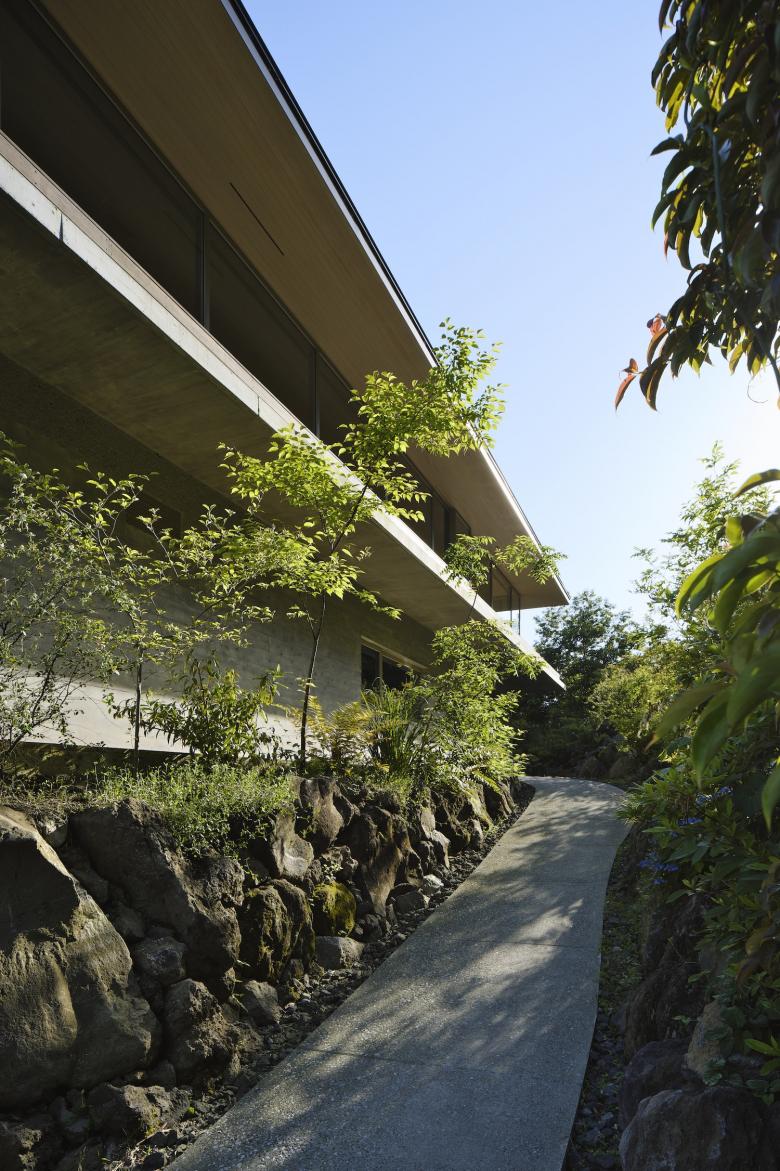
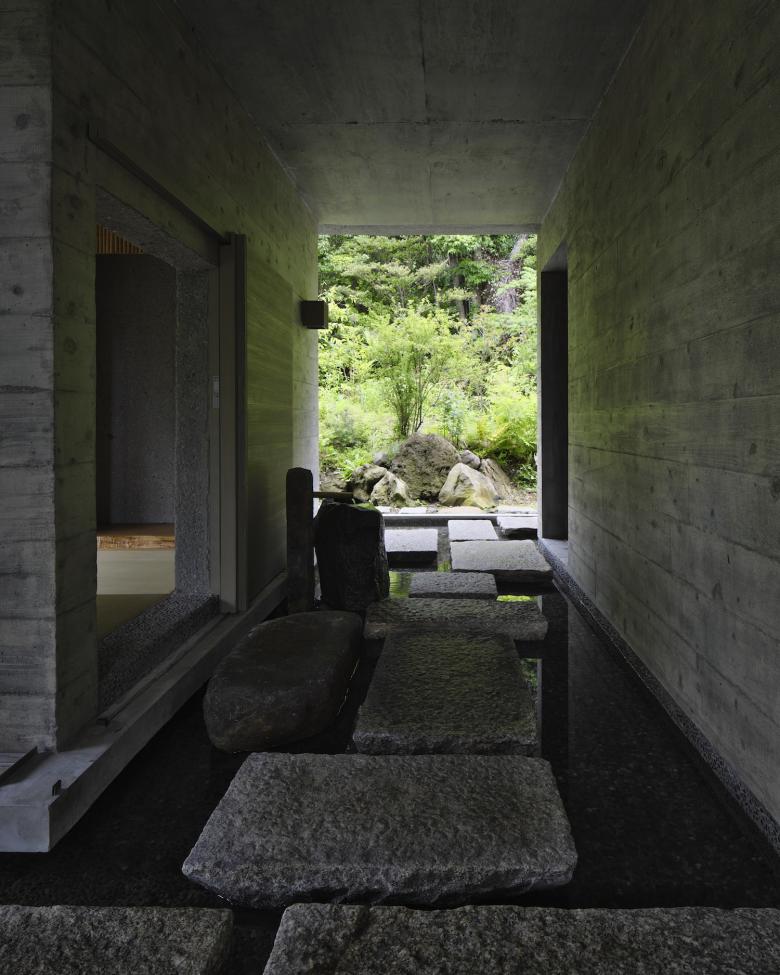
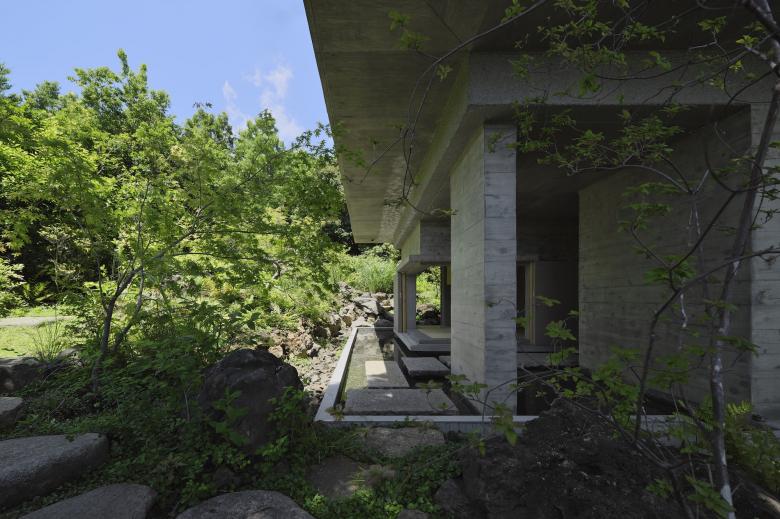
The terrain, which rises gently from southeast to northwest, was left as natural as possible and landscaped as a green hill. Furthermore, the slope was restored and greened to cover the retaining wall along the driveway on the south side. By designing the architecture to appear as if it were growing out of the lush, natural hillside, the intention was to ensure that the building—erected at a higher elevation on the site to secure floor height—would not appear to protrude. The approach road was designed as a gentle, green-lined slope that follows the natural topography. In the garden in front of the tea room, lava rocks exposed during site preparation were left as they were to serve as landscape stones, and a hill-like walking path was created that makes use of the natural terrain. By utilizing the natural topography in this way, the structure blends seamlessly into the surrounding area.
The goal of this project was to create a design that enjoys magnificent views while utilizing the site’s unique characteristics to bring out the natural character of the hills, thereby becoming an integral part of the landscape.
- Year
- 2024
- Project Status
- Built