House in Jogasaki coast
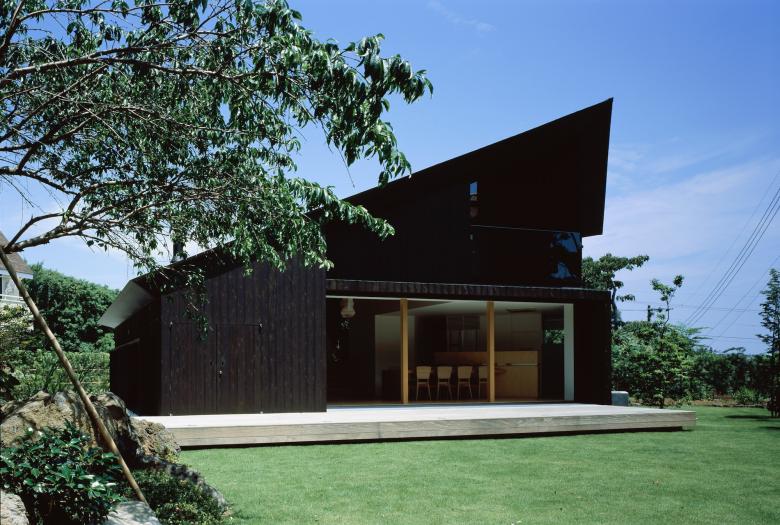
This project involves the design of a weekend home for a couple living in the city center, with the intention of eventually serving as their permanent residence.
The site is located within a planned residential development along a street lined with cherry trees leading to the Jogasaki Coast. Although the surrounding area is designated as a national park, the site itself is flanked by existing homes to the north and south, with plans for further development to the east, resulting in a dense cluster of residential buildings nearby. It is a suburban housing development where one cannot sense the vast natural scenery—such as the majestic ocean or mountain ranges—typically associated with the term “weekend home.”
Therefore, rather than focusing on nature as a beautiful landscape to be viewed, we intended to create a space integrated with the site where one can fully experience nature as the very atmosphere of the place.
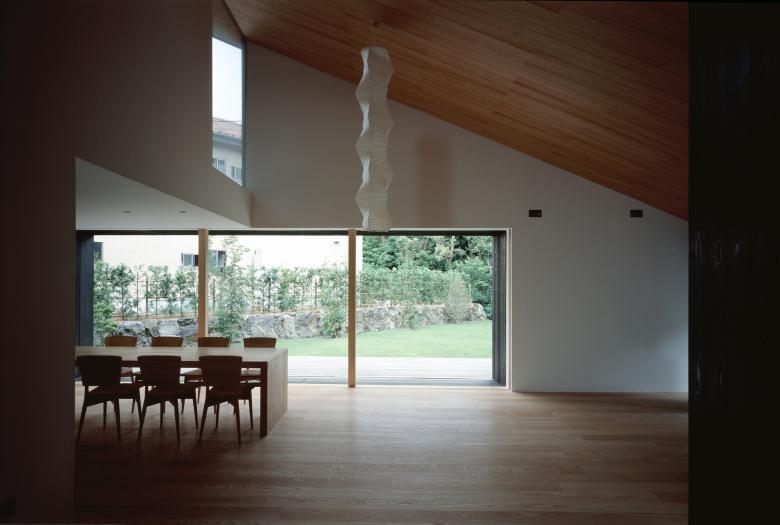
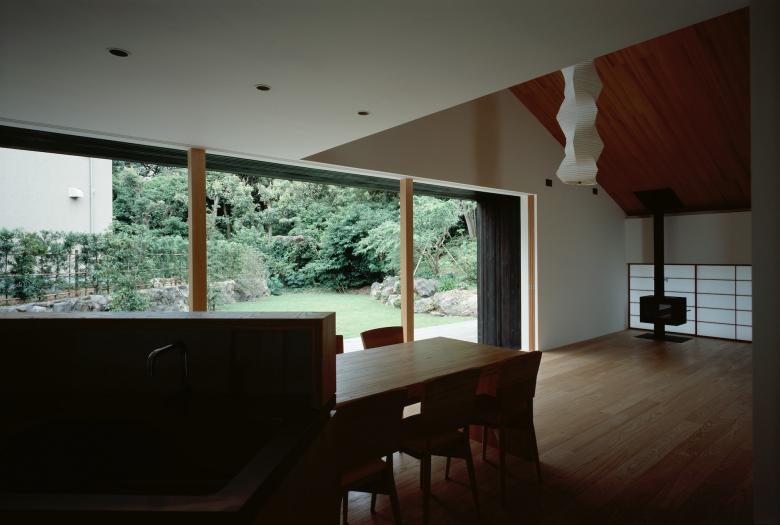
We envisioned spanning a large roof over the land to envelop the very atmosphere of the site, thereby creating a space that becomes one with the land. The roof was designed to span the maximum area permitted by the Natural Parks Act, and its shape was made to blend into the site by mimicking the undulations of the land before development. The form, which spirals upward from the approach, also aligns with the client’s request for an “exterior that makes you feel like you’ve arrived at a vacation home and lifts your spirits.”
I wondered if it might be possible to create a space rich in expression without compromising the essence of a space integrated with the site by introducing orderly diversity and variation into this simplicity.
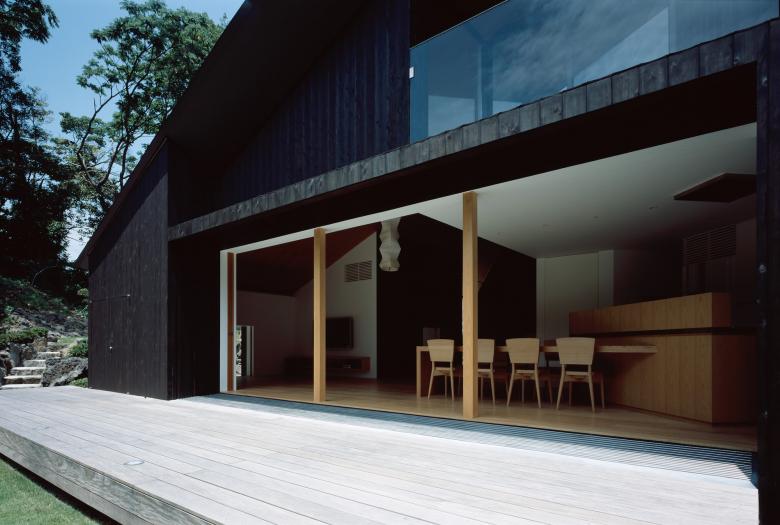
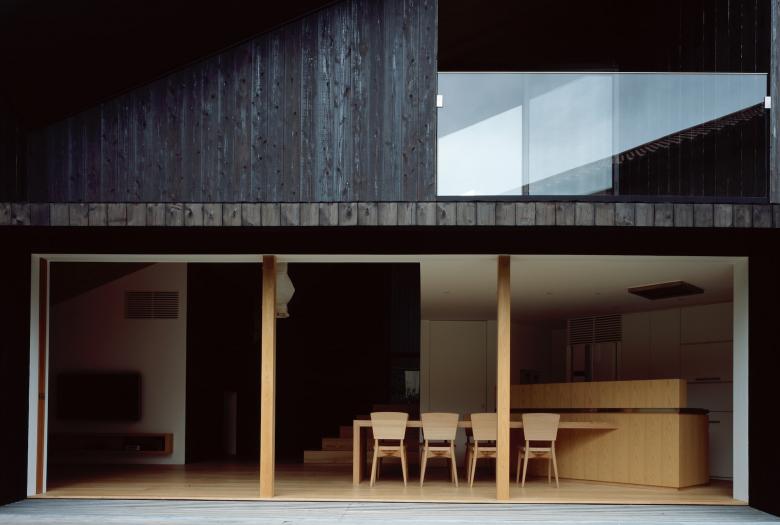
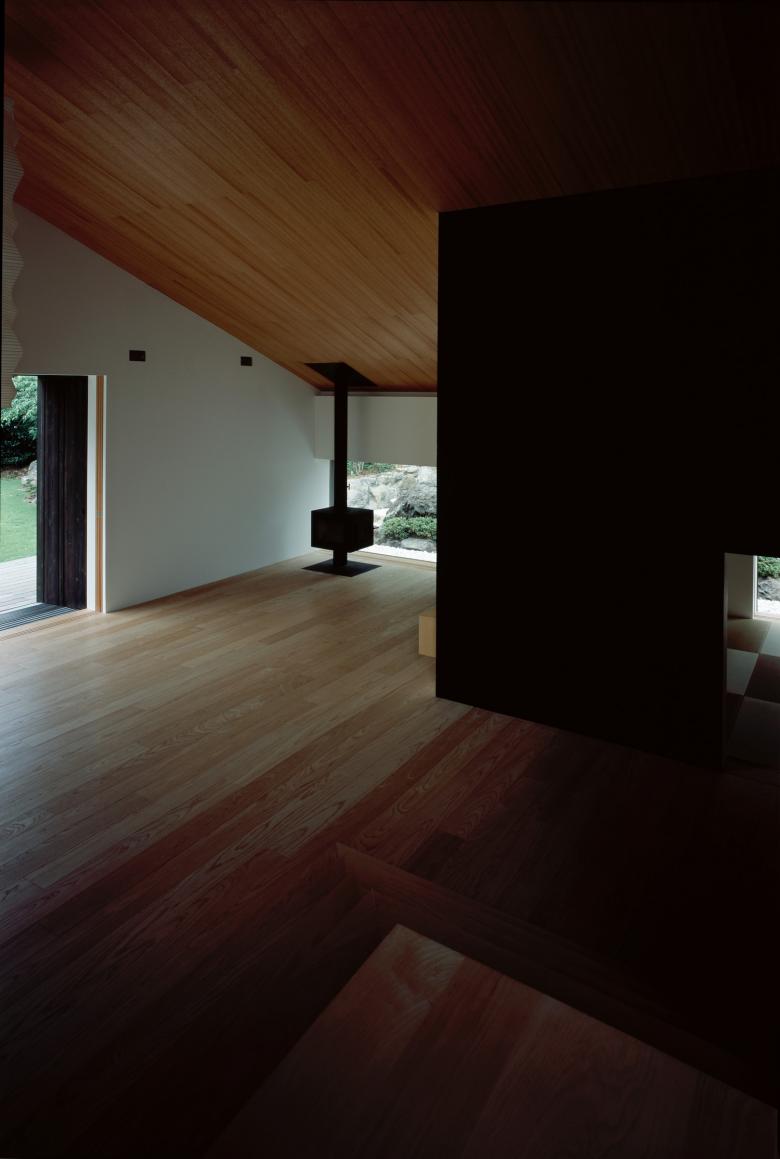
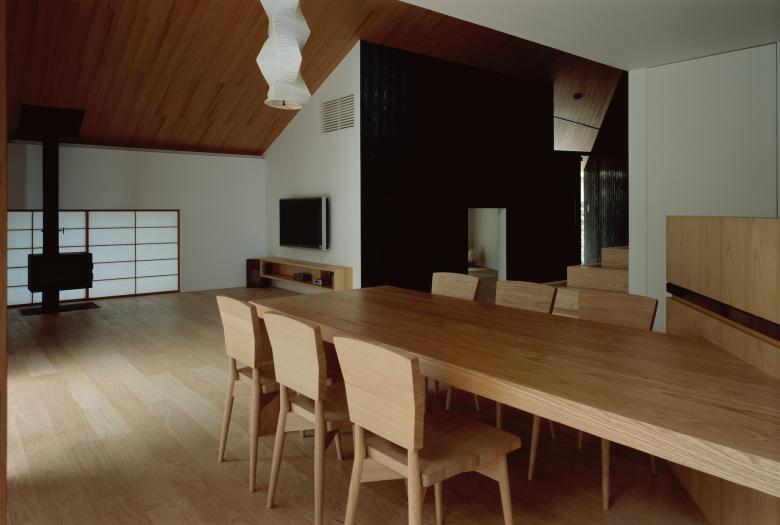
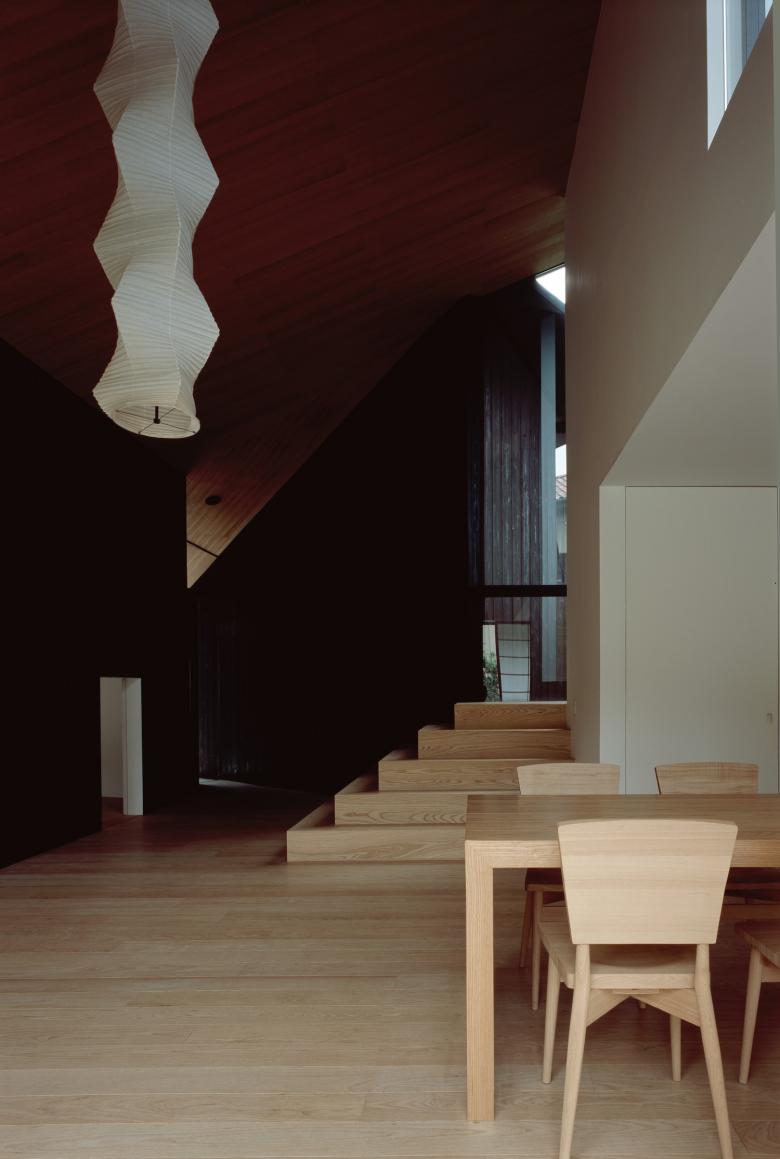
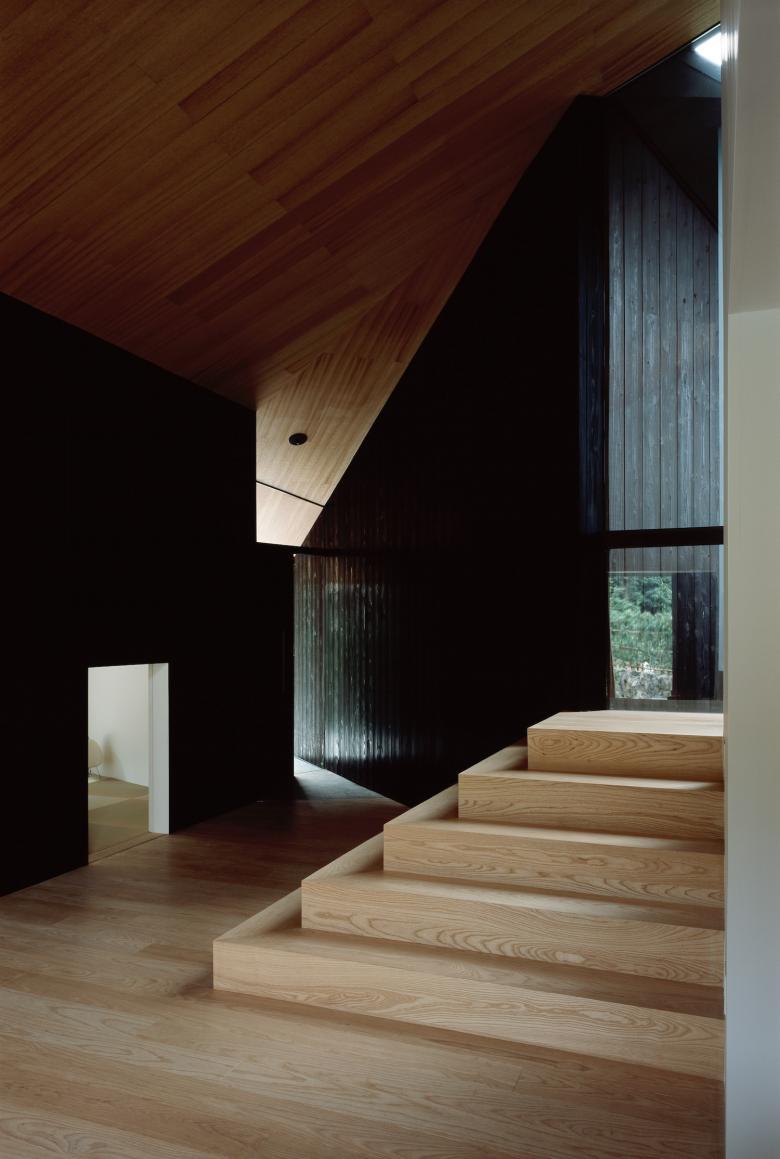
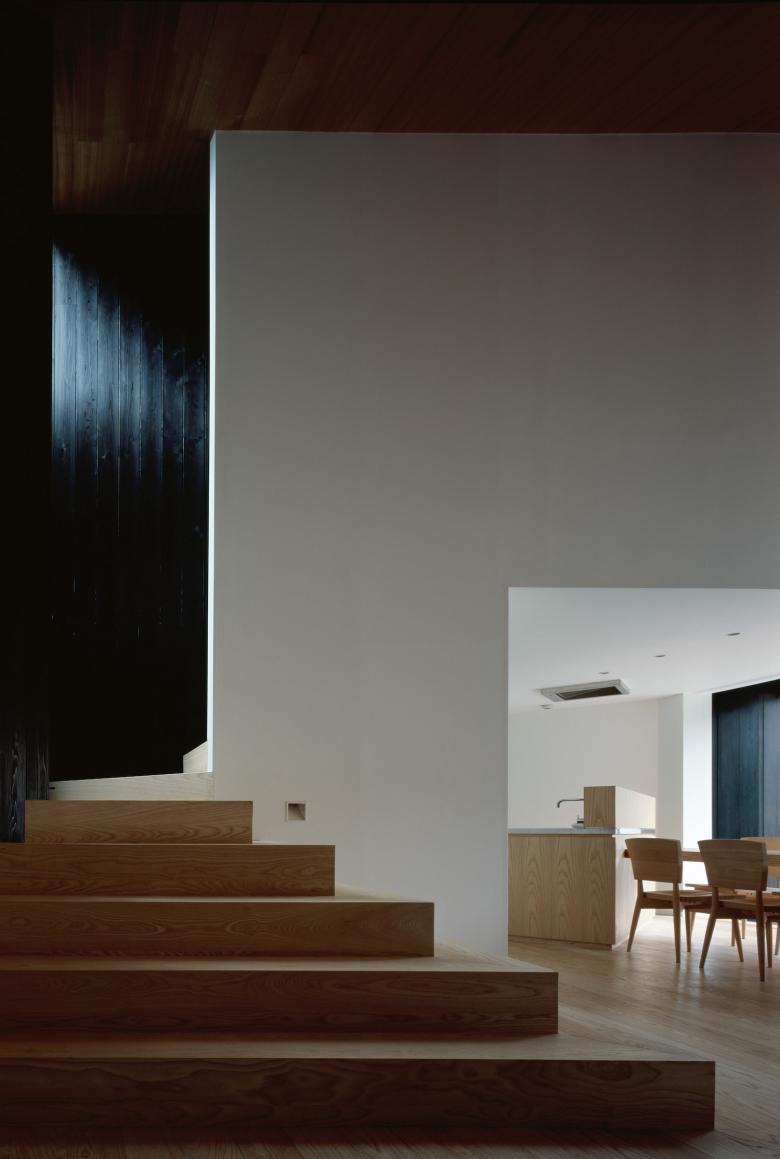
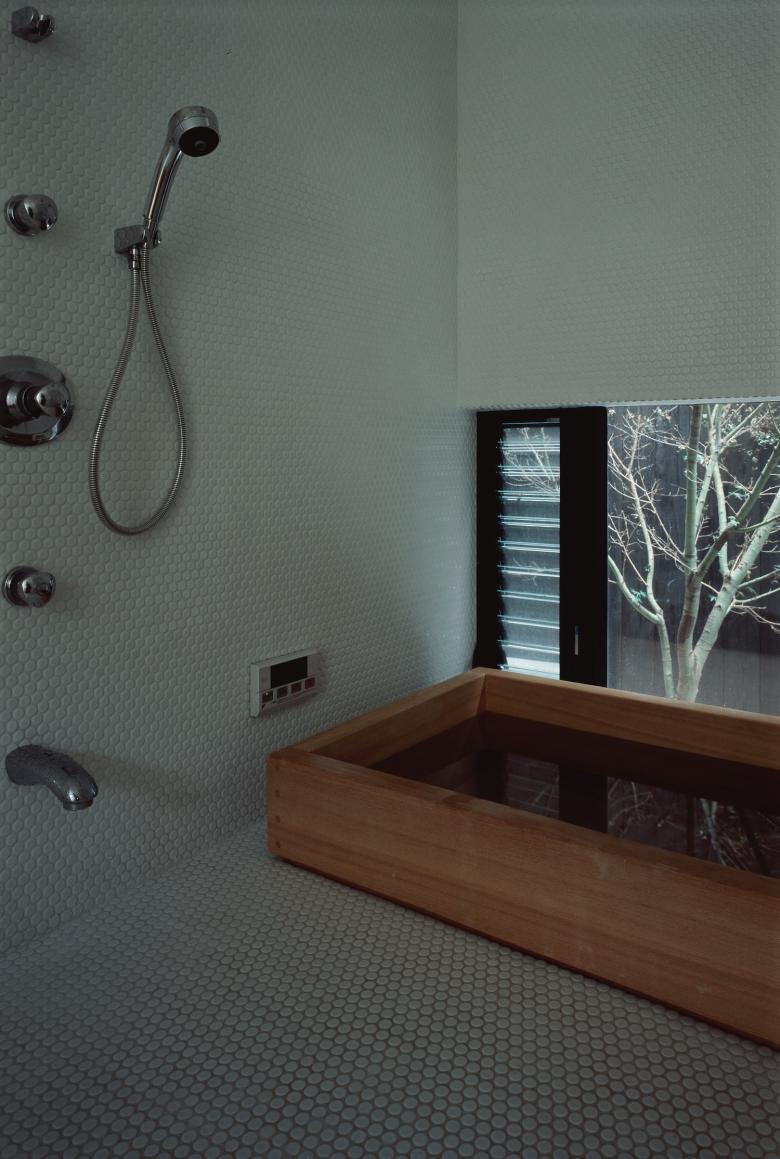
The brief specified the provision of three private rooms (two bedrooms and a guest room) to accommodate multi-generational use. In addition, essential residential functions such as the wet areas and parking lot were organized into separate, enclosed blocks. These blocks were then arranged under the large roof, taking into account the character of each block and the characteristics of the site. On the north side, where the approach from the cherry tree-lined avenue leads to the site, we placed the parking block; on the west side, facing a small hill covered with mixed woodland, we placed the guest room block; and on the east side—which was a small hill before development and has now been leveled—we placed a two-story block resembling an artificial hill, with the two bedrooms stacked above the wet areas.
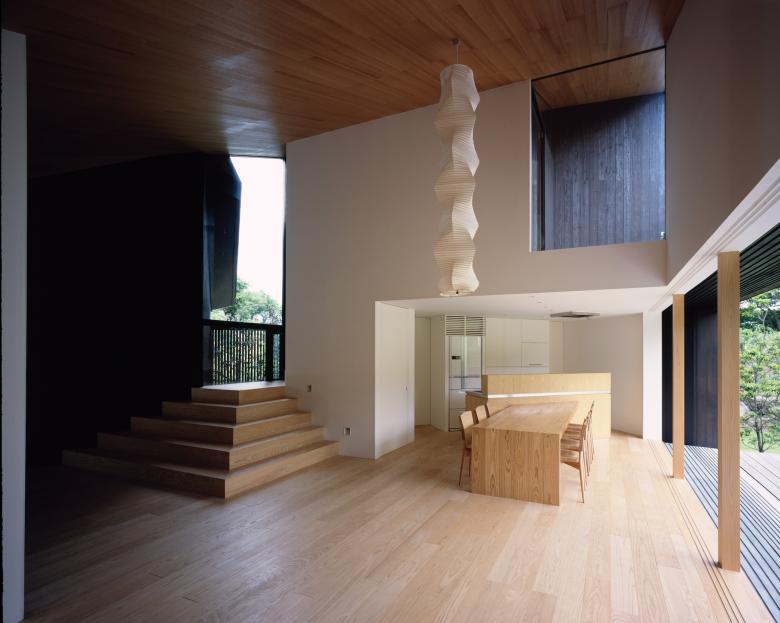
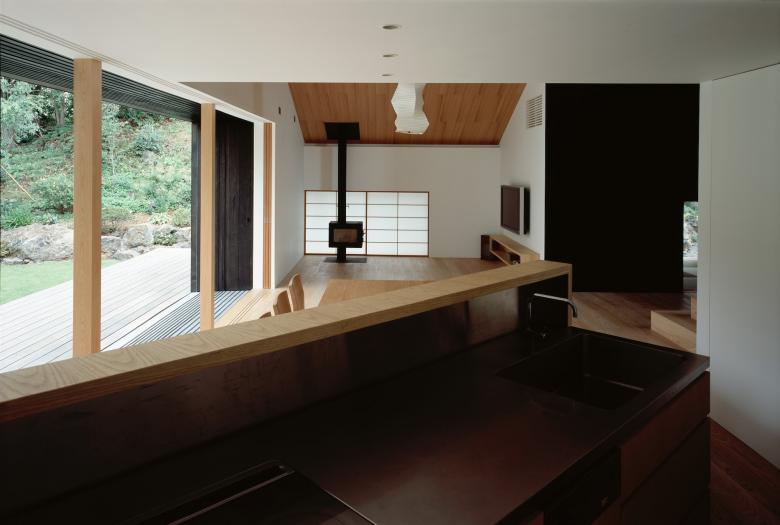
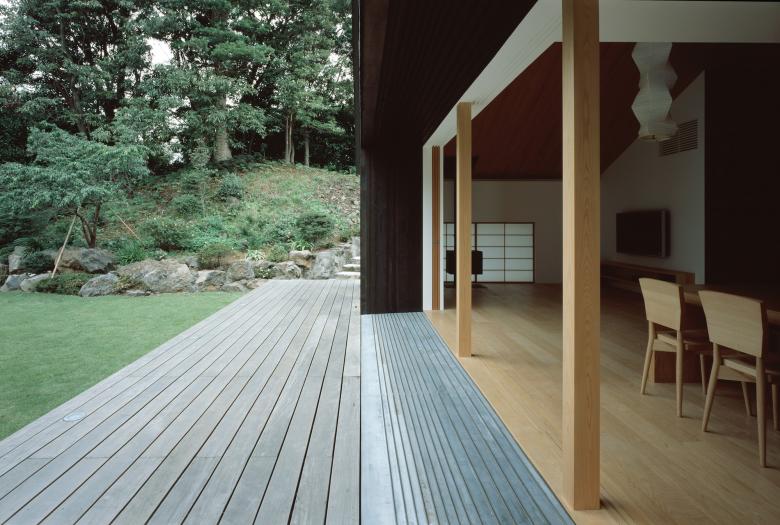
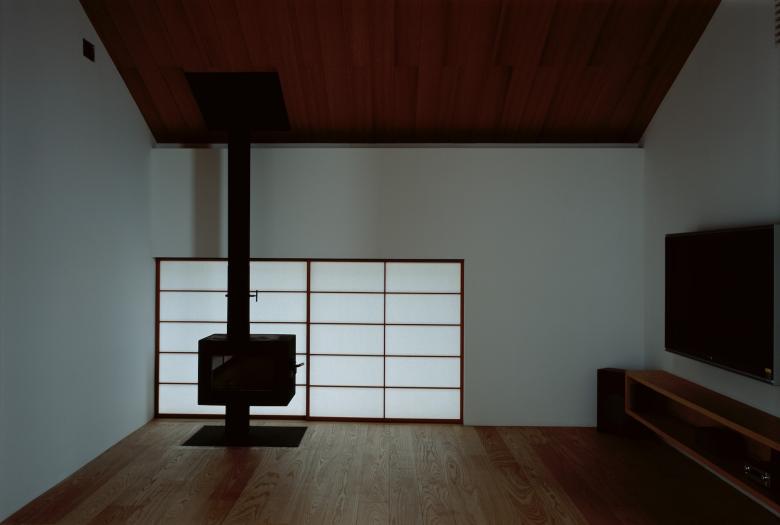
The organic spaces created by dispersing these blocks beneath the large roof have become richly expressive environments, full of diversity and variation, without compromising the essence of the space as an integral part of the site or being constrained by the building’s functions.
This residence allows one to fully experience with one’s entire body the sky, greenery, sunlight, and breezes visible through the ever-changing gaps between the blocks, creating a new space within the site where the natural surroundings can be felt more richly and vividly.
As this is a weekend home that will eventually serve as a permanent residence in old age, the design sought to balance the extraordinary with the practicalities of daily life. Therefore, for the wet areas and the two bedrooms—used primarily for sleeping—the 910 module, with which the inhabitants are physically familiar from daily life, was employed as much as possible. For the remaining areas, the diagonal dimensions of the 910 module were adopted as the standard unit, creating a design that allows the inhabitants to unconsciously experience the slight physical discrepancy from their daily routine as a sense of the extraordinary.
- Year
- 2006
- Project Status
- Built