House in Tama-Plaza
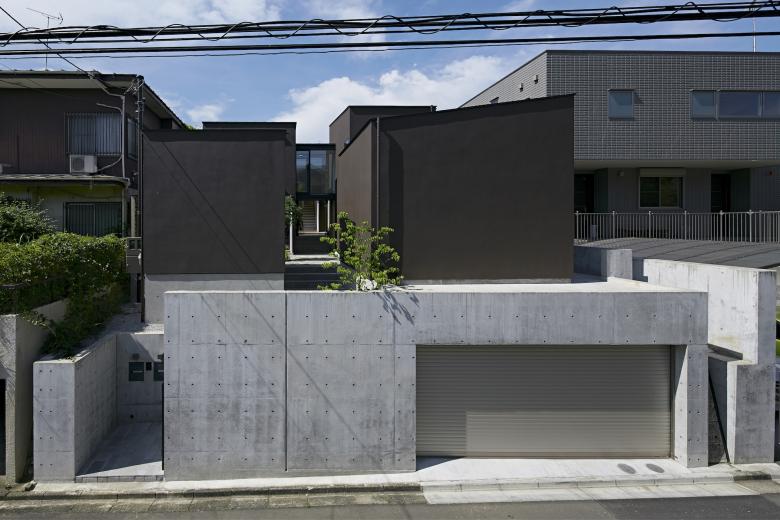
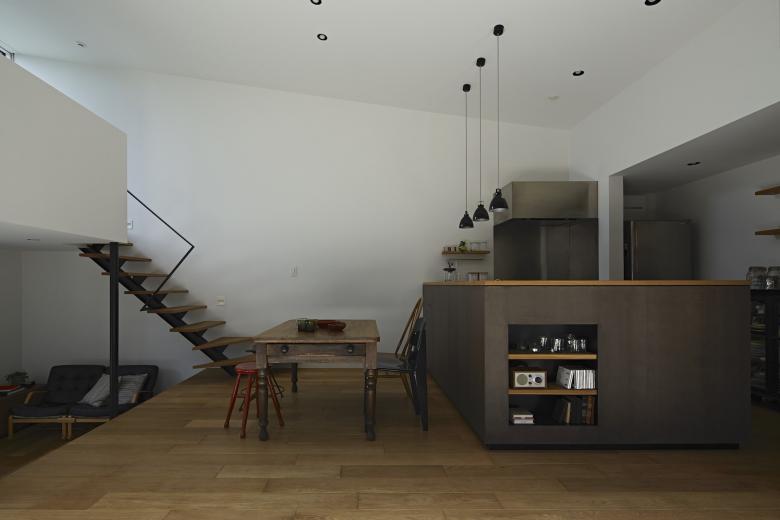
This project involves a four-generation, two-household residence comprising the grandparents and parents (the parent household) and the daughter, her husband, and their child (the child household). Since the two households are living together for the first time, the clients requested a design that separates the entrances and utility areas to accommodate differences in daily schedules and habits between the households.
The site is located in a quiet, low-rise, low-density residential neighborhood developed with a focus on separating pedestrians and vehicles, featuring a permitted building coverage ratio of 40% and a floor area ratio of 80%. All surrounding lots have ample space, and the site itself is 100 tsubo—a relatively large plot size for an urban area. A 40% building coverage ratio means that over half (60%) of the site remains as open space where no building can be constructed. In other words, the key lies in how effectively we can design this non-buildable open space. The site is sandwiched between two parallel north-south roads and is terraced, rising 3.5 meters above the level of the northern road. To connect these two roads, we decided to create a street running vertically through the center of the site, drawing the outside air directly into the property. We wanted to actively embrace the richness of life that arises precisely because two households and four generations live together on a single site, even though the entrance and utility areas are separate. We hoped that the street connected to the outside would provide a moderate sense of community, creating a space where natural connections between households could form, and that this would give rise to a new framework for family life that transcends individual households.
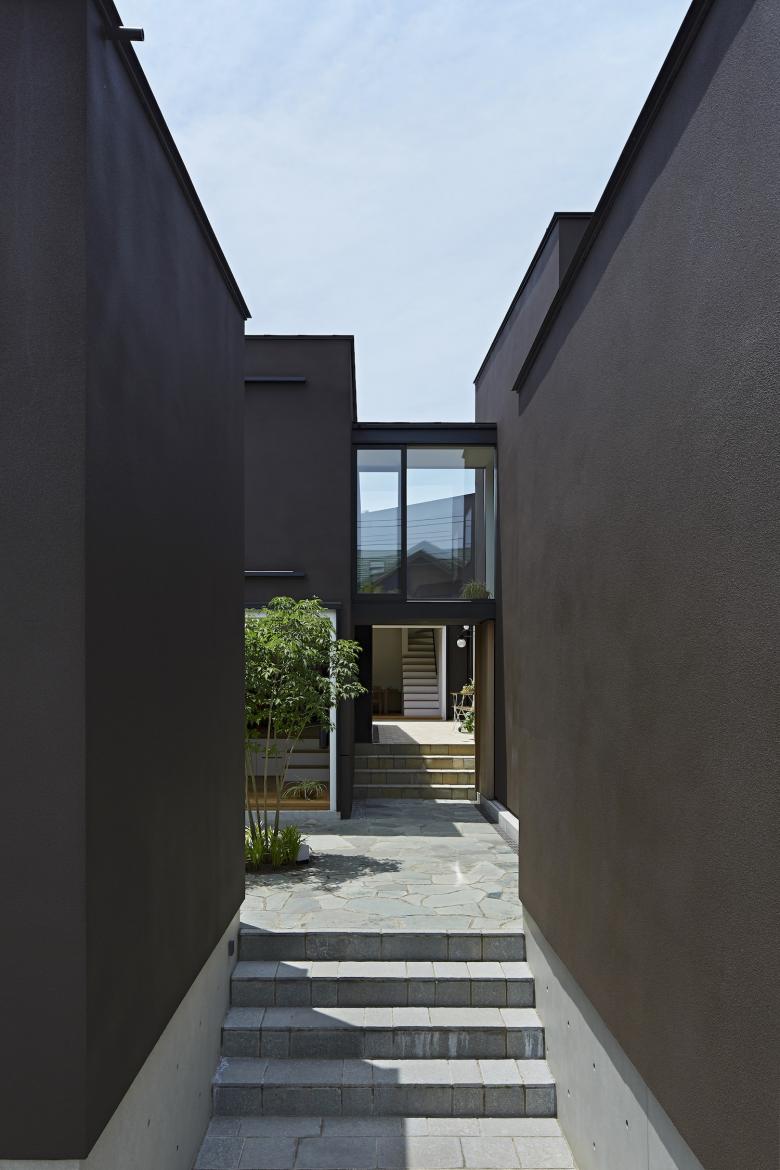
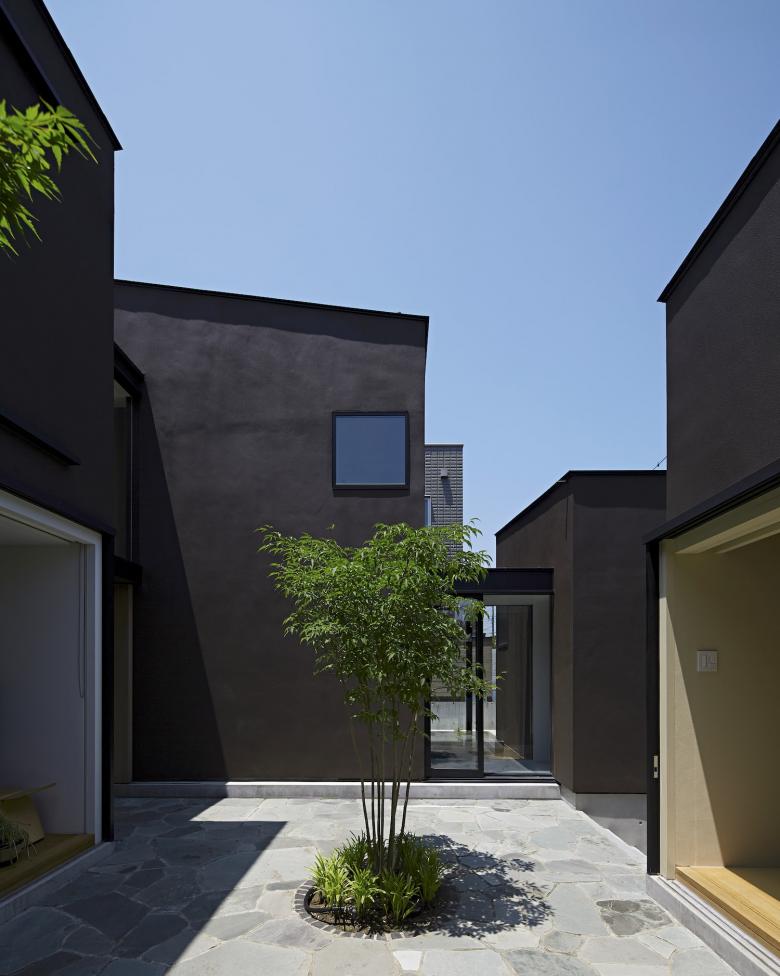
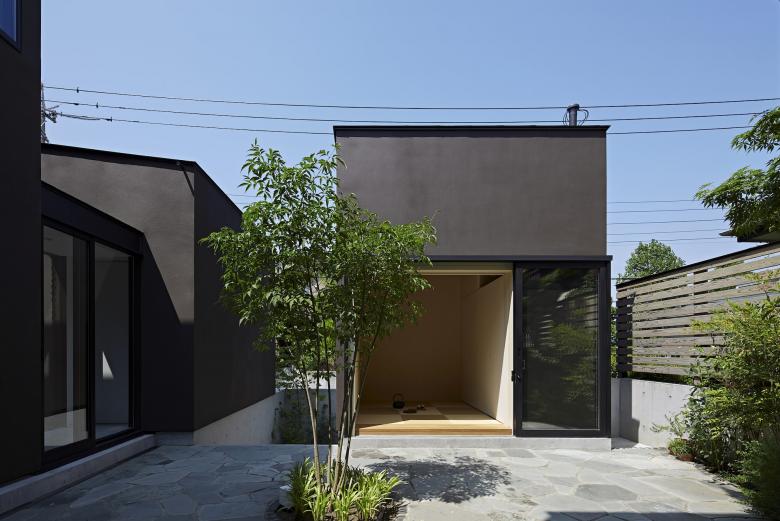
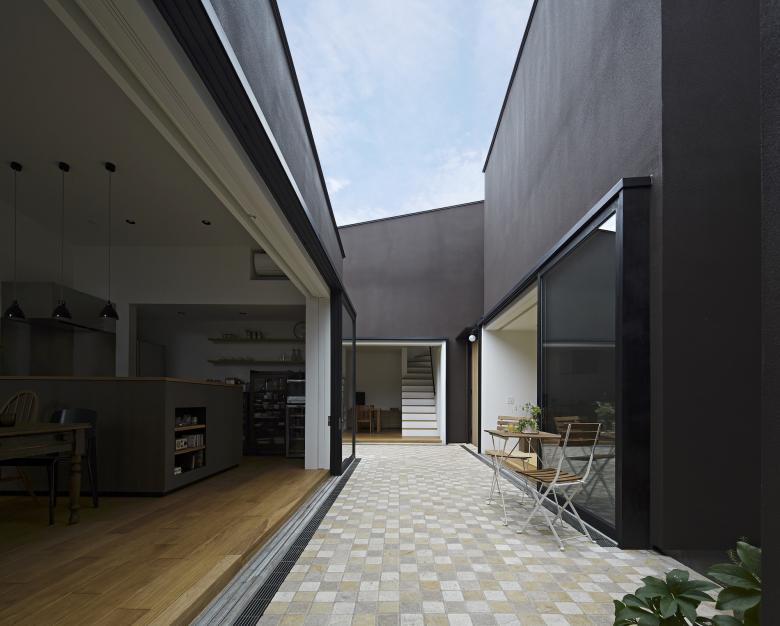
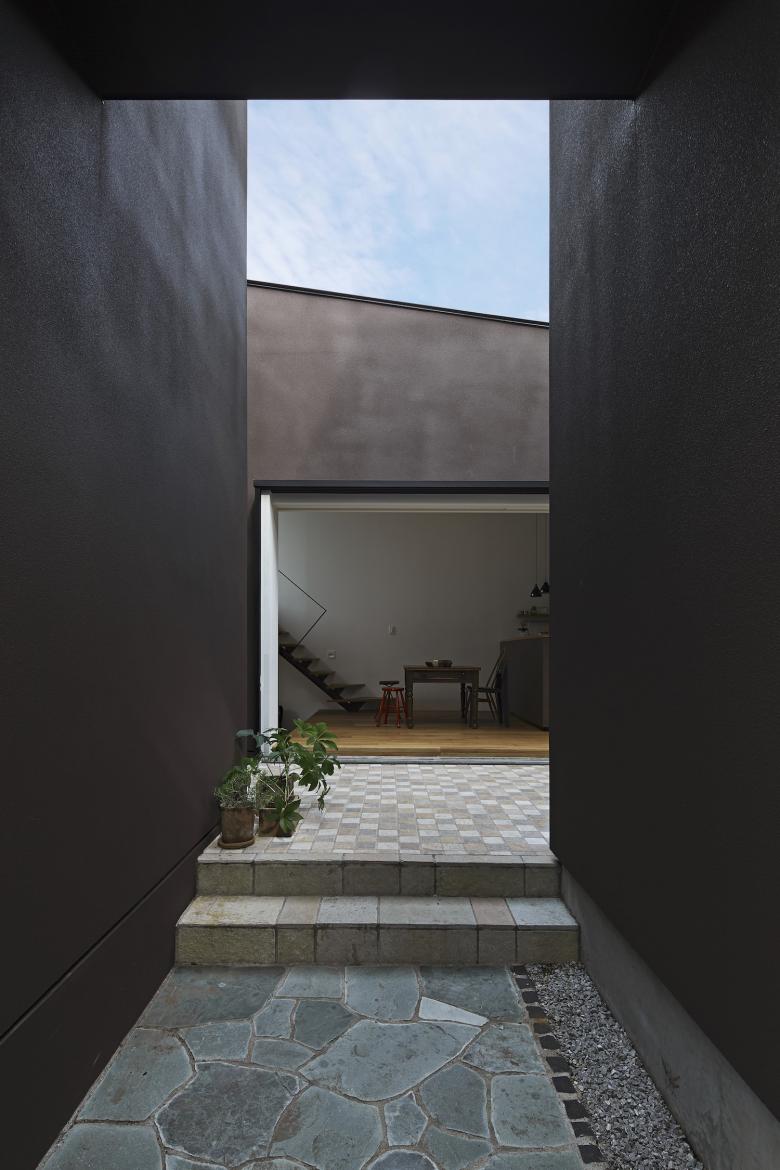
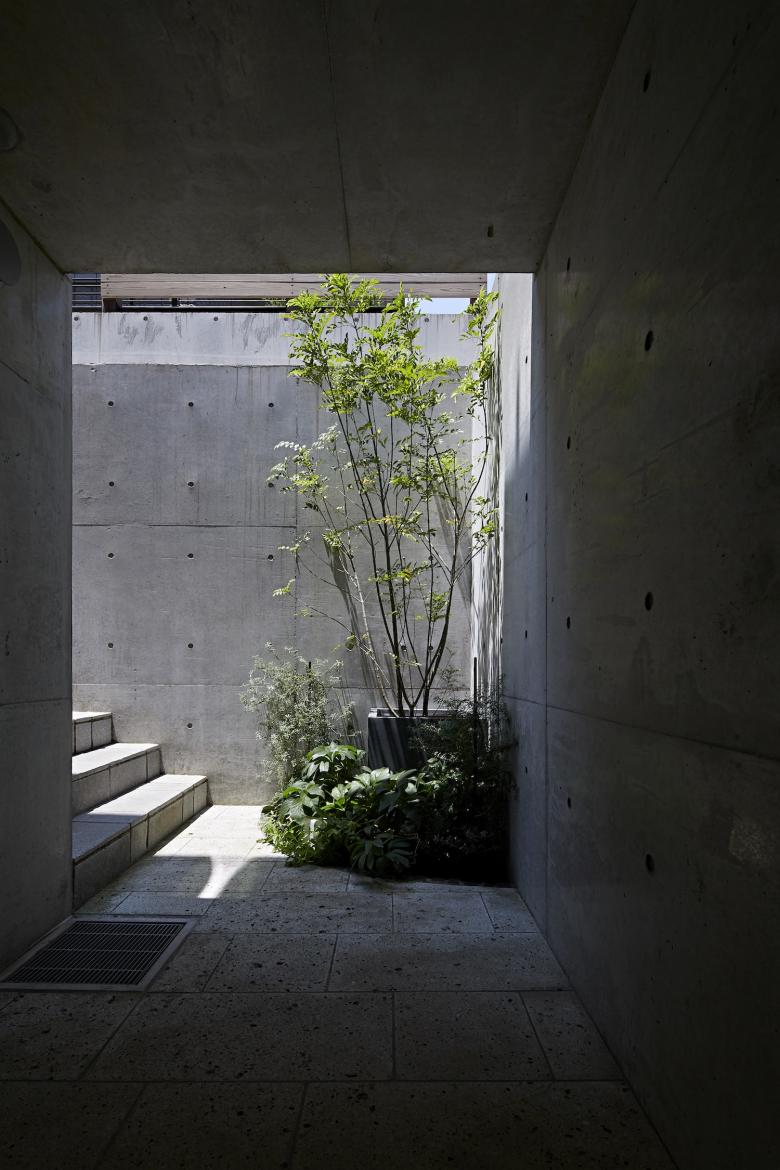
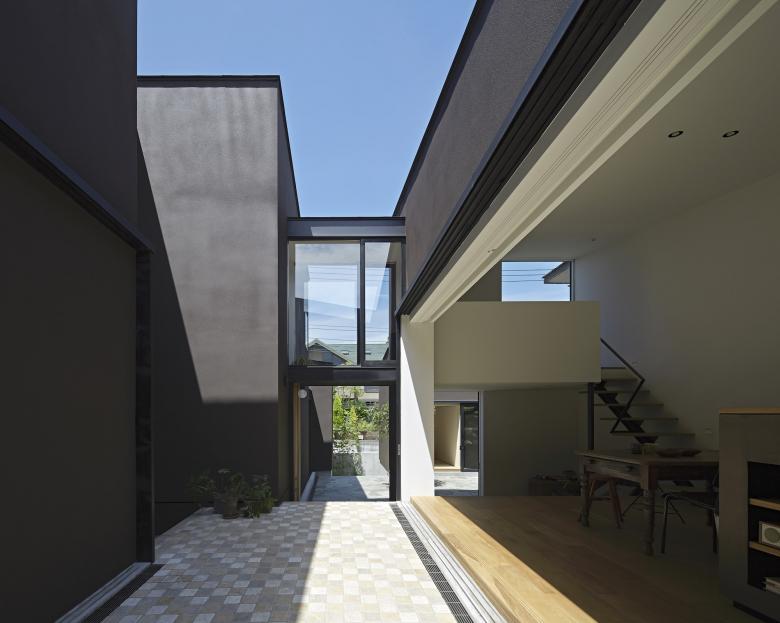
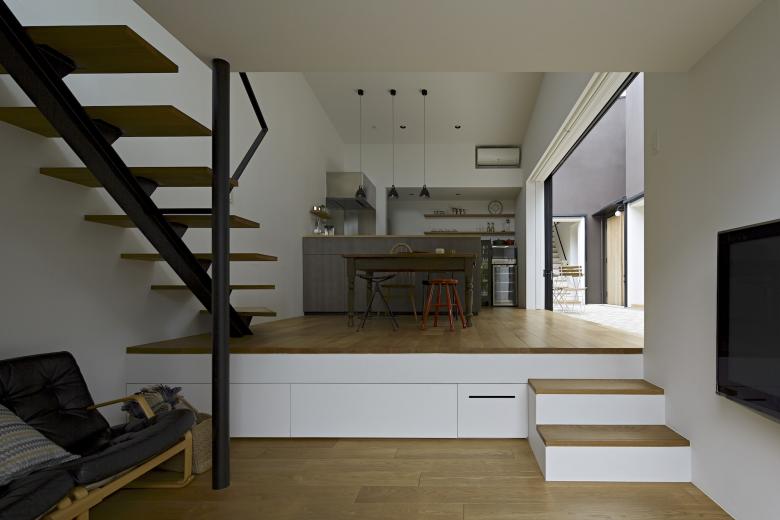
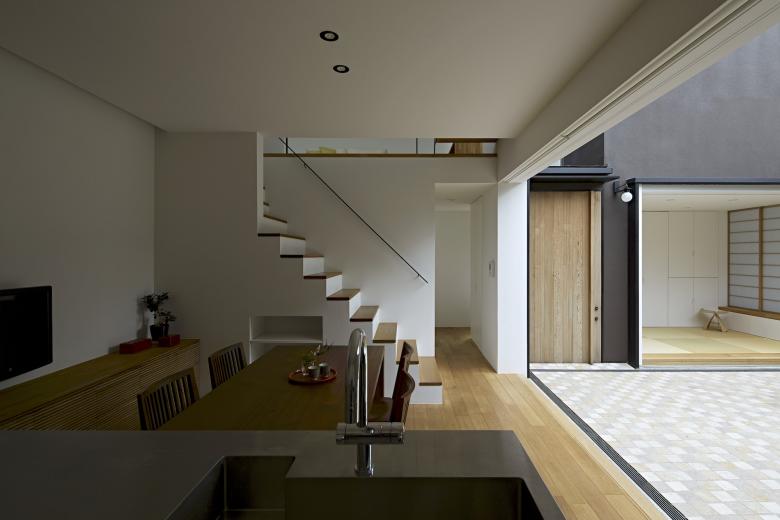
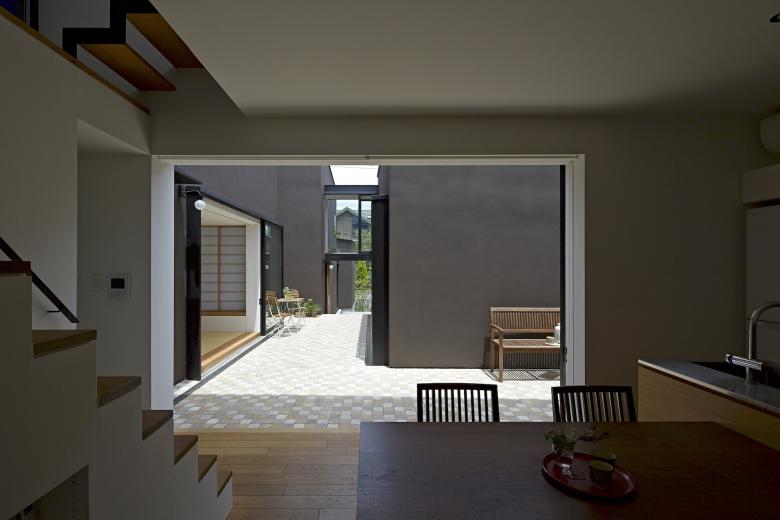
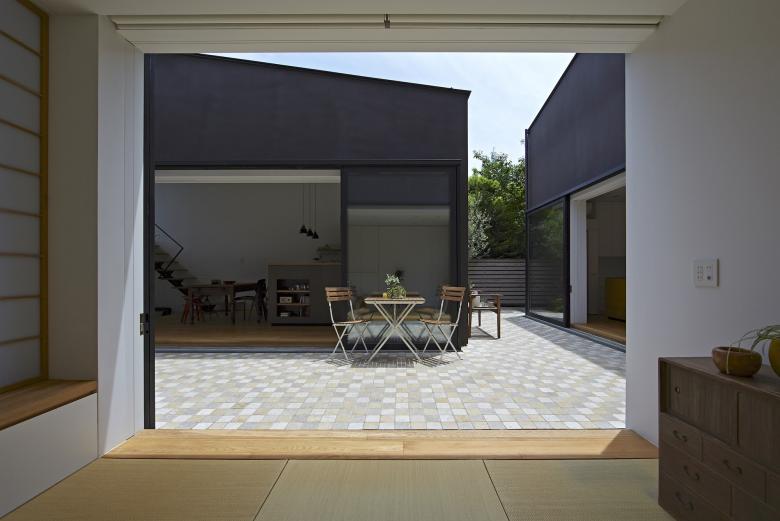
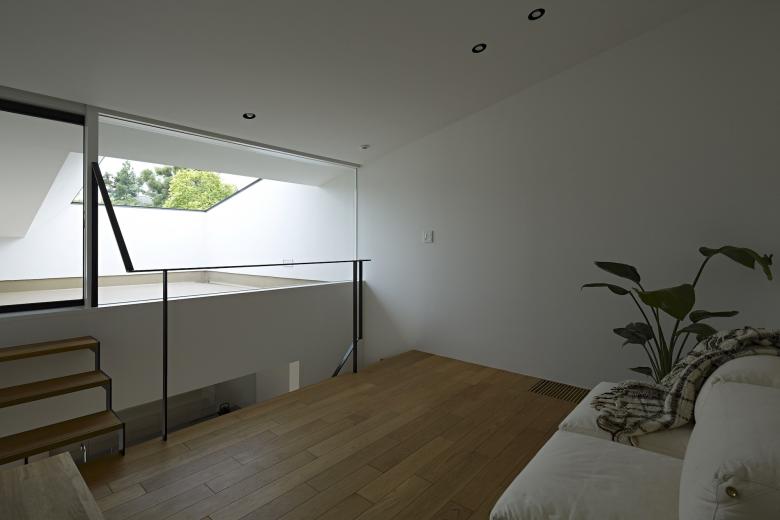
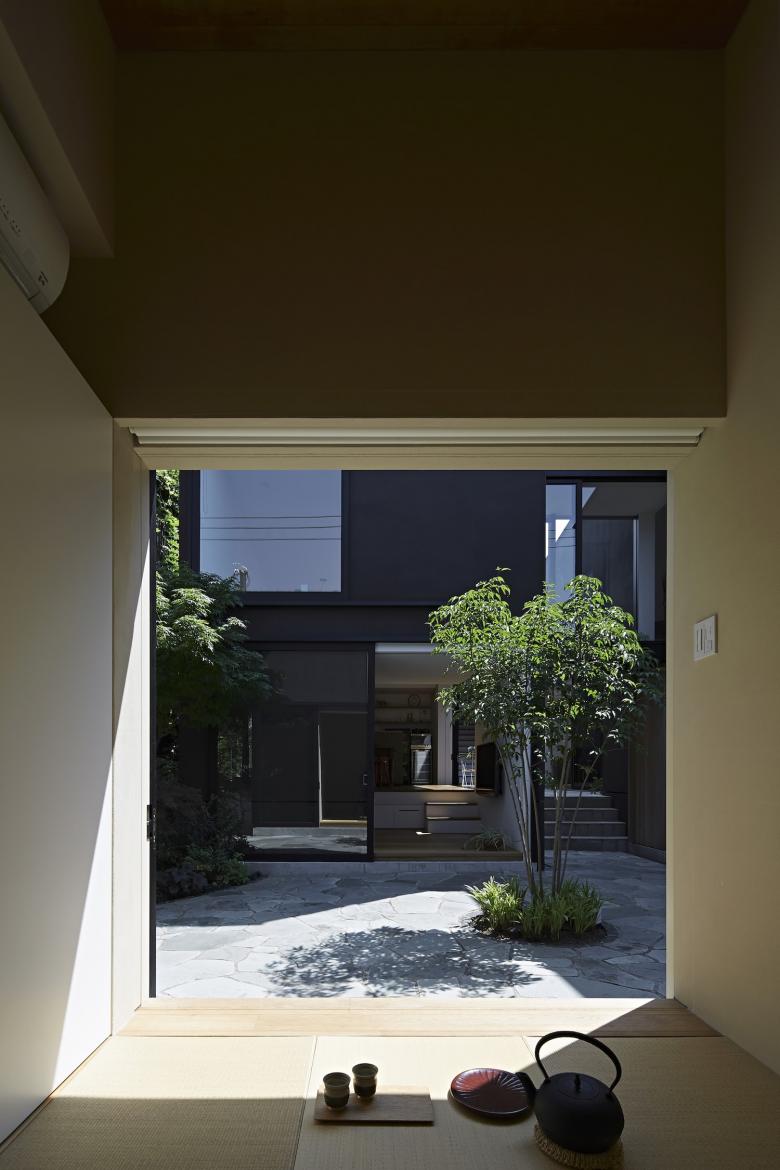
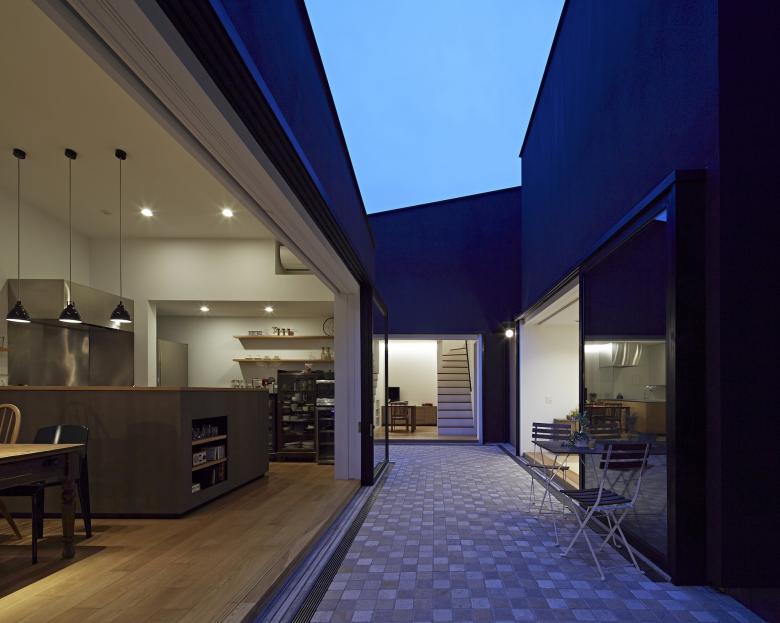
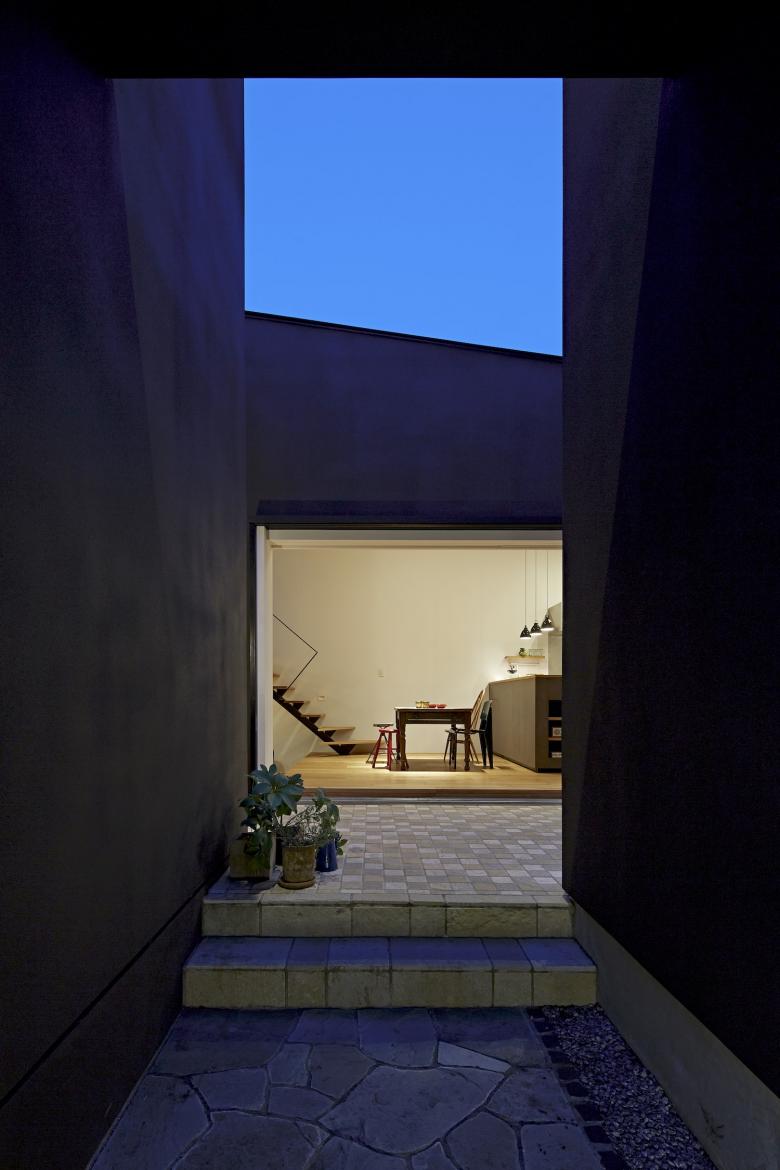
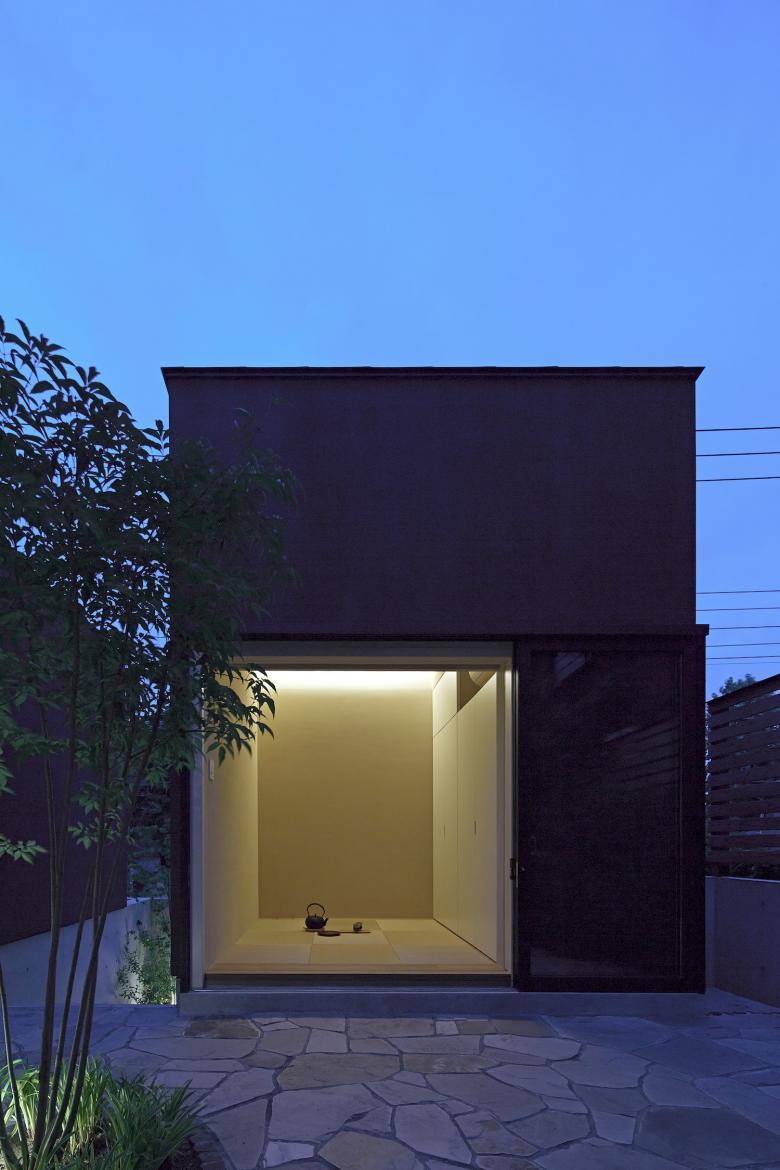
The street winds in a zigzag pattern, sometimes widening to incorporate open spaces or narrowing to form a narrow alley, traversing the site in a stepped configuration while weaving in diverse scenery and naturally absorbing the elevation difference between north and south. The residential blocks, composed of separate buildings, are attached to the street, and the separate buildings are connected by aerial bridges, keeping the ground level open to maintain the street’s continuity.
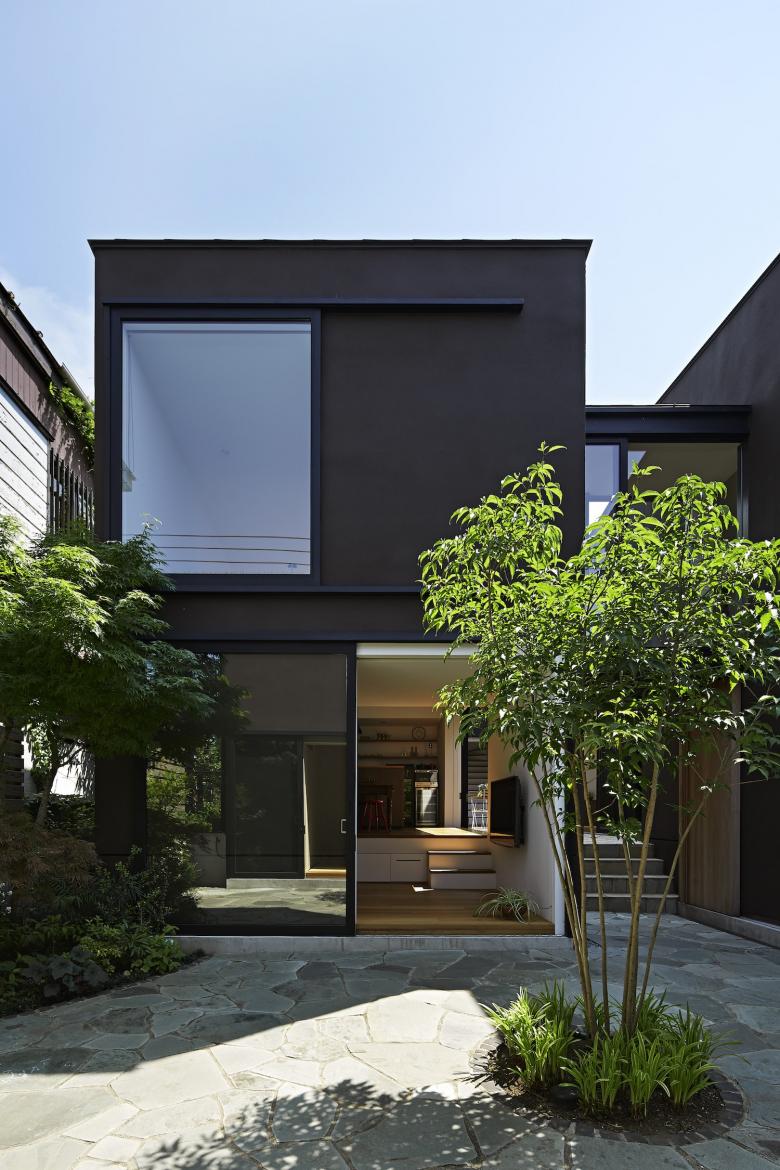
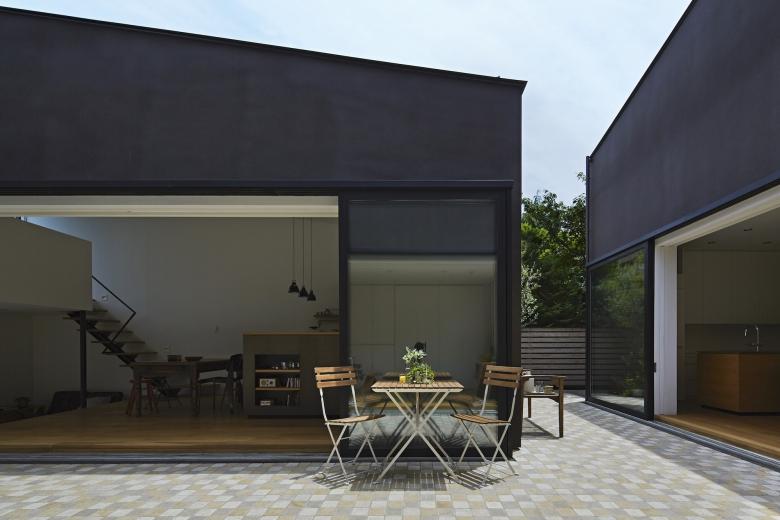
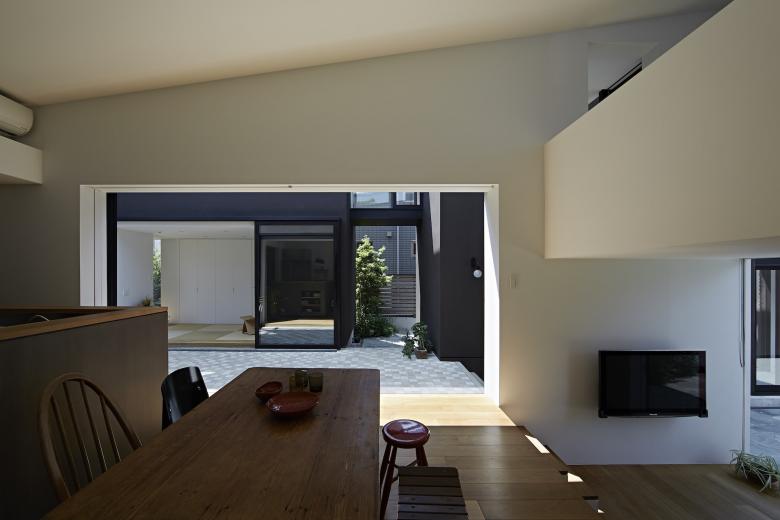
Daily life spills out onto the streets, and the boundaries between households dissolve. Today, residents frequently come and go between the buildings through the large sliding windows facing the street, bypassing the front doors. People share side dishes, and when a child cries, someone goes to comfort them. On sunny days, tables are set up on the street for impromptu gatherings. The streets serve as the foundation for a family structure that transcends individual households, giving rise to vibrant community activities.
- Year
- 2013
- Project Status
- Built