The Battle for Books as a Battle for Democracy
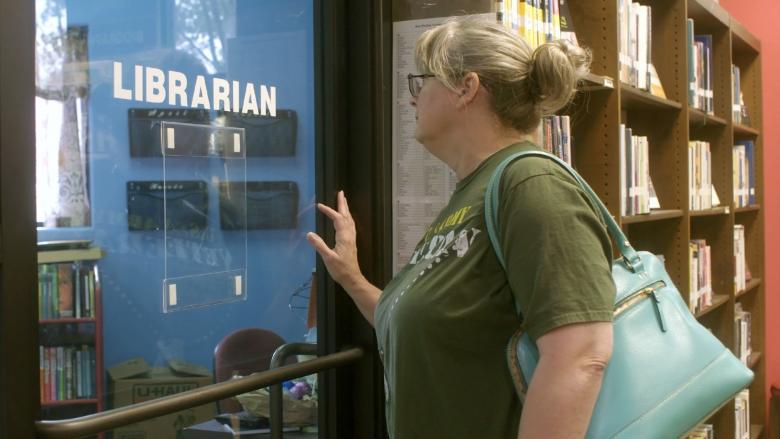
Dublin, London, Oxford, Zurich—the documentary film The Librarians has taken European cinemas by storm even before its premiere in the US. But it's actually all about the United States: Since fall 2021, Texas Republican Matt Krause's book ban list has been fueling a wildfire in the country, with books being removed from school libraries for allegedly spreading pornographic content.
Kim A Snyder's documentary, which was presented as part of the Zurich Film Festival's “#SaveDemocracy” program, sheds light on the crisis that is cutting deep into the foundations of American society and undermining democratic values. Snyder, who was nominated for an Oscar for her short film Death by Numbers, uses film as a tool in the fight for human rights. She and former school librarian Julie Miller, one of the film's protagonists, attended the Swiss premiere in Zurich. In a discussion following the screening, they emphasized that although the events unfolded in the United States, the story behind them is deeply global.
With the spread of the ban list and the demand by organized forces that numerous books be removed, meetings of school and library boards took place nationwide. Not only the Krause List, which targeted 850 works addressing ethnicity and LGBTQ stories, but also the organization Moms for Liberty was and remains the driving force behind book censorship in the US. Parents began to see in the stories precisely the offensive content that the organizations were telling them about. Library staff were instructed to immediately remove all books on the list and to independently identify any others that contained nudity or LGBTQ themes of any kind, either in imagery or text.
At the time, Snyder was involved in documentaries about gun violence. But during the Covid-19 pandemic, as political forces exploited the weakness, vulnerability, and fear of the population to make political statements and polarize the country, the focus shifted to the so-called “culture wars.” A pivotal moment was the gubernatorial election in Virginia, where candidate Glenn A. Youngkin literally built his campaign on protesting Tony Morrison's book Beloved. This tactic worked: He won, and other forces, including Moms for Liberty, recognized its effectiveness and shifted their attention to books and book bans. The publication of the Krause List in Texas finally caught Snyder's attention in New York.
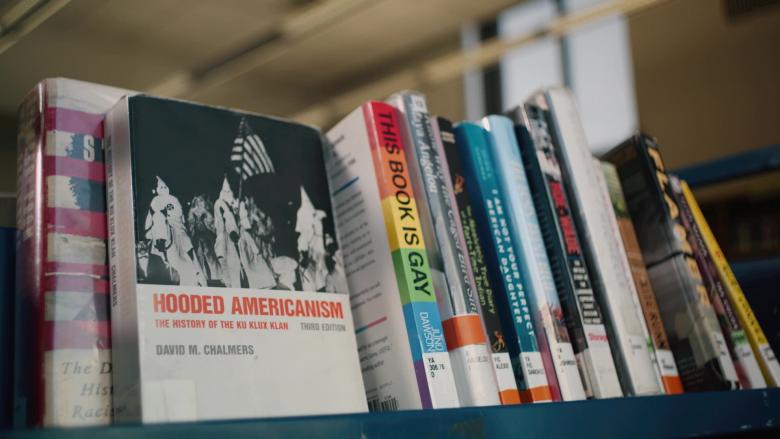
She sees librarians as first responders, so to speak, for democracy and the freedom of expression guaranteed by the United States Constitution. The ban list triggered book bans across the United States on an unprecedented scale. These censorship efforts were fueled by a wave of extremism—and those affected were harassed, threatened, and criminalized. In the film, librarians tearfully speak about the verbal violence and threats they were subjected to during this time. Many were fired for refusing to clear out the libraries.
Snyder, as she said on the panel, is convinced that book bans are only the obvious part. She believes that focusing on banning individual books or pronouns in the classroom is short-sighted; rather, she sees it as a Trojan horse masking a much more organized effort that is creeping into public education and into everyone's lives as “white Christian nationalism.” Ultimately, it is about silencing voices, especially those of people of color and the LGBTQ community. Only what is “straight, white, cisgender Christian” is desired, while everything else is rejected as “the other.” The real, frightening consequence is that once books are disposed of, these forces may eventually try to persecute the people they represent.
At the beginning of the documentary, the director and her team couldn't have predicted how the situation in the country would develop. They went directly to Texas to amplify the voices of the librarians and engage in preventative work. In the film, Snyder deliberately expands the story to reveal the organizations behind it. The international response confirms what was feared: After the screenings so far, librarians from Australia, Canada, and the United Kingdom have also reported that the US is unfortunately exporting this type of organized activity. Even the German National Library contacted Snyder, as hundreds of library employees in Germany are well aware of the seriousness of these signs.
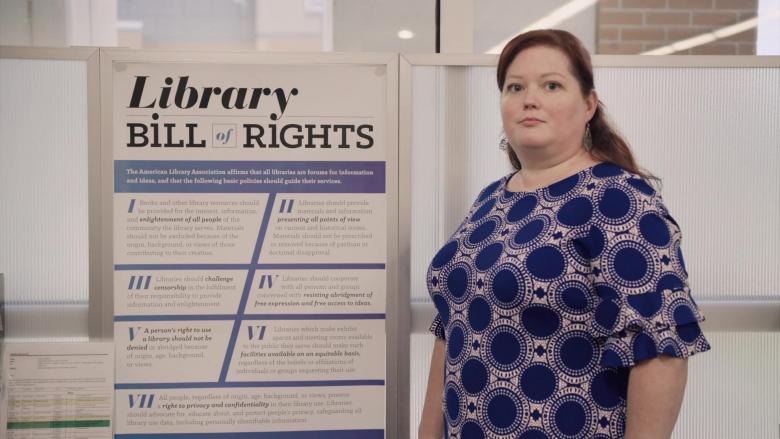
A special panelist on the Zurich stage was Julie Miller from Florida, a librarian whose story is featured in the film. She spoke about her personal challenges and her initial hesitation to participate in the documentary, fearing it would make her even more of a target. At the time of the request, she was still employed as a school librarian, but the consequences of her political struggle soon followed: She was reclassified from her position as a librarian to a normal classroom position, which allowed her employer to fire her without it being considered an unlawful termination. She filed a complaint, which was supported by her teachers' union, but left teaching after just under two months and now runs a college library. Florida is a “right to work state,” which Miller describes as a “right to be fired,” since strikes are not permitted there. Job security was also abolished in Florida about twelve years ago, meaning that contracts must be renegotiated every year.
When asked about those who openly insulted library staff as pornographers, Julie Miller said, “I think that says a lot more about the person who has those thoughts than it does about anyone else.” She also pointed out that sexual content or nudity does not automatically mean pornography. “Pornography is not in school libraries,” Miller said. “Pornography is already in everyone's pockets, on their cell phones, on the internet—and every high school student has constant access to it.”