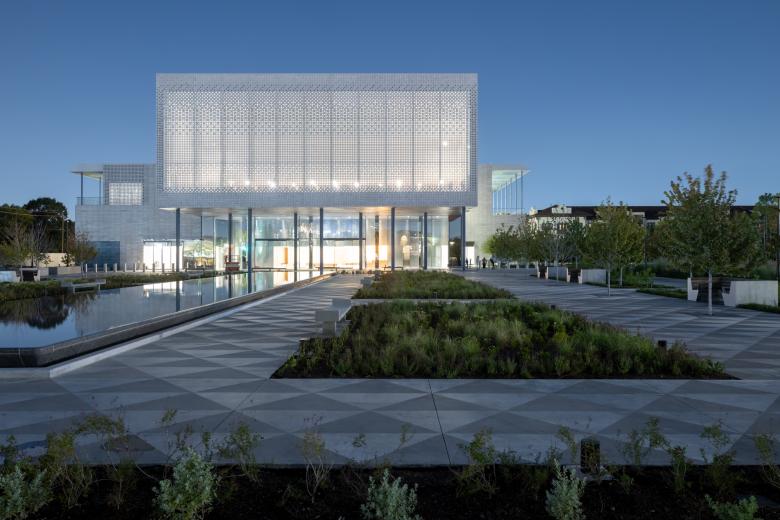
The Ismaili Center, Houston, designed by Farshid Moussavi Architecture and Nelson Byrd Woltz Landscape Architects in partnerhsip with AKT II DLR Group, was inaugurated on November 6 as the first Ismaili Center in the United States and the seventh worldwide.
As its name indicates, the Ismaili Center, Houston serves Houston's Ismaili Muslim community, functioning as a place for prayer but also, per a press release from the Ismaili Imamat, “a welcoming space where people of all backgrounds can learn, engage, and connect.” Facilities inside the 150,000-square-foot building include an exhibition gallery, a black box theater, banquet halls, meeting rooms, educational spaces, a café, and a prayer hall. While it was inaugurated on November 6 by Houston Mayor John Whitmire in the presence of His Highness Prince Rahim Aga Khan V, the Ismaili Center will open to the public in December.
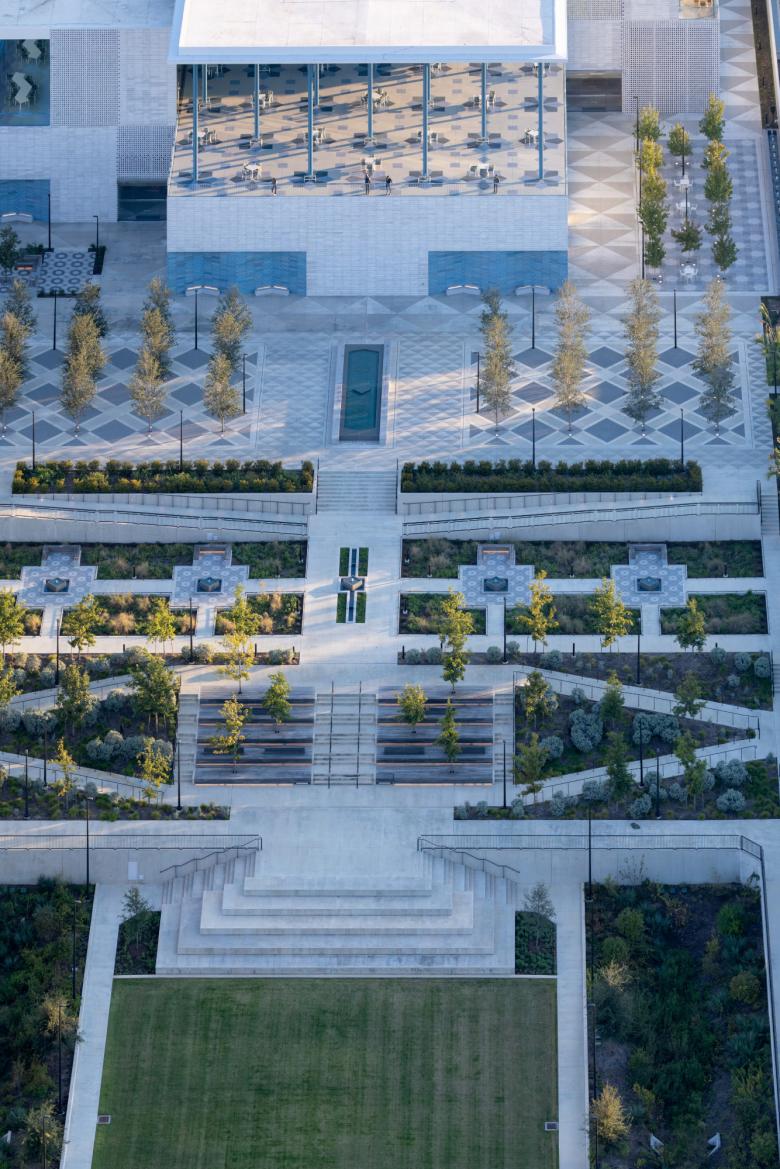
The Ismaili Center, Houston sits on a 11-acre site close to Buffalo Bayou Park, the expansive recreational and cultural green space west of downtown that stretches for more than two miles along its namesake waterway. Nine acres of gardens, courts, terraces, and fountains designed by Nelson Byrd Woltz Landscape Architects create “a contemplative oasis in the heart of Houston’s urban core,” per the press release, “reinterpreting Islamic landscape traditions while grounding the center in Texas’s diverse ecologies.”
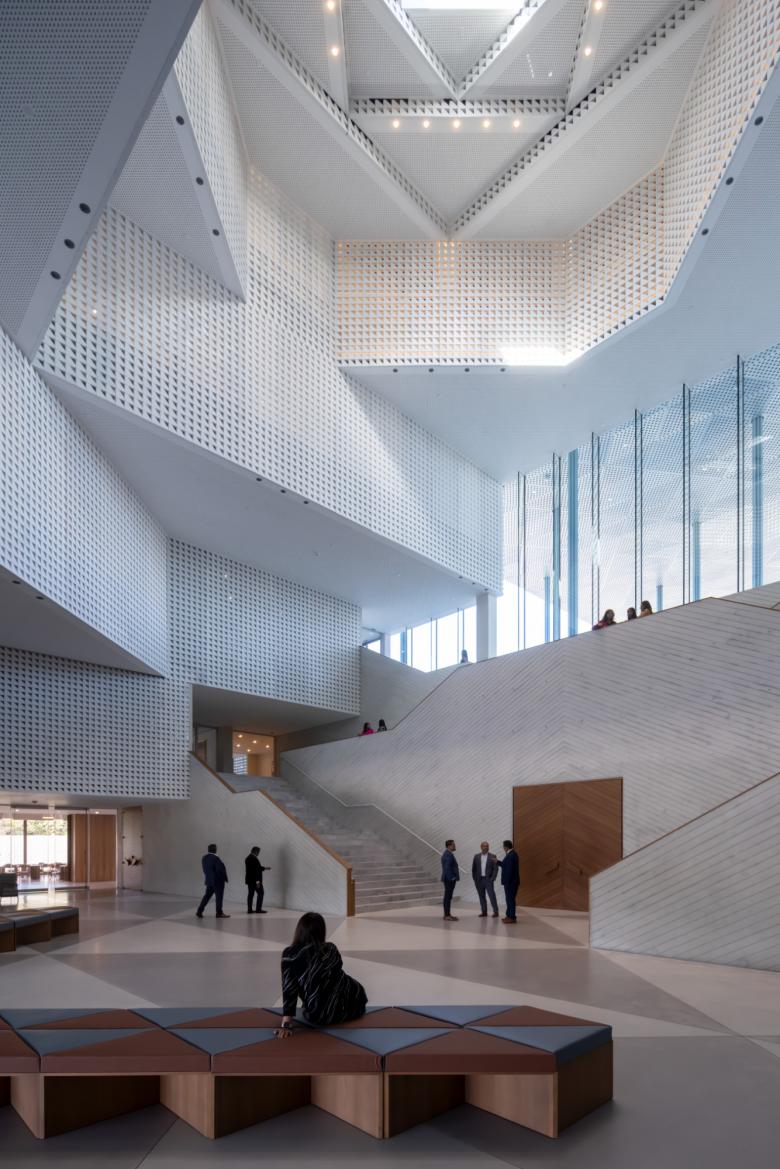
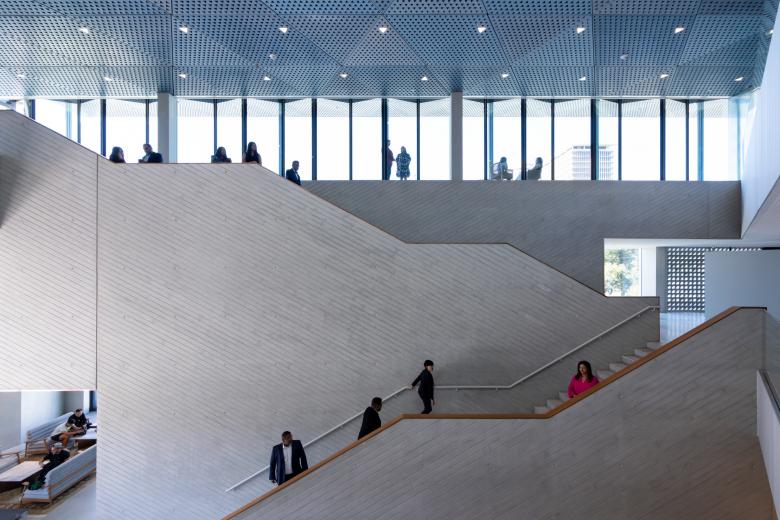
Farshid Moussavi describes her firm's design of the building as “contemporary in its expression, [yet] reflective of a historically rooted, rich architectural heritage.” This balancing act is apparent on the exterior, where stone walls transition to porous mashrabiya-like screens that provide privacy and much-needed shade in the hot and humid Houston climate. Moussavi's architectural expression is even more striking inside, particularly at the central atrium, where a series of stacked Vierendeel trusses decrease in size and rotate as they rise. Clad in porous Ultra-High Performance Concrete (UHPC) panels, the multi-story space is rotated 45 degrees for orientation of the Qibla and to organize the building's three main wings: worship, social interaction, and learning.
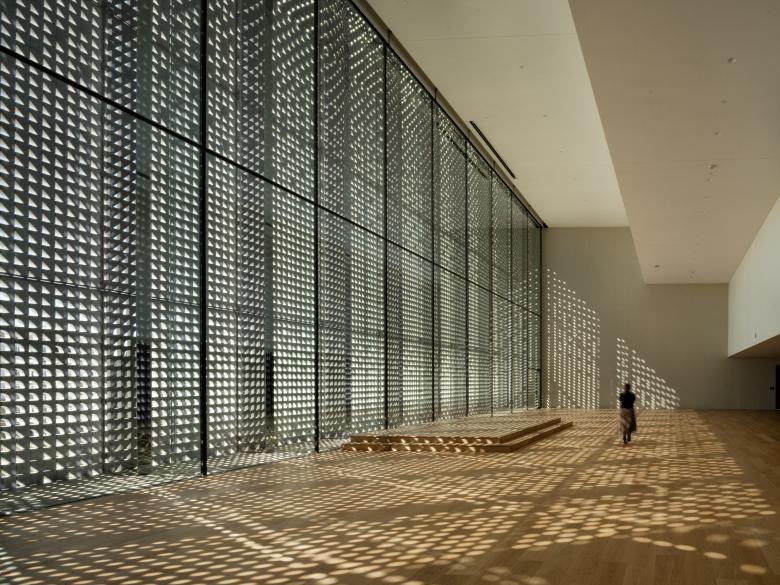
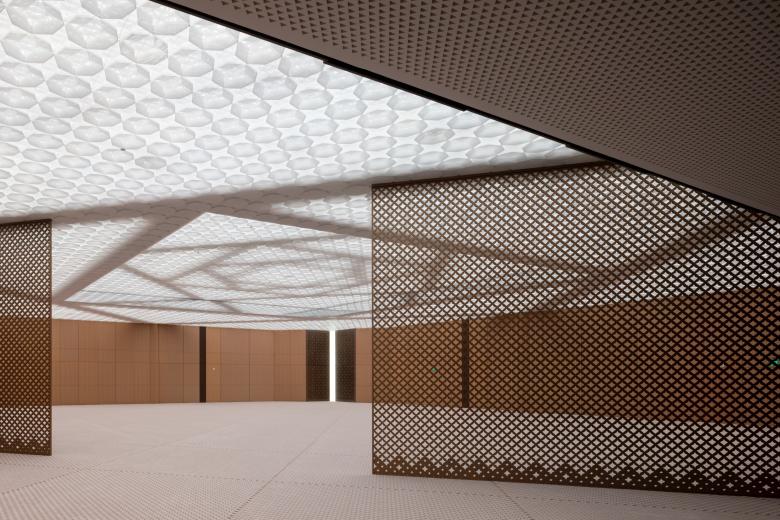
As seen above, the main of the two social halls is a stepped space behind the south facade, where natural light is filtered via a stone screen. The prayer hall is a large 115-foot square space whose span is structured by steel beams in seven interlocking squares, visible above a perforated aluminum ceiling with integrated lighting. The pattern is meant to recall traditional jālī screens of Islamic architecture.
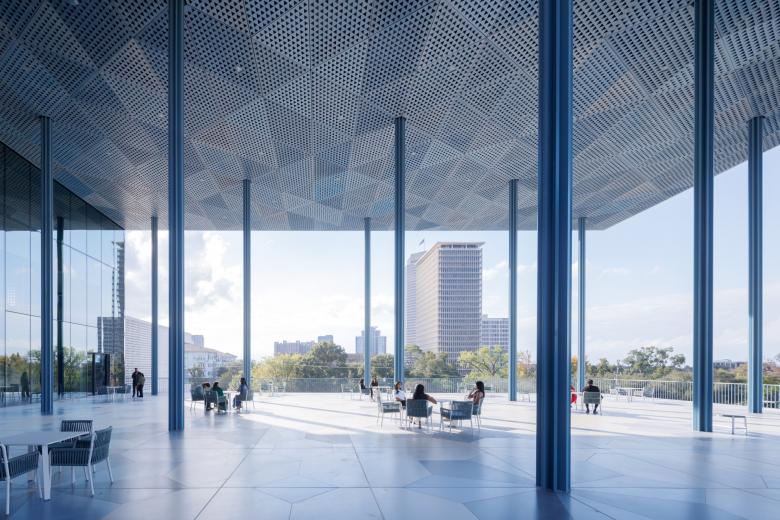
As seen below, movement through the building is oriented about three atriums, including the central atrium, each of which is adjacent to an eivan (veranda) that brings light and views deep inside the building. Supported by slender columns, the covered outdoor spaces reference 17th-century Persian palaces, while their visibility from outside is intended to make the Ismaili Center “open and inviting in every direction.”