Winners of the 2025 Aga Khan Award for Architecture
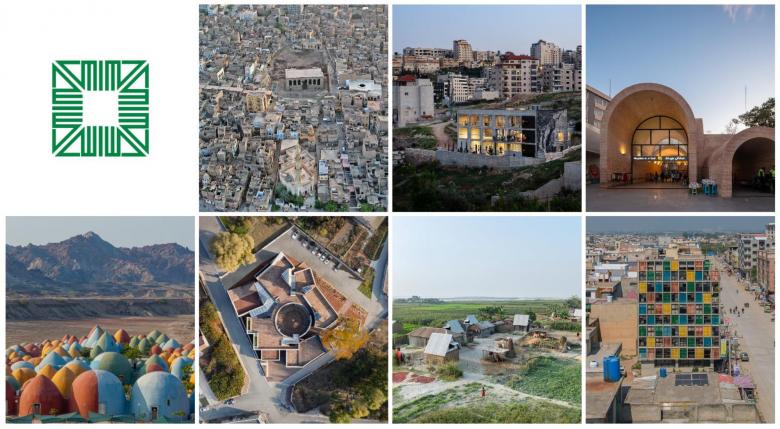
Seven projects have been announced as winners of the 2025 Aga Khan Award for Architecture. The winners, ranging from an X in Y to a Z in ZZ, will split the $1 million USD prize.
The announcement of the winners of the Aga Khan Award for Architecture was made today, September 2, three months after nineteen projects were shortlisted by the nine-member jury* for the prestigious triennial award.
The Aga Khan Award for Architecture was established by His Highness the Aga Khan in 1977 “to identify and encourage building concepts that successfully addressed the needs and aspirations of communities in which Muslims have a significant presence.” The awards, now in their 16th cycle, reward the architects involved on the projects but also the “municipalities, builders, clients, master artisans and engineers who have played important roles” in them.
This combined focus on Muslim communities and recognition of the various project players have made the Aga Khan Award for Architecture one of the most important awards in architecture, while also drawing attention to projects that might not otherwise receive attention in other parts of the world.
The 2025 Aga Khan Award for Architecture winners, in alphabetical order by country:
- Bangladesh – Khudi Bari
- China – West Wusutu Village Community Centre
- Egypt – Revitalisation of Historic Esna
- Iran – Jahad Metro Plaza
- Iran – Majara Residence and Community Redevelopment
- Pakistan – Vision Pakistan
- Palestine – Wonder Cabinet
Below is basic information on the winning projects, featuring images, excerpts from the jury citations, and short films produced by the Aga Khan Development Network (AKDN). Click the above links for much more information on the projects, as found on the AKDN website.
Bangladesh – Khudi Bari
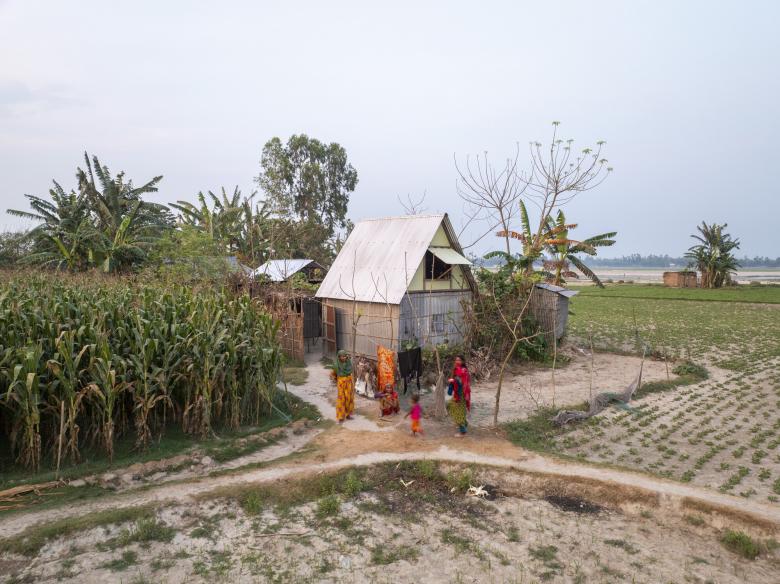
- Location: Various locations, Bangladesh
- Architect: Marina Tabassum Architects, Dhaka
- Client: Local population
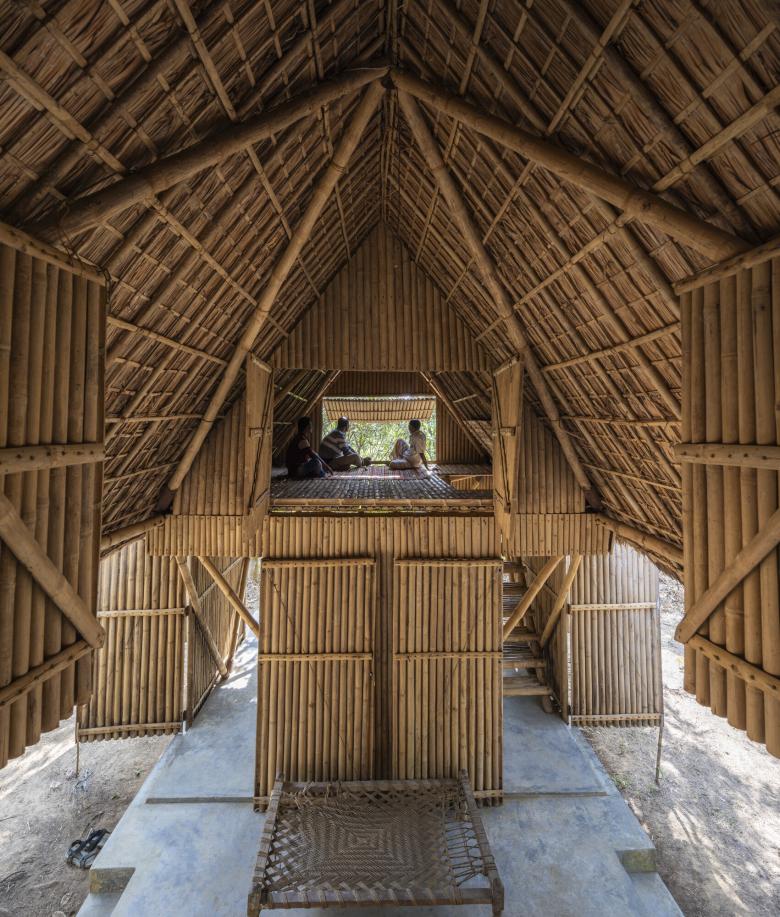
“The Khudi Bari project has been granted the Award for developing a flexible system that addresses global challenges with vernacular solutions, reframed through a contemporary lens to evolve and scale up so as to deliver a wider, regional impact. As it grows into larger-scale communal projects, the Khudi Bari maintains the simplicity of its structure while still delivering grace and beauty, reminding us that design for survival doesn’t exclude architectural quality. The Khudi Bari project is profoundly optimistic, as it reframes the role that architecture can and should play in times of difficult global realities – as a hopeful, actionable, and human-centred solution that is grounded and systemic.”
China – West Wusutu Village Community Centre
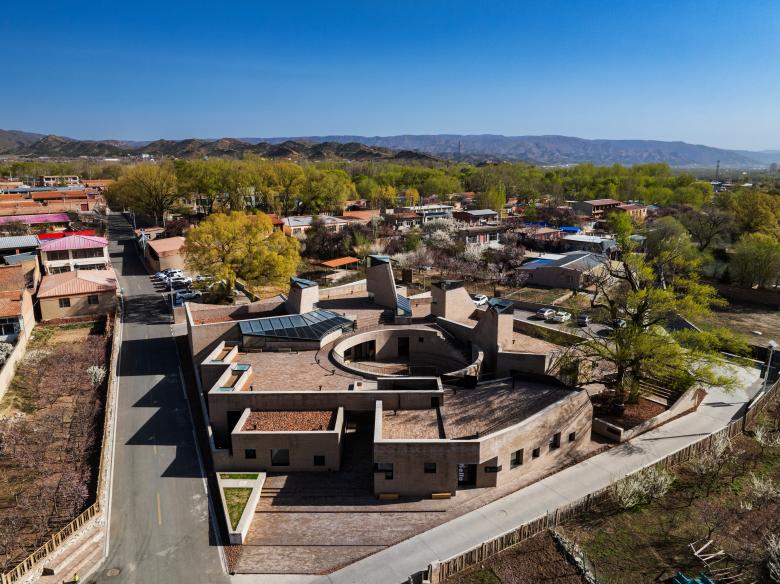
- Location: Hohhot, Inner Mongolia, China
- Architect: Zhang Pengju, Hohhot
- Client: West Wusutu Village Community
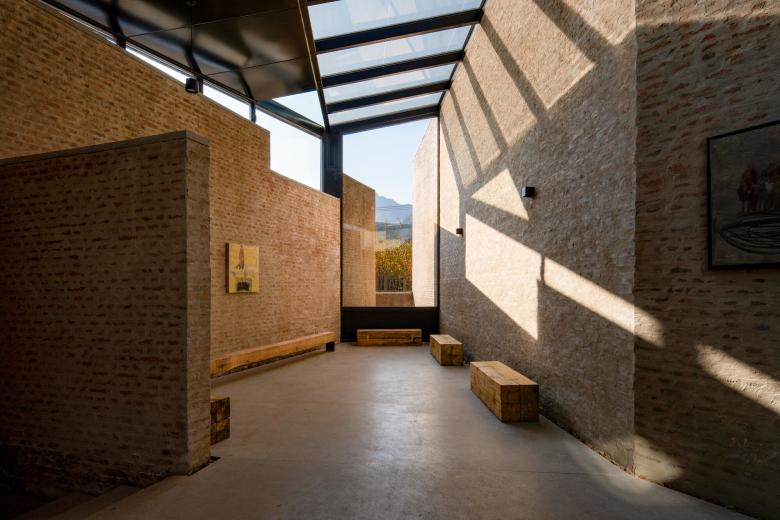
“The West Wusutu Village Community Centre shifts the paradigm of contemporary architectural design beyond object-based and aesthetic end-results, orienting it towards translating users’ daily community needs into a well-conceived architectural vehicle. The dynamics of this project significantly enhance social interaction, cultural experience, and environmental resilience. The project’s architectural performance is based around integrating multiple communal activities not through rigid functional and confined spaces, but rather through a permeating circular courtyard at its core. In addition to its highly optimised form, the structure presents a transcendent, impactful landmark in the village’s landscape.”
Egypt – Revitalisation of Historic Esna
- Location: Esna, Egypt
- Architect: Takween Integrated Community Development / Kareem Ibrahim, Cairo
- Client: Ministry of Tourism and Antiquities, Luxor Governorate, USAID/Egypt
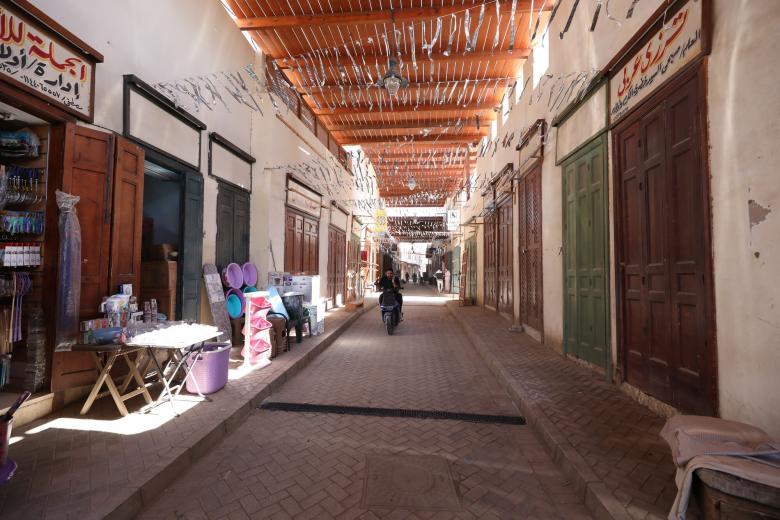
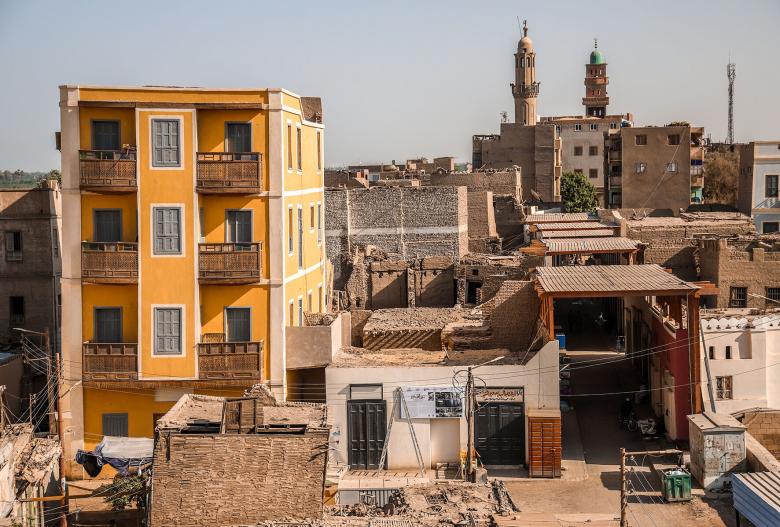
“The initiative to revitalise historic Esna goes beyond the usual limits of an urban conservation project that is formally framed in advance and instead presents a bottom-up strategy through an inclusive, socially structured programme to gradually improve the heritage environment. By restoring or reusing buildings – commercial, residential, and spiritual – the project is stimulating a whole historic urban metabolism to cope with the contemporary challenge of improving human conditions and working infrastructure for craftspeople. Unprecedented in its combination of adaptive reuse with community empowerment while stimulating the local economy, it could bring balance to Egypt’s otherwise more formal heritage conservation strategies and policies.”
Iran – Jahad Metro Plaza
- Location: Tehran, Iran
- Architect: KA Architecture Studio / Mohammad Khavarian
- Client: Municipality of Tehran
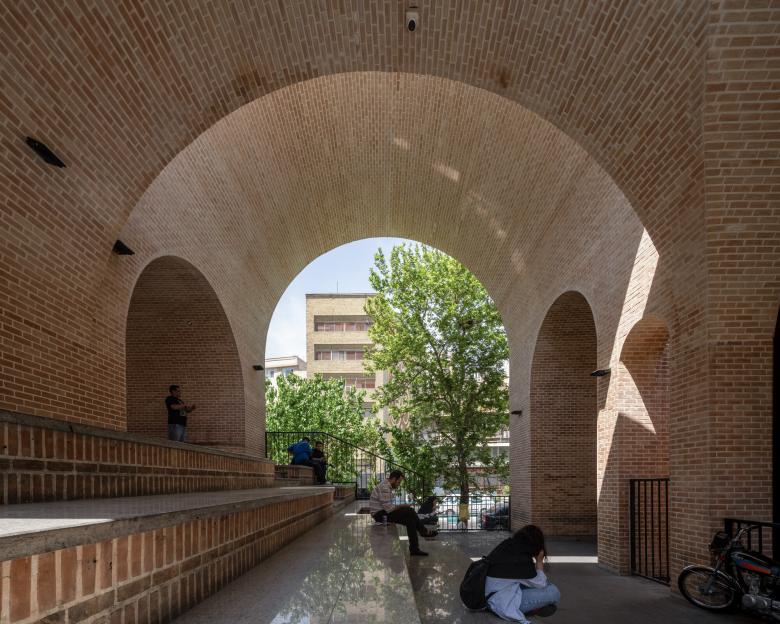
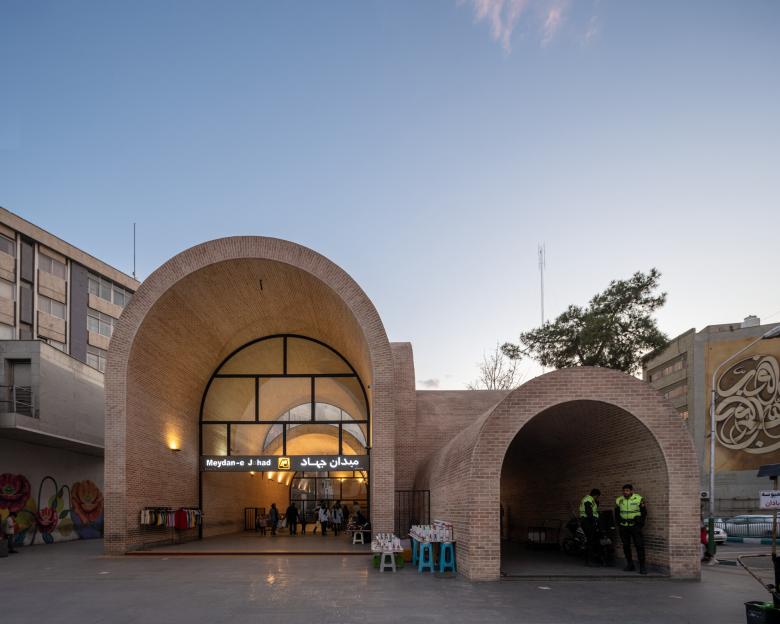
“The redevelopment of the station entrance transformed a once conventional and modest access point into an open public space: a plaza that encourages passage, encounters, and events. Unlike the former structure, which closed off stairways at ground level, the new design opens the station to the sky and neighbourhood, converting former stair areas into a pedestrian zone with direct street access and thus improving accessibility. The project’s architecture is characterised by its striking volume and integration of vaults, arches, and circular forms, which reference Iran’s rich civilisational heritage. The use of brick further strengthens this historical connection, and its warm, subtle texture emphasises the station’s status as a new urban monument.”
Iran – Majara Residence and Community Redevelopment
- Location: Hormuz, Iran
- Architect: ZAV Architects / Mohamadreza Ghodousi
- Client: Ehsan Rasoulof, Tehran
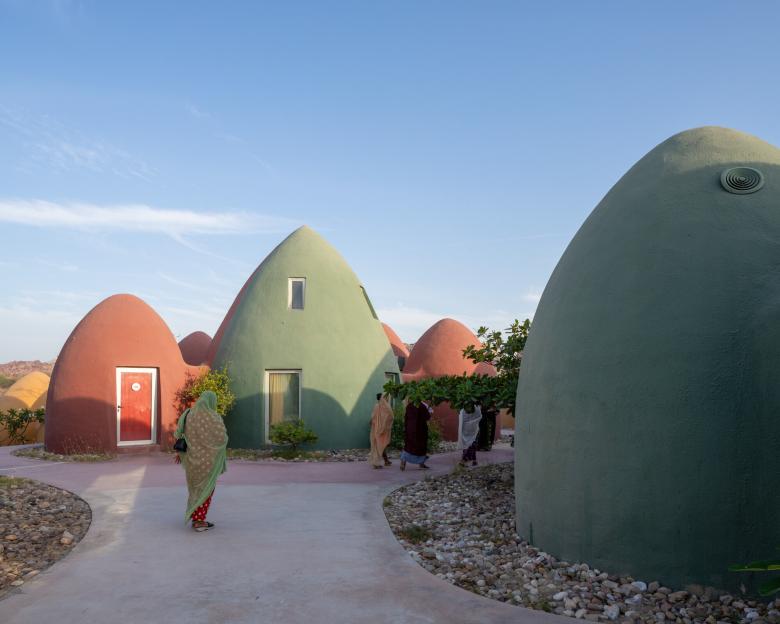
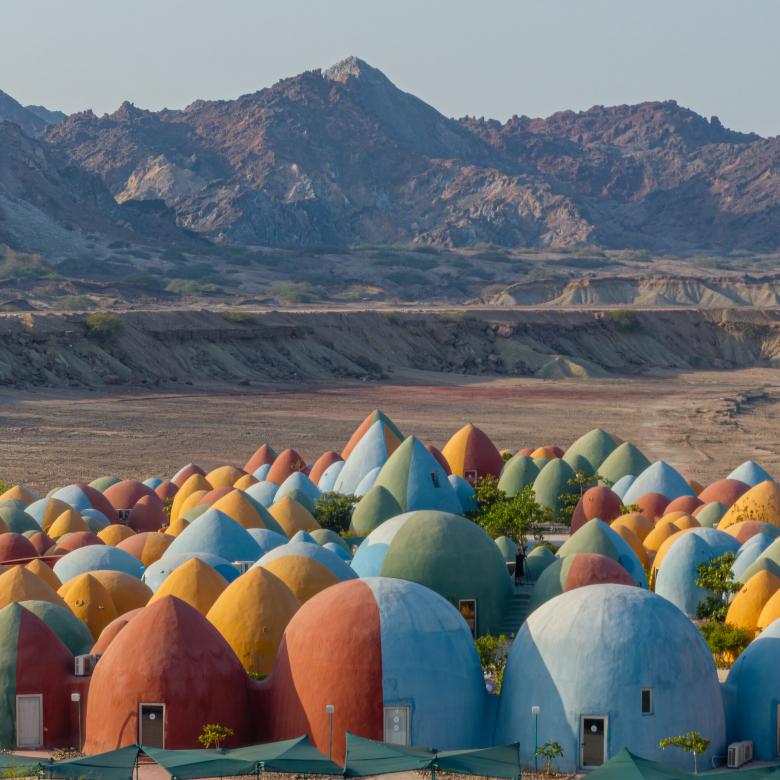
“Set within a breathtaking geological context that dates back millions of years, these projects on Hormuz Island, Iran, are framed in relation to a vast mountain range typified by colourful mineral and salt deposits. The project can be understood as a vibrant and colourful archipelago of varying programmes that serve to incrementally define a truly alternative model for tourism in this context and beyond. Predominantly built using a sandbag “superadobe” structural system, alongside more conventional building processes, the project exploits knowledge systems that leverage both local and wider global expertise, realised with the community. In its deep sensitivity to context, this project exemplifies how architecture can become a formidable force of optimism and rigorous resolve to shift the social, cultural, and material pendulum.”
Pakistan – Vision Pakistan
- Location: Islamabad, Pakistan
- Architect: DB Studios / Mohammad Saifullah Siddiqui
- Client: Rushda Tariq Qureshi
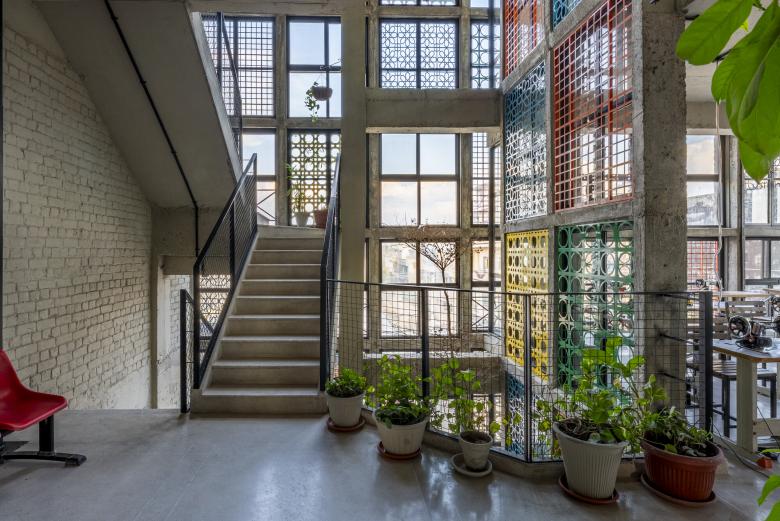
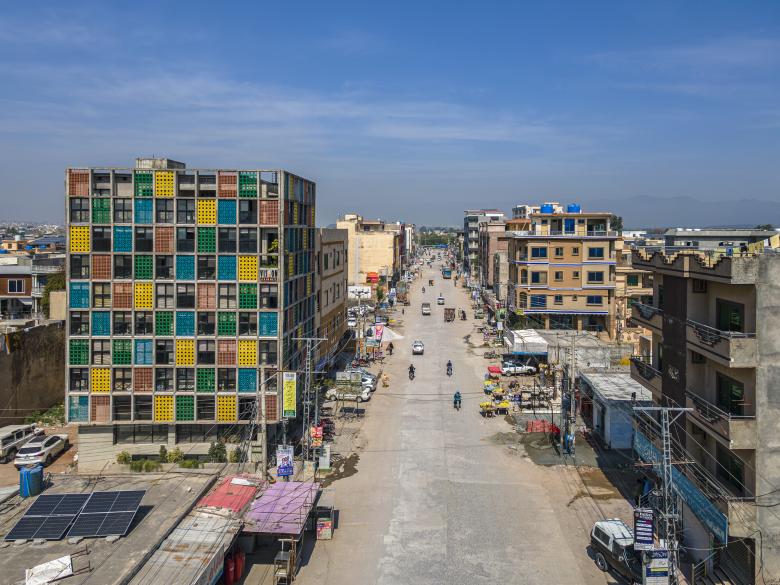
“Two people – one an experienced educator, the other a young practising architect – work together and invent a new wellspring of respect, a new skills training centre, a place where young people feel that they matter, where not-yet-discovered talents will be trained and encouraged. Together they transformed a plot of land close to public transport and invented a building that would not only contain a new type of education, but be full of light, spatially interesting, economically efficient, and highly distinct. The life within this three-dimensional cube is held by strategically important environmental values: good natural light, cross ventilation, solar protection, low maintenance costs, and robust materials.”
Palestine – Wonder Cabinet
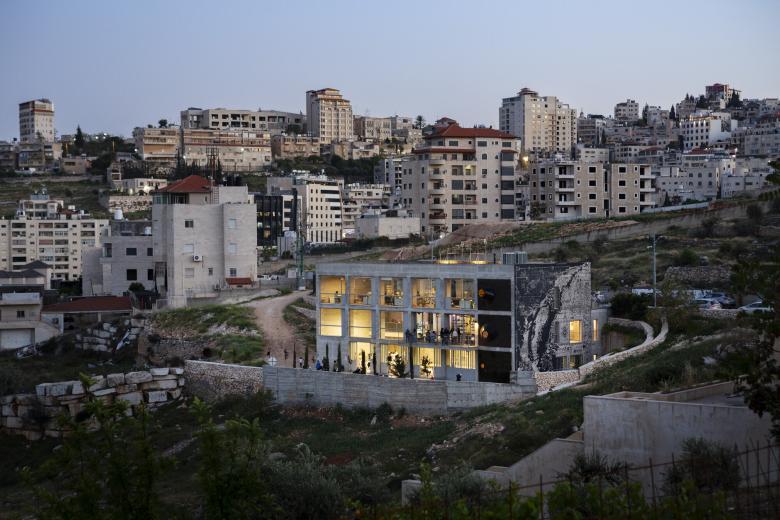
- Location: Bethlehem, Palestine
- Architect: AAU Anastas
- Client: Wonder Cabinet
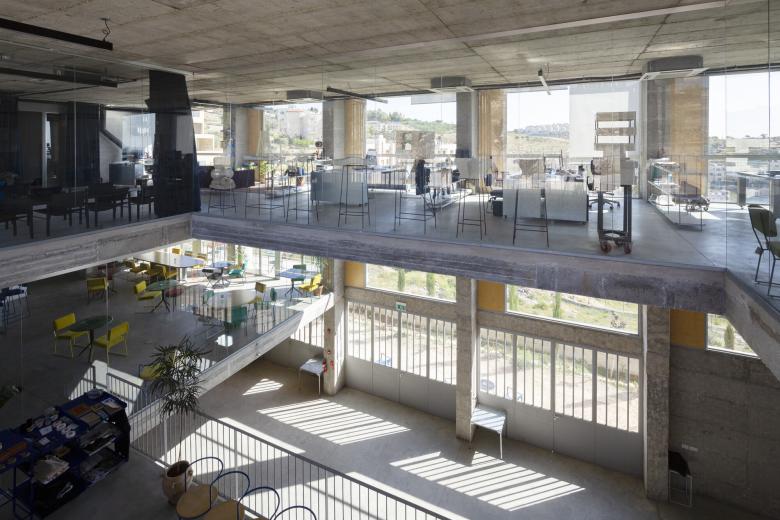
“Initiated by the architects to fill a gap in the cultural offerings for youth in the city, this project expands the agency of architects to the roles of client, designer, cultural practitioner, and activist. Designed as an open, flexible, and transparent beacon of cultural production and resilience in the Al-Karkafeh Valley, the spatial organisation of the building facilitates exchange, dialogue, and community-building. Borrowing from the contemporary language of the concrete frame construction prevalent in Bethlehem and its environs, the project demonstrates that spatial complexity and richness can be achieved through the judicious application of standardised construction methods and minimal material use. Firmly nestled within a deeply charged setting, the Wonder Cabinet offers new horizons: reintroducing making, music, wonder, and joy in the city.”
*The nine members of the 2025 Master Jury:
- Azra Akšamija, an artist and architectural historian born in Sarajevo.
- Noura Al-Sayeh Holtrop, an architect and curator with over 15 years of experience in the cultural development, architectural and planning fields.
- Lucia Allais, an architectural historian whose work addresses architecture’s relation to technology and politics.
- David Basulto, an architect and editor who, in 2006, founded ArchDaily and its global network of sites in English, Spanish, Portuguese and Chinese.
- Yvonne Farrell, an Irish architect and academic.
- Kabage Karanja, a Nairobi-based architect, researcher and educator.
- Yacouba Konaté, a curator, writer and art critic.
- Hassan Radoine, an architecture curator, critic, educator, author and expert-consultant.
- Mun Summ Wong, the architect who co-founded with Richard Hassell the Singapore-based architectural practice WOHA in 1994.