Review of 'Reprise – Aita Flury, Works 2005–2025'
A Longing for Refinement

We live in an age of intellectual simplification: complex interrelationships are reduced to slogans and black-and-white narratives—even in architecture. Aita Flury offers a counterpoint with her book Reprise.
At present, there is a palpable longing for a rich, historically conscious architectural language (not to be confused with a call for reconstruction or imitation)—for buildings that will be cherished and valued for generations to come. With Reprise, Aita Flury is likely to strike a chord. The book is a reaction against a lack of depth, oversimplification, and polarization in architecture. The monograph is a comprehensive critique of architecture: Flury takes a stance in the current aesthetic debate and advocates a nuanced approach to environmentally friendly building. Above all, however, she calls for a re-intellectualization of architecture. Architects should develop buildings by drawing on a vast wealth of knowledge in architectural and cultural history and make their design decisions after careful consideration, rather than following black-and-white patterns of thought.
Writing is indispensable to the architect from Graubünden, who studied philosophy, has an office in Zurich, and is a lover of literature: “In times where ‘building culture’ is under pressure from different quarters, language is a powerful instrument—particularly for us architects—to portray architecture (once again) as intellectual and cultural performance.” That is why, in Reprise, twelve of her own essays and five interviews frame the project section featuring buildings and designs.
In these essays, Flury shows courage. She puts herself on the line and achieves what is often missing in writing about architecture today: she takes a stand in a combative manner, using clear language and offering criticism from every angle. Her incisive texts are steeped in references to architectural and cultural history as well as literature.
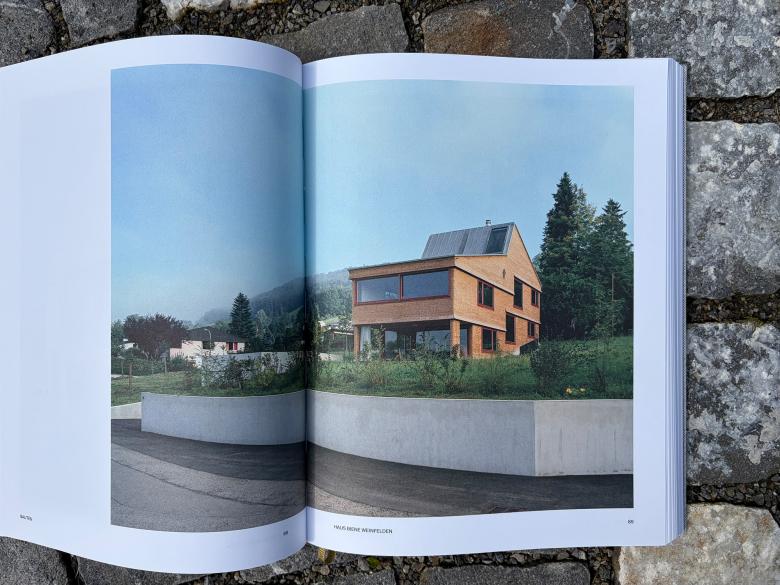
In Flury’s view, architecture cannot be developed without building on memories and cultural history. Design processes, she writes, are processes of transformation in which material from the past is consciously and gradually reworked into the present. However, this is not a call to imitate historical buildings: “The culture of transformation is not nostalgic and always has its sights on the architectural whole. […] Engaging with the past, it sets out to connect things in new ways and, at the same time, to develop new and unexpected solutions in the present day.” This approach is vividly illustrated by the Biene House in Weinfelden. Clad in shingles and featuring traditional overhangs in the lintel area, the residence draws on the Swiss tradition of timber construction. At the same time, its form and large windows speak to the structural possibilities of today.
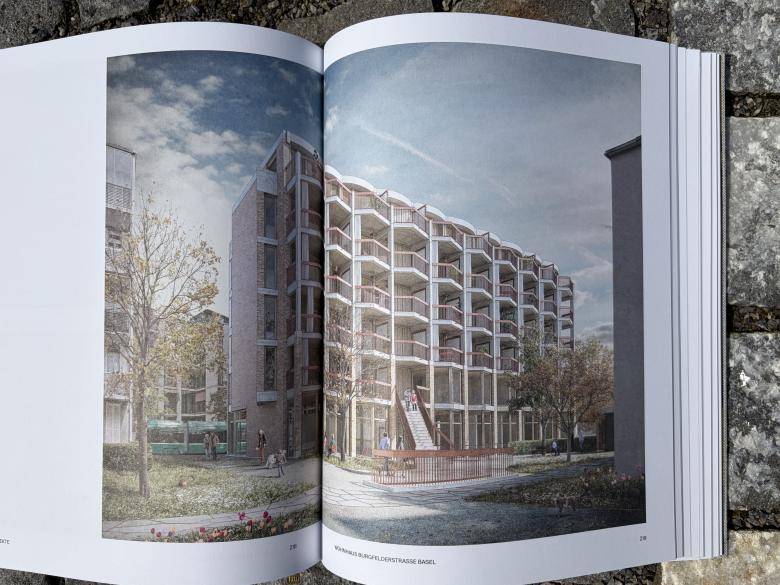
With Reprise, Flury takes a stand in the debate over the aesthetics of sustainable buildings, a debate recently reignited by the DAM Architecture Prize. Architecture developed from its geographical, topographical, social, and architectural contexts is preserved over the long term and is therefore resource-efficient. Flury advocates for durable, meticulously detailed architecture that is not meant to be trendy. She rejects neo-postmodern design strategies, which are currently popular among younger architects: “Mediocre bricolage strategies involving inferior reused building components make little sense if the resulting architectural expression is nothing more than a simple collection of set pieces that exude the spirit of self-build.”
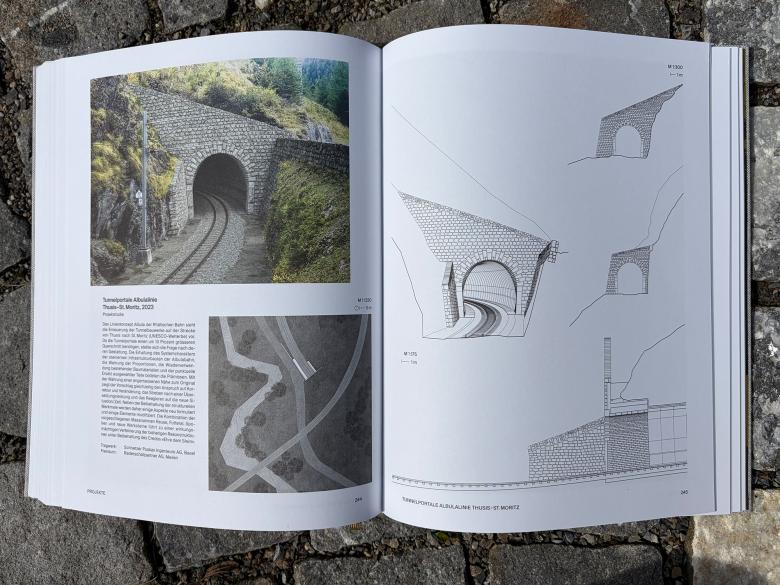
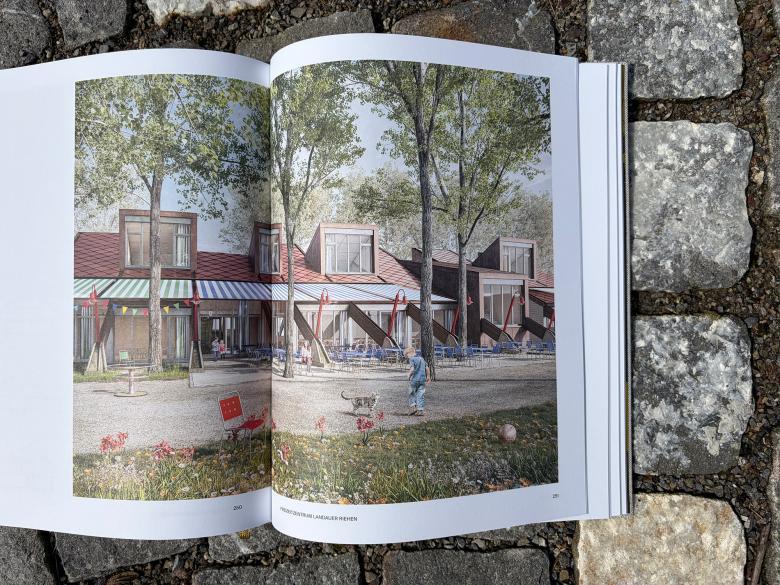
Nevertheless, Flury is no opponent of reuse: Her design for the renovation of the Albula railway tunnels (2023) envisioned constructing the tunnel portals—enlarged for modern rail traffic—using the stones of their historical predecessors and a few new parts. In this proposal, reuse is not only ecologically sensible but also architecturally significant: it expresses appreciation for a piece of Swiss identity and openness to technical innovations. Flury’s competition design for the expansion of the Landauer leisure center (2024) also relied on used parts: the historic Hetzer beams from the neighboring janitor's house were to be used to extend the existing structural framework by three axes.
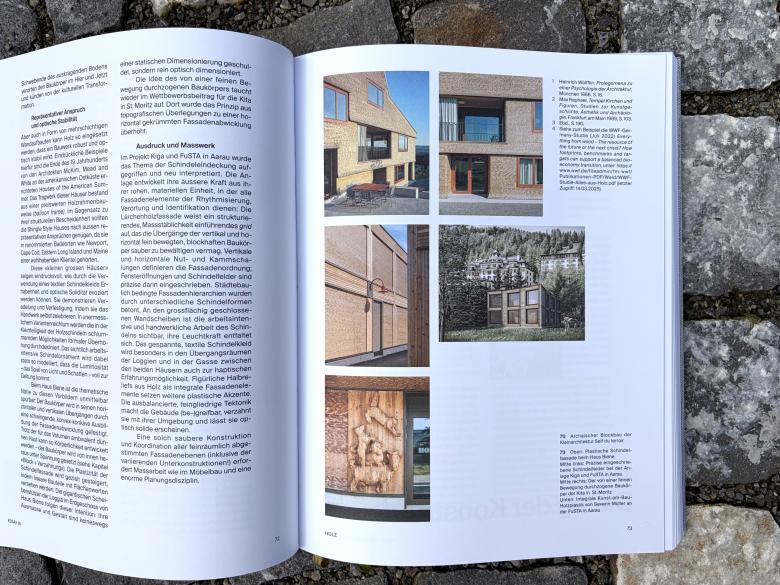
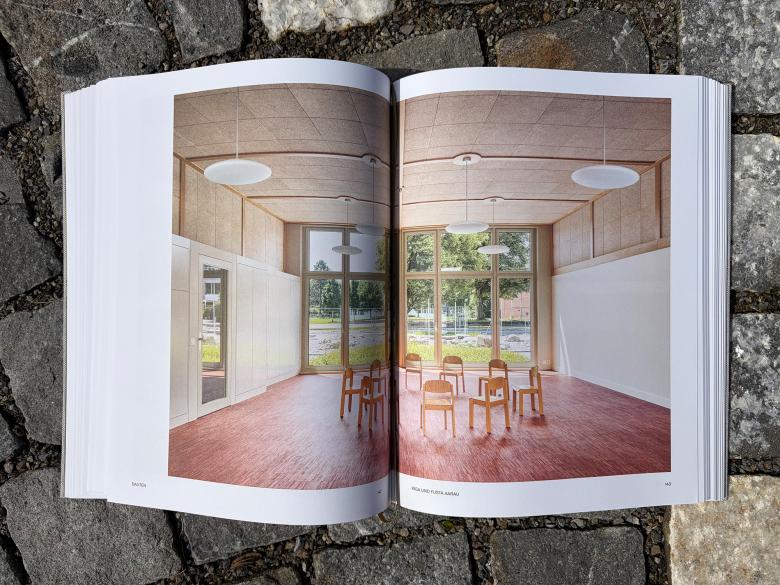
The architect does not accept sweeping generalizations. She constantly questions things. Although she has designed impressive wooden buildings, such as the Kindergarten and day care center in Aarau (2020), she does not get carried away by the hype surrounding this natural building material: “However, various global studies suggest that a growing use of wood will not slow down, but rather accelerate climate change as a result of increasing deforestation: Earth’s forests cannot supply a sufficient amount of sustainably grown timber,” she points out. The use of this natural building material must be carefully considered: “Wood displays its powerful effect where it is used in relation to a specific site or application, as is the case with Swiss farmhouses. […] The spatial, cultural and historical effect of wood is all the more striking the less the building material is ‘subjected’ to technical processing, the more direct, raw and unified its use, and the more visible and tangible it appears in the finished house.”
Architecture needs more of this kind of deep reflection and careful consideration. All too often, it is the loudest voices with the most radical ideas that get the most attention, and their positions are frequently accepted without sufficient scrutiny.
Reprise is a thought-provoking contribution to the discourse. The book will polarize opinion and has the power to spark fruitful discussions. What’s more, it inspires with its successful buildings and impressive designs.

Reprise – Aita Flury, Works 2005–2025
Aita Flury
Articles by: Roger Boltshauser, Axel Fickert, Jonathan Sergison, Jörg Stollmann, Andrea Wiegelmann, Jürg Conzett
21 × 27.3 cm
308 Seiten
263 Illustrationen
Clothbound, flexcover
ISBN 9783037613344
Quart
Dieses Buch kaufen
Verwandte Artikel
-
Periphery as Method: On Architecture’s 'Dispositional Intelligence'
Guiomar Martín | 15.05.2026 -
-
-
-