Clerestory Garden at Naka-Ikebukuro Park
Luce Jardin
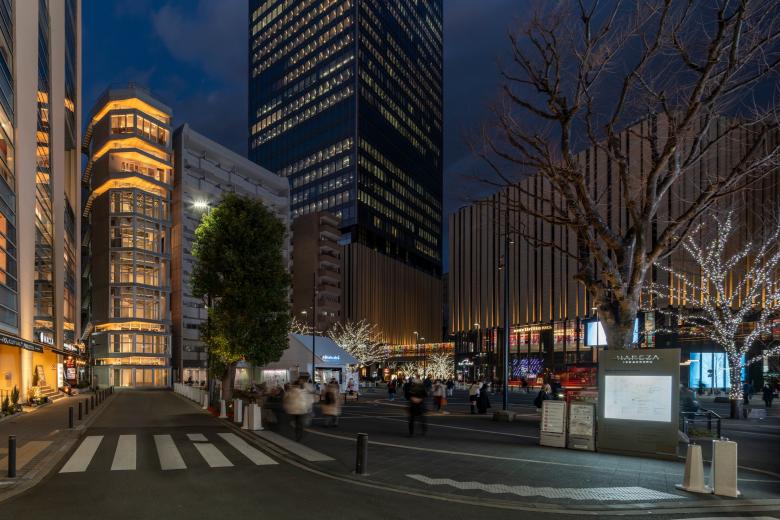
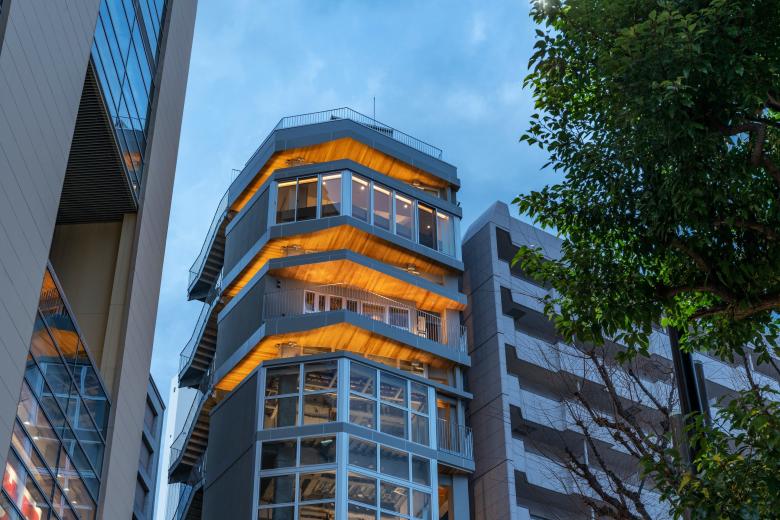
This eight-story mixed-use building combining commercial and residential space sits next to Naka-Ikebukuro Park in Tokyo, a short walk from Ikebukuro Station. The design by KEY OPERATION INC. / ARCHITECTS, the Tokyo firm of Akira Koyama, features planted transoms that lend the building its name. The architect answered a few questions about the project.
What were the circumstances of receiving this commission?The client, who owned a small corner plot directly facing Naka-Ikebukuro Park in central Tokyo, approached KEY OPERATION directly. The site sits beside the civic plaza that was renovated in 2019 in connection with the opening of the Hareza Ikebukuro cultural complex. The client shared our ambition to create a building that would actively engage with the public space rather than simply maximize its own footprint.
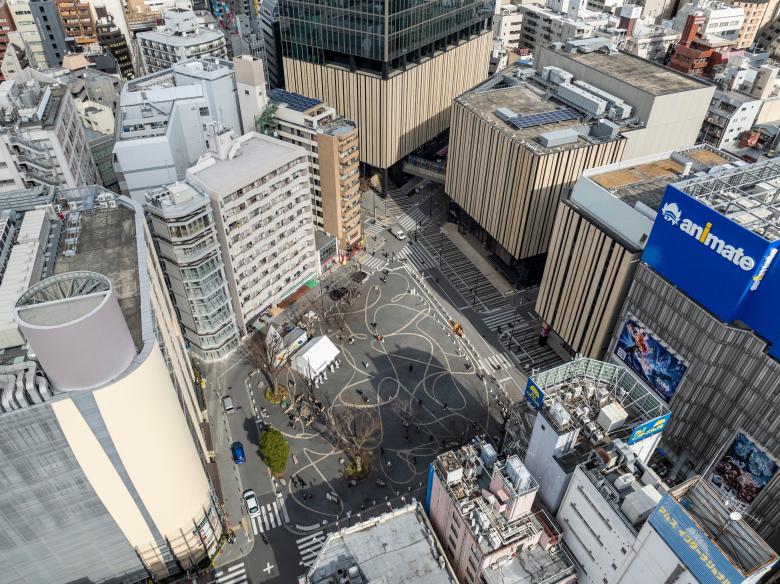
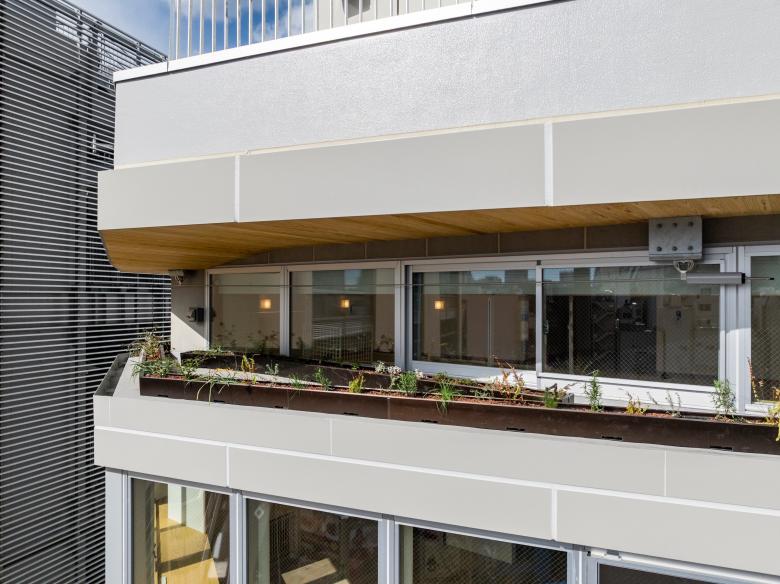
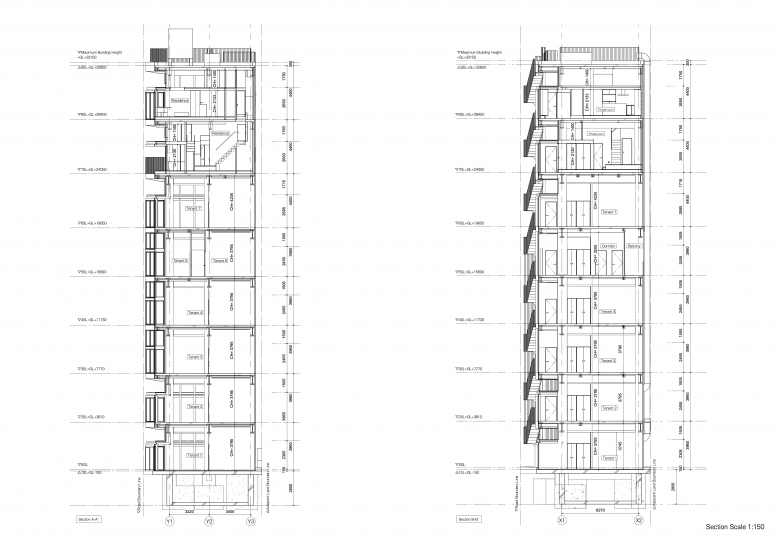
The founding question was: “Can a small urban building give greenery back to the city without sacrificing commercial floor area?” On a site of just 82 square meters, the building introduces a planted “clerestory garden” at the transom zone of each floor—contributing greenery to the civic plaza while preserving leasable area and tenant visibility.
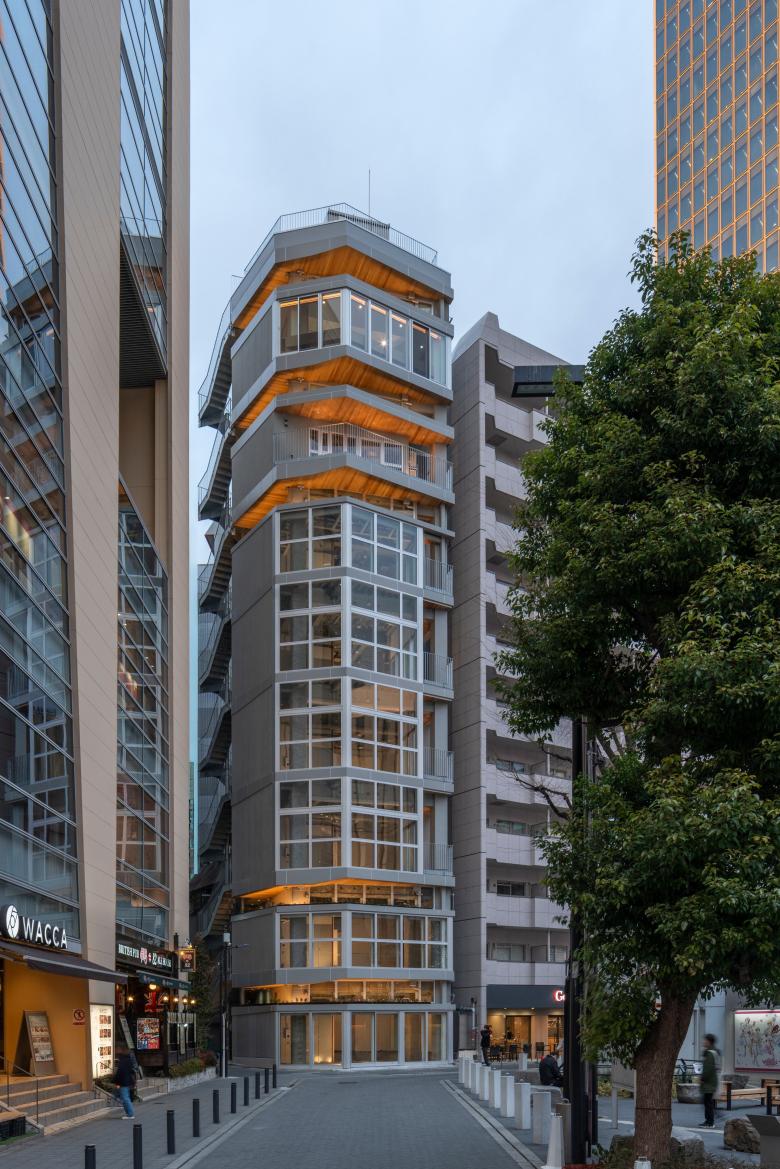
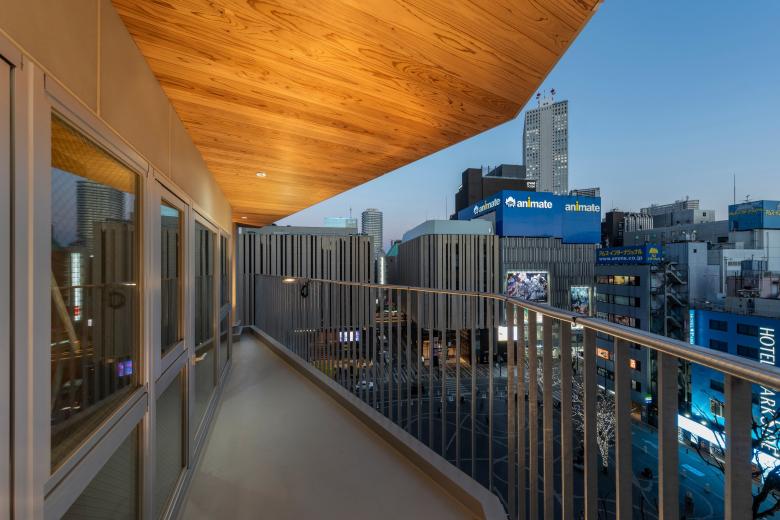
The opportunity arose from a regulatory constraint: the maximum fabrication height of fire-rated aluminum sashes is 2.2 meters, generating a transom above each window. Rather than treating this as a problem, we set the transom back to create a planting bed at every floor. Green space is generated not as surface decoration but through a section strategy integrated into the architectural logic—a model in which urban density and ecological contribution are not mutually exclusive.
By day, the clerestory garden connects the building to the greenery of the plaza. By night, light from each floor filters through the plantings and illuminates the civic space beyond. The project proposes that small-scale private development can become an active contributor to the public realm.
The renovation of Naka-Ikebukuro Park had created a rare European-style civic plaza in central Tokyo, yet the surrounding buildings were largely hard-edged and indifferent to the space. We felt a need for a building that would genuinely belong to the plaza rather than turn its back on it.
We initially explored wall-mounted greenery, but this would have compromised tenant visibility. In the process, we noticed that the fabrication limit of fire-rated glazing systems generates a clerestory zone above each window—and it was here that the concept crystallized. A regulatory constraint became the generative idea.
The name “Luce Jardin” combines words for light and garden, reflecting the dual role of the clerestory: as a planted garden visible from the plaza, and as a source of diffused natural light filtering into the interiors.
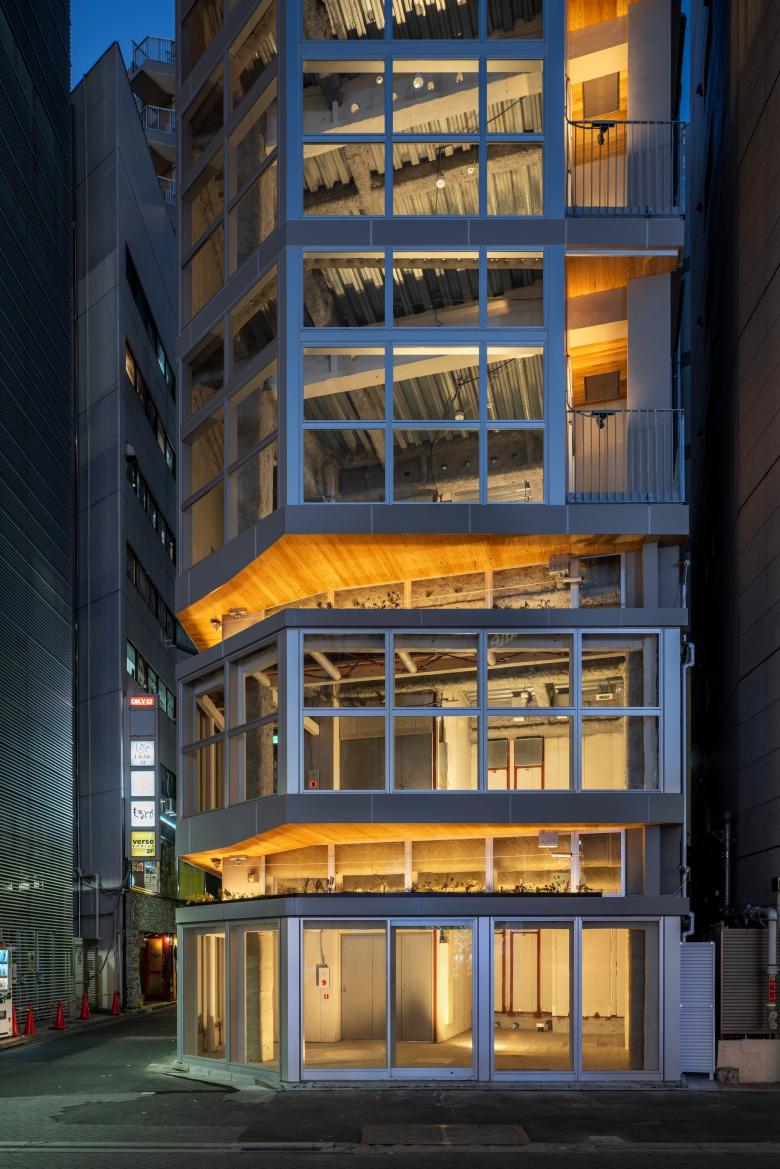
The irregular 82-square-meter plot fronting directly onto the civic plaza made the relationship between building and public space the central design question. How the building addressed the plaza—rather than how it maximized its own program—became the point of departure.
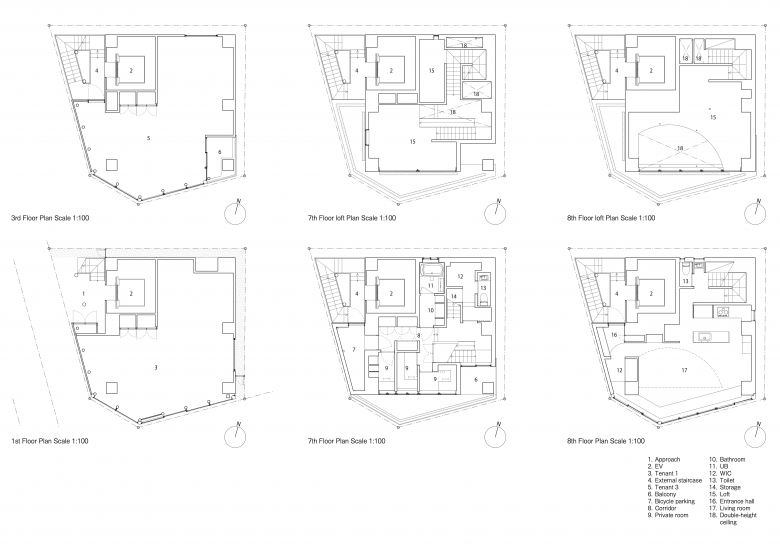
Structurally, we initially planned a frame following the irregular polygon of the site, but adopted a simple rectangular grid at the centre for cost efficiency. The building's footprint follows the site boundary while the interior is rationally organized. The ground floor prioritizes the tenant's street presence, with stairs and lifts accessed from the side street.
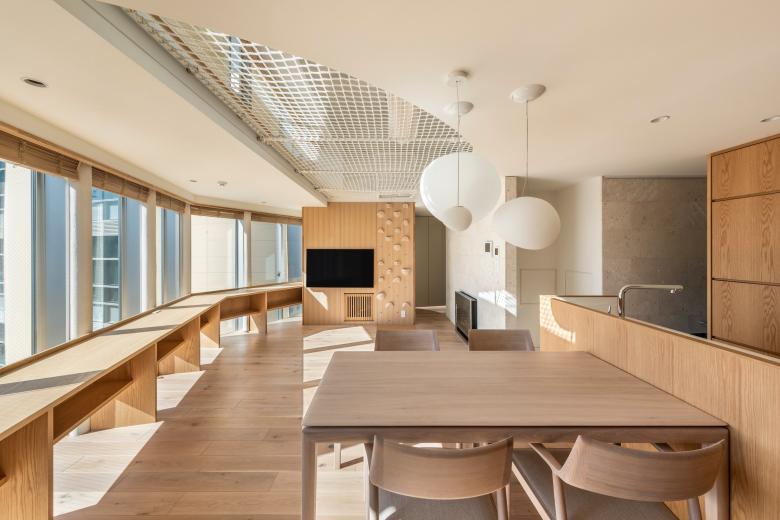
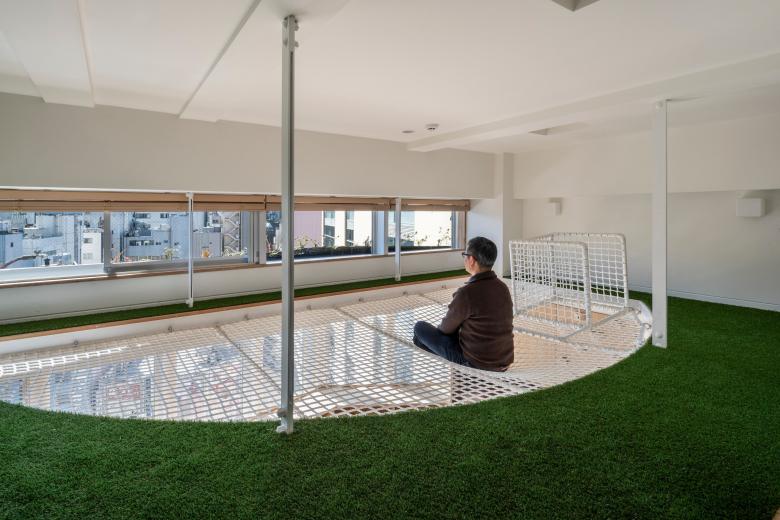
The client's decision to occupy the upper floors as a private residence was fundamental to the program. Rather than a conventional apartment, the upper two floors were designed as a “Quatrefoil”—a two-level maisonette subdivided by a loft into four levels, incorporating a slide, bouldering wall, and hammock net within a densely layered section.
Critically, this loft is spatially linked to the clerestory garden: it looks out through the planting towards the plaza below, sitting within a space of greenery and filtered light. The commercial tenants below and the owner's residence above are unified by the clerestory garden as a single architectural gesture.
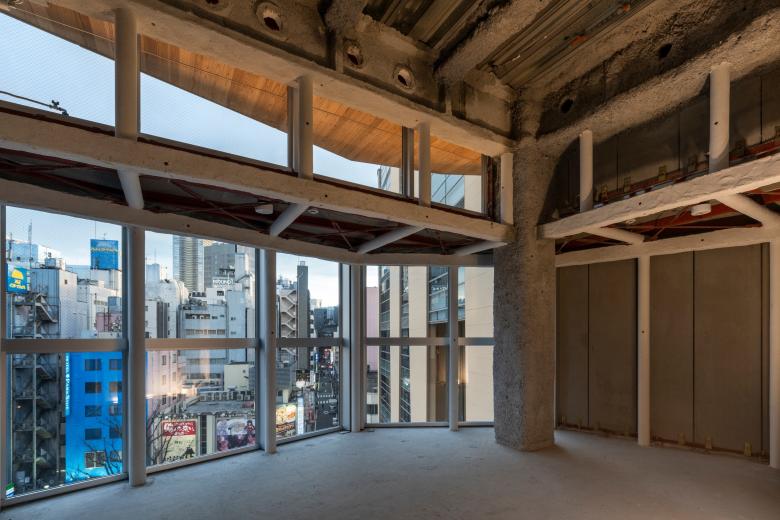
The structural approach evolved significantly. We initially planned a frame following the irregular polygon of the site, but cost efficiency led us to adopt a simple rectangular grid at the center. This clarified the building's logic: the exterior form responds to the site boundary, while the interior is rationally organiszd. The clerestory garden concept remained constant throughout—it was the founding idea from which everything else followed.
Luce Jardin is part of a sustained investigation at KEY OPERATION into the relationship between small-scale urban buildings and the public realm. We consistently ask how privately developed buildings can become responsible civic neighbors—contributing to the streetscape, the greenery, and the quality of public space rather than simply maximizing their own footprints. This project is perhaps our most direct expression of that ambition.
The project also continues our interest in sectional density. The Quatrefoil residence represents one answer to the question of how spatial richness can be achieved within a tight urban plot—and its spatial connection to the clerestory garden means that the building's outer shell and interior life work as one.
Email interview conducted by Japan-Architects.
Location: Toshima-ku, Tokyo, Japan
Client: Private
Architect: KEY OPERATION INC. / ARCHITECTS, Tokyo
- Design Principal: Akira Koyama
MEP/FP Engineer: Comodo Equipment Planning
Contractor: Watanabe Construction Co., Ltd.
Site Area: 82.84 m2
Total Floor Area: 469.06 m2
Articles relacionats
-
Marunouchi Architecture Tour
Mitsubishi Jisho Design, Japan-Architects Curators | 20.02.2026 -
-
-