Black and White and White All Over
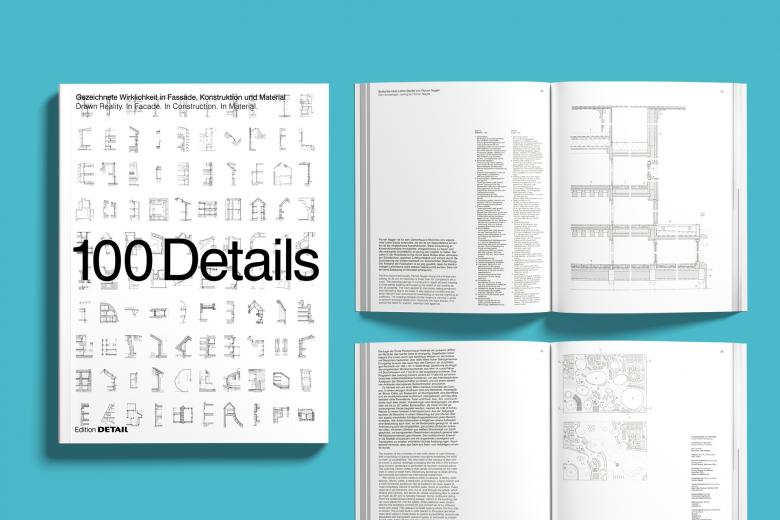
To celebrate 65 years of DETAIL, the “international platform for design and construction solutions in architecture” has published 100 Details: Drawn Reality. In Facade. In Construction. In Material. Here we take a look inside the big 416-page book.
Since its launch in 1961, Edition DETAIL has published somewhere around 500 issues of its namesake magazine, with an estimated 6,000 projects featured in that time. (This is based on the numbers they boasted of six years ago on their 60th anniversary.) According to Jeanette Kunsmann, editor of 100 Details, each project in the magazine requires around 80 hours of production time on the part of DETAIL's CAD department, with each page taking 10 hours to produce. No wonder Edition DETAIL, rather than limiting the drawings to the issues of the magazine, makes most of them available online via a subscription service and repackages them in books that take the form of monographs, city guides, and technical guides focused on particular typologies or materials. 100 Details is one such book—a celebration of the magazine and its unceasing devotion to architectural details, but also a celebration of technical drawings themselves, given how the pages are devoid of photos and other illustrations.
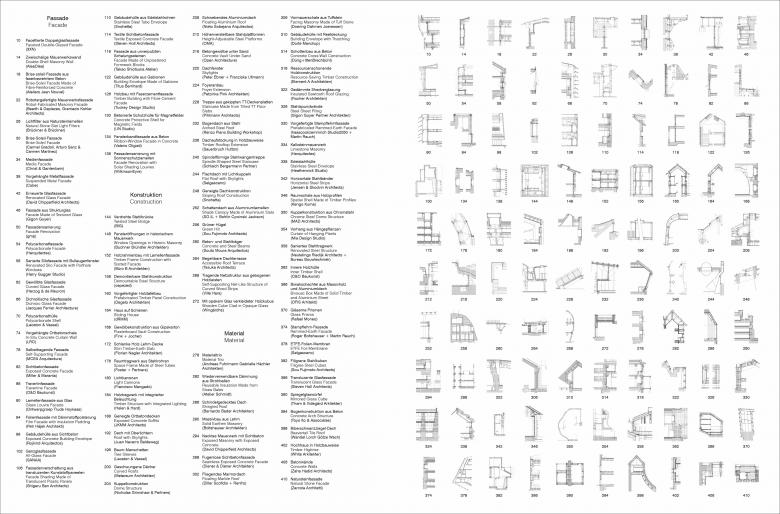
The 100 details in the book, shown both on the cover and the table of contents (above), are almost exclusively wall sections, all of them grouped into three chapters that follow from the book's subtitle: Facade, Construction, Material. The hundred projects the details come from span about half of DETAIL's 65-year existence: the oldest project is from 1997 and the newest from 2025. This means no hand-drawn details from the pre-CAD days of architectural production but also a focus on contemporary architecture relevant to architects practicing today. Curiously, instead of using project names, the titles describe the single details from the projects in material terms. So, to take the oldest and newest projects, Doering Dahmen Joeressen's House in Italy (1997) is “Facing Masonry Made of Tuff Stone,” while pihlmann architects' Thoravej 29 (2025) is “Staircase Made from Tilted TT Floor Slabs.”
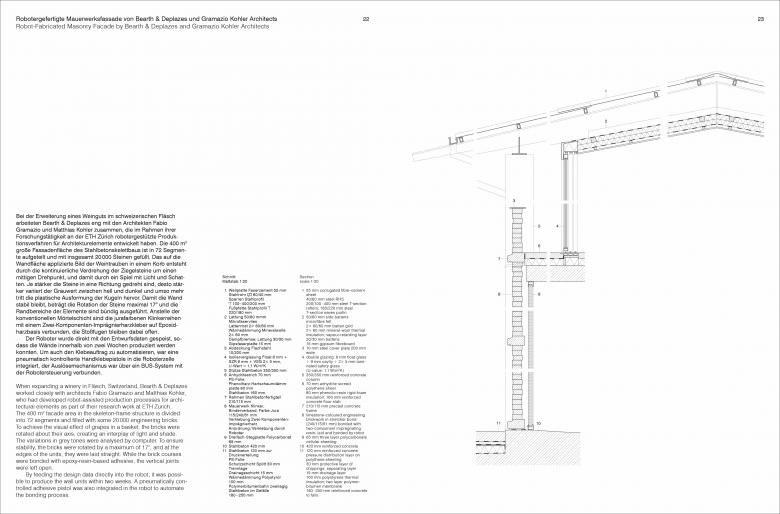
How, you might be asking, are the projects and details presented? The answer won't surprise anyone familiar with DETAIL: consistently. Each project is given four pages with a repeated structure: The first page has the title name, a brief description, and the numbered key for the detail on the second page, opposite. (All of the text is in German and English, it should be noted.). The third page has additional project description, while the fourth page has small building sections and/or floor plans and a column of text with project data. Depending on the scale of the buildings and the extent of the detail, the details range in scale from 1:10 to 1:50, with the majority appearing at 1:20. 1:500 is prevalent for the building sections and floor plans, but their scales also vary due to the wide range of building sizes and the fixed size of the page—slightly larger than a standard A4. This means that, unlike the magazine, which may occasionally find a drawing extending across the fold on a single spread, each of the details in 100 Details fits on a single page.
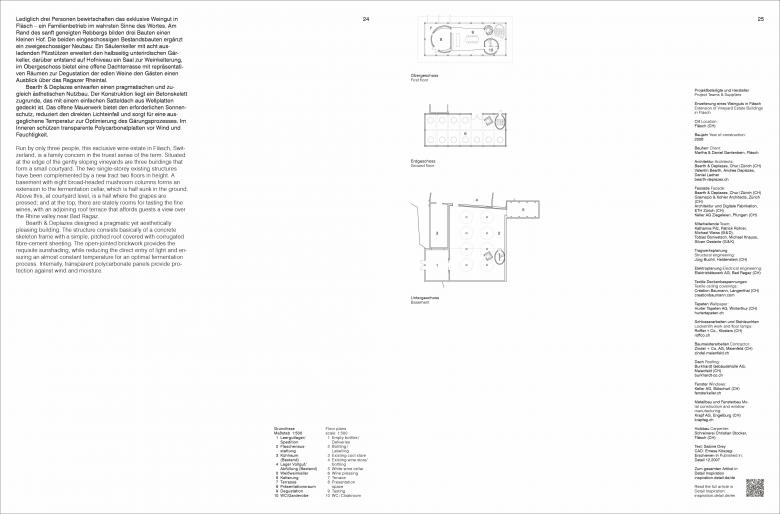
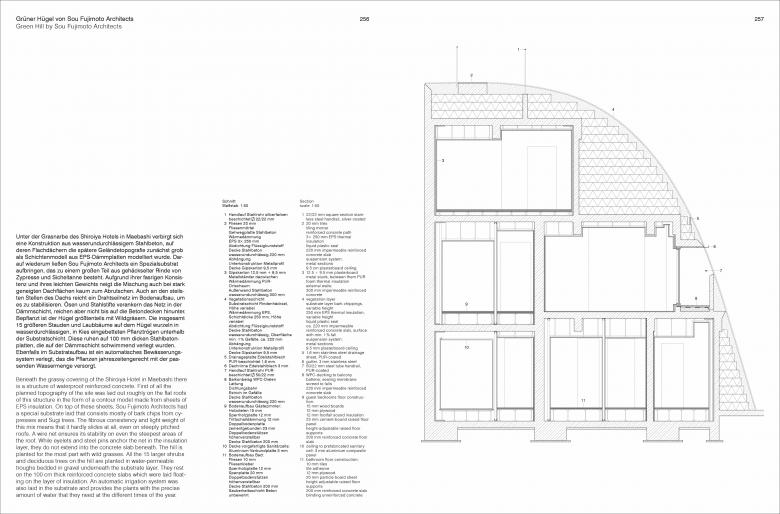
The spreads accompanying this review illustrate how the book is limited to text and drawings. Put another way, there are no photographs or other images competing with the details. For those not familiar with the projects selected for inclusion in the book—quite a few of them are famous and/or designed by famous architects, but not all of them—this might be a source of frustration, as are other books that require a smartphone or computer to fully grasp what is on the page. Given how, in Kunsmann's words, “the spotlight here is on the detail drawings themselves,” this is not an issue for the magazine. Nevertheless, the project data for each project includes a QR code linking to the project on DETAIL Inspiration. Unfortunately, given that Inspiration is subscriber-only, the reader venturing there would have to pay or look elsewhere for more information. In this reviewer's opinion, Edition DETAIL should have made those projects freely available—only 100 among the more than 4,300 on the service—for people who spent €80 on this book.
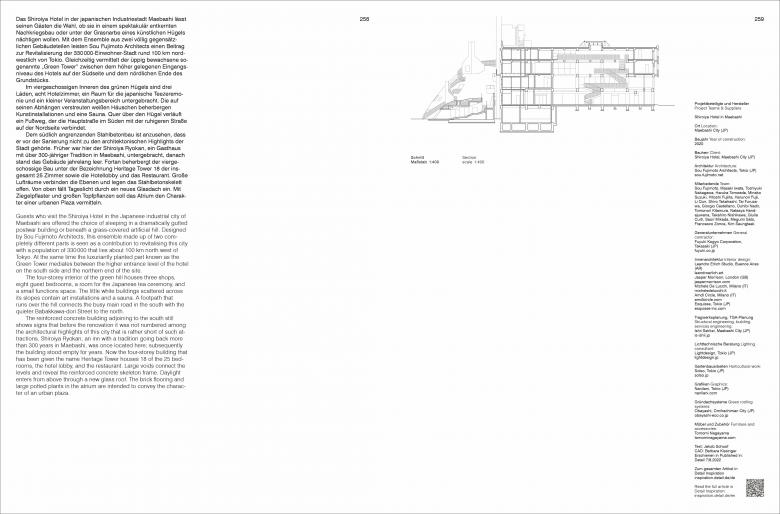
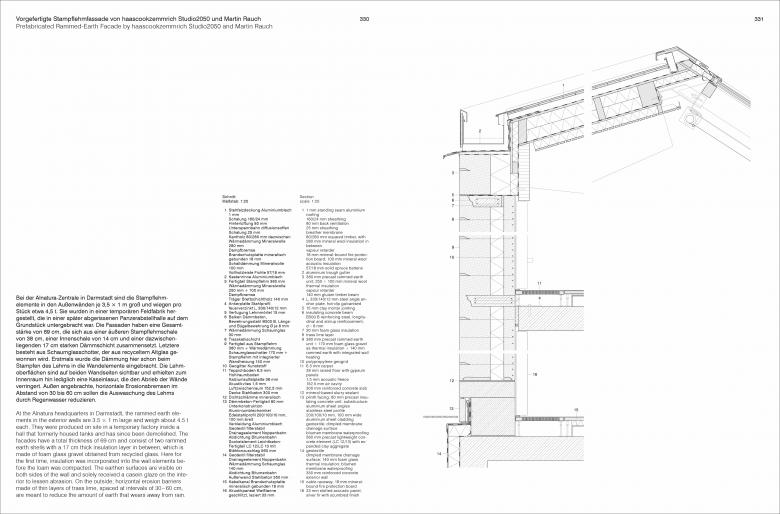
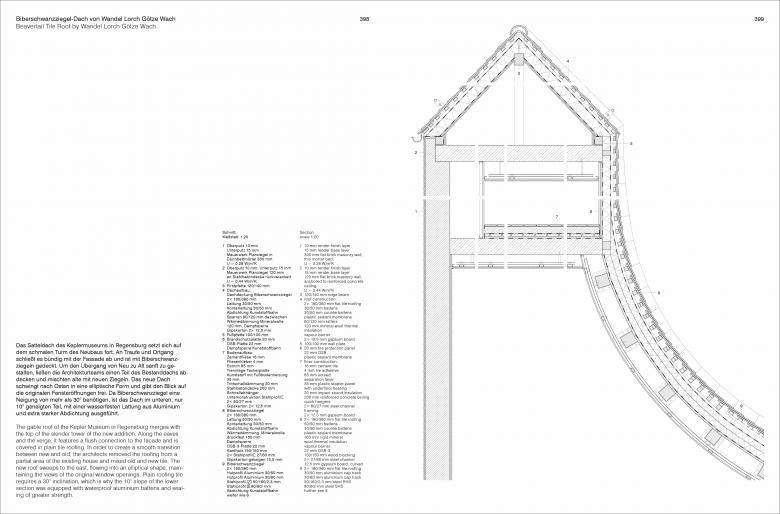
Another aspect of the book that comes across in the spreads shown here is the enormous amounts of white space, especially on the third and fourth pages of each project. This is an outcome of the decision to focus on details and not include photos, but it made me wonder a couple things: Could more details have been included? Could the book have been smaller, and therefore less wasteful and less expensive? But after looking through the book a second time, I realized that the white space provides some breathing space to the details and also eliminates distractions that could have arisen with more ink on the reverse of each page. As is, the text on the third page comes through slightly while examining the detail on page two, but not enough to distract; a photo on the reverse certinaly would have added a layer of distraction. Put another way, the white space is in service of the the details, such that it is almost as important to the details as the details themselves—details that look beautiful on the page.
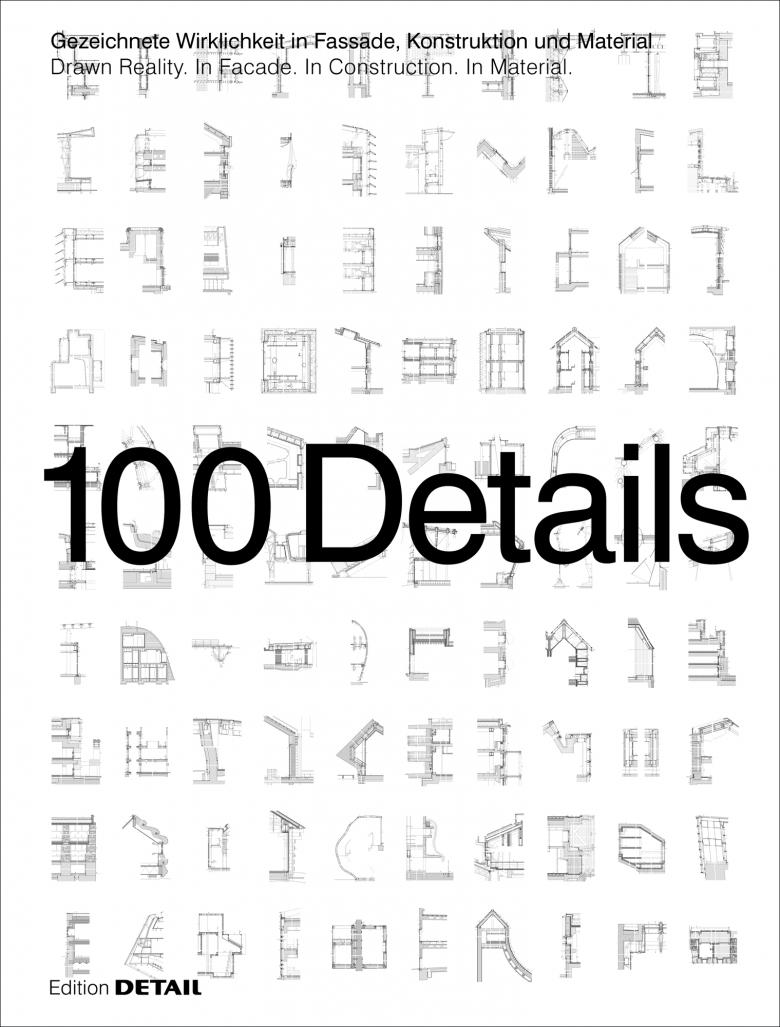

100 Details: Drawn Reality. In Facade. In Construction. In Material.
Edited by Jeanette Kunsmann
32 x 23 cm
416 ページ
Hardcover
ISBN 9783955536787
Edition DETAIL
購入
関連した記事
-
-
Periphery as Method: On Architecture’s 'Dispositional Intelligence'
Guiomar Martín | 15.05.2026 -
-
-