Inside Princeton University Art Museum
West facade, Princeton University Art Museum, 2025 (Photo: Richard Barnes, courtesy of the Princeton University Art Museum)
The Princeton University Art Museum (PUAM) opened to the public on October 31 with a 24-hour open house that included a number of free events in addition to a portion of the museum's 117,000 artworks being put on display. World-Architects visited during the open house and took some photos, shown here alongside photos provided by PUAM.
A lot happened in the five years between a first peek of Adjaye Associates' design for PUAM, via a September 2020 virtual presentation by David Adjaye, and the museum's celebratory open house a couple weeks ago. Construction began in the midst of Covid-19 in mid-2021, which involved the demolition of the existing museum complex but the retention of the Marquand Art Library that the new museum would eventually embrace in plan. The World Health Organization called an end to the Covid-19 emergency in May 2023, but that good news was followed two months later by a Financial Times report of three women in Adjaye's employ accusing him of sexual assault and harassment. While Adjaye denied the allegations and no formal charges were brought against him, the news led to the firm losing commissions that were in early design stages, while projects like PUAM that were already under construction moved forward but distanced themselves from Adjaye personally, instead emphasizing the contributions of others in Adjaye Associates and the executive architects working on the projects—Joe Franchina and Marc McQuade in Adjaye Associates' New York office, and Erin Flynn at Cooper Robertson, respectively, in the case of PUAM.
While the fallout from the FT story threatened to overshadow the festivities around the opening of PUAM—not to mention the Museum of West African Art in Nigeria on November 11 and the Studio Museum in Harlem on November 15—Adjaye's omission from the spotlight had the inadvertent effect of putting the emphasis squarely on the museum and its building rather than the (flawed) person behind the design. Put another way, place took precedence over personality. When I visited PUAM on November 1, the building was crowded with art lovers, architecture buffs, and the generally curious, all focused on the art on display, the building, and the events taking place in and around the museum's new home. Accordingly, our coverage of the museum focuses on the building itself—an impressive setting for an impressive collection of art—shown in photos accompanied by descriptive captions.
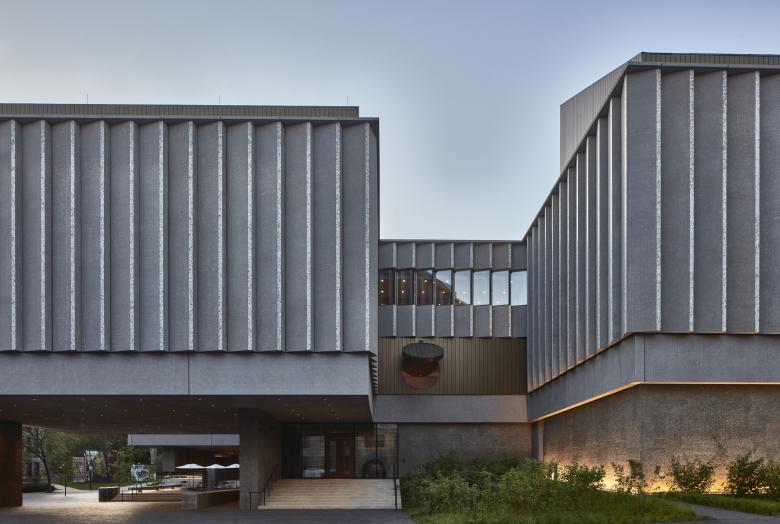
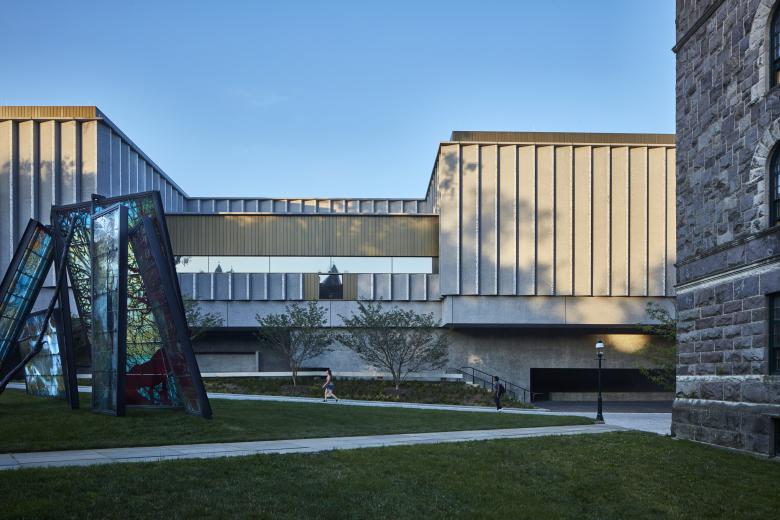
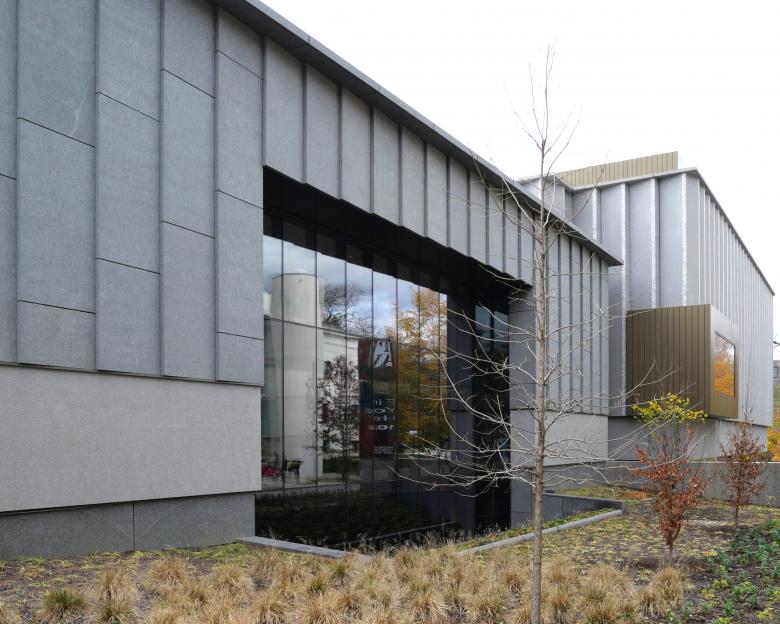
The 146,000-square-foot three-story building has entrances on all four sides, and therefore no traditional front elevation. Precast concrete panels in a serrated profile wrap the whole building, as seen here in the south facade. (Photo: Richard Barnes, courtesy of the Princeton University Art Museum)
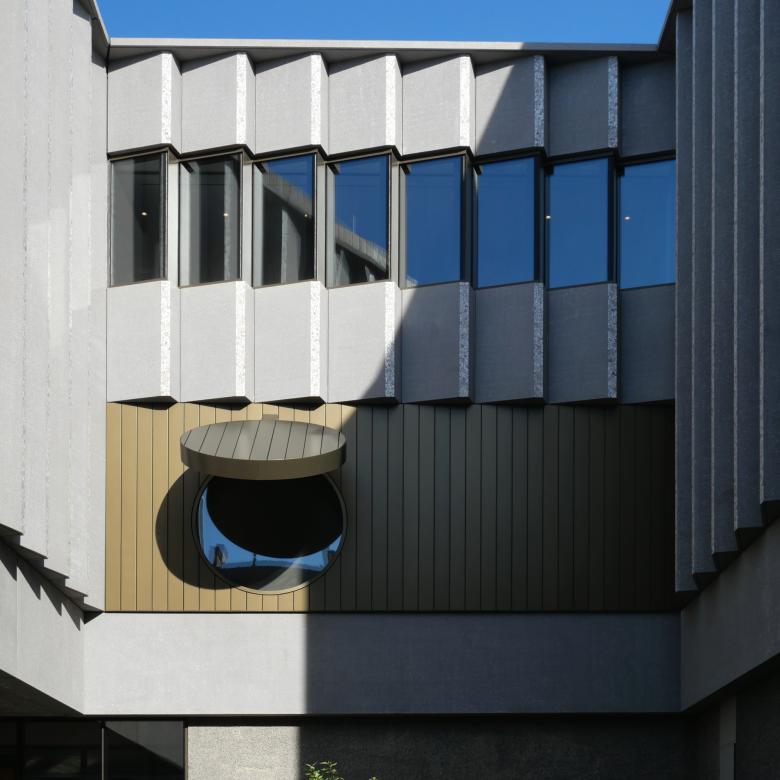
Punctuating the precast panels are “lens moments”—windows that connect museumgoers inside to the campus around the building. (Photo: John Hill/World-Architects)
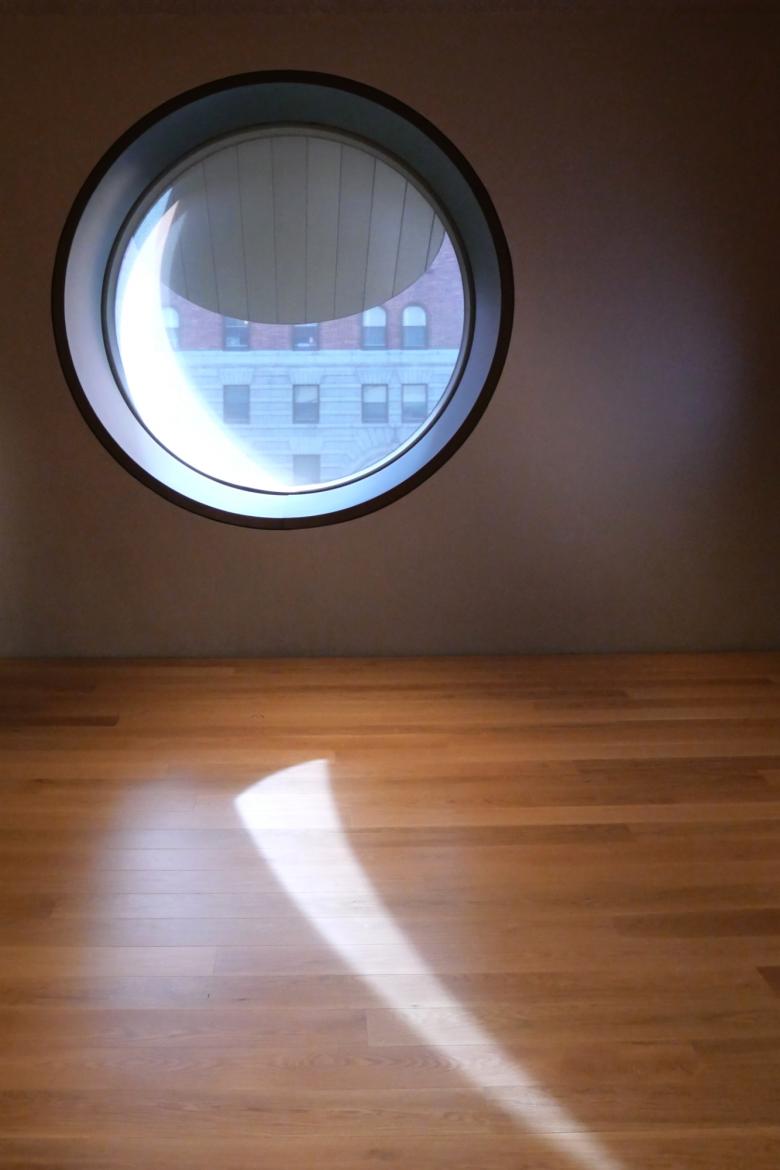
Here is the round window on the south facade seen from the inside, with a shaded view of adjacent Brown Hall. (Photo: John Hill/World-Architects)
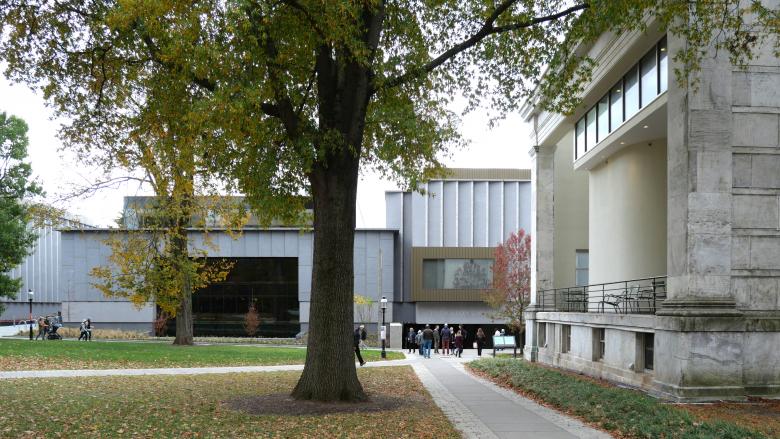
If there is one primary avenue to PUAM, it is from the north alongside Whig Hall (at right, 1893, renovated by Gwathmey Siegel in 1972). (Photo: John Hill/World-Architects)
Although Marquand Library was retained as part of PUAM's construction, its facade was clad with new stone panels with a serrated profile similar to the museum. (Photo: John Hill/World-Architects)
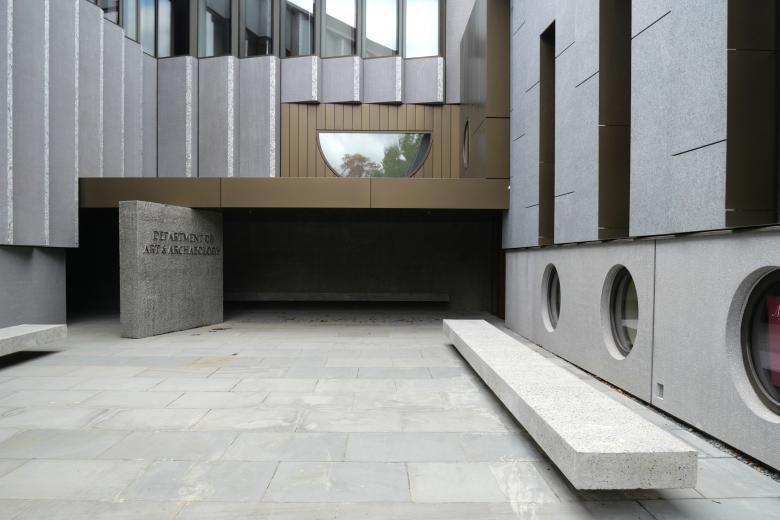
The entrance to Marquand Library (reopening in January) is separate, accessed from the east-west McCosh Walk. A “lens moment” is visible above the darkened entry portal. (Photo: John Hill/World-Architects)
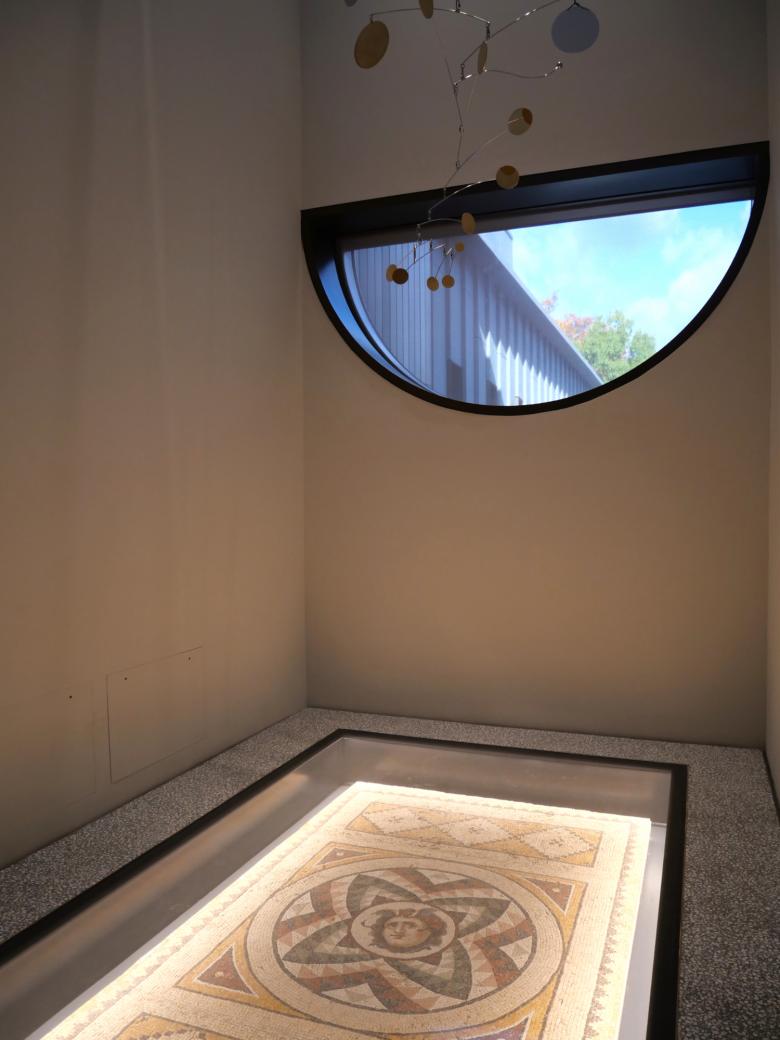
The small space of the half-circle “lens moment” highlights a mosaic through a glass floor and Tuan Andrew Nguyen's kinetic sculpture, Naga, above. (Photo: John Hill/World-Architects)
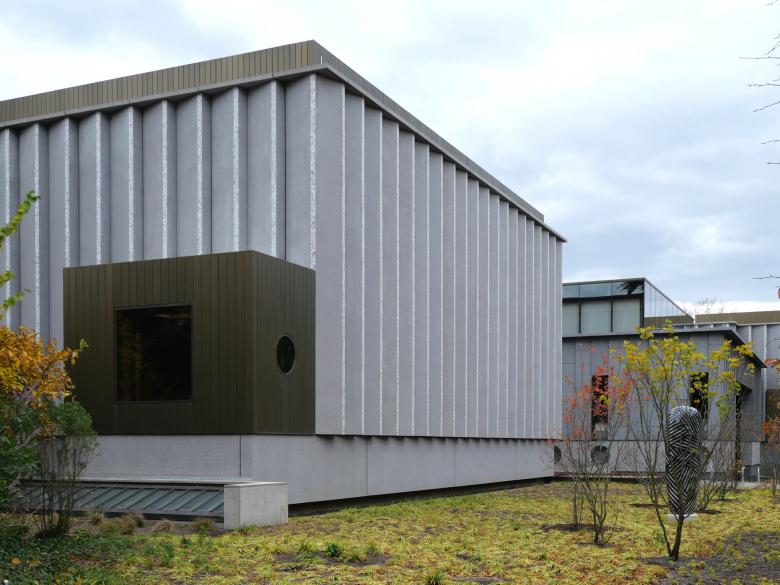
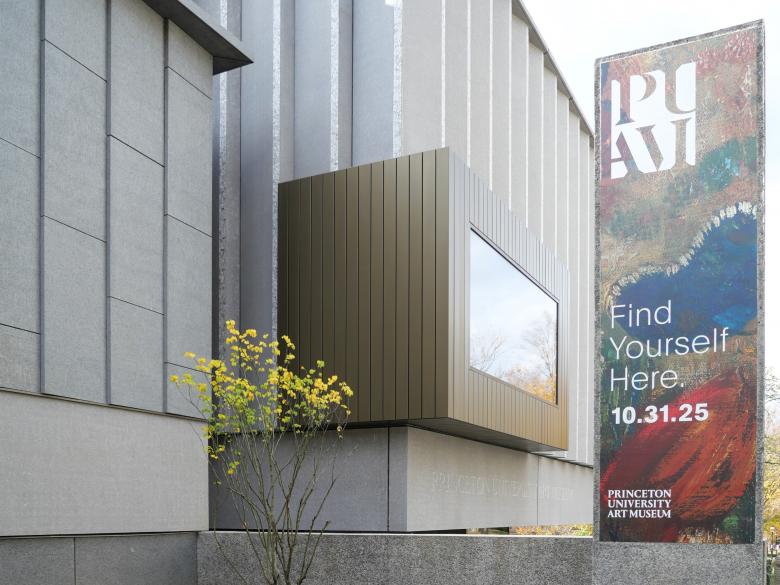
At the northeast corner of the museum is yet another “lens moment,” one that projects from the main concrete-clad volume. (Photo: John Hill/World-Architects)
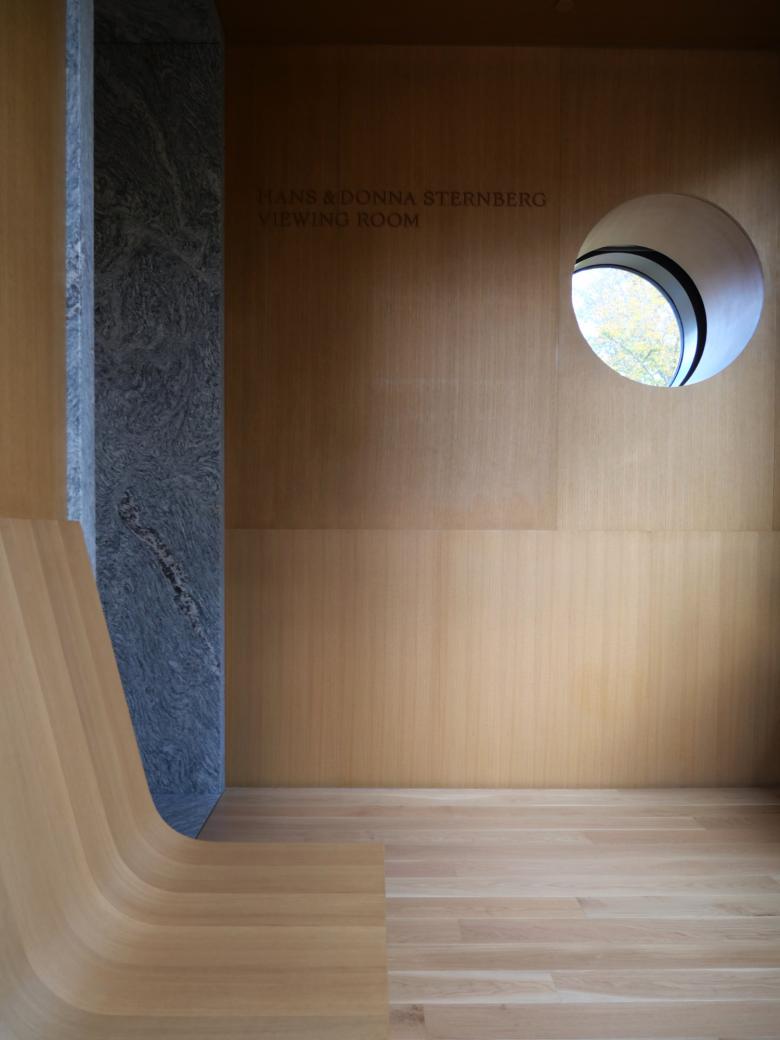
Inside, this “lens moment” is one of the most unexpected and peaceful places in the museum, with custom benches allowing views outside and of a site-specific artwork set into the ceiling. (Photo: John Hill/World-Architects)
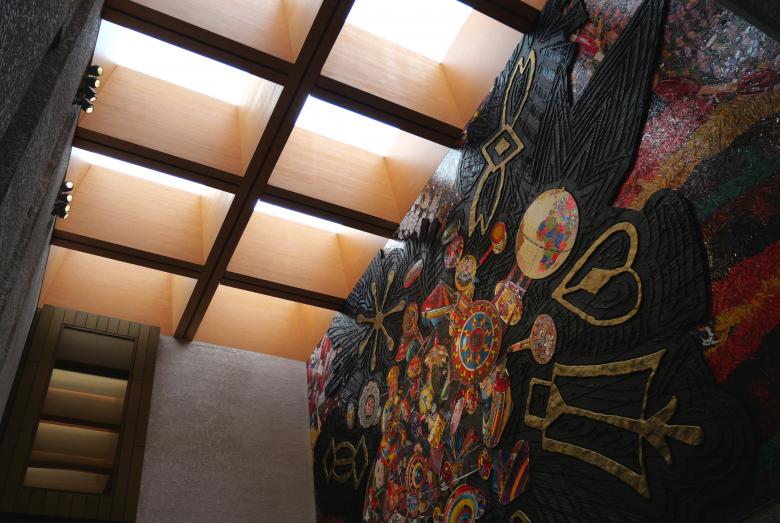
Back toward the entrance to the museum near Whig Hall, another “lens moment”—the largest in the museum—is visible above a walkway leading to… (Photo: John Hill/World-Architects)
…a three-story site-specific installation, Let me kindly introduce myself. They call me MC Prince Brighton, by Nick Cave. (Photo: John Hill/World-Architects)
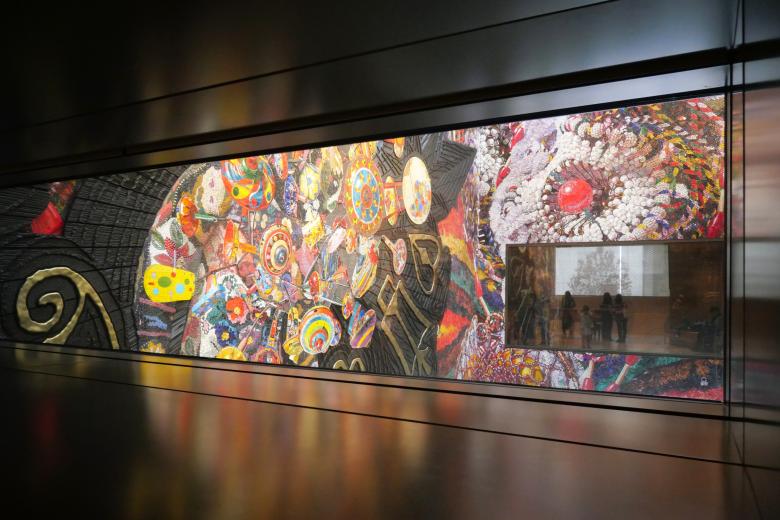
Here is a view of Nick Cave's mosaic from inside the museum, looking through to the “lens moment” across the entrance court. (Photo: John Hill/World-Architects)
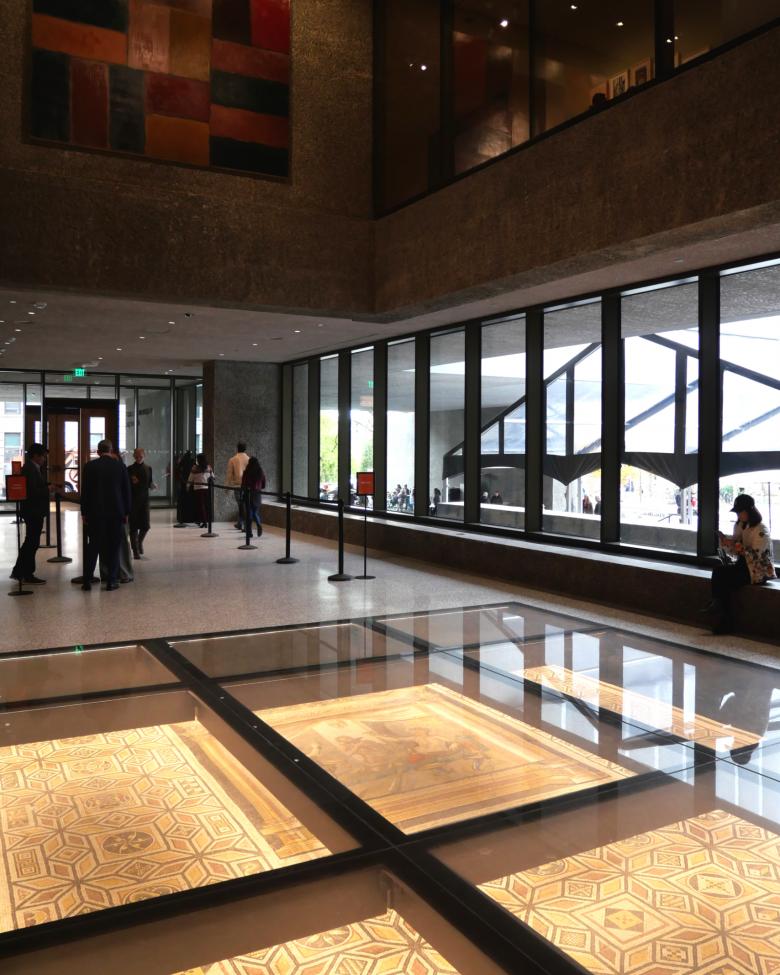
Another vertical space inserted into the three-story volume of the museum is found at the entrance from the south, where glass floors cover mosaics and floor-to-ceiling glass gives views of the galleries at the second floor. (Photo: John Hill/World-Architects)
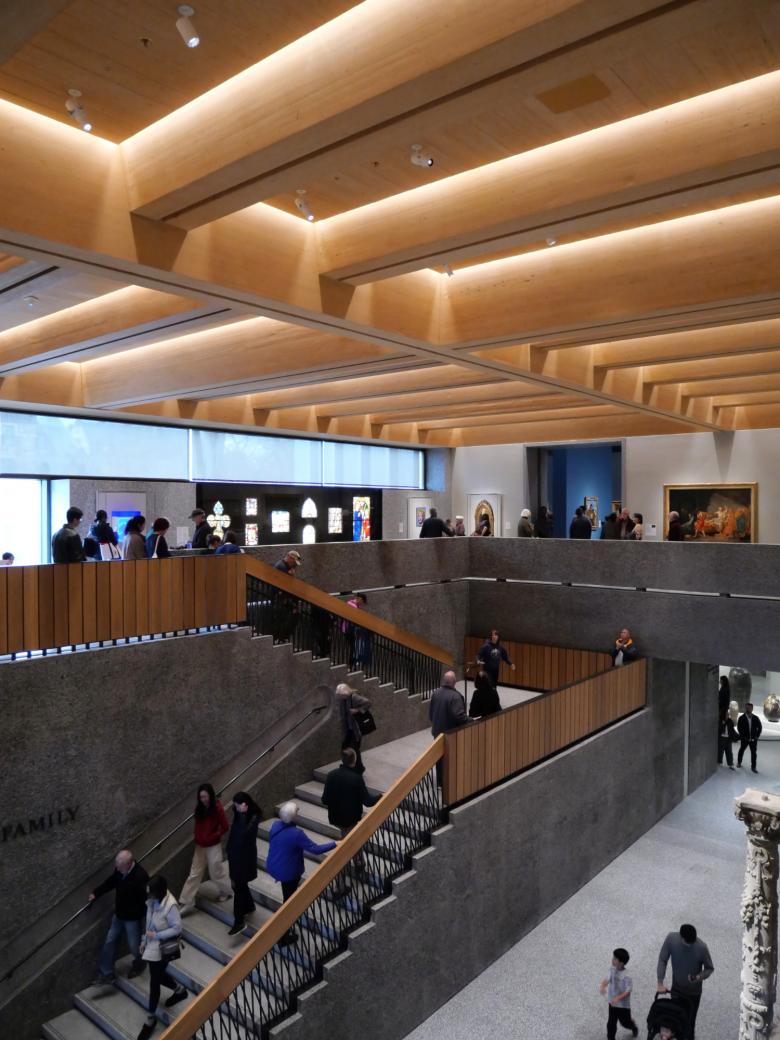
Ninety percent of the exhibition space is up on the expansive, sprawling second floor. Drawing visitors upstairs is the dramatic entrance hall. (Photo: Richard Barnes, courtesy of the Princeton University Art Museum)
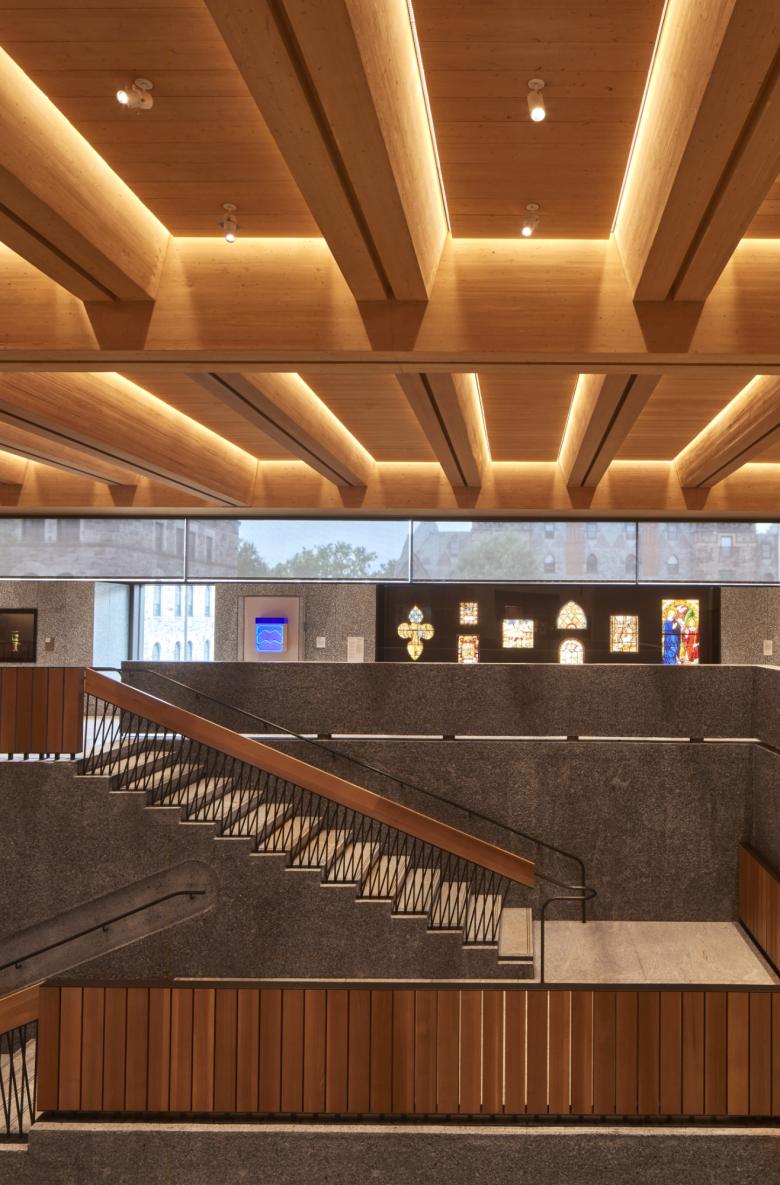
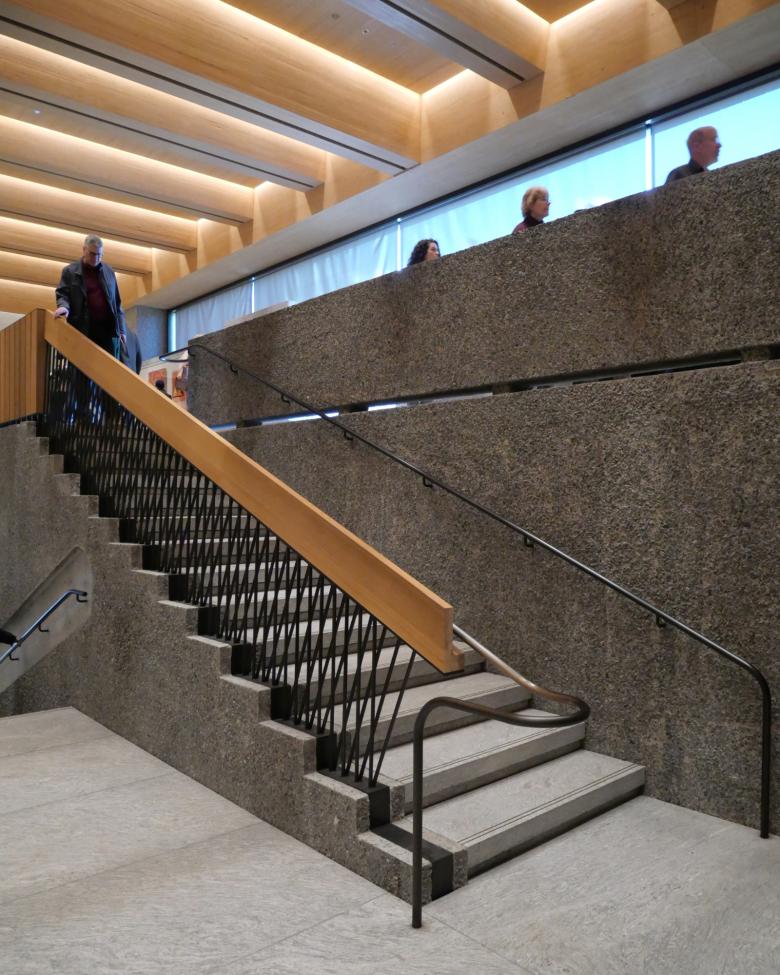
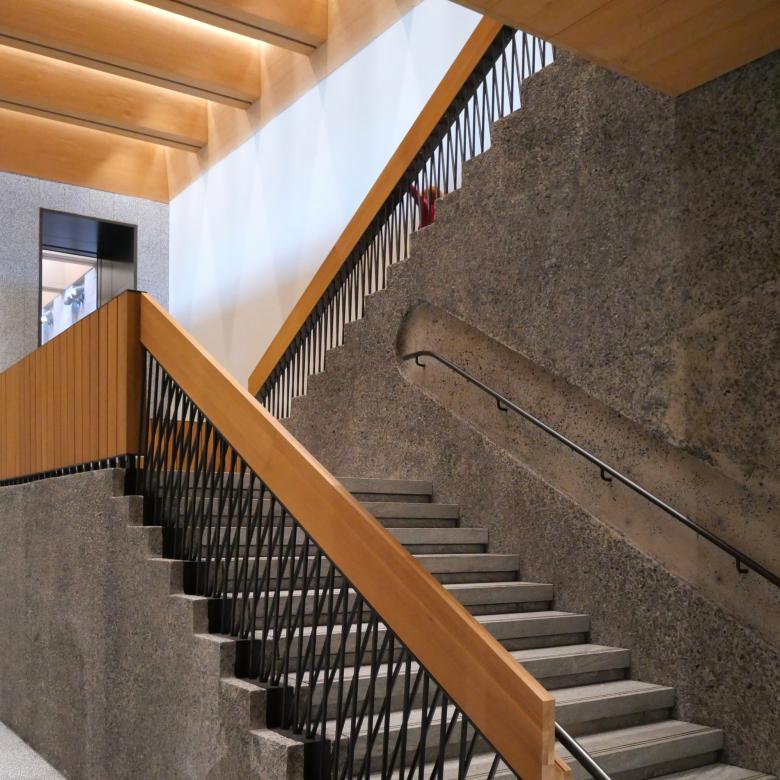
The interior's minimal palette of dark concrete with exposed aggregate, wood, and black metal is visible at the stair leading to the second floor. (Photo: John Hill/World-Architects)
With its location at the nexus of the north-south and east-west circulation axes cutting through the building, the entrance hall was a hub of activity during the open house, thanks also to the art displayed at its periphery. (Photo: John Hill/World-Architects)
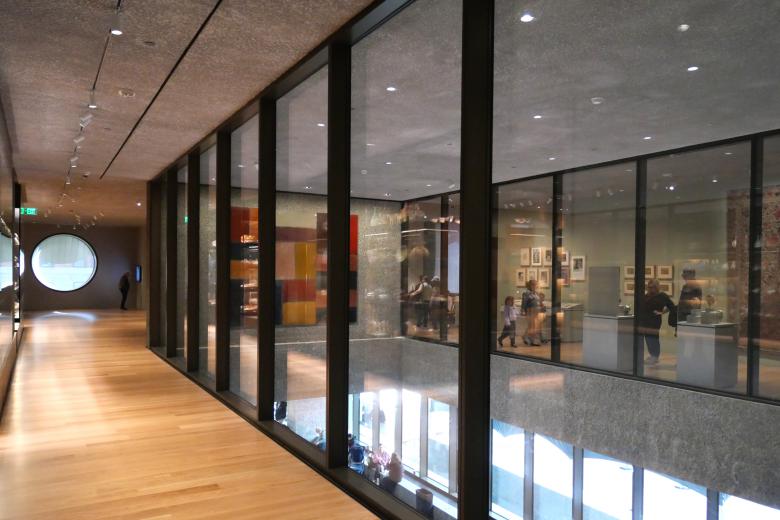
Movement across the second floor isn't limited to art—the architecture also has orienting views to the first floor (at right) and to the campus via the “lens moments” (left, in the distance). (Photo: John Hill/World-Architects)
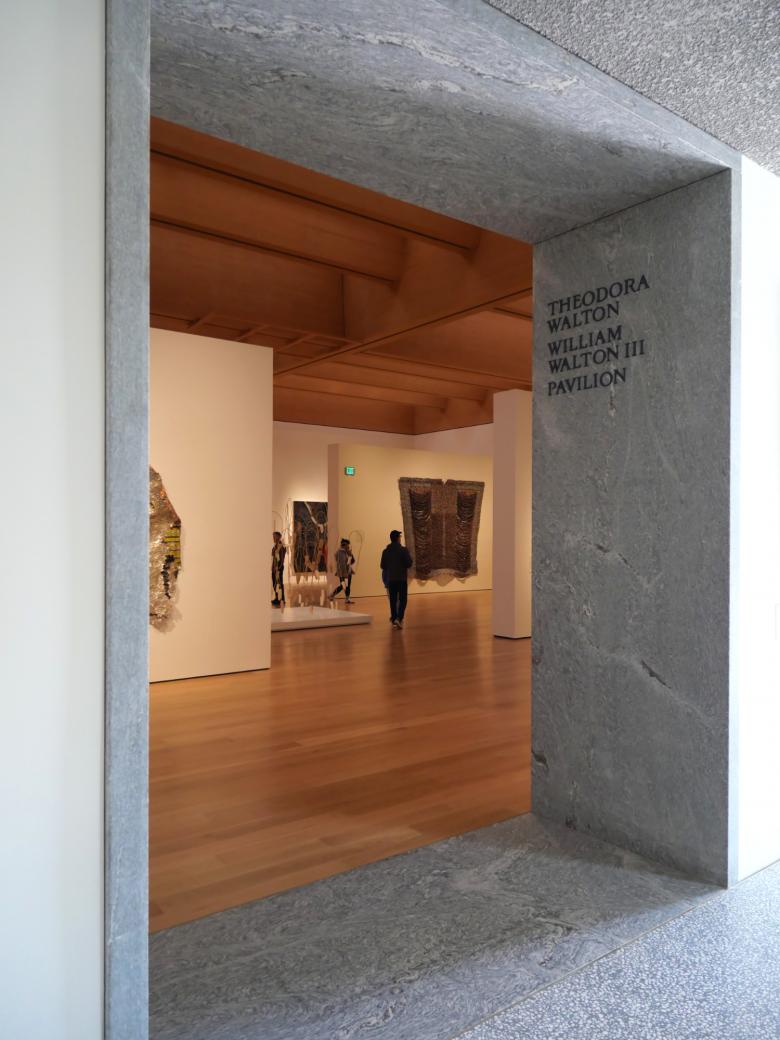
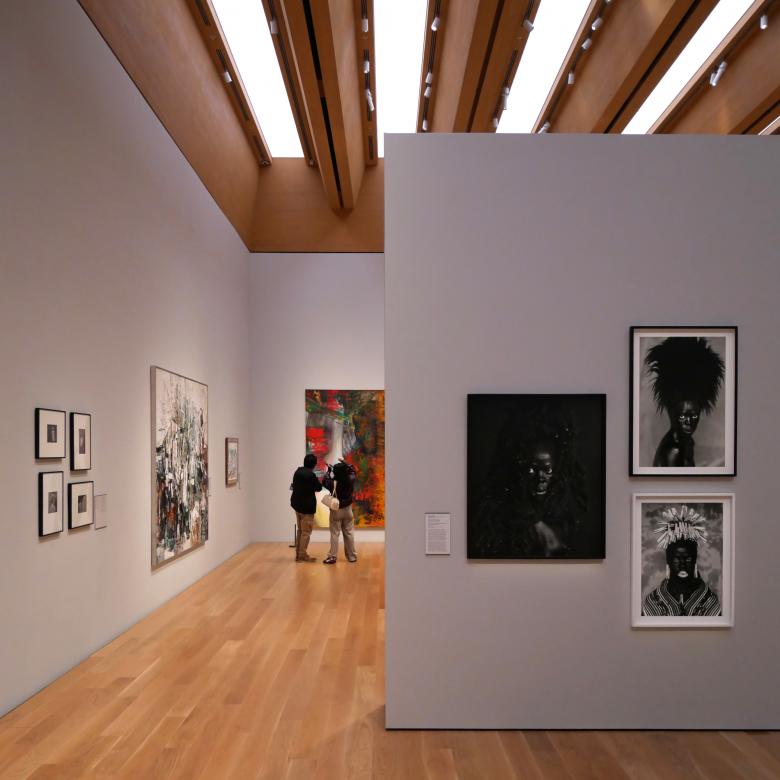
The building is laid out as nine pavilions in an irregular grid, with Marquand Library serving as one, a conservation studio in another, and seven devoted to galleries. Movement into a pavilion happens via thick thresholds, as in the gallery devoted to modern and contemporary art seen here. (Photo: John Hill/World-Architects)
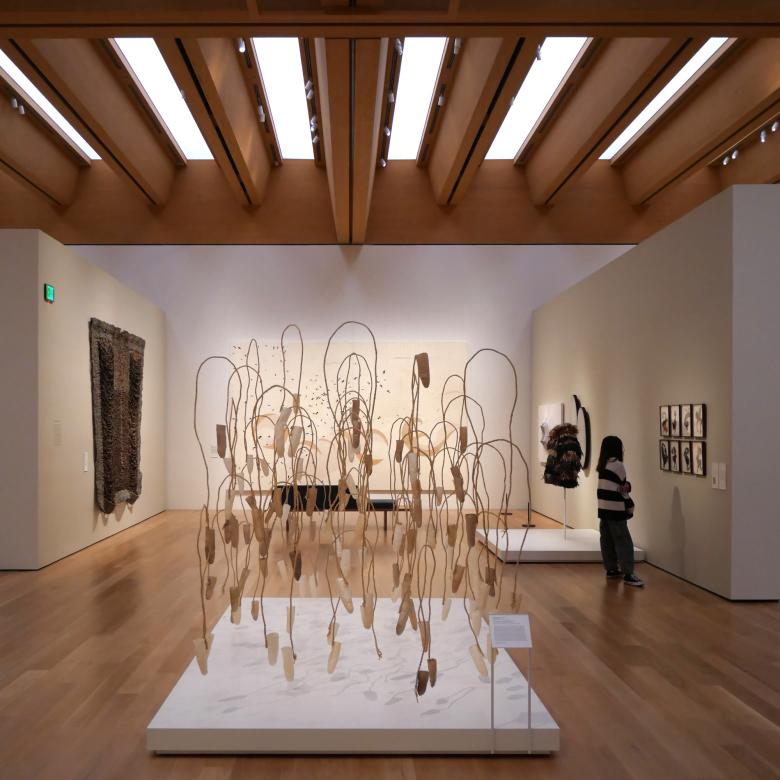
Just as consistent as the serrated concrete panels outside are the wood ceilings that bring diffuse natural light (via solar tubes on the roof) to the galleries. (Photo: John Hill/World-Architects)
The ceilings give a remarkably even lighting to the galleries; the space devoted to temporary exhibitions is seen here. (Photo: John Hill/World-Architects)
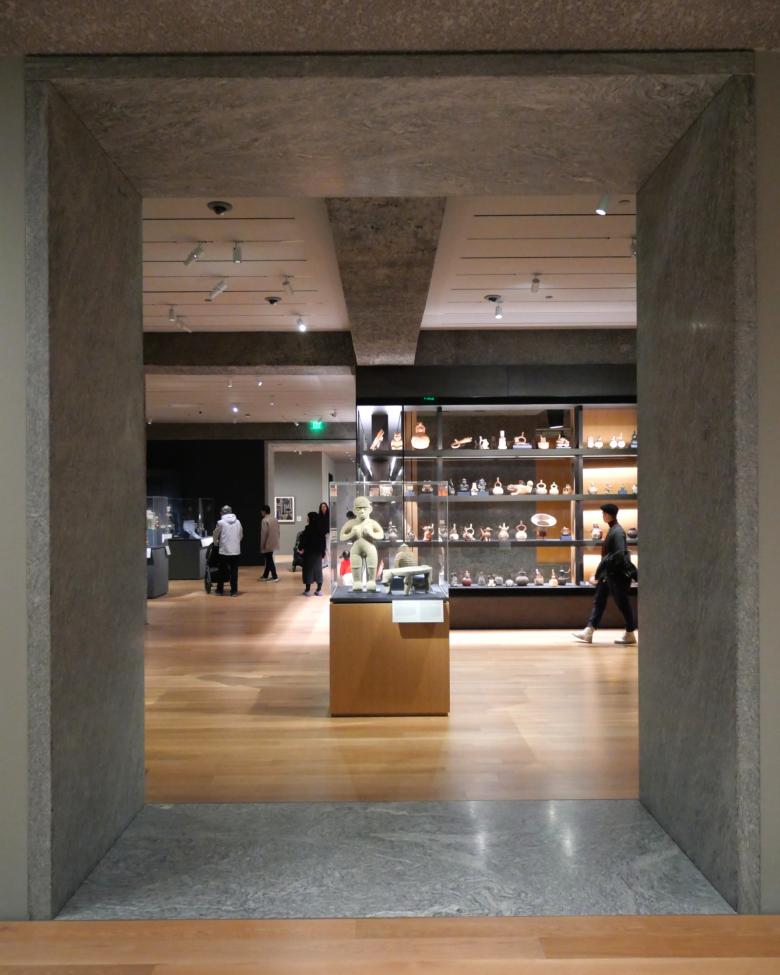
Lower ceilings predominate in the center of the plan, as in the Art of the Ancient Americas gallery seen here through another portal. (Photo: John Hill/World-Architects)
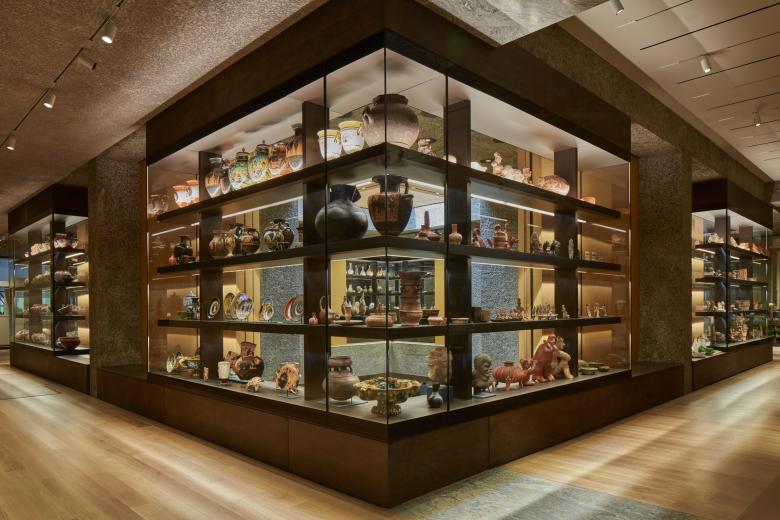
Display cases abound in the Art of the Ancient Americas gallery, their four corners defining the upper extents of the two-story Grand Hall. (Photo: Richard Barnes, courtesy of the Princeton University Art Museum)
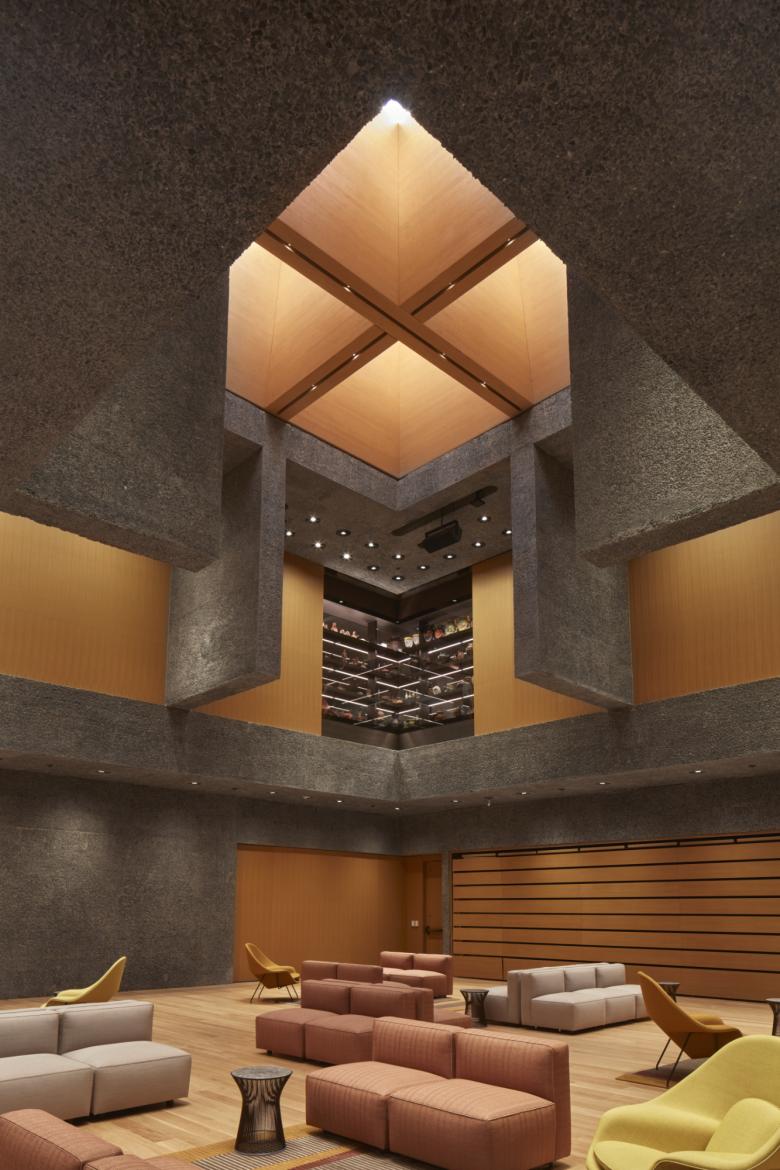
Seen from the first floor, the Grand Hall is a suitably grand space whose structure is reminiscent of Louis I. Kahn; note the display case in the distant corner. (Photo: Richard Barnes, courtesy of the Princeton University Art Museum)
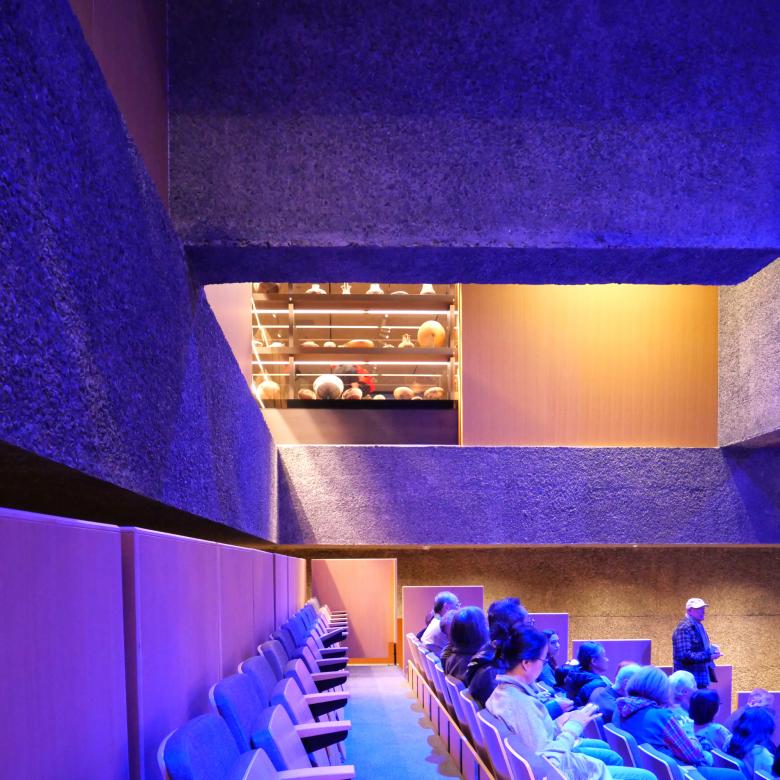
A musical performance was held in the Grand Hall on the afternoon of November 1, with tiered seating allowing one to get close to the concrete structure and corner display cases. (Photo: John Hill/World-Architects)
The stair to the third floor is detailed similarly to the one from the first floor seen earlier, but with few program spaces upstairs it is a less traveled route. (Photo: John Hill/World-Architects)
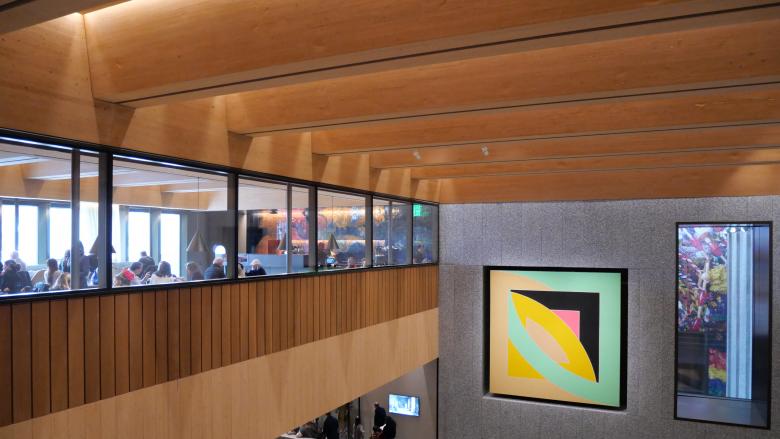
The main reason to go the third floor is Mosaic Restaurant (through glass wall at left), which opened on November 1. (Photo: John Hill/World-Architects)
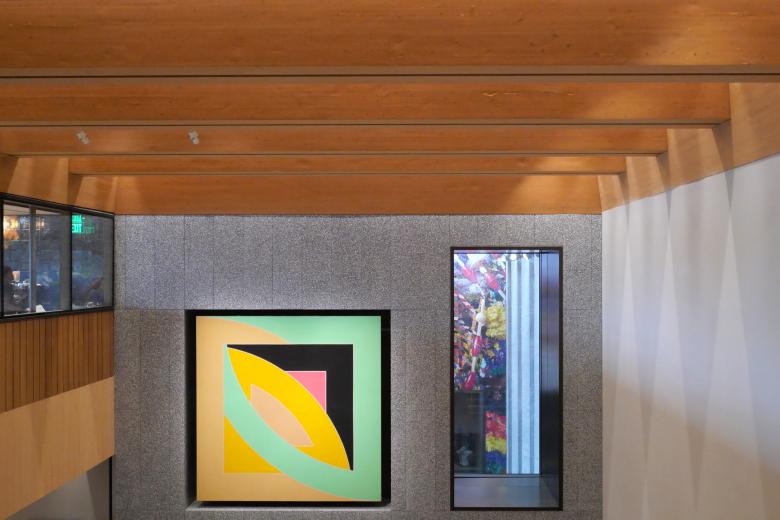
The landing on the third floor has a great view of Frank Stella's River of Ponds II (1969) as well as… (Photo: John Hill/World-Architects)
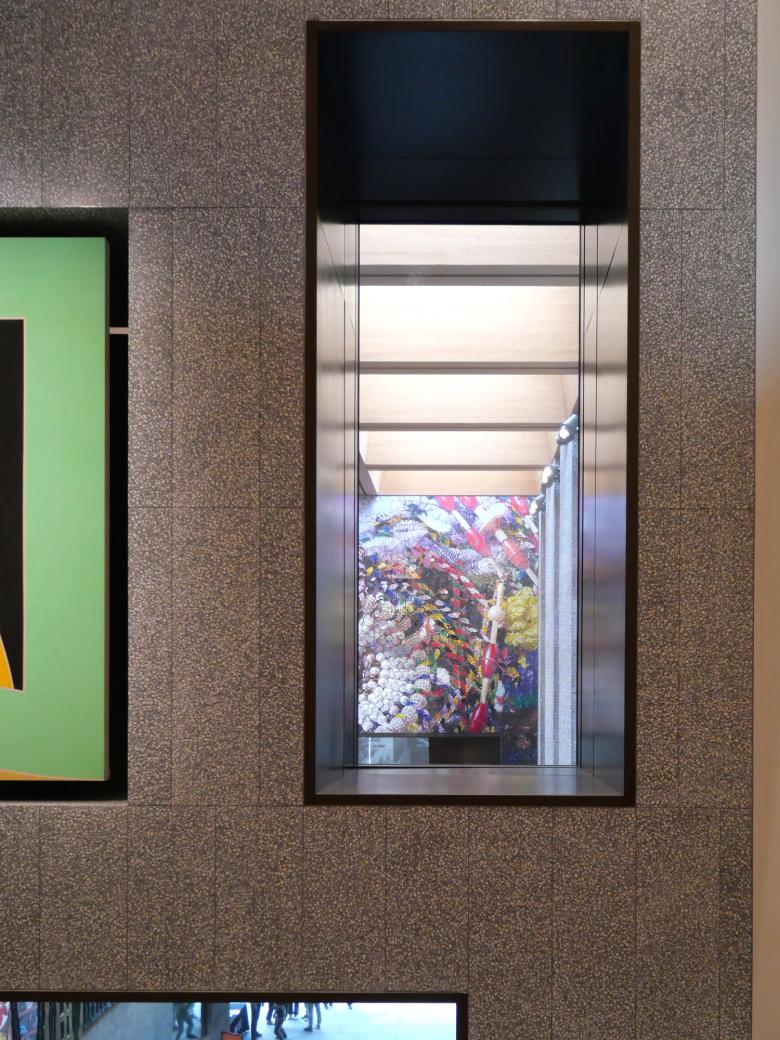
… yet another view of Nick Cave's impressive mosaic in the entrance court. (Photo: John Hill/World-Architects)