RIBA's Inaugural Middle East Awards

The Inaugural RIBA Middle East Awards has recognized nine winning projects across Saudi Arabia, Qatar, and the UAE, celebrating the region’s best new architecture. Jumana Naim reports on the winners from Dubai.
The Middle East has unveiled some of the most jaw-dropping projects and architectural marvels in recent years, from the grand, waterfront Louvre Abu Dhabi to the intricately designed and sustainability cautious Expo 2020 pavilions. The Royal Institute of British Architects (RIBA) has taken notice, revealing nine winning projects of its inaugural RIBA Middle East Awards last week, which recognizes the best of the region’s new architecture.
From inspiring new civic spaces to sustainable places for learning and community, the winning designs show how architecture is reshaping the future of the built environment in the region, while celebrating the architectural ambition and diversity of the Middle East. Spanning the United Arab Emirates, Saudi Arabia, and Qatar, jury members agreed the winning projects excelled in their respective categories, bringing sensitivity to context and designing with integrity to heritage, landscape, and culture in mind.
“[These projects] translate universal architectural virtues, clarity, performance, and longevity through a distinctly regional intelligence,” explains Kerem Cengiz, RIBA Jury Chair for the Middle East Awards and Managing Director of LWK + Partners. “The work resists spectacle for its own sake, aiming instead for cities that are more walkable, equitable, and shade-literate.”
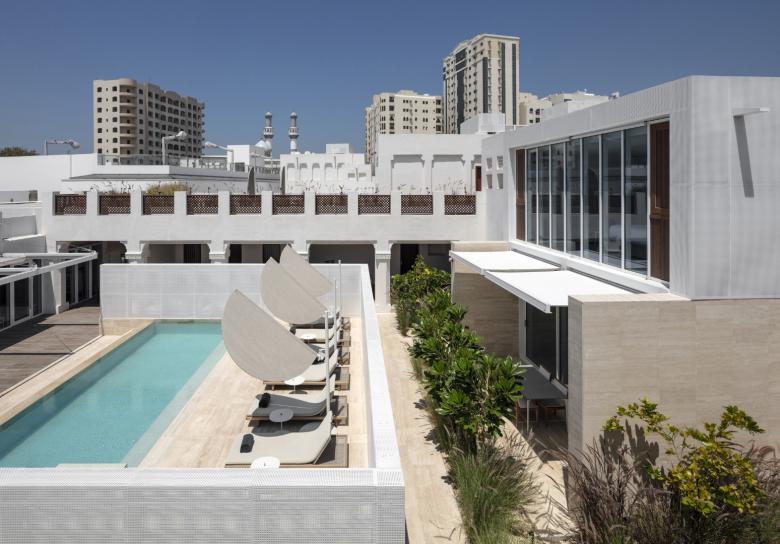
The Serai Wing, Bait Khalid Bin Ibrahim – Chedi Al Bait, designed by UAE-based architecture firm ANARCHITECT, came in as a champion in adaptive reuse by transforming two 1950s pearl-merchant homes into a serene boutique hotel, blending Sharjah’s rich past with contemporary comfort.
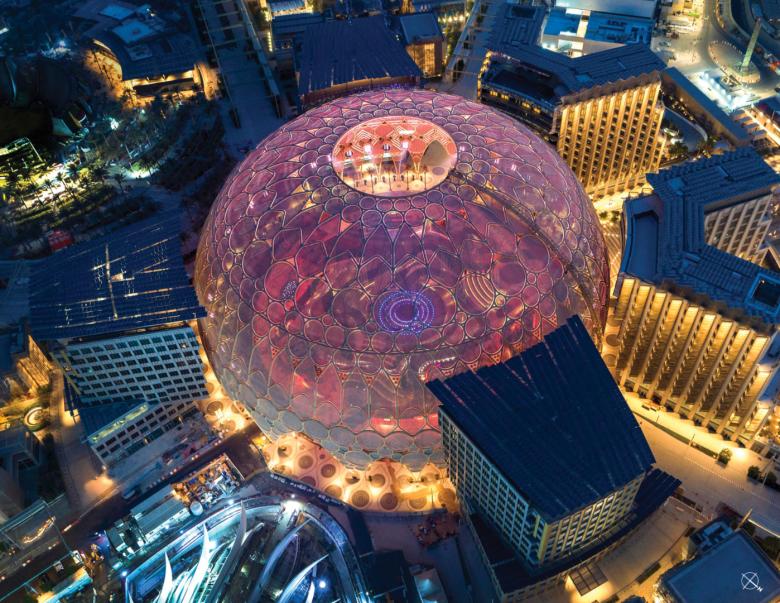
Al Wasl Plaza, the centerpiece of Expo 2020 Dubai designed by Adrian Smith + Gordon Gill Architecture more than five years ago, has been awarded under the “Design for Living” category for evolving into a vibrant community hub at the heart of Expo City post the world fair.
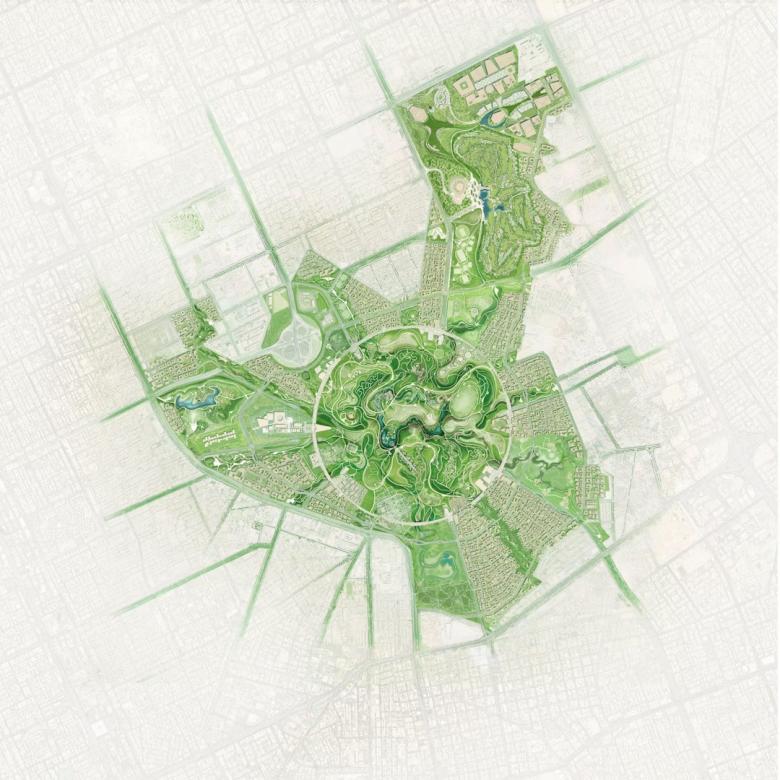
A “Future Project” winner, King Salman Park in Riyadh was masterfully transformed from a former airport to the world’s largest urban park. Gerber Architekten, who led the joint venture with two engineering partners, Buro Happold, and Setec, aimed to create a design to enhance biodiversity, improve air quality, and promote active, healthy living, as part of the Kingdom’s commitment to a more sustainable and liveable future.
“Amid Riyadh’s ongoing cultural and landscape transformation, I’m excited to see projects such as the Royal Arts Complex—with its National Theatre, museums, galleries, and vibrant public realm, signaling a durable civic turn for the city,” Cengiz adds. With so much talent and innovation on display, what exactly were the juries looking for when choosing the winners?
“[The projects] demonstrate disciplined responses to climate, culture, and community,” Cengiz says. “The Serai Wing at Bait Khalid Bin Ibrahim, for instance, shows renewal through restraint; Al-Mujadilah Center and Mosque for Women reframes inclusion with architectural dignity; King Salman Park advances the civic landscape as everyday commons,” he says, adding that above all, each project brings public value—spaces that invite participation, rather than mere admiration.
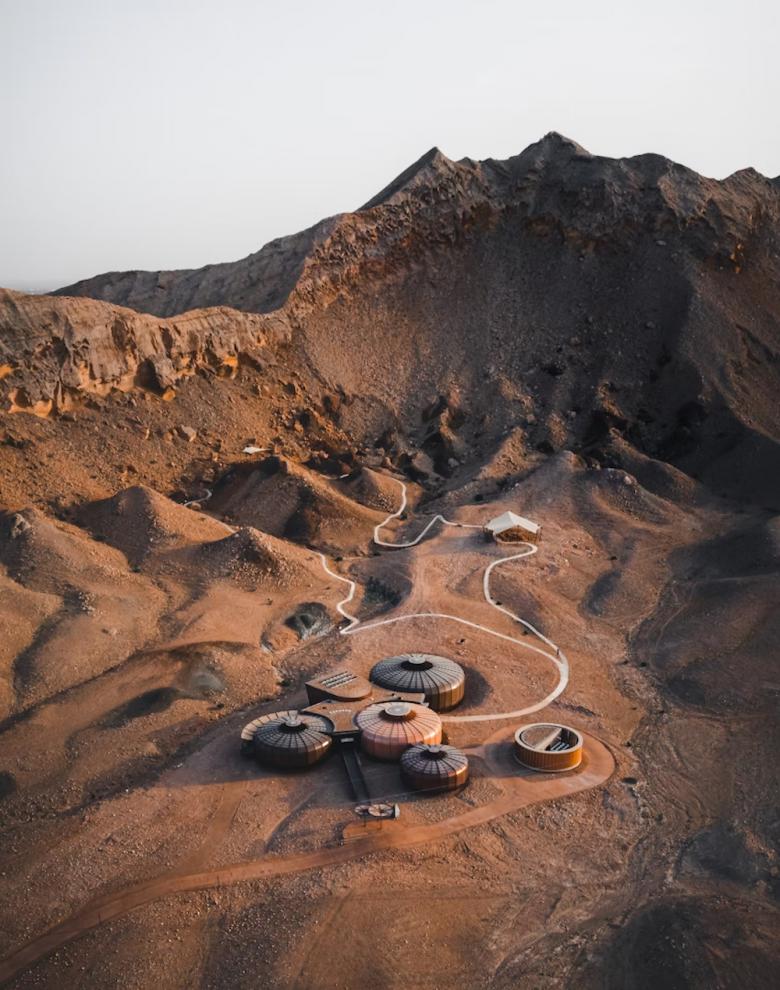
RIBA also celebrated its members Hopkins Architects with multiple wins. Set within a protected desert landscape, Buhais Geology Park brings the story of the earth to life through a series of striking, shell-like buildings inspired by fossilised sea urchins found on site. Designed to blend gently with the surrounding terrain, the centre allows visitors to explore the region’s ancient geology and fossils while preserving the fragile desert environment.
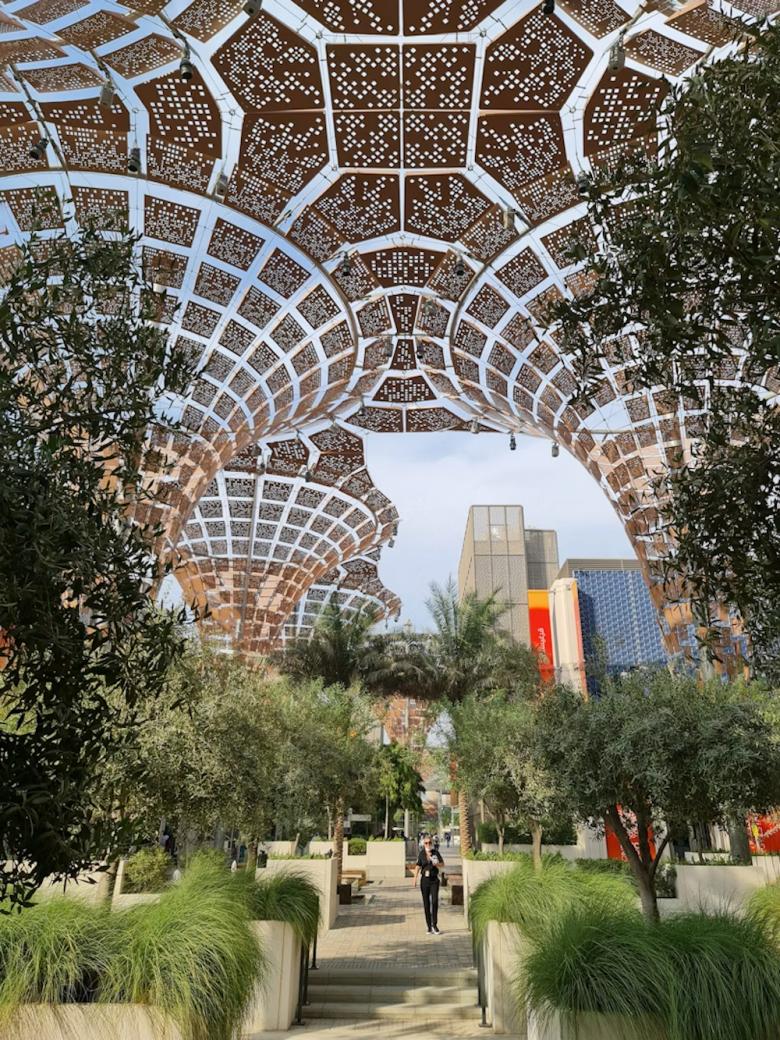
Also by Hopkins, the Expo 2020 Thematic Districts transformed the desert into a human-scaled, walkable city inspired by traditional Arab urbanism. With shaded courtyards, tree-lined streets, and adaptive reuse at its core, the project has seamlessly evolved into a thriving mixed-use quarter for Dubai’s future.
“What makes Middle Eastern and Arab architecture distinguishable from that of the rest of the world is a calibrated conversation with light, shadow, and hospitality. Courtyards, sikkas, arcades, and contemporary mashrabiyas translate climate into spatial comfort and privacy,” Cengiz says. “Materials are tactile; facades trade glare for depth; urban rooms balance monumentality with intimacy.”
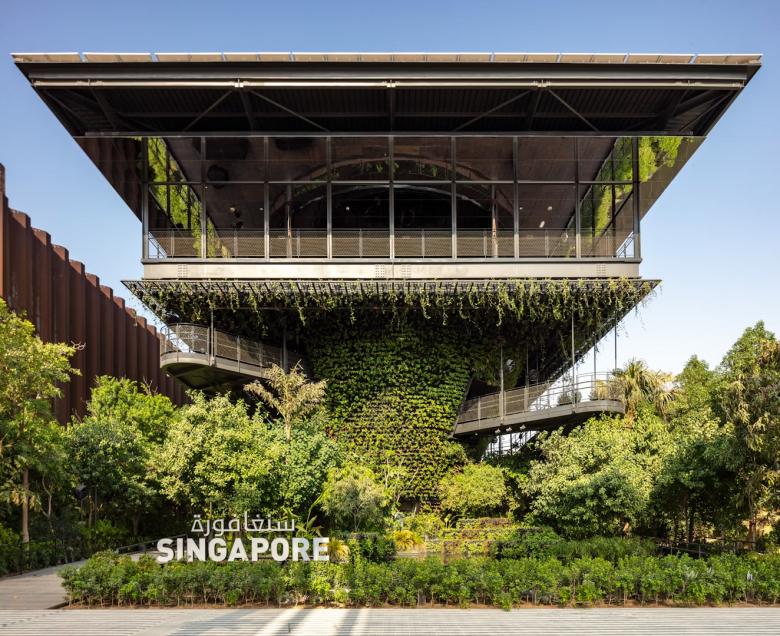
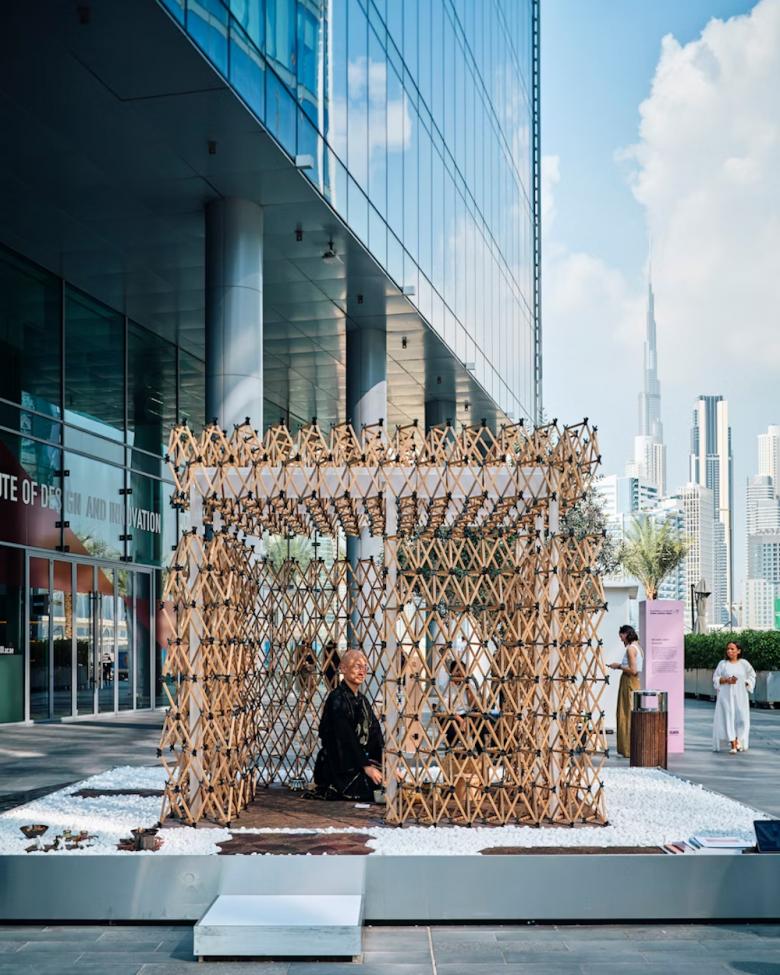
Temporary architecture also had its moment. The Singapore Pavilion at Expo 2020 Dubai by WOHA transformed the desert into a lush oasis of vertical gardens, achieving net-zero energy and water use with recyclable materials, while Mitsubishi Jisho Design’s ARABI-AN, the Dubai edition of the World Food Waste Teahouse, used tea leaves and dried fruit to form the world’s first food concrete structure.
“The projects recognized in the RIBA Middle East Awards show architecture’s growing influence in shaping how people live, learn, and come together across the region,” Chris Williamson, RIBA President, says. “They celebrate progress, not only in design and technology, but in how buildings can create opportunity, inclusivity, and lasting cultural value.”
Conceived by Her Highness Sheikha Moza bint Nasser and designed by Diller Scofidio + Renfro, social architecture winner the Al-Mujadilah Center (pictured at top), is the world’s first purpose-built contemporary women’s mosque, designed to foster equality and community engagement. Flooded with natural light across a grand prayer hall and classrooms, the centre boasts a courtyard and flexible spaces to support education, skills development, and inclusive worship, marking a transformative shift in religious spaces across the region.
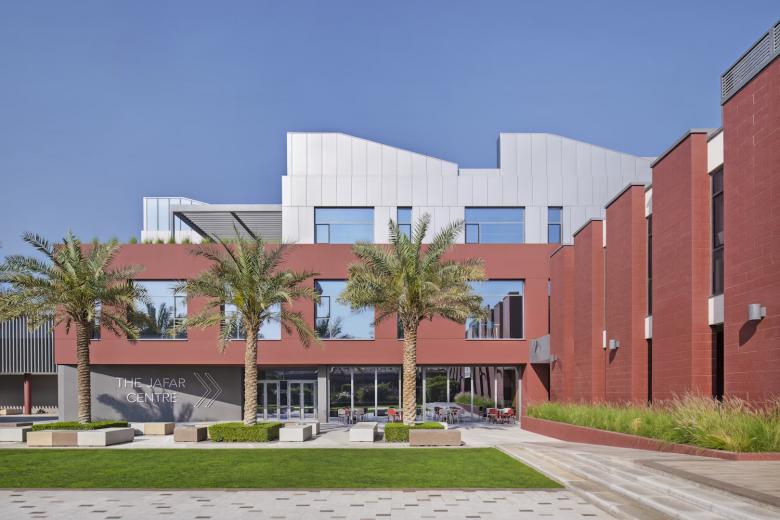
From social to the sustainable, the Godwin Austen Johnson designed Jafar Centre at Dubai College successfully replaced underused space in the Al Sufouh area of the city with its compact vertical building. Delivered with minimal disruption, the building prioritizes daylight, acoustics, thermal comfort, and sustainability, aiming for LEED Gold certification.
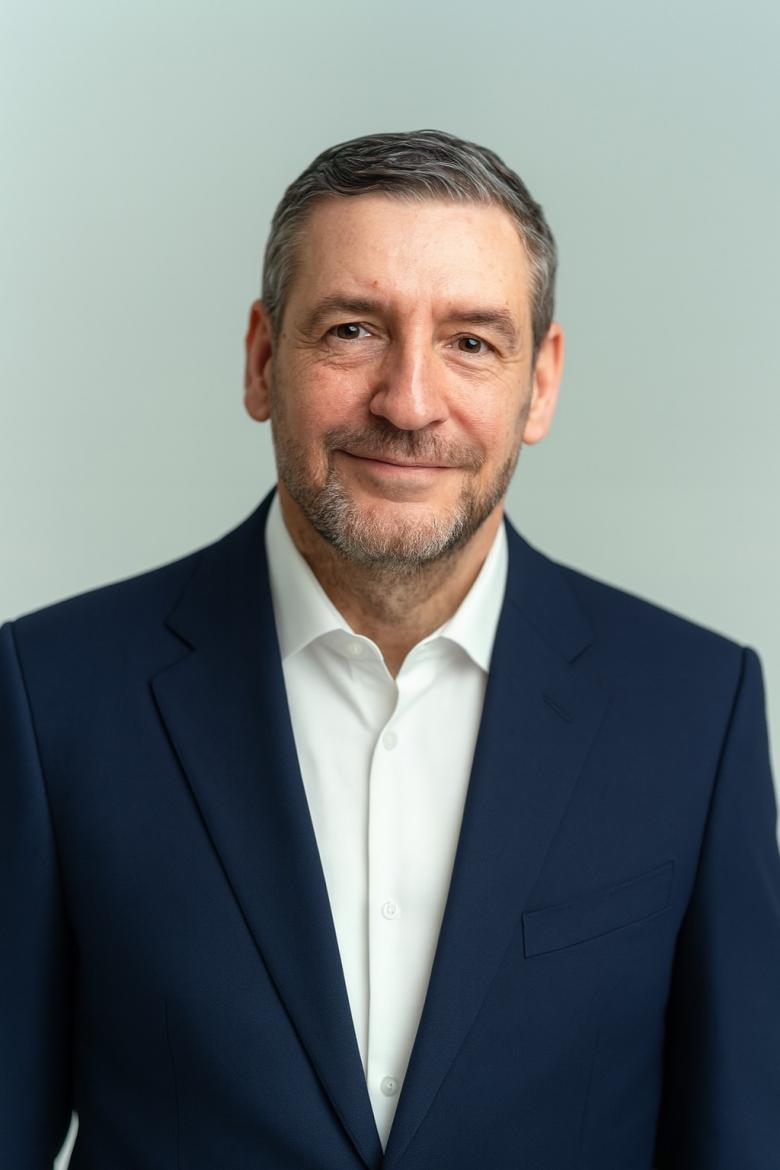
The agenda is maturing toward transit-supportive, mixed-use urbanism, says Cengiz, when asked about what projects in the Middle East are getting right. Delivery at scale, rising investment in landscape and public realm, serious digital capability, and clearer operational-carbon roadmaps are a few of the aspects bringing the region to the forefront of the architectural discourse.
And there’s plenty more to come. Regionally, momentum is visible with upcoming projects. In Saudi Arabia, Jeddah Historic District’s sensitive renewal is taking shape. Museums across the GCC are emerging as formidable players in the global cultural space, with Abu Dhabi’s Saadiyat Cultural District introducing three new behemoth institutions, including Guggenheim Abu Dhabi, Zayed National Museum, and Natural History Museum Abu Dhabi.
Elsewhere in the Gulf, Doha is preparing for the Art Mill Museum and Lusail Museum, while Cairo’s Grand Egyptian Museum has officially opened its doors this month with an impressive structure in the heart of Giza. Other notable projects include the historic Cairo city upgrades, Abu Dhabi’s Mina Zayed waterfront re-making, Oman’s Botanic Garden and The Sustainable City – Yiti projects, and the re-purposing of Dubai’s Expo City.
“This combination of cultural specificity and transferable principles reads as globally consequential, setting benchmarks that travel well beyond the region,” says Cengiz. While the region is undoubtedly competing with global standards, Cengiz adds that the Middle East market still has plenty room to mature. “The next frontier is everyday buildings that perform beautifully without heroics—affordable, adaptable, and measured in lived quality as much as kilowatt-hours.”