Utopia Parkway on Rue de Castiglione
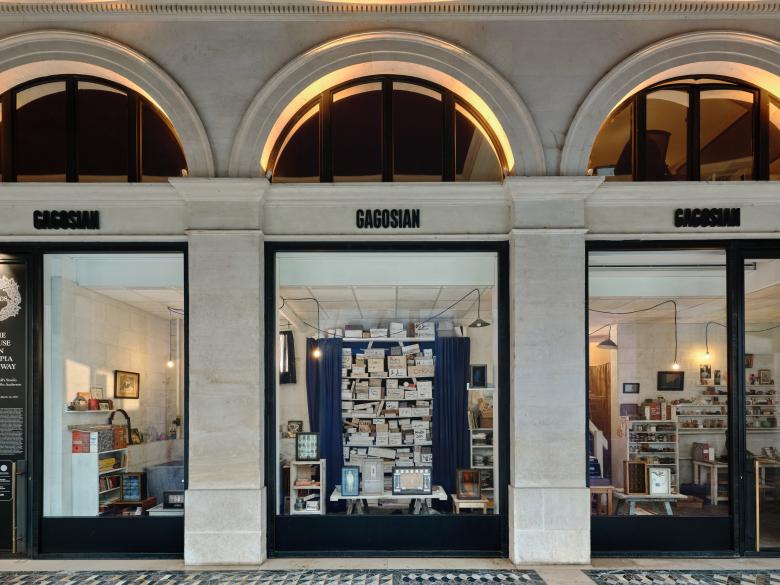
Wes Anderson speaks with Gagosian about the jewel box-like recreation of artist Joseph Cornell's studio from the basement of his house on Utopia Parkway in Queens to the gallery's storefront windows at 9 rue de Castiglione in Paris.
How to stage Joseph Cornell's famous boxes and collages is a perennial question for museums and galleries that is often answered with minimalism: off-white or colored walls as backgrounds, with spotlights that allow the artworks to stand out from the often darkened surroundings. Filmmaker Wes Anderson and curator Jasper Sharp took a dramatically different approach, using Anderson's team of production artists to recreate Cornell's cluttered and dusty Queens studio as settings for the artist's finished boxes of found objects. A Dressing Room for Gille (1939), Pharmacy (1943), and a few other boxes sit in the foreground of the three storefront spaces, but it's the carefully crafted fake studio that garners the most attention of passersby. In the 8-minute film at bottom, Anderson discusses his first encounters with Cornell's art, its influence on his films, and how they pulled off the highly detailed recreation.
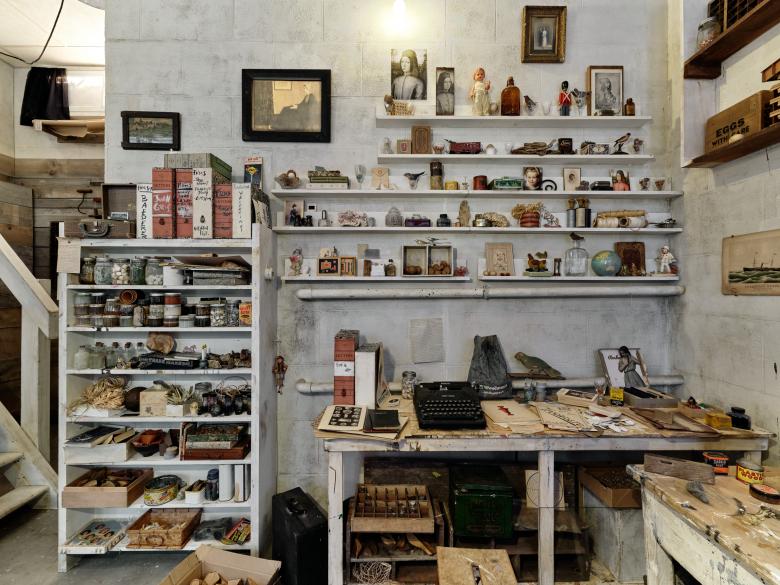
The House on Utopia Parkway: Joseph Cornell’s Studio Re-Created by Wes Anderson is on display at Gagosian (9 rue de Castiglione, Paris) from December 16, 2025 until March 14, 2026. The exhibition was conceived by curator Jasper Sharp with Anderson and is the first solo presentation of Cornell’s work in Paris in more than four decades.