Temporary Illumination of Manpuku-ji
Gokasho, Sanbanwari - 3 4, Kyoto, Japan
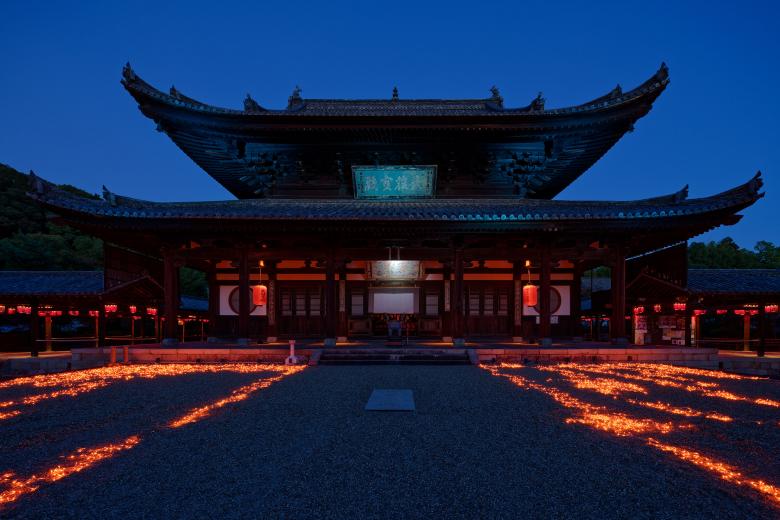
Ōbaku-san Manpuku-ji Temple, founded in 1661 by Zen master Ingen Ryūki, is a Chinese Ming Dynasty-style temple complex. Recently declared a National Treasure, its entire precinct is meticulously designed as a "big dragon"—a magnificent concept that has remained largely unknown until now.
This art project deliberately avoids mere decoration. Instead, light alone – much like a manga drawing or a painting on a jet-black canvas – highlights the temple gardens and buildings. It aims to reveal the "full form of the dragon," which is invisible in daylight, by illuminating it in the dark of night, thereby visualizing the temple as envisioned by Zen master Ingen for contemporary visitors.
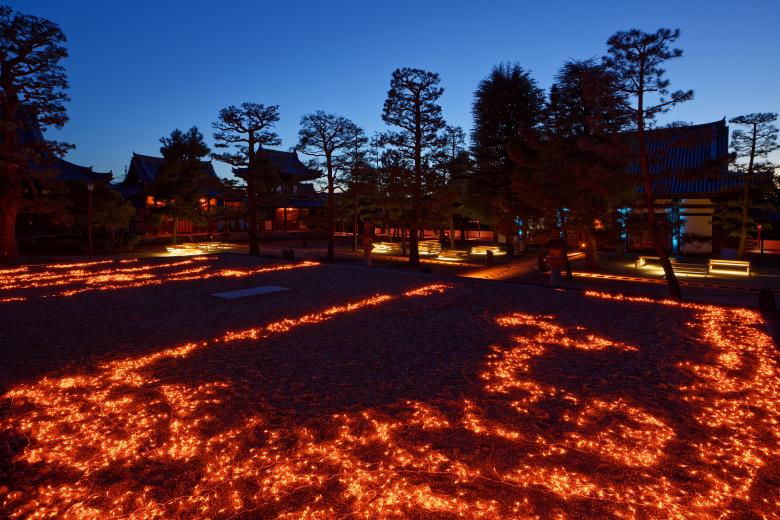
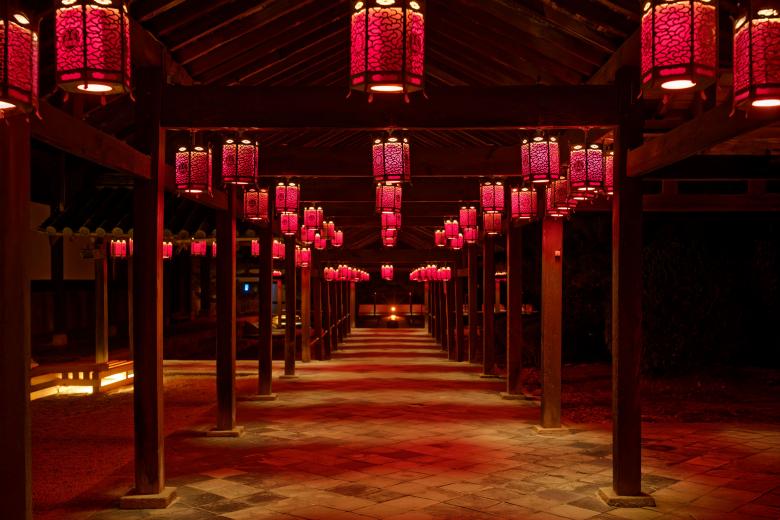
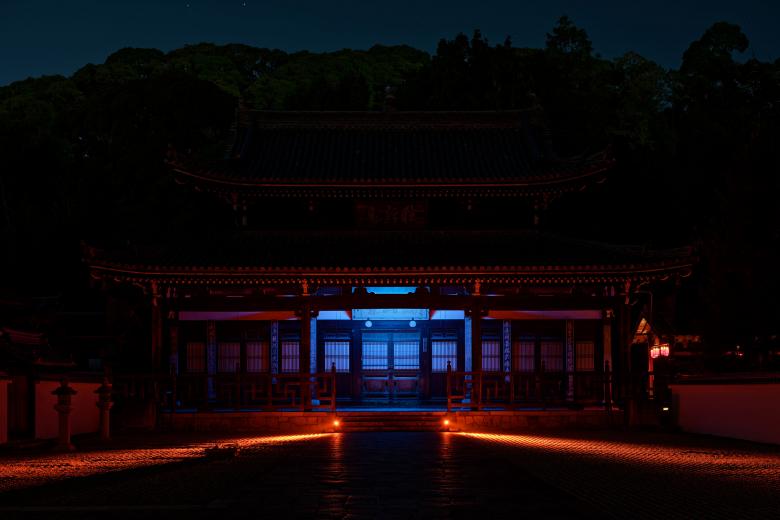
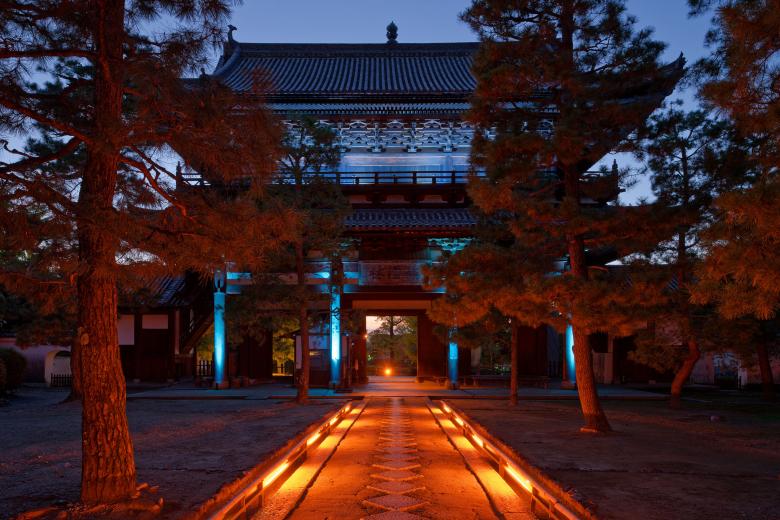
The dragon, whose shape is laid out in the ground plan of the complex, becomes vividly visible at night through this illumination. Four colors are artfully employed: Amber and red lights, reminiscent of the element of fire and symbolizing central connections, trace the dragon's form by illuminating tiled walkways (scales), the accordion-fold ceiling (belly), and stone pathways (back). A warm amber glow also hints at the 'Golden Path' and the dragon's divine connection. Blue light, representing the sky, highlights the National Treasure buildings and other special features, creating an image of the dragon dancing in the heavens. White light, embodying the element of air, fills the spaces in between. Twenty-four types of lighting fixtures, including 3,000 lanterns, render a three-dimensional depiction of the dragon.
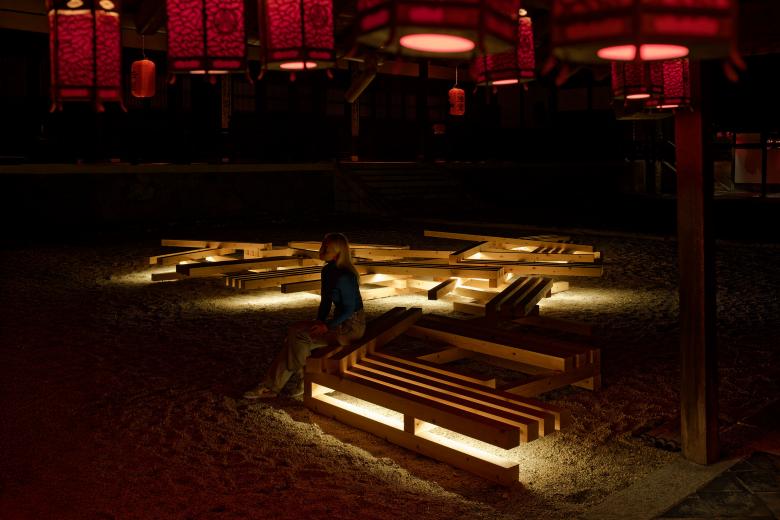
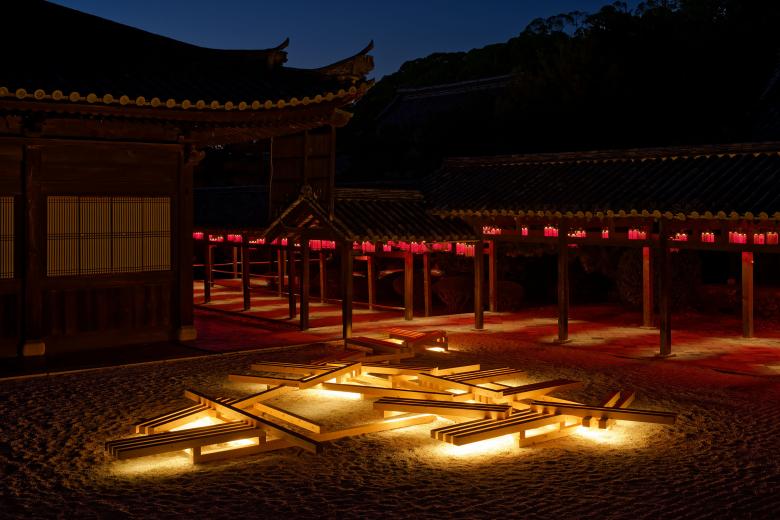
"Light benches," crafted from 400 pieces of Kyoto cypress timber, serve as footlights and represent the "clouds" enveloping the dragon. Installed in six locations within the precinct, these benches create serene spaces where visitors can quietly engage with the light installation.
Through this innovative light installation, Manpuku-ji Temple's profound narrative, embodied by the illuminated dragon, is vividly revealed to contemporary visitors.
The temple's gardens and buildings, which typically present themselves in their familiar form during daylight hours, are elevated to a new dimension by the light installation. Its objective is to bring to life the special aspects of the overall concept – the dragon stretching across the entire complex – at night, like a manga drawing or a painting on a dark canvas. Concurrently, carefully selected details are accentuated, shaping the experience and the unique character of the temple complex.
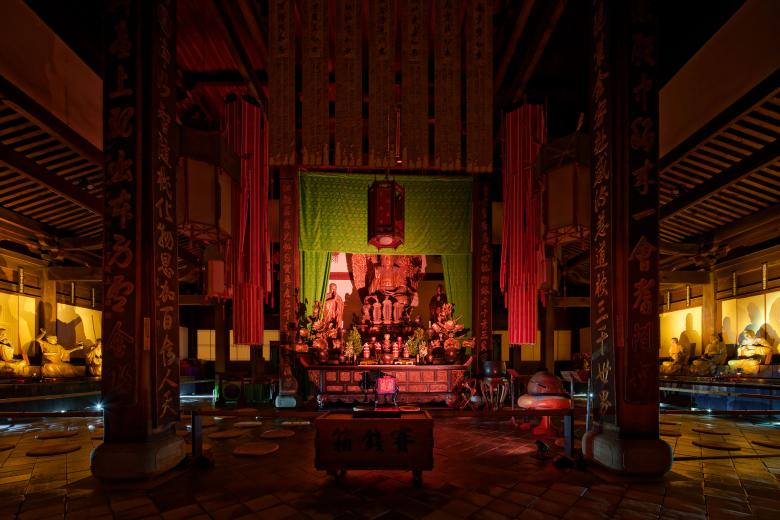
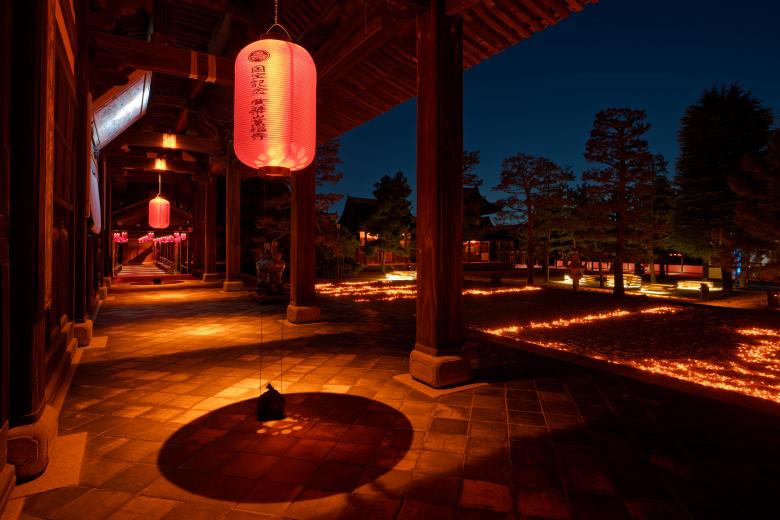
Covered main pathways are bathed in red light by 570 lanterns, symbolising the element of fire.
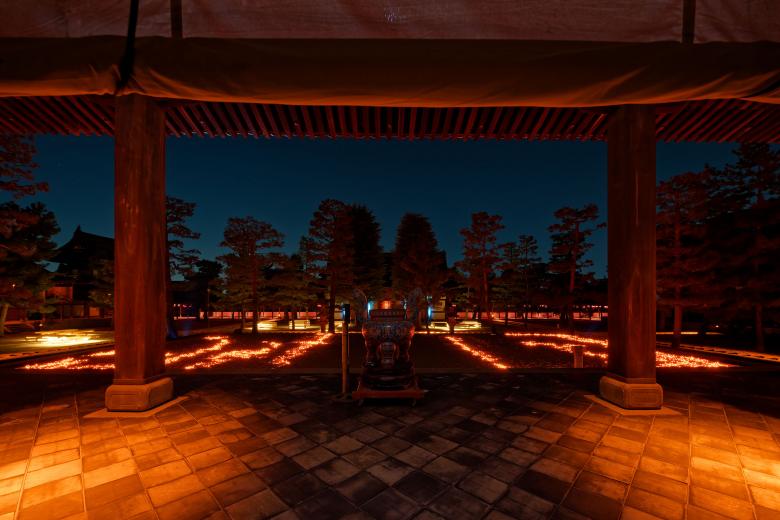
Outdoor pathways are dramatically staged by a low-level grazing light. Here, the distinctive stone tiles prominently emerge due to their pronounced plasticity and nuanced shading. They form the so-called 'Golden Path' – its colour, a sign of divine connection, appears as an amber hue in the warm glow of the fire, thereby tracing the dragon's form.
In the central open space, the otherwise ordered light structure dissolves into a seemingly random, chaotic formation of countless small points of light, creating a captivating contrast to the rigid geometries. Its form embodies the dynamic mutability of elemental forces such as water, fire, and air.
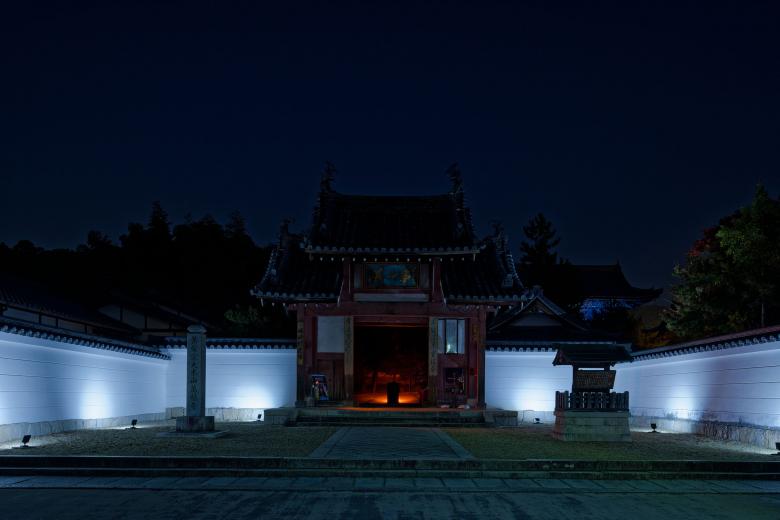
The buildings, with their distinctive roof structures and calligraphic inscriptions, are highlighted by blue light. Upwards, they appear to dissolve into the sky, their colour thereby symbolising the expanse of the firmament.
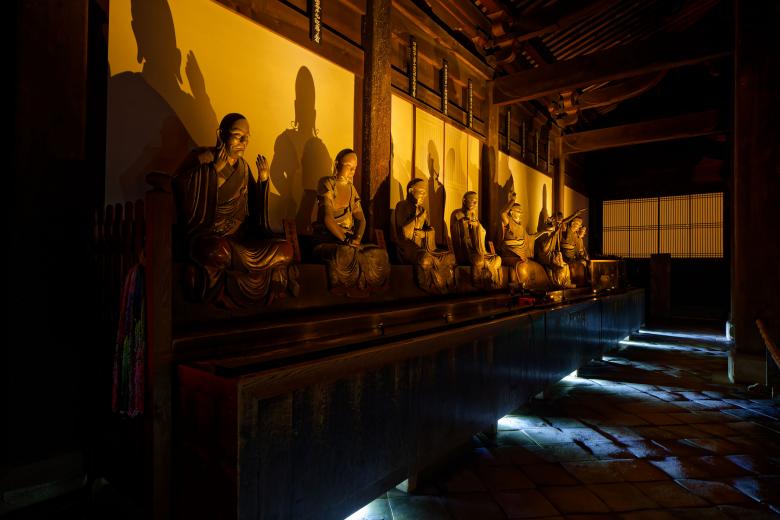
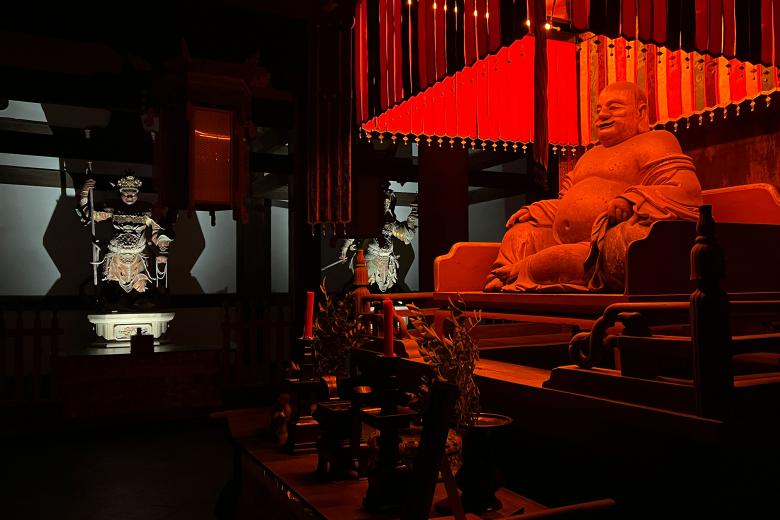
The unique statues within the buildings, often only dimly discernible by day, are mostly illuminated from below and at night emerge in gold and amber.

- Lighting Designers
- DAY & LIGHT LIGHTING DESIGN
- Year
- 2026
- Project Status
- Built
- Client
- Uji City, G8 Research Institute[社団所GG8 Research Institute
- Architects
- GENETO Architects