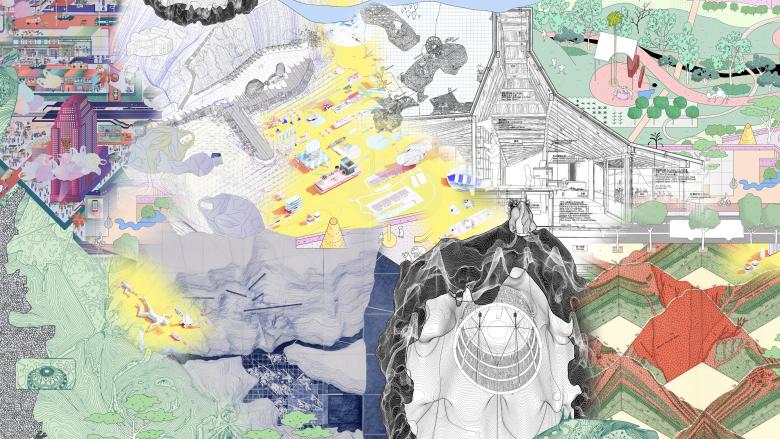
One component of the 2026 UIA World Congress taking place in Barcelona next summer is the UIA International Student Competition, Catalysts of Resilience, which launched in July and “invites students to design spatial interventions that enable resistance and adaptation to predictable threats related to political shifts, social transformations, and climate change.”
There is less than one year until the UIA World Congress of Architects 2026 Barcelona (UIA2026BCN), taking place from June 28 to July 2, 2026, under the theme Becoming: Architectures for a Planet in Transition. Under the leadership of its curatorial team, the Congress will consist of lectures, conferences, debates, round tables, student workshops, an exhibition, and a catalog. Comprising part of the exhibition will be the winners of Catalysts of Resilience, the UIA International Student Competition that was announced on July 15 and is now open for registration.
Per the announcement, participants in the single-stage competition “will be challenged to design spatial interventions that enable resistance and adaptation to predictable threats related to political shifts, social transformations and climate change, among other concerns. This competition asks students to think beyond conventional design methods, using time as a design strategy to catalyze resilient futures.” Students are also encouraged “to think of architecture not as a final result, but as a dynamic and adaptive process. Rather than proposing static projects, participants are encouraged to consider careful, time-based processes of transformation that respect and nurture the physical and cultural realities of the chosen site.”
Accordingly, the participants—full-time registered students in architecture and related programs, who can be joined by students from other fields—are asked to submit three panels that address the Catalysts of Resilience competition theme as well as the overarching Congress theme of Becoming:
- Panel 1, Characterizing found sites: Participants should select a site that aligns with the competition theme. This could be a local place familiar to the participants or a distant one they wish to investigate. The site should be critically analyzed for its vulnerability and risk of collapse as well as for its potential to explore the idea of Catalysts of Resilience.
- Panel 2, Short-term proposed transformation: Students are asked to design a proposed transformation for the selected site in a short-term scenario, illustrating time-based strategies that increase resilience over time.
- Panel 3, Long-term evolution of Becoming: Design a proposed transformation for a long-term scenario, depicting a “finalized” state while still illustrating the time-based strategies that enhance resilience over time and into the distant future.
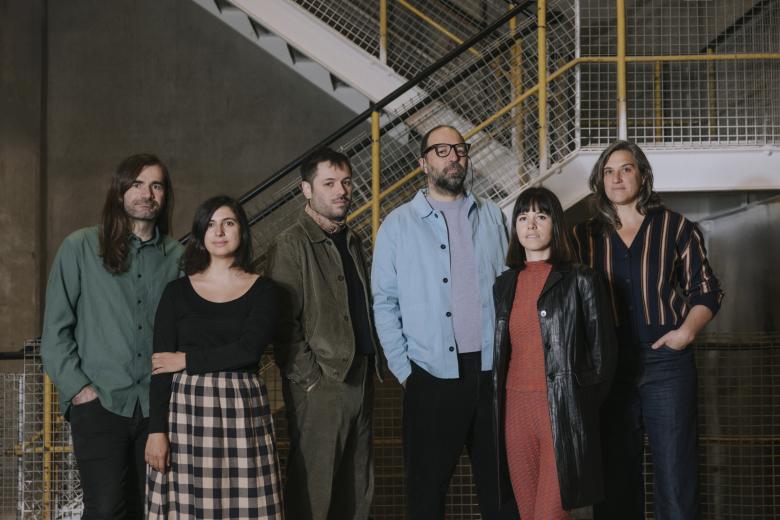
Many more details can be found on the International Student Competition website, but included below are the list of the international jury and the timeline for registration and submission. Five winners will be selected and receive prize money, a certificate, and free admission to the Congress, with travel expenses covered.
- Tatiana Bilbao (Mexico)
- Josep Ferrando (Spain, Jury President)
- Marianna Rentzou of Point Supreme (Greece)
- Sumayya Vally of Counterspace (South Africa)
- Wtanya Chanvitan from Bangkok Tokyo Architecture (Thailand and Japan)
- Two alternate jurors: Alejandro Vargas of Entropia Studio (Colombia) and Donn Holohan of Superposition (China)
- 15 July 2025 – Competition launch
- 15 September 2025 – Deadline for questions
- 24 September 2025 – Deadline for answers
- 07 November 2025 – Deadline for registrations
- 07 November 2025 – Deadline for submission of entries
- January 2026 – Announcement of results