Have You Kicked a Brutalist Building Lately?
Photo: John Hill/World-Architects
On a recent visit to the campus of the University of Wisconsin–Madison, World-Architects discovered the George L. Mosse Humanities Building, a lesser-known, endangered Brutalist building designed by Chicago architect Harry Weese that opened in 1969. With millions of dollars of deferred maintenance, UW–Madison and the State of Wisconsin are planning to demolish the large structure within the next few years and replace it with new academic buildings.
As I stopped in my tracks and starting taking photos of the large concrete and limestone building I happened upon while traversing the UW–Madison campus, a student asked me with a mix of sarcasm, “You like that building?” Soon after my visit, I learned the building I espied was the George L. Mosse Humanities Building, designed by Harry Weese, the architect best known for designing the stations of the Washington Metro in the United States capital in the 1960s.
If the DC Metro is beloved by residents and tourists alike, Mosse is liked by the occasional archi-tourist, like me, but derided by nearly every UW–Madison student: Generations of students have referred to the building—originally built to house the art, music, and history departments—as the “Inhumanities Building,” for its disorienting interior, poor heating and cooling, and deferred maintenance revealing itself in the deteriorated structure.
The building's poor maintenance record has led to current estimates of $70 million in repair costs and plans to instead spend $292.6 million to relocate the arts and music programs to other sites and tear down the block-long building. If all goes to UW–Madison's plan, that money will be allotted in the 2025-2027 budget and the university will move forward with their relocation and demolition plans—an unfortunate loss for both UW–Madison and 20th-century modern architecture.
Below are some photographs World-Architects captured while walking by Weese's Humanities Building, with information on the building provided in the captions.
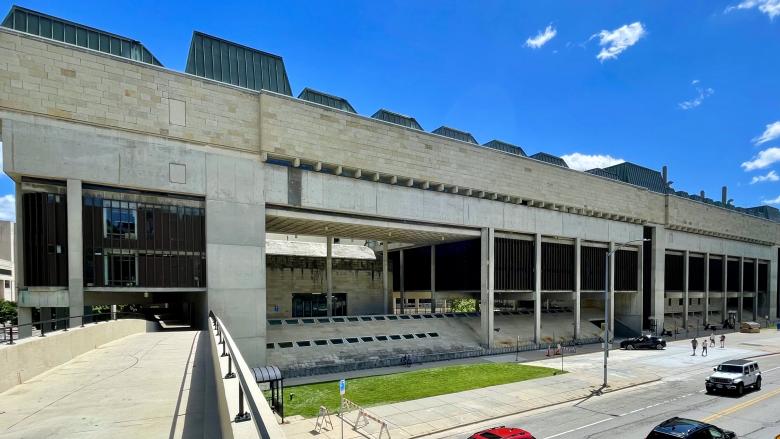
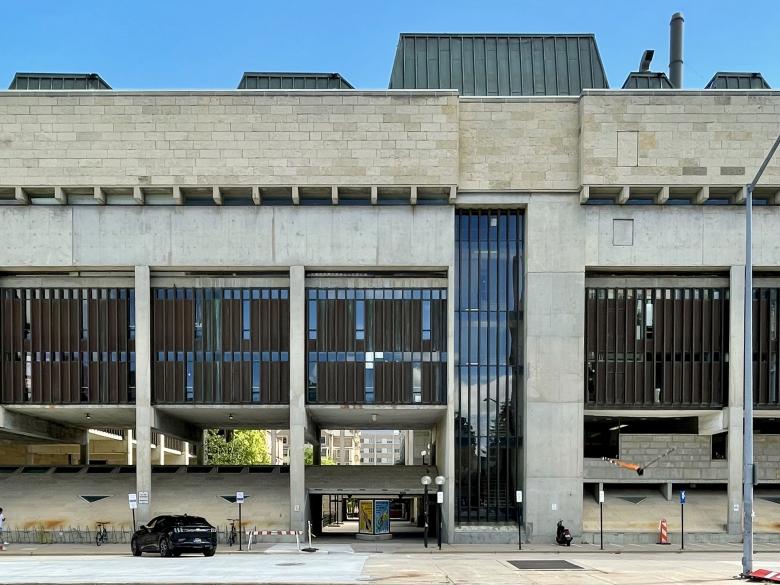
When Weese was hired in the 1960s, he rejected the university's master plan that placed each academic department in a separate tower, instead proposing a single horizontal structure—a megastructure spanning a full city block on Park Avenue opposite Bascom Hill, UW–Madison's historic quadrangle. (Photo: John Hill/World-Architects)
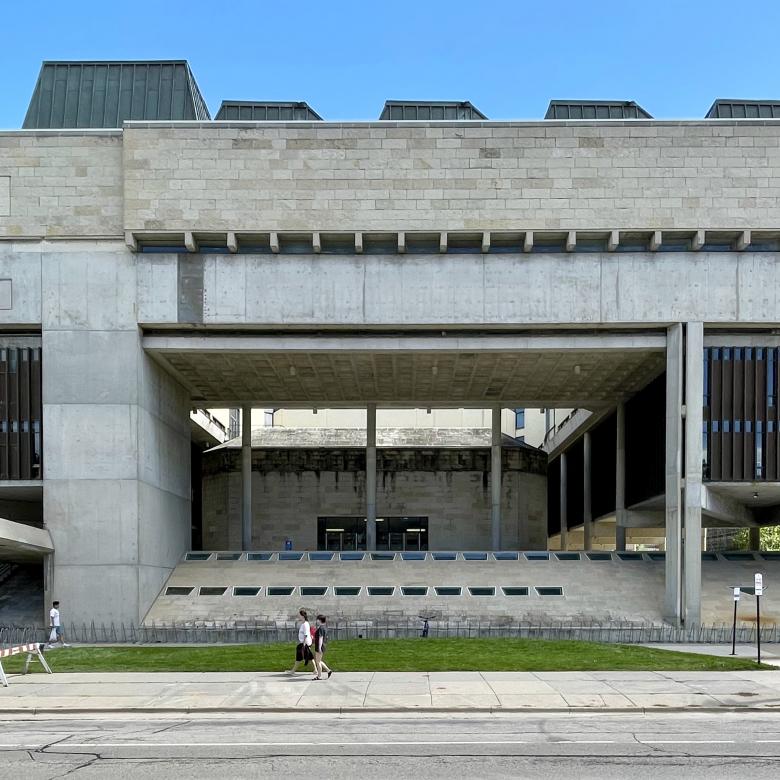
Weese located the programmatic elements in the 300,000-sf, seven-story building in horizontal layers: classrooms, practice areas, lecture halls, and performance spaces on the lower floors; office spaces in the middle three floors; and art studios and galleries in the top two floors. (Photo: John Hill/World-Architects)
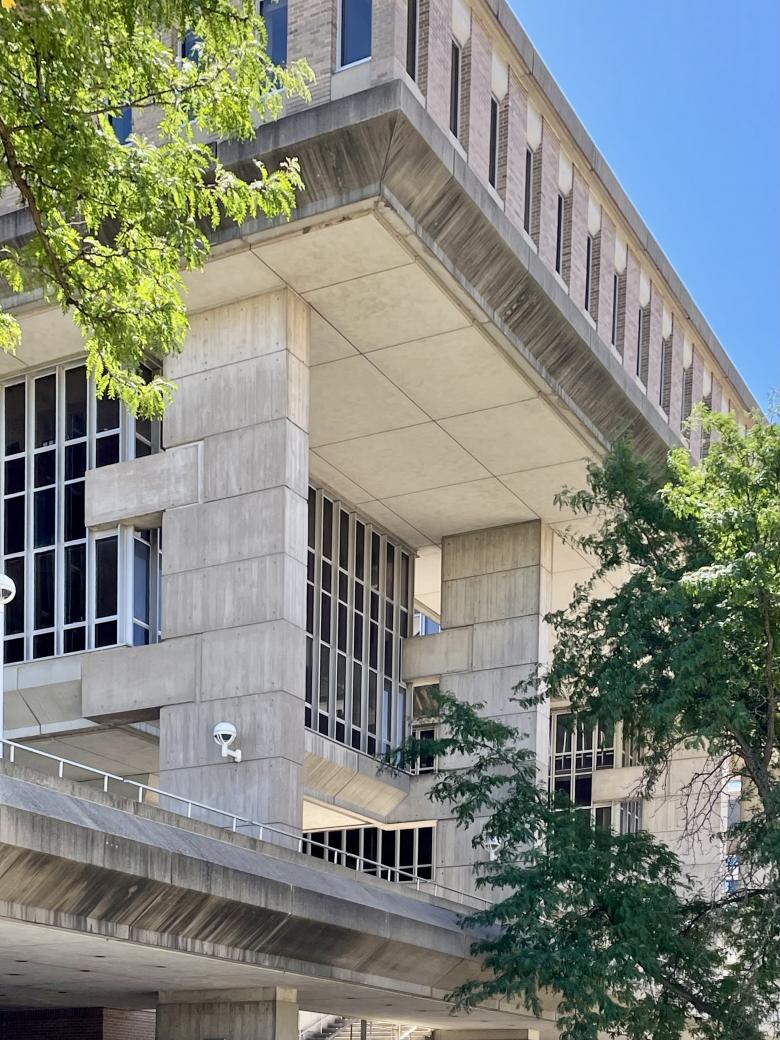
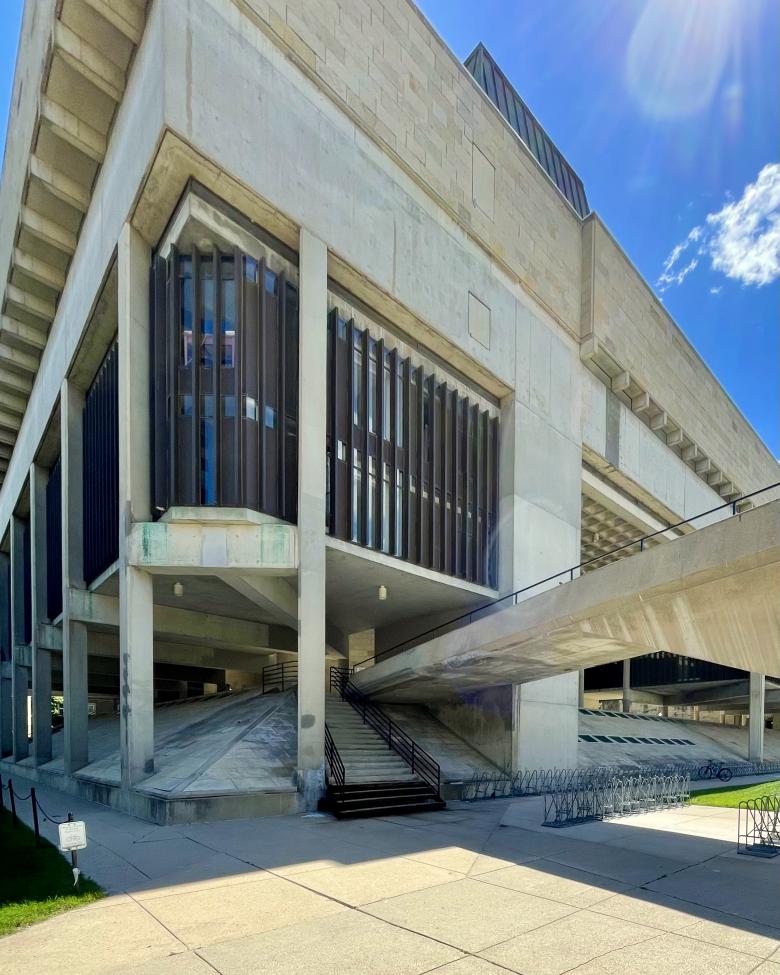
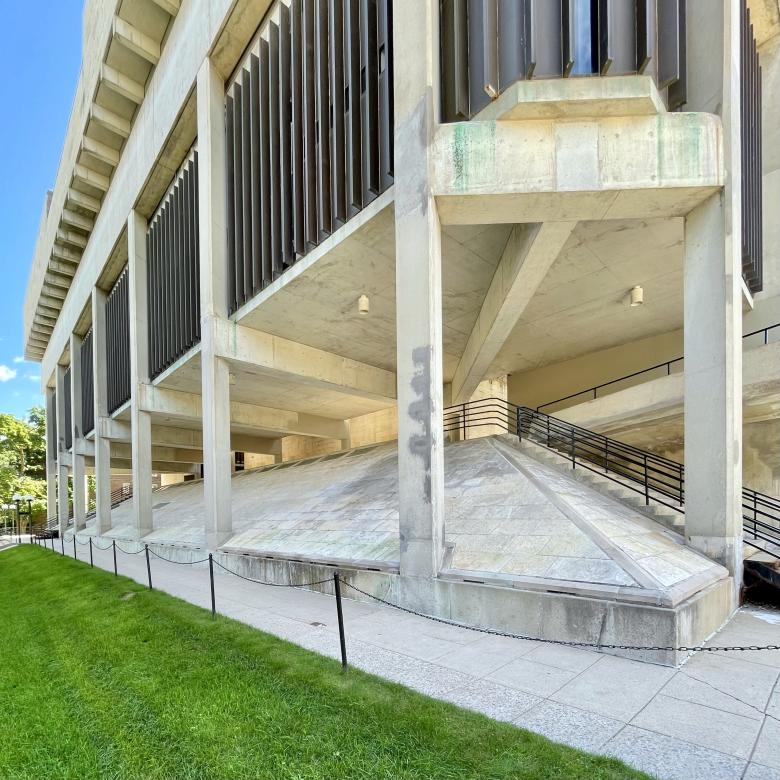
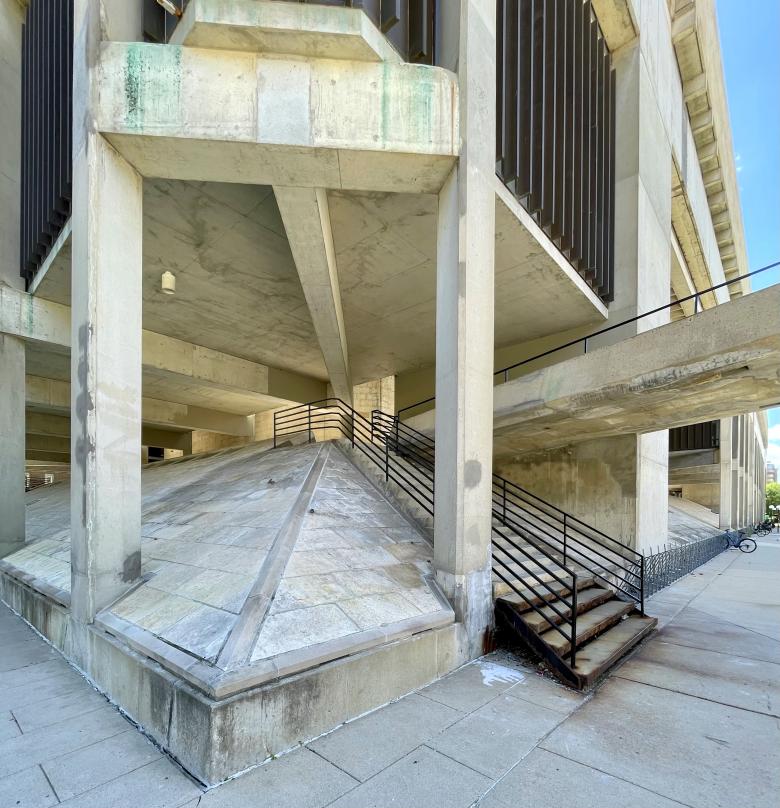
The architecture expressed this stacking through massing and materials, particularly in the sloped roofs of the lecture halls near sidewalk level, the continuous limestone facades and punctuated skylights at the top floors, and the occasional openings in the middle floors, as seen here. (Photo: John Hill/World-Architects)
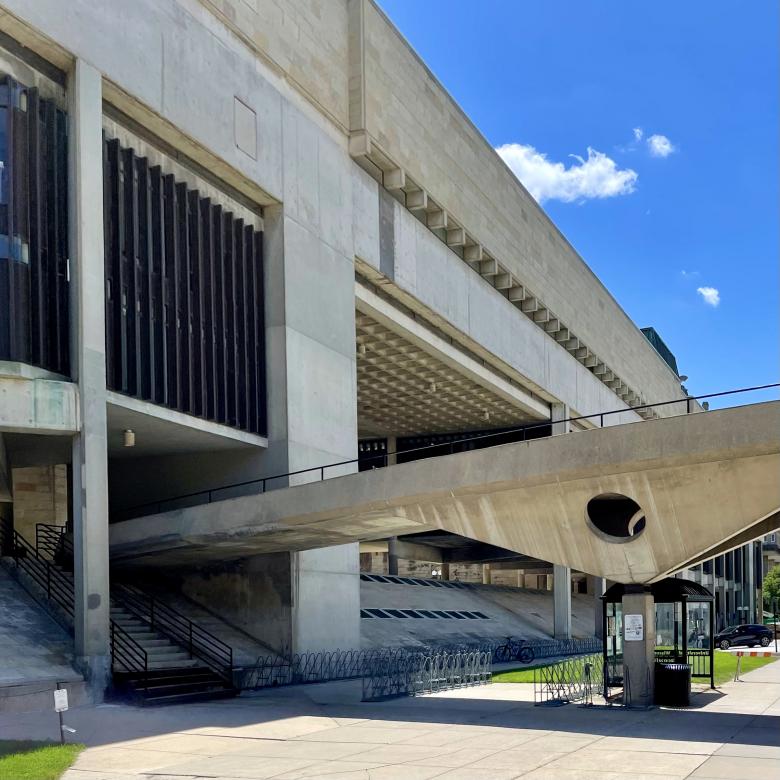
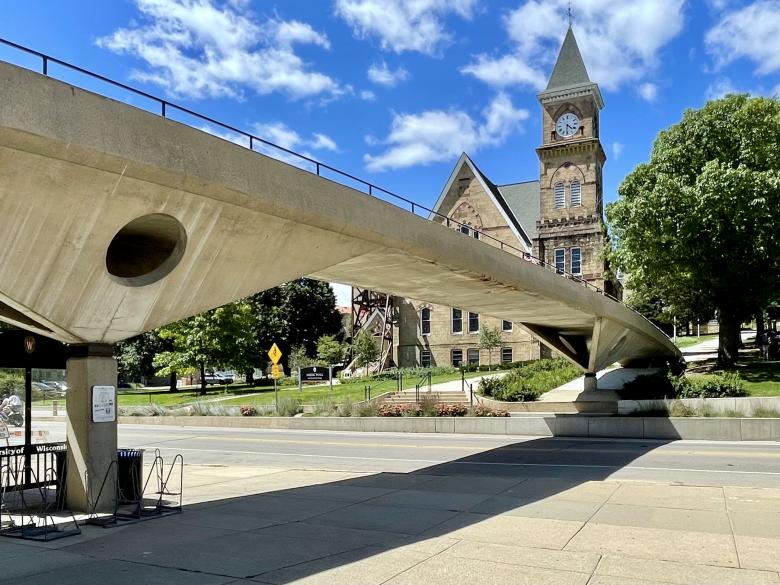
There are some 22 entrance to the building on all sides, including ones accessed via a pedestrian bridge over Park Avenue. (Photo: John Hill/World-Architects)
The bridge, original to the project, spans Park Street and connects Mosse to Bascom Hill and, appropriately, Music Hall (seen here with the clock tower), which opened in 1880. (Photo: John Hill/World-Architects)
Mosse used to be connected by a second pedestrian bridge to Vilas Communication Hall, pictured here, designed by J.J. Flad in a Brutalist style around the same time. That bridge was removed in 2015. (Photo: John Hill/World-Architects)
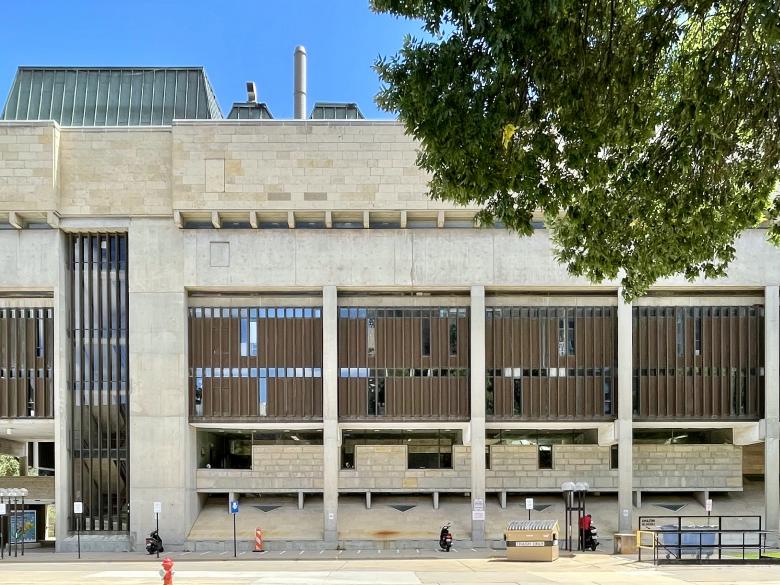
The middle office floors are covered in wrapped with a curtain wall of vertical windows alternating with copper panels. (Photo: John Hill/World-Architects)
An 2021 excellent essay at On Wisconsin, particularly helpful in researching this piece, indicates that “the concrete-heavy exterior attempts to match the hues of the Historical Society,” a 125-year-old neoclassical edifice that the Mosse facade seen here faces. (Photo: John Hill/World-Architects)
The extant bridge—and the stairs from sidewalk level—delivers students to the middle layer, above the roofs of the lecture halls and below the office floors. (Photo: John Hill/World-Architects)
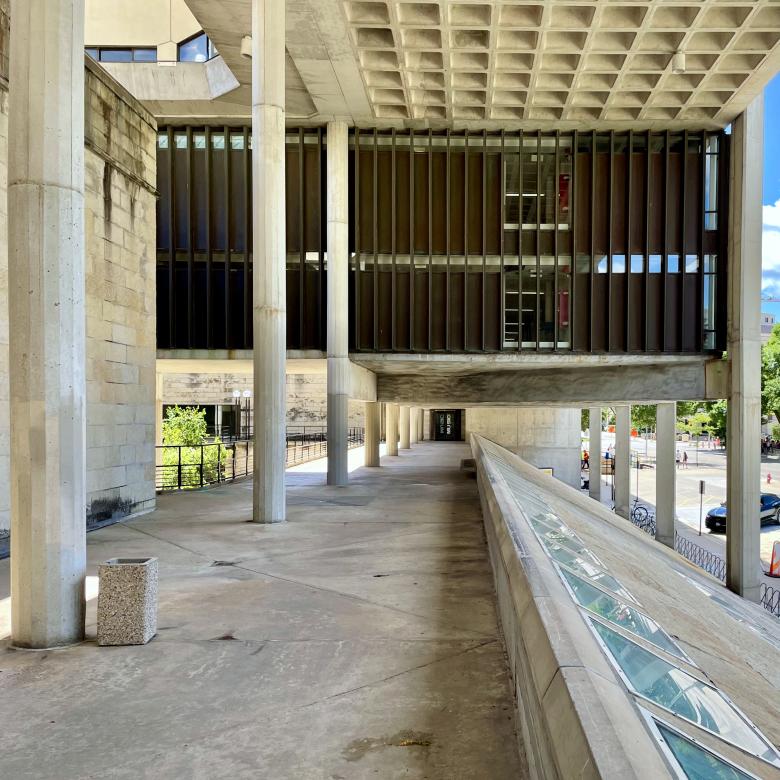
Here, at plaza level, are elevated walkways that allow students to circumnavigate the building outside and access the courtyard at the center of the building's large footprint. (Photo: John Hill/World-Architects)