World Building of the Week
SMVIT Library
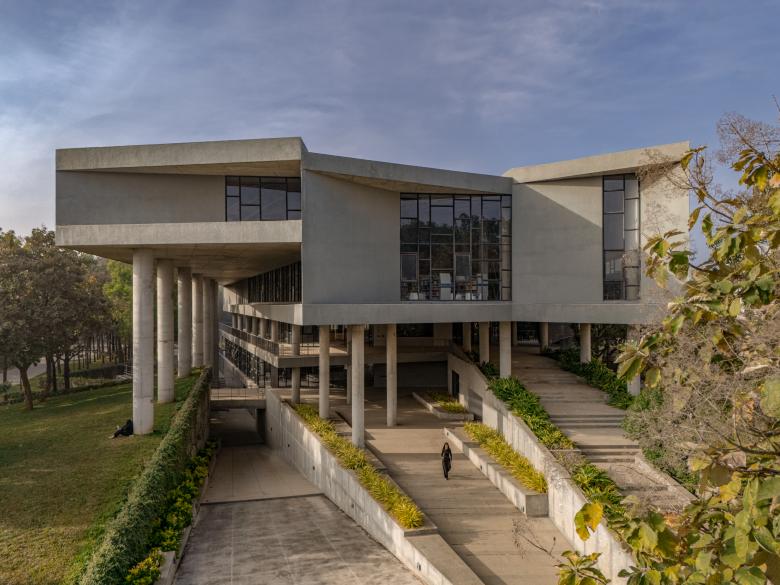
Founded in 1986, Sir M. Visvesvaraya Institute of Technology (SMVIT) sits on 133 acres in North Bangalore, not far from Bengaluru International Airport. Completed this March, the latest addition to campus is the SMVIT Library, designed by Bangalore's Cadance Architects like a tree: “anchored yet outward-reaching.” The architects answered a few questions about the project.
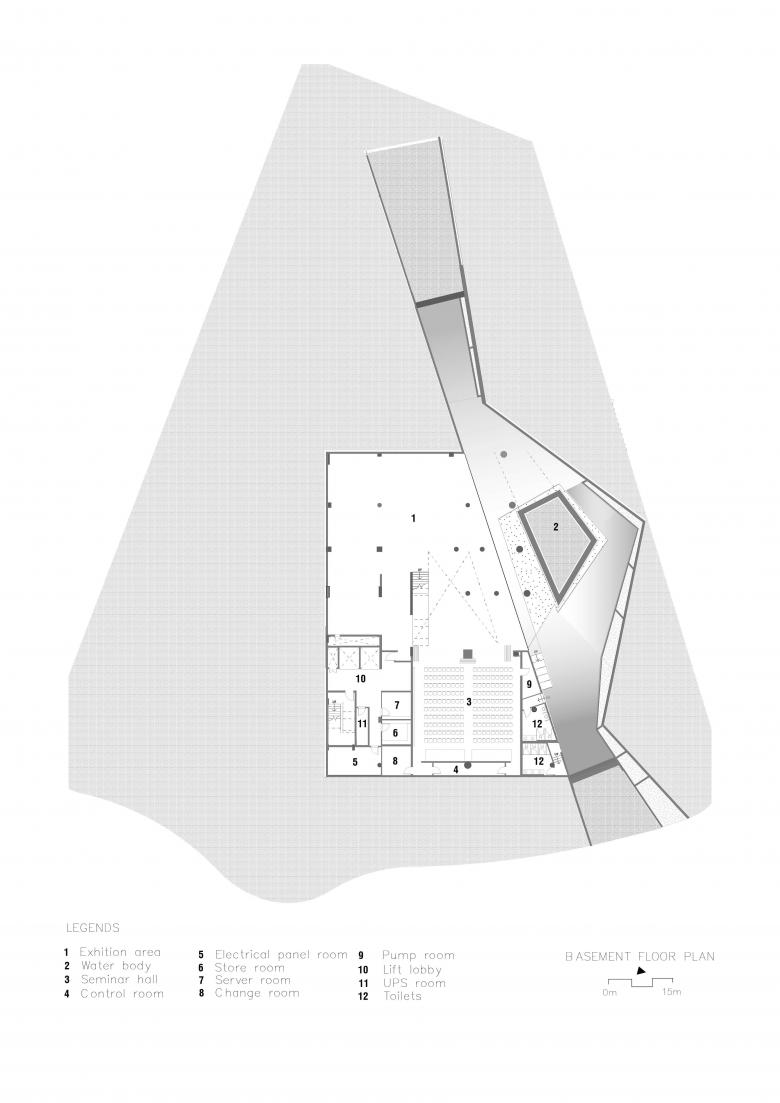
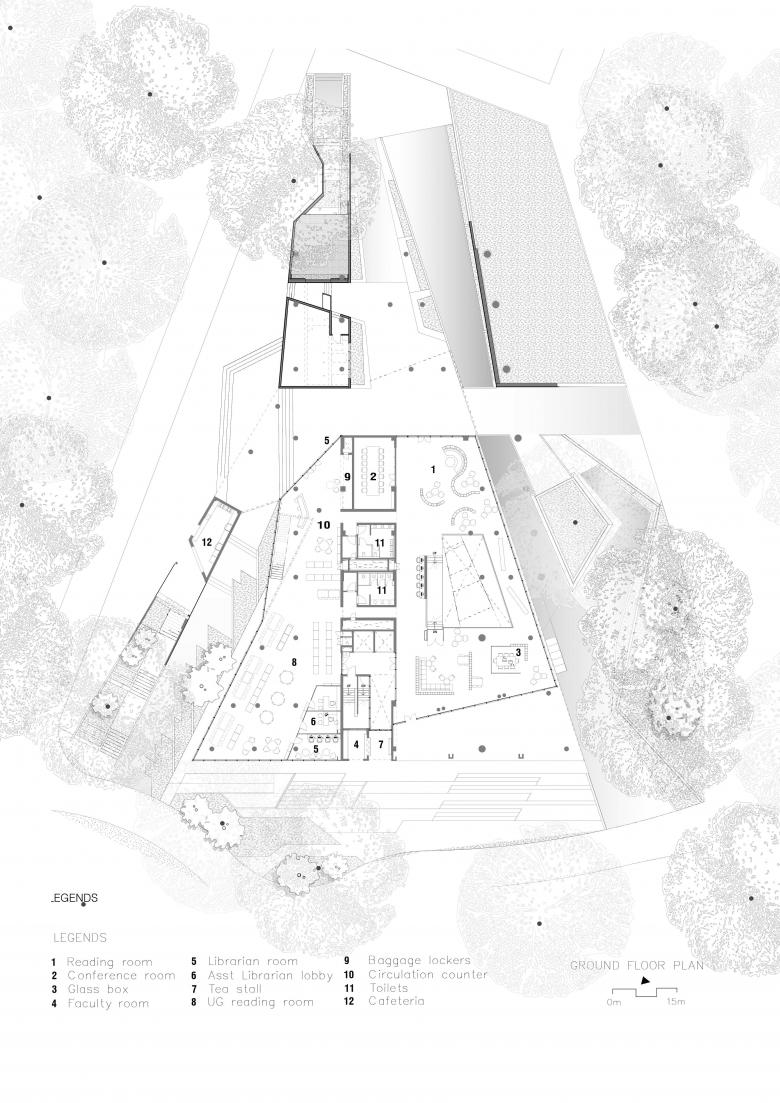
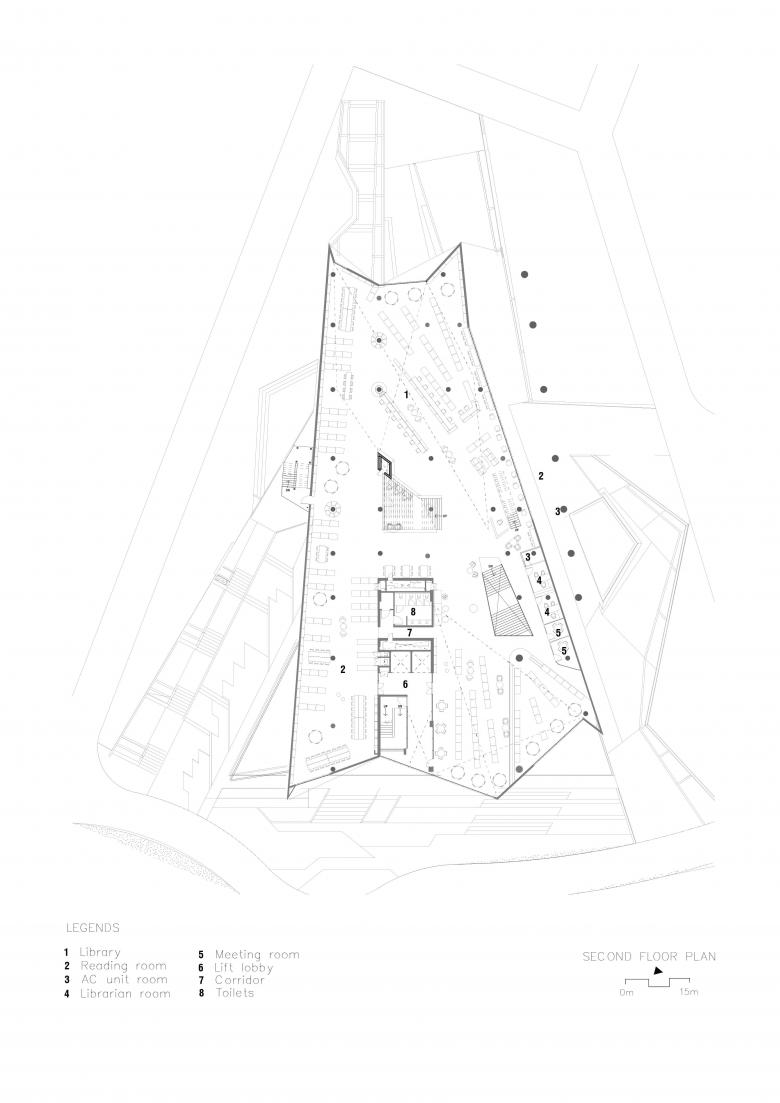
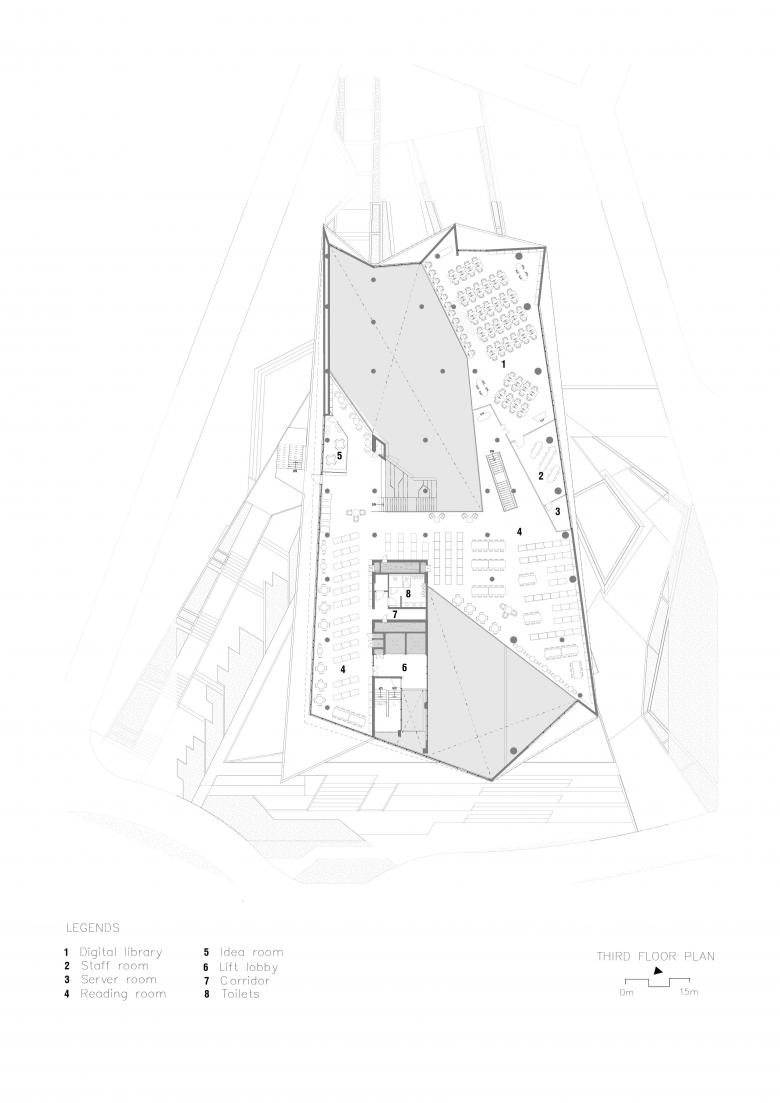
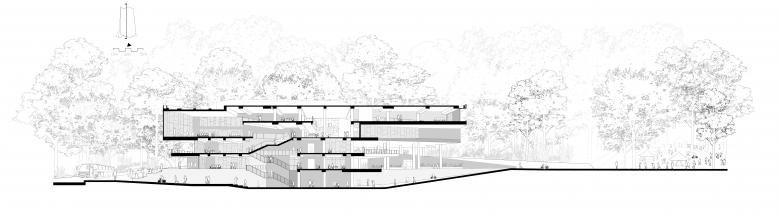
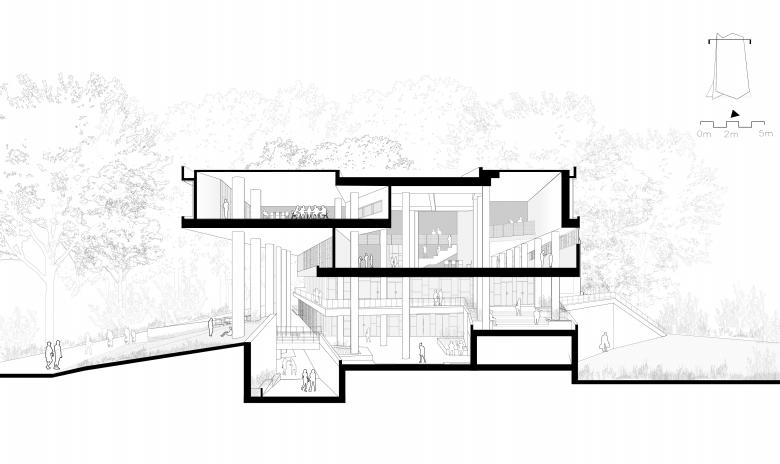
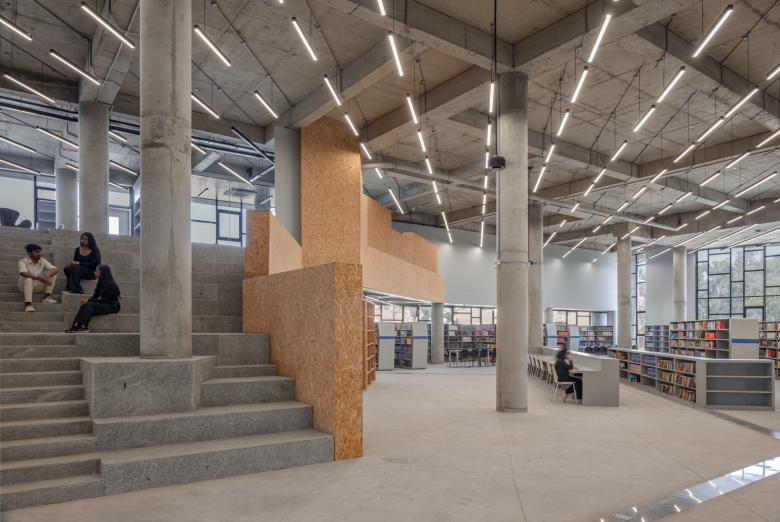
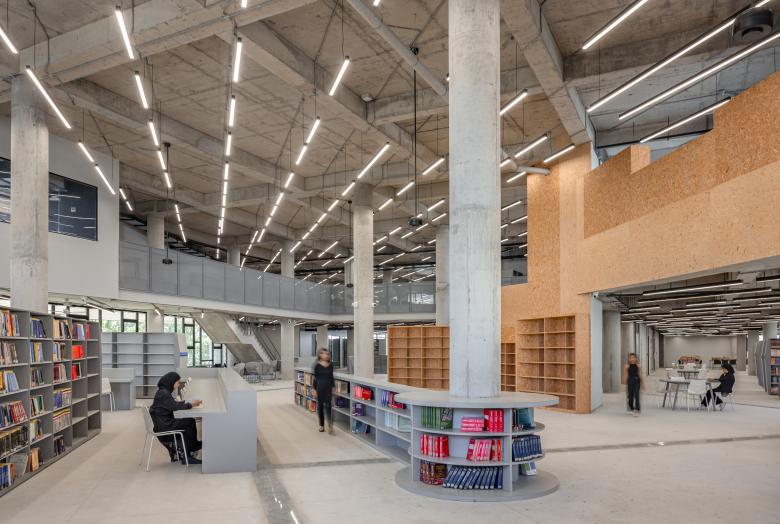
What makes this project unique?The project is unique in the way it refuses the “iconic object” stance and instead democratizes space through porosity and ground-forming. It merges with the terrain, bends around existing trees, and allows pedestrian paths to traverse the volume, so the building functions as campus infrastructure as much as a library. Its sectional variety—from intimate nooks to generous commons—delivers multiple scales of occupation without imposing hierarchy. The result is an institution that is simultaneously rooted, welcoming, and continuously engaged with the life of the campus.
The design takes inspiration from the idea of a tree—anchored yet outward-reaching—and from the campus’s aspiration for a civic plaza. This metaphor informs a form that is grounded at its core while branching into inclusive edges, opening views and routes to invite movement. The democratic ethos of libraries as places of shared knowledge also shaped decisions, favoring spaces that cultivate relationships over formal showmanship. Material clarity and sectional depth reinforce this quiet, connective character.
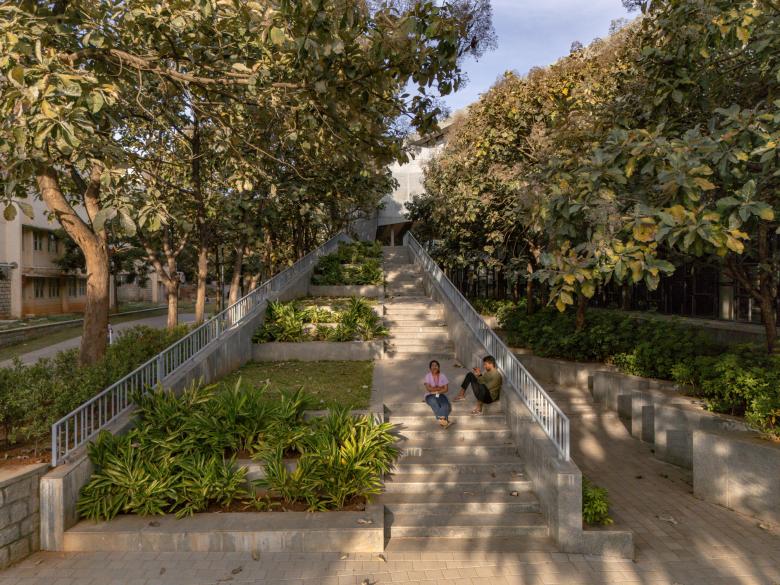
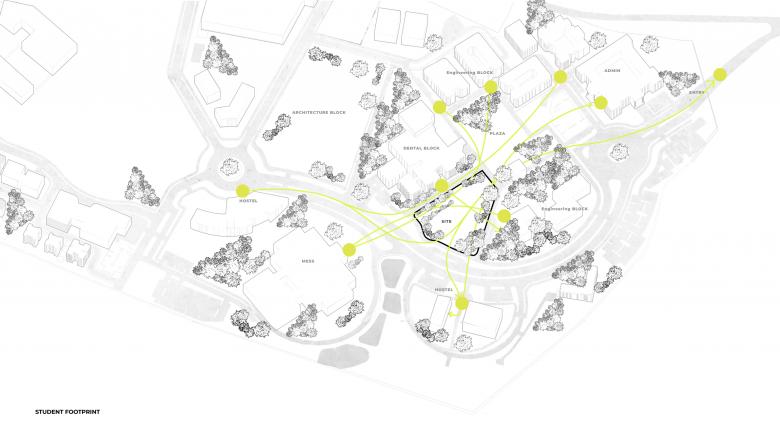
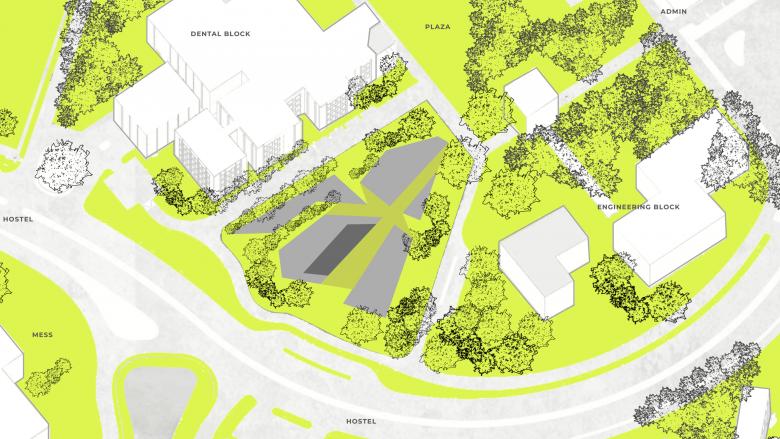
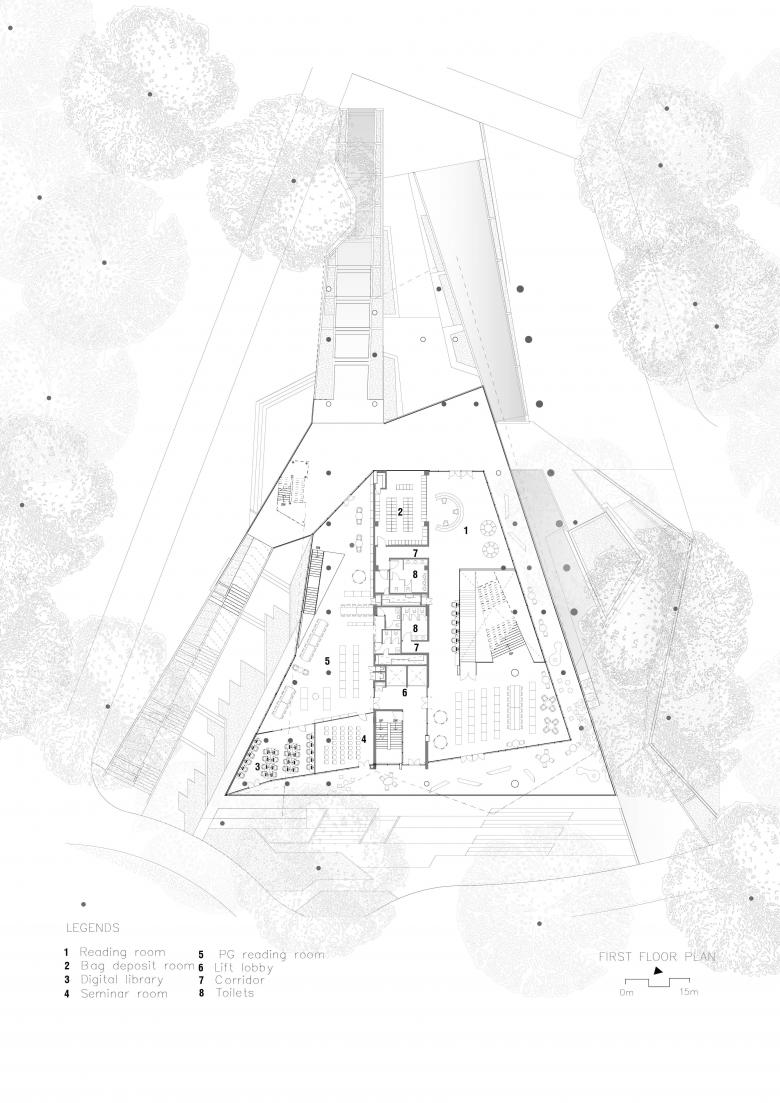
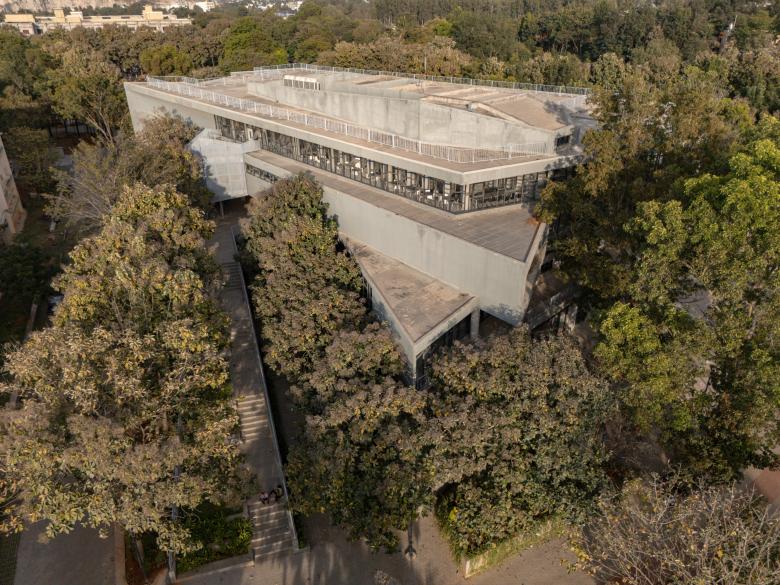
Site forces were decisive: an arterial road bisecting hostels and academics, the adjacency to the planned central plaza, and a significant tree cover. The building negotiates these conditions by folding into the ground, threading between trees, and admitting pedestrian desire lines through its body. Its edges open to the plaza to act as a spillover civic room, while its massing anchors key crossings to calm and organize movement. In short, the site’s flows and ecologies authored the form.
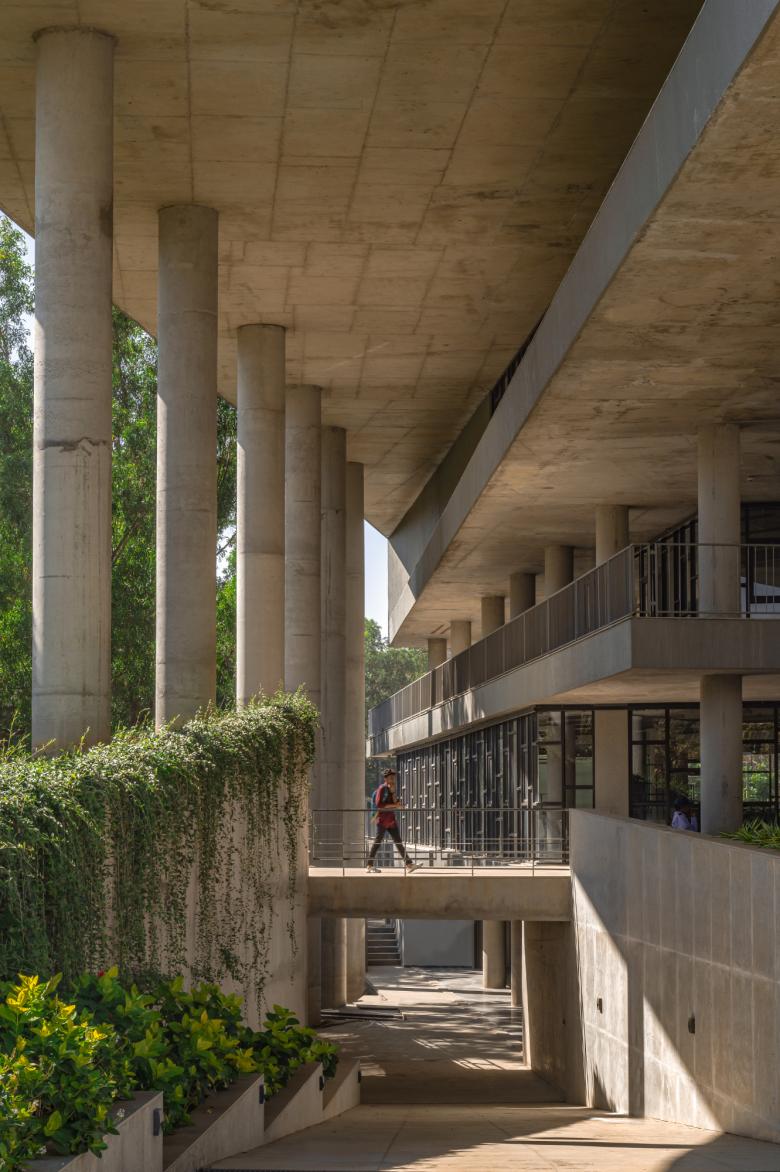
The client’s and users’ needs emphasized inclusivity, connectivity, and everyday usefulness, not monumentality. That translated into legible routes, accessible entries from multiple directions, and spaces that support quiet study alongside informal gathering. The library’s porous ground plane and varied sections respond to how students and faculty actually move, dwell, and collaborate. Their emphasis on a welcoming, non-intimidating institution guided the building’s generous thresholds and landscape-first stance.
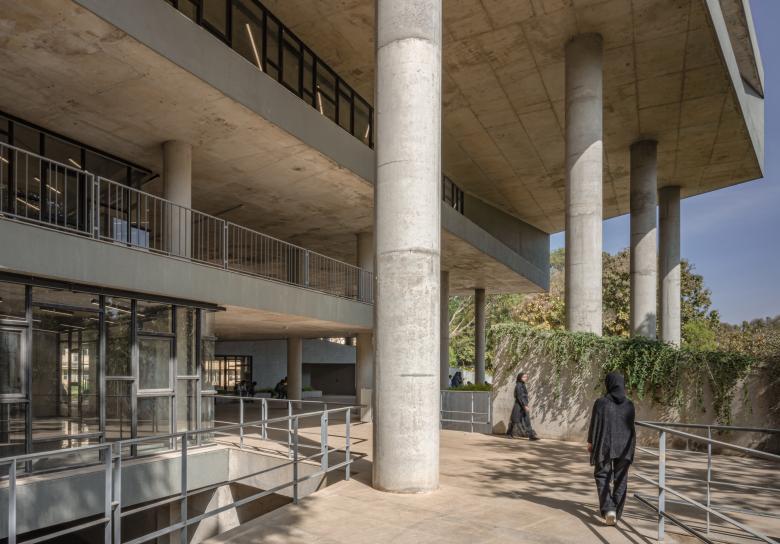
As the design matured, its porosity and landscape reciprocity intensified, led by on-site tree preservation and refined pedestrian mapping. Rather than trimming permeability for formal purity, the project amplified through-routes and sectional diversity to better serve campus flows. The balance between concrete permanence and approachable, open edges was tuned to soften institutional gravitas while retaining clarity and durability. These evolutions sharpened the library’s role as connector without diluting its identity.
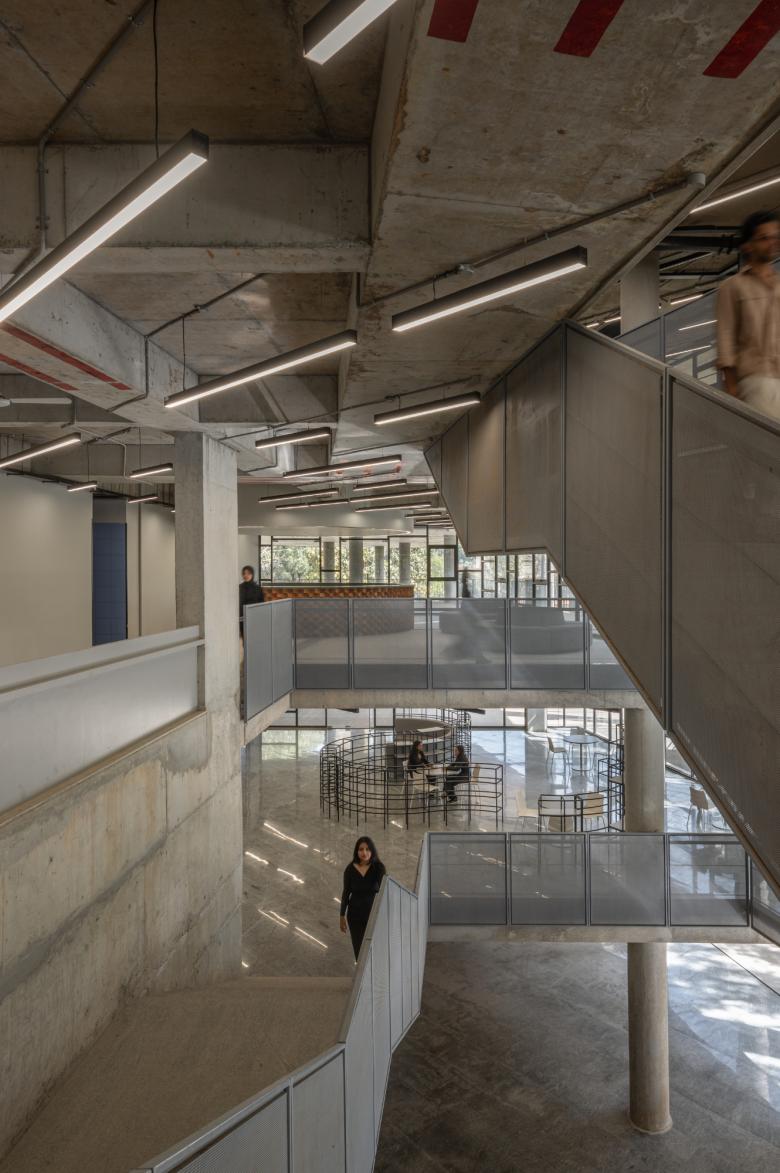
Within our broader body of work, the SMVIT Library advances an ongoing preoccupation with democratic, context-responsive architecture that privileges relationships—between people, program, and landscape—over isolated form. It extends our studio’s pursuit of ground-integrated civic buildings, using section and edge conditions to create publicness. The project also reinforces our approach to urban-scale thinking at the building scale, where everyday movement patterns are treated as primary design material. In that sense, it is both consistent with our ethos and a distilled, campus-specific refinement of it.
Email interview conducted by John Hill.
Location: Bangalore, India
Client: Sir M Visvesvaraya Institute Of Technology
Architect: Cadence Architects, Bangalore
- Design Principals: Smaran Mallesh, Narendra pirgal, Vikram Rajashekar
- Project Architects: Anshul Deshmukh, Aishani Nath, Shilpa Ananth
MEP/FP Engineer: Aadya consultants
Interior Designer: Cadence Architects
Contractor: Cicon
Furniture: Featherlite
Doors and Windows: Jindal
Glass: Saint Gobain