Review of ‘The Global Turn: Six Journeys of Architecture and the City, 1945–1989’
A Turn for the Better

The Global Turn: Six Journeys of Architecture and the City, 1945–1989 is a new book born from a meeting of the Global Architectural History Teaching Collective (GAHTC), which was founded in 2013 to infuse a global perspective into the academic preparation of the next generation of architectural historians. Written by Tom Avermaete, Chair of the History and Theory of Urban Design at ETH Zurich, and Michalangelo Sabatino, the newly appointed Director of the School of Architecture + Planning at the University of Texas at San Antonio, the book looks at the impact of globalization in the middle of the 20th century on architecture and cities. Nishi Shah read the book and sent us her impressions.
Can The Global Turn: Six Journeys of Architecture and the City be considered a successor to A Global History of Architecture, the classic textbook by Mark M. Jarzombek and Vikramaditya Prakash (co-founders of the GAHTC), with illustrations by Francis D. K. Ching, that surveyed five millennia of the built environment across the world and changed the way architectural history was perceived? Whereas “global history” once accounted for a dictionary-like, almost taxonomic overview of everything of value, of every so-called style that was built across the world, The Global Turn takes a different approach and condenses the study over a charged 44-year period, examining the spatial phenomena that led to the “turn” toward far-reaching international implications in architecture and urbanism. Forty-four years that introduced and gave meaning to the complex term “globalization,” long before it became ubiquitous and diluted.
The interdisciplinary investigations by Avermaete and Sabatino on social, economic, political, geographical, and cultural phenomena—from comic strips and postwar advertisements to speed walk conveyors and passenger planes—underscore the widespread forces and discoveries that produced a holistic interconnection of architecture and cities across the world. Through a precise lens between World War II (1945) and the fall of the Berlin Wall (1989), admittedly with a dominant focus on activities in North America and Europe alone, the book attempts to understand this “global shift that simultaneously expanded and shrank the world we live in.”
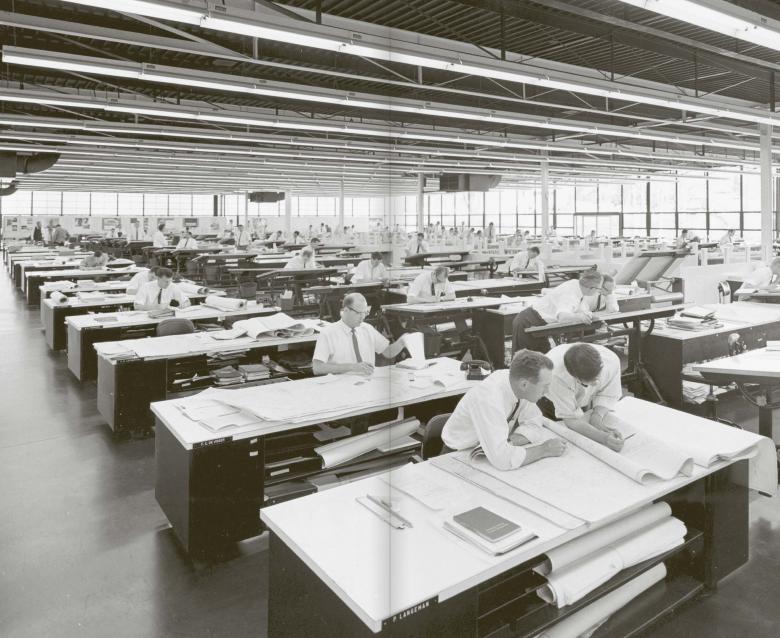
The “six journeys” of the book’s subtitle structure it both conceptually and materially. Organized around six themes—collaboration, goods, mobility, knowledge, construction, and labor—the chapters together construct what the authors call “a new road map” of globalization’s rise and reach. A foreword from Mark Jarzombek, an introduction, the six journeys/essays, an “incomplete” conclusion, and a coda by Leonardo Zuccaro Marchi, all take the form of a compact volume that is modest in scale and comfortably portable.
At first glance, its academic appearance suggests a heavy read; in practice, however, the book reads with delightful lightness, unfolding as a sequence of narrative-driven historical investigations. A single journey reads effortlessly in one sitting, with a distinctly novelistic pull, prompted by the suspense of its consequences. The paperback with flaps, designed by Joost Groetens, announces the concept through typography, where “THE” is set vertically, and “GLOBAL” and “TURN” are written horizontally but inverted, rotated relative to each other, staging the book’s argument of a “turn” playfully across four rotational/ topsy-turvy configurations on the cover itself. Each chapter opens with a strong introduction to its theme, followed by a visual sequence of meticulously curated archival black-and-white images that propels the subsequent analytical narrative.
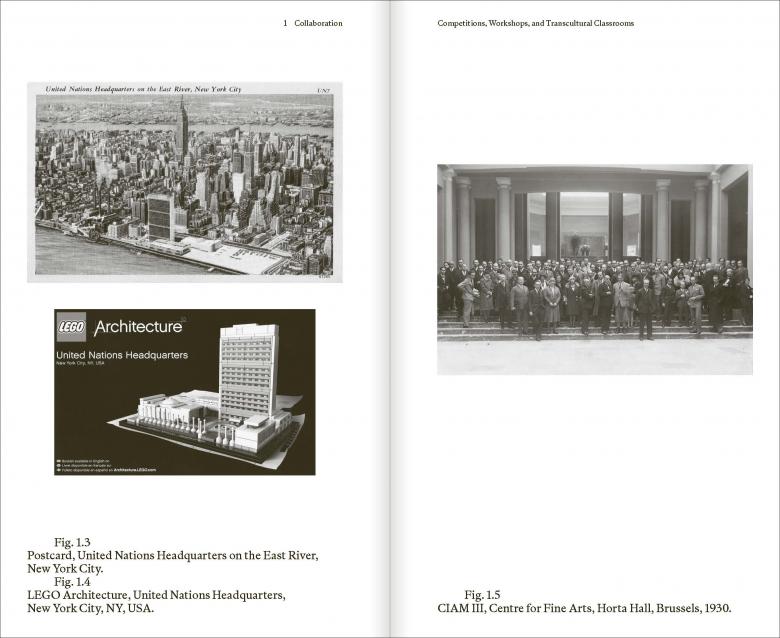
These six journeys—three written by Avermaete, three by Sabatino—stage a repeated shift from cultural and social trajectories in architecture to their economic, political, and material counterparts. The chapters on collaboration and knowledge foreground the soft infrastructure for international interdependence, where ideas, pedagogies, and professional cultures were first networked. Architectural competitions, workshop-based education, and collectives such as CIAM and Team 10 appear as laboratories for a global architectural consciousness, with frequent mentions of our beloved Le Corbusier and Oscar Niemeyer. These narratives are deepened through explorations of mass media, Marshall McLuhan, the Grand Tour, Neufert’s standards, architectural journals, popular culture, and, inevitably, Venice. Globalization began through exchange and circulation.
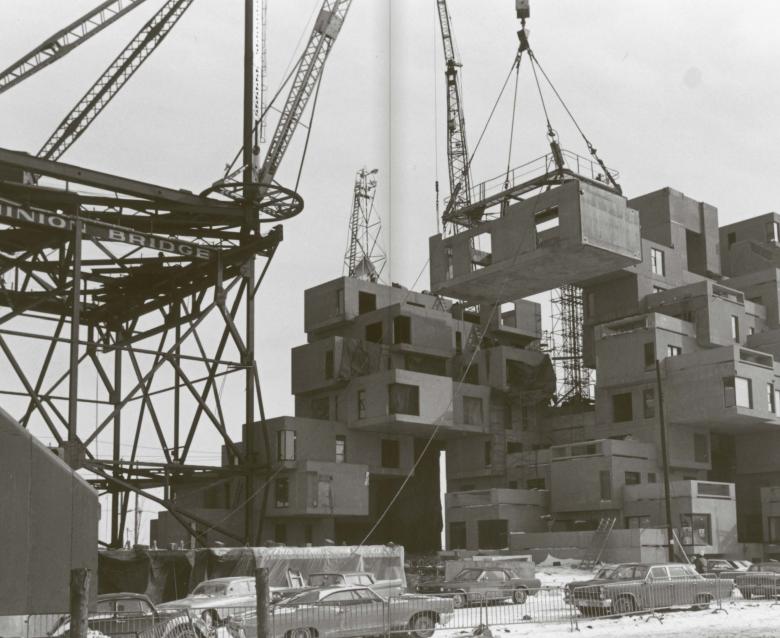
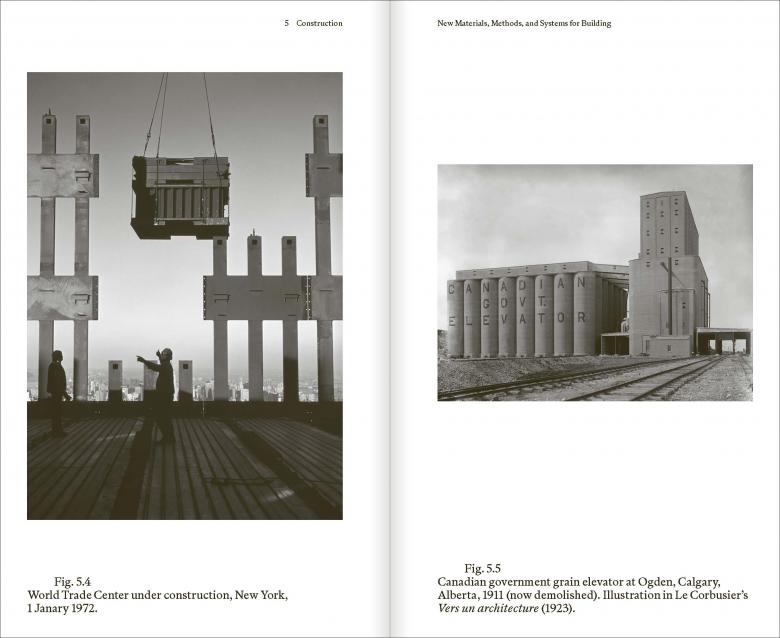
The journeys of goods and mobility, on the other hand, read as histories in built form; the first distribution center, the first shopping mall, the first airport, the first trade fair, the first hotel–motel, and the first highway, each pointing unmistakably to the rise of consumerism. Construction and labor confront the consequences of this acceleration, tracing the homogenizing effects of patents, material circulation, migratory expertise, and traveling construction labor. Here, globalization appeared through standardization and typology.
The book, time after time, probes assumed familiarity. You may know CIAM, but not the sheer number of failed architectural competitions that preceded its formation. The shopping mall may have been a familiar teenage hangout, but it is rarely understood as the groundbreaking proposition of the “shopping center as a core for public life.” For anyone educated within architecture or urbanism, the book offers a welcome reorientation of the built environment’s history that feels newly revealing. And for a reader of my generation, who barely remembers the tragic 9/11 incident, as Marchi points out in the coda, this book acts as a looking glass into a world I can hardly register, making the events that led me, as an architect, to migrate from India to the Netherlands in pursuit of a better life all the more vivid and legible. Nearly all of the six journeys traced in the book played a role in making that path possible.
At times, however, the book’s narrative ambition outpaces its visual support, and references to key figures, organizations, or well-known events would benefit from additional contextual framing. I occasionally found myself relying on the internet to visualize buildings and learn about moments that might have been fully supported through photographic presence or brief explanatory asides. Overall, it remains difficult to grasp how the authors arrived at these six precise journeys. The events they trace are so deeply interconnected that the strict categorization at times seems impossible and obscure. It is equally hard to imagine that there weren’t additional such phenomena that introduced globalization or induced it into the built environment.
But, then again, this productive uncertainty is what the book encourages, also outlined in the incomplete conclusion. Rather than closing the subject, it incites the reader to think further and venture into parallel studies, or navigate the same journeys in different contexts. One almost anticipates a Part II of this voyage, perhaps shifting its focus toward the Global South, where the inverse logics of labor and colonization might be examined. In this sense, the book does not end when the final page is turned. The epigraph on the opening page: “One’s destination is never a place but rather a new way of looking at things,” by Henry Miller, proves extremely appropriate, now that I have wandered through it for the first time.
The earlier moments of globalization and its postwar optimism feel distant and invisible today. And the book expertly reveals the origins of a background condition we now casually inhabit, often without noticing its ideological, constructed beginnings. This is a true textbook in the most generous sense of the word, where you devour the book’s logic, grapple with the lens of focus in your own personal subjectivities, and find its questions continuing to unfold. For me, that is the epitome of a truly successful book.
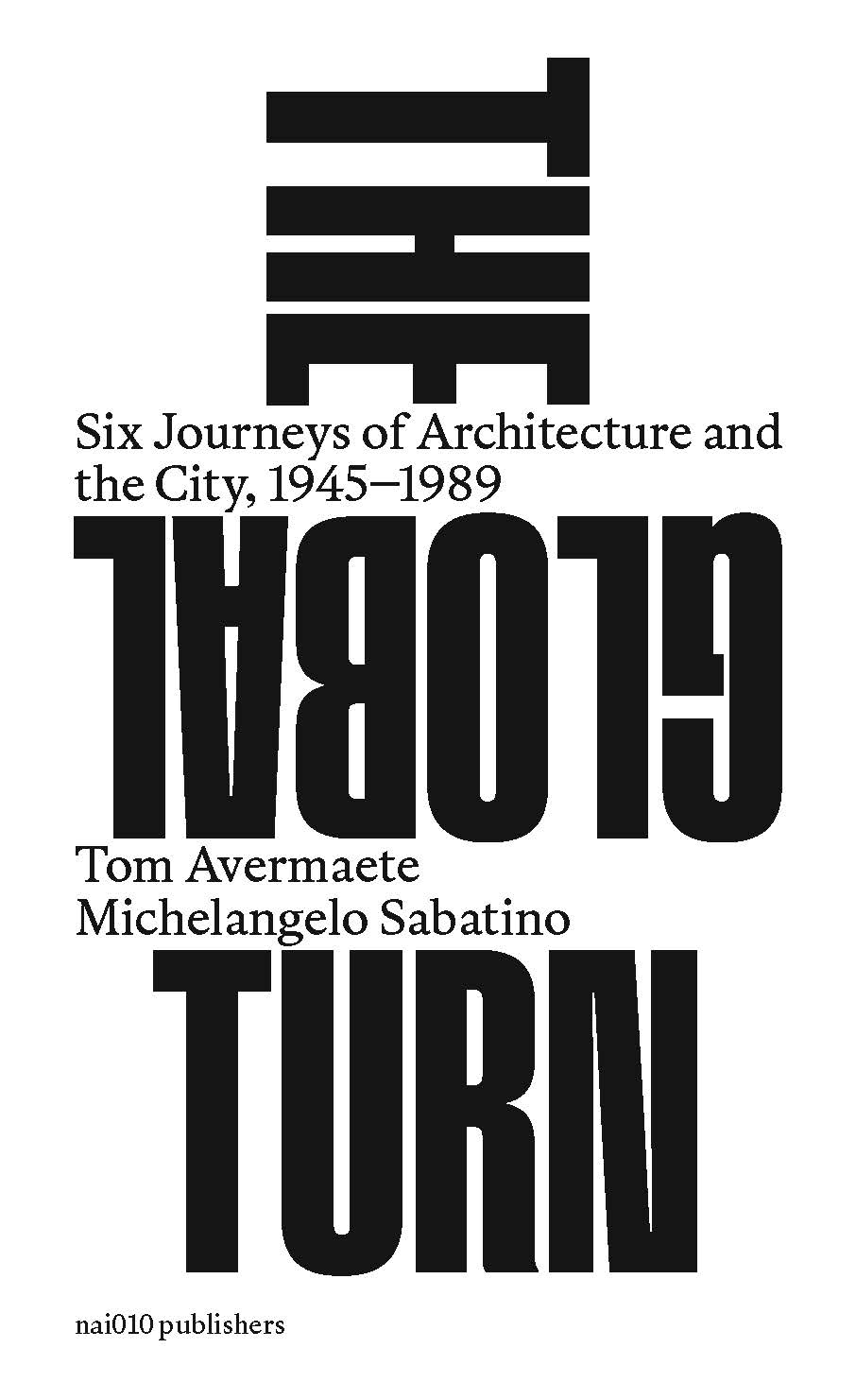
The Global Turn: Six Journeys of Architecture and the City, 1945–1989
Tom Avermaete, Michelangelo Sabatino
Foreword by Mark Jarzombek; Coda by Leonardo Zuccaro Marchi
17 x 24 cm (6.75" x 9.5")
240 Páginas
Paperback w/flaps
ISBN 9789462085831
nai010 Publishers
Compra