World Building of the Week
Neuhoff
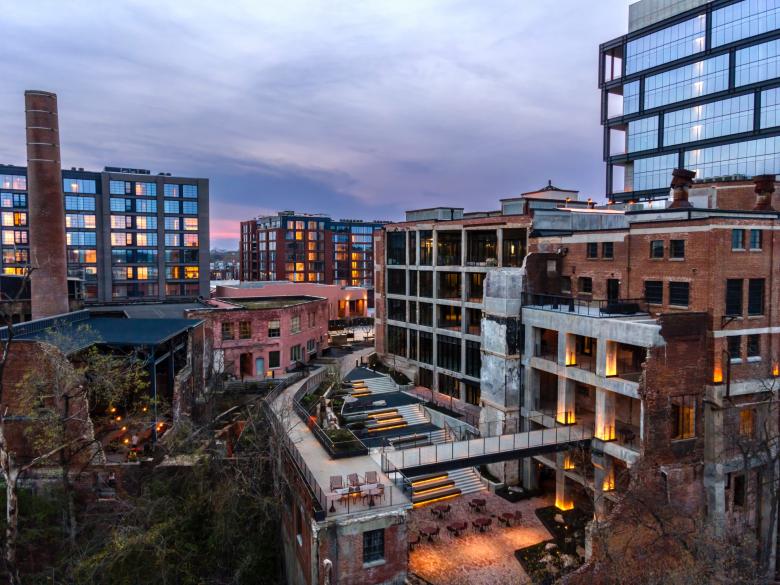
Sitting on the banks of the Cumberland River in Nashville's Germantown neighborhood, Neuhoff is a large mixed-use development consisting of office, cultural spaces, residential units, and retail/dining establishments in a mix of new construction and converted old buildings that hark back to the site's distant past as a meatpacking complex. S9 Architecture answered a few questions about the project.
What makes this project unique?Neuhoff’s uniqueness lies in its seamless fusion of history, topography, and urban regeneration. Few sites offer such a dramatic convergence of industrial heritage, complex terrain, and cultural context. The project transforms a century-old slaughterhouse complex—long closed to the public—into a vibrant, publicly accessible district that reweaves the Germantown neighborhood to the Cumberland River for the first time in decades.
Rather than erasing the past, the design embraces it. S9 Architecture used the site’s existing buildings, distinct topography, and neighborhood context to create a multi-level urban experience that is entirely unique to the site.
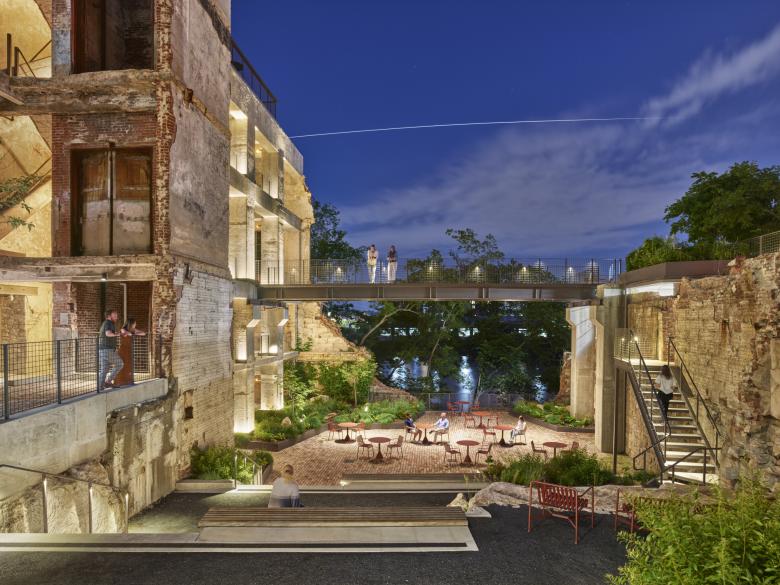
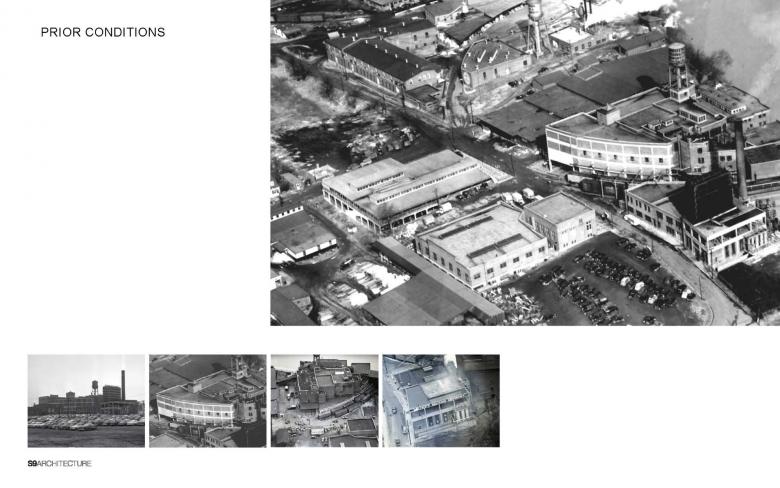
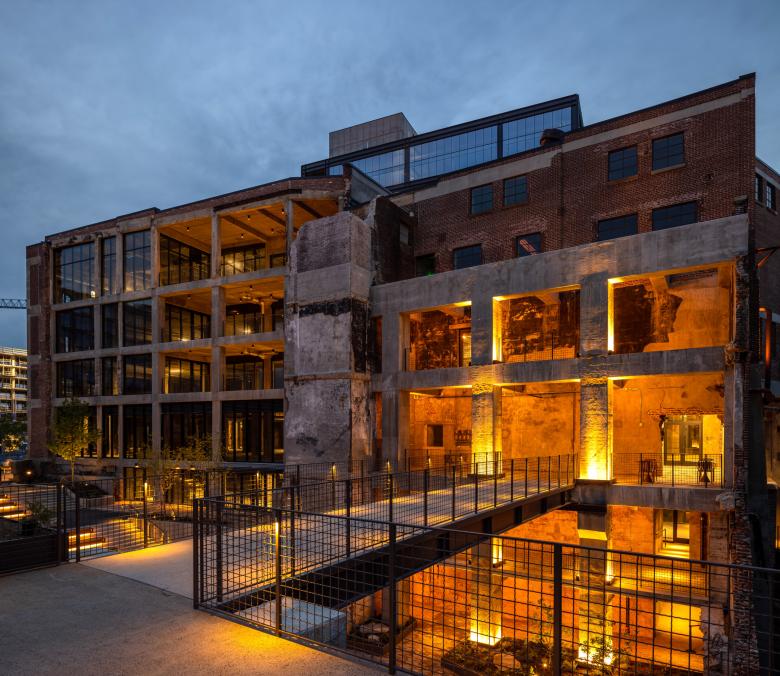
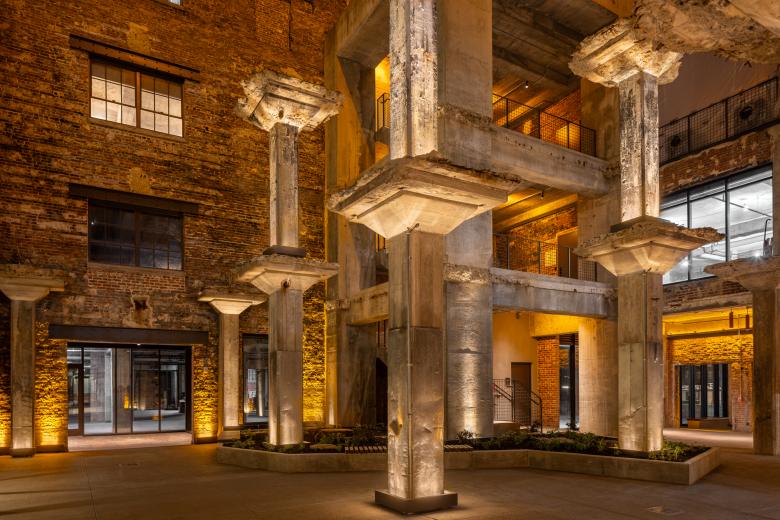
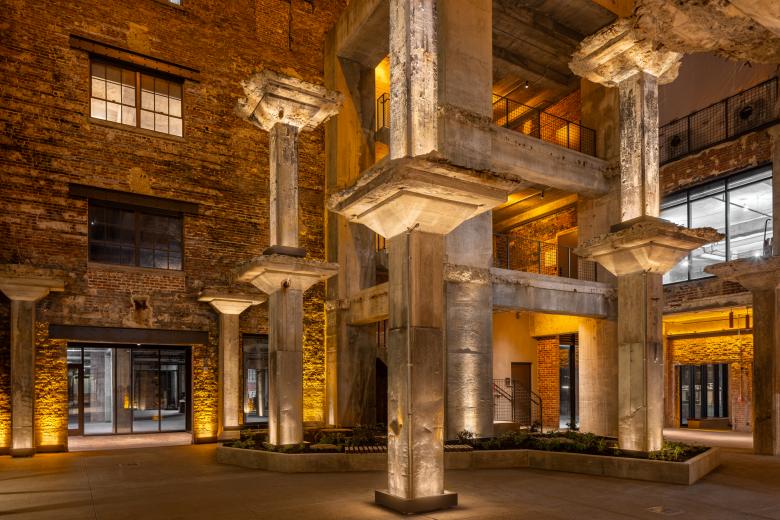
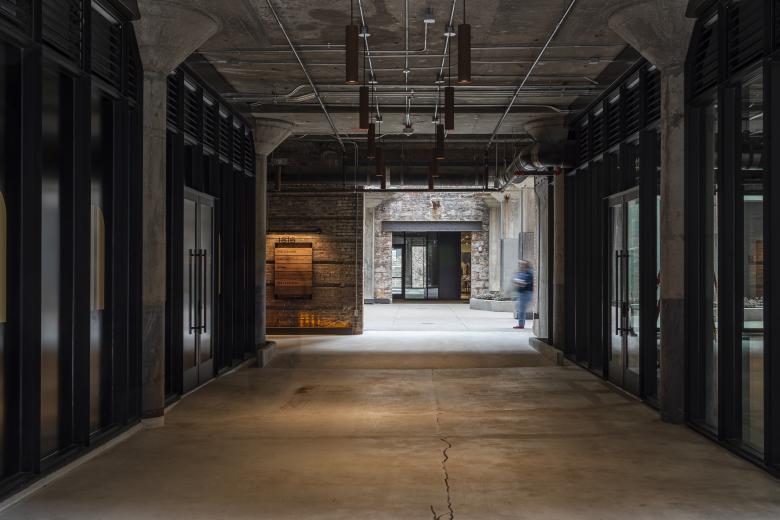
The design for Neuhoff draws directly from the site’s industrial heritage and its distinctive position within Nashville’s Germantown neighborhood. The historic structures of the former slaughterhouse anchor the master plan both physically and conceptually. Their layered history and evolution informed our approach to stabilize and reinterpret them as urban ruins, preserving the site’s authentic character while setting the stage for new interventions.
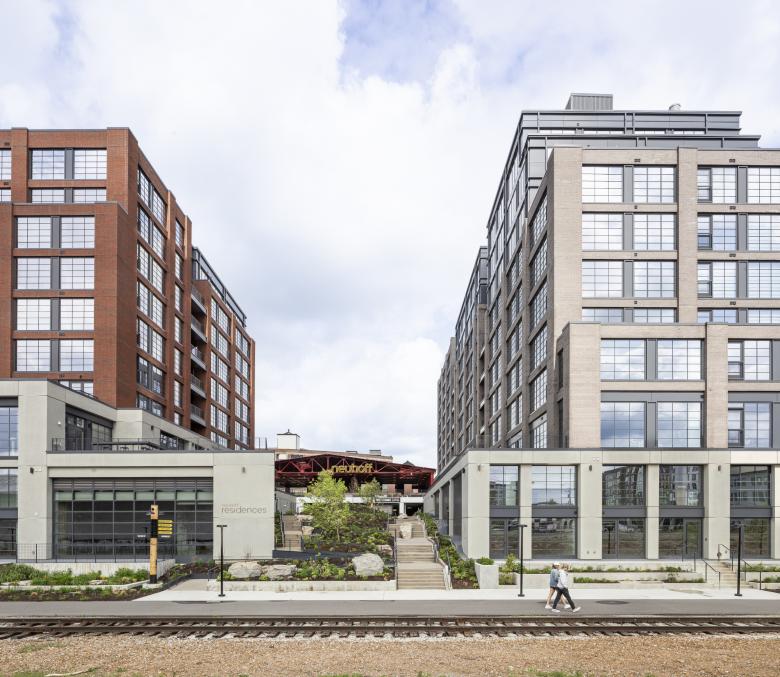
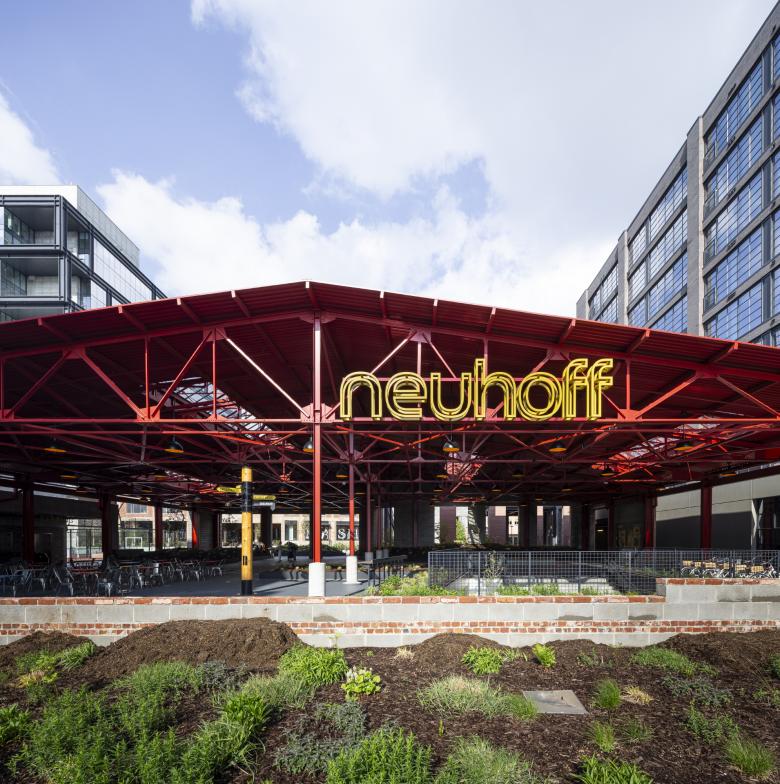
New buildings and public spaces were conceived using materials and a palette drawn from the surrounding industrial fabric, creating a cohesive sense of place that feels both contemporary and deeply rooted in context.
Equally influential was Neuhoff’s relationship to its surroundings—the lively Germantown community and the nearby Cumberland River. For decades, the site had severed access between the neighborhood and the riverfront. S9’s design mends this divide by reestablishing pedestrian connections and reorienting the site toward the water, weaving together two once-disconnected districts into a unified urban experience.
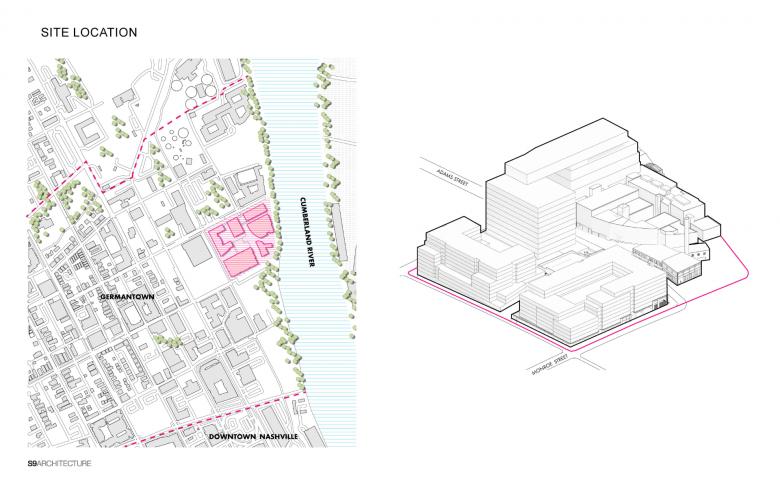
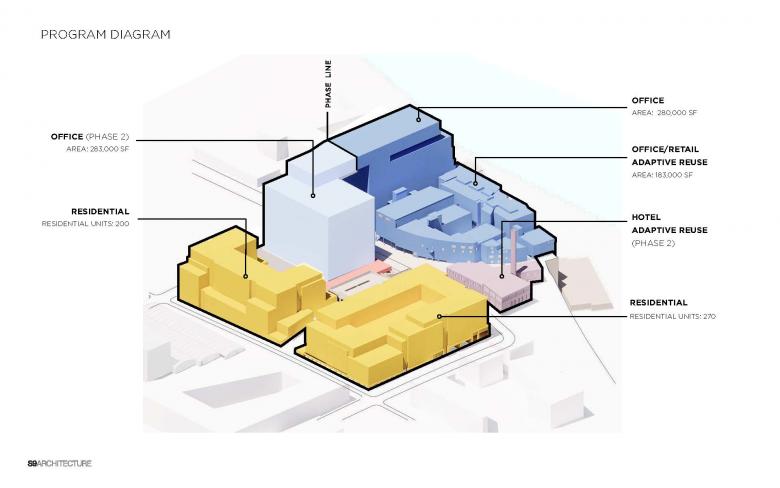
The Neuhoff site fundamentally shaped S9 Architecture’s design approach, serving as both the physical and conceptual framework for the project. Its industrial past offered a rich material and spatial legacy that became central to the design narrative. Existing concrete and brick structures, along with traces of historic use, directly informed our architectural response. Embracing the site’s found conditions, we incorporated worn masonry walls, exposed structural systems, and layered industrial textures as authentic design elements.
The steep river bluff and adjacency to Germantown’s historic fabric further guided circulation and massing strategies, inspiring a network of terraced courtyards, catwalks, and public spaces that merge industrial monumentality with the intimacy of neighborhood scale.
The owner, New City Properties, played a pivotal role in shaping the design of Neuhoff. From the outset, New City envisioned transforming the long-abandoned industrial complex into a vibrant mixed-use destination that would reconnect Germantown to the river. This ambition aligned closely with S9 Architecture’s ethos of adaptive reuse and contextual urban repair.
New City’s commitment to authenticity—preserving the site’s industrial character while introducing new layers of activity—guided design decisions across scales, from stabilizing historic masonry to programming a diverse mix of public and private spaces. Input from future tenants and the broader community further informed the design, emphasizing permeability, accessibility, and a sense of openness that invites the public into the site.
Ultimately, the design reflects a shared vision between S9 Architecture and New City Properties: to evolve a historic industrial landmark into a dynamic, connected, and enduring part of Nashville’s urban fabric.
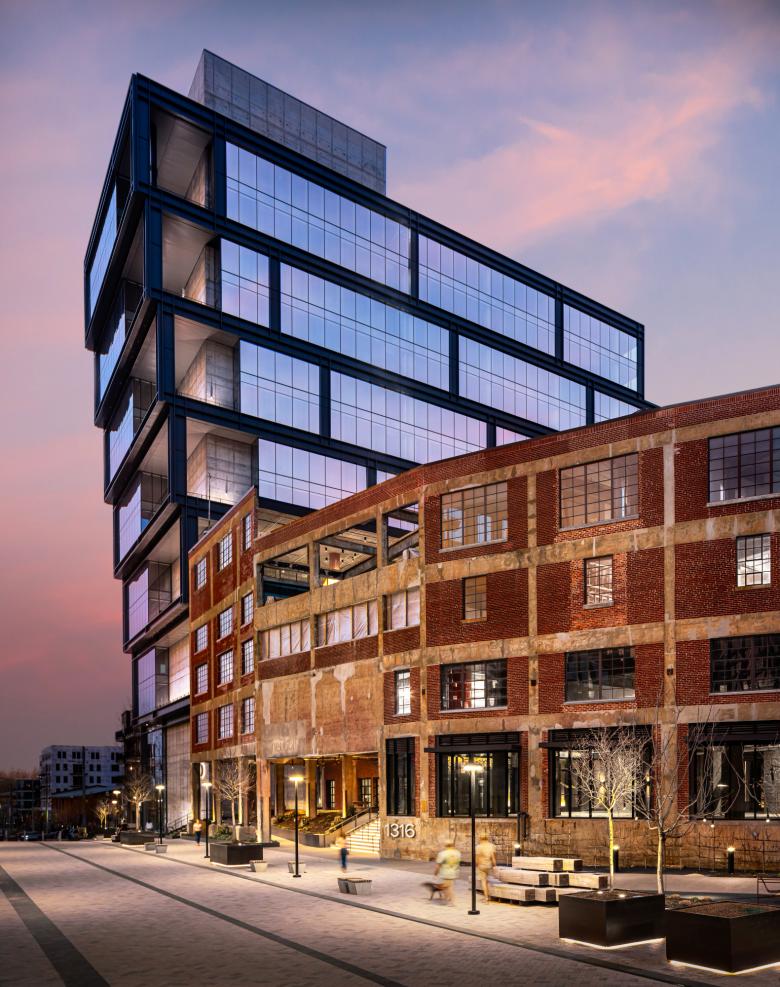
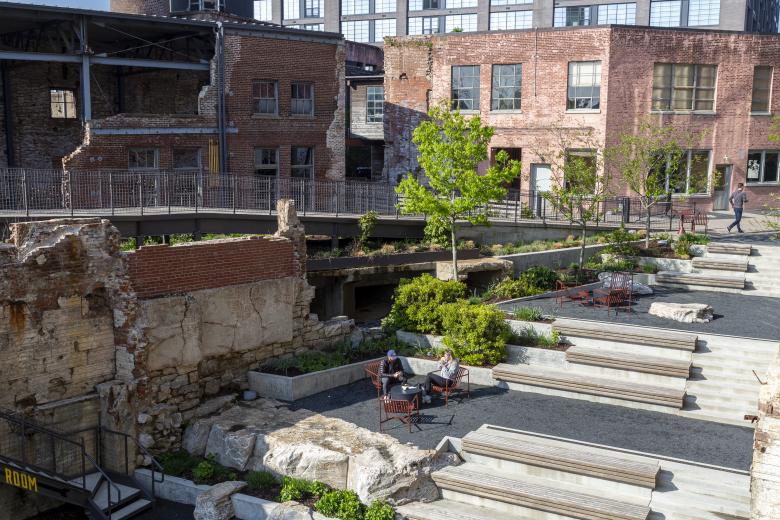
S9 Architecture’s work centers on integrating sites within their broader environments—creating new nodes of engagement and activity while mending urban voids through contextual, place-driven design. Neuhoff exemplifies this philosophy. Like S9’s transformations of Industry City and Empire Stores in Brooklyn, Ponce City Market in Atlanta, and The Stutz in Indianapolis, the project reimagines an industrial relic as a catalyst for urban regeneration.
Each of these projects is rooted in rigorous research and a deep understanding of both community and physical context. Though they share a common design philosophy, each becomes an expression unique to its place—architectures that could exist nowhere else.
Email interview conducted by John Hill.
Location: Nashville, Tennessee, USA
Client: New City Properties
Architect: S9 Architecture, New York
- Design Principal: Dryden Razook
- Managing Partner: John Clifford
- Project Architects: Leonardo Afanador, Carl Yberg
- Project Manager: Cannelle Legler
- Project Team: arah Baghai, Lucas Boyd, Justin Capuco (Husband and Wife Interiors), Candido Gude, Natalie Imran, Sepideh Khazaei, Chang Liu, Edward May, David Peraza, Steven Rusche, Heidi Schmitt, Hazal Seval, Zhanqing Xu
Structural Engineer: Uzun + Case
MEP/FP Engineer: I.C. Thomasson Associates Inc
Civil Engineer: Kimley-Horn & Associates
Landscape Architect: Future Green Studio
Lighting Designer: Niteo
Interior Designer: CDH Interiors (for Neuhoff Residences)
Signage Designer: Airspace
Contractor: JE Dunn Construction
Site Area: 9.2 acres
Building Area: 1.3 million sf