I. M. Pei's Archive Heads to MIT
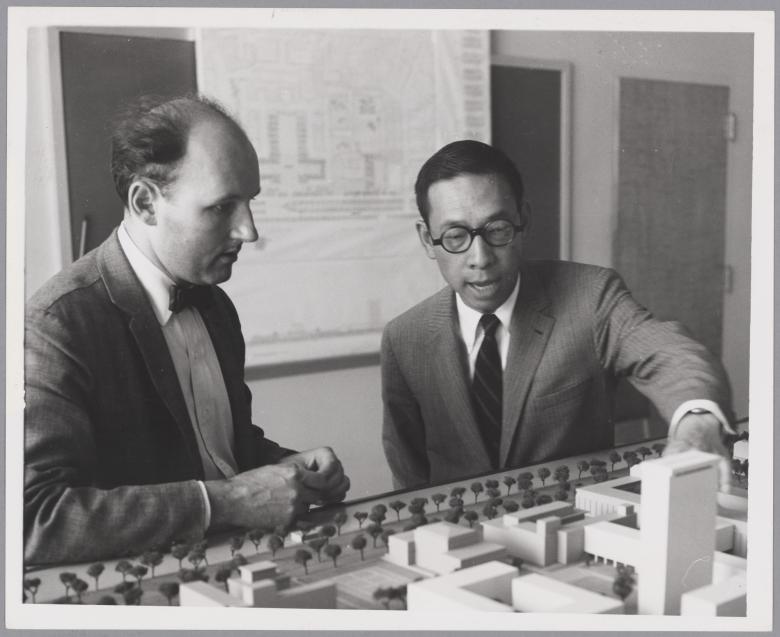
The MIT Museum has announced that it will receive the archive of Pritzker Prize-winning architect and MIT Architecture alumnus I. M. Pei—an extensive archive spanning six decades of practice.
How extensive? “The I. M. Pei archive includes,” per the MIT Museum, “approximately 1,500 rolls of architectural drawings, 50 architectural models, and 1,000 linear feet of manuscripts and other archives spanning sixty projects.” With the archive, the museum will become “the leading steward and resource for the student and professional work of I. M. Pei, further bolstering the museum’s extensive architecture collections.”
Ieoh Ming Pei was born in Guangzhou, China, in 1917 and moved to the United States in 1935, where he received a Bachelor of Architecture from MIT, in 1940. After gaining a Master of Architecture from Harvard Graduate School of Design, he moved to New York and formed his eponymous office, in 1955, with Henry Cobb and Eason Leonard. The firm eventually became Pei Cobb Freed & Partners, the name it retains to this day. The donation of Pei's archive to MIT Museum comes from the firm.
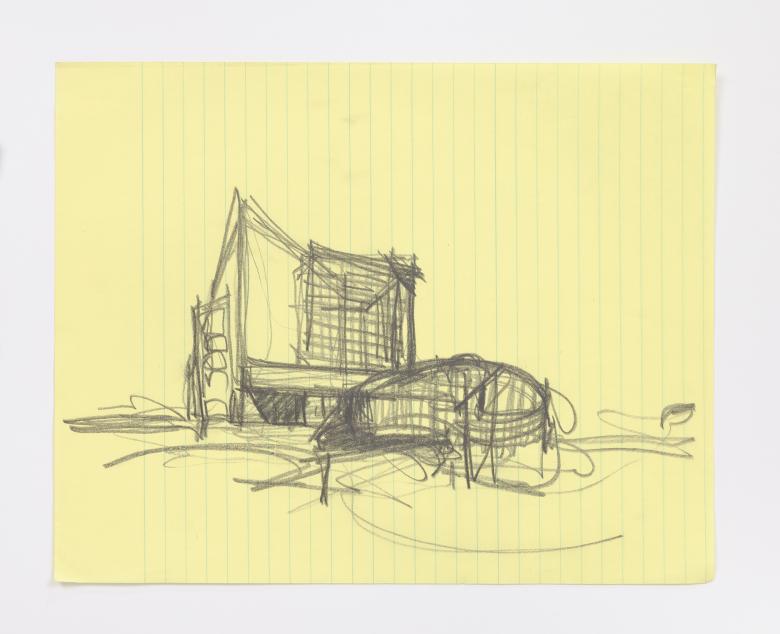
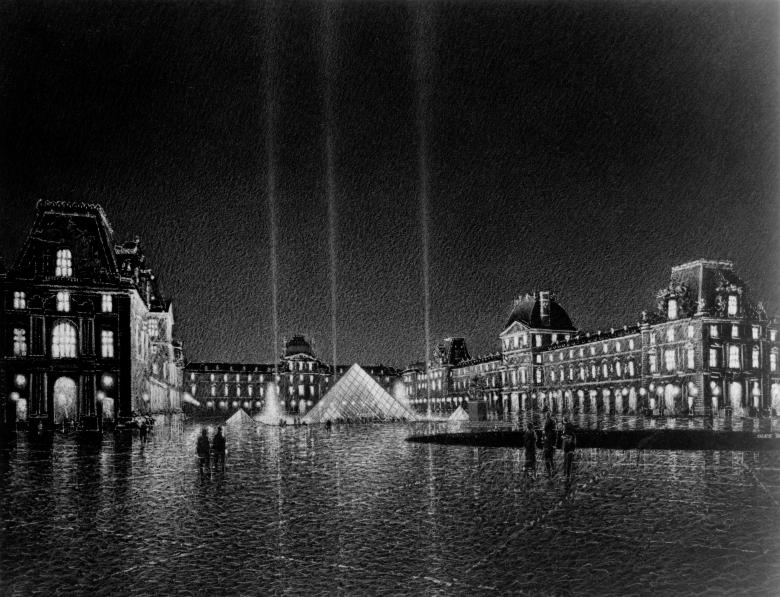
Pei's archive is planned to be available to students, researchers, and the wider public—the last via exhibitions and other programs—beginning in the fall of 2028, once it is processed and catalogued. Notably, the archive has documentation of the Earth Science Building (Green Building) at MIT, Pei's first major non-residential project and one of four projects by Pei on the MIT campus; the others are Dreyfus Chemistry Building, Landau Chemical Engineering Building, and Weisner Building, which are also part of the archive. Other important projects in the archive include the John F. Kennedy Presidential Library and Museum in Boston, the Rock and Roll Hall of Fame in Cleveland, the Musée du Louvre in Paris, and the National Gallery of Art in Washington, DC, among numerous others.
The donation of Pei's archive to the MIT Museum seven years after his death in 2019 brings to mind how the archives of other late-20th-century architects have been dealt with in recent years. Unlike today's architects, whose work is produced with computers and is often archived digitally, Pei and his contemporaries drew by hand, built models, and left many correspondences on paper—all amassing into large collections over time. Deciding how to maintain and where to keep such archives are obvious concerns for famous architects, be it in the later stages of their careers or posthumously, with their successor firms. Similar donations of architectural archives include Michael Graves's archive going to the Princeton University Art Museum in 2019, a portion of Frank Gehry's archive being acquired by the Getty in 2017, Moshe Safdie donating his archive to McGill University in 2022, and both Álvaro Siza and Toyo Ito giving their archives to the Canadian Centre for Architecture, in 2014 and 2023, respectively.
Pei's archive at the MIT Museum will reside alongside other collections from MIT alumni and faculty, including Imre Halasz, TAC The Architects Collaborative, Kallmann McKinnell & Wood, and Goody Clancy, among others.