Photo © Julien Lanoo
The latest addition to the campus of furniture maker Vitra in Weil am Rhein, Germany, is the Water Garden by Bas Smets, the Belgian landscape architect who is also responsible for a masterplan that views the campus as a “living organism.”
Since the completion of Factory Buildings designed by Nicholas Grimshaw in 1981, the Vitra Campus has become home to numerous buildings designed by famous architects: Tadao Ando's Conference Pavilion, Frank Gehry's Vitra Design Museum, Zaha Hadid's Fire Station, Herzog & de Meuron's VitraHaus and Schaudepot, and Factory Buildings by Gehry, SANAA, and Álvaro Siza. Recent years have seen the realization of small follies and the preservation of important structures, such as Kazuo Shinohara’s Umbrella House, on the public side of the campus, as well as a focus on the landscape uniting the whole. In regard to the latter, Vitra commissioned Dutch gardener Piet Oudolf to design a garden that opened in 2020 and marked the beginning of a more ecological design strategy for the campus.
This strategy was solidified in 2022, when Vitra hired Bas Smets to develop a masterplan that sees the campus as “a habitat for people, animals and plants that adapts to changing climatic conditions,” per a statement from Vitra, which continues: “Over the coming years, sealed surfaces will be gradually renaturalized, green spaces expanded, plants introduced and heat islands eliminated to create a cooling microclimate.” The Water Garden designed by Smets, which opened on June 17 next to the Gehry-designed museum, is the second major piece of the masterplan to be realized, following the planting of 8,000 young trees across the campus.
Take a visual tour of the new Water Garden in photos accompanied by captions providing additional information on the latest addition to the Vitra Campus:

Looking north from George-Nelson-Str., the Water Garden can be seen beyond Tadao Ando's Conference Pavilion (1993) and the adjacent Doshi Retreat, which opened last October. (Photo © Julien Lanoo)
The Water Garden takes the place of a lawn in front of the Vitra Design Museum. Alongside the existing orthogonal pathways by Tadao Ando is a re-edition of an original Maison Démontable 4x4 by Jean Prouvé, visible in the foreground. (Photo © Julien Lanoo)
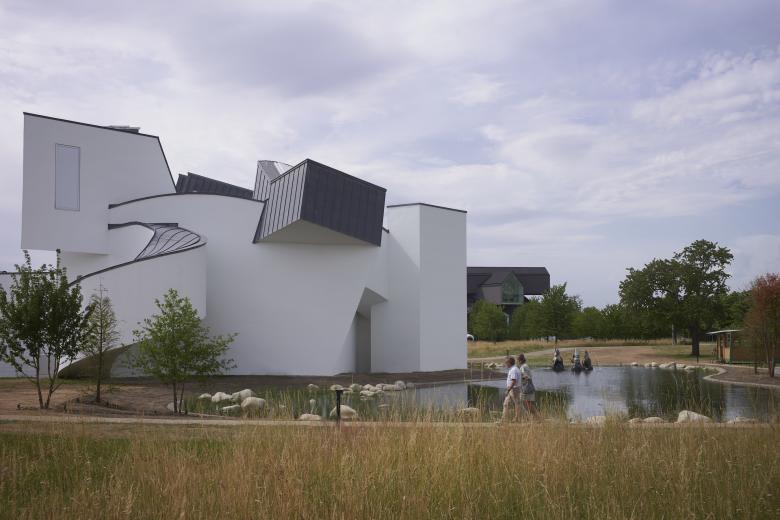
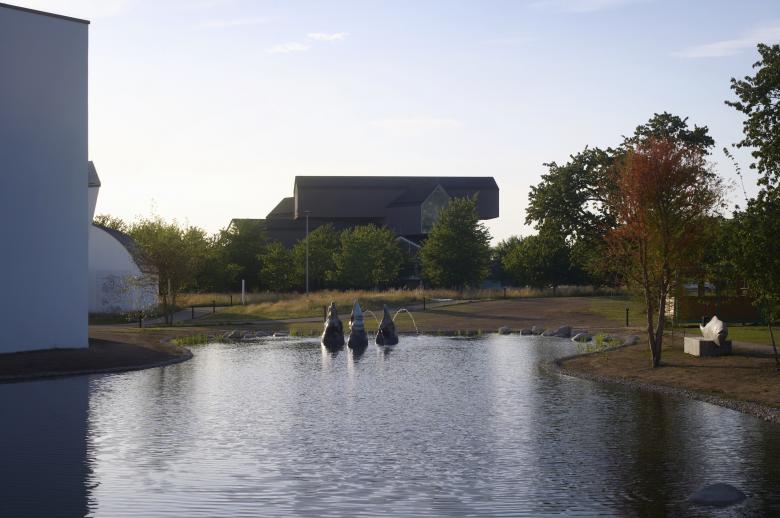
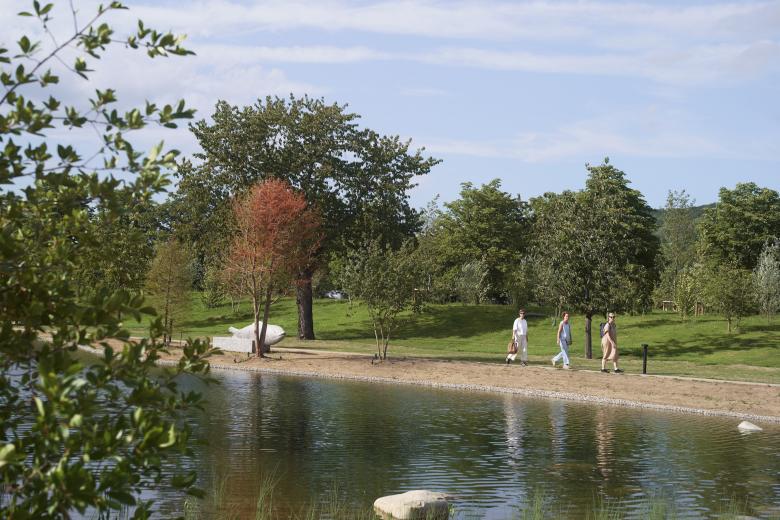
Edged with aquatic vegetation and native trees, the Water Garden is supplied by rainwater collected from an adjacent factory roof. (Photo © Julien Lanoo)
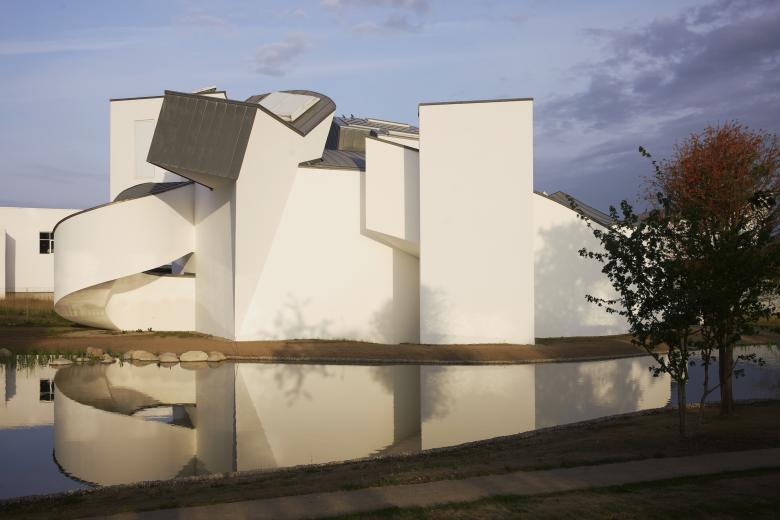
The Water Garden aims to enter into “a compelling dialogue” with the “dynamic architecture” of Gehry's Vitra Design Museum, per a statement, “creating new spaces for visitors to linger and stroll.” (Photo © Julien Lanoo)
The dialogue between the museum and the pond is most pronounced when the water surface reflects the surfaces of Gehry's architecture. (Photo © Julien Lanoo)
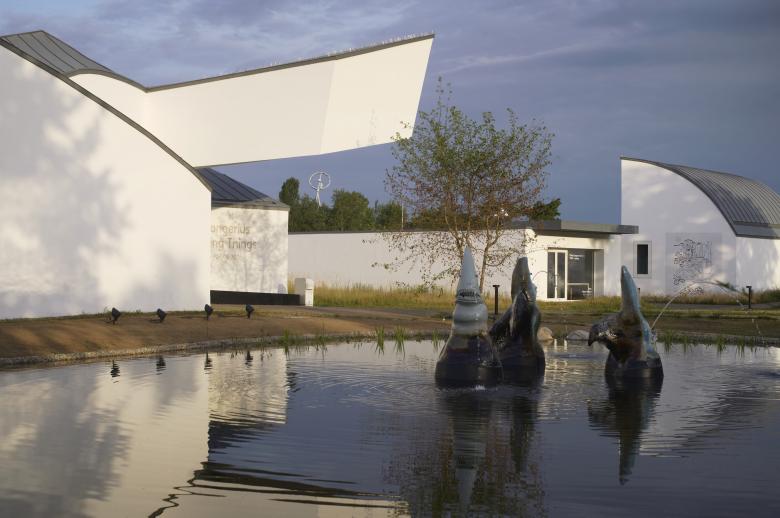
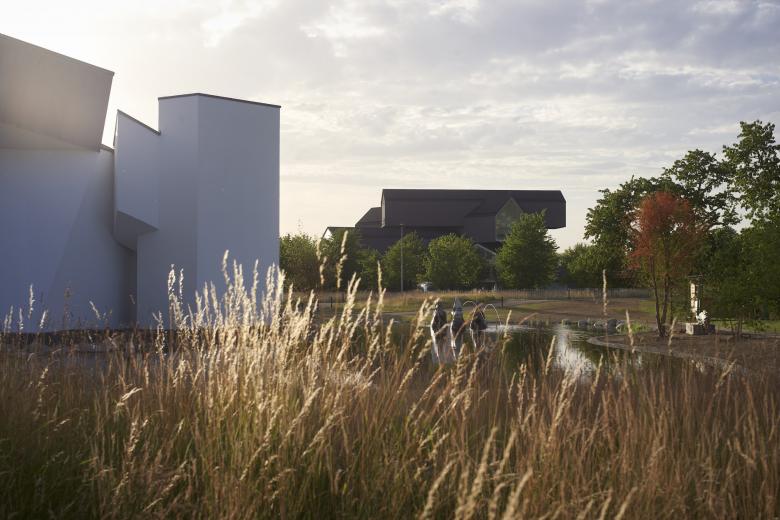
Looking toward Herzog & de Meuron's VitraHaus (2010), three figures are visible in the middle of the pond. (Photo © Julien Lanoo)
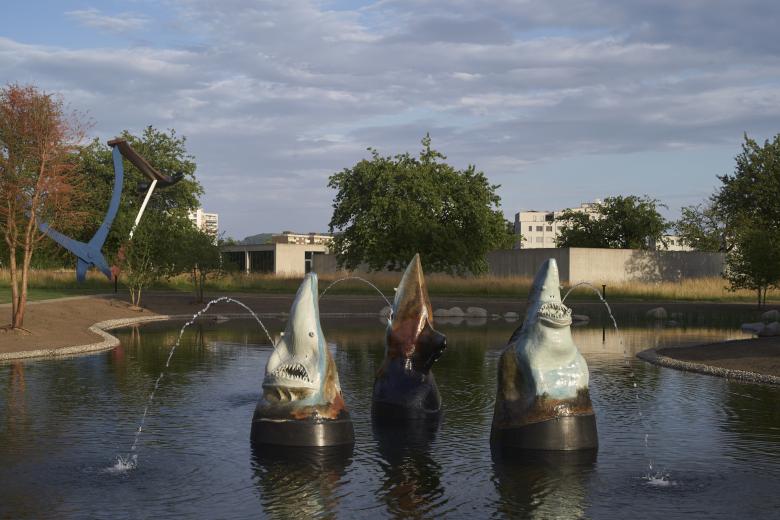
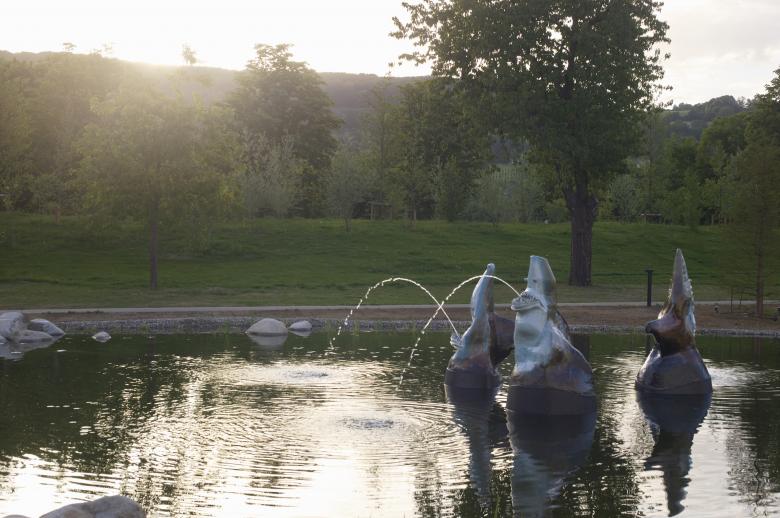
The large ceramic sculptures are The Three Graces by designer Hella Jongerius, part of her “Angry Animals” series that gives a voice to endangered wildlife. (Photo © Julien Lanoo)
The sculptures accompany Whispering Things, a retrospective of Jongerius’ career currently on display at Vitra Design Museum, though they will remain in the Water Garden as a permanent installation after the exhibition closes in September. (Photo © Julien Lanoo)
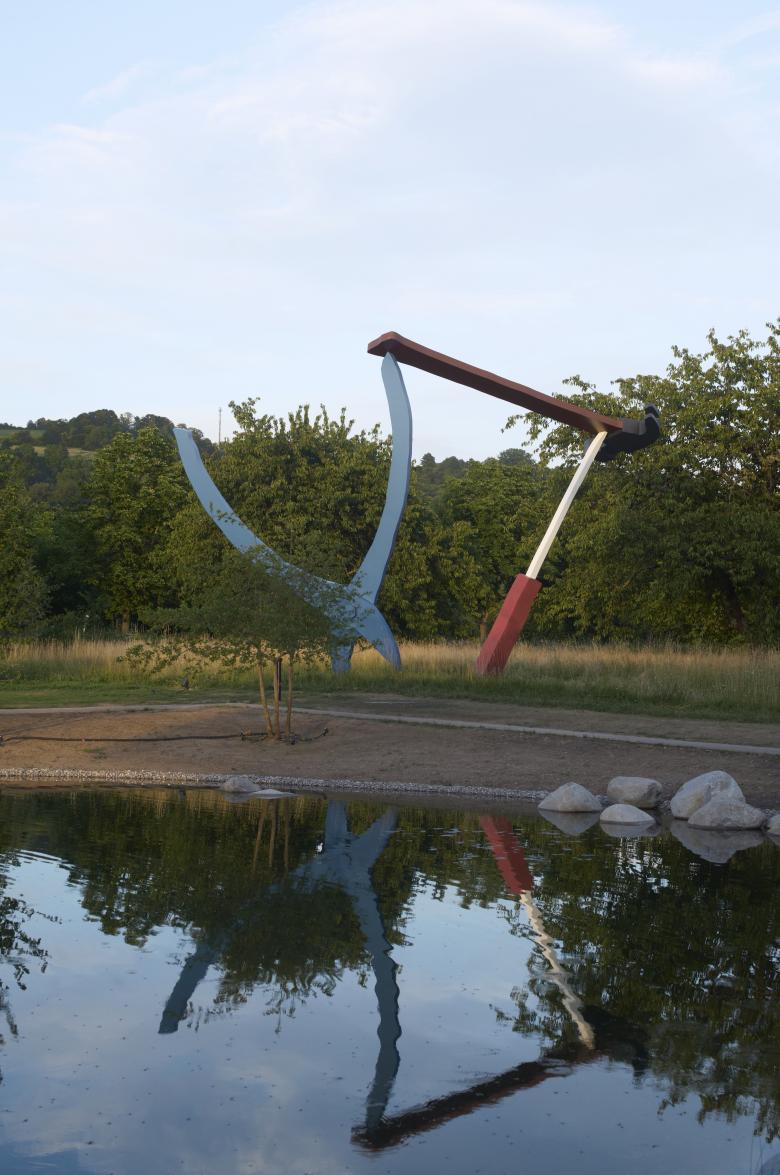
The Water Garden sits between the Vitra Design Museum and one of the campus's most familiar images: Balancing Tools by Claes Oldenburg and Coosje van Bruggen, installed in 1984. (Photo © Julien Lanoo)
The soil excavated for the creation of the pond was used to form a berm shielding the garden from the busy road. (Photo © Julien Lanoo)
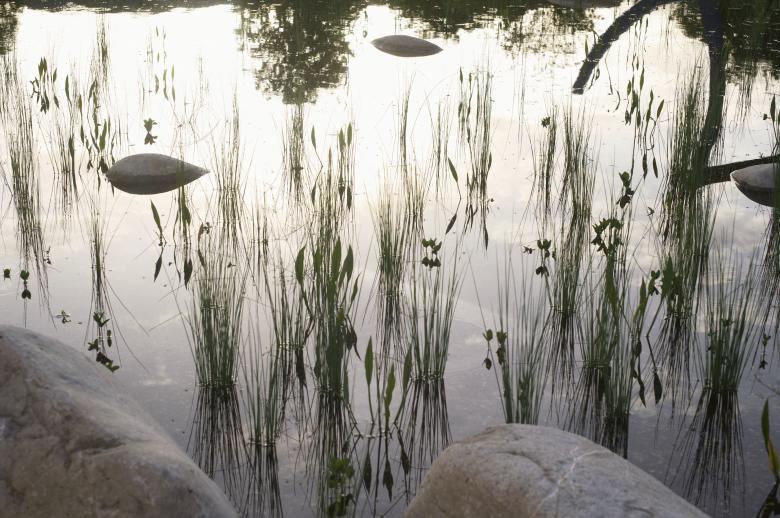
“The body of water and its plants will attract birds and support a population of fish,” the statement reads, “bringing new forms of life to the campus.” (Photo © Julien Lanoo)