World Building of the Week
Kampoong Guha
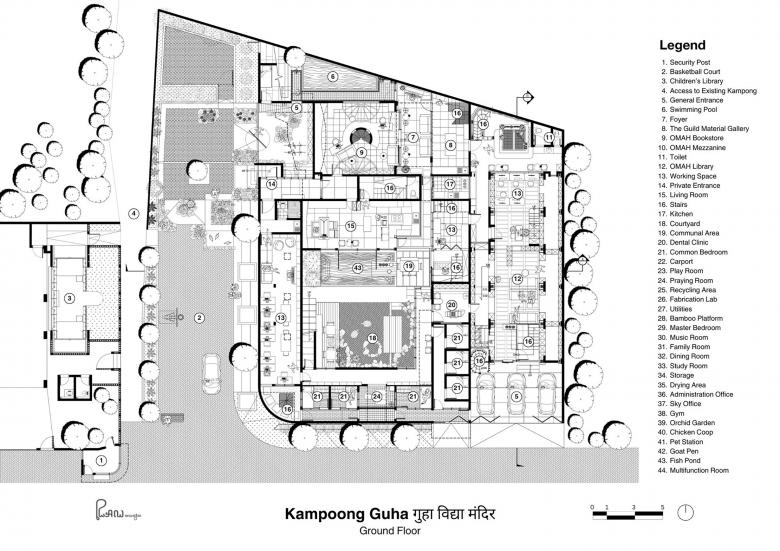
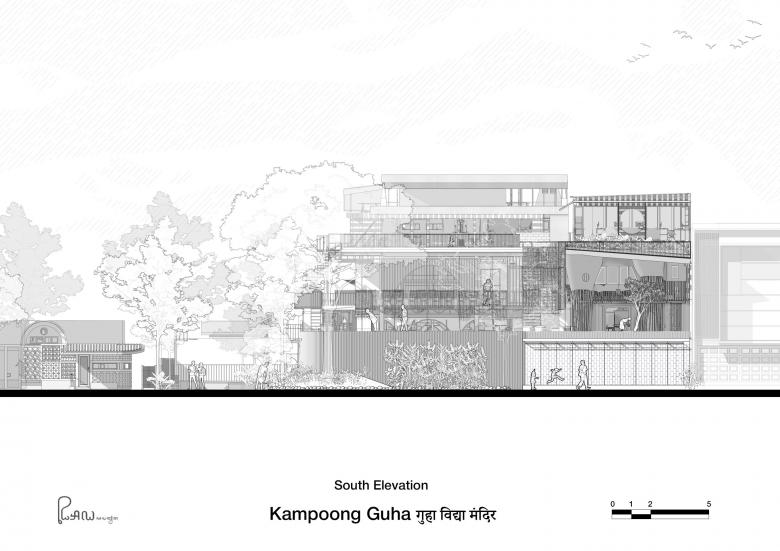
Located in Tangerang, the largest city in the Indonesian province of Banten, Kampoong Guha consists of a children's library, educational spaces, residences, and the office of Realrich Architecture Workshop Studio, which is both architect and client for the community-focused project. Architect Realrich Sjarief answered a few questions about the project.
What were the circumstances of receiving this commission?Kampoong Guha arises at the junction of a formal and an informal neighborhood, and we have been growing alongside the local community. The project houses OMAH Library (children’s and public library), Realrich Architecture Workshop Studio, a co-working space, a workshop hall, home education classrooms, and an architect's residence with a boarding house for designers. The design has become our way to nurture the community and take care of all the spirits around it.
Our library was born out of necessity to address issues of both safety and literacy in the area. It has become our call ever since to always provide a safe space for children where they can read, do their homework, and play. Therefore, the library has become an effort for us to combine these two contrasting neighborhoods together. It is a channel for us to stay close and learn from the community, as both of our library and studio have become glued with the community. We include the community as an integral part of our identity, and we see it as an urgent matter to make this approach as the model for the best practice in our studio.
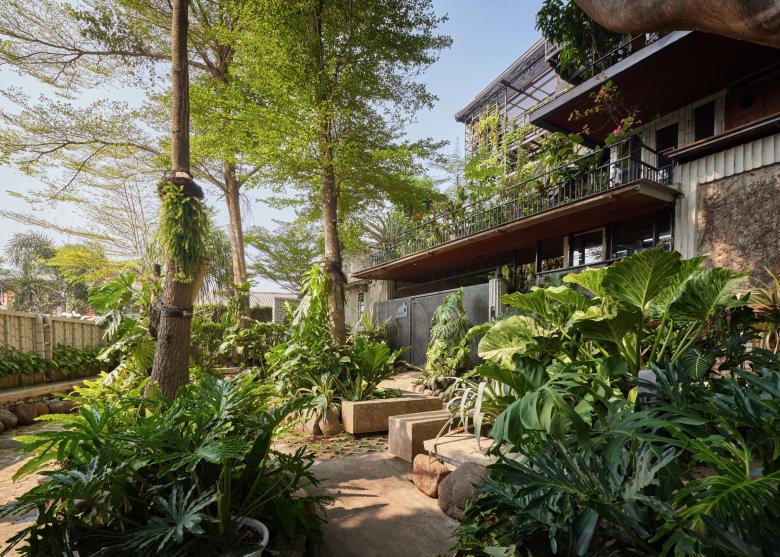
We see Indonesia as a postcolonial country, and we recognize its lack of resources. We believe that architecture doesn’t need to be expensive to be beautiful. Kampoong Guha is shaped by the intangible knowledge of the local craftsman. Our approach prioritizes craftsmanship over expensive materials. Our construction is increasingly moving towards lighter materials in terms of both cost and weight.
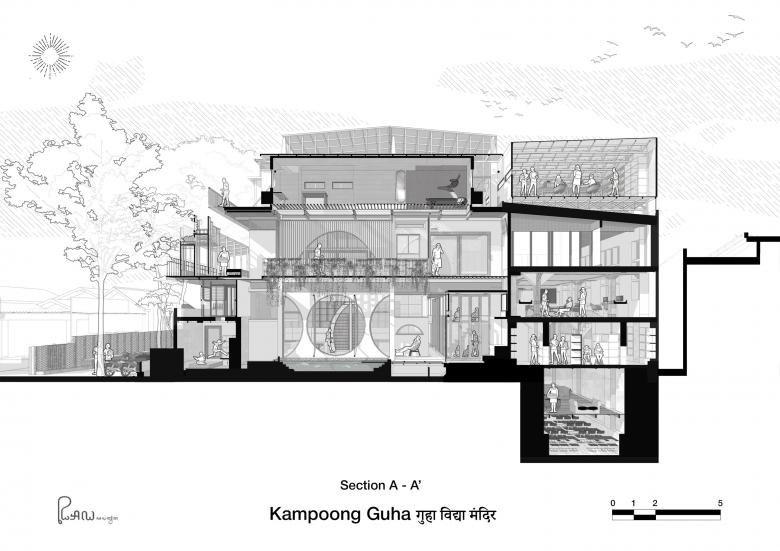
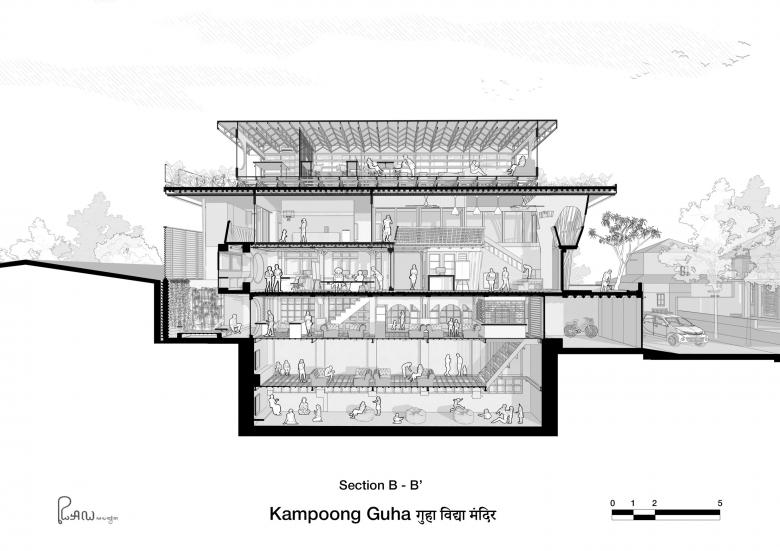
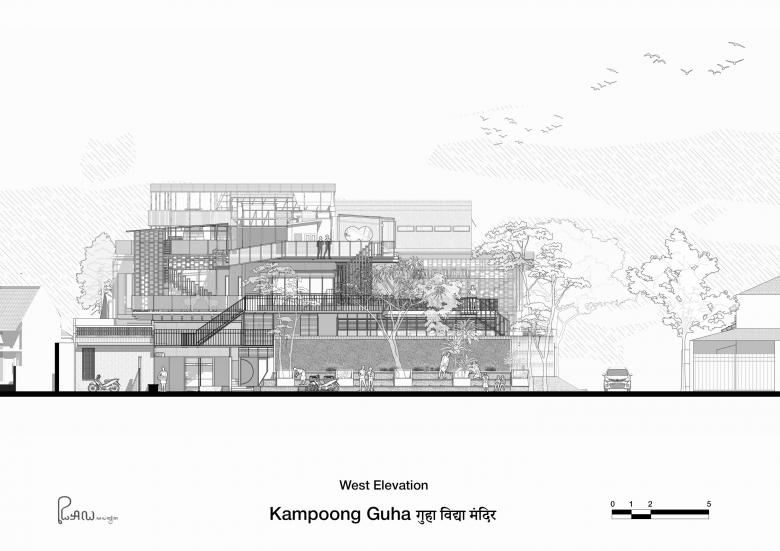
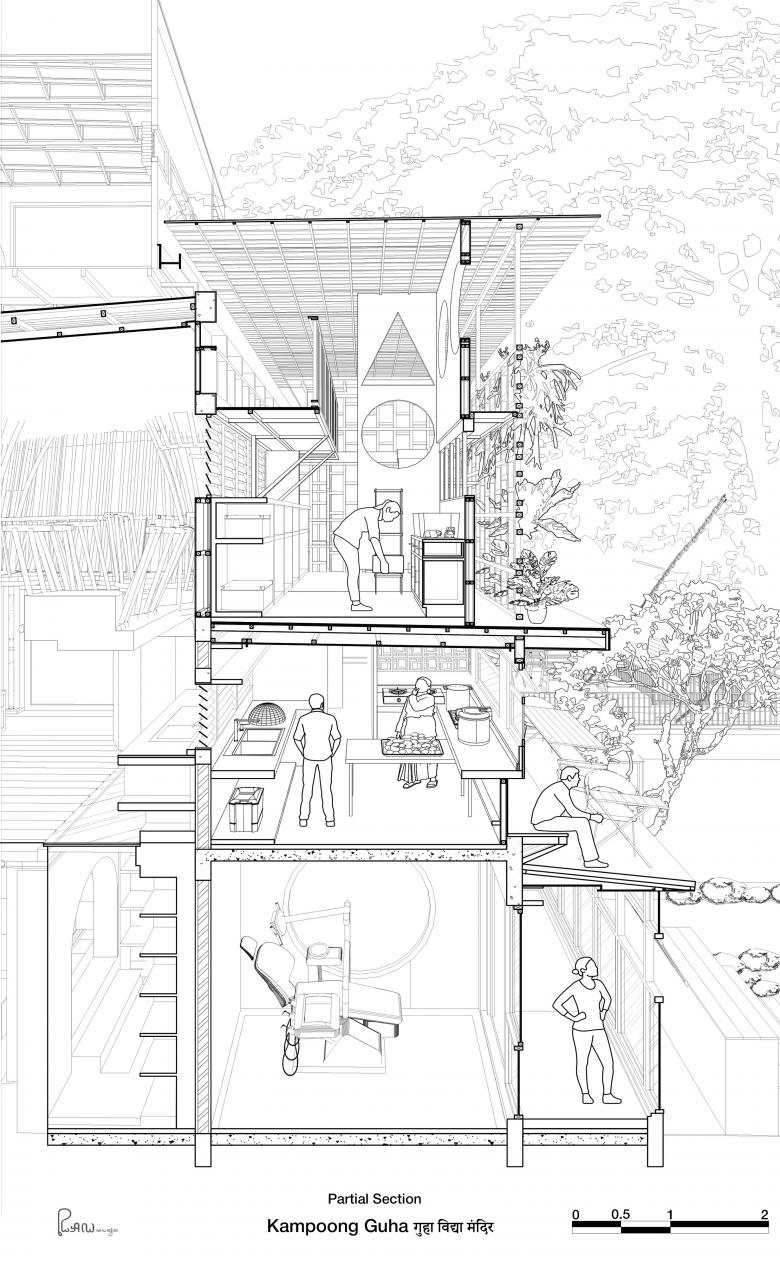
The project combines lightweight construction above heavy concrete foundations. The lightweight envelope wraps the outer layer of Kampoong Guha further with bamboo, light steel, and plant, shaping a microclimate inside.
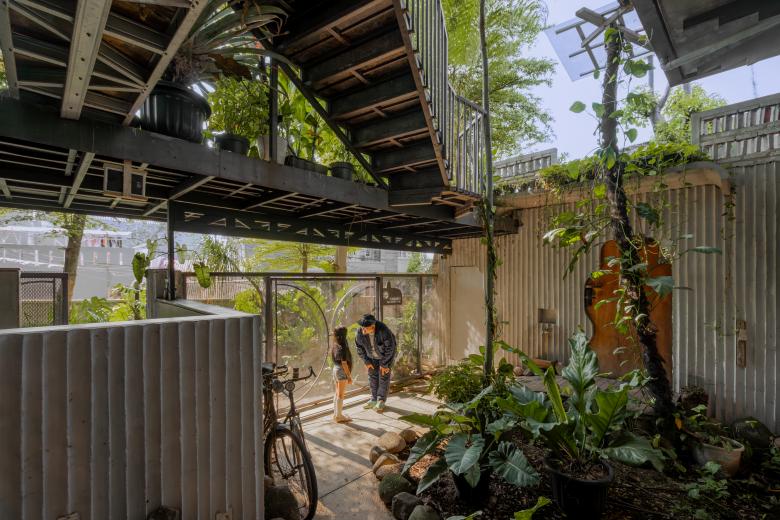
In Kampoong Guha, we use the local bamboo that we can find in the street, which are smaller and cost only $1 each, unlike the bamboos from Bali and Sumbawa. We use bamboo because it is lightweight, locally available, and has great potential for craftsmanship. Additionally, bamboo is a sustainable material that can be grown.
These alternative materials then shape our tectonics grammars. We get some of the patterns in our project from material limitations, and these patterns have further inspired our architecture details. Materials can take on different appearances through various construction methods, bringing out the best of each element to its limit.
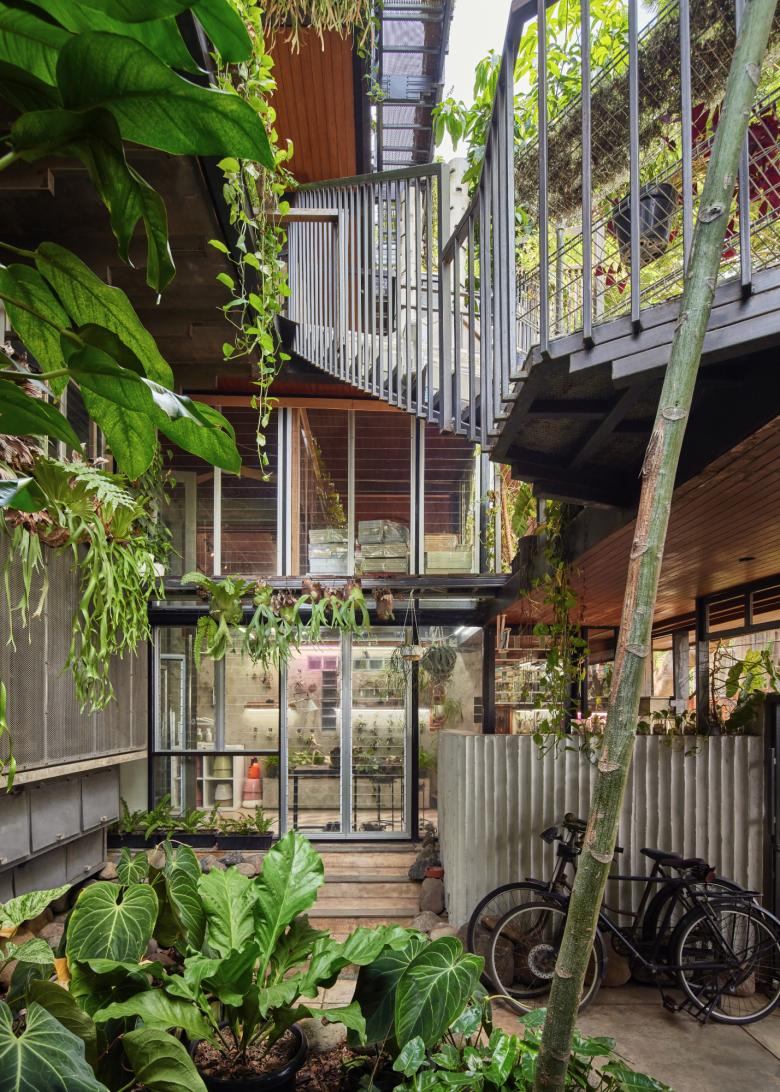
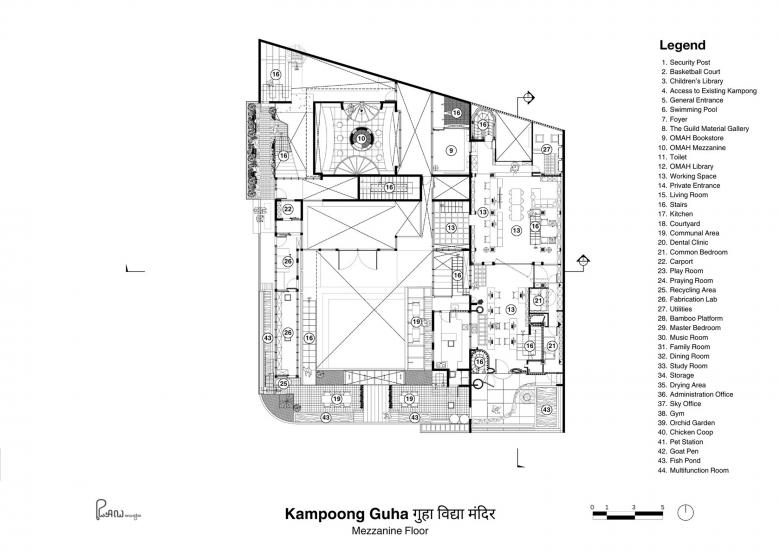
The architecture of Kampoong Guha unfolds like an intricate kampung journey. The design explores and imitates the quality of a kampung within the intimate scale. Spaces flow through like one in a tight alley, venturing through intimate corridors to big communal spaces. We see kampung as a prototype, a typology to liberate us from our postcolonial context through the human scale. Hence, the Kampoong has shaped our daily practices by adapting to the microclimate conditions, becoming an oasis to address efficiency, and make the urban living in Jakarta more humane.
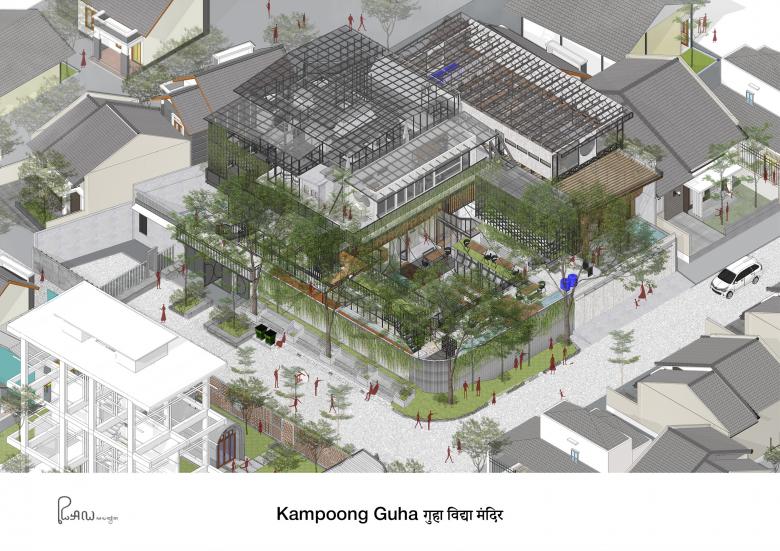
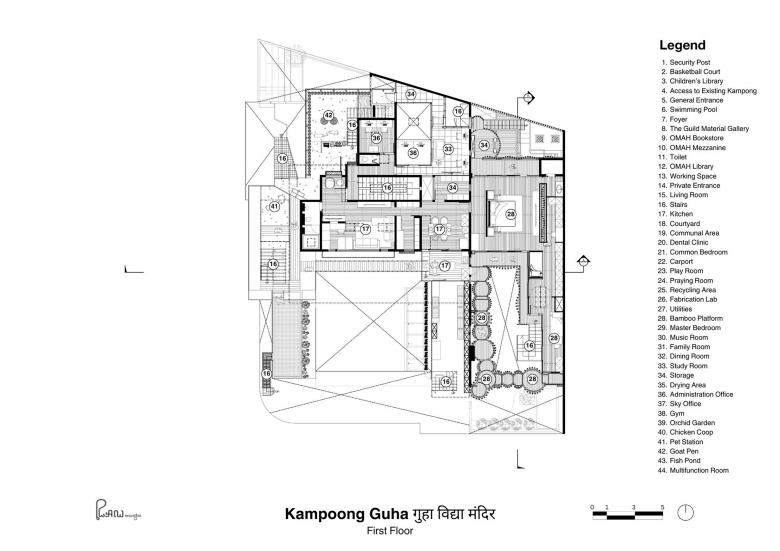
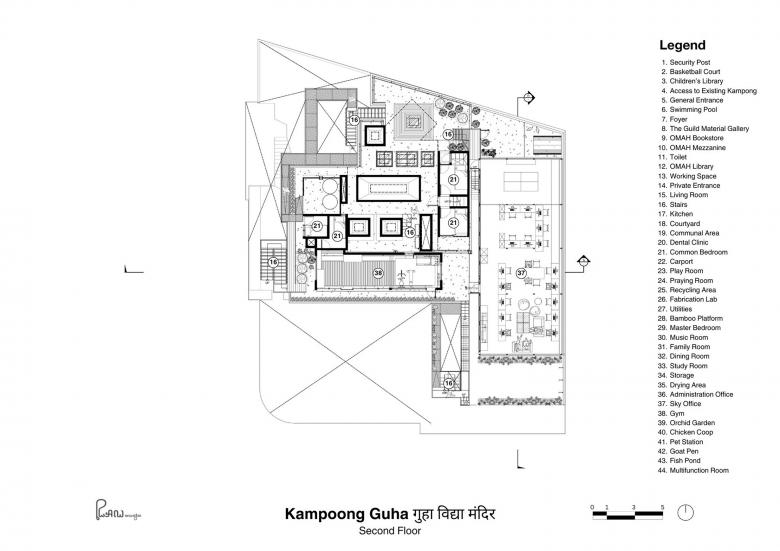
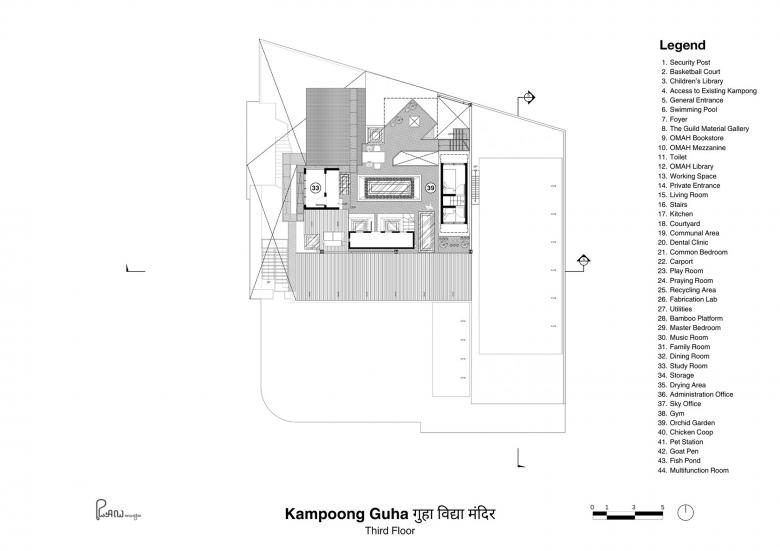
The spatial program of Kampoong Guha is organized like a flexible labyrinth, with a maximum span of 4m per room, with more than 200 doors and windows, all accessible from multiple access points. The dense yet flexible space programming ensures air circulation and natural lighting through openings, doors, windows, and skylights. The doors have become windows, and the windows have become the doors. This adaptive nature in every scale of the elements is key in showing how the architecture can survive through evolving and growth.
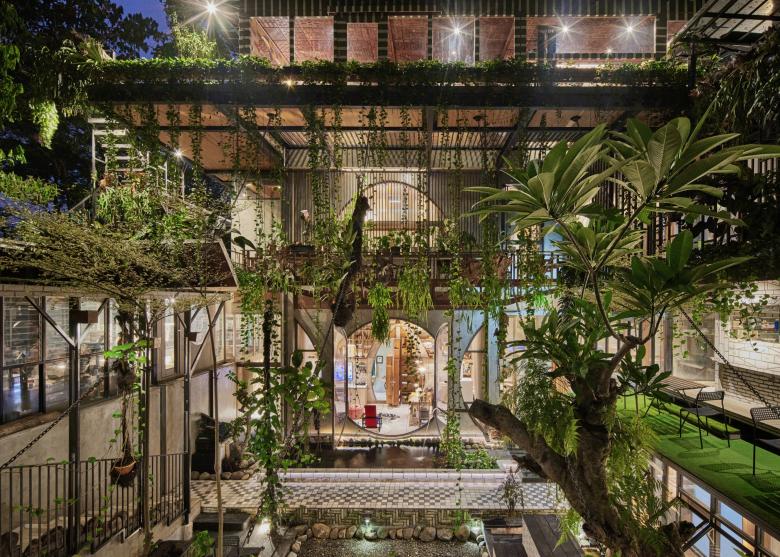
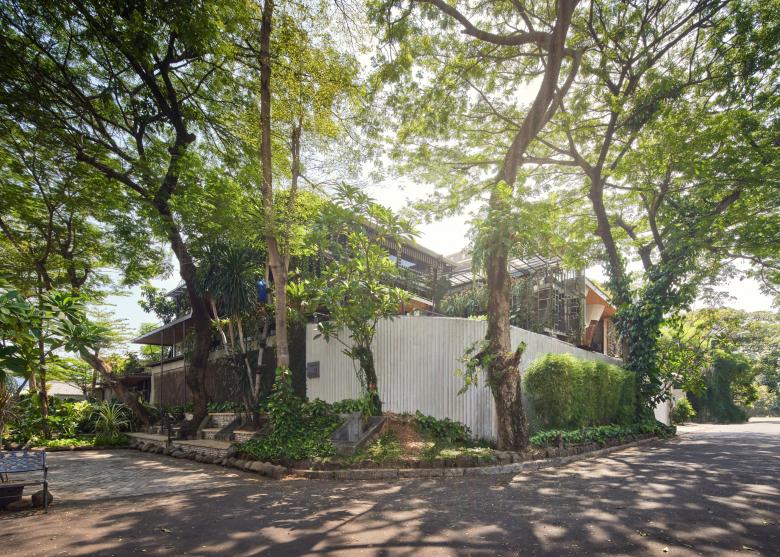
The site is located at the junction of a formal and an informal neighborhood: to the north lies Kampung Haji Brit with a 1.5 m-wide alley, while to the south lies a Mediterranean-style gated community in Meruya, Tangerang, with a 6 m-wide road. The design plants tropical plantings that shade the pathway connecting the gated street with the Kampung alley, also preserving existing flamboyant and Trembesi trees.
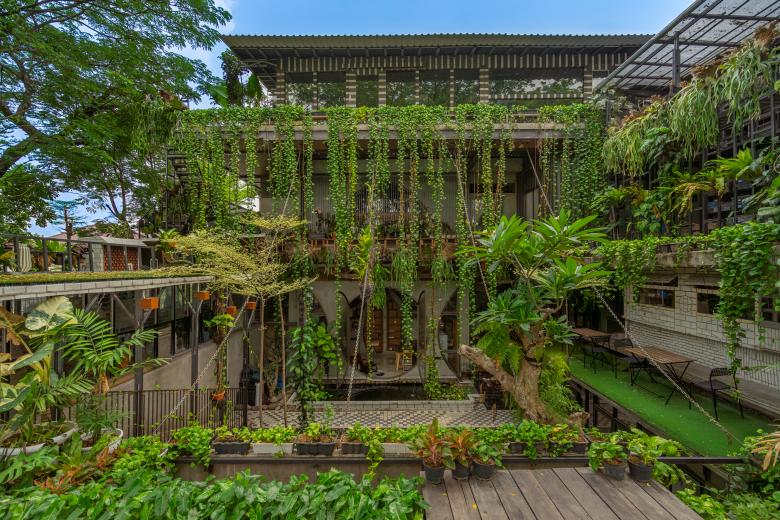
We realize that plants are the perfect materials that can perform to filter air and provide oxygen for our indoor environment. We take inspiration from the layered structure of forests to design our landscape. Just like how the canopy, understory, and forest floor work together in nature.That way, we chose to work with various kinds of plants, from large to small, creating layers that grow inside out. This approach has provided Kampoong Guha with its own microclimate, reducing the urban heat island of the site immensely.
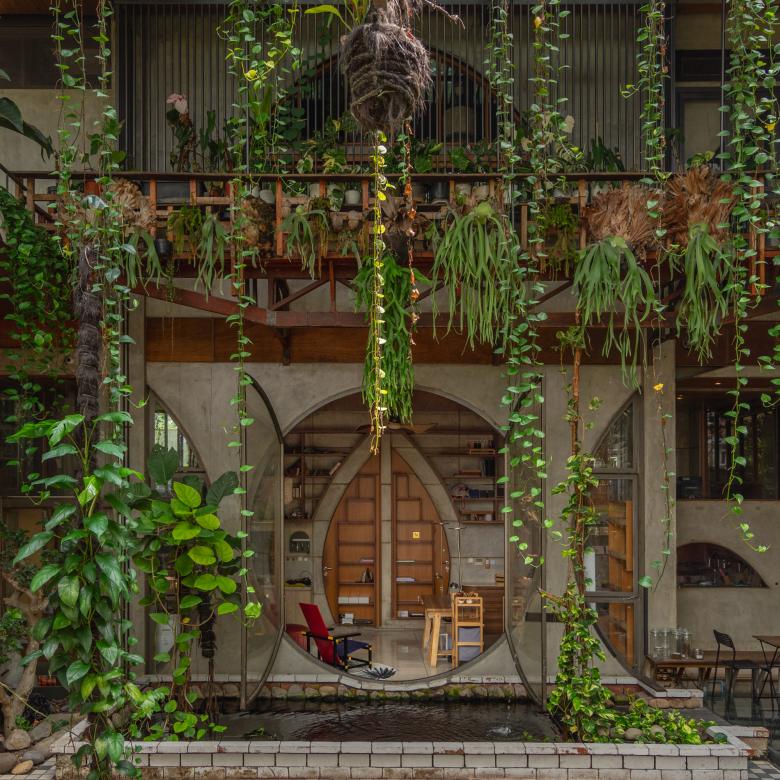
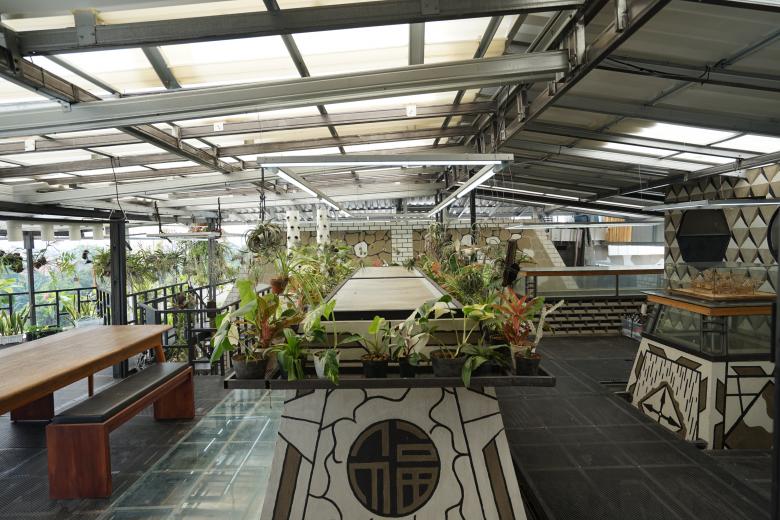
The landscape inside Kampoong Guha mirrors those in context. Throughout the project, pockets of gardens create micro-spaces that lead to an orchid and air-plant garden at the rooftop. The green roof functions as thermal insulation, maintaining indoor temperatures below 30°C as a tropical climate experiment. The landscape provides a house for cascading orchid gardens, and small animals such as goats, tortoises, lizards, guinea pigs, and chickens. This ecological loop allows for composting—herbivores provide natural fertilizer for plants. This loop therefore highlights the idea of our ecosystem and architecture, completes the chain where we continue to support each other.
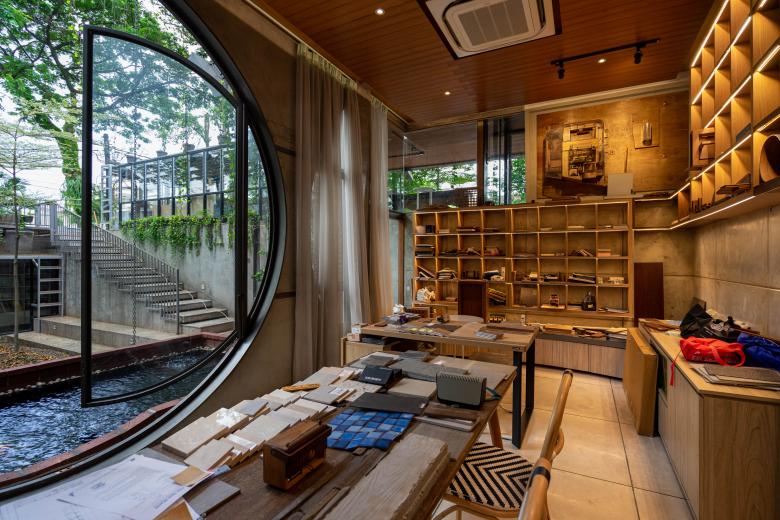
The people who live in Kampoong Guha guide the design as much as the design guides the routines of the people. The context calls the importance for programs like libraries to emerge, and our community calls for the necessity to nurture and improve our well-being together through housing.
We are grateful for the community that has been essential in affirming the importance of libraries and literacy as the foundational elements of a knowledgeable society. We understand that every step that we take is part of a larger vision of a better future. We are committed to continue our struggle to keep innovating and to spread kindness. Our mission does not end in creating beautiful spaces, but to empower, educate, and inspire future generations. We believe that, with community support and collaborative spirit, this journey will bring about meaningful positive change, creating a better future for us all.
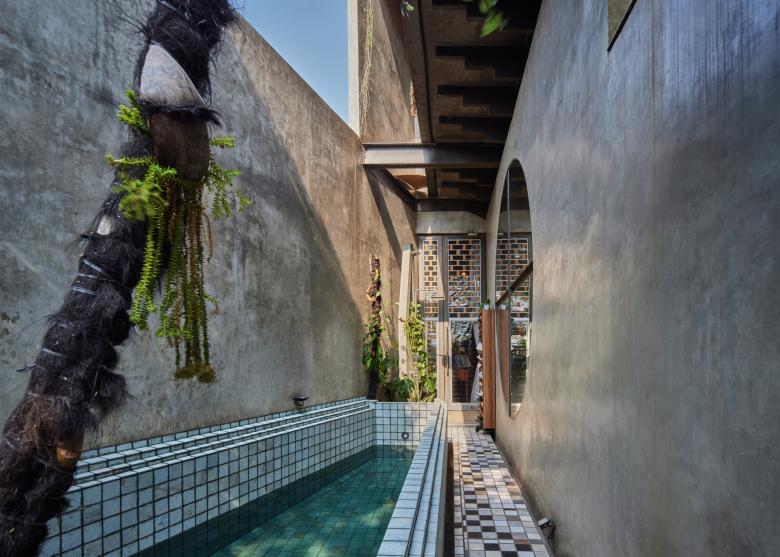
In Kampoong Guha, plans and programs are always a subject to change. The project is always in the state of iterations, with the mentality of keeping it 99% finished to always leave space for improvements to happen. The project acts more like a frame–where plans and programs can flexibly be shifted, added, or connected according to the needs, by means of structure, down to the detail level of the ergonomics. This level is where it is most important, like giving muscle to the bone of the project.
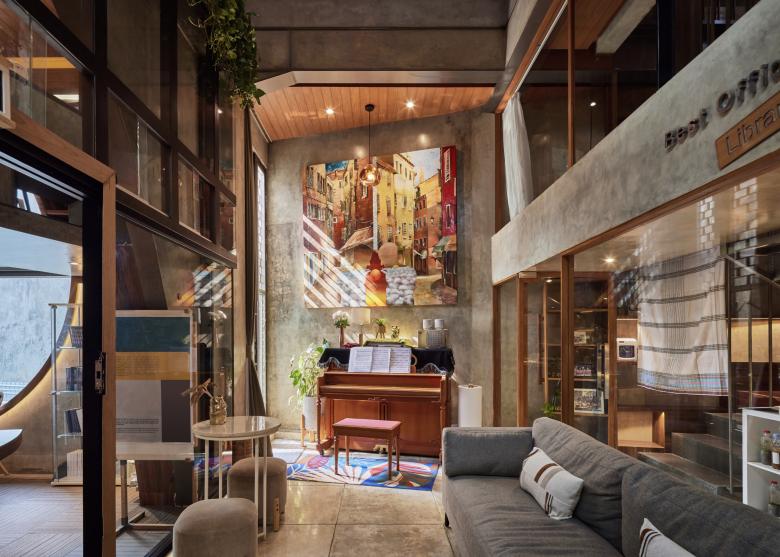
Kampoong Guha always holds its door open to the community, especially the craftsman community by providing them a space where they feel secure to create. Each program in Kampoong Guha can be flexibly changed according to their needs, discovering possibilities of improvements for the program, or unlocking new potential on how to use the space.
Spaces inside Kampoong Guha are always in use by everyone, bringing in public life within its private core. Designers and librarians who work and live inside have always been able to interact with visitors or students who came in to learn, and therefore extends connections to occur even further. The project calls it a necessity to house living space for designers, librarians, and craftsmen, as an approach and proof that by taking care of each other through the daily routines can liberate one's way of life from the traps of a postcolonial attitude.
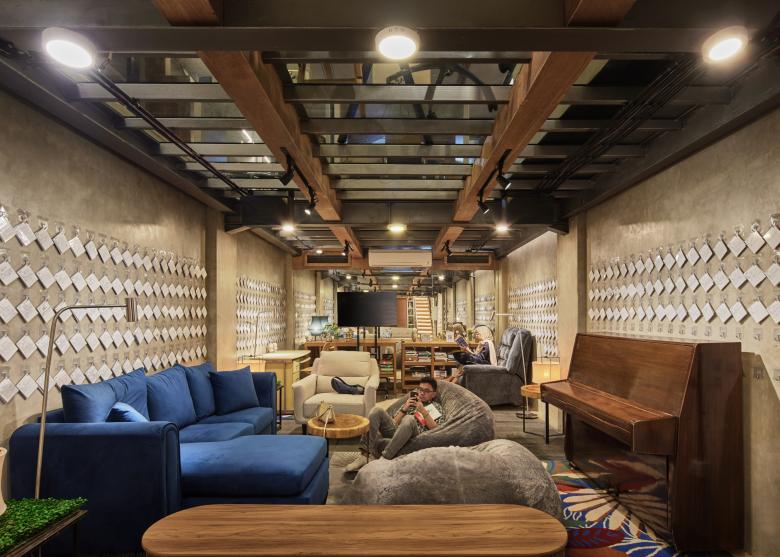
Kampoong Guha has become a laboratory, where a lot of the explorations of the architecture elements such as doors and windows details, brick and wood patterns, and lighting fixtures happens, to the extent of trying out iterations of workspace planning, and bioclimatic approaches with fans and openings before it gets applied in the other projects.
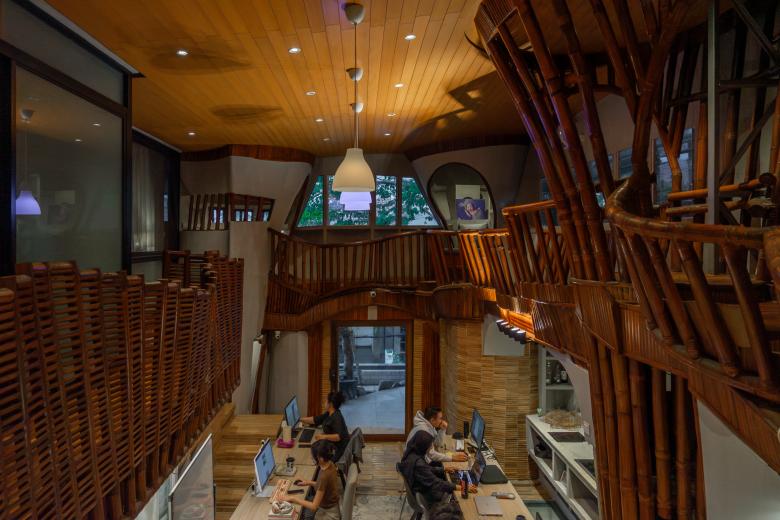
The common thread throughout our projects has been our craftsmen. We believe that craftsmanship holds a hidden potential for exploration beyond the drawing. They underline our identity of always questioning what is beyond the architecture. Our office is committed to hold high of their dignity, in a context where craftsmen are still looked upon. Our bond is strong, built on mutual care and innovation. We believe that this human to human relation is the key to create innovation that brings dignity together. Hence, more than the architecture itself, Kampoong Guha embodies the spirit that echoes throughout our projects, becoming a model that nurtures and grows, a necessity in our postcolonial context.
Location: Tangerang, Banten, Indonesia
Architect: Realrich Architecture Workshop, Jakarta
- Lead Architect: Realrich Sjarief
- Analytic Team (Climatic Assessment): Aditya Kosman, Alya Hasna Rizky Riandita, Prasetyi Adi Nugroho
- Design Team: Aep Saepuloh, Eddy Bachtiar, Amud
Consultant (Structural, Landscape, Lighting, Acoustics, Environmental): DOT Workshop
MEP: Hamim
Interior Designer: Realrich Architecture Workshop
General Contractor: Singgih Suryanto
Supervisor In Charge: Sudjatmiko, Singgih Suryanto
Construction Manager: Eddy Bachtiar
Mechanical & Electrical Contractor: Bambang Priyono, Andi, Karim, Hamim
Master Carpenter: Syarifuddin Pudin
Gross Built Area: 800 m2