Verdant Ridges
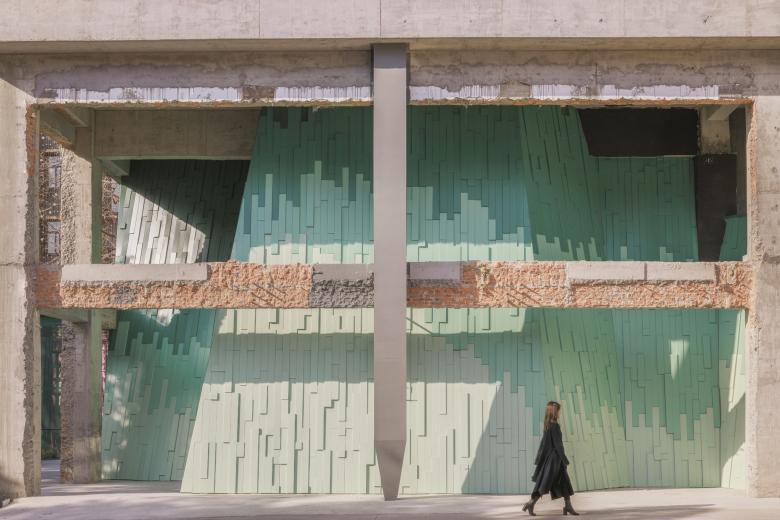
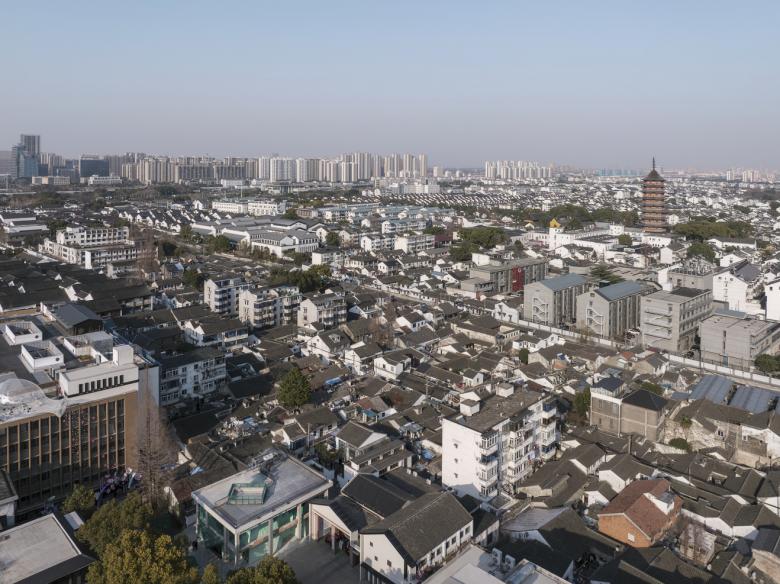
Wutopia Lab was commissioned to create the "Verdant Ridges " (青嶂) Theater in Suzhou’s historic Taohuawu district. Inspired by Tang Bohu, this theater emerges from the ruins, embodying a poetic dialogue between history and contemporary architecture.
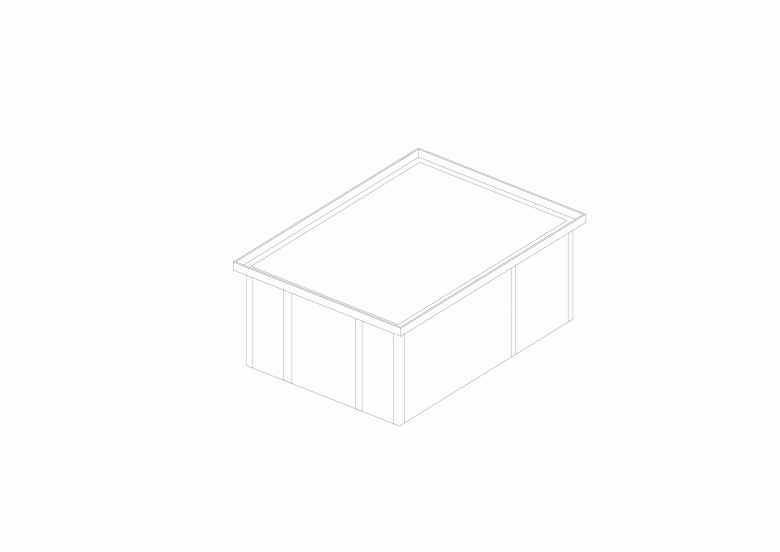
The site was originally home to the Xinguang Silk Weaving Factory. The renovated Building No. 5 has now been transformed into a versatile theater, seamlessly integrating Suzhou-style stage performances with medium-sized conferences.
Tang Bohu
In architectural renovation, the common approaches typically fall into two categories: completely redesigning parts of the structure or preserving its original form as much as possible. Wutopia Lab seeks to break free from this binary and explore a new path.
Inspired by the dramatic life of Tang Bohu, we go beyond merely preserving the historical depth of the old building—we breathe new artistic life into it.
In 1499, Tang Bohu’s promising official career was abruptly cut short due to his implication in an imperial examination scandal. This downfall, however, became the catalyst for his artistic genius to fully emerge. Stripped of the bureaucratic path he once pursued, he carved out a new realm of artistic brilliance.
We see the old factory as a symbol of feudal constraints, while the new theater represents Tang Bohu’s liberation and metamorphosis.
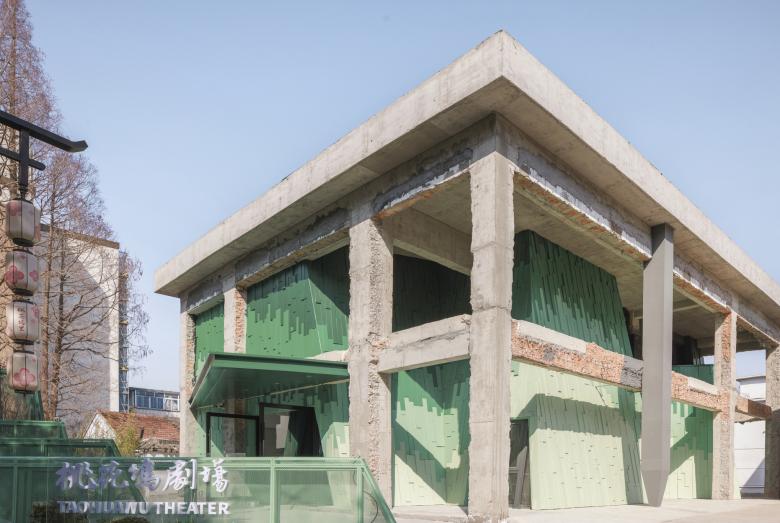
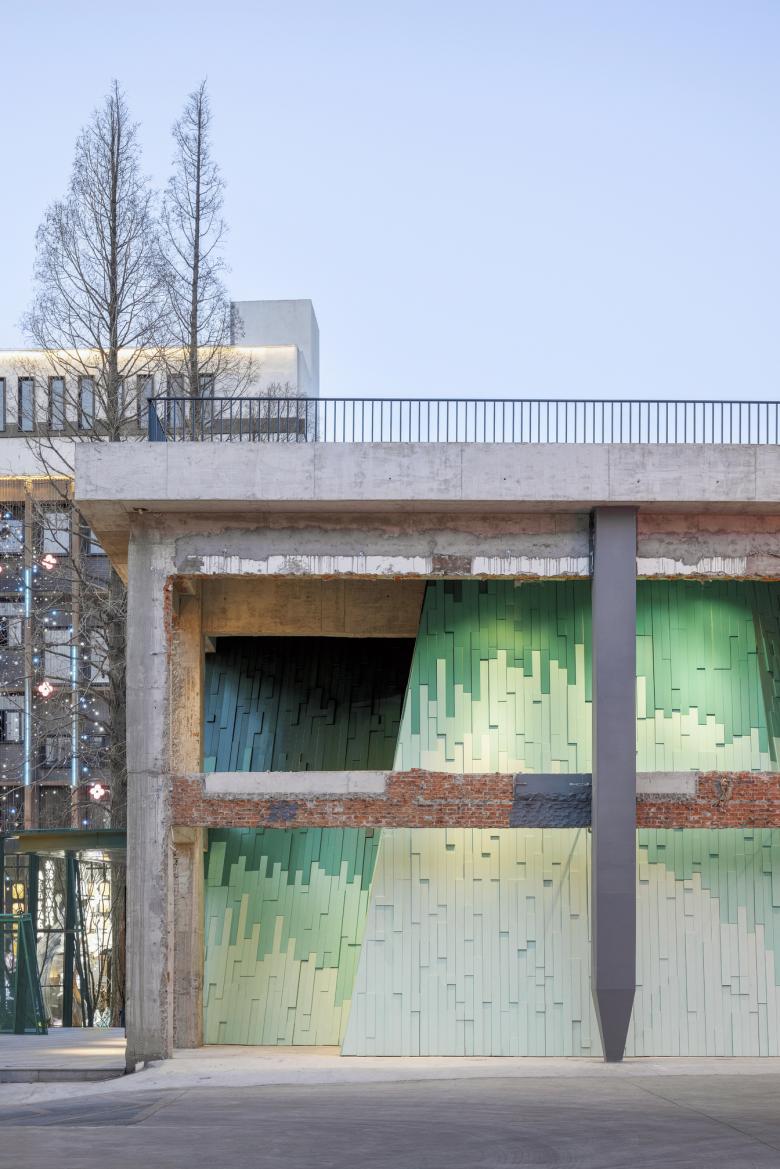
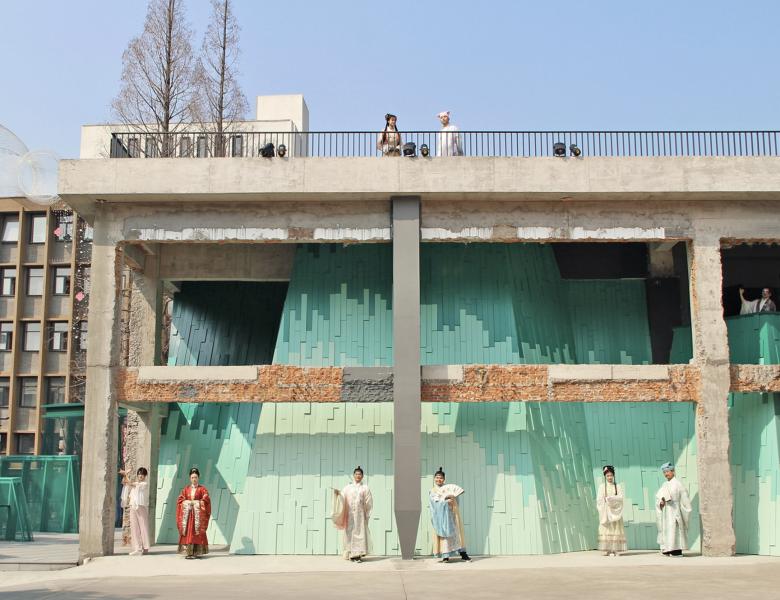
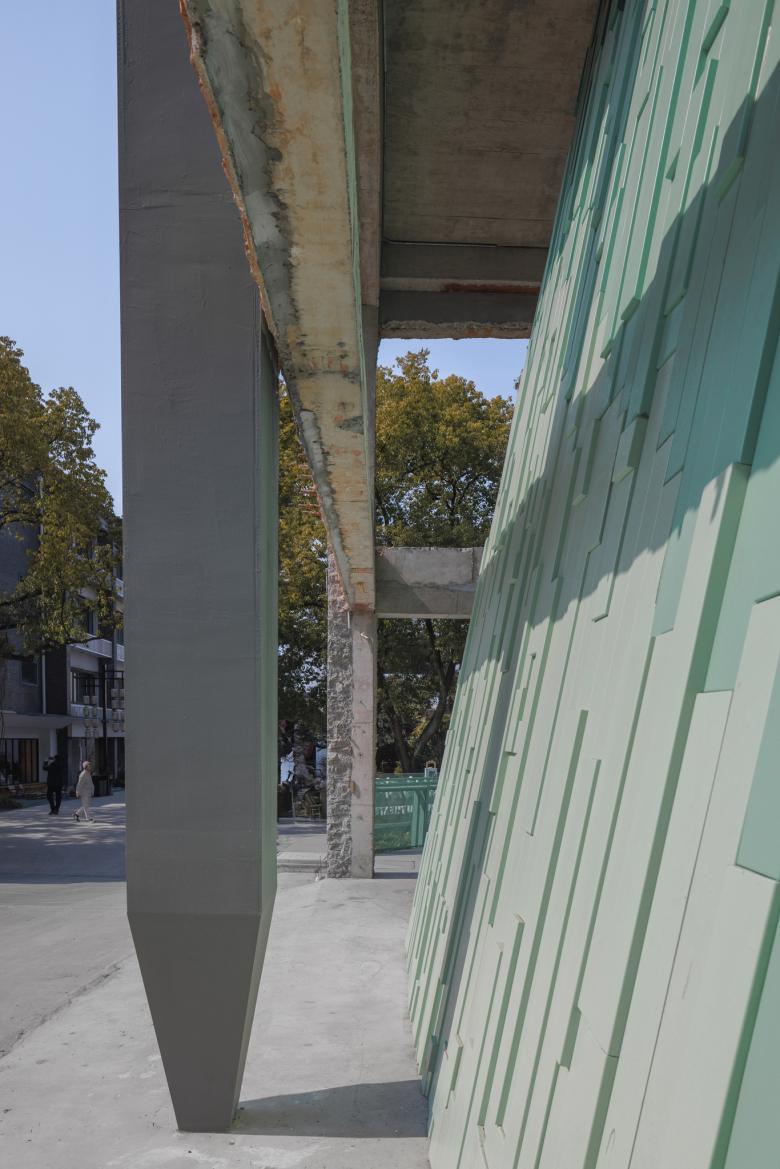
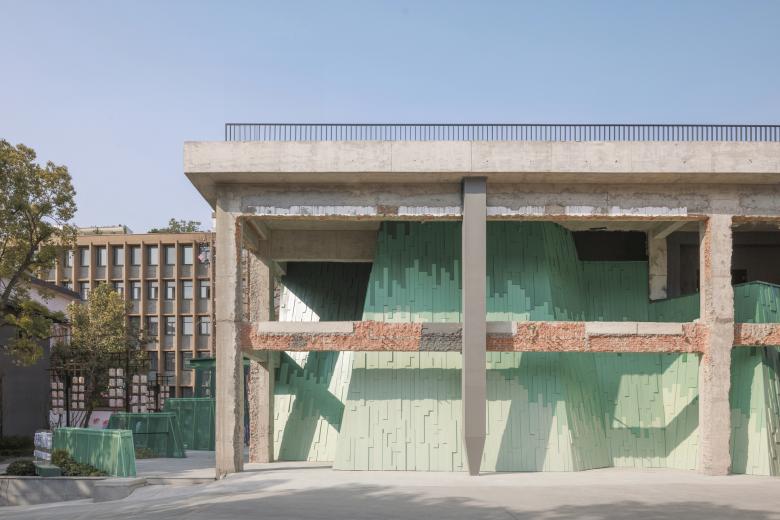
Tang Bohu was a master of landscape and figure painting. Traditional landscape paintings were often monochromatic, while figure paintings were rich in color and vibrancy. Drawing from Wutopia Lab’s expertise in bold use of color, we have infused the vivid hues of Tang Bohu’s figure paintings into his landscapes, creating a new visual language—one that honors classical elegance while embracing modernity. You might notice a unique column on the east side, resembling an inverted paintbrush. More than just a structural element, it stands as both a subtle monument and a symbol of artistic legacy.
The Inner World of Tang Bohu
Though celebrated as a literary genius of Jiangnan and a symbol of romantic elegance, Tang Bohu’s Peach Blossom Hermitage Song reveals a more introspective and refined sensibility. Beneath his flamboyant persona, he longed to preserve a sense of inner tranquility and dignity.
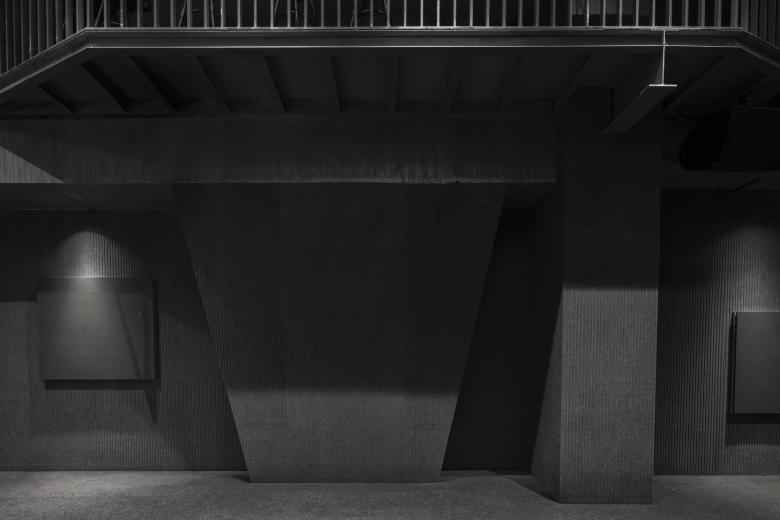
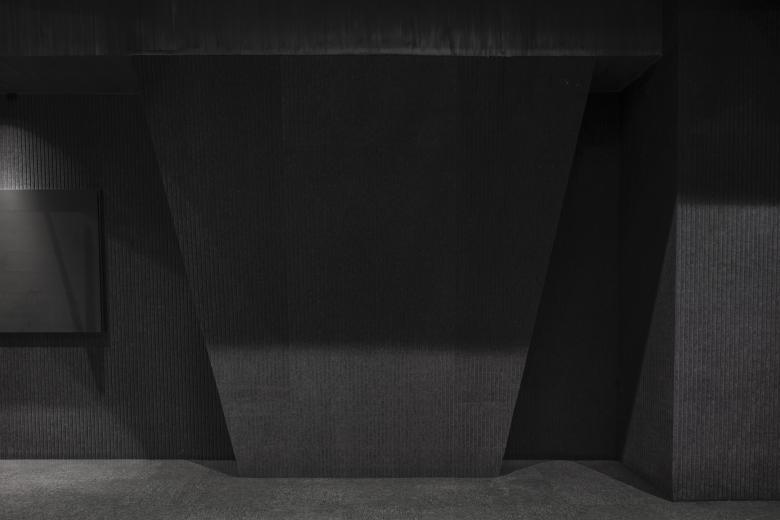
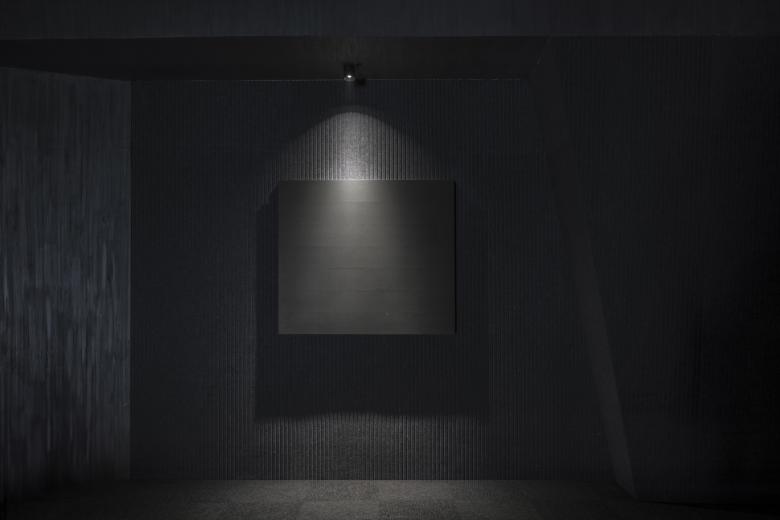
The theater’s interior embraces a minimalist palette of black, white, and gray, responding to the opulent costumes and performances of traditional Chinese theater while guiding the audience beyond external splendor—into the quiet, unadorned depths of Tang Bohu’s soul.
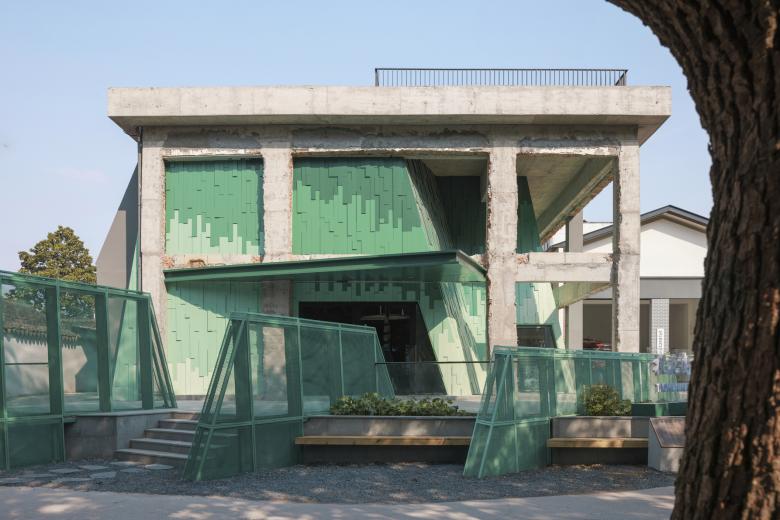
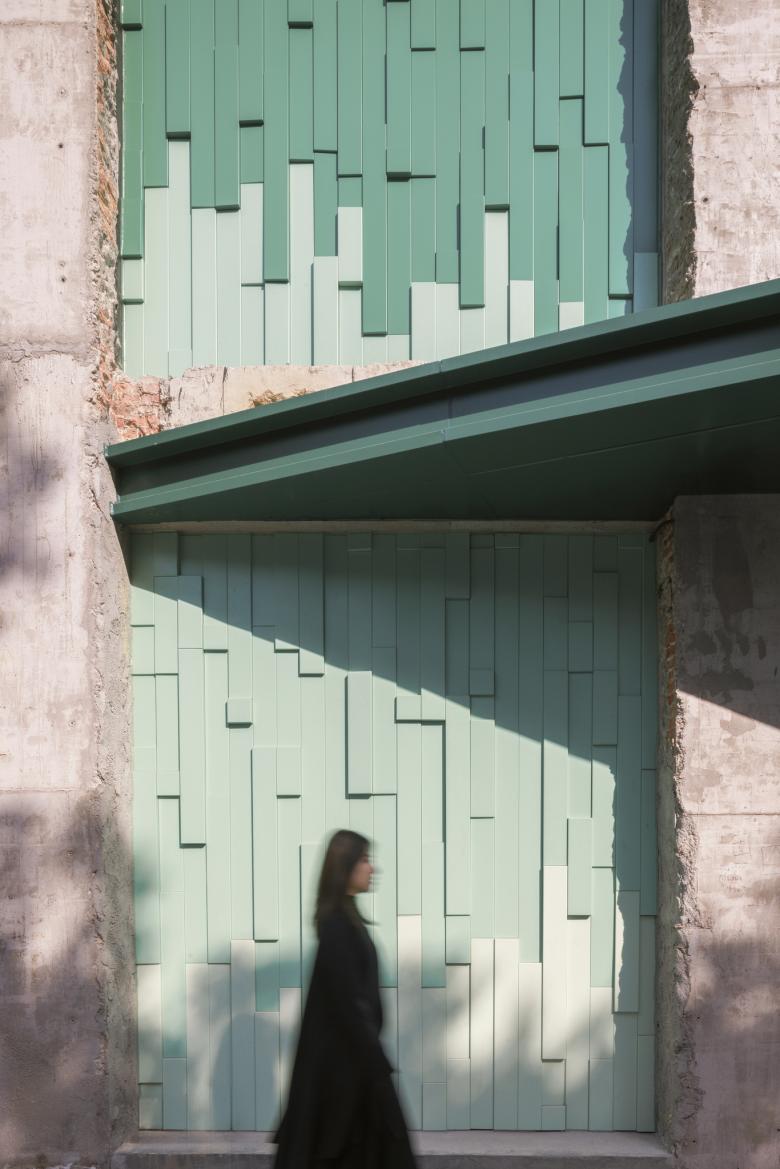
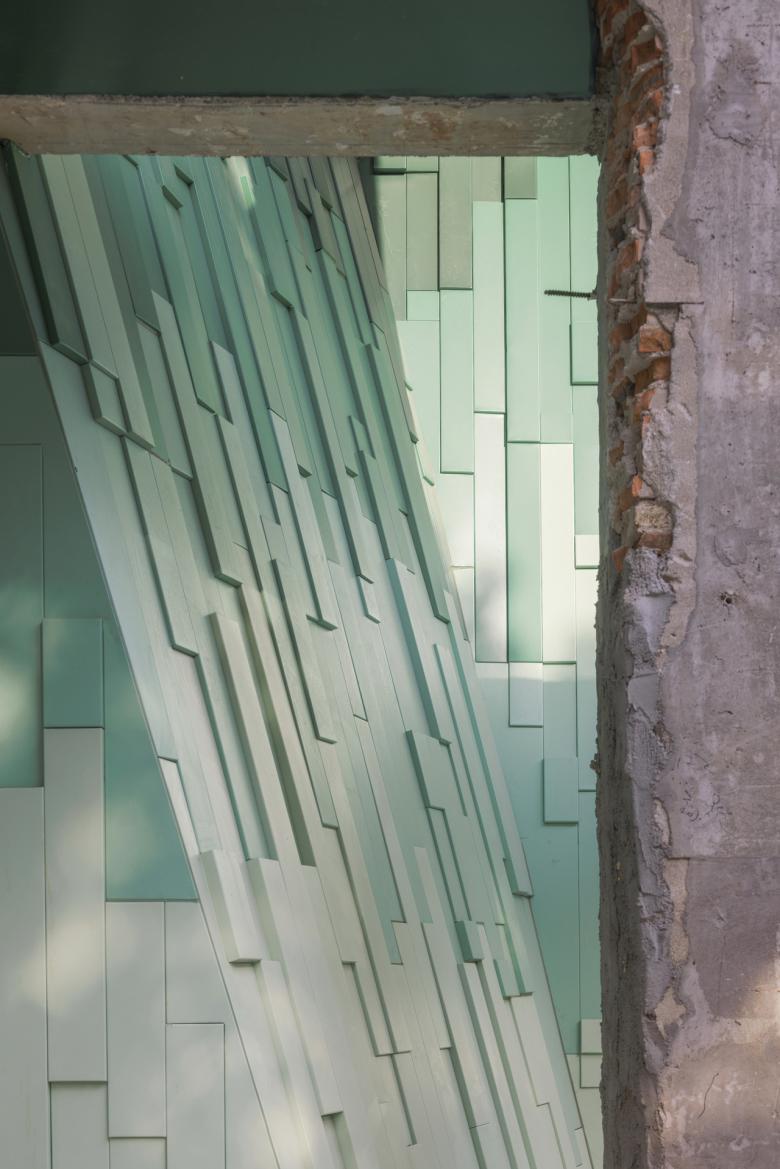
Outside, the landscape is rendered in verdant hues, evoking classical green-blue Shan Shui paintings, while the interior transforms into monochrome landscapes, embodying serene simplicity. Inspired by the "cún" (皴) brushstrokes of Chinese ink painting, the design incorporates acoustic panels and artistic coatings to create rich vertical textures. A mezzanine level echoes the inclined walls of the ground floor, immersing visitors in an experience reminiscent of venturing deep into the mountains.
Wutopia Lab
The custom-designed stage adopts an I-shaped (工) layout, breaking away from conventional theater configurations to create a temporal interplay between the present and the late Ming dynasty. Audiences step into what feels like a time tunnel, experiencing Tang Bohu’s legendary life firsthand.
Due to Suzhou’s historic preservation regulations, the central column of the stage could not be removed. Instead, it has been cladded in black wood paneling, seamlessly integrating it into the design. Certain seating areas have been adapted into standing zones, allowing for greater flexibility to accommodate different performance needs.
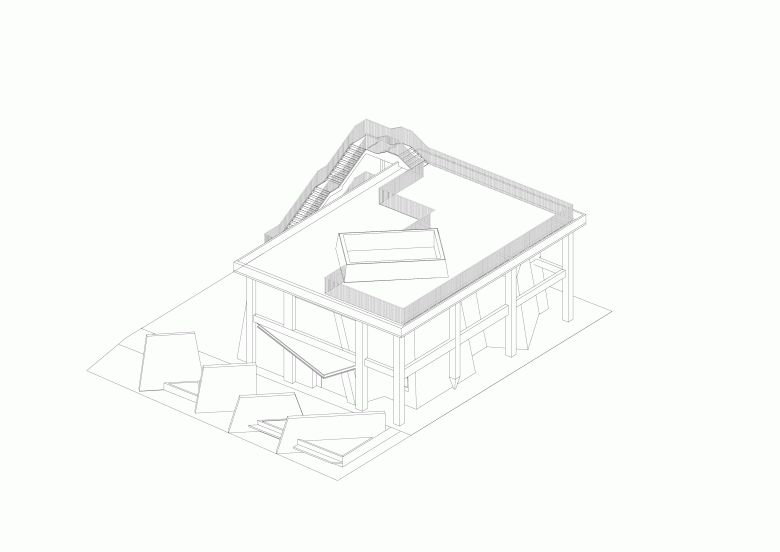
On the ground floor, undulating ink-wash mountain silhouettes form a backdrop, reinforcing the theatrical atmosphere. To the left, a ticket office and bar provide functional amenities, while the right houses the dressing rooms. The second floor features a control room, with an external staircase on the north side leading to the rooftop.
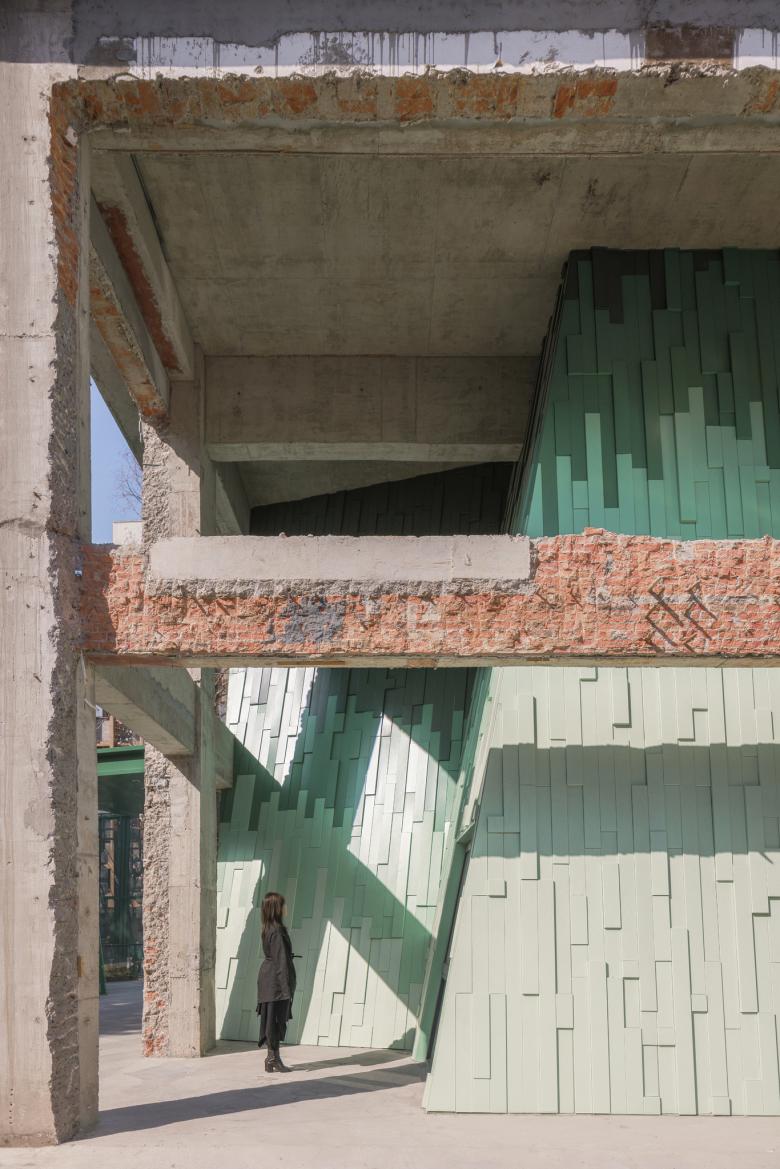
We employed distinct treatment strategies for the existing concrete structure, new mezzanine, and decorative elements, accentuating the contrast between raw and refined textures. The careful integration of mechanical systems, stage equipment, and lighting layouts ensures that the mezzanine maintains optimal ceiling height, preserving both functionality and spatial harmony.
Duality in Design
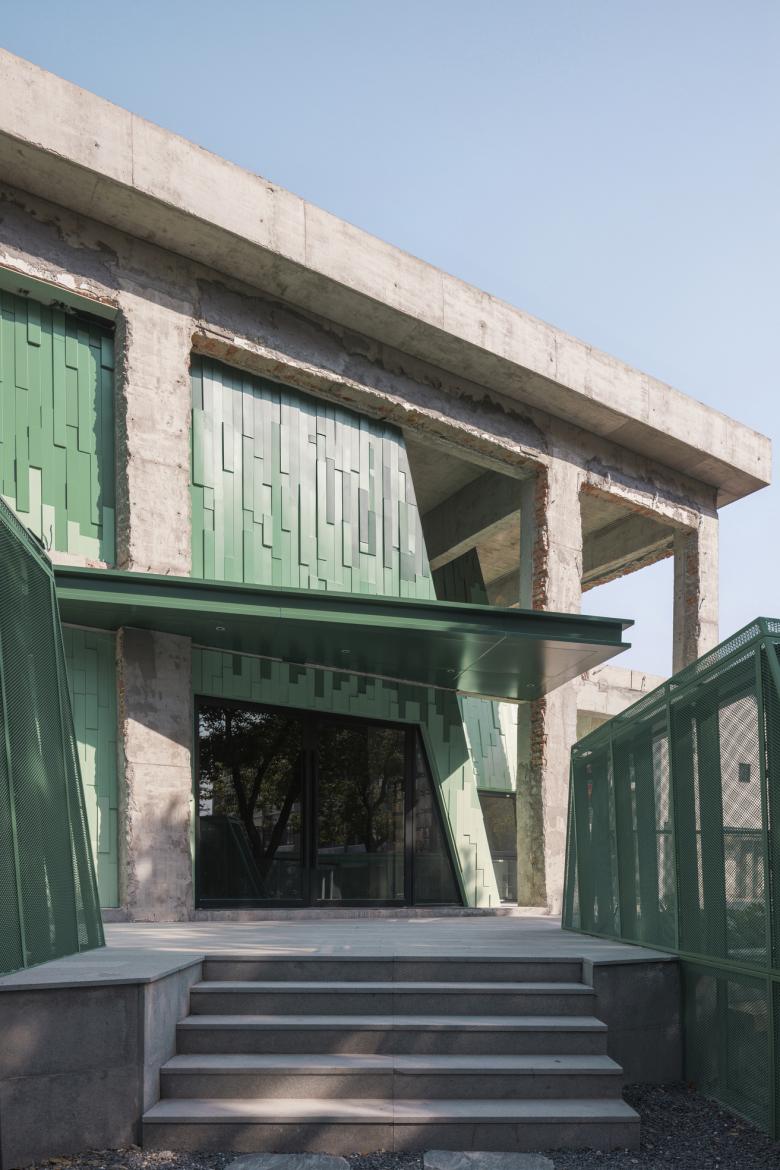
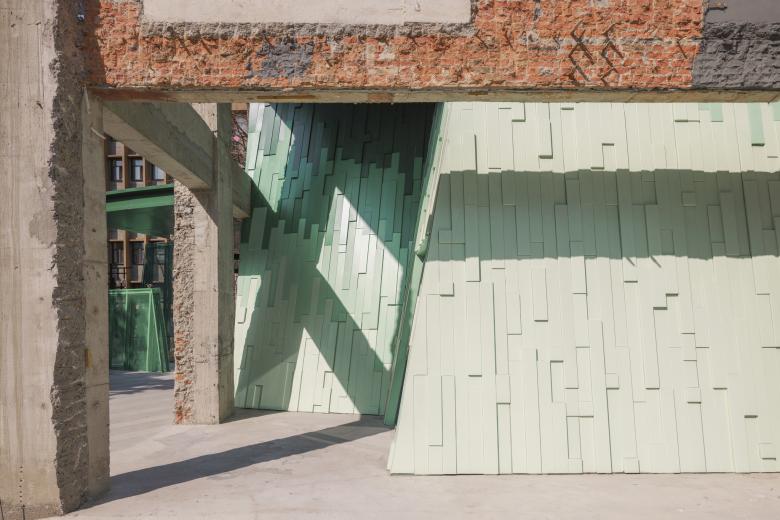
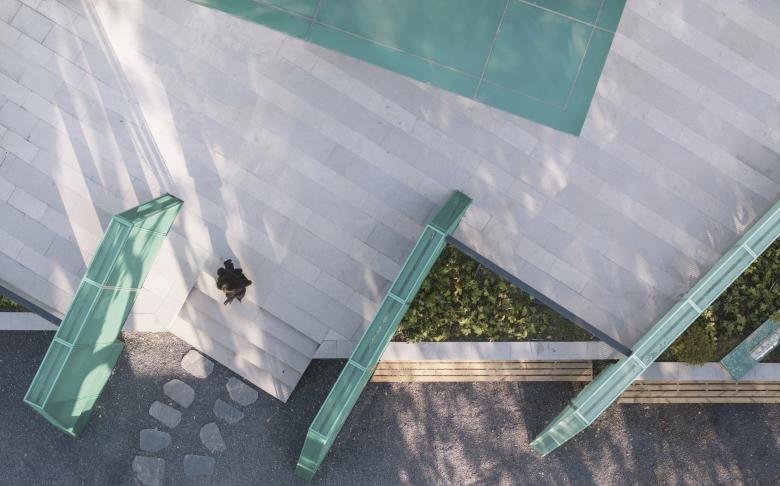
The foreground landscape is shaped by metal mesh, crafting an ethereal mountain silhouette that contrasts sharply with the solid, metal-clad mountain forms behind it. At the entrance, a negative space of a mountain becomes the theater’s visual focal point, framing the transition into the performance realm.
Due to its proximity to a fire station, the new structure is set back to the north, creating a gray-toned threshold space that naturally leads visitors into the interactive area beneath the eaves. The second-floor terrace, nestled among the peaks, offers a moment of retreat—an illusion of standing amidst the mountains—immersing visitors in a theatrical interplay of past and present from the moment they first encounter the building.
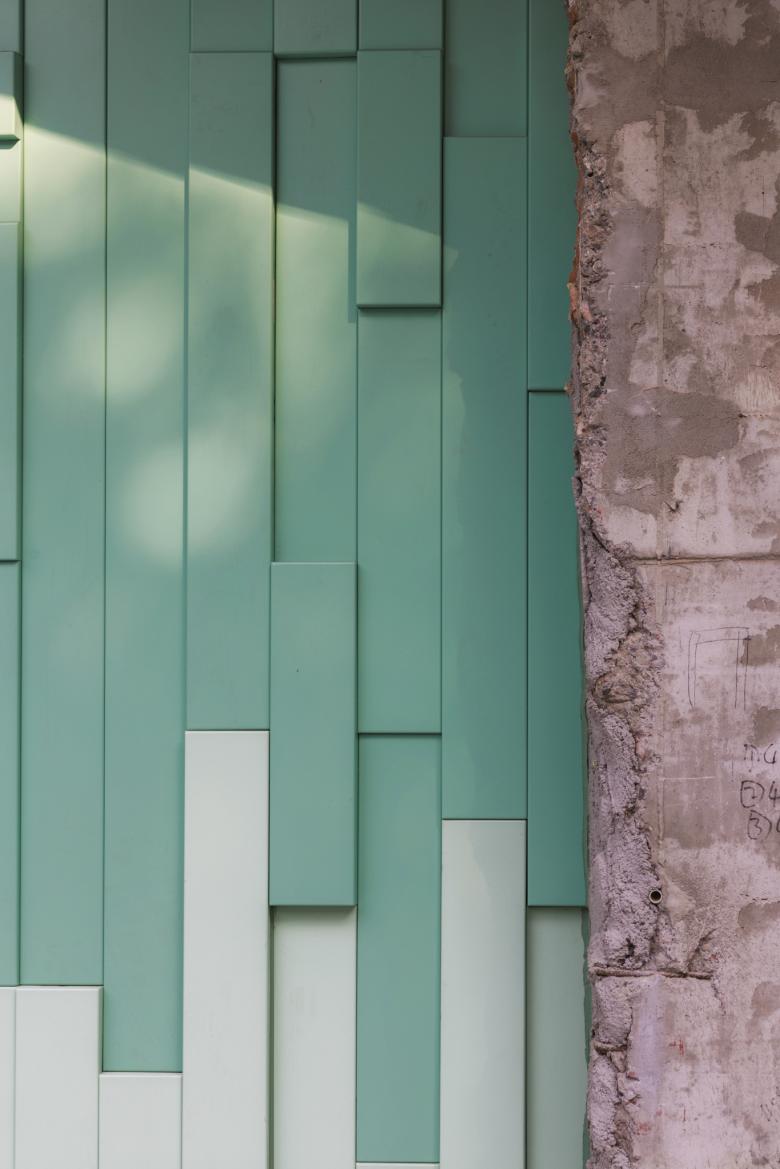
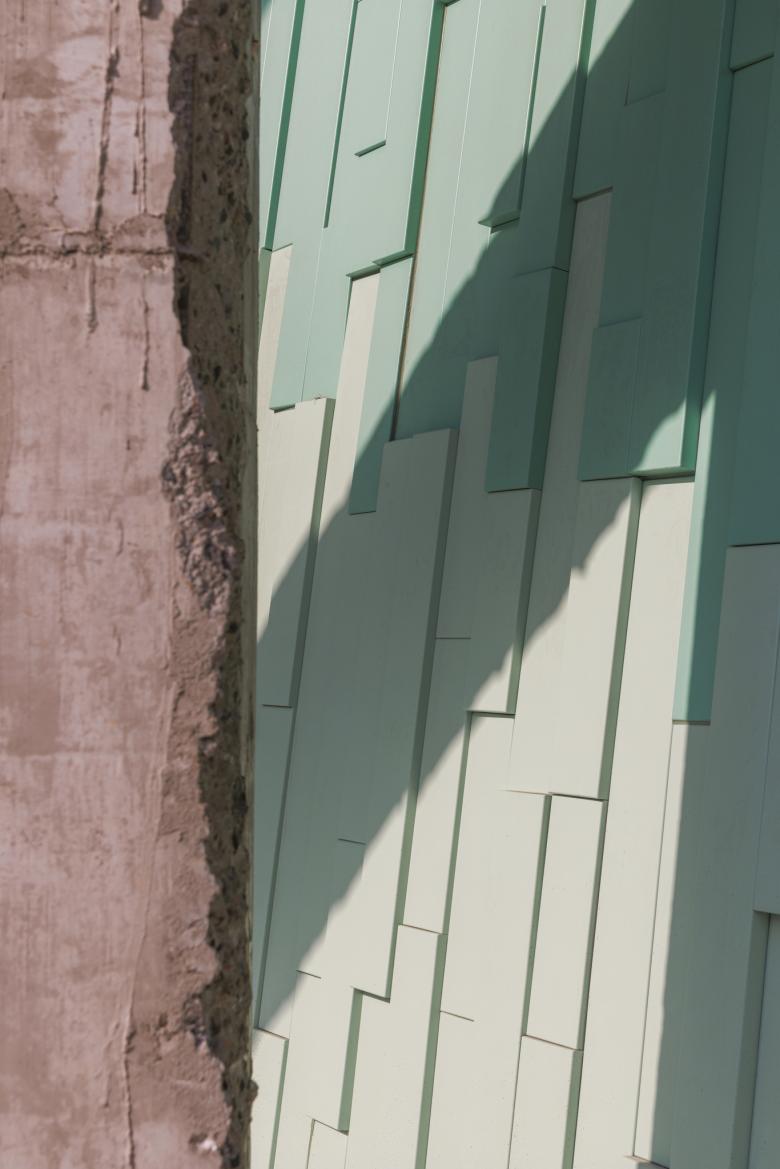
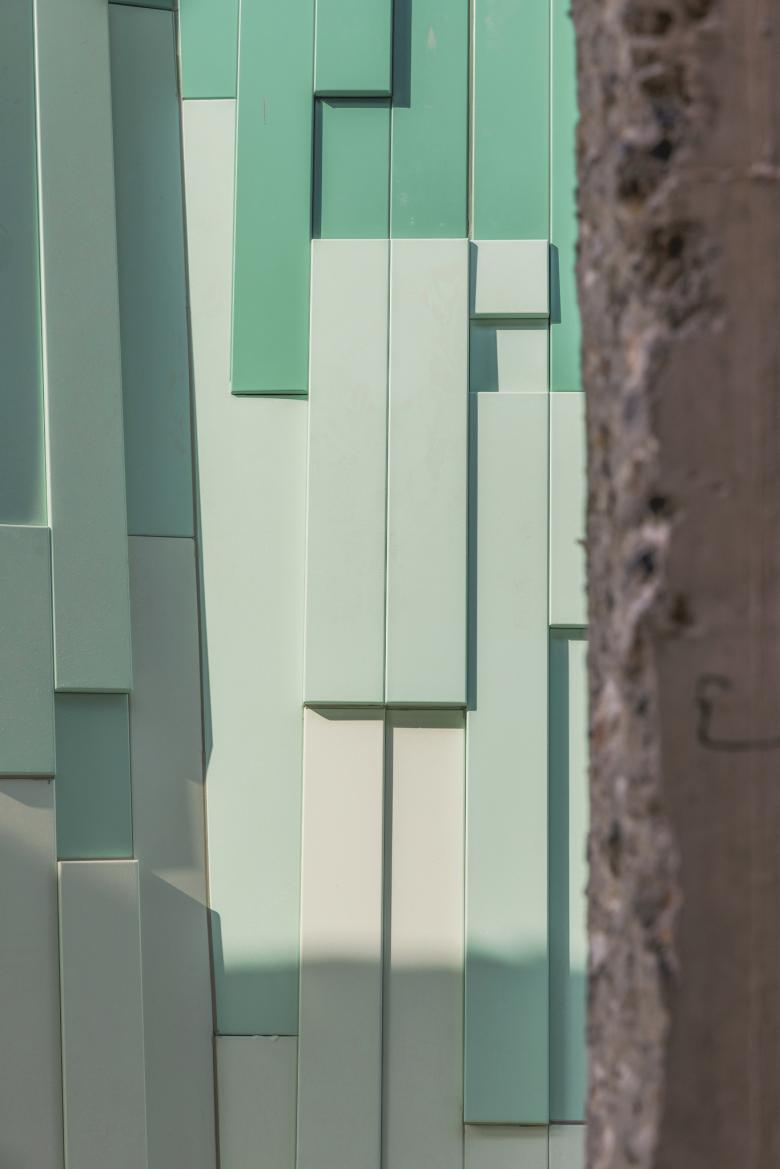
The metal curtain wall employs four variations of metal panels in both color and thickness. To unify the transitions at inner and outer corners, V-shaped panels were strategically used during construction, resolving complex junction details. Meanwhile, the roof is framed by a trapezoidal metal mesh, subtly echoing the layered contours of the mountain façade, extending its rhythm beyond the building’s edge.
A Third Approach
Here, we have not only reinterpreted Tang Bohu’s story but also infused it with Wutopia Lab’s vision—this is the third approach. Neither a complete reconstruction nor a rigid preservation, this method embodies an equitable dialogue between history and the present.
The theater’s resident production echoes this interplay, where actors weave through the I-shaped stage, seamlessly blurring the boundaries between past and present.
What has Wutopia Lab always stood for?
It is respect for the mainstream, while persistently seeking a path unlike any other.
"A man can see what he has, but not what he is. "
—Wittgenstein
Postscript
In our projects, Wutopia Lab explores diverse aesthetics, new concepts, and the significance of society, culture, and individuals while also investigating emerging technologies.
In this project, Wutopia Lab envisioned the theater as a super intertextual entity. Architectural elements, as a form of text, are interwoven with other texts, such as symbolism, history, the lives of artists, and stylistic narratives.
As the old building, laden with symbolic biases and rigid order, was dismantled, the designers incorporated the semi-finished work of contemporary construction workers—an accidental outcome—into the narrative as well.
The interplay between the new and the old, history and the present, contingency and inevitability, ultimately resulted in a textual visual effect designed as an open-ended conclusion. It stands apart from conventional stylistic approaches and represents Wutopia Lab’s experimental aesthetic. This is because Wutopia Lab does not seek to repeat known styles, including its own.
Wutopia Lab hopes this experiment can offer a potential approach to urban renewal. It stemmed from a thoughtful study of an individual—Tang Bohu—and aimed to translate this research into an architectural expression. The extent to which this transformation will reinvigorate the social significance of the community may take some time to fully reveal itself.
Project Information
Project Name: Verdant Ridges (青嶂)
Design Firm: Wuto-mills by Wutopia Lab
Chief Architect: YU Ting
Project Architect: SUN Liran
Design Team: PAN Dali, XIONG Jiaxing, Vi CHEN(Intern)
Construction Drawing Consultant: Dazhou Design & Consulting Group Co., Ltd.
Client: Suzhou DoBe Taohuawu Cultural Tourism Industry Development Co., Ltd.
Construction Contractor: Jiangsu Jinshengshui Construction Co., Ltd.
Lighting Consultants: Chloe ZHANG, WEI Shiyu
Photography:LIU Guowei
Loacation: Suzhou, China
Timeline: 2024.5-2024.12
Area: 282 sqm
Materials: Aluminum panels, metal mesh, acoustic panels

- 年份
- 2025
- 项目状态
- 已建造