Speaking with George Arbid about the Collection Room
Honoring Three Arab Cities through Architectural Archives
World-Architects speaks to Dr. George Arbid, a Lebanese architect, researcher, and curator of the latest Sharjah Architecture Triennial archival exhibition, showcasing historic architectural materials from Baghdad, Damascus, and Tunis until July 2026.
The Sharjah Architecture Triennial has unveiled a rich archival project, showcasing a historic library of previously unreleased photos, films, and architectural drawings from three pivotal Arab cities. It is also a showcase deeply grounded in the preservation of a physical history that has been continuously under threat over the past few decades.
Lebanese architect and researcher Dr. George Arbid has turned Al Qasimiyah School in Sharjah into a “Collection Room”—a curated space described as something between an exhibition and an open archive. It brings together materials that not only preserve the memory of realized buildings but also revisits those that were altered, demolished or never built across Baghdad, Damascus, and Tunis.
“Several years back, Sharjah Architecture Triennial was searching for the original drawings of the Kalba Kindergarten by architects Georges Rais and Jafar Tukan in order to conduct an informed preservation and restoration of the building,” says Arbid, a co-founder and director of the Arab Center for Architecture (ACA) located in Beirut. The architect also curated the first iteration of the archival project in 2023. “At the time, we at the Arab Center for Architecture were able to provide it. The triennial then asked me to curate an exhibition on our collection, and we agreed that it would cover more than just what we had available at the center.”
On view until 12 July, Sharjah Architecture Triennial’s latest project in its ongoing institutional programming, titled A Journey into Architecture Archives: Baghdad, Damascus, Tunis, brings together rare archival materials, physical models and newly commissioned documentary films to explore histories, memories, and unrealized futures across these three ancient cities.
“My inspiration starts from my own need to connect with this recent past and showcase the story of modernity in these places,” Arbid says, whose research mostly covers modern architecture in Lebanon and the Arab world. A scholar at heart, Arbid received a Diplôme d’Etudes Supérieures en Architecture from the Académie Libanaise des Beaux-Arts (ALBA), was a Fulbright Visiting Scholar at MIT’s History, Theory and Criticism Program, and also has a Doctor of Design degree from Harvard University. Alongside the ACA, Arbid also founded Docomomo Lebanon, a non-profit organization devoted to the documentation and conservation of buildings, sites, and neighborhoods of the Modern Movement.
Building on the inaugural 2023 exhibition, which focused on Beirut, Cairo, and Rabat, Journeys into Architecture Archives is developed to foster knowledge production about the region from within its own communities, while contributing to the development of a shared archival database.
“The Collection Room proposes a different way of interacting with the exhibited material,” says Arbid. “For this iteration, documents are placed on tables and the visitors are invited to interact with them. They can place these drawings on top of each other to understand a project better—or they can take a document related to one building and move it closer to the model to verify it.”
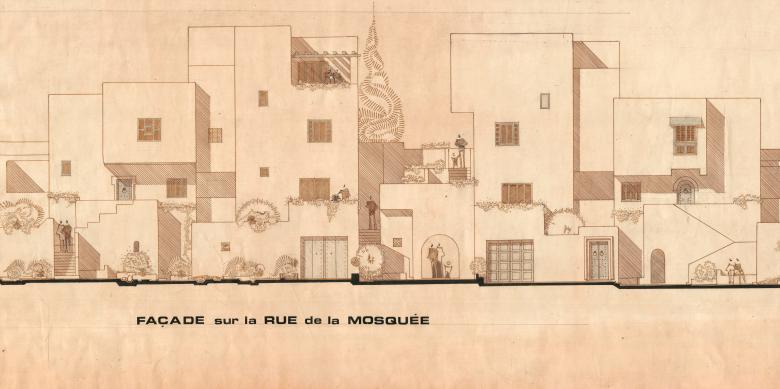
The Collection Room brings together works from private collections and institutional archives. It reveals layered histories of buildings and neighborhoods through reproductions of architectural drawings, documents, and models, largely dating from 1930 to 1980. Emphasizing pre-digital design processes, the exhibition presents pen-and-paper drawings alongside 3D-printed models created for the show, positioning architecture as a tactile, narrative practice rooted in craftsmanship and discovery.
“When I was doing research for my dissertation, I noticed the difficulty of finding archives and quickly understood that they are not necessarily out there, organized and waiting for you,” he says. “You literally have to dig to find them and connect the dots.”
The Sharjah Architecture Triennial highlights both the vulnerability and importance of architectural archives in the Arab world, positioning them as vital records of knowledge, history and cultural memory. It calls for urgent efforts to locate, protect and revive materials that are often fragmented or at risk of being lost.
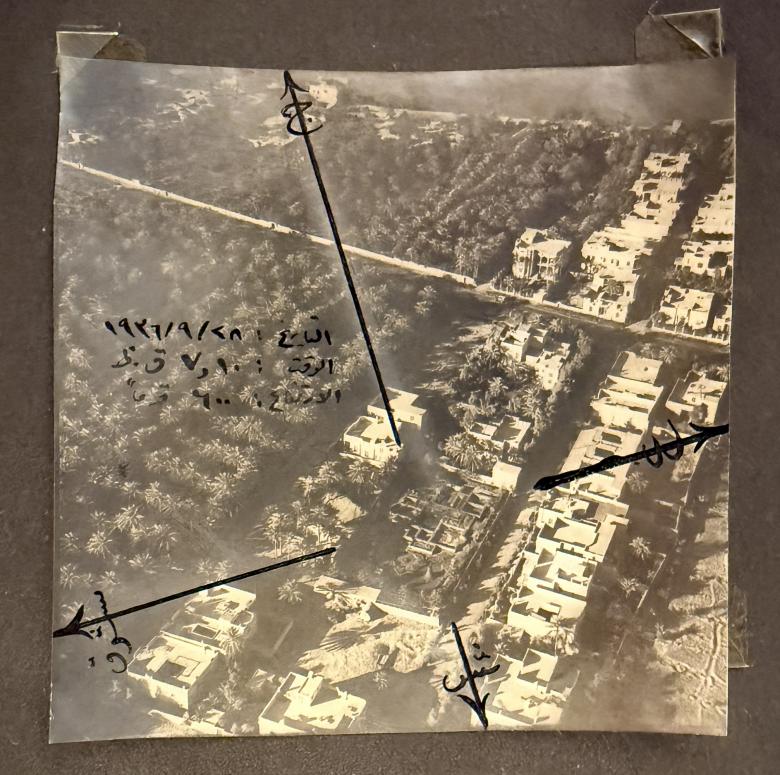
“In Baghdad, Damascus, and Tunis, architecture was extremely rich during the period that is covered, namely the 1930s to the 1970s,” explains Dr. Arbid. “Each city has its own stories related to preservation of buildings and their archives. When primary archives do not exist anymore, secondary archives take a primary role.” From an unbuilt design for a competition entry in Damascus that remained 50 years in the drawer of an architect in Italy, to the graduation project of a female architect in 1963 at the University of Aleppo, each item brings with its own narrative—and sense of nostalgia.
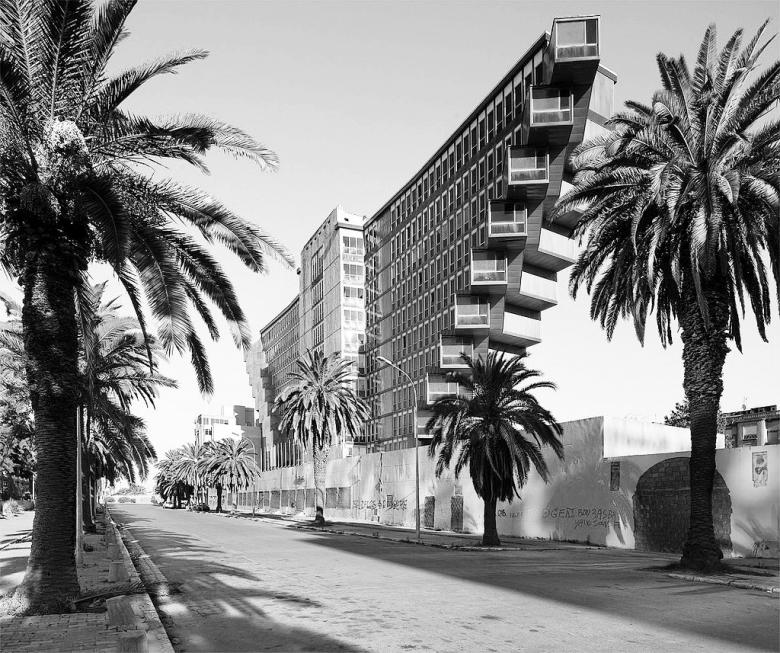
The materials on view preserve the memory of several projects, both built and forgotten, across these cities, honoring production as much as ideas. Among them are works related to the Hôtel du Lac in Tunis, designed by Raffaele Contigiani and currently under threat of demolition. The showcase also features documentation of experimental cinemas in Damascus and modernist civic and cultural projects in Baghdad.
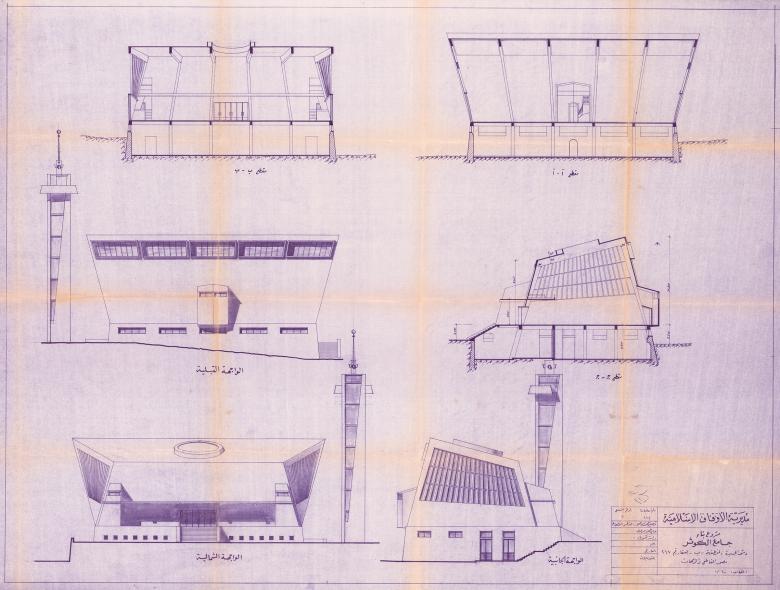
“All the elements are telling stories in their own rights: a brochure of an architect, a construction schedule for the building of a house in 1936 Baghdad, an unbuilt design for a minaret and the construction drawings of an iconic steel-structure hotel in Tunis designed in 1966,” says Arbil, adding that to choose even one standout of the collection would be impossible. Through these assemblages, the Collection Room reconstructs both lost and imagined architectures, offering insight into the ambitions and complexities that have shaped these cities.
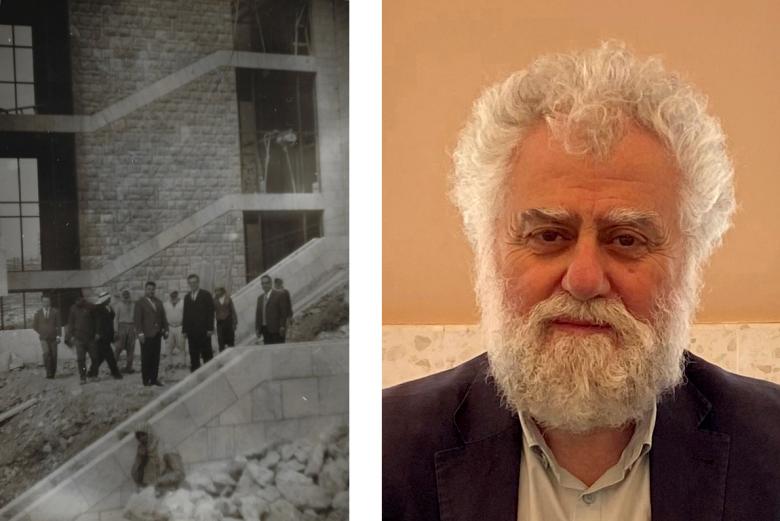
Right: George Arbid (Photo: Farah Kassab)
Other materials on display include the Mayoralty Building by Iraqi architect Hisham Munir. Developed following a 1978 competition, the building is emblematic of a generation of public architecture that sought to reconcile modern construction with local traditions. The project integrated brickwork, woodcraft, and arched forms with exposed concrete.
In response to ongoing political instability in the region, this edition marks a shift from the previous exhibition format to one of a Collection Room. This transition reflects an evolving methodology: one that moves away from the conventions of exhibition display toward a quieter, more sustained engagement with material. “In moments of conflict, our role extends beyond presenting history to caring for the stories we hold,” Arbid says. “It is great that this archive is preserved, but more importantly, it should be used.”
Arbid looks towards a long-term vision for the project, and hopes it can continue to foster education, research, and personal discovery, while offering a layered, deep understanding of these iconic cities’ built environments. “I hope that this journey triggers other journeys,” Arbid adds, “and empowers the younger generation of architects, activists, and citizens of these places.”