Progress Needs Transdisciplinary Thinkers
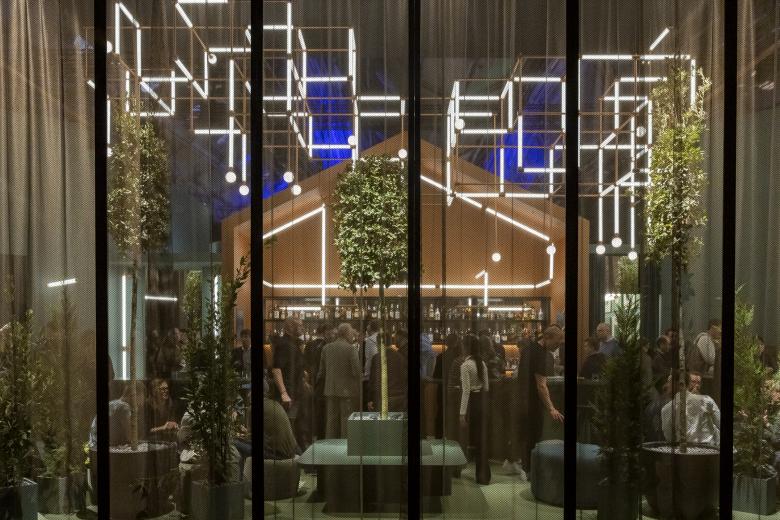
Light + Building, the trade fair for lighting and building technology, took place in mid-March. As it became clear, continued collaboration across all sectors is essential to creating sustainable, connected, and livable (lighting) spaces. The expert presentations by World-Architects as part of the event program contributed to the discussion.
Since the previous trade show in 2024, the lighting and building technology industry has had two years to reinvent itself for this year’s Light + Building. But let’s be honest—no one was expecting groundbreaking innovations, were they? And indeed, they didn’t materialize. Personally, that didn’t disappoint me, because the industry is moving forward—and in a positive direction. It continues to focus on the key themes of connectivity, electrification, and sustainability—thinking even more broadly about them and pursuing collaborative approaches. Ultimately, it’s about the long-term well-being of people and nature, and achieving this in a comprehensive way is enough of a challenge in itself.
“The market has come a long way since just a few years ago—especially in areas where sustainability is understood as the interplay of recyclability, durability, safety, health, and good design,” said Claudia Tiesler (sqloud, Hamburg). As one of thirteen experts, the architect led a tour to selected exhibitors on her topic “New Lighting and Building Technology for Sustainable Architecture,” as part of the talks and tours curated by World-Architects in collaboration with Messe Frankfurt. She continued: “Groundbreaking approaches already exist: bio-based materials for light switches, lighting solutions in the context of healing architecture, and smart street furniture. The key is how we bring these approaches together in the future. Only then will individual ideas become truly sustainable solutions.”
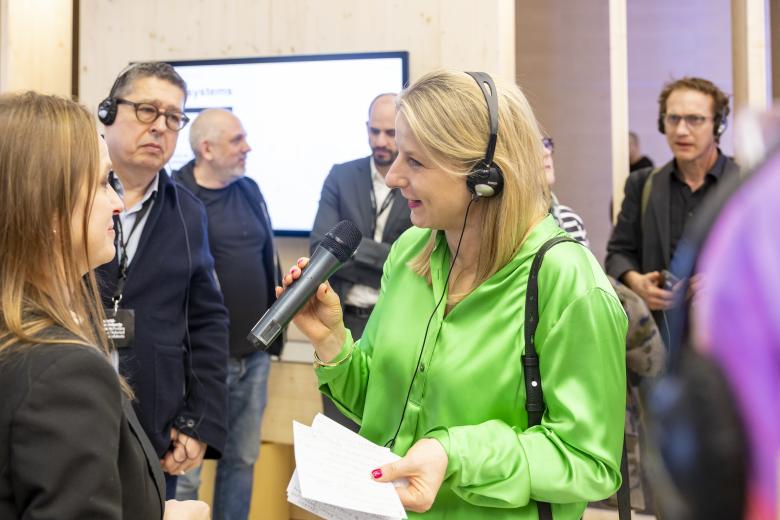
For architects, interior architects, designers, lighting experts, and building developers, the trade fair provided an opportunity to reflect on the current state of the market. Various accompanying formats—including the Talks + Tours by World-Architects—sparked discussion on lighting and buildings. It is clear that buildings are evolving from mere energy consumers into active components of a smart energy system. In lighting, there is a growing demand for adaptive design, automatic adjustment to usage scenarios, and customized solutions that support the circadian rhythm, aka the human biological clock. Acoustic elements and miniaturized forms remain on-trend in lighting design. All of this falls under the umbrella of sustainability mentioned at the outset.
Jonas Godehardt (Reflexion, Zurich) addressed the aforementioned growing demand for project-specific lighting during his guided tour with World-Architects. Daniel Walden (ag Licht, Cologne) also shared his insight that optimal lighting solutions are often not off-the-shelf products, but rather a “journey” that begins with a vision. Lance Hollman (jack be nimble, Berlin) spoke about light as a creative partner in design that enhances well-being and contributes to holistic, sustainable architecture. The sensuality of light and the perception of architecture through light was the topic addressed by Iris and Michael Podgorschek (podpod design, Vienna). Jule Leu (ANDRES + PARTNER Lichtplanung, Hamburg) focused on outdoor spaces: her central concern was the protection of the night sky.
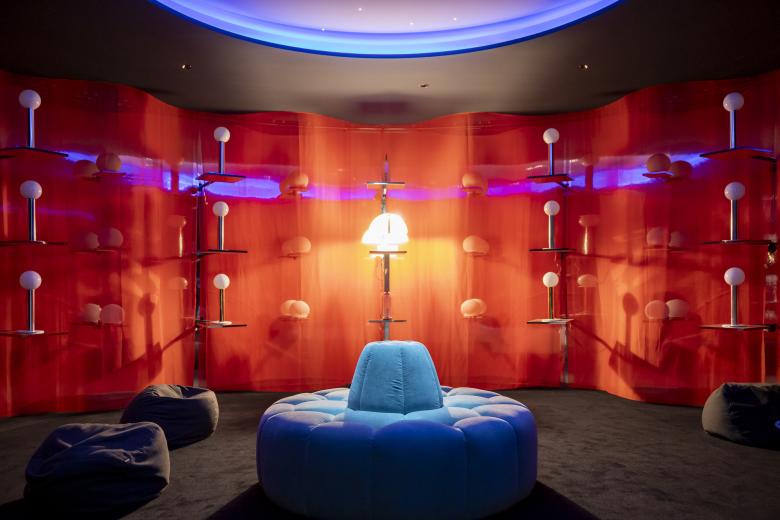
The Talks + Tours event series by World-Architects was kicked off by Carla Wilkins, who curated the special exhibition “The Living Light – Light That Shapes Life” for the trade fair, and Philip Rafael (both of Lichtvision, Berlin) with a look into the future of lighting. Beatrice Seidt and Florian Zach (both of 3lpi lichtplaner + beratende ingenieure, Munich) explored how architecture is defined by light and the concept of “experiencing spaces of light.”
Jan Nielsen (CONCEPTLICHT, Traunstein) encouraged attendees to explore lighting design in existing buildings and tackle the challenges of renovation projects: “Good lighting design is a wonderful tool for bringing out the potential of an existing building. I want to encourage you not just to design on a computer, but to test the lighting tools on-site. Good lighting designers are perception designers. During a sample installation, the effect of the light can be experienced better than can be depicted through a simulation.” Visual calm is the gold standard of lighting design: in good lighting design, the fixtures recede visually into the background.
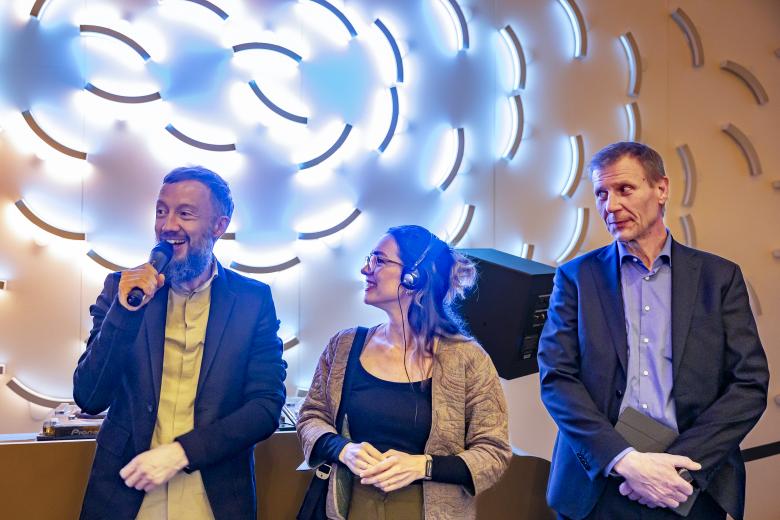
The theme of how circular strategies and artificial intelligence are transforming lighting design was explored in the guided tour “Light Between Circularity and AI” led by Sabine De Schutter (Studio De Schutter, Berlin) “The future of the lighting industry clearly lies in taking greater responsibility for resources and energy,” De Schutter said. “There is a need for durable, repairable, and recyclable products, as well as transparent material strategies. AI will play a central role, particularly in operations and production, to improve the efficiency of buildings and optimize processes.”
March 5–10, 2028
Exhibition grounds Frankfurt am Main
light-building.messefrankfurt.com
Talks + Tours organized by World-Architects