L35's Collective Method for Complex Architecture
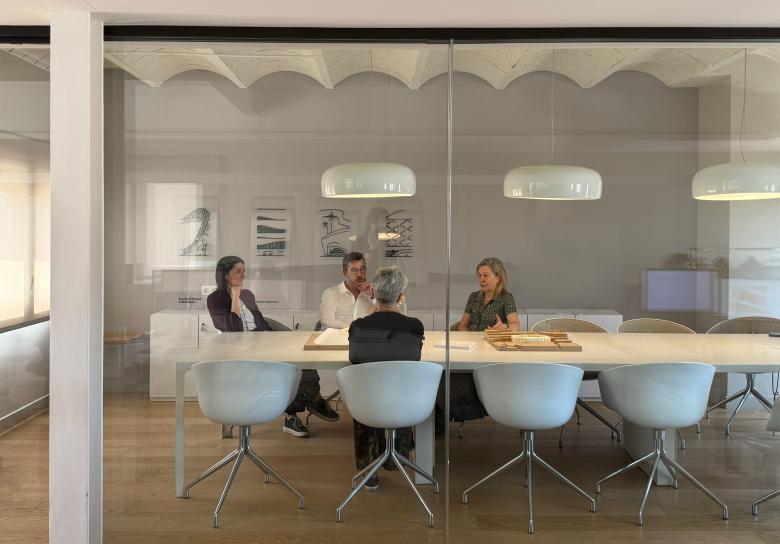
In a professional context that still equates identity with formal language, the work of L35 shifts the focus from style to method. With nearly six decades of experience and a practice that spans diverse regions, the firm has built its strength not on the repetition of solutions, but on a way of organizing and thinking about projects.
Far from a formulaic approach, L35's practice is based on coordinating diverse teams and the ability to integrate various factors—technical, social, and economic—from the very beginning of the process. Despite the immediacy imposed by digital tools and certain market dynamics, the firm insists on reflection as the irreplaceable core of the project—a critical process that anticipates transformations and maintains architecture’s relevance over time.
Our conversation with L35 partners Luisa Badía, Javier Framis, and Pamela Martín, and architect Gaia Pellegrini is part of the Architecture Studio Sessions, an initiative jointly launched by L35, Labóh, and World-Architects. For the studio, this involvement is fundamental because it aligns directly with its core values: collaborative work and the pooling of expertise.
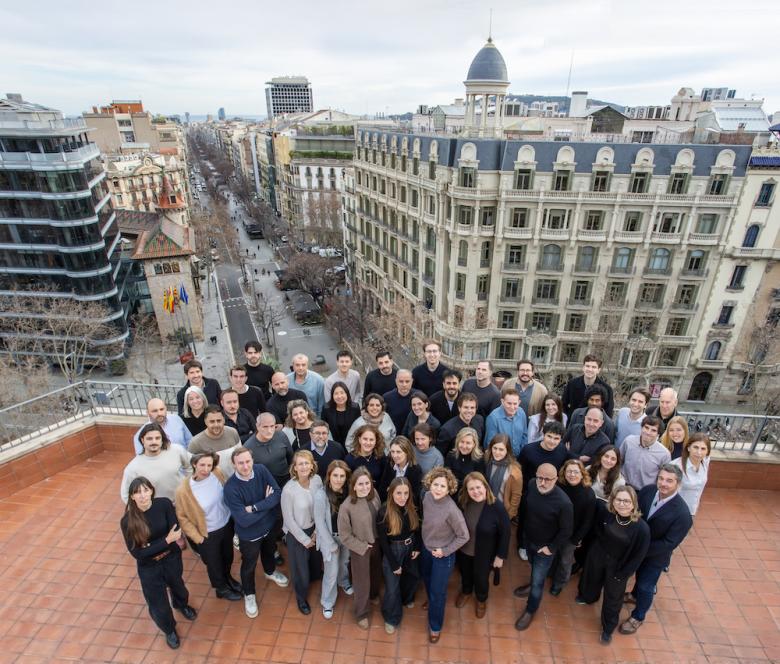
Luisa Badía: It’s a topic we’ve always thought about, a question that comes up constantly. People expect a firm to have a visual identity based on its architecture—a style, a model to follow. What we have is a reflective approach in which the project takes center stage, not the architect behind it.
Of course, there is a team—L35—with its own approach to and way of thinking about projects. And while there may certainly be recognizable elements, we believe that architecture is multidisciplinary. Every project is unique; designing a stadium is not the same as designing a neighborhood: the context, the users, the lifespan—everything changes.
In 2027, we will celebrate our 60th anniversary as an architecture firm, so, among other things, we are drafting a manifesto that reflects the values we stand for.
Luisa: We adapt to each location. We are very respectful of local culture; you can’t apply a Spanish mindset in Colombia, Morocco, or Switzerland… We listen and understand that there are very different cultural identities and diverse ways of life. Sustainability begins with respecting the place: the terrain, the topography, the sunlight, and the working hours. The architectural design is a response to all of this.
We recently held a Design Thinking session in Paris and realized that we’ve been working this way for years without even knowing it. We collaborate with a variety of professionals depending on the type of project we’re working on.
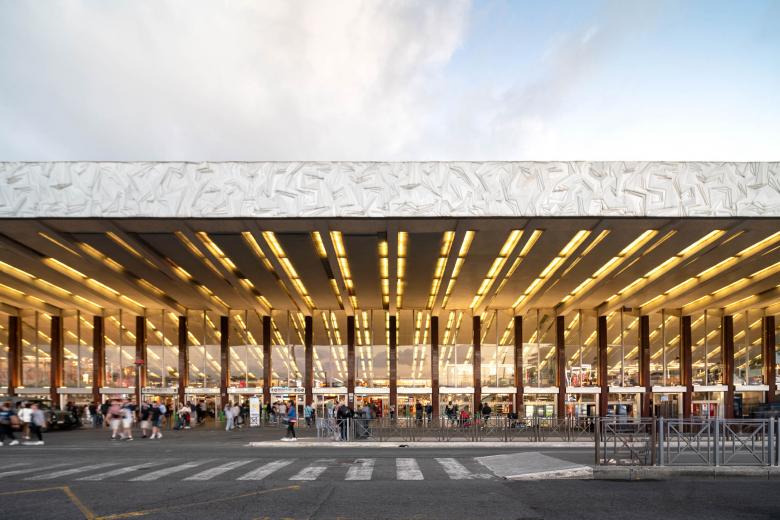
For example, for the co-living project in Madrid, we had a sociologist who helped us understand the users. Or at the station in Rome, we needed to understand the dynamics of a business traveler or a foreign family with children and seven suitcases.
Luisa: We've learned a lot from the world of retail. Ultimately, it's about creating resilient spaces and staying on top of the latest trends and best practices.
Our projects are about creating living spaces—places where people can linger, feel at ease, and simply be. A shopping center isn’t just a sales machine. We put people first and create the right environment.
Javier Framis: To recap: at L35, there is no formal architectural style. Each project is unique. We carefully consider and analyze each one based on its specific circumstances, its target audience, its geographic location, and the local culture.
Our approach is to adapt to each project. Furthermore, teamwork is fundamental to us, and that means incorporating different perspectives on how that architectural vision is brought to life in the project. We don’t have a formal style director.
Luisa: Since its inception, L35 has been a team. And bringing in other types of professionals is also important: structural engineers, installers, etc. We even bring in specialists for specific projects—in building health, traffic, landscaping, as well as lawyers, economists, sociologists… That’s why our teamwork methodology is so important.
Javier: Here, the architect is almost like an orchestra conductor—the person responsible for leading and coordinating a team, the musicians. But, of course, he must listen to each musician’s notes in order to try to bring them together into a final result.
The challenge is to understand that if you're leading a team, you need to listen to every member, value their contributions, and ultimately strive for an outcome that reflects the contributions of the entire team.
Luisa: No, I think our training gives us an advantage. An architect is capable of touching on everything but never really delving into anything. From the moment we start a project with urban planning to the moment we finish constructing a building—it’s quite a journey.
Education in this country is quite multifaceted and interdisciplinary. We are capable of engaging in a discussion with a structural engineer, but we don’t do calculations, for example. When we visit other countries, this approach has been very helpful to us.
Javier: I think that in Spain, compared to other countries, we have a perspective that encompasses both the big picture and the details: from urban planning to interior design. On the other hand, we also have an interdisciplinary approach. In other words, even if you’re not an expert in structures or systems, you do have the basic technical knowledge to weigh in on conceptual issues within those specialties. And this, ultimately, gives us that director’s touch.
It can be very difficult to successfully complete a project without the basic knowledge needed to steer the outcome in the right direction. We are information aggregators.
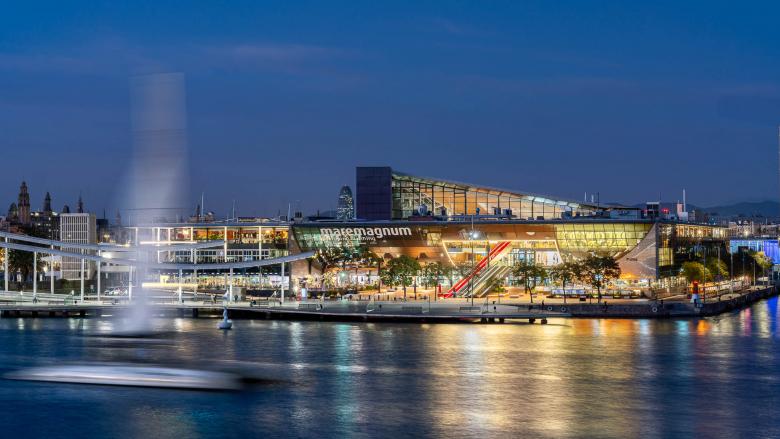
Luisa: Absolutely. We design right inside the building. We have projects where the client can see, in real time, everything we do. It’s a huge challenge because we’re concerned about immediacy, and we’re concerned about careful thinking beforehand.
Javier: The immediacy is overwhelming. What neither AI nor technology can replace is the conceptual reflection behind a project. It’s clear that they provide significant assistance—and will continue to do so—in visualizing and producing results from a concept. But projects are the fruit of prior thought, reflection, and conception; they are not the result of artificial intelligence.
Luisa: In general, clients don't understand—or place very little value on—the need to reflect.
Javier: I'd say it's a long-standing issue. In general, it depends on the type of client, their concerns, their cultural background, etc. It can vary greatly, but even before these tools existed, it was already difficult for them to fully grasp a concept. For many, it wasn’t easy to understand a project through floor plans and elevations, but with immediate 3D visualizations, the client remains outside that architectural process and sees a final product.
I think it's the “social media” culture: it's either like or dislike.
Pamela Martín: They focus on specific elements, but not on the underlying concepts and considerations behind the decisions.
Javier: For us, reflection and concept are non-negotiable. Even when we work on visualizations based on client requests, we never lose sight of the essence of reflection.
Pamela: It is in that reflection and that concept where our added value as architects lies. We strive to ensure that the design reflects the client (as an individual, as a company, as a business) and that they are satisfied with the finishes. But the initial considerations for each project still carry significant weight.
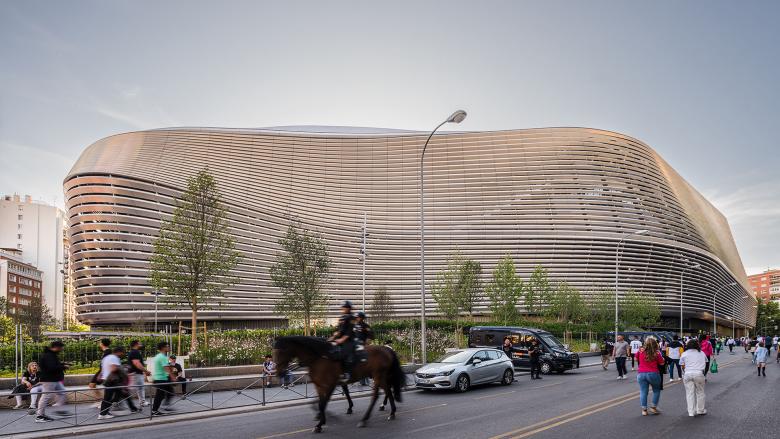
Javier: There is one crucial point to keep in mind: you must be aware of the scale of the project you are working on. Developing an urban planning project, creating a new eco-neighborhood, and designing the renovation of the Bernabéu Stadium are not the same thing. Flows vary depending on the scale and the project: the stadium fills up and empties of people at specific times, while an eco-neighborhood must be alive at all hours of the day.
Pamela: Or a train station, which may be open 24 hours a day but is used by people who might only pass through once and are unfamiliar with the surroundings; whereas in an eco-neighborhood, the users actually live there. We must understand who the users of the spaces we design will be—and not just today, in 2026—since these interventions are designed for the long term, for buildings with a lifespan of 50 or 100 years.
On the other hand, we undertake projects with an 8- to 10-year development cycle, so it’s important to envision spaces that can adapt to a changing society. We focus on spaces that are flexible, intuitive, and easy to use—spaces where the user experience is enriching.
In short, these are projects that shape the city, generating flows that attract people; they are spaces that endure for many years, evolving over time, and that is how we envision them.
Javier: The main challenge is that vision of the future. Take a large commercial project, for example: it can take 7 or 8 years from start to finish. So, from the very beginning, the project is designed to open to the public in 8 years—a time during which the shopping experience could change significantly (such as doing everything online and not going to a store, for example). It’s possible that the spatial plans will become obsolete, so from the very beginning we think about the flexibility and transformation of the spaces. This is the most difficult challenge because we don’t know the future; we might get it right or wrong, but we must ensure that future transformations are possible.
We have renovated projects we completed more than 20 years ago, and we see that the conceptual foundations still hold up, that vision was already there. We haven’t had to tear down entire projects to start over.
Pamela: For example, parking garages are common in France, so we came up with strategies—such as redesigning the structure and creating a specific corridor—that would allow these buildings to be repurposed for other uses in the future.
Javier: In this case, the clear height for these buildings is typically 2.2 meters; our intention is to propose, from the outset, clear heights of 2.75 meters to allow for future renovations. Sometimes it’s not about having a brilliant idea that predicts the future, but rather about issues that are very simple yet shape the future.
Pamela: The developer may question this, but our role is to support the client, explaining that their property—which is currently a parking lot—can be transformed in a few years and may yield a return on investment in the future. The ideal approach is to repurpose the space without demolishing it, which is why it’s essential to carefully consider the plan beforehand and discuss it with the client.
Javier: We work as a team, taking a cross-functional and multidisciplinary approach, so we bring everything together from the very beginning. It’s like a cocktail shaker: a mix of diverse inputs on various topics and different areas of expertise, which we take into account from the start to develop any project collaboratively. We don’t start with a preconceived formal decision, although that is an important value that shapes the outcome.
The key is to strike a balance between various factors in order to create an architectural project that stands the test of time. The goal is to build the environment in which we all live, from the urban level down to the interior spaces. If the conditions are not right, there will be little life there.
Returning to the topic of the challenge, it’s about being able to reflect on how our projects evolve. Obviously, the project requirements must be met, but we should aim to go a step further.
Pamela: As we mentioned earlier, many different people are involved in the project from the ground up, which is why listening is essential: listening to every consultant and every specialist, acknowledging the different perspectives in what we propose as architects, and understanding where we can contribute.
I believe we should move away from the notion of the architect as merely a builder of buildings: we work with space, which is meant to be inhabited by people; and within that habitat, social, landscape, emotional, and health-related factors come into play. In short, architecture is much more than just a pretty building.
It remains essential to work with partners who understand all these factors, so that the end result is more than just an architectural imposition that the rest of the elements are then forced to fit around.
In addition to these conceptual issues, there are others that every architect must address: regulations, costs, construction timelines, and site-specific technology. And then there are global issues that do not affect every region in the same way, such as global warming. How can you work within these constraints?
Javier: There are factors—such as regulations, costs, deadlines, and construction technologies—that shape the final outcome of a project; they are part of the reality of the world. That is why we have a way of viewing architecture—one I believe is shared by most architects—with a vision open to integrating all inputs from the start of the project to arrive at solutions that provide answers and allow us to create spaces that people can enjoy and experience.
Pamela: An architect does not start with a blank slate: there is a specific environment and location in the world that shape the considerations involved in developing an architectural proposal; this is how materials and technologies are chosen, regulations are reviewed, budgets are refined, and a plan is proposed. We are bound by a reality to which we must respond.
Javier: The sum of these factors does not yield a final result. An architect’s essential role is to reflect on them in order to interpret them and give shape to a project.
Javier: We are aware of the role. In France, we are working on urban transformations of outlying areas that, over time, have become urban zones. For example, converting a hypermarket with a large floor area into a space suited to today’s reality. In this case, this renovation allows for the regeneration of large areas through a change of use. So we believe that urban redevelopment is the way forward.
Like 22@ in Barcelona: a large industrial site that began to be repurposed as a hub for new technologies and will eventually become a residential area as well. Its future use may change along the way.
Pamela: This is definitely an issue of land use and urban transformation, just like in 22@ or the Zona Franca in Barcelona. The city is driving this forward!
Gaia Pellegrini: An architect is also a consultant: they don’t just think about what can be done, but also about what could be done. One of L35’s strengths—having worked on extremely complex projects in such diverse parts of the world—is knowing various approaches that could be applied to different situations.
Javier: We have a key concept in urban growth, which is the belief in creating mixed-use areas that coexist throughout the day.
It is true that, today, we are faced with zoning restrictions that belong to a bygone era, so it is important to make this clear to government officials so that they can be updated to reflect current realities.
Javier: Although we are capable of undertaking all kinds of projects, there are highly specialized sectors within the profession—such as hospital architecture—that we have not yet explored. Rather than simply entering this field, we would be interested in participating in an integrated project: a large-scale initiative that goes beyond a single type of use and combines public transportation, intermodality, efficiency, housing, offices, and hospital services. We think more in terms of areas and neighborhoods than isolated buildings; it is a way to more fully integrate the needs of people’s lives.
Pamela: For years now, there has been talk of the “15-minute city.” And this vision involves moving away from dividing the city by function in order to truly create sustainable spaces. It’s not just about the environment and building construction, but about creating urban spaces that are in use 24 hours a day, 7 days a week.
Javier: We're already working on these kinds of projects, but we'd like to be able to influence public transportation and infrastructure decisions whenever neighborhood development is proposed.
Javier: Thoughtfulness in the design of projects. This is irreplaceable.