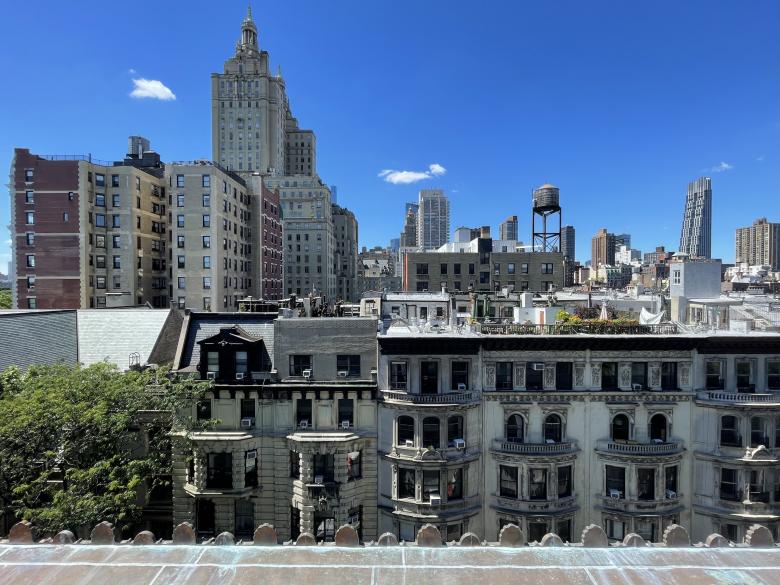
From Rendering to Reality
Tang Wing for American Democracy Opens on Eve of USA's 250th
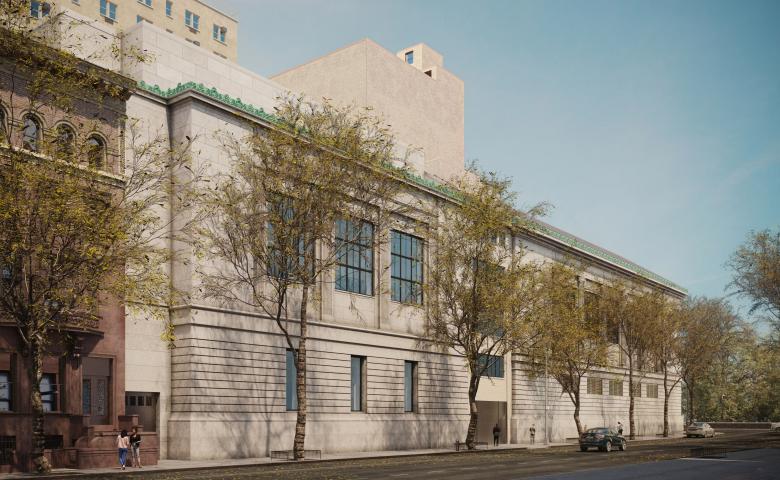
The New York Historical's new Tang Wing for American Democracy opened to the public on June 18, two weeks shy of the United States celebrating the 250th anniversary of the signing of the Declaration of Independence. World-Architects visited the new wing to see how renderings of the design by Robert A. M. Stern Architects compare to its built reality.
Most of the people who visit the New York Historical, located on Central Park West between 76th and 77th streets, probably will not see the new Tang Wing for American Democracy on the outside before they experience it on the inside. While the new wing fronts West 76th Street, the closest subway stop is a couple blocks north, at the nearby American Museum of Natural History, and the main entrance to The Historical is at Central Park West and 77th Street. Those who do walk along 76th Street might not even notice the museum's new wing, given how the design by RAMSA, the firm of Robert A. M. Stern, who died late last year at the age of 86, is deferential to the existing museum as well as the scale of the Upper West Side street lined with townhouses. Put another way, this is an addition meant to look like it's always been there.
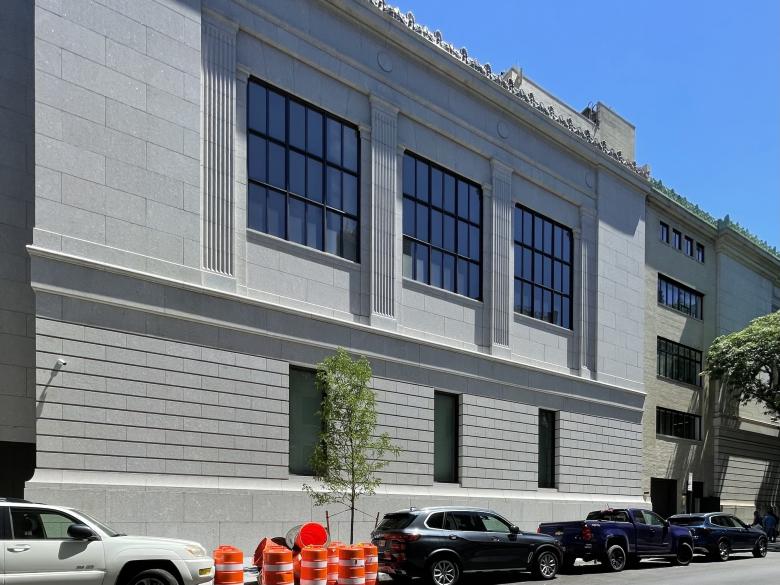
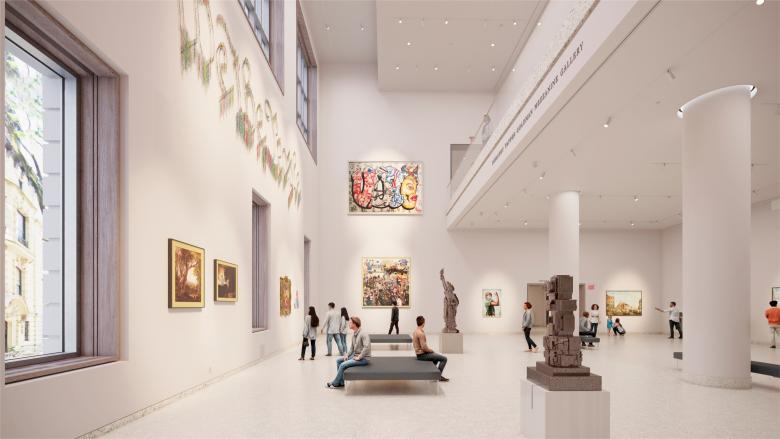
Named for philanthropists Oscar L. Tang and Agnes Hsu‐Tang, who gifted $20 million to The Historical for the project, the Tang Wing is a 71,000-square-foot, 4-story building anchored by the double-height Klingenstein Family Gallery on the museum's first floor. Before arriving at the space, visitors will walk through the Stuart and Jane Weitzman Shoe Museum, a small gallery that is also part of the new wing. Unlike the exterior's historical details, the double-height gallery space is simple, with flat surfaces and few details—a white cube, if you will, meant to put the focus on the artworks on display.
Intended to host changing exhibitions, highlight works from The Historical's collection of American art, and serve as event space, the gallery opens with Democracy Matters, “which explore[s] both the big idea of democracy and the themed threads of protest, speech, symbols, and petitioning.” In remarks at a press preview ahead of the June 18 opening, Agnes Hsu‐Tang, chair of the museum's board of trustees, passionately expressed the need for the new wing and its inaugural exhibition at a time when the country is fractured and its democratic principles are under threat: “Our history … began as a revolution by many, and endures, and will endure as an evolution of democracy for all.”
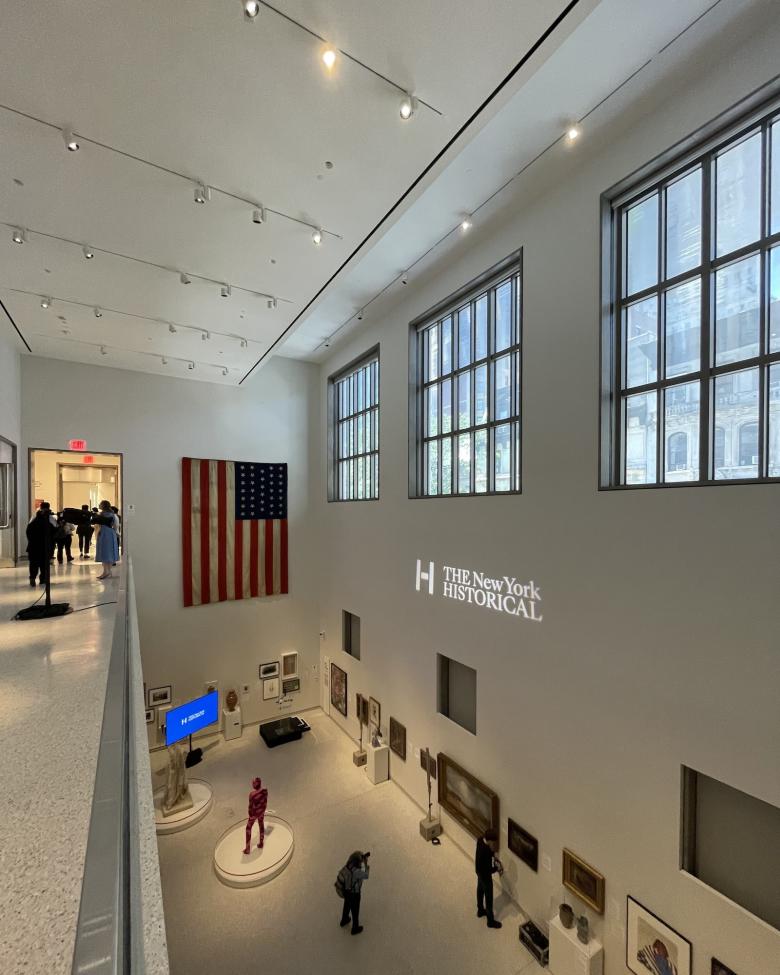
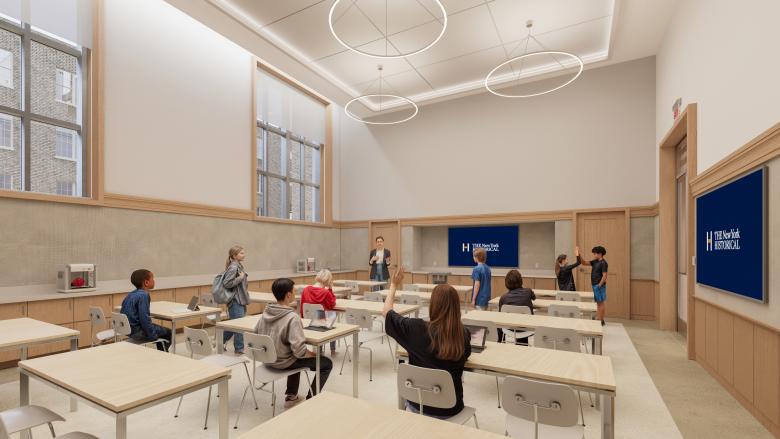
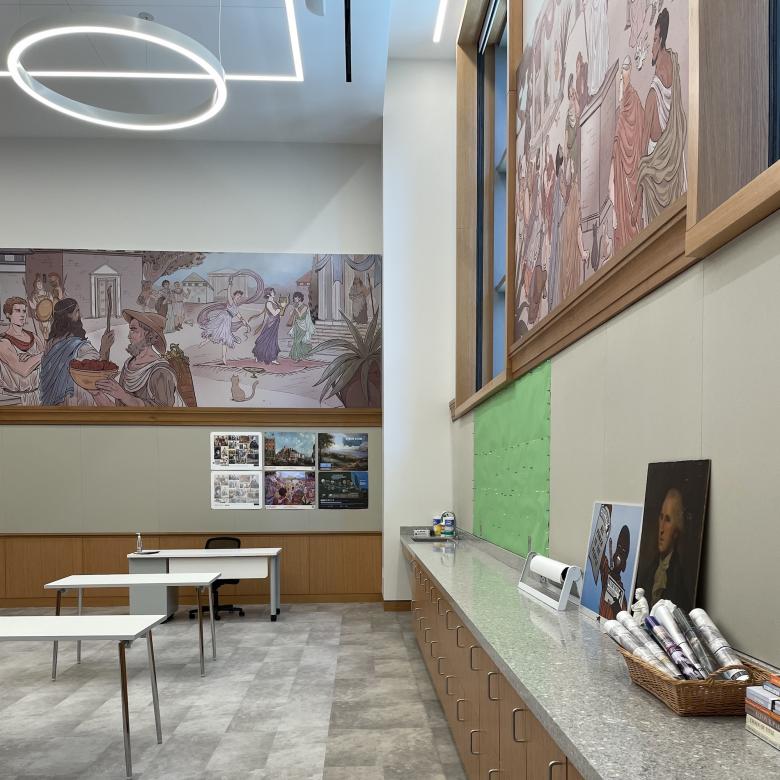
Accessed from the mezzanine overlooking the Klingenstein Family Gallery is classroom space for the Chang Chavkin Academy for American Democracy, The Historical's “award-winning initiative for 6th graders that's designed to address critical knowledge gaps in the learning of American history.” The new space means the capacity for students in the program will increase from 3,000 to 30,000 annually. The two classrooms gain natural light from large windows that face a new sculpture garden in the middle of the block.
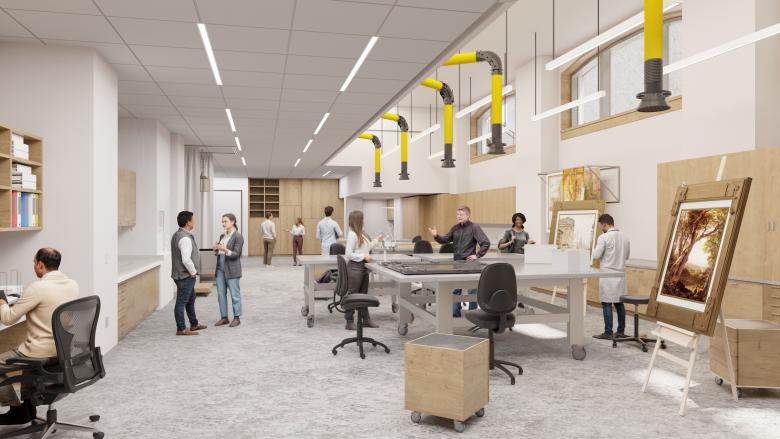
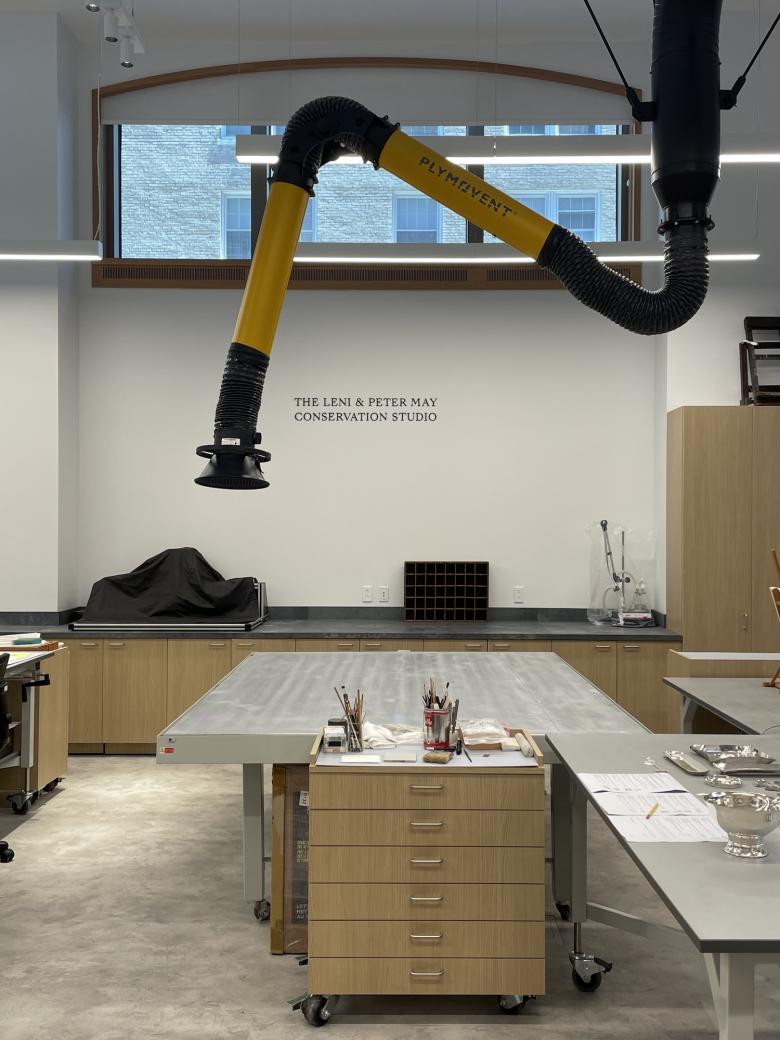
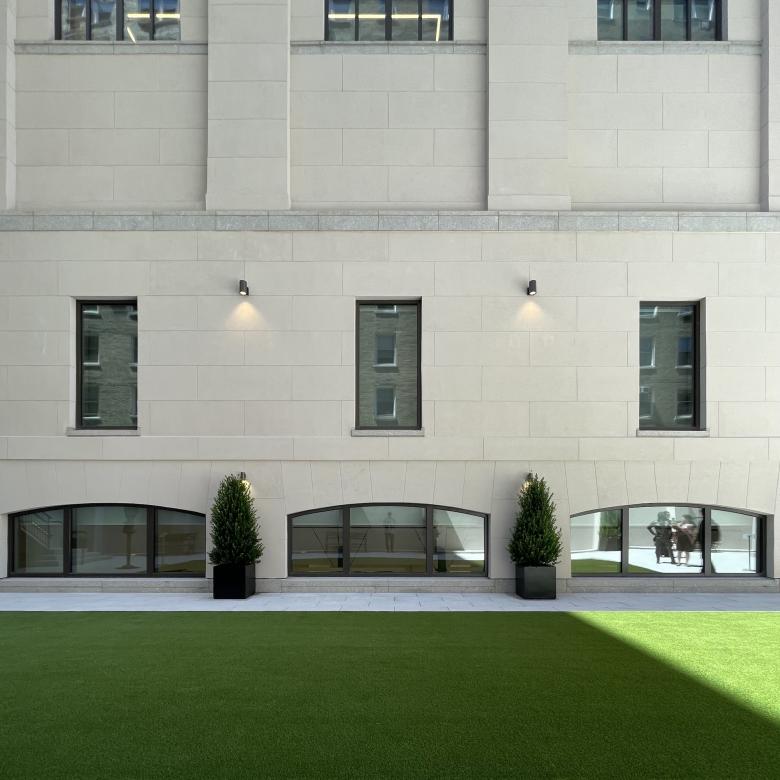
Tucked into the cellar is the Leni and Peter May Conservation Studio, the museum's first on-site conservation lab. Designed by Samuel Anderson Architects, a firm specializing in art conservation labs, the state-of-the-art facility is surprisingly bright considering its below-grade location; this is thanks to the creation of a mid-block sculpture garden north of the new wing and wide windows looking onto it.
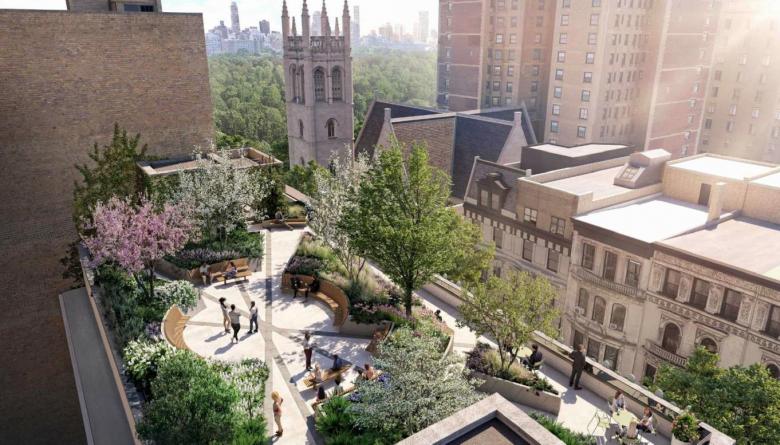
The Tang Wing's opening can be seen as a “soft opening,” given that a couple space's are not yet complete. First is the roof garden, which will have trees, plantings, and seating when fitted out but is currently just a paved surface. Second is the home of the nascent American LGBTQ+ Museum, which will be housed in a space on the Tang Wing's fourth floor and is expected to open in 2028.