Wagner Park Pavilion at Sunset
All photographs by John Hill/World-Architects
On a chilly January afternoon, World-Architects stopped by Robert F. Wagner Jr. Park in Battery Park City to look at the recently completed pavilion designed by Thomas Phifer and Partners. As the sun set, we took some photographs.
Architects who have previously ventured to the southern tip of Battery Park City in Lower Manhattan will know that Phifer's is not the first Wagner Park Pavilion. Its predecessor was designed by Boston's Machado Silvetti and completed in 1994. It featured two brick buildings with accessible roofs linked by a bridge, with the opening between the buildings forming a portal perfectly framing the Statue of Liberty in the harbor, to the west. The building, as well as its landscape designed by Laurie Olin, was demolished as part of the post-Sandy resiliency project that is reshaping much of Lower Manhattan's coastline. With Battery Park City built on landfill, the best defensive option for Wagner Park was lifting the pavilion and a portion of its landscape. The project has been carried out by AECOM (engineering and landscape), SiteWorks (landscape), and Thomas Phifer and Partners (architecture). With the landscape yet to take hold and the chilly temperatures keeping most people away from the park, we kept our camera trained on the pavilion designed by Phifer and Partners. Some of our photos are below, accompanied by captions with additional information on the project.
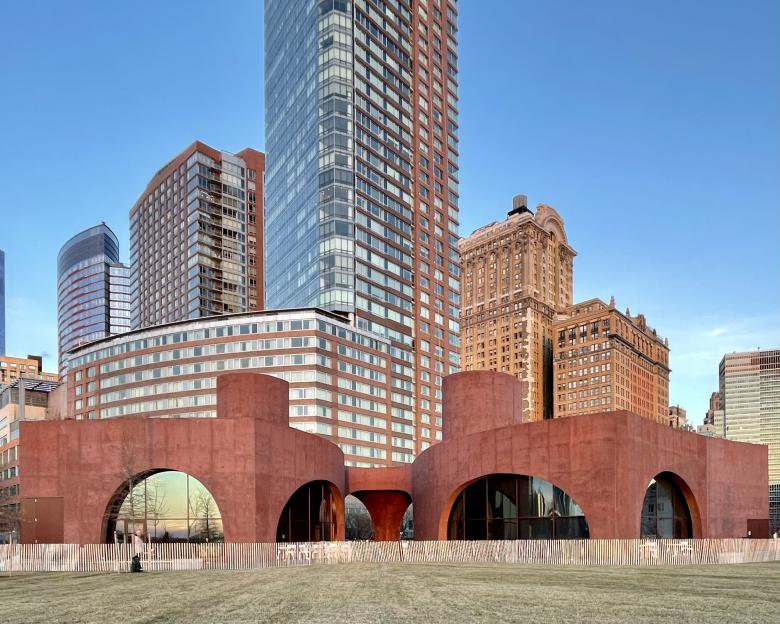
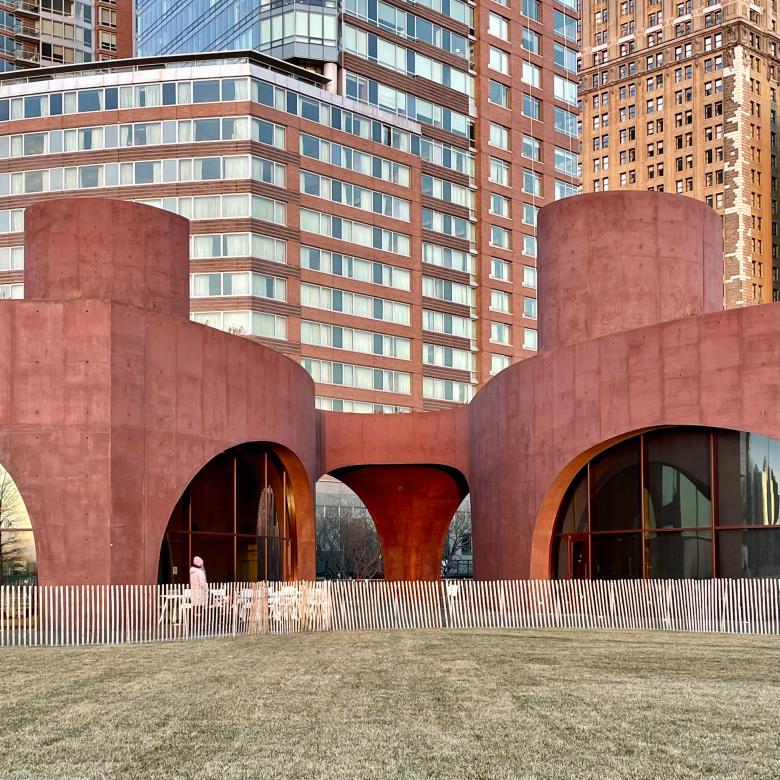
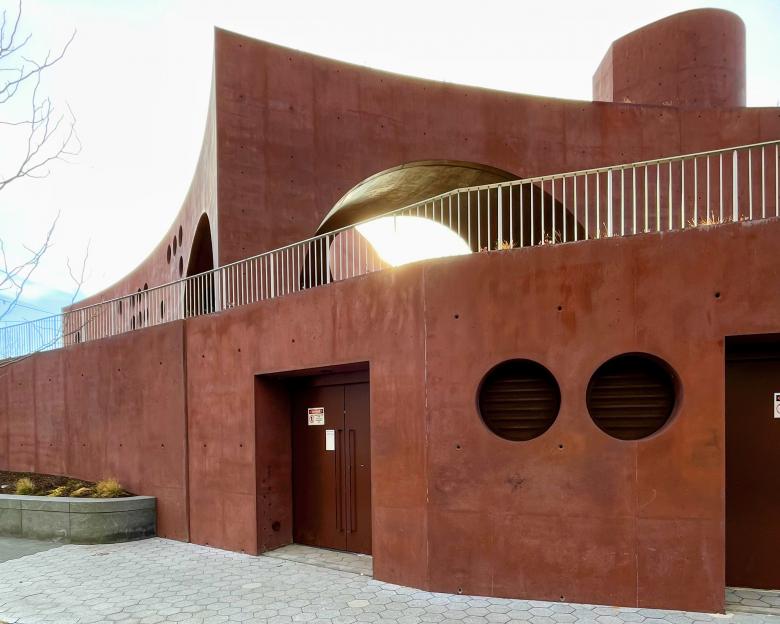
Seen from the east, the pavilion is organized into two volumes linked at the roof, much like the 1994 pavilion.
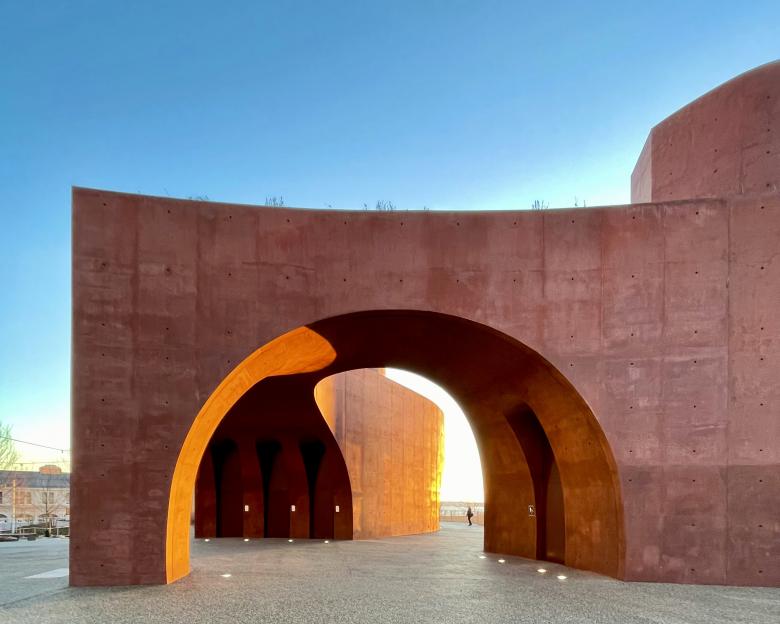
A tighter view shows how the gap between the buildings, unlike its predecessor, is interrupted by a support for the rooftop connection.
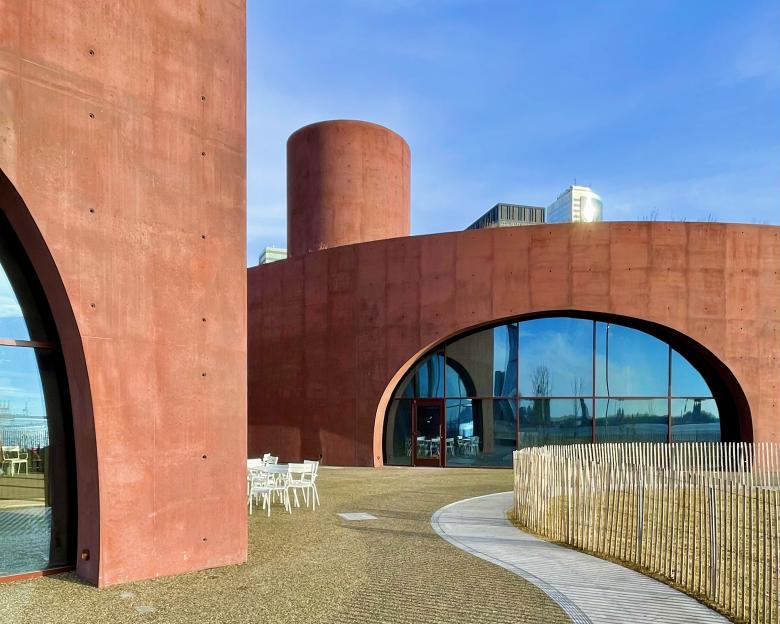
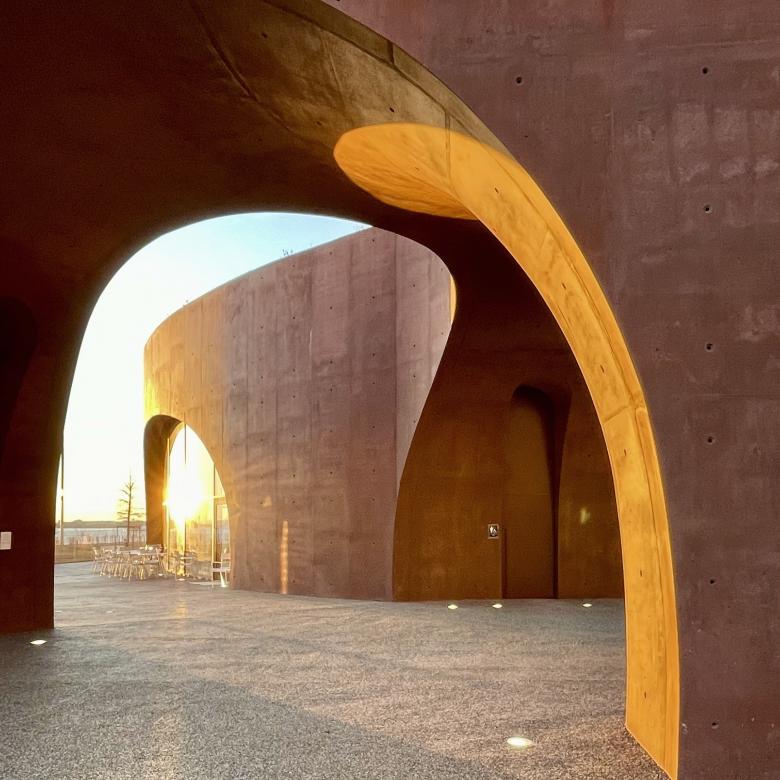
The interiors of the pavilion, both still under construction, will offer a classroom (at right)…
…and restaurant (at left) for the community and visitors to the park.
But most people will approach Wagner Park from the east, along Battery Place. From here, one can see clearly how the new pavilion has been raised about 10 feet above street level.
Walking along the street to either the northern or southern end of the park, visitors can then ascend gentle slopes that bring them up to the level of the pavilion.
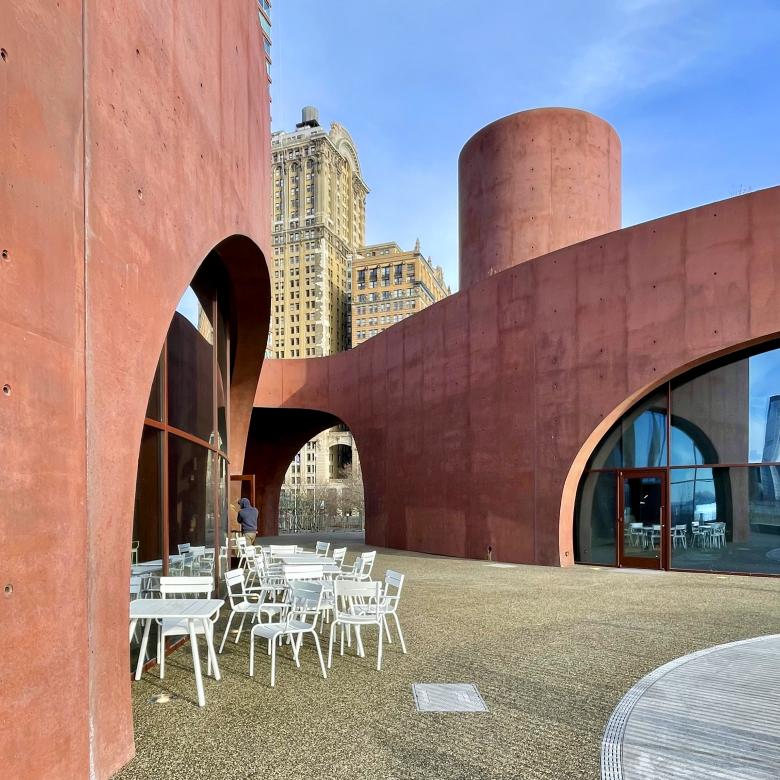
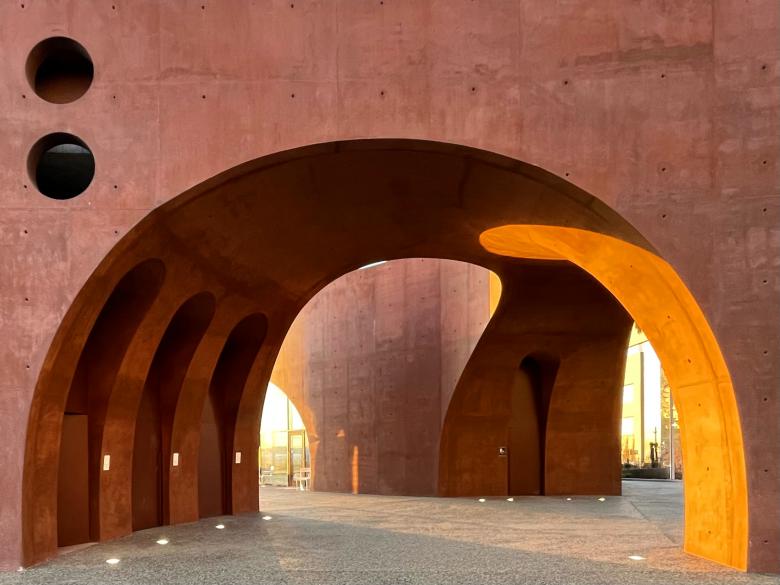
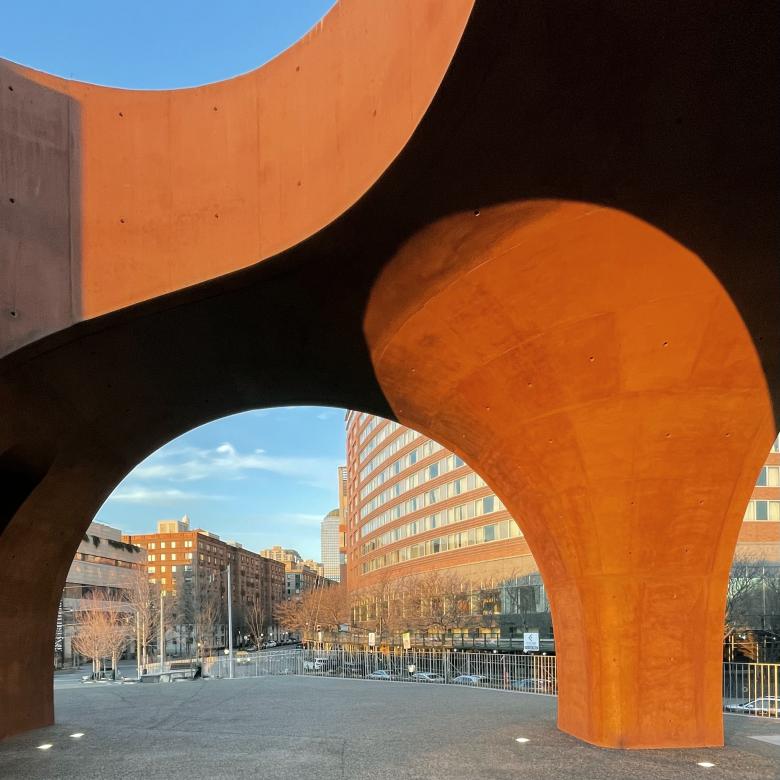
Here, at the arched openings by the pavilion's tripod-like support, are restrooms and a stair and elevator that lead to the rooftop.
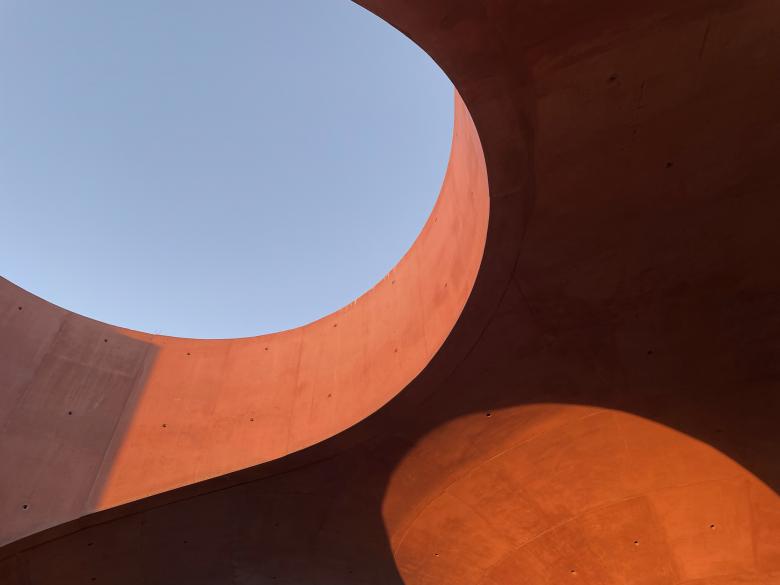
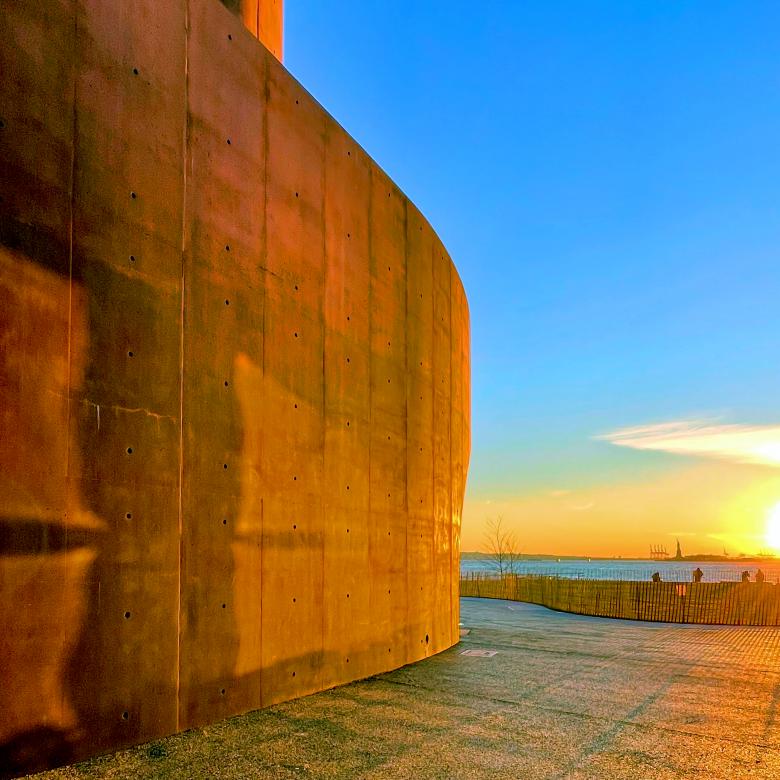
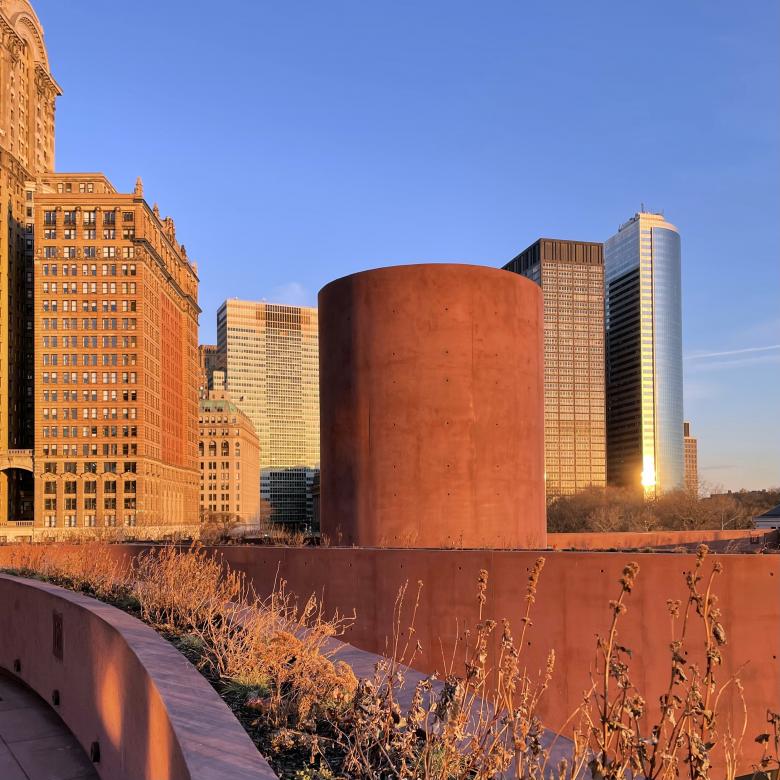
The orange glow of sunset accentuates the deep red color of the concrete, which Phifer and Partners specified to “harmonize with the warmth of the brick buildings that distinguish Battery Park City.”
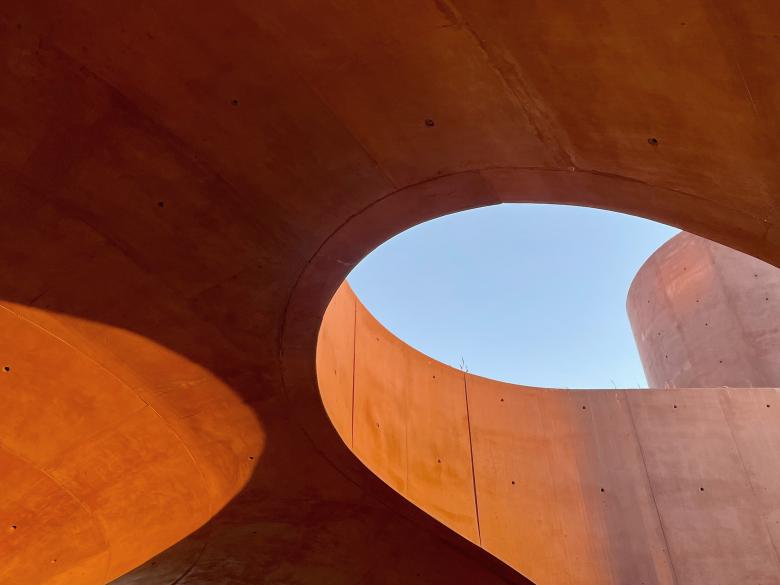
At some moments it felt like the sunlight was drawing attention to the sculptural aspects of the pavilion's design. (Note the lights in the pavement, an indication that the concrete surfaces are illuminated after sunset.)
Although Phifer's pavilion does not frame the Statue of Liberty as prominently as the Machado Silvetti pavilion, the distant view—and pleasing sunsets—should once again draw people to the newly redesigned Wagner Park, especially in the spring, when the weather warms, the landscape blooms, and the restaurant opens.
After taking in the sunset, views of the two elevator overruns reminded us to head up to the roof terrace.
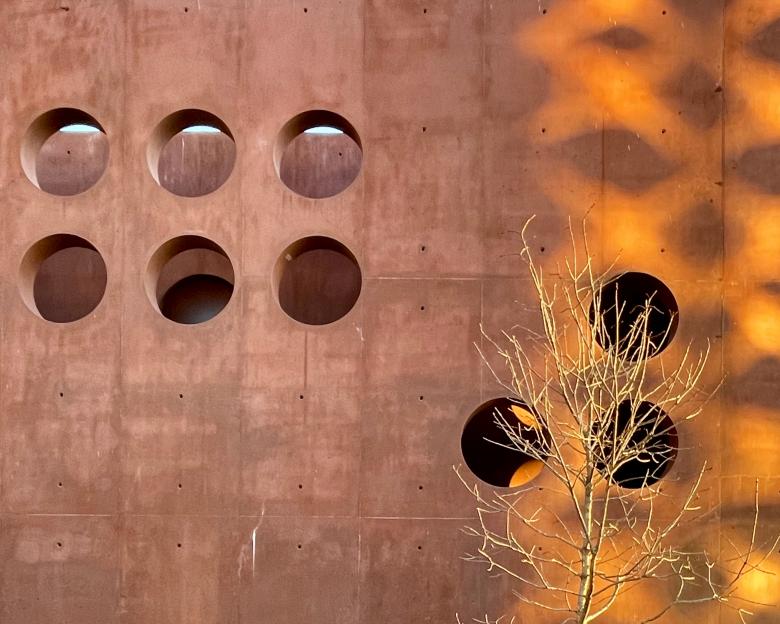
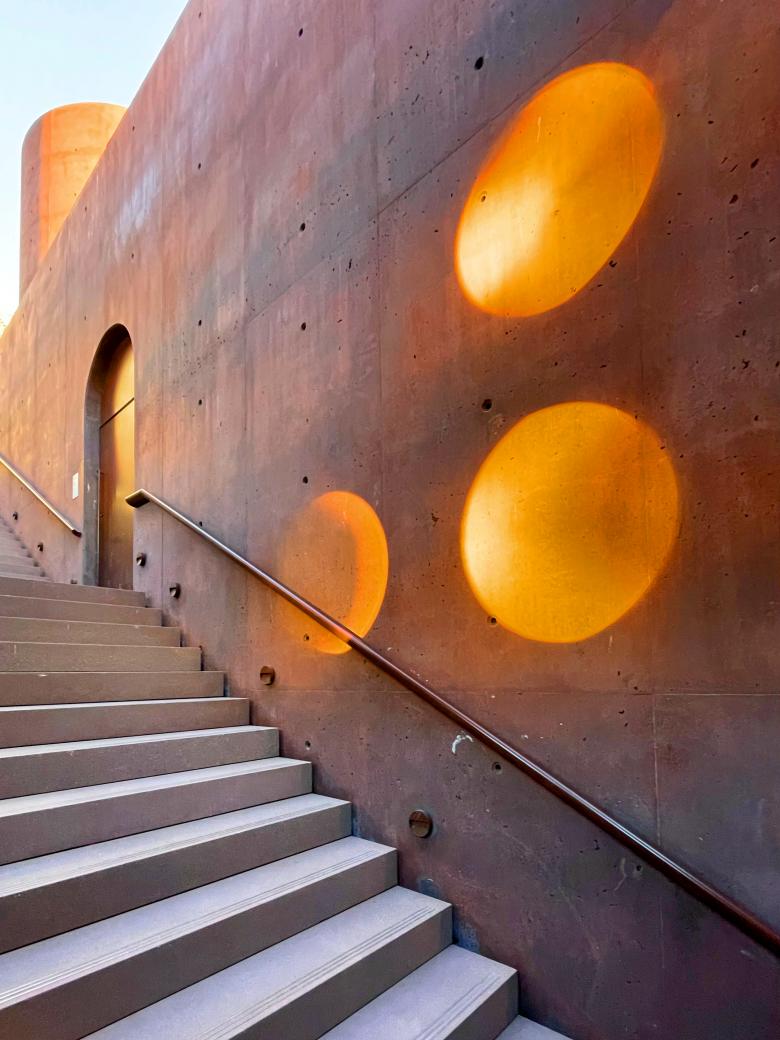
One stair is located behind circular openings on the north facade. On our visit, the concrete was enlivened by a dappled pattern of the setting sun reflecting off the adjacent Museum of Jewish Heritage.
The reflected light through the circular openings, if inadvertent, was a sublime effect.
With views of Lower Manhattan as well as the Statue of Liberty and the harbor, the rooftop features some large planting beds as well as strips at the curving edges that are intended to “overhang and soften the edge of the roof parapet,” per Phifer and Partners.
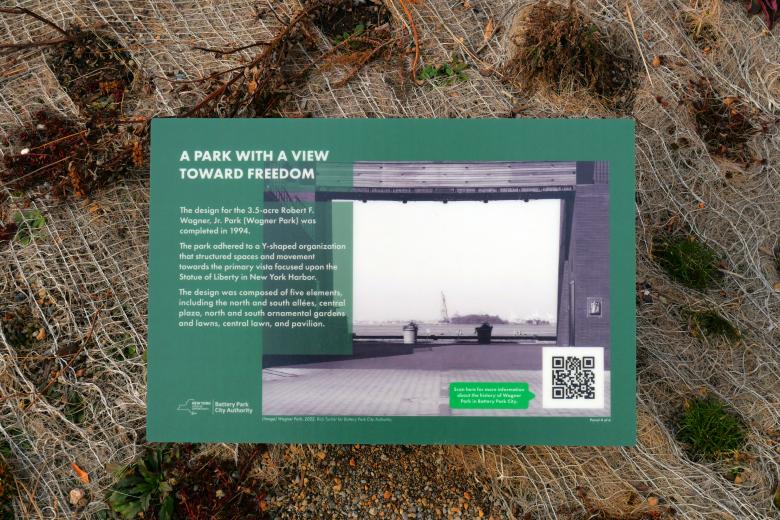
Curiously, one of the last things we spotted on our visit was signage in one of the planting beds that describes and shows a photograph of the old pavilion that was designed by Machado Silvetti and completed in 1994. Gone but not forgotten, apparently.