The Agora | Chamberlain Student Center
An 'Agora in the Pines' at Rowan University
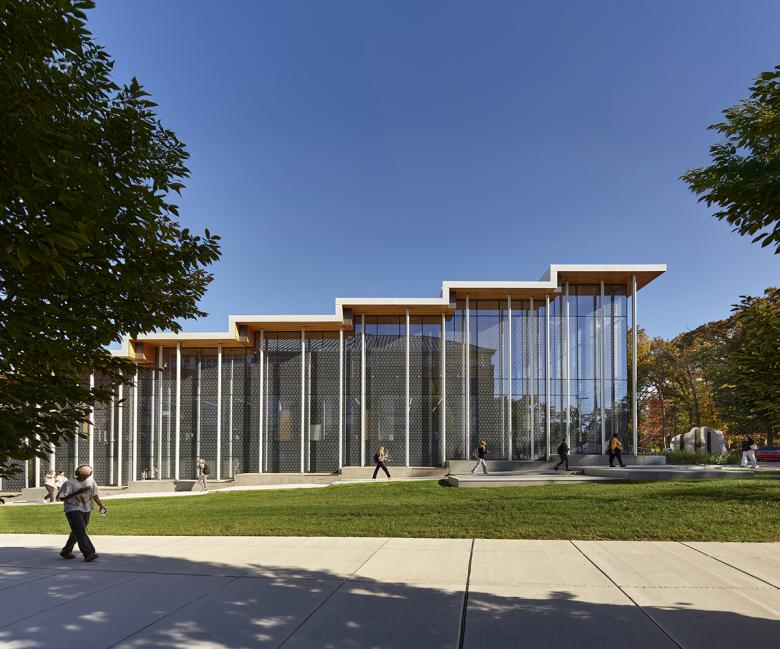
Rowan University is located in Southern New Jersey, about a half hour drive south of Philadelphia, not far from the Pine Barrens, a large area made up of Atlantic Cedar forest and unique flora and fauna. ikon.5 architects found inspiration in the Pine Barrens in their design of an expansion to the university's Chamberlain Student Center, as revealed in some questions they answered about the project.
What were the circumstances of receiving this commission?The Chamberlain Student Center expansion project was an open RFP released by Rowan University directly before the pandemic. After submitting our qualifications and experience, Rowan University chose ikon.5 architects to program and design the 35,000-square-foot expansion to their existing 1970s student center. The existing student center was inward-looking and isolated from the campus environs. While the existing center served to enhance student life on campus, its existing lack of visual and physical connection to the campus made it difficult to be the central social and intellectual hub that the university desired it to be.
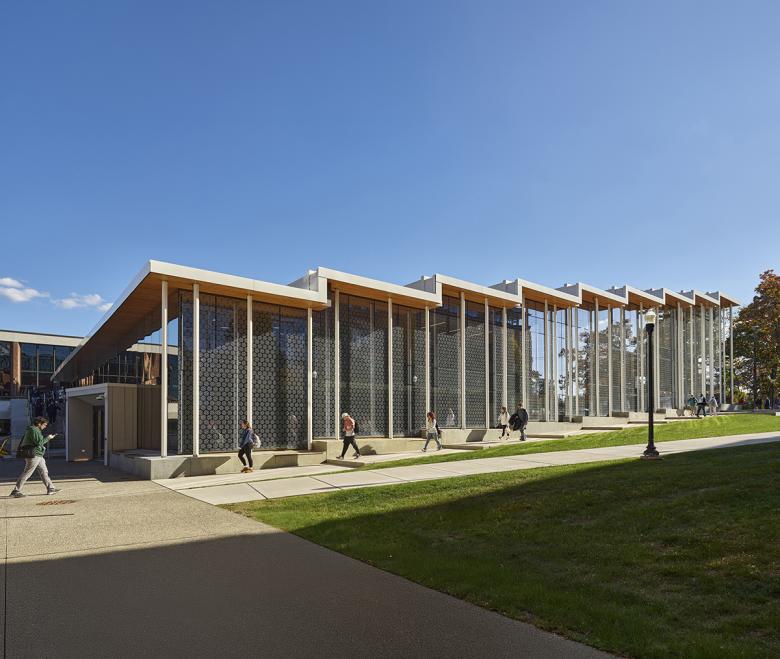
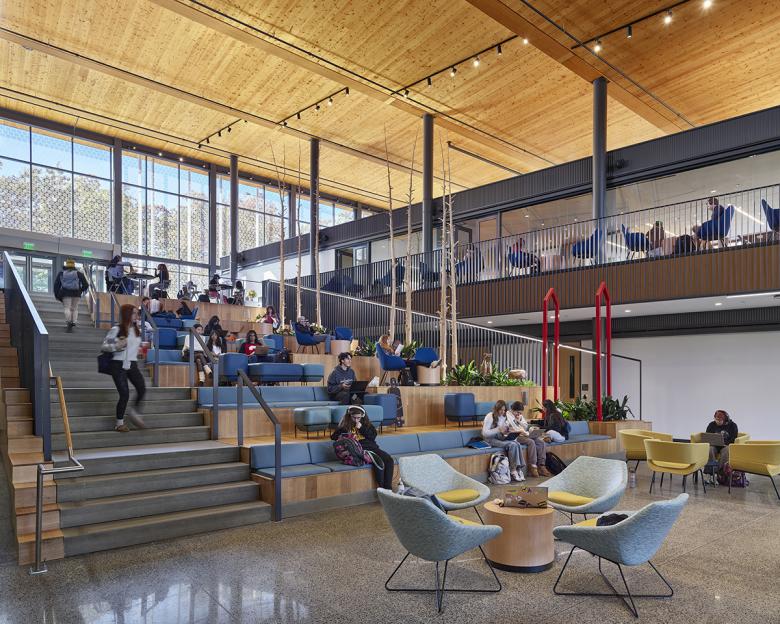
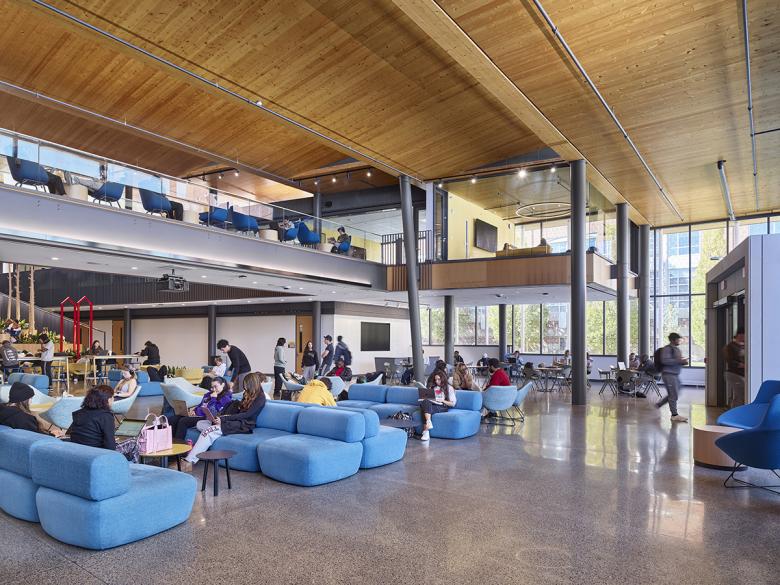
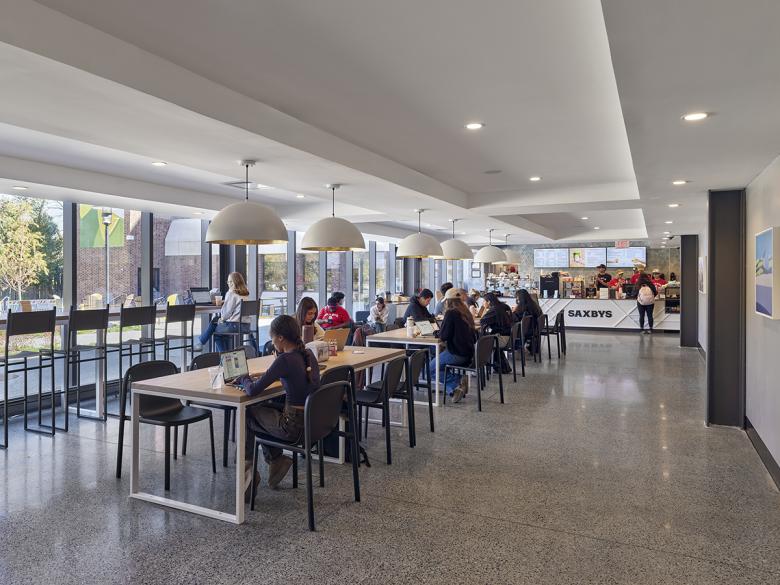
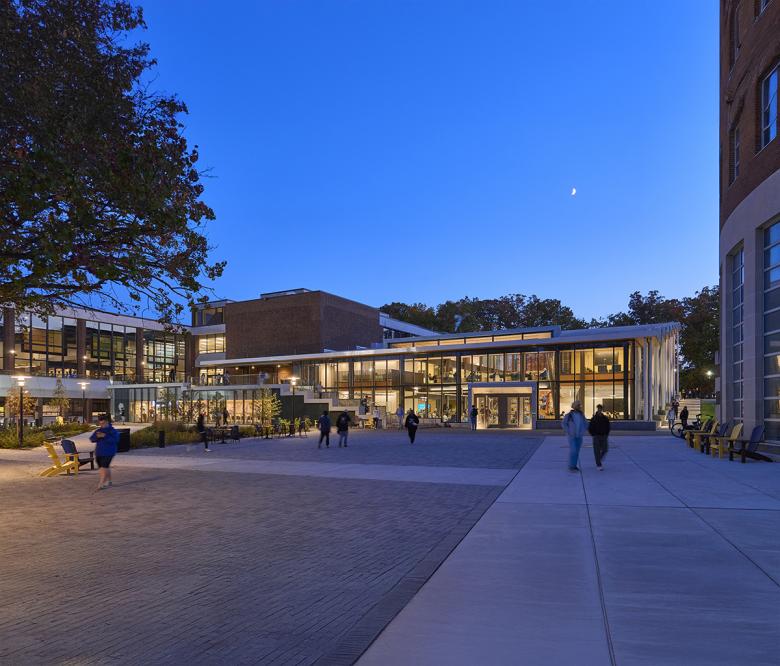
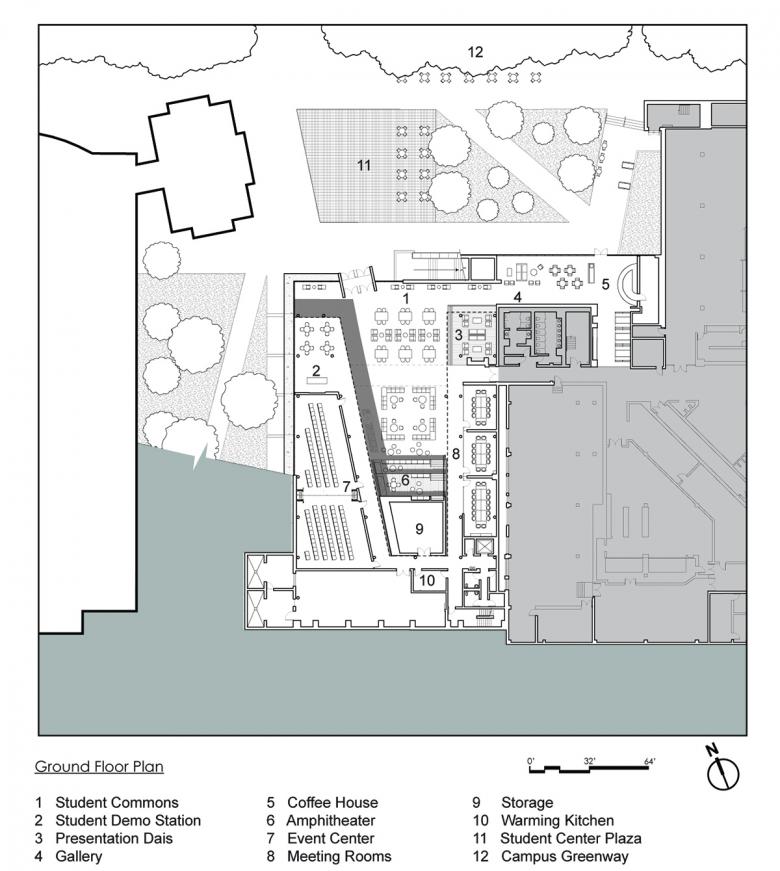
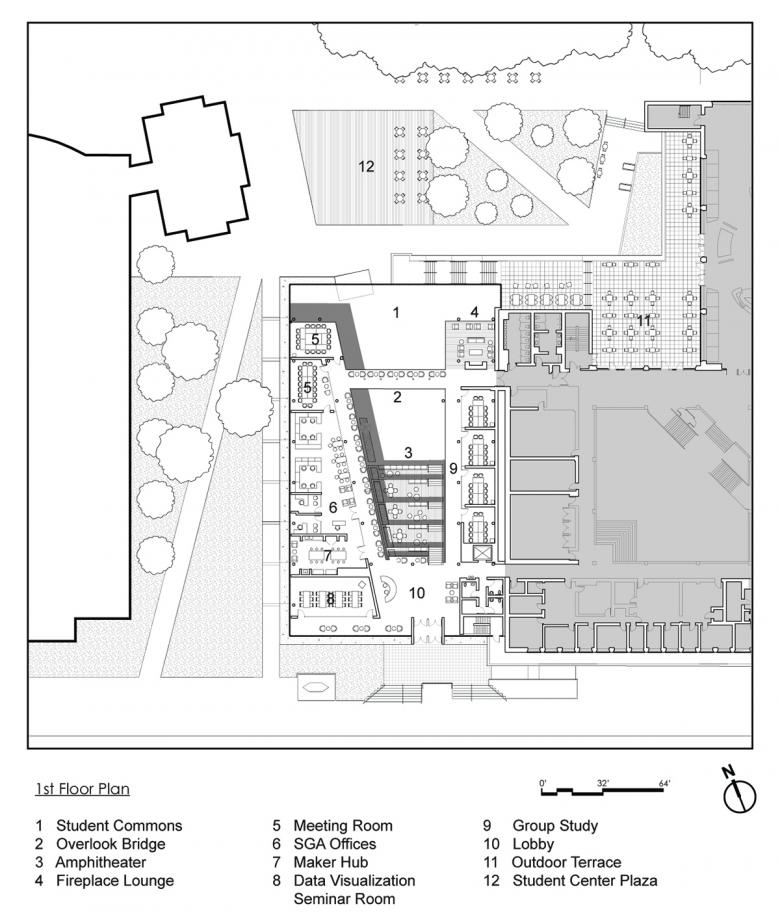
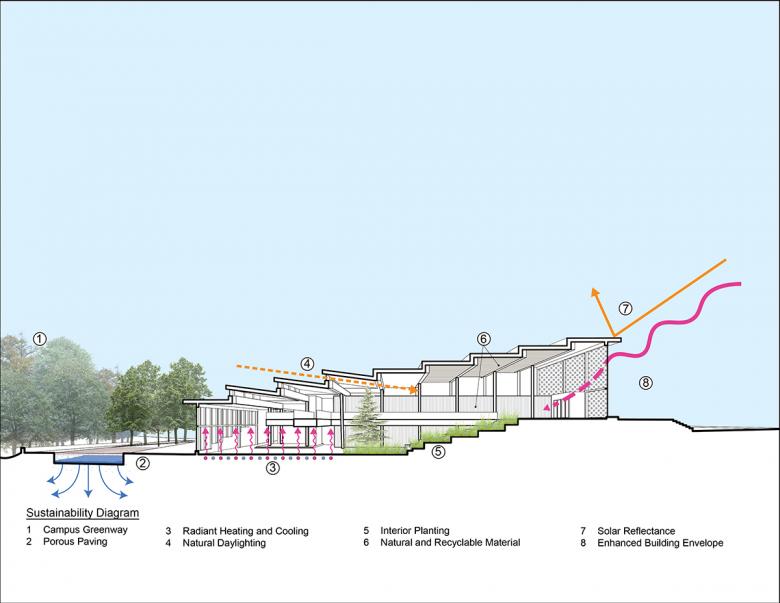
The Chamberlain Student Center expansion is a biophilic response to the regional New Jersey Pine Barrens adjacent to where it is sited. A mass timber roof structure cascades down the sloping site and opens spatially and visually to the Campus Greenway, a landscape green that is a microcosm of the Pines on campus. Native plantings populate the outdoor student center plaza and indoor amphitheater reminding the occupants of their unique location in the world. The expansion is imagined as a landscaped embankment gently stepping up from the water’s edge of Campus Greenway. As the building’s form steps upward with the sloping site, an internal space is carved out of the slope to create a dynamic interactive “agora” of student collaborative spaces facing the Campus Greenway. A new grand portal along Mullica Hill Road welcomes students and visitors to enter this “Agora in the Pines”—the new intellectual and social hub of student life at Rowan University. Beneath the cascading mass timber roof is a glass enclosure inverting a previously inward-looking student center into a visually engaging center of student life.
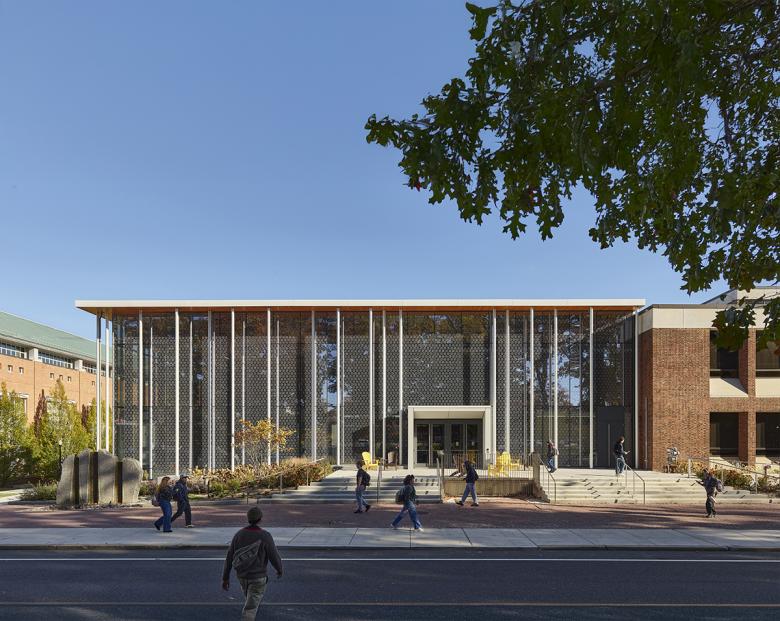
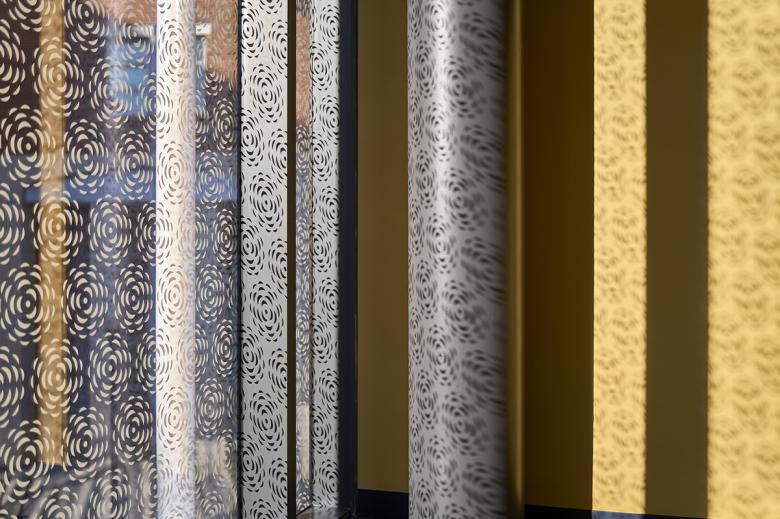
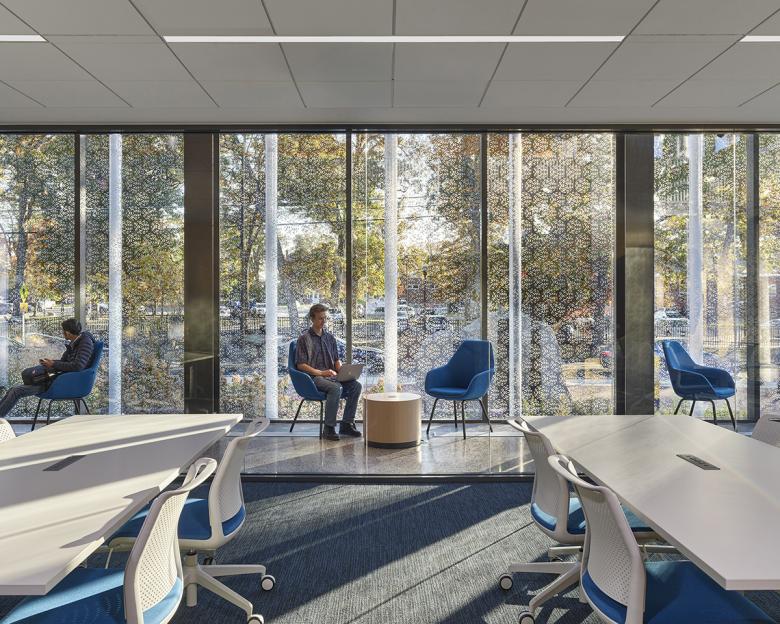
Sustainable approaches support the biophilic concept. The stepping mass timber roof reduces embodied carbon and provides a warm interior environment that promotes well-being. Overhead light monitors diffuse northern daylight throughout the center ensuring every space has access to natural light to support occupant wellness. The exterior columns and ceramic coating on the glazing significantly reduce heat gain and are reinterpretations of their Pine Barrens siting. The irregular exterior columns recall the Atlantic Cedar forest while the ceramic frit coating is a graphic reinterpretation of the pinecone. These exterior envelope elements assisted us in designing and specifying a high-efficiency, low-energy HVAC system.
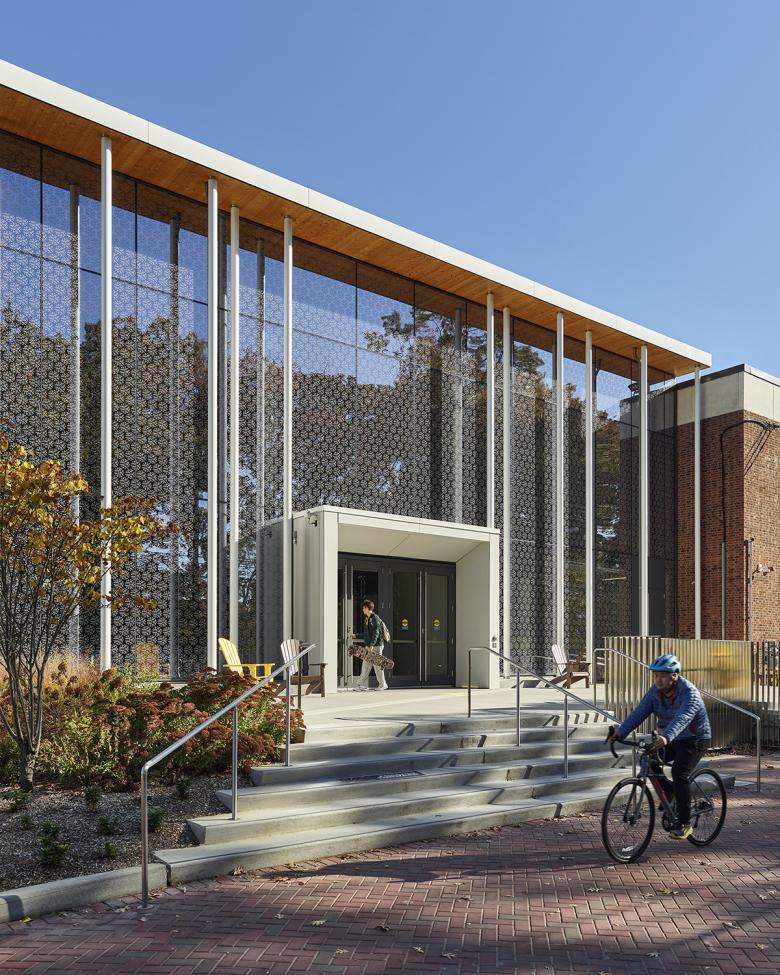
Influenced by the unique ecological phenomenon of its site in southern New Jersey, the expansion is a biophilic response to the regional New Jersey Pine Barrens. The New Jersey Pine Barrens is the largest remaining Atlantic coastal pine land ecosystem made up of Atlantic Cedar forest and unique flora and fauna. The building’s exterior columns, and the ceramic coating on the exterior glazing, significantly reduce heat gain and are both reinterpretations of their siting adjacent to the Pine Barrens. The irregular columns recall the Atlantic Cedar forest while the pattern of the ceramic frit coating is a graphic reinterpretation of the pinecone.
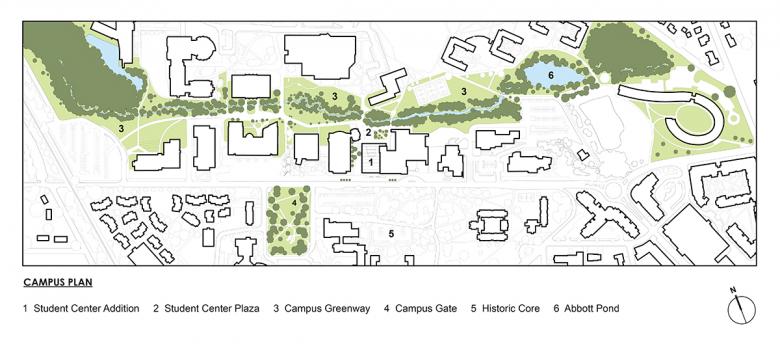
Rowan University sits on the edge of a unique habitat in southern New Jersey—the New Jersey Pine Barrens. Much of the history and spirit of New Jersey and Rowan University is influenced by the preserved flora and fauna of the Pine Barrens. On campus, a landscaped Campus Greenway of native plantings runs parallel to Chestnut Creek and weaves organically through the built environment of the campus. The existing Chamberlain Student Center is a destination along this Campus Greenway with the site of the expansion at the confluence of pathways that cross and run parallel to it. The expansion of the student center is inspired by its adjacent location to this landscaped corridor, experienced as a vestige of the New Jersey Pine Barrens.
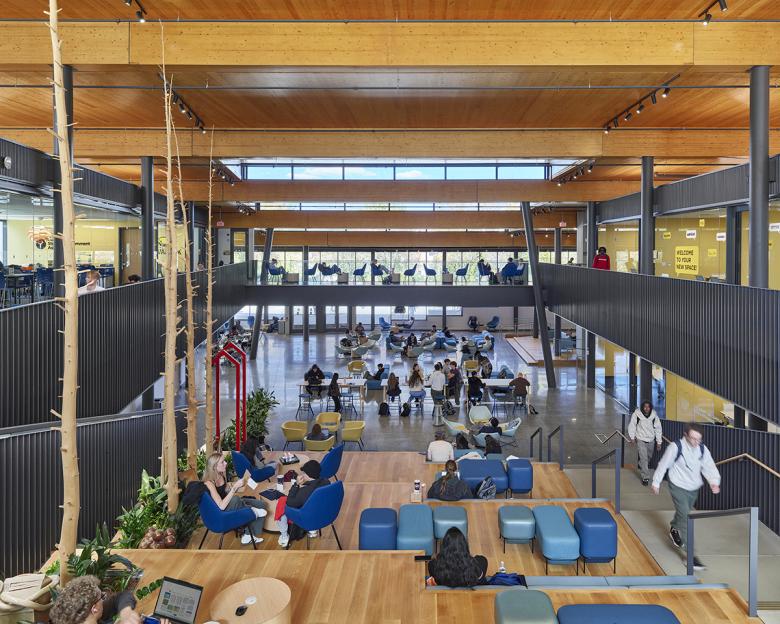
At the onset of the project, the President of Rowan University offered the model of an “Ancient Agora” as a vision for the expansion of the Chamberlain Student Center. He envisioned the addition as an opportunity to enrich the student life experience by creating a central gathering place that would serve as the social and intellectual hub of the campus. Working with the design committee, we programmed a venue much like an ancient agora, where all students can connect and share their diverse offerings, talents, and skills with each other in one campus location. Central to this vision, a demonstration area allows students to present and discuss their work and research in an open forum to the entire university. The impact to the campus has been significant as evidenced by 80% utilization of the group study rooms. Several classes are also being conducted in the open Agora where all students on campus can observe and learn about topics outside of their specific field of study.
There were no significant design changes from the initial design to completion. However, at the beginning of concept design we offered several concept approaches to placing the program on this particular site.
At the conclusion of the conceptual design process, two of the four concept approaches emerged as the most successful meeting most broadly the aspirations and needs of the campus community.
Both concepts captured the spirit of Rowan University, met the project goals and fulfill the vision of creating an “agora” of social and intellectual life on campus and therefore both approaches would successfully advance Rowan University’s mission. The design team recommended moving forward with the concept that preserved the most exterior space and best engaged the Campus Greenway. Rowan University chose to move forward with our recommendation.
The Agora at Rowan University relates to other projects in our office in that it is an inventive solution influenced by its specific place and the mission of the university. Our work seeks to consistently express the unique place and story of our clients. In this way, the Agora is related to our other work in seeking to express the unique story of Rowan University and its place in the world.
Email interview conducted by John Hill.
Location: Glassboro, New Jersey, USA
Client: Rowan University
Architect: ikon.5 architects, New York
- Design Principal: Joseph G. Tattoni, FAIA
- Project Architect: Andrew Skey
- Project Manager: Arvind Tikku, AIA
- Project Team: Charlie Maria, AIA, LEED AP; Saverio Manago, AIA
MEP/FP Engineer: Bruce E. Brooks & Associates (now IMEG)
Civil Engineer: Land Dimensions
Landscape Architect: Ground Reconsidered
Lighting Designer: The Lighting Practice
Interior Designer: Galina Design Group
AV/IT/Security: Cerami & Associates
Cost Estimator: International Consultants, Inc.
Contractor: Newport Construction
Construction Manager: Accenture
Building Area: 35,000 sf
Artigos relacionados
-
-
-
-
A Contemporary Gateway to Green-Wood Cemetery
Architecture Research Office | 04.05.2026